
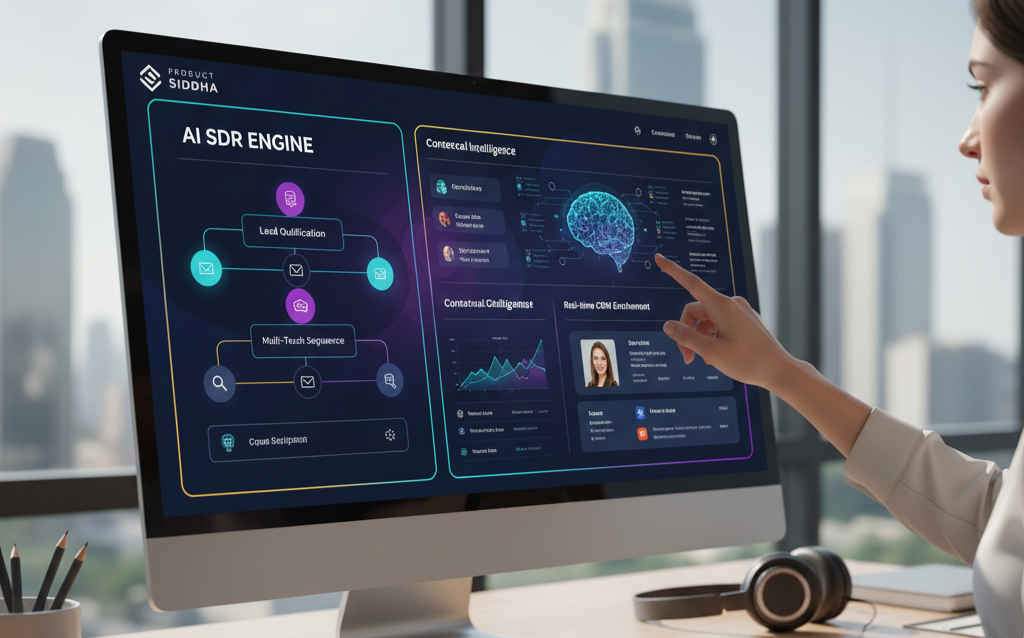
AI SDR Agents That Do More Than Send Messages
Rethinking Lead Generation
Many sales processes fail not because companies lack good leads but because they treat outreach as a repetitive chore. In the past, SDRs were asked to follow rigid scripts and send large batches of emails. Today’s environment demands a different approach. Buyers expect thoughtful, relevant, and informed outreach. They respond to conversations that understand their problems and adjust as the dialogue progresses.
This shift has produced a rise in intelligent SDR systems. These are not the typical tools that simply automate cold messages. They behave like skilled representatives who understand context, track behavior, and handle objections. This evolution matters for businesses and for Email Marketing Companies that must integrate sales and lifecycle communication into the same system.
What an AI SDR Should Actually Do
An effective AI SDR system moves beyond outreach. It plays an active role through the early phases of a deal. The most practical systems handle tasks such as:
- Lead qualification across channels
- Managing replies, objections, and follow up
- Data entry and CRM enrichment
- Multi-touch outbound sequences
- Handing warm leads to the sales team
The goal is not only to send more messages. The goal is to remove repetitive work from sales teams so they can focus on real conversations. This is where many AI systems fall short. They stop at automation and do not help move leads through the pipeline.
What Makes a High-Performing AI SDR Engine
A strong AI SDR system contains three layers of capability.
1. Contextual intelligence
The system understands user profiles, industry language, and timing. It reads signals before sending a message. It adjusts tone when a lead asks a question and adapts when a prospect shares new information.
2. Operational precision
It manages lists and outreach sequences without errors. It updates CRM fields. It tags leads by sector and buying stage.
3. Learning and improvement
It does not repeat the same outreach pattern forever. It learns what converts, what fails, and what messaging encourages a response.
The winning systems mirror human reasoning while maintaining consistency across thousands of conversations.
A Real Case in Point
Product Siddha worked on a project that required building a complete outbound engine after direct access to a popular prospecting platform was removed. The challenge was not just finding a new source of leads. We built an intelligence layer that filtered and qualified leads, tracked replies, and triggered the correct follow-up action. This was not only automation. It required planning, classification logic, user behavior mapping, and custom enrichment.
The result was an SDR engine that continued generating conversations and appointments even when a primary channel was no longer available. That project demonstrated that strong SDR systems do more than send messages. They protect the pipeline when conditions change.
Why Outreach Alone Is Not Enough
Many companies still believe that outbound success depends on sending a high volume of messages. It often leads to the opposite result. Prospects ignore messages that lack context. What works better is a system that behaves more like a consultant. It asks questions. It notes objections. It adds context from previous interactions.
This mindset is common among the best Email Marketing Companies as well. They treat communication as a long-term process rather than a broadcast tool. When outreach is part of a larger engagement system, it becomes more credible and more predictable.
Comparison Table
| Basic SDR Automation | High Performing AI SDR Engine |
|---|---|
| Sends volume messages | Evaluates lead intent |
| Triggered by static rules | Adjusts based on conversation |
| No personalization | Uses profile and context |
| Works on a fixed schedule | Responds when prospects interact |
| Limited data capture | Enriches CRM and keeps history |
Where AI SDRs Fit Into the Sales Operation
Every successful sales team depends on three functions.
Identifying opportunities
Qualifying them with context
Handing them off to closers
AI SDRs are now strong candidates for the first two steps. They free sales teams from repetitive tasks and provide cleaner data. They also lower the cost of outbound programs.
This is also where voice bots play a growing role. Modern AI voice SDRs can handle qualification calls, book meetings, answer objections, and route high-intent leads to the sales team-without requiring manual dialing. They simulate human conversations, extract intent, and trigger automated next steps inside CRM or email workflows.
When connected with lifecycle systems and customer analytics, voice bots and AI SDRs together become more powerful than a traditional outbound team.
The Role of Email Marketing Companies in This Shift
Customers no longer evaluate companies only on the first message. They evaluate the entire sequence of communication. Email Marketing Companies that understand lifecycle automation can help integrate AI SDRs into the broader funnel. This ensures that outbound conversations lead into post-sales flows such as onboarding, retention, and re-engagement.
When outbound systems and lifecycle systems work in parallel, businesses see better return on investment. This is because conversations do not end when a lead replies. They continue through a structured journey.
Final View
AI SDR systems will shape the next decade of sales. They do not replace people. They support them. They handle the repetitive tasks while allowing sales teams to work on relationships. When backed by thoughtful planning and strong analytics, these systems can change how companies generate demand.
Product Siddha builds SDR engines through that principle. The goal is to create intelligence that understands customers and moves them through the funnel in a structured way. This keeps outreach relevant even when conditions change.