
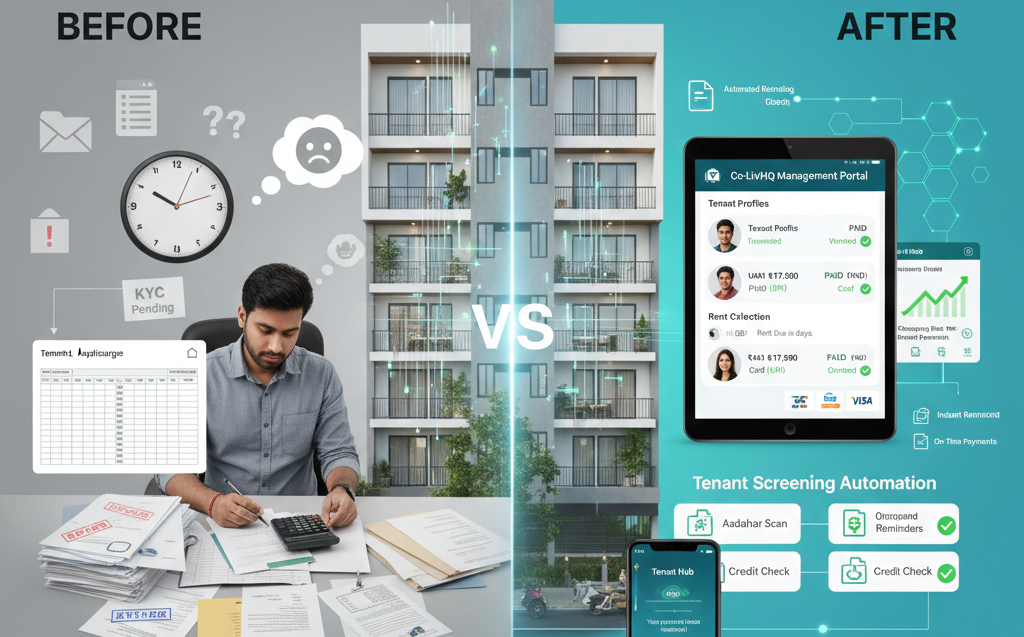
Co-Living Spaces: How to Automate Tenant Screening and Rent Collection
A New Rental Model with Old Problems
Co-living has moved from a niche concept to a mainstream housing option across Indian cities. Young professionals, students, and remote workers prefer flexible leases, furnished rooms, and shared amenities. Operators benefit from higher occupancy and faster turnover.
Yet behind this growth sits a familiar set of problems. Tenant screening takes time. Rent collection becomes fragmented. Manual checks and follow-ups strain operations as portfolios grow.
In co-living, volume is the challenge. Dozens or hundreds of tenants may move in and out each month. This is why operators increasingly look to automate tenant screening and rent collection. Automation brings order to scale without removing human judgment.
Product Siddha works with platforms that face similar operational complexity. Their approach focuses on building systems that hold up under real usage, not ideal conditions.
Why Tenant Screening Matters More in Co-Living
Traditional rentals involve fewer tenants and longer leases. Co-living is different. Short stays, shared spaces, and frequent move-ins raise the stakes.
Poor screening leads to disputes, payment delays, and community friction. Manual screening struggles to keep pace when applications arrive daily.
To automate tenant screening is to reduce inconsistency. It ensures every applicant passes through the same checks, regardless of timing or staff availability.
What Automated Tenant Screening Looks Like in Practice
Automated screening does not remove decision-making. It structures it.
A typical automated screening flow includes:
- Identity verification through documents
- Address and employment checks
- Credit or payment behavior signals
- Background screening where applicable
Data is collected digitally and reviewed against predefined criteria. Applications that meet requirements move forward. Those that do not are flagged for manual review.
This approach shortens turnaround time and reduces bias. Every applicant is assessed on the same basis.
A Relevant Case from Product Siddha
One Product Siddha case study involved AI automation services for a French rental agency, MSC-IMMO. The agency managed a growing portfolio with frequent tenant turnover.
Manual screening and rent tracking caused delays. Staff spent excessive time verifying information and chasing payments. Errors affected tenant experience.
Product Siddha helped introduce automation layers that standardized screening inputs and synchronized payment tracking. While markets differed, the operational lesson applies directly to co-living in India.
To automate tenant screening is not about speed alone. It is about consistency and reliability when volume increases.
Digital Screening Builds Tenant Trust
Tenants also benefit from automation. Clear requirements and quick decisions reduce uncertainty. Applicants know where they stand without repeated calls or emails.
Digital screening records also protect operators. Decisions are documented. Disputes can be resolved with evidence rather than memory.
In shared living environments, transparency helps maintain community standards.
Rent Collection Challenges in Co-Living
Rent collection in co-living is rarely uniform. Tenants join on different dates. Payment methods vary. Late payments disrupt cash flow.
Manual reminders do not scale. Missed follow-ups accumulate. Accounting becomes complex.
Automation introduces discipline without constant oversight.
How Automated Rent Collection Works
Automated rent collection relies on clear schedules and digital payment systems.
Key components include:
- Automated invoices based on move-in date
- Digital payment links or standing instructions
- Reminder notifications before due dates
- Automatic reconciliation with records
Tenants receive timely reminders. Operators gain predictable cash flow. Exceptions are handled individually rather than across the entire system.
This approach reduces friction on both sides.
Screening and Payments Work Best Together
Tenant screening and rent collection should not exist as separate systems. When linked, they form a complete operational loop.
Approved tenants move directly into payment workflows. Lease terms align with billing schedules. Exit processes trigger final settlements automatically.
Product Siddha’s experience building custom dashboards by stage supports this integrated view. Operations become easier to manage when data flows without interruption.
Data Visibility Improves Decision Making
Automation also improves insight. Operators can track:
- Approval rates by tenant profile
- Payment delays and patterns
- Occupancy trends
- Revenue per property or location
These insights support better pricing and capacity planning. Without automation, such analysis remains partial or delayed.
To automate tenant screening is also to create a reliable data trail for future decisions.
Balancing Automation with Oversight
Automation must be applied carefully. Overly rigid rules may reject suitable tenants. Overly lenient ones may increase risk.
The best systems allow thresholds and manual review where needed. Staff intervene when context matters.
Product Siddha’s broader work across analytics and automation emphasizes this balance. Systems assist teams. They do not replace judgment.
A Practical Adoption Path
Most co-living operators begin with one area. Screening or payments. As confidence grows, systems connect.
Automation reduces routine effort. Staff spend more time on community management and tenant experience.
To automate tenant screening and rent collection is not a technological statement. It is an operational one.
Sustainable Growth Through Structure
Co-living thrives on efficiency and trust. Automation supports both when applied with care.
Structured screening protects communities. Predictable rent collection supports financial stability. Together, they allow operators to grow without losing control.
Product Siddha’s experience across rental platforms, analytics, and automation reflects this steady approach. Systems should make growth manageable, not fragile.