
First-Party Data Strategies After Cookie Deprecation
First-Party Data Strategies After Cookie Deprecation
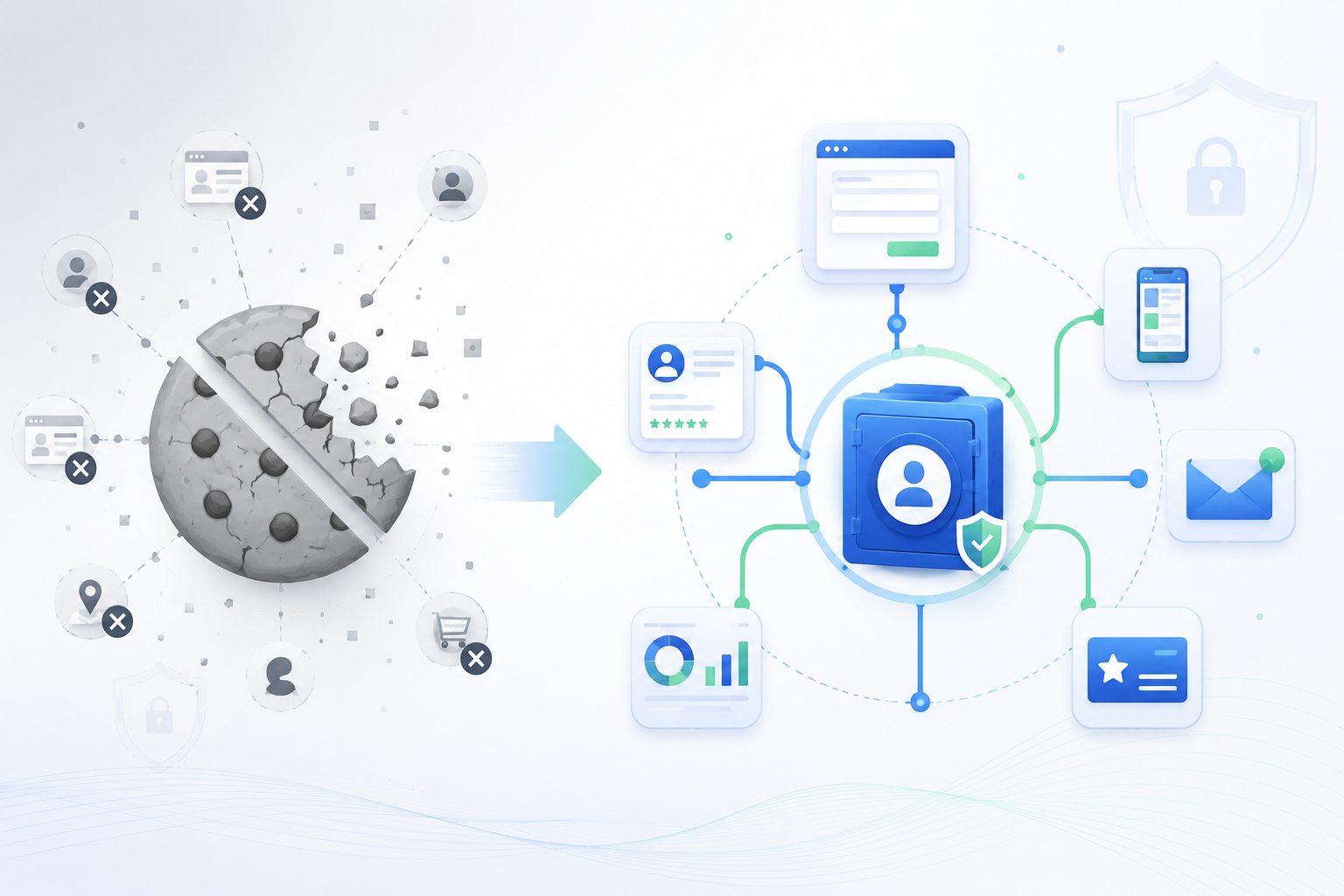
Third-party cookies have shaped digital marketing for many years. Businesses relied on them to understand customer behavior, measure campaign performance, and deliver personalized experiences. As browsers continue to phase out third-party cookies and privacy expectations grow stronger, companies must rethink how they collect and use customer information.
The shift is not simply about replacing one technology with another. It is about creating stronger relationships with customers while respecting their privacy. Businesses that invest in first-party data today will be in a much better position to improve customer experiences, increase conversion rates, and make better business decisions.
At Product Siddha, we help businesses build intelligent automation solutions that make first-party data more valuable. By combining AI automation, CRM integration, and business intelligence dashboards, organizations can transform customer information into meaningful business insights while remaining compliant with evolving privacy standards.
Why Third-Party Cookies Are Going Away
Third-party cookies allow websites to track users across multiple domains. While this helped advertisers target audiences effectively, growing concerns about privacy have led browsers like Google Chrome, Safari, and Firefox to reduce or eliminate third-party cookie support.
Several factors have accelerated this change.
- Increased privacy regulations
- Higher customer expectations for transparency
- Browser-level tracking restrictions
- Greater focus on user consent
This shift encourages businesses to rely on information customers willingly share through direct interactions.
What Is First-Party Data?
First-party data is information collected directly from your customers through your own digital channels.
Examples include:
| Source | Type of Data Collected |
| Website Forms | Contact information |
| CRM Systems | Customer profiles |
| Mobile Apps | User behavior |
| Email Campaigns | Engagement metrics |
| Customer Support | Purchase history and feedback |
| Online Orders | Transaction details |
| Product Usage | Feature adoption and preferences |
Unlike third-party data, first-party information belongs to your business and is collected with customer awareness and consent.
Build Trust Before Collecting Data
The strongest first-party data strategy begins with trust.
Customers are more willing to share information when they clearly understand:
- Why data is collected
- How it will be used
- What value they receive in return
Simple privacy policies, transparent consent forms, and honest communication encourage higher participation.
For example, an online retailer offering personalized product recommendations in exchange for customer preferences often achieves better engagement than businesses collecting information without explanation.
Improve Data Collection Across Every Customer Touchpoint
Every customer interaction creates an opportunity to gather meaningful information.
Important touchpoints include:
- Newsletter signups
- Contact forms
- Customer portals
- Live chat conversations
- Product registrations
- Loyalty programs
- Customer surveys
- Webinar registrations
Instead of asking for excessive information upfront, businesses should collect data gradually as customer relationships develop.
This approach creates a better user experience while improving data quality.
Connect Your CRM with Marketing Systems
Collecting first-party data is only the first step.
Businesses also need connected systems that organize customer information into one reliable source.
CRM automation helps businesses:
- Maintain accurate customer profiles
- Track customer journeys
- Identify buying behavior
- Personalize communications
- Improve sales forecasting
At Product Siddha, CRM automation solutions connect multiple business systems so teams can work with consistent customer information rather than disconnected spreadsheets.
Use AI to Make First-Party Data More Valuable
Artificial Intelligence helps businesses identify patterns that are difficult to detect manually.
AI can analyze:
- Customer purchasing habits
- Website navigation
- Product interests
- Email engagement
- Support requests
- Customer lifetime value
These insights allow businesses to deliver more relevant recommendations while reducing unnecessary marketing efforts.
Rather than relying on third-party tracking, organizations can make smarter decisions using their own customer information.
Real Example – Product Siddha’s Data Automation Approach
One of the core strengths of Product Siddha is helping businesses integrate customer data across multiple operational systems.
For example, a growing B2B company may receive customer information through website forms, CRM software, email marketing platforms, and customer support systems.
Without automation, these datasets often remain isolated.
Product Siddha’s automation services help connect these systems into a unified workflow. Customer information automatically flows between platforms, reducing duplicate records and improving reporting accuracy.
Business intelligence dashboards then transform this information into visual reports that help decision-makers identify customer trends, sales opportunities, and operational improvements.
Instead of spending hours preparing reports manually, teams can focus on improving customer relationships.
Create Better Customer Experiences
First-party data allows businesses to personalize experiences without invading customer privacy.
Some practical examples include:
- Product recommendations based on previous purchases
- Personalized onboarding emails
- Renewal reminders
- Location-specific offers
- Customized dashboards
- Relevant educational content
Personalization works best when it solves customer problems rather than simply increasing marketing activity.
Measure the Right Business Metrics
A successful first-party data strategy depends on meaningful measurement.
Useful performance indicators include:
| KPI | Business Value |
| Customer Retention | Measures loyalty |
| Repeat Purchase Rate | Tracks returning customers |
| Email Engagement | Indicates content relevance |
| Customer Lifetime Value | Shows long-term profitability |
| Lead Conversion Rate | Measures sales efficiency |
| Customer Satisfaction | Reflects service quality |
Business Intelligence Dashboards make these metrics easier to understand through real-time visualization.
Strengthen Data Governance
As businesses collect more customer information, maintaining data quality becomes increasingly important.
Good governance includes:
- Regular database cleanup
- Permission management
- Secure storage
- Role-based access
- Data validation
- Compliance monitoring
Clean data improves reporting accuracy while reducing operational errors.
Prepare for the Future
Cookie deprecation is only one part of a larger movement toward responsible data practices.
Organizations that invest in first-party data today will be better prepared for future privacy regulations and changing customer expectations.
Instead of depending on external tracking technologies, businesses can create long-term value by understanding their own customers more effectively.
With intelligent automation, connected CRM systems, and business intelligence reporting, organizations gain deeper insights while maintaining customer trust.
Product Siddha helps businesses build these connected ecosystems through AI automation services, CRM automation solutions, and business intelligence dashboards that turn customer data into actionable business intelligence.
Key Takeaways
The end of third-party cookies represents an opportunity rather than a limitation.
Businesses that prioritize first-party data collection, strengthen customer trust, integrate business systems, and apply AI-driven insights will remain competitive in an increasingly privacy-focused environment.
At Product Siddha, we help organizations simplify this transition through intelligent automation, connected data systems, and scalable analytics solutions that support sustainable business growth.