
How Email Automation Becomes a Revenue Channel When Done Right
From Inbox Noise to Business Asset
Most inboxes are crowded. Buyers skim subject lines, delete without opening, and move on. This reality has led many teams to treat email as a support tool rather than a source of revenue. When email performance stalls, the channel is often blamed instead of the approach behind it.
Email Automation changes this equation when it is built with purpose. Instead of sending campaigns on a schedule, strong teams design systems that respond to user behavior, timing, and intent. When done carefully, email stops being a reminder channel and starts acting as a steady contributor to revenue.
This shift does not come from clever wording or volume. It comes from structure, data, and restraint.
Why Email Often Fails to Drive Revenue
Email fails when it is disconnected from user behavior. Messages are sent because a calendar says so, not because a user action triggered them. Content is generic because segmentation is shallow. Results are measured by open rates instead of outcomes.
Another common issue is over-automation. Teams set up dozens of flows without understanding how users actually move through the product or store. Messages overlap. Timing feels random. Trust erodes.
Email Automation works when it mirrors how customers already behave. The system should feel observant, not intrusive.
The Difference Between Automated Email and Automated Thinking
Sending automated emails is easy. Automating decisions is harder. The best Email Automation systems are built around decision points.
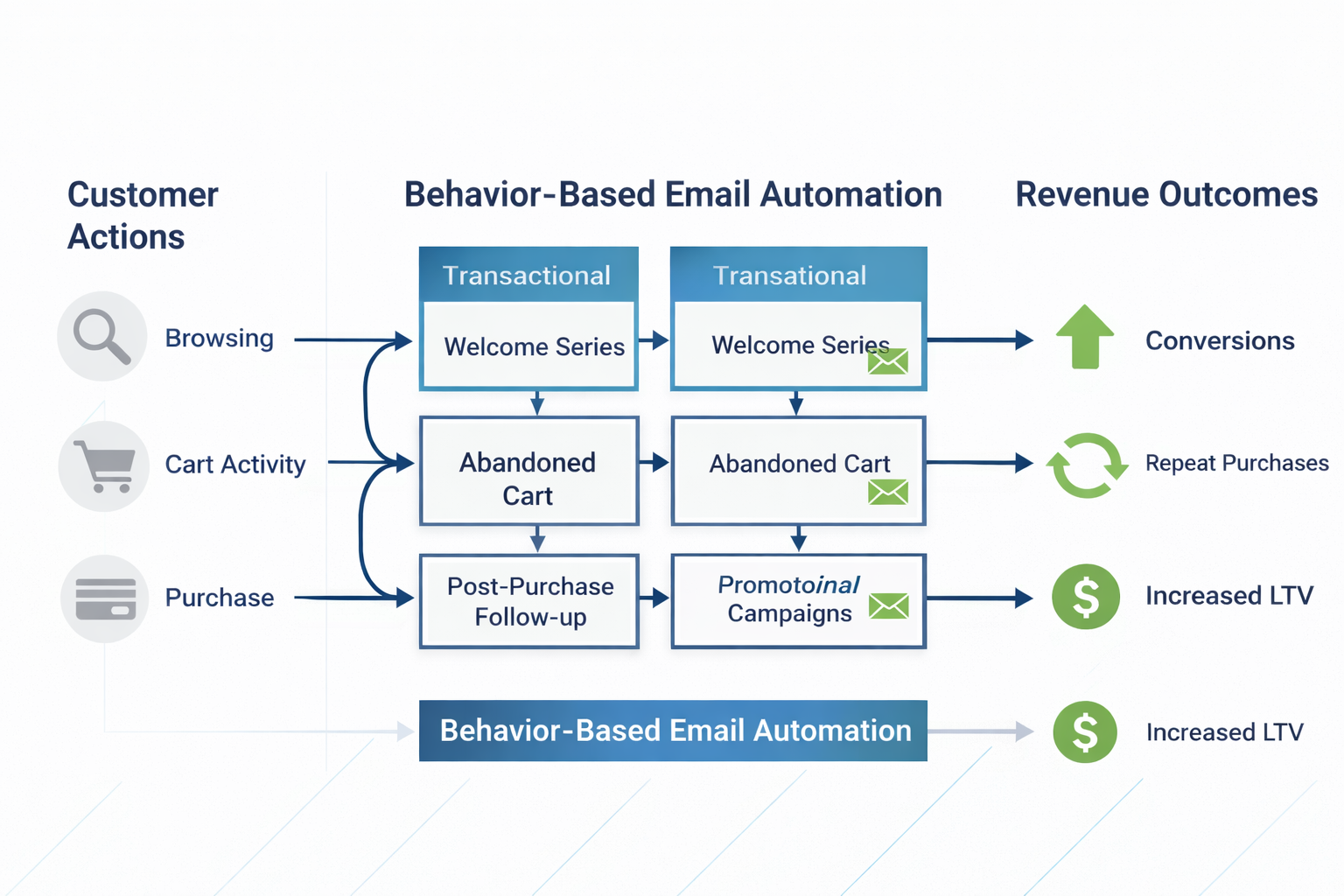
A user browses but does not purchase. A customer buys once and disappears. A subscriber reads pricing pages repeatedly. Each of these actions signals intent. The role of automation is to respond with relevance, not repetition.
Product Siddha has seen this pattern across industries. Automation that reacts to real behavior consistently outperforms automation based on assumptions.
Revenue Starts with Clean Inputs
No Email Automation system performs well without reliable data. This includes event tracking, purchase history, and lifecycle stages.
In a Shopify brand engagement where Product Siddha helped boost email revenue using Klaviyo, the first step was not writing emails. It was cleaning event data. Product views, add-to-cart actions, and purchase confirmations were audited and corrected.
Once the data reflected reality, automation flows were rebuilt around customer actions. Browse abandonment, post-purchase follow-ups, and replenishment reminders were timed based on actual behavior, not guesses. Revenue lift followed because the messages made sense to the recipient.
This example highlights a quiet truth. Revenue growth through email usually starts with better inputs, not louder messages.
The Technology Stack Behind Revenue-Driven Email Automation
Email Automation becomes a revenue channel only when it is supported by the right technical foundation. Without a connected stack, even well-written automation flows fail to deliver consistent results.
At a minimum, revenue-focused teams rely on four layers of technology.
The first layer is data collection. Tools like Segment, Mixpanel, or native platform tracking capture user actions such as browsing, cart activity, purchases, and feature usage. These events form the raw signals that automation depends on.
The second layer is the email delivery and automation platform. Systems such as Klaviyo, HubSpot, Customer.io, or Brevo handle workflows, triggers, and message sequencing. These tools decide when and to whom an email is sent.
The third layer is customer context storage. This is often a CRM or data warehouse where user attributes, lifecycle stages, and historical behavior are stored and updated. Without this layer, personalization remains shallow.
The final layer is analytics and attribution. Dashboards and reporting tools connect email actions to outcomes like conversions, repeat purchases, and lifetime value. This closes the loop between automation and revenue.
In practice, Product Siddha has seen that email automation starts producing revenue only after these layers are properly connected. Writing emails comes later. Infrastructure comes first.
Timing Matters More Than Frequency
Many teams focus on how often emails are sent. Strong teams focus on when.
A well-timed message sent once can outperform five poorly timed reminders. Email Automation allows teams to respond in hours or days based on user action, rather than batching communication.
For example, in a SaaS coaching platform where full-funnel attribution was implemented, automated emails tied to trial usage proved more effective than weekly newsletters. Messages arrived after meaningful actions, such as completing a module or skipping sessions. Engagement increased because timing matched intent.
Email Automation succeeds when it respects the user’s rhythm.
Content That Supports Decisions
Revenue-focused email content does not persuade aggressively. It supports decisions already forming.
This means explaining value clearly, reducing friction, and answering common questions. It avoids urgency tactics that feel artificial.
Strong teams write emails as if they are continuing a conversation, not starting one. The tone stays helpful and direct.
In fintech environments, such as a HubSpot Marketing Hub setup for a growing brand, automated emails focused on clarity. Feature explanations, usage reminders, and simple prompts guided users toward action. Conversion followed because confusion was reduced.
Segmentation Is About Behavior, Not Labels
Many Email Automation systems rely on static lists. These lists age quickly.
Behavioral segmentation adapts in real time. Users move in and out of flows based on what they do, not what they were once tagged as.
This approach reduces wasted sends and increases relevance. It also keeps automation manageable.
Across Product Siddha’s analytics and automation projects, behavioral triggers consistently outperform demographic or role-based segmentation. People reveal intent through action.
Personalization at Scale Without Losing Control
Personalization does not mean writing a different email for every user. At scale, it means designing systems that adapt automatically based on behavior.
Revenue-focused Email Automation uses dynamic content, conditional logic, and real-time data. A returning customer sees different messaging than a first-time visitor. A high-intent user receives follow-ups sooner than a casual browser.
This approach depends on rules, not guesswork. For example, users who view pricing pages multiple times may enter a value-focused email flow. Customers who complete a purchase may receive education or replenishment reminders instead of discounts.
In real implementations, including automation setups using tools like Klaviyo and HubSpot, Product Siddha has seen that fewer, smarter rules outperform complex personalization attempts. Over-personalization increases maintenance and introduces errors.
Personalization at scale works best when it is predictable, testable, and tied directly to user actions. The goal is relevance, not novelty.
Measuring Revenue Without Guesswork
Attribution matters. If teams cannot link email activity to revenue, the channel remains undervalued.
Top teams track assisted conversions, repeat purchases, and time-to-purchase. They review performance at the flow level, not just the campaign level.
Custom dashboards built by stage help here. By separating acquisition, activation, and retention emails, teams see which automation drives real value. Decisions improve because feedback loops are clear.
Email Automation becomes a revenue channel when performance is measured honestly.
Avoiding the Common Automation Traps
Even strong teams stumble. Some automate too early without understanding customer journeys. Others copy flows from different industries without adapting them.
Another trap is treating automation as set-and-forget. Customer behavior changes. Products evolve. Automation must be reviewed and adjusted.
The most effective teams schedule regular audits. They remove underperforming flows, refine triggers, and simplify where needed.
Restraint is a competitive advantage in Email Automation.
When Email Works Quietly in the Background
The best email systems do not draw attention to themselves. They support users at the right moments and then step back.
Revenue grows steadily, not in spikes. Teams spend less time debating subject lines and more time improving the product and customer experience.
This is where Email Automation belongs. Not as a megaphone, but as a reliable channel that compounds over time.
Building Revenue Through Careful Design
Email has survived decades of digital change because it adapts. Automation extends its usefulness, but only when guided by thoughtful design.
Product Siddha’s work across analytics, automation, and lifecycle systems shows that email revenue is rarely accidental. It is built through clean data, clear intent, and disciplined execution.
When Email Automation reflects how customers think and act, it stops feeling like marketing. It becomes part of the business engine.