
Indian Real Estate Firms Are Quietly Replacing CRM Work with AI Agents
A Practical Shift Inside Sales Offices
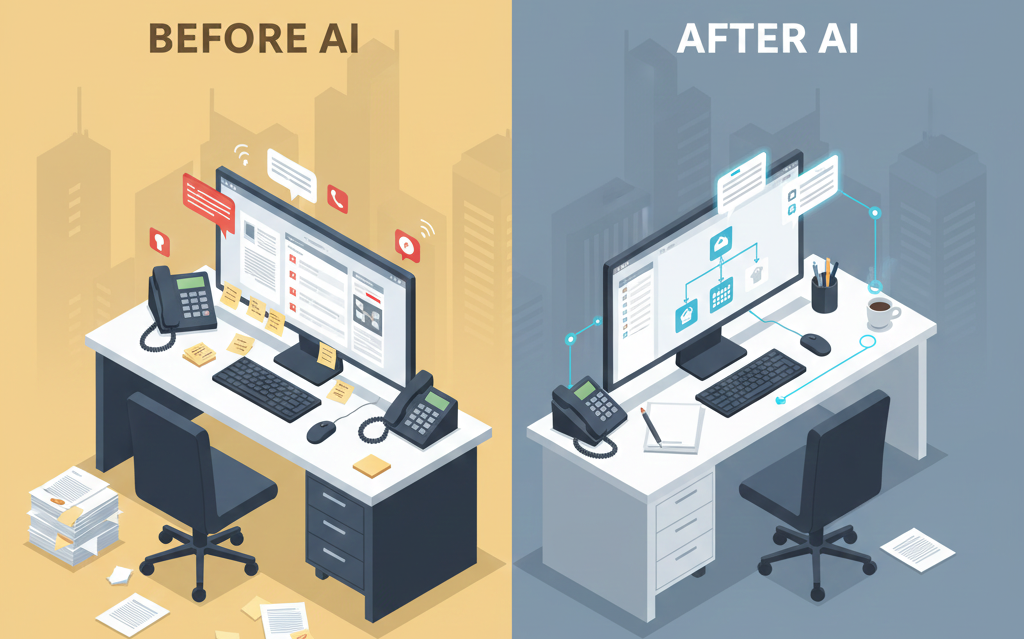
Indian real estate firms have never lacked effort. Sales teams work long hours, juggle calls, update records, and follow up with buyers who may or may not show up for site visits. What they have lacked is time. For years, CRM systems promised order and efficiency, yet many teams found themselves spending more time feeding the system than selling property.
Over the past two years, a quiet shift has begun. Instead of hiring more CRM executives or forcing agents to log every interaction, firms are introducing AI Agents that handle routine sales operations in the background. This is not about futuristic experimentation. It is about removing friction from everyday work.
AI Agents now answer inquiries, qualify leads, schedule site visits, and keep records updated without constant human input. In many Indian real estate offices, CRM dashboards are no longer the center of activity. The real work happens through automated agents that act, respond, and learn continuously.
Why Traditional CRM Work Started Breaking Down
CRMs were designed for structured sales environments. Indian real estate rarely fits that model. Leads come from portals, WhatsApp, phone calls, walk-ins, and referrals. Agents are often on the move, not sitting at desks updating fields and notes.
As a result, CRMs became partial records at best. Follow-ups were missed. Lead response times stretched from minutes to hours. Managers relied on incomplete reports, while agents relied on memory and personal notebooks.
The problem was not the software. It was the assumption that humans would consistently perform repetitive data work under pressure. AI Agents remove that assumption. They listen, log, update, and trigger actions automatically.
What AI Agents Actually Do in Real Estate Operations
AI Agents are not chatbots answering basic questions and stopping there. In real estate workflows, they act as digital coordinators.
They respond to incoming leads across channels, including web forms, calls, and messaging apps. They ask qualifying questions based on budget, location preference, and timeline. They assign leads to the right sales agent and book site visits based on availability.
After each interaction, the agent updates records, sets reminders, and triggers follow-ups. No manual entry. No forgotten notes. The system stays current because the agent never stops working.
This shift changes the role of human sales teams. Agents focus on negotiation, property walkthroughs, and closing. AI Agents handle the rest.
From Lead to Site Visit Through Voice AI Automation
One clear example of this approach can be seen in Product Siddha’s work on voice AI automation for a real estate platform. The goal was simple. Reduce lead drop-off between inquiry and site visit.
Instead of routing calls to busy sales executives, a voice-based AI Agent answered inbound calls, collected buyer intent, confirmed interest, and scheduled visits automatically. The agent followed up with reminders and handled rescheduling without human intervention.
The result was not just faster response times. It was consistency. Every lead received the same level of attention, regardless of time of day or call volume. Sales teams reported higher show-up rates and fewer wasted follow-ups.
This type of automation replaces a large portion of CRM-related work without replacing salespeople.
How Indian Firms Are Using AI Agents Instead of CRM Tasks
Across India, developers and brokerage firms are adopting AI Agents in specific areas rather than ripping out systems overnight.
Lead qualification is often the first step. AI Agents filter serious buyers from casual inquiries before assigning them to agents.
Follow-up management comes next. Agents no longer chase reminders or update statuses. AI Agents track conversations and trigger the next action automatically.
Reporting is another major shift. Instead of manual dashboards updated at the end of the day, managers view live performance data generated by agent activity.
CRMs still exist in many setups, but they operate quietly in the background. AI Agents interact with them, update them, and extract insights without requiring constant human input.
Beyond Real Estate, Proof from Other Industries
The strength of AI Agents becomes clearer when viewed across industries. Product Siddha has implemented similar automation models for rental agencies, SaaS platforms, and marketplaces.
In the case of a French rental agency, MSC-IMMO, AI automation handled inquiry routing, follow-ups, and scheduling. The operational logic closely mirrors Indian real estate workflows, where speed and responsiveness matter more than polished CRM records.
Another example comes from building custom dashboards by stage. Instead of asking teams to update metrics manually, AI Agents populated dashboards automatically based on real activity. The same principle applies to real estate sales funnels.
These case studies show that AI Agents work best when they remove routine decisions from human hands.
Data Accuracy Improves When Humans Are Removed from Data Entry
One unexpected outcome of AI Agent adoption is better data quality. Human-entered CRM data often suffers from delays, shortcuts, and inconsistency. AI Agents log interactions as they happen.
Every call, message, and booking becomes structured data. Over time, firms gain a clearer picture of lead sources, conversion timelines, and agent performance.
This data can support smarter pricing decisions, marketing spend allocation, and inventory planning. The value compounds because the system improves as more interactions flow through it.
What This Means for Sales Teams on the Ground
Sales agents are often wary of automation. In practice, AI Agents reduce pressure rather than increase it.
Agents spend less time on follow-ups that go nowhere. They receive better-qualified leads. Their calendars are managed for them. Conversations start at a higher level of intent.
Managers gain visibility without micromanagement. Instead of chasing reports, they review outcomes.
This balance is why AI Agents are being accepted more easily than earlier CRM mandates.
A Measured Path Forward for Indian Real Estate Firms
The most successful firms are not rushing to replace everything at once. They introduce AI Agents into one workflow, measure impact, and expand gradually.
Lead handling, site visit coordination, and follow-up automation are natural entry points. Over time, these agents become the operational backbone, while CRM systems fade into a supporting role.
This is not about technology replacing relationships. It is about clearing the path so relationships can actually form.
The New Operating Standard
Indian real estate has always adapted quickly to practical tools. AI Agents fit that tradition. They do not demand perfect processes. They adapt to real ones.
As more firms move away from manual CRM work, the difference will show in response times, buyer experience, and sales efficiency. The advantage will not come from louder marketing claims, but from quieter operations that simply work better.
Product Siddha continues to build and deploy these systems with a focus on real workflows, not theoretical models. The result is automation that feels less like software and more like an extra team member who never misses a follow-up.