
How Real Estate Teams Use AI Automation to Shorten Sales Cycles
Closing the Gap Between First Contact and Final Signature
In real estate, time is rarely neutral. Every extra hour between a new inquiry and a meaningful response lowers the chance of a deal moving forward. Buyers lose interest, sellers explore other options, and agents spend more time chasing updates than closing transactions.
Over the past few years, many real estate teams have begun turning to AI automation not as a replacement for human judgment, but as a way to remove friction from routine work. When done correctly, AI Automation for Real Estate Teams shortens sales cycles by improving speed, consistency, and follow-through at every stage of the funnel.
This shift is not about aggressive marketing tactics or abstract technology promises. It is about practical systems that help teams respond faster, qualify better, and focus their energy where it matters most.
Where Sales Cycles Usually Break Down
Before automation enters the picture, most delays happen in predictable places.
Leads arrive outside business hours and sit unanswered until the next day. Agents manually sort inquiries without clear intent signals. Follow-ups depend on memory, spreadsheets, or overworked CRM notes. Site visit scheduling becomes a chain of back-and-forth messages.
None of these issues are dramatic on their own. Together, they quietly stretch a sales cycle from days into weeks.
AI automation works best when it addresses these small failures of timing and coordination rather than attempting to overhaul the entire sales process at once.
Faster Responses Without Adding Headcount
Speed remains the strongest factor in early-stage conversions. AI-powered systems now allow real estate teams to respond to new inquiries within seconds, regardless of when they arrive.
Chat and voice AI tools can acknowledge interest, ask basic qualifying questions, and route leads to the right agent based on location, budget, or property type. This initial contact feels immediate and organized, not rushed or generic.
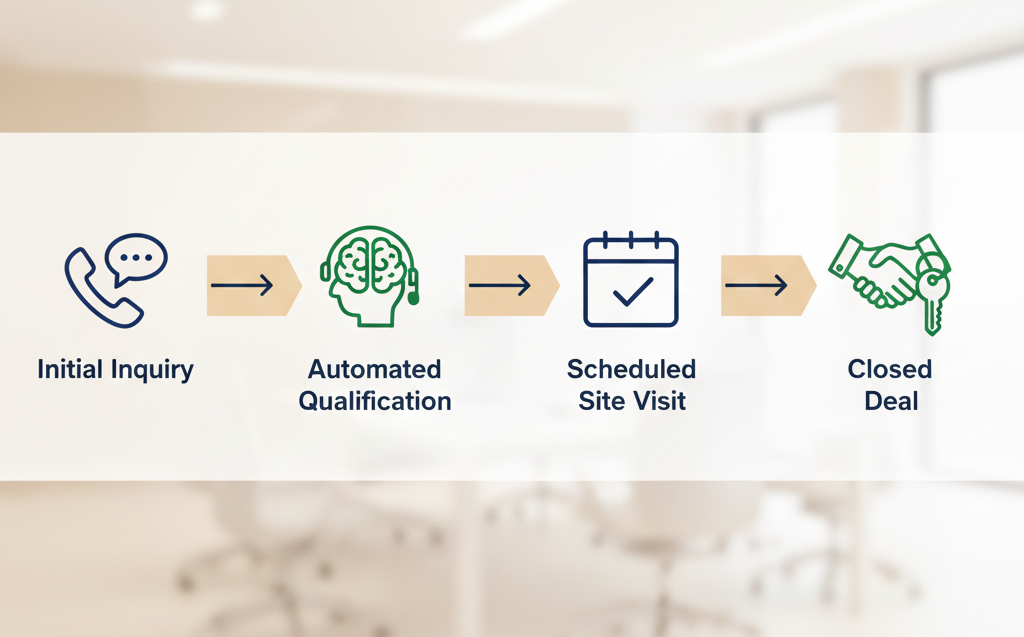
One example comes from Product Siddha’s work on “From Lead to Site Visit – Voice AI Automation for a Real Estate Platform.” In this project, voice AI handled inbound calls, captured intent, and scheduled site visits automatically. Agents no longer spent hours returning missed calls. Prospects moved directly from inquiry to appointment without delay.
Smarter Lead Qualification at Scale
Not every inquiry deserves the same level of attention. AI automation helps teams identify which leads are ready to move forward and which need time.
By analyzing response patterns, engagement history, and basic intent signals, automated systems can tag leads as high, medium, or low priority. Agents see this context before making contact, which changes the tone of the conversation.
Instead of asking surface-level questions, agents can focus on specifics like financing readiness or move-in timelines. This reduces wasted calls and shortens the path to serious discussions.
For teams managing large volumes of inbound traffic, this alone can remove days from the sales cycle.
Clean Data That Supports Faster Decisions
Sales delays often stem from poor visibility. When data is fragmented across tools, teams hesitate. They double-check information, ask for updates, or wait for reports.
Product Siddha has addressed this problem across several projects by building custom dashboards by stage. These dashboards give real estate managers a clear view of where every lead sits, how long each stage takes, and where deals slow down.
With this level of clarity, teams can intervene early. If site visits stall, scheduling workflows are adjusted. If follow-ups lag, automation rules are refined. Decisions are made with evidence, not guesswork.
Automated Follow-Ups That Feel Human
Follow-up is one of the most neglected parts of real estate sales, largely because it is repetitive and time-consuming.
AI automation ensures no lead goes silent. Emails, messages, or reminders are triggered based on behavior rather than fixed schedules. A prospect who views a listing twice receives a different follow-up than one who has gone quiet for a week.
The key is restraint. Well-designed automation supports agents instead of overwhelming prospects. Messaging stays relevant and timely, which keeps conversations alive without pressure.
This balance is central to effective AI Automation for Real Estate Teams.
Shortening the Path to Site Visits
The site visit remains a critical turning point. Delays here often derail deals entirely.
Automation simplifies scheduling by syncing calendars, offering instant time slots, and confirming appointments automatically. Voice AI, chat assistants, and CRM integrations work together to remove manual coordination.
In the previously mentioned Product Siddha real estate platform project, site visit booking times dropped significantly once automation was introduced. Prospects moved from interest to in-person engagement in hours instead of days.
This acceleration has a direct impact on close rates.
Learning From Patterns Across Markets
AI systems do more than execute tasks. They learn from outcomes.
Over time, patterns emerge. Certain property types close faster with evening follow-ups. Some buyer segments respond better to voice calls than messages. Pricing discussions stall at predictable points.
By reviewing these patterns, teams refine their approach. Sales cycles shrink not because agents work harder, but because systems guide them toward what works.
This mindset mirrors Product Siddha’s broader analytics work across industries, including growth-focused dashboards and funnel attribution systems used in SaaS and marketplace environments. The same principles apply clean data, clear signals, and steady optimization.
What Successful Teams Do Differently
Teams that see the strongest results from automation share a few habits.
They start with one or two bottlenecks rather than automating everything at once. They involve agents in workflow design so tools match real conversations. They review performance monthly and adjust rules instead of treating automation as a fixed setup.
Most importantly, they treat AI as operational support, not a sales shortcut.
This approach keeps the process grounded and sustainable.
Moving Faster Without Losing Trust
Shortening a sales cycle should never come at the expense of trust. Real estate remains a relationship-driven business.
AI automation works best when it handles timing, organization, and consistency, allowing agents to focus on judgment, negotiation, and personal connection.
Product Siddha’s work across real estate, marketplaces, and analytics-driven platforms shows that speed and professionalism are not opposing goals. With the right systems, teams move faster while appearing more attentive and reliable.
That balance is what ultimately closes deals sooner and more often.