
Product Analytics Metrics Every SaaS Should Track
Signals That Matter
SaaS growth rarely stalls because of a lack of features. It slows when teams lose sight of how real users interact with the product. Dashboards look busy, reports arrive on time, yet decisions feel reactive. This is where Product Analytics earns its place.
Product Analytics focuses on behavior inside the product. It shows how users move, where they pause, what they repeat, and where they leave. For SaaS businesses, these patterns are often more valuable than revenue reports or campaign data alone. At Product Siddha, most analytics engagements begin with a single question. Which signals actually reflect product health?
This article outlines the Product Analytics metrics every SaaS company should track, why they matter, and how they connect to real operational outcomes.
Active Usage Metrics
Daily Active Users and Monthly Active Users
DAU and MAU remain foundational metrics in Product Analytics. They reveal how often users return and whether the product has become part of a routine. A rising user base with falling activity is an early warning sign.
The ratio between DAU and MAU is often more telling than either number alone. A strong ratio suggests habitual use. A weak ratio points to shallow engagement.
In a Product Siddha project involving a U.S. music streaming app, usage analysis showed a sharp gap between signups and weekly activity. By studying DAU trends by feature, the team discovered that users returned primarily for curated playlists, not social features. This insight redirected development priorities and improved retention without adding new acquisition spend.
Activation Metrics
Time to First Value
Time to First Value measures how quickly a user experiences a meaningful outcome after signing up. In SaaS, this moment defines whether curiosity turns into commitment.
Product Analytics tracks the actions that lead to that first success. It may be creating a dashboard, completing a setup step, or receiving a result.
In a SaaS coaching platform analyzed by Product Siddha, activation time averaged eight days. Funnel analysis revealed that users stalled during data import. Simplifying that step reduced Time to First Value to under three days and lifted trial to paid conversions.
Feature Engagement Metrics
Feature Adoption Rate
Not all features deserve equal attention. Feature adoption rates show which parts of the product users rely on and which ones remain unused.
Product Analytics tools like Mixpanel or Amplitude allow teams to track usage by role, plan, or cohort. This prevents product decisions based on internal assumptions.
In a ride hailing platform project, Product Siddha used feature level analytics to understand why a driver earnings view saw low usage. The data showed drivers preferred real time notifications over static reports. The interface was redesigned accordingly, increasing daily engagement among active drivers.
Retention Metrics
Cohort Retention Analysis
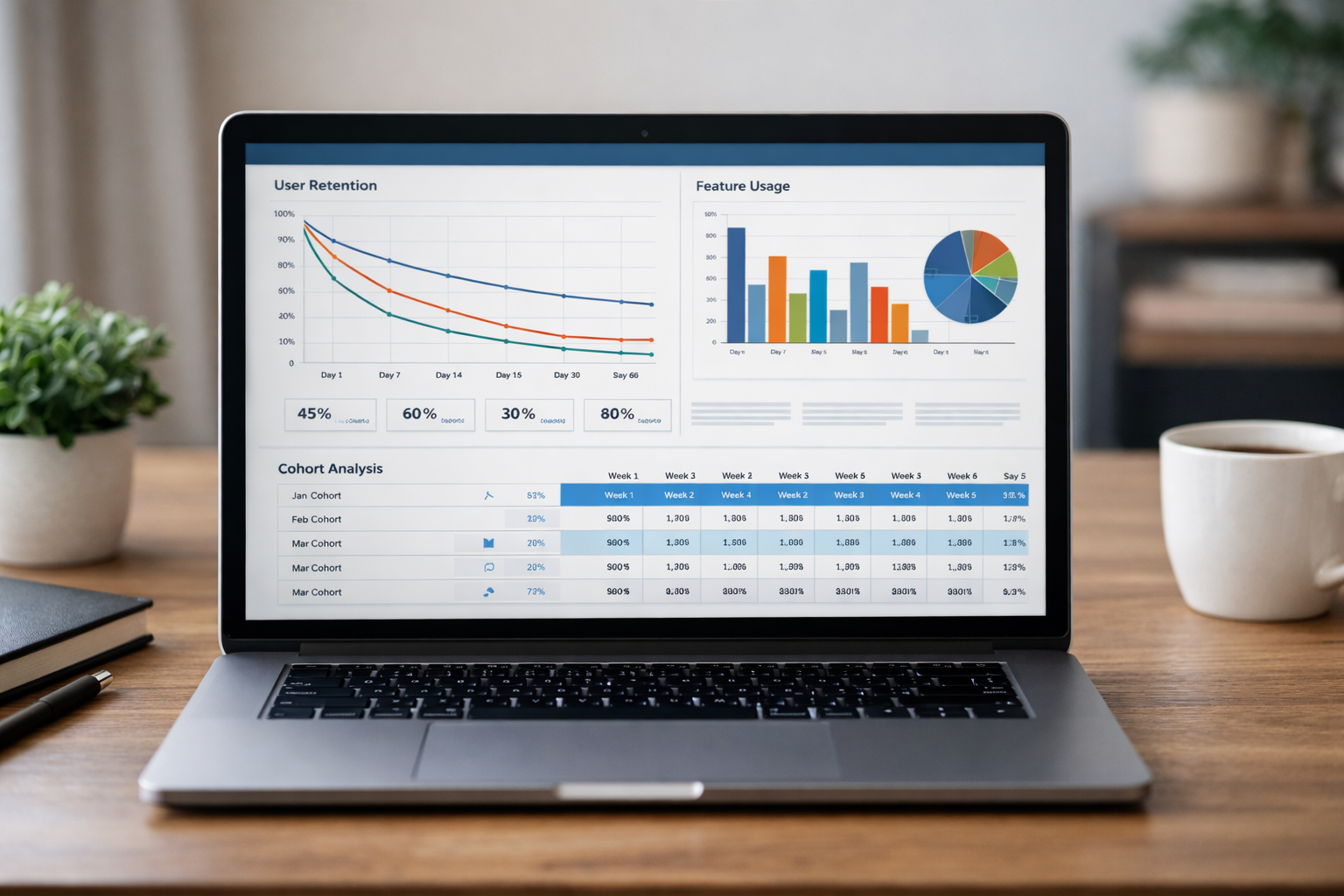
Retention tells the long story of a product. Cohort analysis compares users based on signup period or behavior, showing how engagement changes over time.
Product Analytics highlights when and why users disengage. This is far more useful than looking at churn numbers alone.
In one Product Siddha engagement focused on full funnel attribution for a SaaS coaching platform, retention cohorts revealed that users who completed two sessions in their first week stayed three times longer than those who completed only one. This insight reshaped onboarding messaging and in app nudges.
Engagement Depth Metrics
Session Frequency and Event Volume
Session counts and event frequency measure how deeply users interact with a product. A single login may signal curiosity. Repeated actions signal value.
Product Analytics helps separate passive usage from meaningful engagement. High session counts with low event activity often point to confusion or friction.
| Metric | What It Shows | Why It Matters |
|---|---|---|
| Sessions per user | Visit frequency | Habit formation |
| Events per session | Interaction depth | Feature usefulness |
| Avg session duration | Focus time | User intent |
Conversion Metrics
Funnel Conversion Rates
Conversion funnels show how users move from one key action to the next. This applies to onboarding, upgrades, renewals, or feature adoption.
In a real estate platform project involving voice automation, Product Siddha mapped the journey from lead capture to site visit booking. Product Analytics revealed that users who engaged with voice follow ups converted faster than those relying on email alone. This allowed the team to double down on high intent channels.
Revenue Linked Product Metrics
Expansion and Usage Based Revenue Signals
For SaaS models tied to usage, Product Analytics connects behavior directly to revenue. Metrics like seats used, reports generated, or API calls consumed reveal expansion opportunities.
Rather than pushing blanket upsells, teams can identify accounts already showing growth signals.
In a fintech marketing hub setup, Product Siddha used usage thresholds to trigger sales alerts only when accounts showed sustained product adoption. This reduced sales friction and improved close rates.
Operational Metrics
Error Rates and Performance Events
Product Analytics is not limited to growth. It also protects reliability. Tracking error events, failed actions, and performance delays helps teams fix issues before support tickets spike.
In a custom dashboard project, analytics revealed that slow load times correlated directly with abandoned sessions. Infrastructure changes improved both performance and engagement.
Putting Metrics Into Practice
Tracking metrics alone does not improve outcomes. Value comes from consistency, context, and ownership. SaaS teams should define a small set of core Product Analytics metrics tied to product goals.
At Product Siddha, analytics implementations often focus on clarity over volume. Clean event definitions, reliable tracking, and shared dashboards matter more than complex reports.
Measuring What Endures
Product Analytics gives SaaS teams a way to listen without interruption. It captures behavior as it happens and reveals truths users may never articulate.
The most effective SaaS companies track fewer metrics, but they track them well. They understand which signals reflect value, which predict growth, and which warn of risk.
When Product Analytics becomes part of everyday decision making, products improve quietly and steadily. That kind of progress tends to last.