
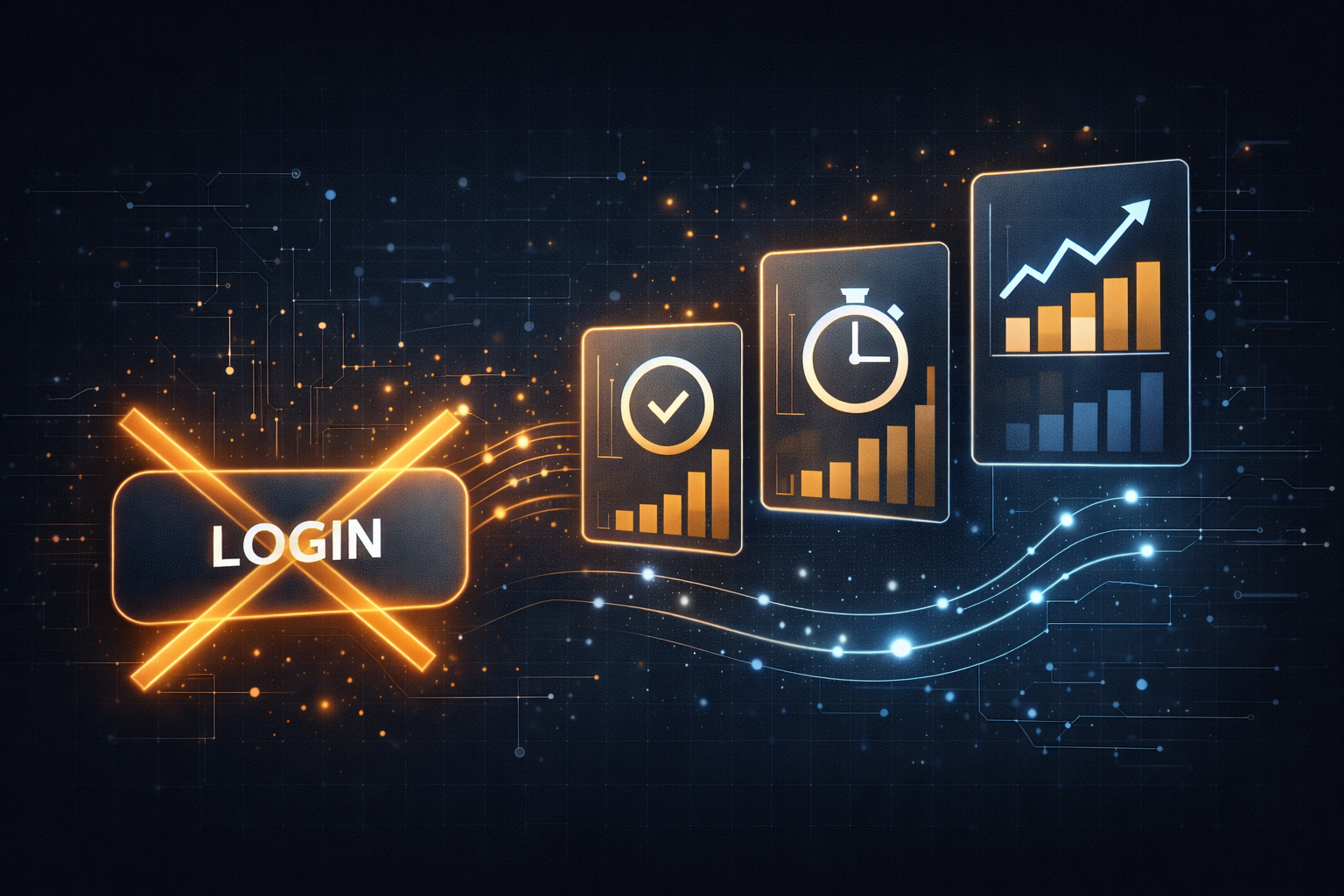
Why High Login Frequencies Are Lying to You About B2B Product-Market Fit (And the 3 Metrics to Track Instead)
The Illusion of Activity
In many B2B products, login frequency becomes a comfort metric. Teams see users returning often and assume the product is working well. On the surface, it feels reasonable. If users log in every day, they must be finding value.
This assumption often fails under closer inspection.
Frequent logins can signal friction, confusion, or dependency rather than satisfaction. A user who must log in repeatedly to complete a simple task is not experiencing efficiency. They are compensating for gaps in the system.
For companies building or scaling with AI Automation Services, this distinction matters. Automation aims to reduce manual effort. If login frequency rises while outcomes remain flat, the product may be adding work instead of removing it.
Where Login Metrics Fall Short
Login frequency measures presence, not progress. It tells you that users are there, but it does not explain what they achieved.
Consider a procurement platform used by mid-sized enterprises. A buyer logs in five times a day to track approvals, follow up on delays, and correct errors. The metric shows high engagement. The reality shows a broken workflow.
There are three common reasons why login data misleads teams:
- Task Fragmentation
Users must return multiple times to complete one job. - System Dependency
The product becomes a checkpoint rather than a solution. - Lack of Outcome Tracking
Teams measure activity instead of results.
The Three Metrics That Matter
To understand product-market fit in a B2B setting, you need metrics tied to outcomes and value delivery. Below are three that offer a clearer picture.
1. Task Completion Rate
This metric tracks whether users successfully finish the actions they came to perform.
For example, in a CRM system, the relevant task might be moving a lead from initial contact to closed deal. If users log in frequently but fail to complete this process, the product is not meeting its purpose.
2. Time to Value
Time to value measures how quickly a user reaches a meaningful outcome after entering the product.
Shorter times indicate clarity and efficiency. Longer times suggest confusion or unnecessary steps.
In environments supported by AI Automation Services, this metric becomes critical. Automation should shorten the path between intent and result.
For instance, in the case study From Lead to Site Visit – Voice AI Automation for a Real Estate Platform, automation reduced the time between initial inquiry and site visit scheduling. Users did not need repeated logins. The system handled follow-ups and coordination.
The result was a smoother experience with fewer touchpoints.
3. Outcome Retention
Outcome retention looks beyond usage frequency. It asks whether users continue to achieve results over time.
A finance team using reporting software may log in daily. That alone does not indicate success. If monthly reports are accurate, timely, and require less manual correction, the product is delivering value.
Comparing Metrics
| Metric Type | What It Measures | Insight Provided |
|---|---|---|
| Login Frequency | User presence | Surface-level activity |
| Task Completion | Work finished | Functional effectiveness |
| Time to Value | Speed of results | Efficiency and clarity |
| Outcome Retention | Sustained success | Long-term product fit |
The Role of AI Automation Services
AI Automation Services play a practical role in shifting focus from activity to outcomes. When implemented correctly, they reduce the need for repeated user actions.
At Product Siddha, automation projects often begin with process mapping. Teams identify where users spend time and where delays occur. From there, workflows are streamlined.
In the case study AI Automation Services for French Rental Agency MSC-IMMO, automation reduced manual follow-ups and simplified booking workflows. Users interacted less frequently with the system, but results improved.
This is an important signal. Reduced interaction combined with better outcomes suggests strong alignment between product and user needs.
A Practical Approach to Measurement
To move away from misleading metrics, teams should adopt a structured approach.
Step 1: Define Core Outcomes
Identify the primary value your product delivers. This could be revenue generation, time savings, or operational accuracy.
Step 2: Map User Journeys
Break down how users move from entry to outcome. Identify each step clearly.
Step 3: Instrument Key Events
Track actions that indicate progress, not just presence.
Step 4: Review Patterns Regularly
Look for bottlenecks, repeated actions, and delays.
A Subtle Warning
There is a temptation to celebrate high engagement numbers. They are easy to present and easy to understand. However, they rarely tell the full story.
A product that demands constant attention may appear active while quietly increasing user fatigue. Over time, this leads to churn.
In contrast, a well-designed system often requires fewer interactions. It works in the background, supports decisions, and delivers results with minimal effort.
Closing Note
Product-market fit in B2B environments is not reflected in how often users log in. It is reflected in how effectively they achieve their goals.
High login frequency can mask inefficiencies, inflate confidence, and delay necessary improvements. By focusing on task completion, time to value, and outcome retention, teams gain a clearer understanding of their product’s role.
For organizations investing in Product Siddha AI Automation Services, this shift is essential. Automation should simplify work, not multiply it. When metrics align with outcomes, the path forward becomes easier to see.