
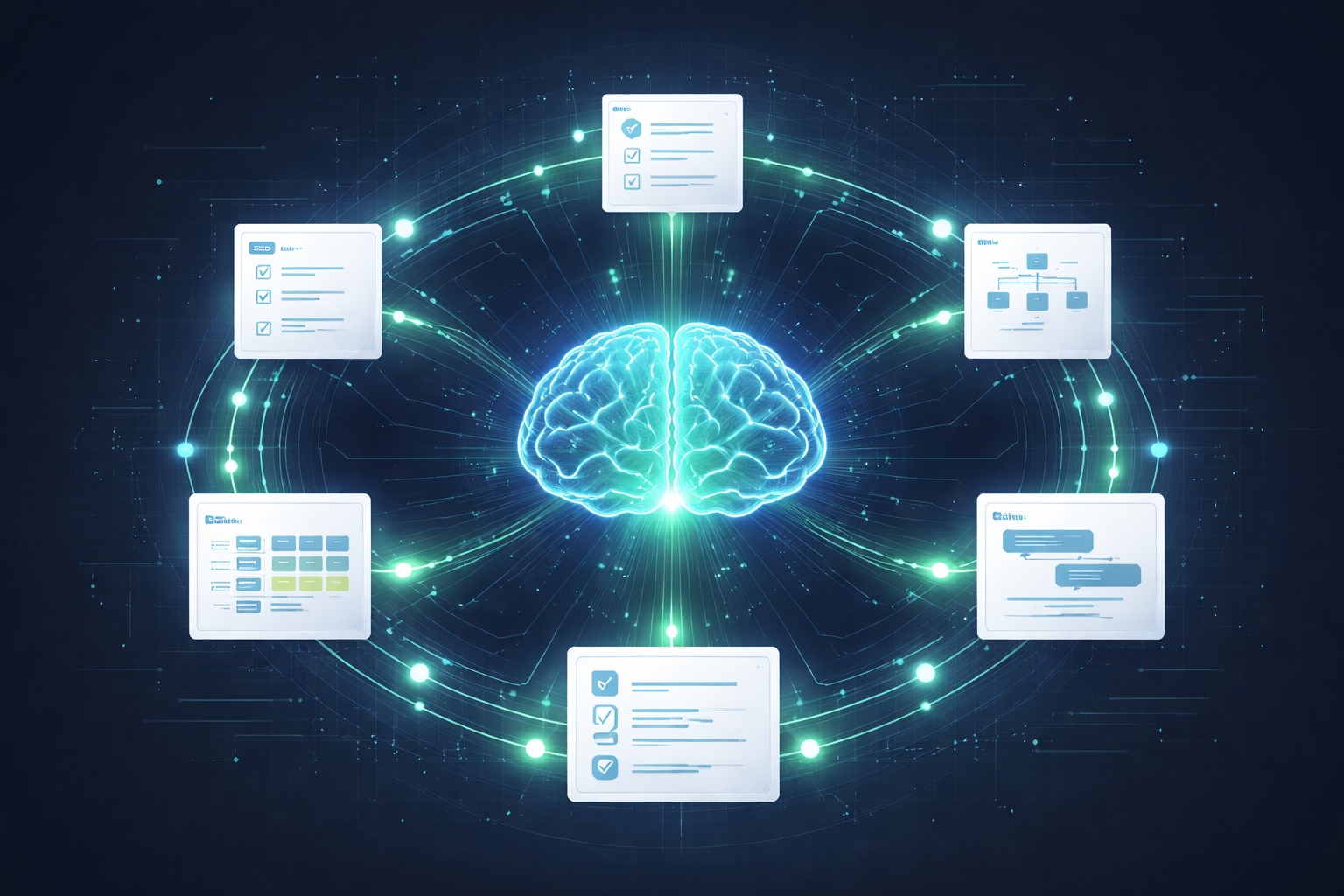
How to Train an Internal LLM on Your B2B Agency SOPs
A Practical Starting Point
Many B2B agencies reach a point where growth begins to strain internal systems. Teams expand, processes multiply, and knowledge becomes scattered across documents, tools, and people. Standard Operating Procedures exist, but they are often buried in folders or outdated. This is where an internal language model can help.
Training an internal LLM on your SOPs allows your team to access institutional knowledge in a consistent and reliable way. Instead of searching through documents or asking senior staff, empgloyees can get precise answers based on how your agency actually operates.
For firms offering AI Automation Services, this is not a theoretical advantage. It is a direct path to improving delivery speed, reducing errors, and maintaining consistency across projects.
What an Internal LLM Actually Does
An internal LLM is not just a chatbot trained on generic data. It is a system that understands your workflows, your terminology, and your expectations. When trained correctly, it becomes a working layer within your operations.
It can:
- Answer process-related questions
- Guide new hires through tasks
- Suggest next steps in a workflow
- Draft responses based on internal guidelines
- Reduce dependency on tribal knowledge
For agencies like Product Siddha, which work across MarTech implementation and AI Automation Services, this creates a unified layer between strategy and execution.
Preparing Your SOPs for Training
Before any model training begins, your SOPs must be structured properly. Most agencies overlook this step and face poor results later.
Key Preparation Steps
- Audit Existing SOPs
Remove outdated or duplicate documents. Keep only what reflects current operations. - Standardize Format
Each SOP should follow a clear structure:- Objective
- Steps
- Tools used
- Expected output
- Break Down Complex Processes
Long documents should be divided into smaller, logical units. This improves retrieval accuracy. - Remove Ambiguity
Replace vague instructions with clear, actionable steps.
Choosing the Right Training Approach
There are two common ways to train an internal LLM:
1. Retrieval-Based Systems (Recommended)
This method connects your SOP database to the model. The model retrieves relevant information when needed.
Benefits:
- Faster implementation
- Easier updates
- Lower cost
2. Fine-Tuning
This involves training the model directly on your SOP data.
Benefits:
- Deeper contextual understanding
- Better performance for repetitive workflows
For most agencies offering AI Automation Services, a hybrid approach works best. Retrieval ensures accuracy, while selective fine-tuning improves usability.
Real Example from Product Siddha
A useful example comes from the case study titled From Lead to Site Visit – Voice AI Automation for a Real Estate Platform.
The challenge was not just automation. It was consistency. Different team members handled lead responses in slightly different ways, which affected conversion rates.
What Changed
- SOPs for lead handling were documented clearly
- A structured dataset was created from these SOPs
- An internal AI layer was built to guide interactions
Outcome
- Faster response times
- Consistent communication tone
- Improved lead-to-visit conversion
This is a clear demonstration of how internal knowledge, when structured and accessible, can directly impact business outcomes.
Integrating the Model into Daily Work
Training the model is only one part of the process. Adoption determines success.
Integration Points
- CRM systems
- Project management tools
- Internal dashboards
- Communication platforms
For example, when a team member updates a pipeline stage, the system can suggest the next action based on SOP guidelines. This reduces decision fatigue and keeps workflows aligned.
Use Cases Across Teams
| Team | Use Case |
|---|---|
| Sales | Lead qualification guidance |
| Marketing | Campaign setup instructions |
| Product | Feature rollout checklists |
| Operations | Process compliance verification |
| Support | Standard response generation |
Data Security and Access Control
An internal LLM must respect data boundaries. Not every SOP should be accessible to every team member.
Best Practices
- Role-based access control
- Data encryption
- Audit logs for queries
- Regular review of permissions
This is especially important for agencies working with sensitive client data under AI Automation Services engagements.
Measuring Performance
You cannot improve what you do not measure.
Key Metrics
- Response accuracy
- Query resolution time
- SOP usage frequency
- Reduction in internal queries
Over time, these metrics show whether the system is improving operational efficiency.
Common Pitfalls
Even experienced teams make avoidable mistakes.
- Training on unstructured data
- Ignoring user feedback
- Overcomplicating the system
- Failing to update SOPs regularly
A model is only as good as the data it relies on. If your SOPs change, your system must reflect those changes quickly.
Final Thoughts
Training an internal LLM on your SOPs is not a technical experiment. It is an operational decision. It reflects how seriously an agency treats its own processes.
Product Siddha’s experience across automation, analytics, and product systems shows that structured knowledge leads to better execution. Whether it is improving lead handling, building dashboards, or managing complex workflows, the principle remains the same.
Clear processes, when paired with the right AI layer, create consistency at scale.