
How to Build a Closed-Loop Reporting System Between Marketing and Product Teams
Where Things Break
In many B2B organizations, marketing and product teams operate with separate views of reality. Marketing focuses on leads, campaigns, and acquisition. Product teams focus on usage, retention, and feature adoption. Both sides collect data, yet the connection between them is often weak.
A campaign may generate hundreds of leads, but product teams may not know which of those leads became active users. At the same time, product teams may observe strong engagement patterns without understanding where those users came from.
This gap leads to partial decisions. Marketing optimizes for volume. Product optimizes for behavior. Neither sees the full journey.
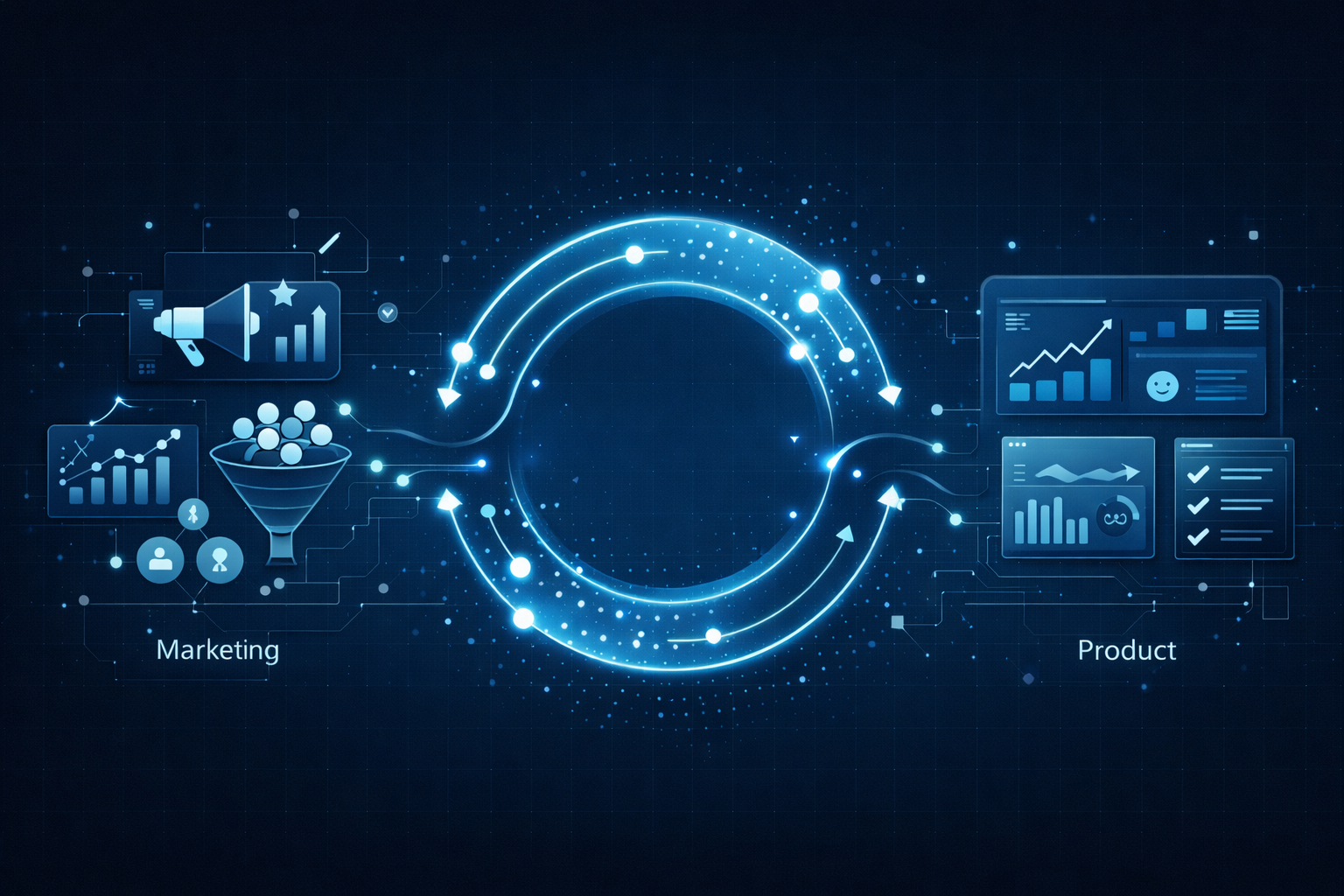
A closed-loop reporting system resolves this disconnect. It links acquisition data with product outcomes, creating a continuous feedback cycle. For organizations working with AI Automation Services, this system becomes a foundation for better planning and execution.
What Closed-Loop Reporting Means
Closed-loop reporting connects every stage of the user journey, from first interaction to long-term usage. It ensures that data flows in both directions.
Marketing learns which campaigns lead to meaningful product activity. Product teams understand which user segments drive value.
This requires more than dashboards. It requires consistent data structure and reliable integration.
The Core Components
A functioning system depends on four elements.
1. Unified Data Model
All teams must work from the same definitions. A lead, a qualified user, and an active account should mean the same thing across systems.
2. Event Tracking
User actions inside the product must be recorded clearly. These events form the basis for understanding behavior.
3. Source Attribution
Every user must be linked to an origin point. This may be a campaign, referral, or direct interaction.
4. Feedback Loop
Insights must flow back to marketing. This allows campaigns to be refined based on real outcomes.
System Components
| Component | Purpose |
|---|---|
| Data Model | Align definitions |
| Event Tracking | Capture user behavior |
| Attribution | Identify acquisition source |
| Feedback Loop | Improve future actions |
A Real Example from Product Siddha
The case study Product Analytics & Full-Funnel Attribution for a SaaS Coaching Platform illustrates this clearly.
Initial Situation
- Marketing tracked lead generation separately
- Product tracked user activity in isolation
- No clear link between acquisition and usage
Implementation
- A unified tracking system was established
- User journeys were mapped from entry to conversion
- Attribution data was connected with product events
Outcome
- Clear visibility into which campaigns produced engaged users
- Better alignment between marketing and product decisions
- Improved efficiency in resource allocation
This example shows that closed-loop reporting is not about collecting more data. It is about connecting existing data in a meaningful way.
Building the System Step by Step
A closed-loop system does not require a complete overhaul. It can be built in stages.
Step 1: Map the User Journey
Identify how a user moves from initial contact to active usage. Break this into clear stages.
Step 2: Define Key Events
Select the actions that indicate progress. These may include sign-ups, feature usage, or conversions.
Step 3: Connect Data Sources
Ensure that CRM, analytics tools, and product databases can share information.
Step 4: Establish Attribution
Link each user to their source. This connection must remain consistent across systems.
Step 5: Automate Reporting
Use AI Automation Services to generate regular reports that reflect the full journey.
Common Challenges
Building this system involves practical difficulties.
Data Inconsistency
Different tools may store data in incompatible formats. Standardization is necessary.
Tracking Gaps
Missing events can break the chain of information.
Delayed Updates
If systems do not sync in real time, insights lose relevance.
Team Alignment
Both marketing and product teams must agree on definitions and goals.
Addressing these issues requires careful planning and regular review.
Measuring Effectiveness
Once the system is in place, its value must be assessed.
Key indicators include:
- Accuracy of attribution data
- Speed of reporting updates
- Alignment between marketing and product metrics
- Improvement in conversion rates
These measures show whether the system is delivering useful insights.
Key Metrics
| Metric | Insight Provided |
|---|---|
| Attribution Accuracy | Reliability of source data |
| Reporting Speed | Timeliness of insights |
| Conversion Alignment | Consistency across teams |
| User Engagement | Product effectiveness |
Practical Benefits
A well-built closed-loop system offers clear advantages.
- Marketing budgets are allocated more effectively
- Product teams focus on features that drive real value
- Decision-making becomes faster and more informed
- Teams operate with a shared understanding
These outcomes are not immediate. They develop as data quality improves and workflows stabilize.
Closing Insight
Closed-loop reporting brings discipline to how organizations understand their users. It replaces isolated metrics with a connected view of the entire journey.
For teams working with AI Automation Services, this system provides a practical way to manage complexity. Automation ensures that data flows consistently, while structured reporting turns that data into insight.
Product Siddha’s experience across analytics and workflow design shows that clarity begins with connection. When marketing and product teams share the same information, decisions become more grounded.
The result is a system where every action can be traced, understood, and improved over time.