
How AI Automation is Replacing Junior Marketing Roles in Agencies (And What to Do Instead)
A Quiet Shift in Agency Work
Walk into any marketing agency today and you will notice a subtle change. The work still gets done. Reports still go out. Campaigns still run. Yet the people doing the early-stage tasks are fewer.
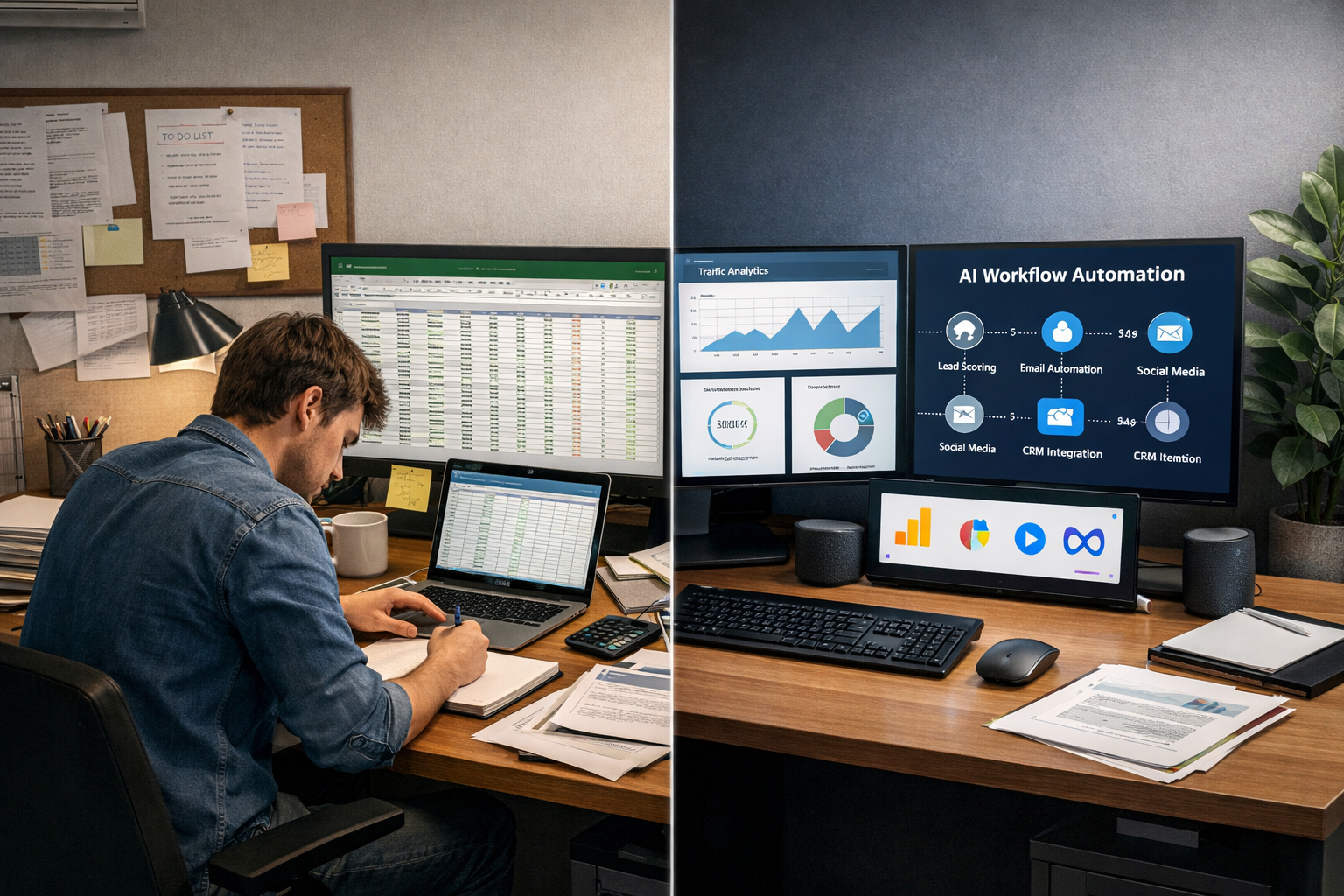
Tasks that once required junior executives now happen in the background. Data is pulled without effort. Reports are built without spreadsheets. Lead tracking runs without constant checking.
This is where AI automation for marketing has made its presence felt. It has not arrived with noise. It has settled into daily operations and removed the need for repetitive effort.
What Junior Roles Used to Handle
To understand the shift, it helps to look at what entry-level roles involved.
Most junior marketers handled work such as:
- Collecting data from analytics tools
- Preparing weekly and monthly reports
- Updating CRM records
- Monitoring campaign performance
- Coordinating between tools and teams
These tasks required time and patience. They also required accuracy. A small mistake in reporting could affect decisions.
Now, these same tasks are handled by marketing automation systems.
Where Automation Has Taken Over
The change is not theoretical. It is visible in day-to-day workflows.
1. Reporting
Manual reporting has almost disappeared in efficient agencies.
Instead of pulling numbers, teams now rely on automated dashboards that update in real time.
2. Lead Management
Lead capture, scoring, and routing are now handled through automated workflows. This reduces delays and ensures that no lead is missed.
3. Campaign Monitoring
Campaign performance is tracked continuously. Alerts are triggered when performance changes. No one needs to check dashboards every hour.
4. Data Sync
Tools such as CRM platforms, analytics tools, and email systems now exchange data automatically.
Traditional vs Automated Workflow
| Task | Traditional Approach | Automated Approach |
|---|---|---|
| Reporting | Manual data collection | Real-time dashboards |
| Lead Tracking | Spreadsheet updates | Automated CRM sync |
| Campaign Monitoring | Manual checks | Automated alerts |
| Data Integration | Separate tools | Connected workflows |
Why Agencies Are Adopting AI Automation
The shift is not driven by trends. It is driven by practical needs.
Efficiency
Automation reduces the time required for routine work. Teams can focus on planning and execution.
Accuracy
Automated systems reduce human error, especially in reporting and data handling.
Scalability
Agencies can handle more clients without increasing team size at the same rate.
Consistency
Processes run the same way every time. This improves reliability.
Where This Leaves Junior Marketers
This is where the conversation becomes important.
If routine work is handled by automation, what happens to entry-level roles?
The answer is not simple, but it is clear.
The role is changing.
Junior marketers who rely only on execution tasks may find fewer opportunities. However, those who build skills beyond routine work remain valuable.
What Skills Matter Now
The shift does not remove opportunities. It changes the type of work that matters.
1. Understanding Systems
Knowing how tools connect is more valuable than knowing how to operate one tool.
2. Interpreting Data
Automation provides data, but someone must interpret it and make decisions.
3. Workflow Thinking
Designing processes is more useful than repeating tasks.
4. Communication
Explaining insights to clients remains a human responsibility.
What Agencies Should Do Next
Ignoring automation is not a practical option. The focus should be on adopting it carefully.
Start with Repetitive Tasks
Identify tasks that are repeated every week. These are the best candidates for automation.
Build Connected Systems
Ensure that tools communicate with each other. Disconnected systems reduce efficiency.
Train Teams
Teams should understand how automation works. This prevents over-reliance on tools without insight.
Focus on Value
The goal is not to replace people. It is to improve how work is done.
A Balanced View of the Change
It is easy to assume that automation removes jobs. In reality, it removes certain types of work.
Every shift in technology has changed roles in similar ways. The difference here is the speed.
Agencies that adapt early tend to benefit more. Those that delay often struggle to keep up.
Looking Ahead
The role of Product Siddha’s AI automation for marketing will continue to expand. More processes will become automated. More decisions will rely on structured data.
For individuals, the path is clear.
Move from execution to understanding.
Move from repetition to design.
Move from tasks to outcomes.
That is where long-term value lies.