
Why Co-Living Companies Need Custom Software
Co-living has grown into a distinct segment of the housing market. Young professionals, students, and remote workers increasingly prefer flexible housing with shared services. Property operators now manage multiple buildings, rotating tenants, and various amenities under one business model.
Yet many co-living companies still rely on generic property tools or spreadsheets. These tools were originally designed for traditional apartment management. Shared living operations require a different structure.
This is where a Custom Software Development Company becomes valuable. Instead of forcing a business to adapt to generic software, a tailored system supports the exact workflow of co-living operations.
For companies managing shared housing communities, the difference is practical and immediate.
A Different Type of Housing Business
Co-living operations differ from conventional rental management in several ways. Residents typically stay for shorter periods. New tenants arrive every few weeks. Services such as housekeeping, internet access, events, and maintenance must be coordinated across many units.
Traditional property systems usually focus on long leases and simple rent collection. They rarely track shared services or community activity.
As co-living portfolios grow, operational complexity increases.
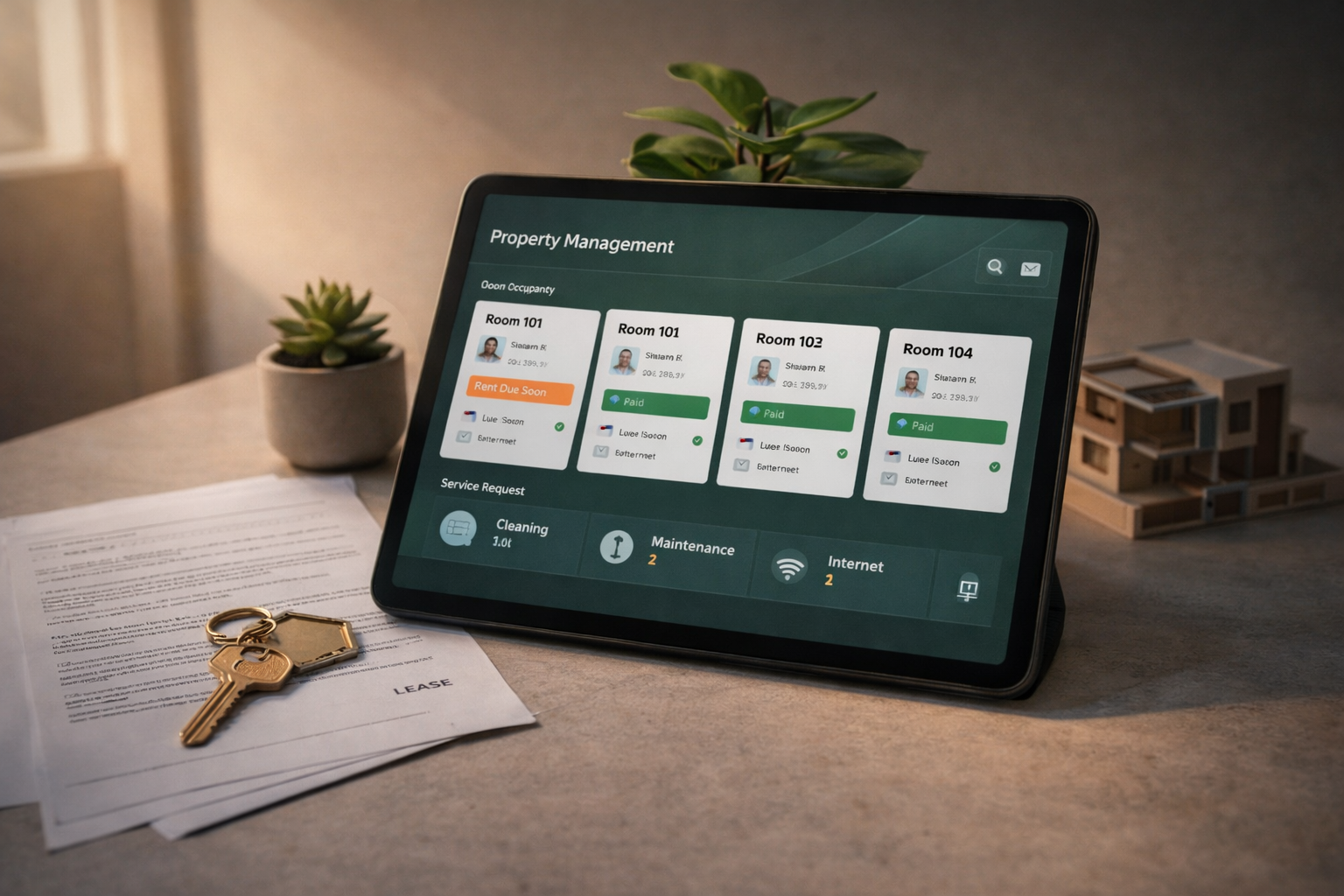
A Custom Software Development Company can design systems that reflect the actual structure of shared living operations. These systems track tenants, services, payments, and property usage in one environment.
Operational Challenges in Co-Living
Co-living companies often encounter similar operational issues.
| Challenge | Operational Impact |
|---|---|
| Frequent tenant turnover | Manual onboarding and offboarding |
| Shared services management | Difficulty tracking service requests |
| Multi-property coordination | Limited visibility across locations |
| Tenant communication | Messages scattered across platforms |
When these activities are managed manually, staff spend significant time on administrative tasks.
Custom systems simplify these operations.
Why Generic Property Software Falls Short
Standard property management tools usually assume a simple relationship between landlord and tenant.
Co-living companies operate in a different environment. Residents may change rooms, extend short stays, or participate in shared activities. Amenities must be scheduled and tracked across multiple users.
Generic systems cannot easily represent these patterns.
A Custom Software Development Company can build platforms that handle:
- room level occupancy tracking
- flexible lease durations
- service subscriptions
- community event management
- integrated payment records
This structure allows staff to manage operations without juggling multiple systems.
Resident Experience Matters
Co-living communities depend on resident satisfaction. Many tenants choose shared living for convenience and social interaction.
A digital platform designed for co-living can improve the resident experience in several ways.
Residents may use a mobile portal to:
- reserve shared spaces
- submit maintenance requests
- manage rent payments
- communicate with community managers
When these services operate smoothly, the property feels organized and professional.
A Custom Software Development Company can develop resident portals tailored to the exact services offered by a co-living brand.
Example of Operational Transformation
The importance of tailored software appears in several industries where operational complexity increases with growth.
One relevant case documented by Product Siddha involves Product Management for UAE’s First Lifestyle Services Marketplace. The platform combined several service categories within one digital system. Users needed a unified interface to browse services, schedule appointments, and track activity.
Although the marketplace operated in a different sector, the challenge resembles the situation faced by co-living operators. Multiple services must be coordinated within a single environment.
By designing custom product workflows, the system could manage service listings, user engagement, and operational data more effectively.
The lesson for co-living operators is clear. When a business offers several services under one roof, standard tools rarely provide the required flexibility. Custom platforms provide better alignment with day to day operations.
Core Modules in Co-Living Software
A well designed platform for shared housing typically includes several integrated modules.
| Module | Function |
|---|---|
| Tenant Management | Track residents, room assignments, and lease duration |
| Billing and Payments | Manage rent, deposits, and service subscriptions |
| Maintenance Requests | Record and track service issues |
| Community Events | Organize resident activities |
| Property Analytics | Monitor occupancy and revenue |
These modules form the foundation of a digital operations system.
A Custom Software Development Company can expand these modules as the business grows.
Co-Living Software Architecture
Tenant Onboarding
↓
Room Allocation
↓
Billing and Payments
↓
Service Requests
↓
Community Engagement
↓
Operational Analytics
This simple structure allows managers to view the entire lifecycle of a resident.
Benefits for Growing Operators
Custom software offers several advantages to co-living businesses.
Operational Efficiency
Staff spend less time updating spreadsheets or searching for information. Most operational records appear within one dashboard.
Data Visibility
Managers can monitor occupancy rates, service usage, and revenue patterns.
Consistent Resident Communication
Messages, service updates, and announcements reach residents through one system.
Scalable Infrastructure
As the property portfolio expands, the platform grows alongside the business.
These improvements help operators focus on building communities rather than managing paperwork.
The Role of a Custom Software Development Company
Developing software internally can be difficult for real estate operators. Most co-living companies specialize in property management rather than software engineering.
Working with a Custom Software Development Company provides access to experienced product teams. These teams design platforms that match operational workflows.
A firm such as Product Siddha works closely with businesses to understand their operational structure. Developers and product managers then translate those requirements into a structured digital platform.
This collaboration ensures that the software supports real operations rather than forcing the company to change its processes.
A Foundation for the Future
Shared housing continues to evolve. New services appear as resident expectations change. Co-living operators who rely on manual tools often struggle to keep pace with this growth.
Digital systems designed specifically for shared living offer a stable foundation.
A platform built by a Custom Software Development Company allows co-living companies to manage properties, coordinate services, and support residents within a single environment.
As portfolios expand and communities grow larger, the value of such systems becomes increasingly clear.
Custom software does not simply automate tasks. It organizes the entire operational structure of a modern co-living business.