
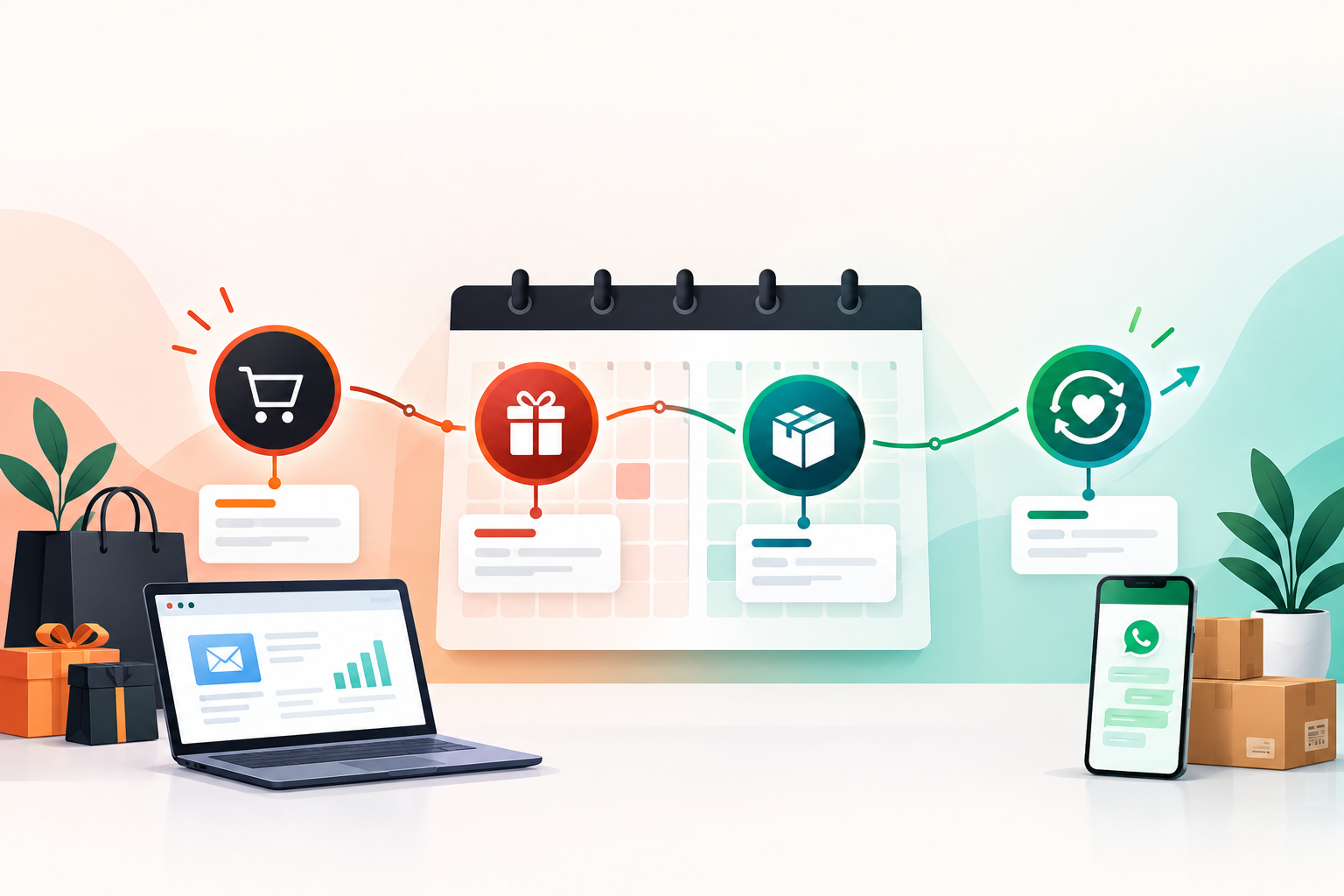
The BFCM Retention Playbook for D2C Brands: Flows to Freeze, Sends to Add
Black Friday Cyber Monday can create an unusual problem for D2C brands. The number of customers increases quickly, campaign calendars become crowded, and automated emails that worked well during ordinary trading periods can suddenly create confusion.
A customer may receive a welcome email, an abandoned cart reminder, a promotional campaign, and a post-purchase message within a short period. Each message may be appropriate on its own. Together, they can become excessive.
This is why BFCM retention requires planning before the first major promotion goes live.
The goal is to decide which Klaviyo flows should continue, which should be temporarily adjusted, and which additional sends should be added to the calendar.
Start With the Customer Journey
Before changing individual flows, map the main customer stages.
During BFCM, customers may move through these stages quickly:
- Browsing products
- Adding products to cart
- Completing an order
- Waiting for delivery
- Receiving the product
- Considering another purchase
Each stage can require a different communication.
The mistake many brands make is treating BFCM as one long promotional period. From a retention perspective, the customer experience begins before the purchase and continues after the sale.
A good D2C retention strategy therefore gives attention to both acquisition-period communication and the weeks that follow.
Flows Worth Freezing
Some automated messages deserve a temporary review during BFCM.
Welcome Flow
If a new subscriber joins the list during BFCM, a standard welcome sequence may promote a discount that is weaker than the current sitewide offer.
Consider temporarily changing the messaging so the welcome series reflects the current promotion.
The flow does not necessarily need to be switched off. It may simply need different content and exclusions.
Abandoned Cart Flow
Abandoned cart emails remain useful during busy sales periods, but their timing may need attention.
A shopper who abandons a cart at 10 a.m. and receives a promotional email at noon may see overlapping offers. Review the flow’s timing, discount language, and campaign exclusions before BFCM begins.
Win-Back Flow
A customer who has been inactive for several months may already be receiving a BFCM campaign.
A separate win-back email arriving on the same day can create unnecessary duplication.
Consider pausing or suppressing the standard win-back campaign while major promotional sends are running.
Flows to Keep Running
Some automated messages become even more important when order volumes rise.
The post-purchase experience deserves particular attention.
Customers need order confirmation, shipping information, delivery updates, product guidance, and other relevant information after buying.
These messages serve a practical purpose and can also help establish the next stage of the customer relationship.
A post-purchase flow can include product education, care instructions, related product recommendations, review requests, and a suitable follow-up offer.
The timing should reflect the product. A customer should have enough time to receive and use the item before being asked to consider another purchase.
Add a BFCM Campaign Layer
Your regular automated flows are only part of the BFCM communication plan.
Add carefully scheduled campaigns around the main shopping dates.
A simple calendar might include:
| Period | Suggested Send | Purpose |
| Pre-BFCM | Early access or sale announcement | Build awareness |
| Black Friday morning | Main offer | Drive initial sales |
| Black Friday evening | Reminder | Reach late shoppers |
| Saturday | Product or category focus | Extend interest |
| Cyber Monday | Final major offer | Capture additional demand |
| Final hours | Closing reminder | Create a clear deadline |
| Post-BFCM | Thank-you or product guidance | Begin retention |
The exact number of sends should depend on the brand, audience, offer, and previous campaign performance.
More emails do not automatically produce better results.
Protect Your Best Customers
BFCM is often treated as a race for new orders. Existing customers deserve equal attention.
Create segments for repeat buyers, high-value customers, recent purchasers, and customers who have purchased specific product categories.
These groups can receive more relevant communication.
For example, a customer who purchased skincare products earlier in the year may respond better to a skincare-related BFCM recommendation than to a general storewide message.
This is where customer segmentation becomes especially useful.
A well-organized Klaviyo account should allow the brand to distinguish between people who are browsing, buying for the first time, buying again, or already waiting for an existing order.
Watch the Post-BFCM Period
The period immediately after BFCM is often overlooked.
A large number of first-time customers may have entered the database. Some will become repeat buyers. Others will never purchase again unless the brand follows up appropriately.
This is where customer retention becomes important.
Instead of immediately continuing heavy promotional communication, consider a structured post-BFCM sequence.
It could include:
- Order and delivery communication
- Product education
- Usage guidance
- Review or feedback request
- Related product recommendation
- Replenishment reminder where appropriate
- A future offer based on customer behavior
The timing should match the product’s normal buying cycle.
A consumable product may justify an earlier replenishment message. A durable product may require a much longer interval.
Clean Up the Calendar
Before BFCM begins, review every scheduled campaign and automated flow.
Look for overlapping messages, duplicate offers, outdated discounts, and customers who should be excluded from certain sends.
A useful campaign calendar should answer three questions:
Who is receiving this message?
Why are they receiving it?
What other communication are they receiving around the same time?
This simple review can prevent many avoidable problems.
Measure Retention After the Sale
BFCM reporting should extend beyond campaign revenue.
Review what happens to customers after their first purchase.
Useful measures include:
- Repeat purchase rate
- Second-order conversion
- Revenue from returning customers
- Post-purchase engagement
- Customer lifetime value
- Flow revenue
- Unsubscribe rate
- Campaign revenue
- Time between first and second purchase
These figures help show whether the BFCM customer base is developing into a repeat customer base.
A campaign that produces a large number of first orders may look successful in isolation. The longer-term picture becomes clearer when those customers are tracked after the promotion.
Build the Playbook Before November
The strongest BFCM retention programs are prepared well before the sale begins.
Review your Klaviyo flows, campaign calendar, customer segments, exclusions, promotional offers, and post-purchase communication before the account becomes busy.
For D2C brands, this preparation can also reveal weaknesses in the existing email marketing program. A flow that has never been reviewed may contain outdated messaging. A customer segment may include people who should be excluded. A post-purchase sequence may end before the brand has made a meaningful second-purchase recommendation.
Product Siddha can help D2C brands review these areas and organize their BFCM retention strategy around the complete customer journey.
The objective is straightforward. Keep useful automated communication running, remove unnecessary overlap, add timely campaign sends, and give serious attention to what happens after the BFCM order is placed.
That is where the next purchase begins.