
Klaviyo vs MoEngage: Which Customer Engagement Platform Fits Your Business?
Choosing a customer engagement platform is rarely a simple software decision. The platform becomes part of how a business collects customer data, builds segments, sends campaigns, creates automated journeys, and measures customer activity.
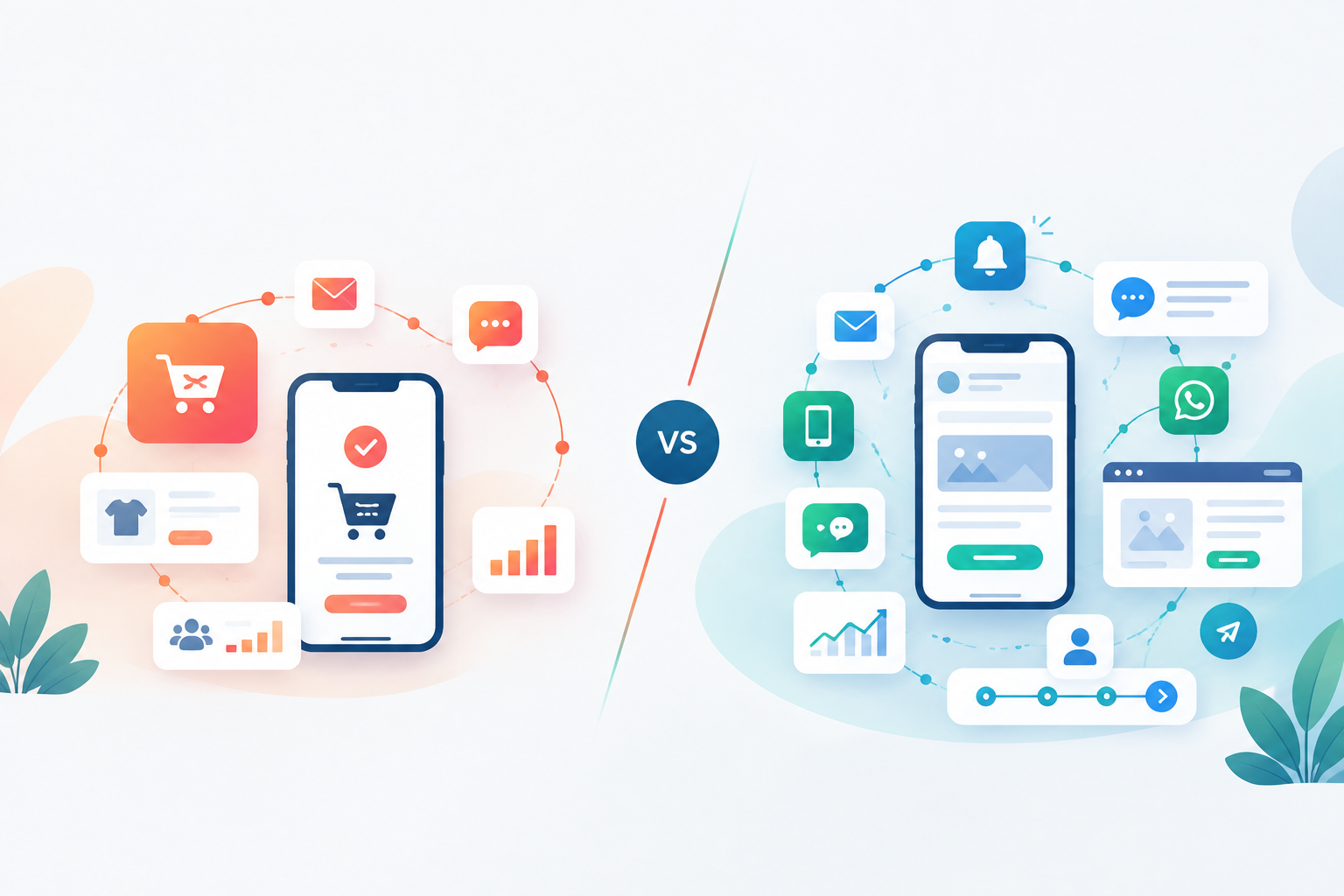
Klaviyo and MoEngage are both established platforms in this area, but they have developed around somewhat different priorities. Klaviyo has a strong connection with ecommerce and customer data, particularly for brands using platforms such as Shopify. MoEngage has built its platform around broader cross-channel engagement, behavioral analytics, mobile experiences, and customer journey orchestration.
For a business comparing Klaviyo vs MoEngage, the important question is not which platform has the longer feature list. It is which platform fits the company’s customer base, channels, technical setup, and lifecycle requirements.
Two Different Starting Points
Klaviyo describes its platform as a B2C CRM and marketing platform that brings customer data and marketing activity together. Its current product includes customer profiles, segmentation, automated flows, reporting, email, SMS, mobile push, RCS and WhatsApp capabilities.
MoEngage takes a broader customer engagement approach. Its platform combines customer insights and analytics with cross-channel marketing, web and app personalization, and transactional messaging. Its current channel offering includes email, SMS, push notifications, in-app messaging, on-site messaging, WhatsApp, RCS and other connected channels.
This difference in emphasis becomes important when planning a lifecycle marketing program.
Klaviyo for Ecommerce Lifecycle Marketing
Klaviyo has a strong position among ecommerce businesses because its platform connects customer activity with marketing campaigns and automated flows.
A brand can build segments based on customer behavior, purchase history and engagement. It can then use those segments in campaigns and automated journeys.
Common Klaviyo use cases include:
- Welcome series
- Abandoned cart flows
- Browse abandonment
- Post-purchase communication
- Product recommendations
- Repeat purchase campaigns
- Win-back campaigns
- VIP customer segments
- Email and SMS campaigns
- Customer segmentation
- Revenue attribution
Klaviyo also provides more than 350 integrations and APIs according to its current product information, which can make it easier for businesses to connect customer and commerce data from other systems.
For an ecommerce team that already works heavily with email and SMS, this can create a relatively direct path from customer activity to campaign execution.
MoEngage for Cross-Channel Engagement
MoEngage approaches customer engagement from a wider channel perspective.
Its current platform includes email, SMS, mobile push, in-app messaging, web push, on-site messaging, content cards, WhatsApp and RCS, among other channels.
This makes the platform relevant for businesses where customer engagement extends beyond an ecommerce email program.
For example, a mobile app company may want to combine push notifications with in-app messages and email. A large consumer business may need behavioral segmentation across website and app activity while coordinating communication across several channels.
MoEngage also provides customer journey tools, campaign controls, A/B testing, campaign attribution and behavioral analytics. Its pricing page describes Growth and Enterprise plans and states that its platform uses Monthly Tracked Users, or MTUs, as one of its usage measures.
Klaviyo vs MoEngage: Feature Comparison
The following comparison reflects the platforms’ current publicly documented capabilities rather than a claim that one system is universally better.
| Area | Klaviyo | MoEngage |
| Email marketing | Yes | Yes |
| SMS | Yes | Yes |
| Yes | Yes | |
| Mobile push | Yes | Yes |
| In-app messaging | More limited compared with MoEngage’s broader app engagement approach | Yes |
| Web engagement | Web forms and related tools | On-site messaging and web push |
| Customer segmentation | Yes | Yes |
| Automated journeys | Yes | Yes |
| Behavioral analytics | Yes | Yes |
| Ecommerce integrations | Strong focus | Available |
| Mobile app engagement | Available | Strong platform focus |
| Customer journey analytics | Available through platform capabilities and analytics products | Strong focus |
| Pricing model | Varies by product, profiles and usage | Based on plan and usage, including MTUs |
| Enterprise capabilities | Available | Strong enterprise focus |
The feature sets overlap considerably. The practical difference comes from how a business intends to use those features.
Customer Data and Segmentation
Customer segmentation is central to both platforms.
Klaviyo allows businesses to create customer profiles and segments using a wide range of behavioral and customer data. Its current product documentation also describes AI-assisted segmentation and predictive capabilities.
MoEngage similarly emphasizes behavioral data and customer insights. Its product overview describes a unified customer view and behavioral analytics designed to help marketing and product teams understand customer actions.
For an ecommerce company, useful segments might include first-time buyers, repeat purchasers, high-value customers, inactive customers and customers who viewed specific products.
For a mobile app, the segments may depend more heavily on app sessions, feature usage, subscription activity, device behavior and other product events.
The quality of the underlying data matters as much as the platform itself.
Automation and Customer Journeys
Both platforms allow marketers to build automated customer journeys.
Klaviyo’s Flows are closely associated with ecommerce lifecycle activity. Customer events can trigger communications based on actions such as purchases, browsing activity and other engagement signals. Klaviyo describes automated flows across email, SMS and push notifications.
MoEngage provides a visual journey builder for cross-channel customer journeys. Its current platform supports event-triggered campaigns, behavioral targeting, campaign controls and multiple communication channels.
The choice therefore depends partly on the type of journey a business needs.
A straightforward ecommerce lifecycle program may rely heavily on purchase and browsing events. A mobile-first business may need journeys that combine app activity, push notifications, in-app communication, email and other touchpoints.
Pricing Needs Careful Comparison
Pricing is another area where a simple comparison can be misleading.
Klaviyo currently offers a free plan with limits of 250 active profiles and 500 email sends per month. Paid pricing varies according to the products and usage selected. Klaviyo’s current billing documentation states that its products can include Profile and Email, Mobile Messaging, Advanced Klaviyo Data Platform, Marketing Analytics and other services.
MoEngage publishes Growth and Enterprise options, but its pricing is structured around usage and the selected platform capabilities rather than presenting one universal public monthly price. Its documentation defines an MTU as a unique end-user profile that performs at least one session or defined event during a calendar month.
This means businesses should compare their expected customer volume and channel usage before comparing headline prices.
A platform that appears cheaper at a small customer volume may have a different cost structure when the database, event volume or number of channels grows.
Which Platform Fits Your Business?
The decision should start with the business model.
Klaviyo can be a natural fit for an ecommerce business whose retention program is centered around customer data, email, SMS, automated flows and commerce activity.
MoEngage can be relevant for organizations that need broader cross-channel engagement, particularly where mobile apps, push notifications, in-app communication and behavioral journey management are important.
There is also considerable overlap. A company should therefore examine its existing technology stack before making a decision.
Ask these questions:
- Which channels do customers actually use?
- Is ecommerce activity the main source of customer events?
- Does the business operate a mobile application?
- How many customer profiles and active users need to be managed?
- How complex are the customer journeys?
- Which integrations are required?
- What reporting does the marketing and product team need?
- How much technical support will implementation require?
- How will platform costs change as customer activity grows?
These questions usually produce a more useful comparison than looking at feature counts alone.
The Right Fit Depends on the Lifecycle
Klaviyo and MoEngage can both support customer engagement, segmentation, automation and retention. Their differences become clearer when the business looks at its primary channels and customer journeys.
For ecommerce brands with a strong email and SMS program, Klaviyo provides a platform closely connected to customer and commerce data. For organizations that need wider cross-channel engagement across mobile, web, email, WhatsApp and other channels, MoEngage provides a broader engagement environment. These are documented differences in product positioning and capabilities, rather than a universal judgment about which platform should be selected.
Product Siddha can help businesses review their existing customer lifecycle, data sources, automation requirements and retention goals before deciding which platform structure makes sense.
The useful comparison is ultimately between the platform and the work your business needs to accomplish. Once those requirements are clear, the differences between Klaviyo and MoEngage become much easier to evaluate.