
WhatsApp Marketing Agency for D2C Brands: What Should You Expect?
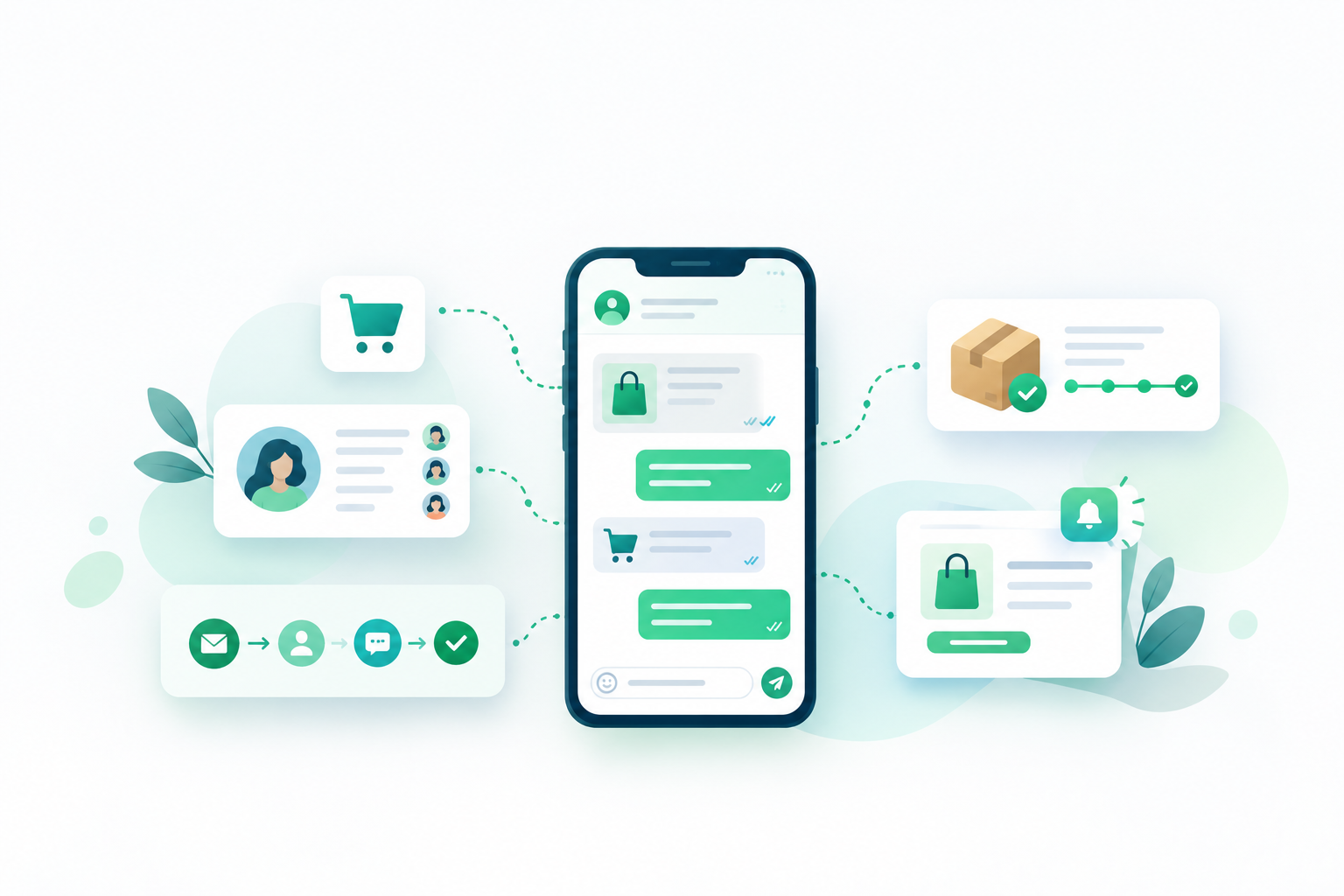
For many D2C brands, WhatsApp has become an important customer communication channel. It can be used to answer product questions, share order information, recover abandoned purchases, announce products, encourage repeat orders, and reconnect with customers who have stopped buying.
But running WhatsApp marketing well requires more than sending promotional messages to a customer list. A D2C brand needs consent management, audience segmentation, message templates, automation, customer data, campaign planning, and performance tracking.
This is where a WhatsApp marketing agency for D2C brands can become useful.
Why D2C Brands Use WhatsApp
D2C businesses depend heavily on repeat purchases and direct relationships with customers. A customer may discover a product through advertising, visit the website, make a purchase, and then interact with the brand through several different channels.
WhatsApp can become part of that customer journey.
Klaviyo’s current ecommerce guidance describes WhatsApp use cases including abandoned cart reminders, product launches, post-purchase communication, customer questions, and coordinated journeys with email and SMS.
For example, a customer who adds a product to a cart but leaves the website could receive an email first and a WhatsApp message later, provided the customer has given the required WhatsApp marketing consent.
The purpose is to make the communication relevant to the customer’s activity rather than treating every subscriber in the same way.
What Does a WhatsApp Marketing Agency Do?
A WhatsApp marketing agency helps a brand plan, build, manage, and improve its WhatsApp customer communication.
The work may include:
- WhatsApp Business setup
- Customer consent and opt-in planning
- Audience segmentation
- Campaign strategy
- Message template creation
- WhatsApp automation
- Abandoned cart journeys
- Welcome flows
- Post-purchase communication
- Product launch campaigns
- Replenishment reminders
- Win-back campaigns
- Customer support handoffs
- Campaign reporting
- Conversion and retention analysis
The exact scope depends on the agency and the D2C brand.
A good engagement should begin with the customer journey rather than with a list of messages. The agency needs to understand what happens before a purchase, immediately after an order, and during the period when a customer is deciding whether to buy again.
WhatsApp Requires Customer Consent
Consent is one of the most important parts of WhatsApp marketing.
Klaviyo’s current documentation states that businesses need explicit opt-in permission before messaging customers on WhatsApp. The customer must provide their phone number and confirm that they want to receive communications from the specific business. The opt-in process also needs to comply with applicable local laws.
This means a D2C brand should have a clear process for collecting WhatsApp subscribers.
Possible methods include:
- Website sign-up forms
- Dedicated WhatsApp landing pages
- QR codes on packaging
- Post-purchase sign-up opportunities
- Social media links
- Other clearly disclosed opt-in methods
The business should also explain what customers are signing up to receive. Klaviyo recommends clear consent language and provides double opt-in functionality for WhatsApp on eligible plans.
For an agency, consent management should therefore be part of the implementation plan rather than an afterthought.
Build the Right Customer Journeys
A D2C brand does not need to send the same WhatsApp message to everyone.
Consider a few common customer situations.
New subscriber
Someone joins the brand’s WhatsApp program for the first time. A welcome flow can introduce the brand, explain what the subscriber can expect, and potentially provide an appropriate first-purchase offer.
Klaviyo currently supports WhatsApp welcome flows triggered by a subscriber opting into WhatsApp marketing.
Abandoned cart
A customer adds products to a cart but does not complete the purchase.
The brand may use a sequence that combines email and WhatsApp, depending on consent and the customer’s previous engagement.
Recent purchaser
A customer has just placed an order.
WhatsApp can be used for suitable post-purchase communication, including order-related information, product care, reviews, replenishment, or related product recommendations. Klaviyo documents post-purchase WhatsApp flows covering uses such as thank-you messages, order confirmation, cross-sell, upsell, reviews, and replenishment.
Inactive customer
A customer who previously purchased has not returned for a period that makes sense for the product category.
A win-back journey can present a relevant product, reminder, or offer based on the customer’s previous behavior.
Segmentation Makes WhatsApp More Useful
The value of WhatsApp marketing depends heavily on who receives each message.
A skincare brand, for example, could create segments for first-time customers, repeat buyers, high-value customers, customers who viewed a particular product, and customers who have not purchased recently.
Klaviyo’s current WhatsApp segmentation guidance includes segments such as highly engaged subscribers, WhatsApp VIP customers, high-intent shoppers, location-based audiences, and customers based on WhatsApp interaction.
This gives an agency more useful options than simply creating one large WhatsApp list.
A customer who has purchased a product twice may need a different message from someone who has only visited a product page once.
Templates and Messaging Rules Matter
WhatsApp marketing also has technical requirements.
Outbound marketing messages sent through the WhatsApp Business Platform require approved message templates. Klaviyo’s current documentation states that businesses need an approved WhatsApp template and explicit marketing consent before sending a WhatsApp campaign.
Templates can contain structured elements such as headers, message bodies, footers, and buttons.
This creates an important role for the agency. The agency needs to understand the brand’s communication style while also creating messages that fit the platform’s requirements.
A message that looks acceptable in an email may need to be written differently for a conversational messaging channel.
WhatsApp Can Work Alongside Email and SMS
A D2C brand does not necessarily need to choose WhatsApp instead of email.
The channels can have different jobs within the same customer journey.
For example:
| Customer stage | Possible channel | Purpose |
| New subscriber | Email + WhatsApp | Welcome and product education |
| Product viewed | Product information | |
| Cart abandoned | Email + WhatsApp | Purchase reminder |
| Order placed | Order-related communication | |
| Product received | Email + WhatsApp | Care, review or education |
| Replenishment period | WhatsApp + Email | Repeat purchase |
| Customer inactive | Email + WhatsApp | Win-back |
| New product launch | Email + WhatsApp | Product announcement |
The exact combination should depend on customer consent, preferences, product type, and business goals.
Klaviyo currently allows WhatsApp to be coordinated with email, SMS, and push within broader customer journeys.
Measure More Than Message Delivery
An agency should also explain how the program will be measured.
Useful metrics can include:
- WhatsApp opt-in growth
- Delivered messages
- Click-through rate
- Replies
- Conversion rate
- Revenue attributed to campaigns
- Repeat purchase rate
- Revenue per recipient
- Unsubscribe or opt-out activity
- Flow performance
The important point is to connect these measurements to business activity.
For a D2C brand, the goal may be to increase repeat purchases, recover abandoned carts, improve customer communication, or reduce the time between purchases. The reporting structure should reflect those objectives.
Geographic Rules Need Attention
WhatsApp marketing should never be planned as though every market follows exactly the same rules.
Klaviyo currently notes that Meta blocks WhatsApp marketing messages sent to US phone numbers as of April 1, 2025.
This makes market-specific planning particularly important for D2C brands selling internationally.
An agency should review the target countries, available WhatsApp capabilities, consent requirements, message rules, and expected customer behavior before launching a campaign.
A Practical Agency Checklist
Before hiring a WhatsApp marketing agency for D2C brands, ask what is included.
The agency should be able to explain:
- How WhatsApp consent will be collected
- How customer segments will be created
- Which flows will be developed
- How message templates will be managed
- How WhatsApp will work with email and other channels
- Which metrics will be reported
- How customer replies will be handled
- Which markets are supported
- What platform and messaging costs are separate from agency fees
- How the program will be reviewed and improved
This helps a brand compare agencies based on the actual work involved rather than simply comparing monthly retainers.
A Better WhatsApp Program
WhatsApp can be a useful retention and customer communication channel for D2C brands when it is connected to real customer behavior.
The strongest programs usually begin with clean customer data, clear consent, sensible segmentation, useful message templates, and carefully planned lifecycle journeys. The technology then supports the strategy.
Product Siddha can help D2C brands plan WhatsApp customer journeys, connect WhatsApp with lifecycle marketing, develop relevant segments and flows, and coordinate WhatsApp with other retention channels.
For a brand considering WhatsApp marketing, the first step is to identify where customer communication currently breaks down. Once those gaps are clear, the right WhatsApp campaigns and automated journeys become much easier to define.