
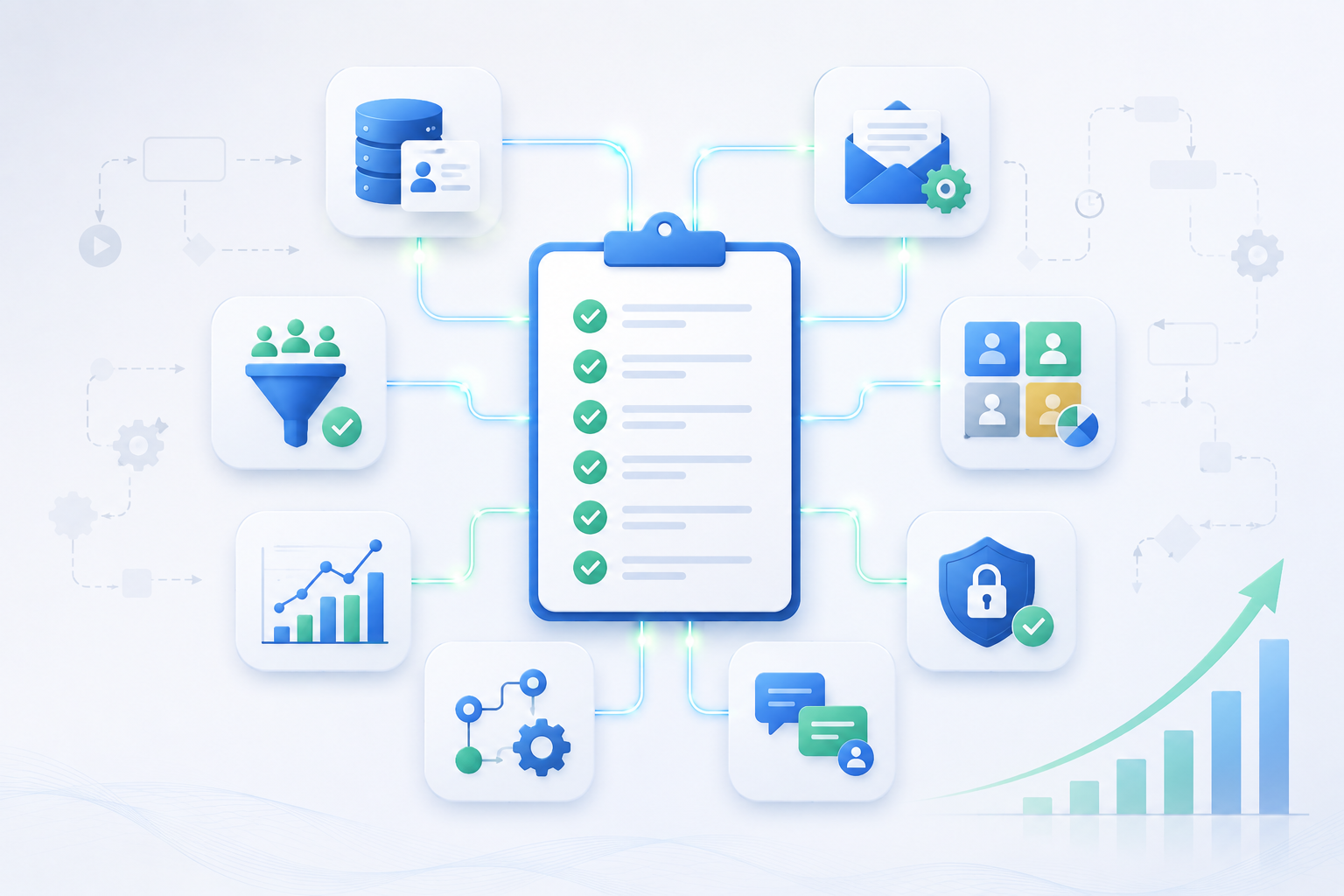
Marketing Automation Audit Checklist for Growing Businesses
As a business grows, marketing activities become more complex. New campaigns, expanding customer databases, multiple communication channels, and increasing lead volumes require organized systems to maintain consistency. Marketing automation helps manage these activities, but simply implementing automation software does not guarantee better results.
Over time, workflows become outdated, customer data may lose accuracy, and automated processes can create unnecessary delays instead of improving efficiency. Regular audits help businesses identify these issues before they affect customer experience or business performance.
A structured Marketing Automation audit ensures that every workflow supports business goals, customer communication remains relevant, and valuable opportunities are not overlooked.
At Product Siddha, we help businesses evaluate, optimize, and automate their marketing processes through intelligent automation, CRM integration, and business intelligence solutions that support long-term growth.
Why Regular Marketing Automation Audits Matter
Automation should simplify business operations. Without periodic reviews, automated systems may begin working against your objectives.
Common issues include:
- Duplicate customer records
- Broken automation workflows
- Outdated email sequences
- Incorrect customer segmentation
- Missing CRM updates
- Delayed lead assignments
- Inaccurate reporting
An audit allows businesses to identify these problems early and improve overall efficiency.
Review Your Business Goals
Every automation workflow should support a clear business objective.
Ask the following questions:
- Does this workflow generate qualified leads?
- Does it improve customer communication?
- Does it reduce manual work?
- Does it improve customer retention?
- Does it support sales conversion?
If a workflow no longer contributes to measurable business outcomes, it should be updated or removed.
Evaluate Customer Data Quality
Marketing automation depends on reliable customer information.
Review your database for:
- Duplicate contacts
- Incomplete customer profiles
- Invalid email addresses
- Outdated phone numbers
- Missing customer preferences
- Inactive contacts
Maintaining clean customer records improves personalization and reporting accuracy.
Verify CRM Integration
Marketing automation platforms perform best when connected with CRM systems.
Your CRM should automatically update:
- New leads
- Customer interactions
- Sales activities
- Support requests
- Purchase history
- Follow-up reminders
Disconnected systems often result in inconsistent customer experiences.
At Product Siddha, CRM Automation Solutions help businesses connect marketing, sales, and customer service into one streamlined workflow.
Review Every Automated Workflow
Each automation sequence should be tested regularly.
Review workflows for:
- Trigger accuracy
- Timing delays
- Email delivery
- Workflow completion
- Error handling
- Duplicate actions
Visual workflow mapping helps identify unnecessary complexity and areas for improvement.
Audit Lead Management Processes
Lead management is one of the most valuable applications of Marketing Automation.
Check whether your system:
- Captures every inquiry
- Assigns leads correctly
- Sends immediate acknowledgments
- Scores leads accurately
- Alerts sales representatives promptly
- Tracks follow-up activities
A missed lead often represents a missed business opportunity.
Evaluate Email Automation
Email remains one of the most effective automation channels.
Review:
- Welcome email sequences
- Follow-up campaigns
- Customer onboarding
- Event reminders
- Renewal notifications
- Re-engagement campaigns
Ensure every email contains current information and aligns with your business goals.
Review Customer Segmentation
Effective automation depends on meaningful audience segmentation.
Consider grouping customers by:
| Segmentation Type | Example |
| Industry | Healthcare, Manufacturing |
| Purchase History | New vs Returning Customers |
| Geographic Location | Region or Country |
| Customer Interests | Product Categories |
| Engagement Level | Active or Inactive |
| Business Size | Small, Medium, Enterprise |
Accurate segmentation improves communication without increasing marketing effort.
Test Forms and Landing Pages
Lead generation begins with customer interactions.
Review all forms for:
- Proper field validation
- Mobile responsiveness
- CRM integration
- Spam protection
- Fast loading speed
- Confirmation messages
Even minor form issues can reduce conversion rates.
Check Reporting Accuracy
Automation platforms generate valuable business insights only when reporting is accurate.
Review dashboards for:
- Lead conversion rates
- Campaign performance
- Customer acquisition
- Sales pipeline activity
- Email engagement
- Customer retention
Business Intelligence Dashboards simplify this process by presenting key performance indicators in real time.
Strengthen Data Security
Growing businesses collect increasing amounts of customer information.
Your audit should include:
- User permissions
- Access controls
- Data encryption
- Backup procedures
- Consent management
- Privacy compliance
Protecting customer information strengthens trust and supports regulatory compliance.
Real Business Example
Consider a growing software company managing leads through website inquiries, webinars, and email campaigns.
Initially, automation handled these processes efficiently. As the business expanded, duplicate customer records appeared, multiple sales representatives contacted the same prospects, and outdated email sequences continued reaching existing customers.
After conducting a comprehensive Marketing Automation audit, the company:
- Removed duplicate workflows
- Improved CRM synchronization
- Updated lead scoring rules
- Simplified customer segmentation
- Reduced manual reporting
The result was smoother internal operations, improved customer communication, and better visibility into marketing performance.
This example illustrates why routine audits are essential for businesses experiencing growth.
Marketing Automation Audit Checklist
| Audit Area | Status |
| Business Goals Reviewed | ✓ |
| Customer Database Cleaned | ✓ |
| CRM Integration Verified | ✓ |
| Automation Workflows Tested | ✓ |
| Lead Management Reviewed | ✓ |
| Email Campaigns Updated | ✓ |
| Customer Segmentation Evaluated | ✓ |
| Forms and Landing Pages Tested | ✓ |
| Reporting Accuracy Verified | ✓ |
| Security and Compliance Reviewed | ✓ |
Businesses should complete this checklist at least twice each year or after major system updates.
Practical Improvements with Product Siddha
At Product Siddha, businesses receive support in reviewing existing automation systems and identifying opportunities for improvement.
Our services include:
- Marketing Automation implementation
- CRM Automation Solutions
- AI-powered workflow optimization
- Business Intelligence Dashboards
- Process automation consulting
- Customer journey optimization
These services help businesses reduce manual work while improving operational efficiency.
Final Thoughts
Marketing Automation delivers lasting value only when workflows remain accurate, connected, and aligned with business objectives. As organizations grow, automation systems require regular evaluation to maintain performance and reliability.
A structured audit helps identify outdated processes, improve customer experiences, strengthen CRM integration, and increase operational efficiency.
By reviewing workflows, customer data, reporting, and system performance on a regular basis, businesses can ensure their automation continues to support sustainable growth.
With Product Siddha’s automation expertise, organizations can build scalable systems that simplify operations, improve decision-making, and create stronger customer relationships.