
Product Siddha

D2C Marketing

Marketing Automation Services for D2C Brands Building a Retention Engine Beyond Klaviyo Flows
AI Automation

Marketing Automation Services for D2C Brands: Building a Retention Engine Beyond Klaviyo Flows

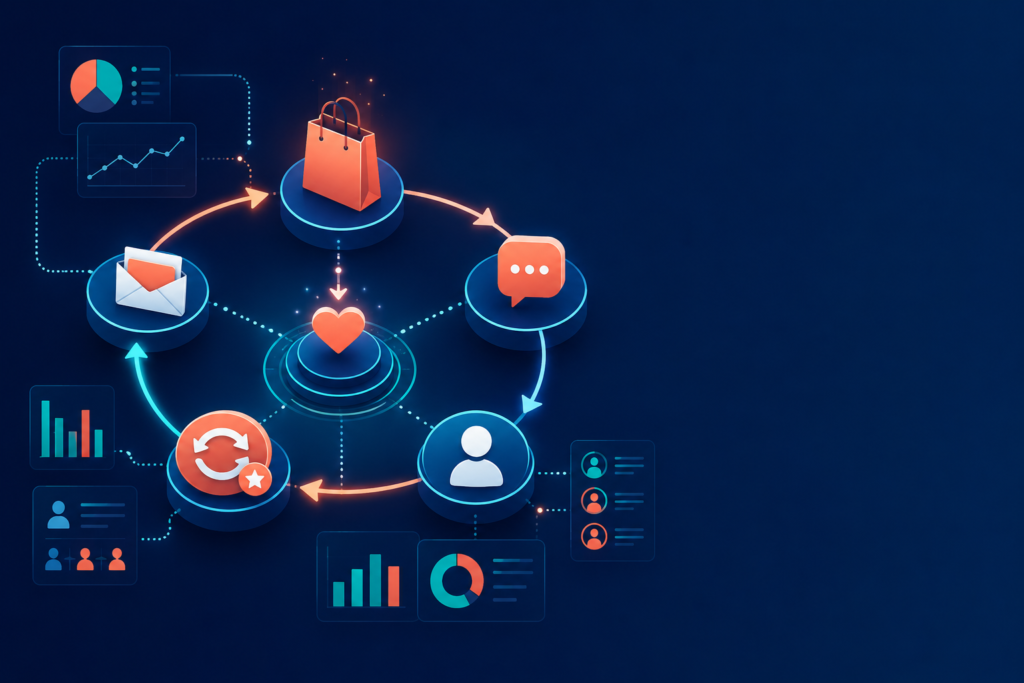
Marketing Automation Services for D2C Brands: Building a Retention Engine Beyond Klaviyo Flows Beyond the Basic Flow Klaviyo flows can handle many important ecommerce tasks. Welcome sequences, abandoned cart reminders, post-purchase messages, replenishment reminders, and win-back campaigns are useful parts of a D2C marketing program. As a brand grows, however, the number of customer interactions increases, and simple flows can become difficult to manage. A retention engine requires a broader view of the customer. A shopper may purchase once, browse several products, respond to an email, ignore promotional messages, buy again three months later, and then become a high-value customer. Each interaction creates information that can influence the next communication. This is where Marketing Automation Services can provide greater value. Instead of treating automation as a collection of email sequences, businesses can build connected systems that use customer data, segmentation, purchase behavior, and lifecycle stages to coordinate marketing activity. For D2C brands, the objective is to make the customer journey more organized and relevant while reducing repetitive manual work. Start With Customer Data Effective automation depends on reliable customer information. A D2C brand may have customer data spread across its ecommerce platform, email marketing software, SMS provider, customer relationship management system, advertising platforms, and analytics tools. When these systems operate independently, marketers may struggle to see the complete customer journey. Marketing automation services can help connect these data sources and establish useful customer profiles. Relevant information can include: Purchase history Product preferences Average order value Purchase frequency Email engagement SMS engagement Customer location Discount usage Browsing behavior Customer lifetime value Date of last purchase The goal is to make this information available when marketing decisions are made. Build Segments Around Behavior Customer segmentation becomes more useful when it reflects actual behavior. A D2C brand could create segments for first-time buyers, repeat customers, inactive customers, frequent purchasers, high-value customers, recent subscribers, and customers approaching their expected reorder period. Each group can receive different communication. For example, a customer who purchased a product 30 days ago may need product education or a replenishment reminder. A customer who has made five purchases may respond better to loyalty-focused communication or complementary product recommendations. Marketing automation can apply these rules consistently across a large customer base. Connect the Customer Journey A retention system should account for what happens before and after a purchase. Consider a basic customer journey: Customer Stage Automation Opportunity Useful Data New subscriber Welcome communication Signup source First purchase Post-purchase sequence Product purchased Product usage period Education and support Purchase date Reorder period Replenishment reminder Purchase frequency Repeat customer Cross-sell communication Product history Inactive customer Re-engagement Last purchase High-value customer Loyalty communication Lifetime value Each stage can connect to the next according to customer behavior. This creates a more organized lifecycle marketing system where campaigns respond to changes in customer status. Go Beyond Email Automation Retention automation does not have to remain inside an email platform. Depending on the business, a D2C retention system can connect email, SMS, customer service, ecommerce data, advertising audiences, and internal reporting. Suppose a customer makes a purchase. The system can update the customer’s profile, adjust segmentation, trigger post-purchase communication, exclude the customer from unsuitable acquisition campaigns, and prepare a future replenishment workflow. That sequence can involve several systems while appearing simple from the customer’s perspective. This is one reason businesses often look beyond individual marketing tools when evaluating Marketing Automation Services. Make Automation More Selective More automation does not necessarily produce better marketing. A retention system should include rules that determine when communication should stop, change, or move to another stage. For instance, if a customer completes a purchase after receiving a replenishment reminder, the reminder sequence should end. If a customer has already purchased a recommended product, a cross-sell message should reflect that information. Frequency controls also matter. Customers who receive too many unrelated messages may disengage. Good automation therefore requires careful workflow design, exclusion rules, timing conditions, and customer data management. Measure Retention at the Business Level Campaign metrics are useful, but D2C brands should also examine broader retention performance. Important measures can include: Repeat purchase rate Customer lifetime value Purchase frequency Revenue per customer Retention rate Churn rate Revenue from automated campaigns Replenishment conversion rate Customer reactivation rate These metrics help establish whether automation is contributing to the business. A campaign with a strong click-through rate may still have limited commercial value if it generates few purchases. A replenishment workflow with modest engagement may produce meaningful revenue if it reaches customers at the right stage of their buying cycle. Where Klaviyo Fits Klaviyo can remain an important part of a D2C retention setup. The question is how it fits into the wider marketing system. A brand may use Klaviyo for email and SMS execution while connecting it with ecommerce data, customer segmentation, analytics, customer support systems, and other business tools. This approach gives marketers more control over how information moves through the customer journey. For businesses with complex workflows, a Marketing Agency for D2C Brand can also help evaluate the existing technology stack and determine which processes should remain inside Klaviyo and which require additional systems or integrations. Choose the Right Automation Partner Selecting a provider of Marketing Automation Services requires more than checking which platforms the agency knows. Ask potential partners how they approach customer data, segmentation, lifecycle strategy, workflow design, integrations, reporting, and ongoing optimization. Useful questions include: How will you map our customer journey? Which data sources will you connect? How will customer segments be maintained? How will you prevent overlapping campaigns? Which processes should be automated first? How will you measure retention performance? Who will manage technical integrations? How will workflows be reviewed after launch? The answers can reveal whether the agency understands the operational side of automation. Build a System That Can Grow D2C brands change quickly. Product ranges expand, customer groups evolve, new channels are introduced, and purchasing behavior shifts. A retention system should be flexible enough to accommodate those changes. Product Siddha approaches marketing automation

retention-marketing-agency-1536x1024
AI Automation

How to Vet a Retention Marketing Agency for Your D2C Brand: A 2026 Buyer’s Checklist

How to Vet a Retention Marketing Agency for Your D2C Brand: A 2026 Buyer’s Checklist Start With the Right Questions Choosing a retention marketing agency can have a direct effect on how effectively a D2C brand turns existing customers into repeat buyers. Many agencies can manage email campaigns, SMS programs, customer data, or automated workflows. The more important question is whether the agency can connect those activities to the way your customers actually buy. For a D2C company, customer retention involves several moving parts. Purchase frequency, customer lifetime value, repeat purchase rate, customer segmentation, lifecycle communication, and customer experience all need to work together. A Marketing Agency for D2C Brand growth should therefore be evaluated on more than its creative portfolio or list of marketing platforms. Before signing a contract, brand owners should examine its strategy, processes, technology, reporting practices, and understanding of their business. Product Siddha helps businesses approach automation and marketing systems with a practical focus on processes, customer data, and measurable business outcomes. Know What You Need First Before speaking with agencies, establish what you want the engagement to accomplish. Your current retention challenges might include: Low repeat purchase rates Customers becoming inactive after their first order Poor email or SMS engagement Disconnected customer data Weak post-purchase communication Manual campaign management Limited customer segmentation Inconsistent promotional communication Poor visibility into customer lifetime value A good agency should be able to work from these business problems rather than immediately recommending a collection of tools. Create a short internal brief that explains your current customer journey, marketing channels, technology stack, sales cycle, average order value, and key retention metrics. This gives prospective agencies enough information to provide a meaningful assessment. Check Their D2C Experience Experience matters, but the number of clients an agency has served is not enough to establish expertise. Ask whether the agency has worked with brands that have similar products, purchase cycles, customer expectations, and order values. A company selling consumable products may need a very different retention strategy from a brand selling furniture or high-value electronics. Ask prospective agencies: Which D2C brands have you worked with? What retention problems did those businesses have? Which channels did you manage? What metrics did you improve? How did you approach customer segmentation? What did your team change after reviewing customer data? Look for specific answers. An agency that understands retention should be able to explain the reasoning behind its recommendations. Examine the Retention Strategy A strong retention program should have a clear structure. Ask the agency to explain how it would approach customers at different stages. This may include welcome communication, first-purchase follow-up, product education, replenishment reminders, cross-sell opportunities, win-back campaigns, and customer loyalty initiatives. The strategy should also account for customer behavior. For example, customers who purchased once and have shown no recent activity should not necessarily receive the same communication as frequent customers. Segmentation allows the brand to adjust messaging according to purchase history, engagement, preferences, and other useful customer information. A capable Marketing Agency for D2C Brand should be able to explain how these segments would be created and maintained. Review Their Automation Capabilities Retention marketing often involves repetitive tasks that can be handled through automation. During the evaluation process, ask agencies which workflows they recommend automating and why. Potential workflows include: Customer Stage Possible Automation New customer Welcome and onboarding sequence First purchase Post-purchase communication Repeat buyer Cross-sell or loyalty messaging Expected reorder Replenishment reminder Inactive customer Re-engagement campaign High-value customer VIP communication Abandoned purchase Recovery sequence The agency should also explain how these workflows will be monitored. Automation should not mean launching a sequence and leaving it untouched for months. Evaluate Their Technology Knowledge A retention partner should understand the systems that support your customer journey. Depending on your business, this may include your ecommerce platform, customer relationship management system, email marketing platform, SMS provider, customer data platform, analytics tools, and reporting systems. Ask how the agency handles integrations and data synchronization. You should also clarify who owns the accounts, customer data, campaign assets, automation workflows, and reporting dashboards. These details should be clear before the engagement begins. Ask How They Measure Success A serious retention partner should be comfortable discussing measurable outcomes. Common retention metrics include: Customer retention rate Repeat purchase rate Customer lifetime value Purchase frequency Revenue per customer Churn rate Email conversion rate SMS conversion rate Revenue from automated campaigns Do not accept a reporting structure that focuses entirely on open rates, clicks, or campaign volume. Those figures can provide useful information, but they should support a larger view of customer and revenue performance. Ask the agency how often it reports results and what happens when a campaign underperforms. Understand the Team Behind the Proposal The person presenting the proposal may not be the person managing your account. Ask who will actually work on your business. Find out who handles strategy, campaign development, data analysis, automation, copywriting, and reporting. You should also understand how communication works. Will you have a dedicated account manager? How frequently will strategy meetings take place? How quickly does the team respond to issues? A clear operating process can prevent many problems later. Request a Practical Audit Before selecting a Marketing Agency for D2C Brand, consider asking shortlisted agencies for a limited audit or assessment. A useful audit could examine your current customer segments, lifecycle campaigns, automation workflows, retention metrics, and customer communication. The objective is not to obtain free consulting work. It is to see how the agency thinks. Compare the recommendations from several agencies. Pay attention to whether their observations are based on your actual business information or whether they present the same generic recommendations to every prospective client. Review Pricing and Contract Terms Pricing should be examined alongside the scope of work. Ask whether the quoted fee includes strategy, campaign management, copywriting, design, automation development, analytics, reporting, and technical support. Clarify additional charges for new workflows, integrations, campaign volumes, platform fees, or strategy work. Also review contract length, cancellation terms, ownership of

Product Siddha
Privacy Overview

This website uses cookies so that we can provide you with the best user experience possible. Cookie information is stored in your browser and performs functions such as recognising you when you return to our website and helping our team to understand which sections of the website you find most interesting and useful.