
Product Siddha

Author name: Binila Treesa

I am binial, a LinkedIn personal branding strategist, ghostwriter, and SEO content writer who helps founders and professionals turn scattered ideas into clear, authority-driven content. My work focuses on content clarity, positioning, and visibility, helping individuals communicate their expertise in a way people understand and remember. I combine personal branding strategy with SEO and audience psychology to create content that builds trust, improves discoverability, and strengthens online presence. My writing style is observation-driven, simple, and rooted in real human behavior rather than generic marketing language.

AI Personalization Beyond Email Campaigns
AI Automation, Blog

AI Personalization Beyond Email Campaigns

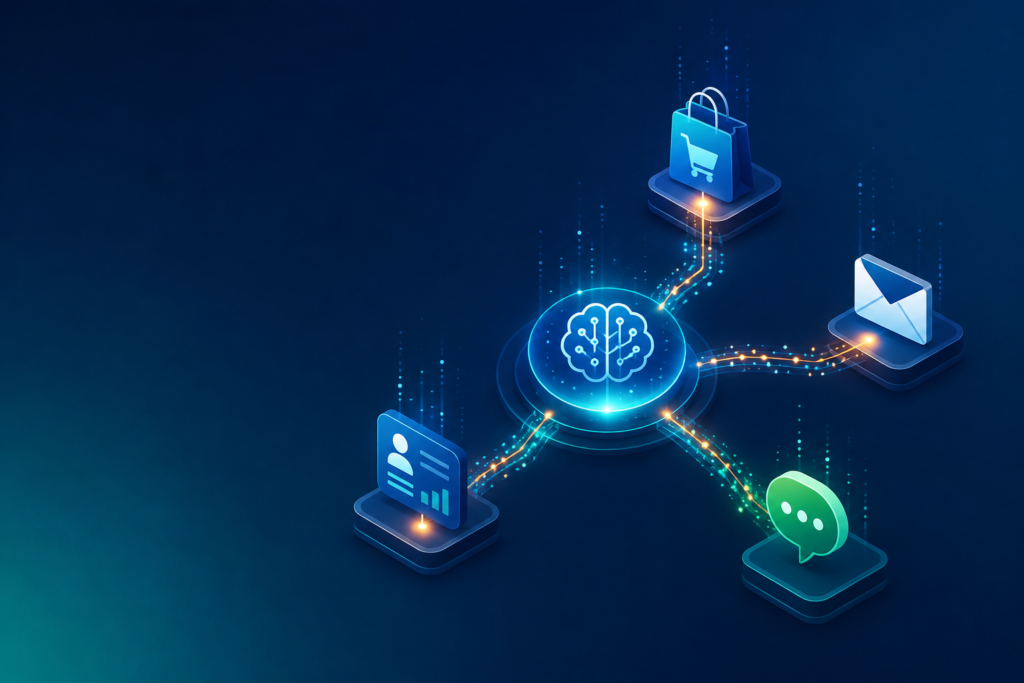
AI Personalization Beyond Email Campaigns AI Personalization Beyond Email Campaigns For many years, businesses have associated personalization with email marketing. Addressing customers by name or recommending products based on previous purchases became common practices. While these methods remain useful, customer expectations have changed. People now expect relevant experiences across websites, mobile applications, customer support, online portals, and every other point of interaction. Artificial Intelligence has made this possible by helping businesses understand customer preferences, behavior, and needs in real time. Instead of focusing only on email communication, organizations can create connected experiences that improve customer satisfaction while supporting business growth. At Product Siddha, we help businesses implement AI-driven automation, CRM integration, and business intelligence solutions that make personalization more meaningful across the entire customer journey. A Broader View of Personalization AI personalization is the process of using customer data and intelligent systems to deliver relevant experiences based on individual preferences and behavior. Unlike traditional personalization, which often relies on basic customer information, AI analyzes multiple data sources to identify useful patterns. These sources may include: Website activity Purchase history CRM records Customer support interactions Mobile application usage Product preferences Browsing behavior Service requests Combining these data points allows businesses to make informed decisions without relying on assumptions. Why Email Alone Is No Longer Enough Email remains an important communication channel, but it represents only one part of the customer experience. Customers often interact with a business through several platforms before making a purchase or requesting support. These touchpoints may include: Company websites Customer portals Live chat Mobile applications Online booking systems CRM platforms Customer support centers Providing consistent and relevant experiences across these channels strengthens customer relationships. AI Personalization Across Digital Channels Artificial Intelligence can improve personalization in several practical ways. Website Experiences Visitors can receive content based on their previous browsing activity, location, or interests. Examples include: Recommended services Industry-specific content Personalized landing pages Frequently viewed products Customer Support Support teams can access complete customer histories before responding to inquiries. Benefits include: Faster issue resolution Personalized assistance Reduced response times Better customer satisfaction CRM Systems AI helps organize customer information while identifying sales opportunities and service needs. CRM automation allows businesses to: Track customer interactions Predict future requirements Improve relationship management Simplify follow-up activities Business Dashboards Business Intelligence Dashboards transform customer data into visual reports that support better decision-making. Managers can monitor: Customer engagement Purchasing trends Service performance Customer retention Revenue growth The Importance of First-Party Data As privacy regulations evolve, businesses increasingly depend on first-party data collected directly from customers. Examples include: Source Information Collected Contact Forms Customer details CRM Systems Purchase history Customer Portals User preferences Support Requests Service history Mobile Apps Usage behavior Website Accounts Browsing activity Using first-party data helps organizations deliver personalized experiences while respecting customer privacy. Predictive Personalization One of AI’s greatest strengths is its ability to identify future patterns. Predictive analytics helps businesses estimate: Customer purchasing behavior Product demand Service renewal likelihood Customer retention risks Sales opportunities These insights support better planning without requiring manual analysis of large datasets. Automation Creates Consistency Personalization becomes more effective when business systems work together. For example: A customer submits an inquiry through a company website. The automation system immediately: Creates a CRM record Assigns the inquiry to the appropriate department Sends a confirmation email Schedules follow-up reminders Updates management dashboards The customer experiences faster communication while employees spend less time on manual administrative tasks. Practical AI Personalization Checklist Businesses should regularly evaluate whether they: Maintain accurate customer records Connect CRM with automation tools Personalize website experiences Track customer interactions Analyze customer behavior Use Business Intelligence Dashboards Protect customer privacy Review automation workflows This checklist supports continuous improvement while maintaining reliable customer experiences. Measuring Success Organizations should monitor key performance indicators that reflect customer engagement and operational efficiency. KPI Business Value Customer Retention Measures long-term relationships Customer Satisfaction Indicates service quality Repeat Purchases Shows customer loyalty Response Time Measures operational efficiency CRM Data Accuracy Improves reporting Workflow Completion Tracks automation reliability Regular reporting helps businesses identify opportunities for improvement. How Product Siddha Supports AI Personalization Product Siddha provides businesses with intelligent automation solutions that connect customer information across departments. Our services include: AI Automation Services CRM Automation Solutions Business Intelligence Dashboards Workflow Automation AI Consulting Services Data Integration Solutions These services help businesses improve efficiency while delivering consistent customer experiences across multiple channels. Looking Ahead AI personalization has progressed far beyond traditional email campaigns. Modern businesses benefit from connected systems that understand customer behavior, simplify operations, and provide meaningful experiences throughout the customer journey. Organizations that invest in CRM integration, workflow automation, first-party data strategies, and business intelligence create stronger customer relationships while improving operational performance. With Product Siddha’s automation expertise, businesses can build scalable personalization strategies that support sustainable growth and long-term customer satisfaction.

AI Automation, Case Studies

Horizon Realtors: Zero Dropped Leads and 100% Automated Pre-Qualification on WhatsApp

Horizon Realtors: Zero Dropped Leads and 100% Automated Pre-Qualification on WhatsApp Client Horizon Realtors And Developers, Kolkata Service Provider Product Siddha Industry Real Estate / PropTech Service AI Automation Services / WhatsApp Lead Qualification & Scheduling Automation The Metrics 0-minute response time to new 99acres leads 100% automated lead pre-qualification Zero manual CRM data entry 24/7 site-visit scheduling Automated follow-ups for inactive prospects Faster sales team response to high-intent buyers Before: High Lead Volume, High Lead Leakage Horizon Realtors And Developers generated a steady flow of inbound enquiries through property portals such as 99acres. The problem was not lead volume. The problem was what happened after a lead arrived. Every new enquiry required a sales representative to call the prospect, ask qualifying questions, understand requirements, recommend suitable properties, and coordinate site visits. By the time a sales rep connected with a buyer, that prospect had often spoken with several competing developers. The qualification process itself created another bottleneck. Sales teams repeatedly asked the same questions: What is your budget? Which locality are you interested in? Are you looking for a ready-to-move or under-construction property? When are you planning to buy? This manual process slowed down response times and prevented agents from focusing on serious buyers. Even worse, many prospects stopped responding midway through conversations. Without a structured follow-up system, those leads simply disappeared from the pipeline. The properties were strong. The lead flow was healthy. But qualification and follow-up were causing significant leakage. That was the opportunity. After: Instant Engagement and Qualified Buyers Ready for Sales Product Siddha built an AI-powered WhatsApp sales assistant that engages every lead the moment it arrives. Instead of waiting for a salesperson, prospects receive an immediate WhatsApp message in natural conversational language, including Hinglish. The AI guides them through a qualification journey, recommends matching properties, and schedules site visits automatically. By the time a sales representative becomes involved, the lead is already qualified, interested in specific properties, and often has a site visit scheduled. The sales conversation begins with intent, not data collection. What We Built 1. Instant WhatsApp Engagement As soon as a lead is submitted through 99acres, the AI starts a conversation. Rather than forcing users through rigid menu options, the assistant communicates naturally, references the original enquiry, and gathers information in a conversational format. The experience feels like chatting with a helpful property consultant rather than interacting with a chatbot. 2. Automated Lead Qualification The AI collects four key qualification signals: Budget Preferred locality Property type Purchase timeline Every lead is pre-qualified before being handed to the sales team. 3. Dynamic Property Recommendations Once requirements are captured, the system matches available inventory against the prospect’s preferences. The AI instantly shares: Relevant property listings Project details Property photos Pricing information Instead of generic brochures, buyers receive options tailored to their needs. 4. Real-Time CRM Updates The moment qualification is completed, all lead information is automatically pushed into a live Google Sheets CRM. Sales teams no longer need to manually enter: Contact information Budget Locality preferences Purchase timelines Site visit details Everything is updated automatically. 5. Automated Site Visit Scheduling The AI actively moves conversations toward the next step. Prospects are offered available visit slots directly inside WhatsApp. Once a time is confirmed, the system records the appointment and sends Google Maps directions automatically. This removes scheduling friction and accelerates the buying journey. 6. Smart Follow-Up Automation Many real estate leads go silent before making a decision. To prevent lead leakage, the system automatically sends contextual follow-up messages when prospects stop responding. These nudges feel natural and conversational while helping recover opportunities that would otherwise be lost. Technology Stack Built using: Python FastAPI Twilio WhatsApp API OpenAI GPT-4o Google Sheets API The Takeaway Real estate buyers expect immediate responses. Delayed engagement often means losing prospects to competitors. By automating qualification, property recommendations, follow-ups, and site-visit scheduling through WhatsApp, Horizon Realtors transformed a slow and manual process into a scalable lead conversion engine. The result is simple: faster responses, fewer dropped leads, less administrative work for sales teams, and more qualified buyers progressing toward site visits.

Marketing Automation Audit Checklist for Growing Businesses
AI Automation, Blog

Marketing Automation Audit Checklist for Growing Businesses

Marketing Automation Audit Checklist for Growing Businesses As a business grows, marketing activities become more complex. New campaigns, expanding customer databases, multiple communication channels, and increasing lead volumes require organized systems to maintain consistency. Marketing automation helps manage these activities, but simply implementing automation software does not guarantee better results. Over time, workflows become outdated, customer data may lose accuracy, and automated processes can create unnecessary delays instead of improving efficiency. Regular audits help businesses identify these issues before they affect customer experience or business performance. A structured Marketing Automation audit ensures that every workflow supports business goals, customer communication remains relevant, and valuable opportunities are not overlooked. At Product Siddha, we help businesses evaluate, optimize, and automate their marketing processes through intelligent automation, CRM integration, and business intelligence solutions that support long-term growth. Why Regular Marketing Automation Audits Matter Automation should simplify business operations. Without periodic reviews, automated systems may begin working against your objectives. Common issues include: Duplicate customer records Broken automation workflows Outdated email sequences Incorrect customer segmentation Missing CRM updates Delayed lead assignments Inaccurate reporting An audit allows businesses to identify these problems early and improve overall efficiency. Review Your Business Goals Every automation workflow should support a clear business objective. Ask the following questions: Does this workflow generate qualified leads? Does it improve customer communication? Does it reduce manual work? Does it improve customer retention? Does it support sales conversion? If a workflow no longer contributes to measurable business outcomes, it should be updated or removed. Evaluate Customer Data Quality Marketing automation depends on reliable customer information. Review your database for: Duplicate contacts Incomplete customer profiles Invalid email addresses Outdated phone numbers Missing customer preferences Inactive contacts Maintaining clean customer records improves personalization and reporting accuracy. Verify CRM Integration Marketing automation platforms perform best when connected with CRM systems. Your CRM should automatically update: New leads Customer interactions Sales activities Support requests Purchase history Follow-up reminders Disconnected systems often result in inconsistent customer experiences. At Product Siddha, CRM Automation Solutions help businesses connect marketing, sales, and customer service into one streamlined workflow. Review Every Automated Workflow Each automation sequence should be tested regularly. Review workflows for: Trigger accuracy Timing delays Email delivery Workflow completion Error handling Duplicate actions Visual workflow mapping helps identify unnecessary complexity and areas for improvement. Audit Lead Management Processes Lead management is one of the most valuable applications of Marketing Automation. Check whether your system: Captures every inquiry Assigns leads correctly Sends immediate acknowledgments Scores leads accurately Alerts sales representatives promptly Tracks follow-up activities A missed lead often represents a missed business opportunity. Evaluate Email Automation Email remains one of the most effective automation channels. Review: Welcome email sequences Follow-up campaigns Customer onboarding Event reminders Renewal notifications Re-engagement campaigns Ensure every email contains current information and aligns with your business goals. Review Customer Segmentation Effective automation depends on meaningful audience segmentation. Consider grouping customers by: Segmentation Type Example Industry Healthcare, Manufacturing Purchase History New vs Returning Customers Geographic Location Region or Country Customer Interests Product Categories Engagement Level Active or Inactive Business Size Small, Medium, Enterprise Accurate segmentation improves communication without increasing marketing effort. Test Forms and Landing Pages Lead generation begins with customer interactions. Review all forms for: Proper field validation Mobile responsiveness CRM integration Spam protection Fast loading speed Confirmation messages Even minor form issues can reduce conversion rates. Check Reporting Accuracy Automation platforms generate valuable business insights only when reporting is accurate. Review dashboards for: Lead conversion rates Campaign performance Customer acquisition Sales pipeline activity Email engagement Customer retention Business Intelligence Dashboards simplify this process by presenting key performance indicators in real time. Strengthen Data Security Growing businesses collect increasing amounts of customer information. Your audit should include: User permissions Access controls Data encryption Backup procedures Consent management Privacy compliance Protecting customer information strengthens trust and supports regulatory compliance. Real Business Example Consider a growing software company managing leads through website inquiries, webinars, and email campaigns. Initially, automation handled these processes efficiently. As the business expanded, duplicate customer records appeared, multiple sales representatives contacted the same prospects, and outdated email sequences continued reaching existing customers. After conducting a comprehensive Marketing Automation audit, the company: Removed duplicate workflows Improved CRM synchronization Updated lead scoring rules Simplified customer segmentation Reduced manual reporting The result was smoother internal operations, improved customer communication, and better visibility into marketing performance. This example illustrates why routine audits are essential for businesses experiencing growth. Marketing Automation Audit Checklist Audit Area Status Business Goals Reviewed ✓ Customer Database Cleaned ✓ CRM Integration Verified ✓ Automation Workflows Tested ✓ Lead Management Reviewed ✓ Email Campaigns Updated ✓ Customer Segmentation Evaluated ✓ Forms and Landing Pages Tested ✓ Reporting Accuracy Verified ✓ Security and Compliance Reviewed ✓ Businesses should complete this checklist at least twice each year or after major system updates. Practical Improvements with Product Siddha At Product Siddha, businesses receive support in reviewing existing automation systems and identifying opportunities for improvement. Our services include: Marketing Automation implementation CRM Automation Solutions AI-powered workflow optimization Business Intelligence Dashboards Process automation consulting Customer journey optimization These services help businesses reduce manual work while improving operational efficiency. Final Thoughts Marketing Automation delivers lasting value only when workflows remain accurate, connected, and aligned with business objectives. As organizations grow, automation systems require regular evaluation to maintain performance and reliability. A structured audit helps identify outdated processes, improve customer experiences, strengthen CRM integration, and increase operational efficiency. By reviewing workflows, customer data, reporting, and system performance on a regular basis, businesses can ensure their automation continues to support sustainable growth. With Product Siddha’s automation expertise, organizations can build scalable systems that simplify operations, improve decision-making, and create stronger customer relationships.

First-Party Data Strategies After Cookie Deprecation
AI Automation, Blog

First-Party Data Strategies After Cookie Deprecation

First-Party Data Strategies After Cookie Deprecation First-Party Data Strategies After Cookie Deprecation Third-party cookies have shaped digital marketing for many years. Businesses relied on them to understand customer behavior, measure campaign performance, and deliver personalized experiences. As browsers continue to phase out third-party cookies and privacy expectations grow stronger, companies must rethink how they collect and use customer information. The shift is not simply about replacing one technology with another. It is about creating stronger relationships with customers while respecting their privacy. Businesses that invest in first-party data today will be in a much better position to improve customer experiences, increase conversion rates, and make better business decisions. At Product Siddha, we help businesses build intelligent automation solutions that make first-party data more valuable. By combining AI automation, CRM integration, and business intelligence dashboards, organizations can transform customer information into meaningful business insights while remaining compliant with evolving privacy standards. Why Third-Party Cookies Are Going Away Third-party cookies allow websites to track users across multiple domains. While this helped advertisers target audiences effectively, growing concerns about privacy have led browsers like Google Chrome, Safari, and Firefox to reduce or eliminate third-party cookie support. Several factors have accelerated this change. Increased privacy regulations Higher customer expectations for transparency Browser-level tracking restrictions Greater focus on user consent This shift encourages businesses to rely on information customers willingly share through direct interactions. What Is First-Party Data? First-party data is information collected directly from your customers through your own digital channels. Examples include: Source Type of Data Collected Website Forms Contact information CRM Systems Customer profiles Mobile Apps User behavior Email Campaigns Engagement metrics Customer Support Purchase history and feedback Online Orders Transaction details Product Usage Feature adoption and preferences Unlike third-party data, first-party information belongs to your business and is collected with customer awareness and consent. Build Trust Before Collecting Data The strongest first-party data strategy begins with trust. Customers are more willing to share information when they clearly understand: Why data is collected How it will be used What value they receive in return Simple privacy policies, transparent consent forms, and honest communication encourage higher participation. For example, an online retailer offering personalized product recommendations in exchange for customer preferences often achieves better engagement than businesses collecting information without explanation. Improve Data Collection Across Every Customer Touchpoint Every customer interaction creates an opportunity to gather meaningful information. Important touchpoints include: Newsletter signups Contact forms Customer portals Live chat conversations Product registrations Loyalty programs Customer surveys Webinar registrations Instead of asking for excessive information upfront, businesses should collect data gradually as customer relationships develop. This approach creates a better user experience while improving data quality. Connect Your CRM with Marketing Systems Collecting first-party data is only the first step. Businesses also need connected systems that organize customer information into one reliable source. CRM automation helps businesses: Maintain accurate customer profiles Track customer journeys Identify buying behavior Personalize communications Improve sales forecasting At Product Siddha, CRM automation solutions connect multiple business systems so teams can work with consistent customer information rather than disconnected spreadsheets. Use AI to Make First-Party Data More Valuable Artificial Intelligence helps businesses identify patterns that are difficult to detect manually. AI can analyze: Customer purchasing habits Website navigation Product interests Email engagement Support requests Customer lifetime value These insights allow businesses to deliver more relevant recommendations while reducing unnecessary marketing efforts. Rather than relying on third-party tracking, organizations can make smarter decisions using their own customer information. Real Example – Product Siddha’s Data Automation Approach One of the core strengths of Product Siddha is helping businesses integrate customer data across multiple operational systems. For example, a growing B2B company may receive customer information through website forms, CRM software, email marketing platforms, and customer support systems. Without automation, these datasets often remain isolated. Product Siddha’s automation services help connect these systems into a unified workflow. Customer information automatically flows between platforms, reducing duplicate records and improving reporting accuracy. Business intelligence dashboards then transform this information into visual reports that help decision-makers identify customer trends, sales opportunities, and operational improvements. Instead of spending hours preparing reports manually, teams can focus on improving customer relationships. Create Better Customer Experiences First-party data allows businesses to personalize experiences without invading customer privacy. Some practical examples include: Product recommendations based on previous purchases Personalized onboarding emails Renewal reminders Location-specific offers Customized dashboards Relevant educational content Personalization works best when it solves customer problems rather than simply increasing marketing activity. Measure the Right Business Metrics A successful first-party data strategy depends on meaningful measurement. Useful performance indicators include: KPI Business Value Customer Retention Measures loyalty Repeat Purchase Rate Tracks returning customers Email Engagement Indicates content relevance Customer Lifetime Value Shows long-term profitability Lead Conversion Rate Measures sales efficiency Customer Satisfaction Reflects service quality Business Intelligence Dashboards make these metrics easier to understand through real-time visualization. Strengthen Data Governance As businesses collect more customer information, maintaining data quality becomes increasingly important. Good governance includes: Regular database cleanup Permission management Secure storage Role-based access Data validation Compliance monitoring Clean data improves reporting accuracy while reducing operational errors. Prepare for the Future Cookie deprecation is only one part of a larger movement toward responsible data practices. Organizations that invest in first-party data today will be better prepared for future privacy regulations and changing customer expectations. Instead of depending on external tracking technologies, businesses can create long-term value by understanding their own customers more effectively. With intelligent automation, connected CRM systems, and business intelligence reporting, organizations gain deeper insights while maintaining customer trust. Product Siddha helps businesses build these connected ecosystems through AI automation services, CRM automation solutions, and business intelligence dashboards that turn customer data into actionable business intelligence. Key Takeaways The end of third-party cookies represents an opportunity rather than a limitation. Businesses that prioritize first-party data collection, strengthen customer trust, integrate business systems, and apply AI-driven insights will remain competitive in an increasingly privacy-focused environment. At Product Siddha, we help organizations simplify this transition through intelligent automation,

How to Build an AI Customer Support Agent for Under ₹25,000
AI Automation, Blog

How to Build an AI Customer Support Agent for Under ₹25,000

How to Build an AI Customer Support Agent for Under ₹25,000 Start with a Practical Plan Artificial intelligence has become more accessible for businesses of every size. Small companies that once considered automated customer support too expensive can now build capable AI support agents with a modest budget. The challenge is no longer whether automation is affordable. The challenge is knowing where to spend money and how to avoid unnecessary complexity. A well-planned AI customer support agent can answer common questions, guide customers through basic processes, collect information, and transfer conversations to human staff when needed. When designed carefully, these systems improve response times while reducing repetitive work for support teams. At Product Siddha, we help businesses build AI automation solutions that match their operational needs and available budget. The goal is to create systems that solve real customer problems instead of adding another layer of technology to manage. Define What Your AI Agent Should Handle Many projects fail because businesses expect an AI agent to answer every possible question from the first day. Instead, begin with repetitive customer enquiries. Typical examples include: Order status enquiries Business hours Pricing information Appointment booking Product availability Shipping questions Frequently asked questions Basic troubleshooting Limiting the initial scope improves accuracy and reduces implementation costs. Build a Reliable Knowledge Base An AI support agent depends on the quality of the information it receives. Before selecting any platform, collect your business knowledge in one place. Include: Frequently asked questions Product documentation Service descriptions Return policies Delivery information Contact details Internal support procedures Clear and well-organized content produces better customer responses. Plan Your Budget Carefully A budget of ₹25,000 is sufficient for a simple implementation when spending is controlled. Expense Estimated Cost AI platform subscription ₹5,000 to ₹8,000 Website integration ₹3,000 to ₹5,000 Knowledge base preparation ₹4,000 to ₹6,000 Workflow setup ₹5,000 to ₹7,000 Testing and improvements ₹2,000 to ₹4,000 The exact cost depends on the complexity of your support requirements and the number of systems involved. Choose the Right Communication Channels Customers expect support through multiple channels. Your AI agent may operate through: Website live chat WhatsApp Business Email Customer portal Mobile application Start with one or two channels before expanding further. This approach simplifies testing and maintenance. Design Clear Conversation Flows An effective support agent follows structured conversations. For example: Customer Question ↓ AI identifies the request ↓ Provides relevant answer ↓ Requests additional information if required ↓ Resolves the issue ↓ Transfers to human support when necessary Well-designed conversation paths reduce customer frustration and improve resolution rates. Connect Business Systems An AI agent becomes far more useful when it connects with existing business systems. Useful integrations include: CRM Order management system Inventory software Help desk platform Appointment scheduler Payment records These integrations allow customers to receive accurate information without requiring manual intervention. Test Before Going Live Testing often determines whether customers trust the system. Review situations such as: Incorrect customer questions Spelling mistakes Multiple language variations Missing information Escalation requests Complex enquiries Each test improves the overall customer experience. Important Performance Metrics Once deployed, monitor performance regularly. Useful KPIs include: KPI Why It Matters Response Time Customer experience Resolution Rate Support effectiveness Escalation Rate AI limitations Customer Satisfaction Service quality Repeat Questions Knowledge gaps Average Handling Time Operational efficiency Monitoring these measurements helps improve the system over time. Common Mistakes to Avoid Businesses often encounter similar challenges during implementation. These include: Poor documentation Weak knowledge bases Overly complex workflows Missing integrations Lack of testing No escalation process Unrealistic customer expectations Avoiding these issues saves both time and money. When DIY Reaches Its Limits Building a simple AI customer support agent is achievable with careful planning and a modest budget. However, many businesses discover that scaling the solution introduces new challenges. As customer enquiries become more varied, businesses often need: CRM integration Workflow automation Reporting dashboards Data synchronization Security controls Multi-channel support Performance optimization These requirements usually extend beyond a basic implementation. This is where experienced implementation partners provide long-term value. How Product Siddha Helps At Product Siddha, we help businesses move from basic automation to reliable customer support systems that grow with the business. Our services include: AI automation consulting Customer support workflow design Knowledge base development CRM integration Business process automation Performance dashboards AI implementation Ongoing optimization Whether you are building your first AI support agent or improving an existing solution, our team helps ensure the system delivers measurable business value. Build Smart, Then Grow An AI customer support agent does not require a large technology budget to deliver meaningful results. With a clear scope, reliable business information, careful budgeting, and structured testing, many businesses can build an effective solution for under ₹25,000. The most successful projects begin with realistic expectations and continue to improve through regular measurement and refinement. As support requirements grow, businesses can expand their AI capabilities through deeper integrations and more advanced automation. For organizations seeking a dependable implementation partner, Product Siddha helps transform practical ideas into customer support solutions that improve service quality while supporting long-term business growth.

Why Continuous Product Discovery Beats Quarterly Planning
Blog, Product Management

Why Continuous Product Discovery Beats Quarterly Planning

Build Products Through Learning, Not Planning For years, quarterly planning has been the standard way to manage product development. Leadership teams gather to define priorities, product managers prepare detailed roadmaps, engineering estimates delivery timelines, and the organization commits to building a list of features over the next three months. The approach creates structure, but it also assumes that customer needs will remain unchanged throughout the quarter. In reality, markets shift, competitors launch new capabilities, customer expectations evolve, and new information becomes available every week. This is why many product teams find themselves delivering features on time that customers barely use. Continuous Product Discovery offers a different way of working. Instead of treating discovery as an activity that happens before development begins, it becomes an ongoing habit that runs alongside product delivery. Product teams continuously learn from customers, test assumptions, evaluate ideas, and refine priorities based on evidence rather than opinion. At Product Siddha, we believe successful products are built through continuous learning. Product strategy becomes stronger when every important decision is supported by customer insight instead of assumptions made months earlier. Quarterly Planning Solves One Problem While Creating Another Quarterly planning helps organizations allocate budgets, coordinate teams, and define business objectives. Those benefits remain valuable. The challenge begins when quarterly plans become fixed commitments rather than working hypotheses. Imagine a B2B SaaS company preparing its roadmap for the next quarter. The team selects twelve features based on sales feedback, internal discussions, and customer requests collected over the previous few months. During development, customer priorities begin to change. Support teams notice a recurring onboarding issue. Sales representatives discover prospects are asking for a completely different capability. Product analytics reveal that one of the planned features addresses a problem very few users actually experience. Despite these discoveries, development continues because the roadmap has already been approved. Three months later, the team ships everything they planned. The release is considered successful internally, yet product adoption barely changes because the roadmap reflected yesterday’s assumptions instead of today’s customer needs. Continuous Product Discovery reduces this risk by keeping customer learning active throughout the product lifecycle. Discovery Is Not a Phase One of the biggest misconceptions in product development is that discovery happens only before engineering starts building. High-performing product teams approach discovery differently. They treat it as a continuous activity that never stops. Each week they speak with customers, review product analytics, observe user behaviour, validate assumptions, and discuss new opportunities. Instead of collecting a large amount of feedback once every quarter, they gather smaller insights consistently. These regular conversations help teams recognise patterns that would never appear in a single research session. For example, one customer struggling with onboarding may represent an isolated issue. When ten customers describe the same experience over several weeks, it becomes a clear opportunity for improvement. Small observations collected consistently often lead to better product decisions than occasional large research projects. Focus on Opportunities Before Solutions Many organizations begin product discussions with a proposed feature. “We should build a new dashboard.” “We need an AI assistant.” “Our competitors have this capability.” Continuous Product Discovery encourages teams to pause before deciding on a solution. The better question is, “What customer problem are we trying to solve?” This thinking is reflected in the Opportunity Solution Tree, a framework popularised by Teresa Torres. Instead of jumping directly to development, teams start with a desired business outcome, identify customer opportunities, explore multiple solutions, and validate ideas before selecting what to build. A single customer problem may have several possible solutions. Testing different approaches before development often reveals that the simplest solution delivers the greatest value. Measure Outcomes Instead of Outputs Many organizations celebrate product success by counting releases. How many features were delivered? How many user stories were completed? How many sprints finished on schedule? These measurements describe output, but they say very little about customer value. Continuous Product Discovery shifts attention towards outcomes. Questions become: Did customer activation improve? Did onboarding become faster? Did retention increase? Did support requests decrease? Did customers complete important tasks more easily? A feature that nobody uses cannot be considered successful simply because it was delivered on time. Product teams should measure whether the product creates better customer experiences and stronger business results. Customer Conversations Should Become a Weekly Habit Customer interviews are often treated as occasional research activities. Teams conduct twenty interviews before planning begins and then spend several months building features without speaking to customers again. A healthier approach is to create a consistent rhythm. Each week, product managers, designers, and engineers should spend time speaking with customers, observing product usage, and understanding daily workflows. The objective is not to ask customers what features they want. Instead, conversations should explore: What tasks are difficult? What slows them down? Which workarounds have they created? What business goals are they trying to achieve? Understanding customer behaviour provides stronger evidence than collecting feature requests. Discovery Works Best as a Team Activity Another important principle of Continuous Product Discovery is shared ownership. Discovery should not belong exclusively to the product manager. Successful teams involve a Product Trio consisting of a product manager, a designer, and an engineer. Each person brings a different perspective. The product manager understands business objectives. The designer understands user experience. The engineer understands technical feasibility. Working together allows teams to evaluate opportunities from multiple angles before investing development effort. This collaborative approach also reduces misunderstandings later in the delivery process because engineering participates in customer learning from the beginning. A Practical Example Consider a company developing HR software for medium-sized businesses. During quarterly planning, leadership approved twelve new features for the next release. Before development started, the product team introduced weekly customer interviews and reviewed user behaviour after every session. Within six weeks they discovered that several planned features addressed problems customers rarely experienced. Instead, nearly every interview highlighted confusion during employee onboarding. The team paused development, created simple prototypes, tested three possible solutions, and selected the version customers completed most successfully. The results

AI-Powered Marketing Attribution Beyond Last-Click Models
Blog, MarTech Implementation

AI-Powered Marketing Attribution: Beyond Last-Click Models

AI-Powered Marketing Attribution: Beyond Last-Click Models Seeing the Complete Picture Every customer follows a different path before making a purchase. Some begin with a search engine, others respond to an email, while many return after engaging with several marketing channels over weeks or months. Yet many businesses continue to measure success by giving full credit to the final interaction before conversion. This approach leaves important questions unanswered. Which campaigns generated early interest? Which channels influenced decision-making? Which activities deserve greater investment? AI-powered marketing attribution offers a more complete way to answer these questions. By examining the entire customer journey, businesses can understand how each interaction contributes to revenue and long-term growth. At Product Siddha, our MarTech implementation expertise combines AI Automation Services, data integration, and performance measurement to help organizations build attribution models that reflect how customers actually buy. Why Last-Click Attribution Falls Short Last-click attribution assigns all conversion credit to the final marketing interaction before a customer completes an action. For example, a customer may: Read a blog article Download a guide Receive several emails Attend a webinar Click a paid advertisement Complete a purchase Under the last-click model, only the final advertisement receives recognition. Every earlier interaction disappears from the report. This creates an incomplete understanding of marketing performance and may lead businesses to reduce investment in channels that play an important role during the buying process. What AI-Powered Marketing Attribution Does Differently Artificial intelligence evaluates customer journeys using large volumes of behavioral and transactional data. Instead of relying on one fixed rule, AI examines patterns across multiple interactions and estimates the contribution of each touchpoint. This creates a more balanced view of how marketing efforts influence customer decisions. An AI-driven attribution framework can evaluate: Website visits Organic search traffic Paid advertising Email engagement CRM interactions Sales conversations Product demonstrations Customer support activity The result is a clearer understanding of marketing effectiveness across the complete customer lifecycle. Why Marketing Leaders Need Better Attribution Marketing budgets are under constant review. Leadership teams expect evidence that campaigns contribute to business growth. Without reliable attribution, important decisions become difficult. Questions often include: Which channels create qualified leads? Where should marketing investment increase? Which campaigns influence revenue? Which customer segments respond best? How does marketing support sales performance? AI-powered attribution provides data that helps answer these questions with greater confidence. AI and MarTech Implementation Work Together Artificial intelligence depends on connected data. If marketing platforms operate independently, attribution becomes incomplete because customer interactions remain scattered across different systems. Successful attribution requires integration between: CRM platforms Marketing automation Analytics tools Customer data platforms Advertising platforms Sales systems Website tracking Email marketing platforms This is where effective MarTech implementation becomes essential. Product Siddha helps organizations connect these technologies so that attribution reflects the complete customer journey rather than isolated events. Key Benefits of AI-Powered Attribution Better Budget Allocation Accurate attribution reveals which marketing activities consistently influence revenue. Marketing leaders can distribute budgets based on measurable business outcomes instead of assumptions. Improved Campaign Planning Historical attribution data highlights successful customer journeys. Future campaigns can be designed around proven engagement patterns. Better Sales and Marketing Alignment Shared attribution reporting creates a common understanding between marketing and sales teams. Both departments gain visibility into how customer interactions contribute to conversions. More Reliable Forecasting When customer behavior becomes measurable across multiple channels, future campaign performance becomes easier to predict. Smarter Customer Experiences Understanding customer journeys helps businesses deliver more relevant communication at each stage of the buying process. Important Metrics to Monitor AI-powered attribution should measure business performance alongside marketing activity. Useful metrics include: KPI Business Value Marketing Qualified Leads Lead quality Customer Acquisition Cost Marketing efficiency Conversion Rate Campaign effectiveness Revenue by Channel Budget optimization Customer Lifetime Value Long-term growth Return on Marketing Investment Financial performance Sales Cycle Length Process efficiency Multi-Touch Contribution Customer journey analysis These measurements provide a broader view than last-click reporting alone. Common Challenges During Implementation Many organizations recognize the value of attribution but struggle during implementation. Typical challenges include: Inconsistent customer data Separate marketing systems Duplicate records Missing campaign tracking Limited reporting capabilities Poor CRM integration Without resolving these issues, even advanced AI models produce incomplete insights. A structured implementation strategy creates the foundation for reliable reporting. The Role of AI Automation Services AI Automation Services simplify the collection, processing, and analysis of marketing data. Automation can: Connect customer information across systems Update CRM records automatically Track customer interactions Generate attribution reports Identify conversion patterns Detect reporting inconsistencies Improve data quality These automated processes reduce manual work while improving reporting accuracy. How Product Siddha Helps Businesses Build Better Attribution Successful attribution depends on more than software. Product Siddha helps businesses design connected MarTech environments where customer data flows accurately between systems. Our services include: MarTech implementation AI Automation Services Customer journey mapping CRM integration Marketing workflow automation Data integration Performance dashboard development Attribution reporting This approach allows marketing leaders to make informed decisions using reliable business data instead of isolated campaign reports. Measuring Marketing with Confidence Customer journeys have become more complex, making traditional attribution methods less reliable for modern businesses. AI-powered marketing attribution provides a clearer understanding of how different channels influence customer decisions across the entire buying process. When combined with strong MarTech implementation, connected business systems, and reliable AI Automation Services, organizations gain accurate insights that support better planning, stronger collaboration, and smarter investment decisions. For businesses seeking dependable attribution reporting, Product Siddha helps build the technology foundation needed to measure marketing performance with greater confidence and long-term consistency.

15 AI Automation Workflows Every B2B Company Should Implement
AI Automation, Blog

15 AI Automation Workflows Every B2B Company Should Implement

15 AI Automation Workflows Every B2B Company Should Implement   Stop Buying AI Tools. Start Building AI Workflows. Ask ten B2B founders what their first AI project was, and most will give a familiar answer. A chatbot. An AI writing assistant. Meeting summaries. Email drafting. Those tools save time, but they rarely change how a business operates. Across growing SaaS companies, agencies, manufacturers, and service businesses, a different pattern is emerging. Companies seeing the strongest returns are no longer automating individual tasks. They are connecting entire business processes so information moves automatically between teams, systems, and customers. Instead of asking, “Can AI write this email?”, they ask, “How can AI remove five manual steps from our sales process?” That shift changes everything. At Product Siddha, our AI Automation Services focus on designing connected workflows that eliminate repetitive work, improve decision-making, and help businesses scale without increasing operational complexity. This article explores the automation workflows that operations leaders, founders, and RevOps teams are increasingly adopting to solve real business problems. Why Most AI Automation Projects Disappoint Many businesses begin their AI journey with enthusiasm. They purchase several AI tools, encourage employees to experiment, and expect immediate productivity gains. Six months later, the excitement fades. The problem usually is not the technology. It is the workflow. For example, a salesperson might use AI to write an email, but still needs to: Copy lead information into the CRM Update opportunity stages Schedule follow-up reminders Create meeting notes Notify internal teams Prepare a proposal Only one task has been automated. The remaining work still depends on manual effort. Successful automation connects these activities into one continuous process. Instead of saving five minutes on one task, it saves several hours across an entire customer journey. What High-Performing B2B Teams Are Doing Differently Businesses achieving measurable returns from AI share several characteristics. They focus on: End-to-end workflows instead of isolated tasks Reliable business data before introducing automation Clear ownership of every workflow Continuous measurement and refinement Human oversight for important business decisions This approach creates automation that improves with time instead of becoming another disconnected system. Workflow 1: AI SDR Research and Lead Qualification Sales development representatives spend a significant portion of their day gathering information before speaking with prospects. Research often includes: Company size Industry Recent funding Hiring activity Technology stack Decision-makers Previous interactions An AI-powered workflow performs much of this preparation automatically. Example Workflow Website enquiry ↓ CRM record created ↓ AI researches company ↓ Buying signals identified ↓ Lead score calculated ↓ Sales representative notified ↓ Personalized outreach drafted Rather than replacing the sales team, automation allows representatives to spend more time building relationships with qualified prospects. Business Impact Faster lead response Higher-quality conversations Better CRM accuracy More consistent prospect research Workflow 2: Proposal Generation in Minutes Proposal creation remains one of the most time-consuming activities in many B2B organizations. Consultancies, agencies, software providers, and professional service firms often spend several hours preparing documents after every discovery meeting. AI can automate much of this work. Example Workflow Discovery meeting completed ↓ Meeting transcript analysed ↓ Client requirements extracted ↓ Scope of work drafted ↓ Pricing inserted ↓ Proposal formatted ↓ Sales manager reviews ↓ Proposal delivered Instead of starting with a blank document, sales teams begin with a structured draft that requires only final adjustments. Business Impact Shorter sales cycles Consistent proposal quality Faster response to prospects Reduced administrative work Workflow 3: Customer Health Monitoring Customer retention often creates more long-term value than acquiring new customers. The challenge is identifying at-risk accounts before they decide to leave. AI can monitor customer behaviour across multiple systems. Signals may include: Reduced product usage Support ticket frequency Declining engagement Payment delays Contract renewal dates Customer satisfaction trends When several warning signs appear together, the workflow automatically alerts the Customer Success team. Example Workflow Customer activity monitored ↓ Risk score updated ↓ Renewal probability calculated ↓ High-risk account detected ↓ Customer Success notified ↓ Personalized outreach initiated Instead of reacting to churn, businesses gain time to strengthen customer relationships. Workflow 4: AI Sales Call Intelligence Sales conversations contain valuable information that often disappears after the meeting ends. Modern AI workflows analyse every customer conversation automatically. The system can identify: Customer objectives Budget discussions Competitor mentions Product objections Buying signals Agreed next steps Relevant information is then added directly to the CRM. Managers receive coaching insights without reviewing every recording manually. Business Impact Better sales coaching Consistent CRM updates Faster follow-up Improved forecasting accuracy Workflow 5: Executive Morning Briefings Executives often begin the day by opening several dashboards. Sales. Marketing. Customer support. Finance. Operations. Each department reports performance differently. AI can consolidate this information into one concise daily briefing. Example Report Yesterday’s Revenue ₹14.2 lakh New Qualified Leads 38 Support Tickets Resolved 142 Critical Customer Risks 3 Outstanding Finance Approvals 7 Marketing Campaign Performance Above target Rather than collecting information manually, leadership receives one consistent report every morning. This allows faster decisions without requesting updates from multiple teams. Business Impact Better executive visibility Faster decision-making Less reporting effort Improved cross-functional alignment Workflow 6: AI Contract and RFP Response Automation Enterprise sales teams know that winning a deal often depends on responding quickly to Requests for Proposal (RFPs), security questionnaires, and legal reviews. These documents can run into hundreds of questions, many of which repeat across customers. Instead of searching through previous responses and copying information manually, AI can build the first draft using an approved knowledge base. Example Workflow RFP received ↓ AI identifies document sections ↓ Searches approved response library ↓ Drafts answers ↓ Flags unanswered or high-risk questions ↓ Legal and sales review ↓ Final document submitted The workflow does not replace legal or sales teams. It removes repetitive work so specialists can focus on reviewing complex requirements. Business Impact Faster proposal turnaround Consistent responses Higher bid capacity Reduced administrative effort Workflow 7: Intelligent Customer Onboarding The sales process does not end when a customer signs a contract. Poor onboarding often delays product adoption and

AI Automation KPIs How to Measure ROI Beyond Cost Savings
AI Automation, Blog

AI Automation KPIs: How to Measure ROI Beyond Cost Savings

AI Automation KPIs: How to Measure ROI Beyond Cost Savings Looking Beyond Payroll Savings Many AI automation projects are approved because they promise lower operating costs. Business leaders often hear statements such as “automation will save thousands of working hours” or “manual work will be reduced by 60 percent.” While these outcomes are valuable, they rarely represent the biggest return from an automation initiative. For executives responsible for approving technology budgets, the real question is much broader. Did the investment improve business performance? A successful automation project should strengthen revenue generation, improve customer satisfaction, shorten business processes, reduce operational risk, and help employees focus on work that creates greater value. This is why measuring return on investment (ROI) through labour savings alone gives an incomplete picture. At Product Siddha, AI Automation Services are designed around measurable business outcomes. Every implementation begins with clear objectives and a reporting framework that allows leadership teams to evaluate progress using practical business KPIs rather than assumptions. Why Cost Savings Can Be Misleading Imagine two businesses that each invest ₹18 lakh in AI automation. Company A Saves ₹5 lakh annually in staffing costs. No improvement in customer experience. Sales remain unchanged. Employees continue working with disconnected systems. ROI appears modest. Company B Saves only ₹2 lakh in operating costs. Reduces customer response time by 80%. Increases repeat purchases by 18%. Improves lead conversion by 22%. Generates ₹36 lakh in additional annual revenue. Although Company B saved less money directly, its automation project produced significantly greater business value. This illustrates why modern AI projects should be measured using operational and commercial KPIs instead of payroll reductions alone. The ROI Formula Every Executive Should Understand Many organisations make ROI calculations unnecessarily complicated. A practical approach is: ROI (%) = (Total Business Value − Total Investment) ÷ Total Investment × 100 Example An organisation invests: Investment Cost AI Automation Implementation ₹9,00,000 Software Licences ₹4,00,000 System Integration ₹3,00,000 Employee Training ₹2,00,000 Total Investment = ₹18,00,000 After twelve months, measurable business gains include: Business Outcome Annual Value Additional Revenue ₹28,00,000 Operational Savings ₹6,00,000 Fewer Processing Errors ₹4,00,000 Faster Customer Onboarding ₹5,00,000 Total Business Value = ₹43,00,000 ROI Calculation: (43 − 18) ÷ 18 × 100 = 139% ROI This calculation tells leadership something meaningful. The project created more than twice the value of its implementation cost. Scenario 1: Customer Support Automation Consider a growing logistics company serving more than 18,000 active customers. The support team receives approximately 1,300 enquiries every week. Before automation: KPI Before AI Support Agents 8 Average Response Time 16 minutes First Contact Resolution 64% Customer Satisfaction 74% Monthly Support Cost ₹6.2 lakh Management initially expected AI to reduce staffing costs. Instead, Product Siddha recommended automating repetitive customer enquiries while allowing agents to focus on complex cases. After six months: KPI After AI Average Response Time 90 seconds First Contact Resolution 83% Customer Satisfaction 91% Repeat Customer Rate +17% Monthly Support Cost ₹5.8 lakh Direct payroll savings amounted to only ₹40,000 per month. However, customer retention improved significantly. The company estimated that improved retention generated approximately ₹32 lakh in additional annual revenue. If management had measured only salary savings, the project would have appeared average. When customer retention and revenue growth were included, the automation initiative delivered an ROI of over 180 percent within the first year. This is the difference between measuring activity and measuring business impact. Scenario 2: Marketing Automation That Improves Revenue Marketing teams often measure campaign performance using click-through rates and lead volumes. These numbers provide useful information, but they do not always explain which activities contribute to revenue. A B2B technology company was generating approximately 1,500 enquiries each month from paid advertising, organic search, webinars, and email campaigns. The marketing team struggled to identify which channels influenced buying decisions because reports relied almost entirely on last-click attribution. Product Siddha introduced AI-powered marketing automation that connected CRM data, campaign activity, website interactions, and sales outcomes. Before AI KPI Before Marketing Qualified Leads 420 Average Lead Response Time 14 hours Conversion Rate 8.6% Revenue Attributed to Marketing Limited visibility After AI KPI After Marketing Qualified Leads 560 Average Lead Response Time 2 hours Conversion Rate 11.9% Revenue Attribution Accuracy Significantly improved Within nine months, marketing-generated revenue increased by 24% because campaigns could be optimized using complete customer journey data instead of isolated interactions. The KPIs That Matter Most Different departments measure success differently. A useful AI automation dashboard should include financial, operational, customer, and adoption metrics. Executive KPI Dashboard KPI Target Sample Result ROI 150% 186% Payback Period Under 12 months 8 months Revenue Growth 20% 24% Customer Satisfaction 90% 92% Customer Retention 85% 89% Process Completion Time -50% -68% Manual Tasks Automated 70% 76% Employee Productivity +20% +29% A dashboard like this helps executives evaluate business performance without reviewing dozens of operational reports. Build a KPI Roadmap Before Implementation Many organizations begin automation projects without deciding how success will be measured. A better approach is to define milestones before implementation begins. First 30 Days Focus on implementation quality. Measure: System uptime User adoption Workflow completion Integration accuracy Data quality First 90 Days Evaluate operational improvements. Track: Time saved Process cycle time Employee productivity Customer response time Automation success rate After 180 Days Measure commercial outcomes. Include: Revenue growth Customer retention Sales conversion Cost avoidance ROI Payback period This staged approach provides a balanced view of automation performance over time. KPIs That Are Often Overlooked Many organizations monitor operational efficiency but ignore indicators that reveal long-term business value. Examples include: Employee Adoption Rate If only half the workforce uses automated workflows, expected ROI will remain difficult to achieve. Exception Rate Monitor how often manual intervention is required. Lower exception rates indicate that workflows are becoming more reliable. Decision Speed Automation often reduces the time needed for approvals, reporting, and planning. This improvement creates business value that is difficult to measure through payroll savings alone. Customer Lifetime Value Improved customer experiences frequently increase repeat purchases. This can generate significantly greater financial returns than operational

Looker Studio vs Power BI Which BI Tool Fits Your Business
Blog, Product Analytics

Looker Studio vs Power BI: Which BI Tool Fits Your Business?

Looker Studio vs Power BI: Which BI Tool Fits Your Business? Understanding the Role of BI Tools in Modern Teams Business intelligence tools have become part of everyday decision-making in many organizations. They pull data from different systems, clean it, and present it in dashboards that teams can read without technical help. Two tools often compared in this space are Looker Studio and Power BI. Both are widely used, but they serve slightly different working styles and infrastructure needs. For teams working with data-driven operations, the choice is not only about features. It is about how well the tool connects with existing systems, how data is modeled, and how easily teams can maintain reports over time. At Product Siddha, we see this decision most often during analytics and MarTech implementation projects where reporting systems need to align with CRM, marketing, and product data. What Is Looker Studio Looker Studio is a cloud-based data visualization tool developed by Google. It allows users to create dashboards by connecting multiple data sources. Common use cases include: Marketing performance dashboards SEO reporting Website analytics tracking Campaign reporting from Google Ads and GA4 Looker Studio works best in environments that already use Google services heavily. It connects easily with Google Analytics, BigQuery, Google Sheets, and Google Ads. Its main strength is simplicity. It allows teams to build reports without deep technical setup. What Is Power BI Power BI is a business intelligence platform developed by Microsoft. It is designed for deeper data modeling and enterprise reporting. Typical use cases include: Financial reporting systems Operational dashboards Enterprise data modeling Cross-department analytics Power BI integrates strongly with Microsoft ecosystems like Azure, Excel, and SQL Server. It is often used in organizations with structured data warehouses and complex reporting requirements. Its strength lies in data modeling flexibility and enterprise-level scalability. Core Differences Between Looker Studio and Power BI Data Handling Approach Looker Studio relies on live connections to data sources. It does not store data in most cases. This makes it fast to set up but limited for complex transformations. Power BI uses a data modeling layer. It can import data, transform it, and store it internally. This allows deeper analysis and faster performance for large datasets. Ease of Use Looker Studio is easier to start with. Most users can build a basic dashboard without training. Power BI requires more learning. It involves data modeling concepts, relationships, and sometimes DAX formulas. For non-technical teams, Looker Studio feels more direct. For analytical teams, Power BI offers more control. Integration Ecosystem Looker Studio integrates naturally with: Google Analytics 4 Google Ads Google Sheets BigQuery Power BI integrates with: Microsoft Excel Azure data services SQL databases Enterprise ERP systems This difference often decides the direction of adoption. Performance and Scalability Looker Studio performs well for lightweight dashboards and marketing reports. However, performance can slow down with large datasets and multiple data sources. Power BI handles large-scale datasets better due to its in-memory processing engine and data compression capabilities. Feature Comparison Table Feature Looker Studio Power BI Ease of setup High Medium Data modeling Basic Advanced Performance on large data Moderate Strong Google ecosystem fit Excellent Limited Microsoft ecosystem fit Limited Excellent Custom calculations Limited Advanced (DAX) Cost structure Mostly free License-based Example: Marketing Dashboard To understand how both tools behave, consider a digital marketing team tracking campaign performance. Data Sources Google Ads Google Analytics 4 CRM leads from HubSpot Email campaign data Using Looker Studio Setup flow: Connect GA4 and Google Ads directly Use Google Sheets for CRM imports Build dashboard with drag and drop charts Result: Fast setup Easy reporting for marketing team Limited data blending capability Using Power BI Setup flow: Import all data into data warehouse or Power BI model Define relationships between campaigns, leads, and revenue Build structured dashboard with calculated metrics Result: More accurate attribution model Deeper revenue analysis Higher setup time but better long-term structure When Looker Studio Fits Better Looker Studio is suitable when: Teams rely heavily on Google marketing tools Reporting needs are simple and visual Setup speed is more important than deep modeling Small to mid-sized businesses are involved It is often used by marketing teams that need quick visibility into campaign performance without technical overhead. When Power BI Fits Better Power BI is better when: Data comes from multiple enterprise systems Financial and operational reporting is required Data modeling complexity is high Long-term scalability is important It is commonly used by finance teams, enterprise analytics teams, and data engineering teams. Common Implementation Challenges Both tools face similar issues when not implemented correctly: Poor data structure from source systems Inconsistent metrics definitions across teams Lack of unified data warehouse Overcomplicated dashboards with unnecessary metrics At Product Siddha, most reporting issues are solved at the data layer, not at the dashboard layer. Without clean data pipelines, no BI tool performs well consistently. Role of Product Siddha in BI Implementation Product Siddha helps teams design analytics systems where BI tools are part of a larger data structure. Key areas include: Data pipeline design (ETL/ELT) Dashboard architecture planning CRM and marketing data integration KPI standardization across teams BI tool selection based on business needs The focus is not only on choosing between Looker Studio and Power BI, but on building a system where both tools can operate correctly if needed. Final Perspective Looker Studio and Power BI serve different needs rather than competing directly. Looker Studio works well for fast reporting and marketing-focused dashboards, especially in Google-centric environments. Power BI fits structured enterprise environments that require deeper data modeling and long-term scalability. The decision depends on how the organization handles data, not only how it visualizes it. A well-designed data system matters more than the BI tool itself.

Product Siddha
Privacy Overview

This website uses cookies so that we can provide you with the best user experience possible. Cookie information is stored in your browser and performs functions such as recognising you when you return to our website and helping our team to understand which sections of the website you find most interesting and useful.