Product Siddha

AI Automation

Brand Retention
AI Automation, Blog

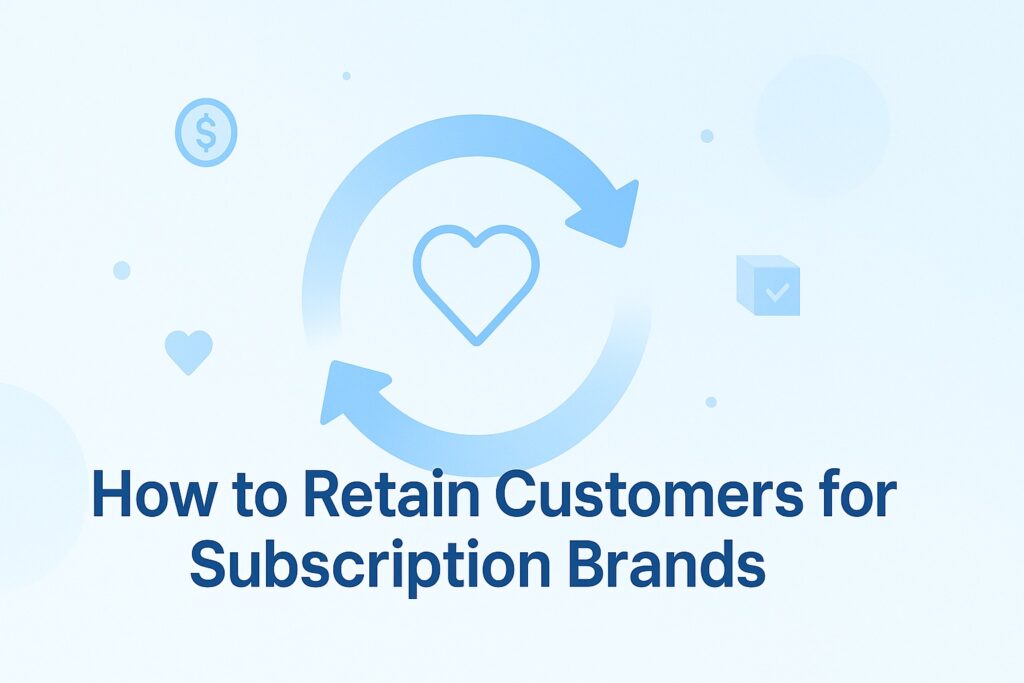
How to Retain Customers for Subscription Brands?

How Subscription Brands Build Loyalty That Lasts Subscription models thrive on consistency. Unlike one-time purchases, the success of a subscription brand depends on keeping customers engaged month after month. Retaining customers requires more than offering a product or service, it’s about creating value that consistently meets and exceeds expectations. To achieve this, brands must align product quality, customer experience, and communication strategies in ways that keep subscribers connected. The process begins with understanding how customers interact with a subscription. Every touchpoint, from the initial sign-up to recurring renewals, presents an opportunity to strengthen loyalty. If customers feel understood, valued, and supported, they are more likely to stay. Product Siddha emphasizes that retention should be treated as a continuous journey, not an afterthought. It is about building long-term trust by solving problems before they arise and delivering value at every stage. What Keeps Customers Coming Back Customers remain loyal to subscription brands when they feel they are consistently receiving benefits worth their investment. Retention comes down to three critical factors: Personalization – People want services tailored to their unique preferences. Subscription brands that leverage data to curate experiences, whether through product recommendations, exclusive content, or customized delivery cycles, create a sense of exclusivity. Reliability – Customers stay when they know they can trust the brand. Timely delivery, consistent quality, and dependable service form the foundation of retention. Ongoing Value – Retention falters if customers feel stagnant. Regular updates, innovations, and added perks remind them why the subscription is worth continuing. The key is ensuring that customers never feel like they are on autopilot. A sense of anticipation, reward, and care transforms what could become routine into a valued relationship. Why Retention Matters More Than Acquisition While acquiring new subscribers is important, retention delivers far greater long-term value. Studies consistently show that retaining a customer is significantly cheaper than acquiring a new one. More importantly, loyal subscribers spend more over time, provide predictable revenue, and often become brand advocates. For subscription brands, churn, the rate at which customers cancel, is a critical risk. High churn indicates unmet needs or disengagement. By focusing on retention strategies, companies reduce churn and maximize customer lifetime value. Product Siddha highlights that retention efforts not only save money but also stabilize business growth. Predictable revenue streams create resilience against market fluctuations and competition. Where Retention Strategies Deliver the Most Impact Retention strategies are most effective where customer interactions are strongest. Subscription brands can build loyalty by focusing on key areas: Onboarding Experiences – The early days set the tone. Clear communication, easy navigation, and immediate value help new customers feel confident in their choice. Customer Support – Accessible, empathetic, and proactive support systems show customers that their concerns are taken seriously. Product and Service Quality – Consistency in product delivery ensures that customers trust the subscription as a reliable part of their lives. Community Engagement – Creating spaces where customers connect with one another, share experiences, or access exclusive insights fosters belonging and loyalty. Where these elements intersect, retention grows strongest. Customers remain committed when they feel both seen and supported. When Engagement Creates Retention Opportunities Timing plays a vital role in retention. Subscription brands must know when customers are most vulnerable to canceling. Typically, this happens after the first few billing cycles when initial excitement begins to fade. Strategic engagement during these periods is essential. For instance: Sending personalized updates just before renewal cycles. Introducing exclusive offers at moments when usage patterns suggest waning interest. Checking in when customers show signs of disengagement, such as reduced product use or lack of interaction. When interventions are timely, they can reignite interest and remind customers of the subscription’s value. Product Siddha advises brands to pay attention to these critical junctures and use them as opportunities to strengthen loyalty. Who Drives Retention Success Retention is not the responsibility of one team alone. It requires collaboration across marketing, product development, customer service, and data analysis. Every department plays a role in delivering value. Marketing teams craft communication strategies that keep customers engaged. Product teams ensure offerings evolve to meet changing needs. Customer service teams resolve issues quickly and with empathy. Data analysts uncover insights into customer behavior and predict potential churn. Together, these functions create a unified experience that fosters loyalty. Product Siddha emphasizes that retaining customers requires organizational alignment where every department contributes to the customer journey. How to Put Retention Into Practice Retention is achieved through deliberate strategies that address both emotional and practical customer needs. Practical approaches include: Personalized Communication: Using data-driven insights to send tailored messages that make customers feel understood. Flexible Subscription Models: Allowing customers to pause, modify, or upgrade plans without friction. Reward Programs: Offering loyalty perks, discounts, or exclusive access for long-term subscribers. Continuous Innovation: Regularly introducing new features, products, or services to keep the experience fresh. When executed well, these practices make customers feel valued and invested in the subscription. Instead of viewing the service as a monthly cost, they perceive it as a recurring benefit. Visualizing Retention Strategies Advantages of Strong Retention Practices Effective retention strategies create ripple effects beyond customer loyalty. They result in: Higher Profitability: Predictable income streams reduce dependency on constant acquisition. Stronger Brand Reputation: Satisfied subscribers spread positive word-of-mouth. Sustainable Growth: Loyal customers provide a steady base from which companies can expand. Lower Costs: Retaining customers is more cost-effective than acquiring new ones. By focusing on retention, subscription brands build resilience and scalability. Product Siddha notes that this approach strengthens long-term competitiveness while ensuring customer satisfaction remains central. Conclusion: The Lasting Value of Customer Retention Customer retention is the lifeblood of subscription brands. It is what transforms one-time curiosity into long-term loyalty. By delivering consistent value, personalizing experiences, and engaging customers at the right time, subscription brands can minimize churn and build lasting relationships. Retention is not an isolated task but a continuous journey. Companies that embrace this philosophy, like Product Siddha encourages, gain more than loyal customers; they cultivate advocates who fuel growth and resilience.
AI tools vs AI Automation
AI Automation, Blog

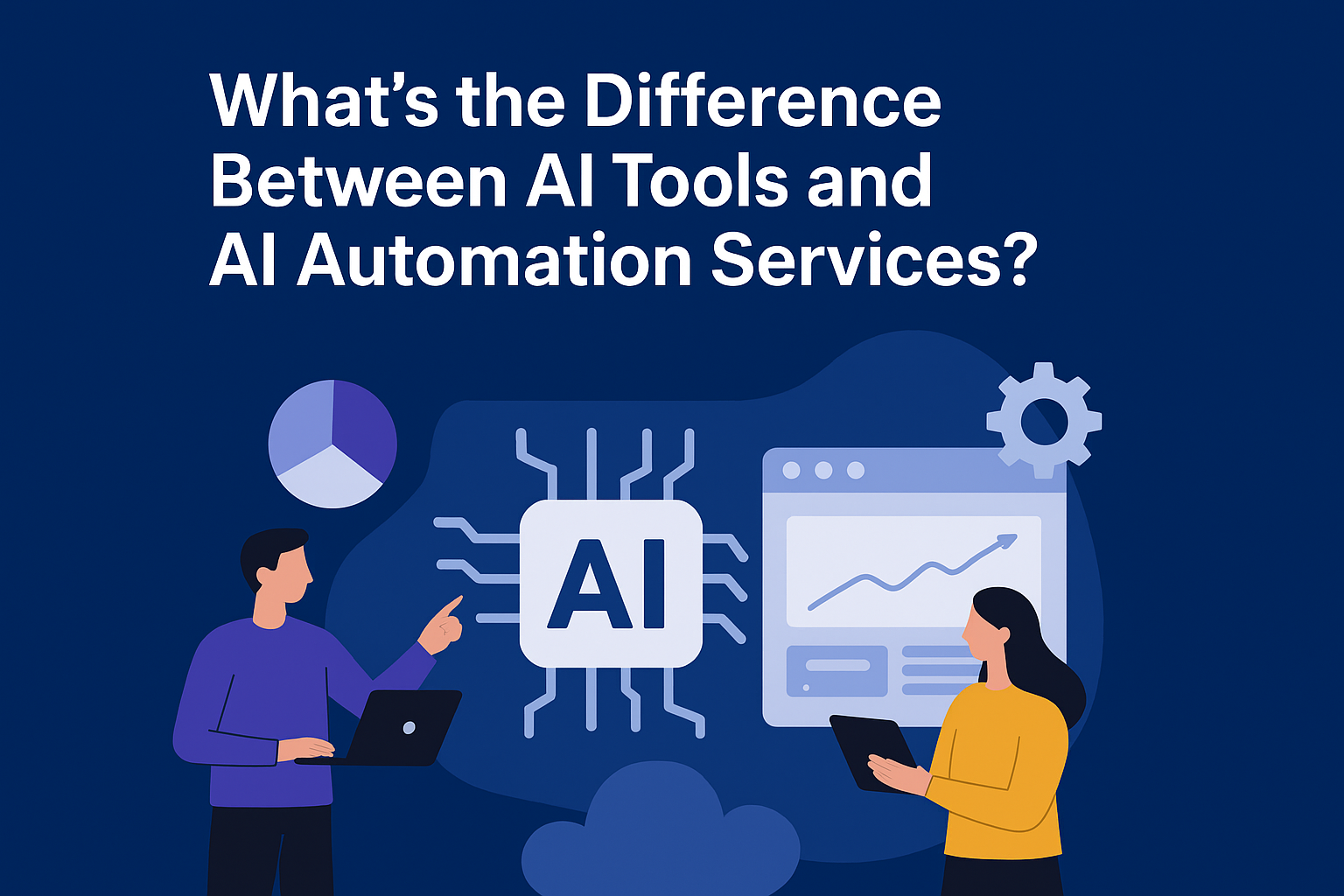
What’s the Difference Between AI Tools and AI Automation Services?

What Makes AI Tools Popular in Modern Workflows? In today’s technology-driven landscape, businesses are increasingly drawn to AI-powered solutions that promise speed, efficiency, and precision. AI tools – whether for text generation, image recognition, data analysis, or customer interaction – have quickly become popular for their ability to handle specific, well-defined tasks. These tools are designed with a narrow focus. A chatbot tool, for example, can manage customer conversations, while a data visualization tool can turn spreadsheets into actionable insights. Their popularity stems from being easy to adopt, often affordable, and user-friendly, making them accessible to companies of all sizes. However, the challenge arises when organizations begin to rely on multiple tools simultaneously. Each operates in isolation, creating silos of information and processes. This fragmentation often reduces efficiency and limits scalability. How Do AI Automation Services Take Things Further? While AI tools address individual problems, AI automation services go a step further by weaving these tools into a seamless operational framework. An AI Automation Agency focuses not just on technology itself but on how it integrates into an organization’s ecosystem. Automation services bring together AI models, business processes, and data pipelines into a cohesive system that functions with minimal human intervention. For example: In healthcare, automation services can unify patient record systems, AI-driven diagnostics, and scheduling platforms into a streamlined care delivery model. In construction, AI automation can coordinate supply chain data, workforce scheduling, and safety monitoring tools, ensuring projects stay on time and within budget. In e-commerce, automation connects inventory management, customer engagement, and personalized marketing into one synchronized flow. The value lies in orchestration—turning individual tools into a unified solution that reduces manual effort and drives consistent results. Why Is the Difference Between AI Tools and Automation So Important? Understanding the distinction between AI tools and AI automation services is critical for long-term success. Businesses that only adopt tools may see short-term productivity boosts, but they often encounter scalability challenges as operations grow. On the other hand, automation services focus on sustainability. They are not just about applying AI but about embedding intelligence into workflows. This ensures that organizations can: Scale operations without dramatically increasing costs. Reduce human error by standardizing processes. Free up teams to focus on higher-value, strategic tasks. Adapt quickly to new market demands or customer expectations. In short, while tools solve immediate problems, automation services build future-ready infrastructures. Who Benefits Most from AI Automation Services? Different stakeholders within an organization benefit uniquely from automation: Executives gain reliable performance metrics and operational transparency. Managers experience smoother workflows and easier resource allocation. Employees are freed from repetitive tasks, allowing them to focus on creativity and problem-solving. Customers enjoy better service quality, faster response times, and personalized interactions. Industries with complex, high-volume operations, such as finance, healthcare, retail, and manufacturing, see the most significant impact from automation. These sectors rely heavily on integrating multiple data streams and workflows, making them ideal candidates for AI automation services. When Should a Business Transition From Tools to Automation? The right time to move from standalone tools to comprehensive automation often depends on growth stage and complexity. Signs that a business is ready include: Rising manual workload: Teams spend more time managing tools than using them. Process bottlenecks: Data must be manually transferred between systems. Scalability limits: Tools cannot handle growing volumes without excessive human input. Customer demand: Clients expect faster, more seamless experiences than tools alone can provide. For startups, tools can be a good starting point. But as operations scale, transitioning to automation services becomes essential for sustainable growth. How Do AI Automation Agencies Deliver Long-Term Value? An AI Automation Agency doesn’t simply implement tools; it redefines workflows. Agencies analyze business objectives, map existing processes, and design tailored solutions that bring multiple technologies together. Key roles include: Strategic integration: Ensuring tools talk to one another within existing systems. Customization: Designing solutions unique to each industry and business model. Support and scalability: Offering ongoing service so solutions evolve with business needs. Measurement: Establishing benchmarks to track ROI, efficiency, and customer outcomes. This approach ensures that businesses are not just using AI but are leveraging it in ways that directly impact growth, profitability, and long-term sustainability. Visualizing the Difference Feature AI Tools AI Automation Services Scope Task-specific Organization-wide Integration Standalone Unified ecosystem Scalability Limited High Human Involvement Moderate to high Minimal Impact Short-term efficiency Long-term transformation Examples Chatbots, analytics dashboards End-to-end automated workflows Reflecting on the Future of AI Automation The future belongs to businesses that move beyond fragmented tools and embrace automation as a strategic advantage. As industries evolve, automation services will not only enhance efficiency but also redefine customer expectations and competitive standards. By partnering with an AI Automation Agency like Product Siddha, organizations can transform their operations into intelligent, scalable systems built for the challenges of tomorrow.

AI automation for Small Business
AI Automation, Blog

How Can Small Businesses Compete Using AI Automation?

The business landscape has shifted. Small businesses no longer compete only with local players but also with large enterprises equipped with advanced tools. The good news is that artificial intelligence (AI) levels the playing field. By partnering with an AI Automation Agency, small businesses can unlock productivity, reduce costs, and scale faster than ever before. This Blog explains how small businesses can use AI automation to compete strategically, stay relevant, and thrive in competitive markets. What is AI Automation? AI automation is the integration of artificial intelligence into everyday business processes to eliminate repetitive tasks, analyze data faster, and make smarter decisions. Unlike traditional automation, AI adapts, learns, and improves over time, making it highly valuable for small businesses. The AI Revolution for Small Businesses and Startups Running a small business often means navigating limited resources, tight budgets, and the constant pressure to compete with larger players. Today, the rise of AI has changed that equation. With the democratization of AI technology, small businesses now have access to powerful yet affordable tools that were once available only to big enterprises. Modern AI solutions are user-friendly, cost-effective, and designed to solve real business challenges without the need for a large technical team. How Small Businesses Can Compete Using AI Automation 1. Streamline Marketing Efforts An AI Automation Agency can help small businesses automate social media posting, content scheduling, and email campaigns. Instead of manually tracking every campaign, AI ensures your business reaches the right audience at the right time. Marketing Task Manual Effort With AI Automation Social Media Posting 5-10 hours/wk 1-2 hours/wk Email Campaign Scheduling 3-4 hours/wk Automated Customer Segmentation 2-3 hours/wk Real-time insights 2. Personalize Customer Experiences Customers expect personalized recommendations and quick responses. AI chatbots, powered by natural language processing, can provide instant support, answer FAQs, and even upsell products. Small businesses using these tools can match the customer service quality of larger competitors. 3. Optimize Operations and Reduce Costs AI can predict inventory needs, manage supply chains, and automate invoicing. Partnering with an AI Automation Agency ensures these systems are set up correctly, giving small businesses more control and efficiency. Operational Impact of AI Automation Area Before AI After AI Inventory Control Reactive Predictive Billing & Invoicing Manual, Error-Prone Automated & Accurate Workforce Efficiency High dependency on staff Enhanced with AI support 4. Data-Driven Decision Making AI-driven analytics tools allow small businesses to track sales, customer behavior, and market trends in real time. Instead of relying on guesswork, decisions are based on actionable insights. This creates a major advantage when competing with bigger brands. 5. Enhance Sales with Smart Tools AI-powered CRMs (Customer Relationship Management systems) help sales teams prioritize leads, follow up automatically, and close deals faster. With automation in place, small businesses can operate like well-structured enterprises without expanding headcount. Why Work with an AI Automation Agency? Setting up AI automation requires the right strategy, tools, and implementation expertise. Partnering with a trusted AI Automation Agency ensures that small businesses avoid tool overload, wasted budgets, and poor implementation. Instead of struggling with disconnected platforms, businesses get a seamless and scalable solution that drives growth. By working with Product Siddha, small businesses gain access to: Tailored AI strategies for growth – Every business is unique. Product Siddha customizes automation strategies that align with your industry, customer needs, and long-term goals. Proper integration across marketing, sales, and operations – No more data silos or manual processes. Product Siddha ensures that all tools talk to each other, creating a smooth workflow that boosts efficiency. Continuous support and optimization – Technology evolves rapidly. With ongoing guidance from Product Siddha, businesses can stay ahead, adapt to changes, and scale confidently. By leveraging the expertise of Product Siddha, small businesses can compete like larger enterprises while staying lean, efficient, and customer-focused. Action Plan for Small Businesses If you want your small business to compete effectively, here is a simple roadmap: Identify repetitive tasks in your business. Choose an AI Automation Agency to evaluate and implement the right tools. Integrate AI into core areas like marketing, sales, and operations. Track performance with AI-driven analytics. Scale gradually as automation frees up time and resources. Start Your AI Journey Today Small businesses no longer need massive budgets or large teams to compete. By leveraging AI-powered tools and partnering with a reliable AI Automation Agency, you can streamline processes, reduce costs, and enhance customer engagement. The future of business growth lies in adopting AI automation today. Ready to take your small business to the next level with AI automation? Contact us today Product Siddha at +91 98993 22826 and discover how our expert team can transform your operations, marketing, and sales into smarter, faster, and scalable processes.

AI Automation, Case Studies

Built an AI Stock Advisor That Tracks, Analyzes, and Remembers, Cutting Manual Research by 75%

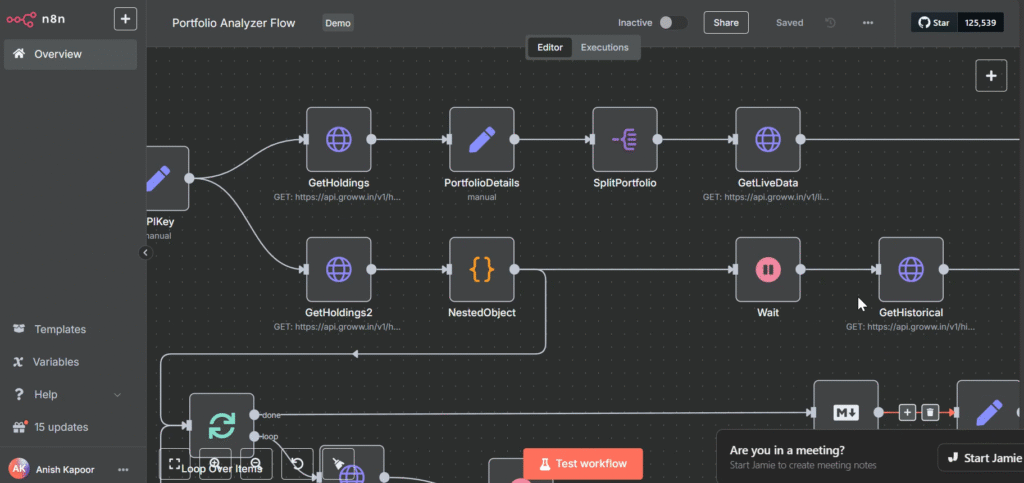
Built an AI Stock Advisor That Tracks, Analyzes, and Remembers, Cutting Manual Research by 75% Client Confidential (High-Net-Worth Individual Investor) Service Provider Product Siddha Industry Wealth Management / Fintech Service AI-Powered Investment Assistant for Indian Equity Markets The Problem: Too Many Tools, Too Much Time A high-net-worth investor came to Product Siddha with a clear problem: They were spending too much time switching between apps, websites, and spreadsheets just to track their portfolio. Here’s what wasn’t working: Manual research across platforms like Groww and Screener No smart system to track financial ratios or market trends No way to remember personal investment preferences No personalized advice based on real portfolio data Repetitive tasks and API overuse, leading to unnecessary costs What the client wanted was simple: A smart, memory-aware AI stock advisor that could save time, reduce research work, and give custom investment insights based on their risk profile. The Solution: A Personalized AI Investment Assistant Product Siddha designed a lightweight, cost-efficient AI system built specifically for the Indian equity market. It was more than just a dashboard; it was a true assistant that remembered, learned, and adapted to its users’ needs. Here’s how we did it: Live Portfolio Tracking via Groww API We connected the client’s brokerage account to pull real-time data on holdings, stock prices, and order history, automatically and securely. Fundamentals via Screener.in Scraper To track stock health, the system pulled data like: P/E Ratio ROCE Debt-to-Equity Dividend Yield This allowed smart filtering of high-risk or low-return stocks. Built-In Technical Analysis Engine Custom code to calculate: RSI (Relative Strength Index) MACD (Moving Average Convergence Divergence) SMA (Simple Moving Average) These helped identify overbought or oversold conditions, giving timely signals for entries and exits. These helped identify overbought or oversold conditions, giving timely signals for entries and exits. Conversational AI Using OpenAI 4.1 We trained the AI to understand: The client’s risk tolerance Investment goals (capital preservation + dividend income) Preferences for industry sectors and stock types This made every recommendation personal and context-aware. This made every recommendation personal and context-aware. Smart Memory via Supabase (Postgres) Every user interaction, stock preference, and past recommendation was stored securely.That way, the assistant could say things like:”You previously reduced Tata Motors due to cyclicality. Do you want to review that decision again based on new signals?” Automation Layer with n8n We added automation to: Orchestrate workflows Control API usage (to avoid overbilling) Trigger insights only when market conditions change This kept the system efficient, scalable, and low-cost. Real Use Cases: Smart Actions, Not Just Alerts The AI assistant didn’t just pull data; it gave smart, actionable suggestions. Reduce exposure to Tata Motors & JSW Steel Both were showing cyclical risk and overbought signals (via RSI/MACD) AI flagged and suggested gradual exits Increase allocation to Power Grid, HDFC Bank, and ITC Low debt, stable income, and consistent dividends Matched the client’s conservative investment goals Adaptive re-entry alerts If technical indicators improved, the AI suggested when to consider buying back, while reminding the user of their original risk profile The Outcome: Research Time Cut by 75%, Confidence Boosted With this system in place, the investor no longer needed to: Jump between platforms Track charts manually Second-guess buy/sell decisions Key Wins: Daily stock insights customized to client holdings Tailored recommendations for lower-risk, high-dividend picks Clear visibility into stock fundamentals and technical indicators 75% reduction in time spent on portfolio research Minimal API usage, low cost, high performance History tracking: See how and why decisions were made over time Bonus: Ready for Other Markets Too This AI stock advisor was built for Indian stocks, but the same system works in other markets. For U.S. Markets, we can plug in: Broker APIs like Robinhood, Alpaca, and Interactive Brokers Data from Yahoo Finance, Alpha Vantage, and Finviz News and fundamentals via Seeking Alpha The architecture remains the same, making it easy to adapt for global equity, ETFs, or crypto. Conclusion: Personalized Investment Automation That Learns With Product Siddha’s smart AI setup, this investor gained: More time More confidence Smarter decisions All without hiring a portfolio manager. If you’re an investor looking to automate your stock research, reduce manual work, and get insights tailored to you, Product Siddha can help. Let’s build an AI stock advisor that works like your second brain.

AI Automation Agency India
AI Automation, Blog

How an AI Automation Agency Transforms Retail: Real-World Use Cases, Profit-Boosting Benefits & Key Stats

Retail is no longer just about shelves and storefronts; it’s a battleground of speed, personalization, and precision. In today’s hyper-competitive landscape, the retailers who thrive are those who adopt technologies that think faster and act smarter. This is where an AI automation agency becomes indispensable. By integrating AI-driven automation, retailers are transforming every aspect of their operations, from inventory to checkout, from marketing to customer experience. But what does this transformation look like in the real world? And why are agencies specializing in AI automation becoming such a vital part of the retail success formula? Let’s break it down. How AI Automation Agencies Revolutionize Retail Operations The power of AI automation lies in its ability to mimic human decision-making at scale, only faster and more accurately. AI automation agencies bring this capability to retailers through tailored solutions that streamline processes, boost performance, and cut inefficiencies. Here’s how it works in practice: 1. Intelligent Inventory Management AI algorithms can predict stock demands, detect seasonal trends, and reduce overstocking or understocking errors. Agencies implement smart systems that analyze sales data in real-time and adjust inventory strategies accordingly. Benefit: Up to 30% reduction in inventory costs Use Case: Automated restocking based on predictive analytics 2. Personalized Customer Engagement AI automation enables hyper-personalized experiences across digital and physical retail channels. From dynamic product recommendations to chatbots handling customer queries, agencies design end-to-end customer journeys that feel intuitive and responsive. Benefit: Increases conversion rates by 20–25% Use Case: Personalized marketing emails and product suggestions 3. Automated Pricing Optimization Retailers no longer rely on manual markdowns or static pricing models. AI automation agencies set up systems that monitor competitor prices, supply changes, and consumer demand in real time. Benefit: Improves profit margins without sacrificing competitiveness Use Case: Dynamic pricing updates across multiple platforms 4. AI-Powered Fraud Detection Retail fraud continues to evolve, but so do AI-powered defenses. Agencies provide solutions that analyze purchasing patterns to flag unusual activity before losses occur. Benefit: Up to 80% accuracy in real-time fraud alerts Use Case: Automated detection of payment anomalies and return fraud Why Retail Needs AI Automation Now More Than Ever As consumer behavior shifts and online competition grows, traditional retail methods are proving too slow and error-prone. Retailers are under pressure to adapt instantly to fluctuating trends, rising operational costs, and tighter customer expectations. AI automation offers relief in several high-impact areas: Speed of decision-making Real-time data visibility Lower operational overhead Scalable customer service Consistent omnichannel experiences Agencies bring the technical depth and domain understanding required to execute AI solutions without disrupting the business. When Retailers See ROI: The Data Speaks Let’s look at a few industry stats that show the concrete benefits of adopting AI automation in retail: MetricValue Achieved by AI AutomationForecasting accuracyUp to 85%Customer satisfaction scoresIncrease by 30–40%Reduction in returns25% decrease with better matchingCheckout time improvement40% faster on averageCost reduction in operations20–35% across key processesThese numbers aren’t projections—they’re being realized by forward-thinking retailers who’ve partnered with AI automation experts. Where the Transformation Happens: Real-World Examples AI automation isn’t limited to high-end ecommerce. Agencies are deploying solutions across various retail sectors, including convenience stores, supermarkets, apparel, electronics, and specialty goods. Example 1: A Regional Fashion Retailer With AI-powered inventory prediction, a mid-size fashion retailer cut seasonal overstocking by 28%, reducing storage and markdown losses significantly. Example 2: A Chain of Grocery Stores Using AI chatbots for online orders and customer service, this grocer reduced response time by 80%, improving customer retention. Example 3: A Niche Electronics Brand Implemented AI-driven price optimization tools and saw a 17% uplift in profit margins within six months. Who Should Partner with an AI Automation Agency? The benefits of AI automation aren’t just for enterprise giants. Any retail business that deals with: High inventory turnover Diverse customer base Multi-channel selling Manual back-office processes Scaling pain points …can benefit from the strategic insight and execution that a specialized AI automation agency offers. Whether you’re a local boutique or a rapidly expanding retail chain, an agency can build tailored automation workflows that evolve with your business. What Makes an AI Automation Agency a Strategic Partner? Unlike hiring internal developers or using off-the-shelf tools, agencies provide: End-to-end consultation: From discovery to implementation Custom-built workflows: Aligned with your business logic Toolstack integration: Harmonizing with existing platforms Ongoing optimization: AI models learn and improve with time Scalability: Modular designs for growing needs This partnership allows retailers to focus on what they do best—selling and delighting customers—while the agency handles the tech backend. Reflecting on the Future: Retail’s AI-Powered Road Ahead AI automation in retail is not a trend—it’s the infrastructure of the future. From predictive insights to real-time customer personalization, retailers who invest now are positioning themselves for long-term dominance. As the retail landscape becomes increasingly complex, only those equipped with the right intelligence tools will stay ahead. AI automation agencies provide the expertise, precision, and strategy needed to thrive in this new digital-first retail era. Product Siddha empowers modern retailers to harness these advantages, turning complexity into opportunity and potential into performance.

AI Automation Agency
AI Automation, Blog

Supercharge Your AI Assistants with RAG for Real-Time, Reliable Responses

Supercharge Your AI Assistants with RAG for Real-Time, Reliable Responses In today’s fast-paced digital world, businesses need smarter and faster tools to serve their customers better. One of the best ways to make your AI assistants more powerful is by using RAG – Retrieval-Augmented Generation. This simple yet smart technology enables your AI to provide better, more accurate answers when users need them. with an experienced AI Automation Agency can help you implement RAG effectively and maximize its potential. What Is Retrieval-Augmented Generation (RAG)? Retrieval-Augmented Generation, or RAG, is a method that combines two powerful AI tools: one that searches for the right information (retrieval) and another that uses that info to create a clear answer (generation). Instead of depending only on what the AI already knows, RAG pulls fresh and trusted data from outside sources in real-time. This makes your AI smarter, faster, and more useful. It’s like giving your AI assistant a way to look up correct answers before speaking. Why RAG Is a Game-Changer for AI Assistants Regular AI assistants can sometimes give wrong or outdated information. That’s because they depend on what they were trained on—usually a snapshot of the internet from the past. But with Retrieval-Augmented Generation, your AI pulls in up-to-date, accurate information from live databases, trusted documents, or your own knowledge base. That means your business gives better answers, builds more trust, and saves time by not correcting wrong replies. Top Benefits of Using RAG in Your AI Real-Time, Accurate Answers RAG helps your AI give instant answers based on current and relevant information, not old training data. Better Customer Support Your AI assistant can now handle more complex questions by searching trusted sources first. This leads to fewer support tickets and happier users. Custom Responses RAG lets your AI answer based on your own data, product manuals, guides, and internal docs—so users always get replies that fit your brand and service. Saves Time and Money By cutting down errors and repeated questions, RAG reduces time spent fixing AI mistakes and improves user satisfaction. How RAG Works in Simple Steps User asks a question AI uses a retriever to find helpful content (from PDFs, wikis, websites, etc.) AI uses a generator to form a full answer using that content User gets a clear, accurate, and real-time response It’s like giving your AI a supercharged brain and a reliable memory! Where Can You Use RAG? You can use Retrieval-Augmented Generation in many places: Customer service chatbots Internal helpdesk bots eCommerce product support Healthcare AI tools Banking and finance support bots Education and learning platforms Wherever you need your AI to be right, fast, and helpful, RAG makes it happen. Make Your AI Smarter with Product Siddha At Product Siddha, we help you bring RAG into your business. Whether you have a chatbot, voice assistant, or custom AI tool, we can help you add real-time search and generation features to make them smarter and more helpful. We use top tools and expert planning to connect your AI assistant with live content, structured documents, and secure sources. This means your users get quick, reliable answers every time. Ready to Supercharge Your AI? If you want your AI to answer better, faster, and smarter, it’s time to switch to RAG. Product Siddha is here to guide your business step-by-step. Whether you need help setting up, training, or scaling your AI assistant, we’re just a call away. Let your AI grow smarter with RAG. Call us today at+91 98993 22826 to get started. Don’t wait for your users to get tired of bad answers. Let us help you build AI that works right the first time. Call now or visit Product Siddha and start building better AI today.

AI Automation
AI Automation, Blog

Smart Moves: How Small Businesses Can Win with AI Automation in 2025

Smart Moves: How Small Businesses Can Win with AI Automation in 2025 In 2025, savvy business owners are leveraging AI automation to save time, serve customers more efficiently, and expand their operations without increasing workload. You don’t have to be a big company to use AI. With the right tools and planning, even small businesses can win big. At Product Siddha, we believe that the right technology should be easy to use and help you work smarter, not harder. Why AI Matters for Small Businesses Today, AI automation services are changing how small businesses do things. AI helps with things like: Talking to customers 24/7 through smart chat tools Organizing work and saving time Making smart decisions using real data Boosting sales with better customer follow-ups According to recent reports, more than 70% of small businesses plan to use AI. That’s because it works. What Is AI Automation? AI automation means using machines and software to do tasks that people usually do. For example, sending emails to customers, answering questions, or even keeping track of your inventory. An AI automation agency can help set up these tools for your business. You don’t need to be tech-savvy. All you need is a clear goal and the right partner. How AI Can Help in CRM (Customer Relationship Management) Want to take better care of your customers? Use AI in CRM. AI tools can: Keep track of customer messages Send reminders to follow up Suggest products based on what customers like Give you reports on what’s working and what’s not With AI in CRM, your customer service becomes faster and smarter. That means happy customers – and more sales. How to Start with AI (Step-by-Step) Step 1: Know What You Need Think about what takes the most time in your business. Is it answering customer questions? Tracking orders? Sending updates? That’s where AI can help first. Step 2: Pick the Right AI Tools There are many tools out there, and some are even free or very low-cost. Some top choices are: Chatbots to answer customer questions Email tools to send automatic replies Smart planners to manage your tasks Need help choosing? A trusted AI automation agency like Product Siddha can guide you. Step 3: Train Your Team We train your team to use the tools. With easy apps like Slack, GoHighLevel, and Gumloop, anyone can learn quickly. Step 4: Test and Improve Start small. Try AI on one part of your business. Track how it helps. Then add more tools as you grow. Real Results from AI Use Small businesses that use AI have seen: Up to 70% lower costs in managing inventory Faster customer service with 24/7 chatbots More sales with smart emails and follow-ups Less stress for teams with better task management What’s Next? The Future of AI for Business In 2025 and beyond, AI will keep getting better. Expect more personal service, quicker answers, and even better tools to grow your business. The best part? You don’t have to wait. Ready to Work Smarter? If you want to grow your business and get more done with less effort, it’s time to explore AI automation services. At Product Siddha, we help small businesses just like yours. Let’s set up your AI system today, simple, fast, and made just for you. Contact Product Siddha now at +91 98993 22826 to schedule your free AI consultation. Don’t get left behind. Start using AI and grow your business the smart way. Product Siddha – Your Trusted AI Automation Agency.

AI Automation, Case Studies

AI Automation Services for Agri-Tech/FoodTech VC Fund

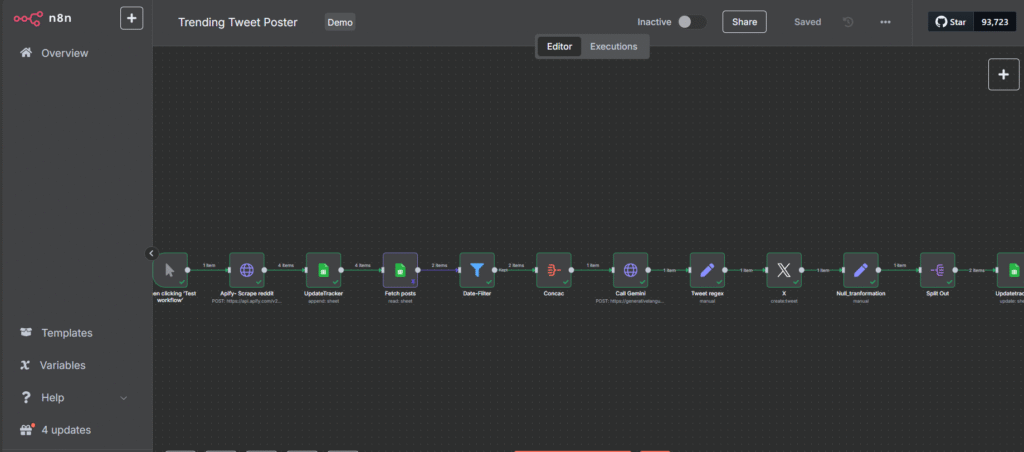
AI Automation Services for Agri-Tech/FoodTech VC Fund Client Confidential (Agri-Tech/FoodTech Venture Capital Firm) Service Provider Product Siddha Industry Venture Capital / Agri-Tech / FoodTech Service AI Automation Services / Content Automation The Problem: Staying Active on Twitter Takes Too Much Time The client is a fast-paced VC fund focused on Agri-Tech and FoodTech startups. They wanted to stay active on Twitter by sharing fresh, trending content, but: Founders and partners didn’t have time to tweet daily Manually researching trending topics in their niche — by studying newsletters, RSS feeds, blogs, and articles — took considerable effort and time Writing good tweets from all that research required strong copywriting skills, which a Founder or Partner may not always have Valuable insights were often missed or forgotten in the process They needed a smart, automated way to turn trending topics in their niche into tweets without wasting time. The Solution: A Reddit-to-Twitter AI Content Pipeline Product Siddha built a fully automated Reddit to Twitter pipeline that turns Reddit trends into ready-to-publish tweets. It saves time and keeps the VC firm’s Twitter active with relevant, high-quality posts. Here’s how the automation works: Collects Industry Trends The system scans multiple trusted sources – such as newsletters, blogs, and content feeds – focusing on topics relevant to the client’s Agri-Tech and FoodTech space. Filters Out Low-Quality Content The engine automatically filters and curates only useful or meaningful posts. Spam, off-topic pieces, or repetitive content are excluded. Uses AI to Write Tweets (Like an Ogilvy Copywriter) The filtered content is passed to a large language model (LLM) that crafts Twitter-ready drafts, following guidelines that ensure each tweet reads like it was written by a top-tier copywriter. Posts Automatically Once the tweet is ready, it’s posted directly to the firm’s Twitter account using the Twitter API – no manual work needed. Logs Everything in Google Sheets Each tweet, source, and result is logged in Google Sheets for easy review, edits, or re-use. Your browser does not support the video tag. The Outcome: Daily Tweets Without Lifting a Finger The VC fund now has a smart Twitter automation tool that runs on its own. Founders stay visible on social media without ever logging in. Key Benefits: Automatic posting from trusted sources Consistent social media presence for the brand No manual writing or research needed Easy to edit or track content in one place Saves hours of work each week Measurable Results: Time saved per week: 5+ hours Tweet consistency: 100% daily activity Twitter engagement: ↑ higher impressions and likes Manual effort: Almost zero Conclusion: AI Automation That Keeps VCs in the Spotlight This project shows how Product Siddha’s AI automation services helped a VC firm turn Reddit trends into tweets in real-time. With AI content generation, automated filtering, and direct Twitter posting, the client now stays active, relevant, and visible – without doing any extra work. If you’re looking for AI-powered social media automation, Product Siddha has the tools and talent to build it for you. ng> has the tools and experience to make it happen.

AI Automation, Case Studies

AI Automation Services for French Rental Agency MSC-IMMO

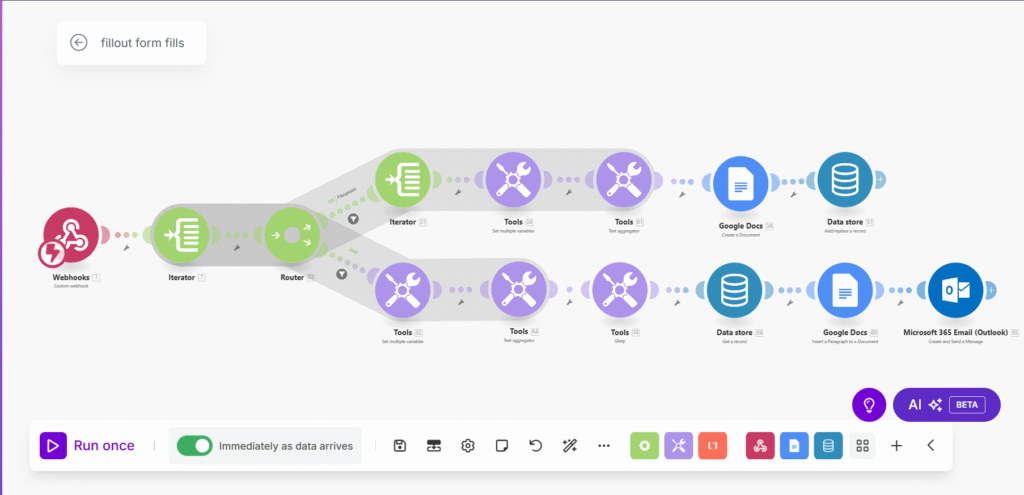
AI Automation Services for French Rental Agency MSC-IMMO Client MSC-IMMO, a French property rental agency Service Provider Product Siddha Industry Real Estate Service AI Automation Services / Real Estate Workflow Automation The Problem: Too Many Leads, Too Little Time MSC-IMMO is a busy rental agency in France. They list their homes and apartments on many property sites, such as SeLoger, Bien’ici, Locaverif, Kyero, and more. Every day, dozens of new rental inquiries fill their inbox. But here was the problem: Staff had to read each message manually They needed to send replies and collect documents from every tenant Then they had to follow up to schedule a visit Too many leads were old, fake, or just not serious Missed replies and double responses were common This process took hours every day and made it hard to keep up. The MSC-IMMO team needed a smart, simple, and automatic way to manage rental leads. The Solution: A Zero-Touch Lead Intake System Product Siddha stepped in to help with AI automation for real estate leads. They created a zero-touch lead intake system that does everything for the MSC-IMMO team – automatically and reliably. Here’s how it works: Smart Email Reader + Auto-Replies The AI system watches the email inbox for messages from top rental platforms like: SeLoger, Bien’ici, Jinka, Locaverif, ParuvenduPro, Kyero, and more. Once a new lead comes in, the system checks: Is the sender valid? Is the message new? Is the lead complete? Is it a rental or purchase inquiry? If yes, the system automatically replies, asking the tenant to complete a rental dossier (application form). Dossier Completion → Instant Visit Scheduling When a tenant completes the dossier (via Fillout), they get an email and SMS with a Calendly link to book a visit – no human involved. Reminders to Reduce No-Shows Before the visit, the system sends automated emails and SMS reminders to make sure the tenant shows up. The Outcome: Less Work, More Results MSC-IMMO went from manually managing every lead to having a fully automated rental lead system. Key Wins: Zero-touch lead intake: Staff no longer has to read every email Faster replies: Tenants get instant, helpful replies Real-time visit booking: Scheduling happens on its own Fewer no-shows: Reminder system keeps tenants on track Cleaner pipeline: Only fresh, serious leads go through Measurable Results: Time saved per day: 3+ hours Lead response time: Instant No-show rate dropped by 40% Staff workload reduced by 70% Happier tenants and better customer experience Conclusion: Automation That Just Works These efforts show how Product Siddha’s AI automation services helped a real estate company save time, reduce stress, and improve results. With smart tools like automated lead intake, AI-based email filtering, and calendar booking automation, MSC-IMMO now runs smoother than ever. Looking to automate your real estate workflows? Product Siddha has the tools and experience to make it happen.