
Product Siddha

Blog

AI Automation, Blog

AI-Powered Revenue Operations – Aligning Sales, Marketing & Customer Success

AI-Powered Revenue Operations – Aligning Sales, Marketing & Customer Success Revenue Misalignment Is a Systems Problem Most companies do not have a revenue problem. They have a systems alignment problem. Marketing optimizes CPL. Sales optimizes win rate. Customer Success optimizes renewals. Each team operates correctly – but from disconnected datasets. Revenue Operations (RevOps) was created to solve this. AI Automation makes it scalable. The shift is not about dashboards. It is about intelligent system orchestration. What AI Changes in Revenue Operations Traditional RevOps is reporting-heavy. AI-powered RevOps is signal-driven. Instead of reviewing last month’s pipeline, AI models analyze: Behavioral intent signals Multi-touch attribution paths Engagement decay patterns Usage drop-off indicators Sales cycle velocity anomalies This moves revenue management from reactive to predictive. The Core Architecture of AI-Powered RevOps A mature AI RevOps stack has five layers: 1. Unified Data Layer CRM (HubSpot / Salesforce) Marketing automation Product analytics Billing systems Support tools All events must flow into a central warehouse or structured reporting layer. In our work on Product Analytics & Full-Funnel Attribution for a SaaS Coaching Platform, we rebuilt attribution logic to connect marketing campaigns with in-product usage behavior and closed revenue. The insight: Attribution is not about “last click.” It is about lifecycle influence weighting. Without unified data, AI amplifies noise. 2. AI-Driven Lead Intelligence Most companies score leads on form fills and email opens. AI-powered scoring models include: Time-to-engagement compression Cross-channel behavior clustering Industry-specific buying cycles Historical win similarity scoring In Building a Lead Engine After Apollo Shut Us Out, alternative acquisition channels were integrated into automated scoring logic to prioritize real intent signals over vanity engagement. This reduced pipeline pollution and improved Sales Accepted Lead conversion rates. Insight: Lead scoring should predict sales velocity, not just interest. 3. Intelligent Sales Orchestration Revenue leakage often occurs in routing and follow-up lag. AI automation can: Auto-assign leads based on closing probability Trigger escalation workflows for stalled deals Detect inactivity risk Recommend next best action Instead of fixed rules, machine learning models adapt based on win/loss patterns. This transforms CRM from a database into a decision engine. 4. Predictive Customer Success Automation Retention is revenue. AI models identify churn risk through: Declining product engagement Reduced support interaction Payment irregularities Feature underutilization In HubSpot Marketing Hub Setup for a Growing Fintech Brand, lifecycle automation was structured so customer success received real-time alerts based on engagement decay — not after renewal failure. Insight: Customer success automation should trigger before the human notices a problem. 5. Closed-Loop Revenue Attribution Marketing ROI is often miscalculated because product and revenue data are disconnected. In Product Management for UAE’s First Lifestyle Services Marketplace, acquisition data was connected to vendor performance and transactional revenue metrics. This revealed: High-volume channels with low LTV Lower acquisition channels with higher expansion value Marketplace supply-demand revenue gaps Insight: AI-powered RevOps optimizes for lifetime revenue contribution, not cost-per-lead. What Most AI RevOps Implementations Get Wrong Automating broken processes Skipping data cleaning No governance structure Over-reliance on dashboards No ownership model Automation without governance creates hidden risk. Governance Framework for AI RevOps Before deploying automation, define: Ownership Who owns lead scoring model tuning? Who monitors churn prediction accuracy? Who validates attribution reports? Monitoring Cadence Weekly anomaly detection review Monthly revenue signal recalibration Quarterly model refinement Fail-Safes Manual override triggers Alert thresholds Performance drift monitoring AI is not “set and forget.” It requires operational discipline. Real Alignment Looks Like This Marketing knows: Which campaigns generate long-term customers Sales knows: Which accounts have expansion potential Customer Success knows: Which users require proactive intervention Leadership sees: One revenue number One attribution model One lifecycle dashboard That is unified RevOps. Measurable Business Outcomes of AI-Powered RevOps When implemented properly, organizations see: 20–35% improvement in lead-to-opportunity conversion Reduced sales cycle length Higher forecast accuracy Lower churn volatility Increased expansion revenue The compounding effect is operational clarity. The Strategic Shift AI-powered Revenue Operations is not about replacing teams. It is about: Removing manual friction Embedding intelligence into workflows Converting fragmented systems into one revenue engine When Sales, Marketing, and Customer Success operate from shared predictive models, accountability becomes structural – not political. Revenue becomes measurable across the full lifecycle. That is sustainable scale.

AI Automation, Blog

AI Workflow Governance – How to Control, Monitor, and Scale Automation Without Chaos

AI Workflow Governance – How to Control, Monitor, and Scale Automation Without Chaos Order Before Scale Automation promises speed. It rarely promises order. That is where many companies struggle. They invest in AI Workflow Automation to remove manual effort, only to discover that disconnected tools, unclear ownership, and hidden errors create new risks. AI workflow governance is the discipline that keeps automation aligned with business goals. It defines who controls the system, how decisions are tracked, and how performance is measured. Without governance, automation expands quietly until no one fully understands how it operates. At Product Siddha, governance is not treated as an afterthought. It is designed into the automation architecture from the start. What AI Workflow Governance Actually Means AI Workflow Automation connects systems, data, and actions. It may qualify leads, route support tickets, trigger campaigns, or update dashboards. Governance ensures that these automated decisions remain accurate, compliant, and measurable. In practical terms, governance covers: Workflow ownership and accountability Access control and permission layers Data validation standards Monitoring and error detection Audit trails and reporting Version control for automation logic When these elements are missing, automation becomes difficult to scale. Small changes ripple across the system. Teams hesitate to modify workflows because no one knows what might break. Why Governance Matters in Growing Businesses Early-stage companies often automate quickly. They connect CRM tools, analytics platforms, and messaging systems. It works well in the beginning. Problems surface when volume increases. One clear example appears in the case study From Lead to Site Visit – Voice AI Automation for a Real Estate Platform. The automation handled inbound property inquiries and routed them through voice-based qualification before scheduling visits. Without strict monitoring rules and fallback logic, even minor data mismatches could have sent buyers to the wrong sales representative. Governance prevented that outcome. Workflow checkpoints were built into the system. Every automated action was logged. Manual overrides were clearly defined. As inquiry volume grew, the automation scaled without confusion. That is the difference between automation and controlled automation. The Core Pillars of AI Workflow Governance 1. Clear Workflow Ownership Every automated workflow must have a named owner. This is not symbolic. The owner is responsible for reviewing performance metrics, approving updates, and ensuring compliance with business rules. In the HubSpot Marketing Hub Setup for a Growing Fintech Brand case study, Product Siddha structured marketing automation flows with defined ownership across lifecycle stages. Lead nurturing, qualification, and handoff processes were assigned to specific team members. The automation did not operate in isolation. It had oversight. Ownership creates accountability. Accountability prevents silent failures. 2. Structured Monitoring and Alerts AI Workflow Automation must be monitored like financial systems. Real-time alerts, anomaly detection, and health dashboards are essential. In the case titled Product Analytics for a Ride-Hailing App with Mixpanel, structured dashboards were built to track event flow across the user journey. When automated triggers depend on behavioral events, data gaps can break workflows. Continuous monitoring ensured that event tracking remained consistent. Monitoring answers simple but critical questions: Are triggers firing correctly Is data flowing between systems Are outputs aligned with expectations If automation operates without monitoring, errors remain hidden until customers complain. 3. Version Control and Change Management As businesses evolve, workflows change. Offers change. Routing logic changes. Compliance rules change. Governance requires version control. Each workflow update should be documented, tested, and rolled out in stages. In Built Custom Dashboards by Stage, reporting layers were aligned with funnel stages. Any adjustment to stage definitions required coordinated updates across dashboards and automation triggers. A change management protocol ensured that modifications did not disrupt reporting accuracy. This approach prevents automation sprawl. 4. Data Quality and Validation AI Workflow Automation depends on data integrity. Poor data creates poor outcomes. Governance must define: Required fields Validation rules Duplicate management Standard naming conventions Consider Building a Lead Engine After Apollo Shut Us Out. After losing access to a primary lead source, new workflows were created for alternative acquisition channels. Without strict data validation, lead records could have entered the CRM in inconsistent formats. Governance rules ensured clean ingestion and accurate segmentation. Automation is only as reliable as the data that feeds it. Scaling Without Chaos Scaling automation involves more than increasing volume. It involves expanding use cases. A French rental agency featured in AI Automation Services for French Rental Agency MSC-IMMO implemented automation for inquiry management and internal coordination. As adoption grew, governance policies ensured that new workflows followed consistent naming structures and reporting standards. Scaling followed three principles: Centralized workflow documentation Unified performance dashboards Regular governance reviews Without these controls, teams often build parallel automations that duplicate effort or conflict with each other. Governance Framework in Practice Below is a simplified governance structure often used in AI Workflow Automation environments. Governance Layer Purpose Key Actions Strategy Layer Align automation with business goals Define KPIs and workflow objectives Control Layer Protect data and access Set permissions and approval processes Monitoring Layer Track system health Create dashboards and alert rules Optimization Layer Improve performance Conduct periodic workflow audits This layered model reduces risk while supporting growth. Lessons from Real Implementations Across Product Siddha case studies, several patterns emerge: Automation succeeds when measurement precedes expansion Clear documentation reduces internal friction Cross-functional visibility improves adoption Regular audits prevent workflow decay In Boosting Email Revenue with Klaviyo for a Shopify Brand, revenue gains depended on structured lifecycle automation. Governance ensured that segmentation logic remained consistent even as campaigns multiplied. Automation did not replace strategy. It executed strategy. Responsible Automation AI Workflow Automation should simplify operations. It should not create uncertainty. Governance gives leaders confidence to scale. It allows teams to experiment without losing control. It ensures that automation remains aligned with compliance standards and customer expectations. When governance is ignored, teams spend time troubleshooting instead of building. When governance is built into the architecture, automation becomes predictable and durable. Product Siddha approaches automation as a managed system rather than a collection of tools. That mindset allows businesses to grow without losing clarity.

Sell.Do vs Zoho CRM Best Real Estate Automation for Indian Builders 2026
AI Automation, Blog

Sell.Do vs Zoho CRM: Best Real Estate Automation for Indian Builders 2026

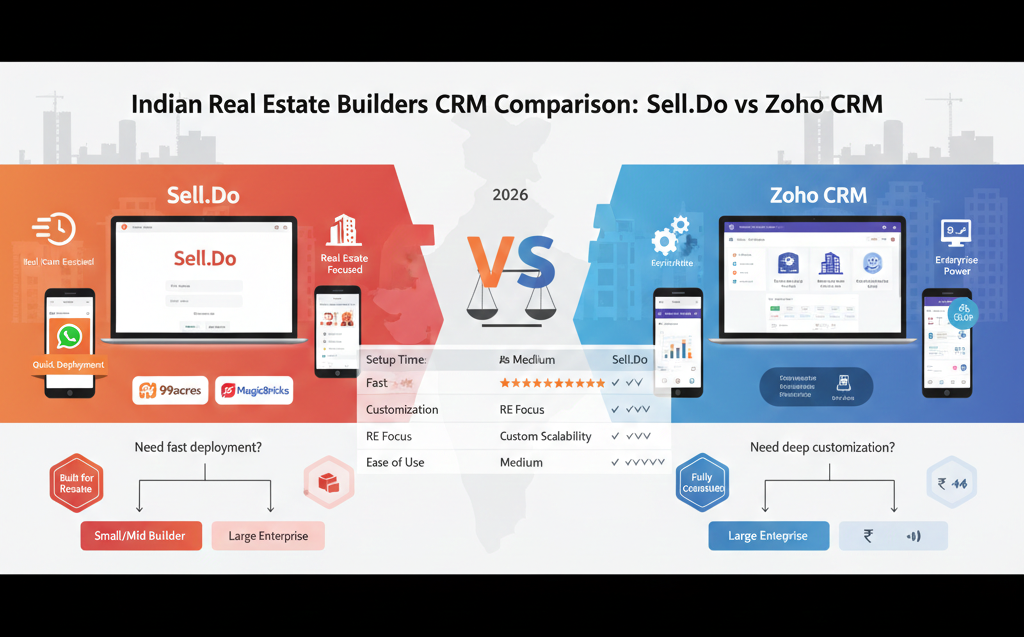
Sell.Do vs Zoho CRM: Best Real Estate Automation for Indian Builders 2026 Setting the Context Indian real estate in 2026 looks very different from even three years ago. Builders are no longer struggling only with lead volume. The real problem is lead quality, delayed follow-ups, poor coordination between sales teams, and unclear visibility into what actually converts a prospect into a site visit or booking. Automation has moved from being a support tool to becoming the backbone of sales operations. This is where the debate around Sell.Do vs Zoho CRM becomes important for builders searching for the Best Real Estate Automation suited to Indian market realities. This article examines both platforms through a practical lens. It focuses on usability, automation depth, reporting clarity, and long-term scalability. Insights are grounded in real-world implementation experience from Product Siddha, including automation work for real estate platforms operating in high-volume lead environments. What Builders Actually Need From Automation Before comparing tools, it is important to understand what Indian builders expect from real estate automation today. Most builders require: Fast lead capture from portals, ads, and walk-ins Immediate response through calls or WhatsApp Automated follow-ups without sounding robotic Clear tracking from lead to site visit to booking Simple dashboards that sales managers can actually use Automation that looks impressive but creates friction for sales teams usually fails within months. The Best Real Estate Automation is not the one with the longest feature list. It is the one that reduces human dependency at scale while keeping reporting clean and trustworthy. Sell.Do Overview for Real Estate Teams Sell.Do is built specifically for real estate developers. Its strength lies in understanding builder workflows rather than trying to be a general CRM. Core Strengths Native integrations with Indian property portals Lead routing based on project, budget, and location Site visit scheduling tied to sales calendars Builder-friendly dashboards and reports WhatsApp and call automation tailored for real estate Sell.Do works well for mid to large builders who want speed without heavy customization. Where Sell.Do Falls Short Limited flexibility outside real estate use cases Reporting becomes restrictive at enterprise scale Advanced automation requires external tools Not ideal for builders with multi-business verticals Sell.Do is practical and focused. It solves real problems quickly but does not always scale cleanly across complex organizations. Zoho CRM Overview in a Real Estate Context Zoho CRM is a horizontal platform. It is designed to serve many industries, including real estate, through customization. Core Strengths Highly customizable workflows Strong automation engine Scales across multiple departments Advanced reporting when configured properly Integrates with Zoho ecosystem tools Zoho CRM appeals to builders who want long-term control over automation logic rather than a pre-built system. Where Zoho CRM Struggles Requires implementation expertise Real estate workflows are not native Initial setup time is longer Sales teams often resist complex interfaces Without proper implementation, Zoho CRM can feel heavy for field-focused real estate sales teams. Feature Comparison at a Glance Feature Area Sell.Do Zoho CRM Real estate focus Built-in Custom-built Lead automation Strong Very strong Ease of adoption High Medium Reporting depth Medium High Scalability Medium High Custom workflows Limited Extensive Best fit Builder-first teams Enterprise builders Automation Depth That Matters Automation is not just about emails and reminders. In real estate, automation must bridge marketing, inside sales, and on-ground teams. Sell.Do automates lead assignment, follow-ups, and site visit reminders well. It works best when teams follow standard sales processes. Zoho CRM, when implemented correctly, allows builders to automate: Budget-based lead scoring Multi-stage approvals Custom sales logic by project type Post-visit follow-up journeys This makes Zoho CRM more powerful, but only when paired with proper implementation. At Product Siddha, automation projects show that builders often underestimate the importance of workflow design. Tools alone do not fix broken processes. Real-World Automation Example One relevant example from Product Siddha’s portfolio is “From Lead to Site Visit – Voice AI Automation for a Real Estate Platform.” In this engagement, automation was layered on top of existing CRM workflows to: Instantly call new leads within minutes Qualify prospects using voice logic Route qualified leads to sales teams Track call outcomes automatically The outcome was not higher lead volume, but faster site visit scheduling and cleaner attribution. This kind of automation works with both Sell.Do and Zoho CRM, but Zoho offered deeper control at scale. This highlights an important truth. The Best Real Estate Automation depends on how well automation aligns with actual sales behavior. Reporting and Visibility Builders often complain that CRMs show activity but not clarity. Sell.Do offers ready-made reports that answer basic questions: How many leads came in? How many site visits happened? Which channel performed better? Zoho CRM, when implemented correctly, answers deeper questions: Which sales actions increase site visits? Where do high-budget leads drop off? How long does each stage really take? Product Siddha often builds custom dashboards by stage, allowing leadership teams to see the real health of the funnel rather than surface metrics. Scalability for 2026 and Beyond Smaller builders usually prefer Sell.Do for its simplicity. Large builders with multiple projects, cities, or international expansion often outgrow it. Zoho CRM scales better across: Multiple brands Channel partners Centralized analytics Advanced automation logic However, scaling Zoho CRM without expert implementation often leads to clutter and poor adoption. This is where experienced real estate automation partners matter more than the tool itself. Choosing the Best Real Estate Automation There is no universal winner. Choose Sell.Do if: You want fast deployment Your team prefers simplicity You operate mainly in residential real estate Choose Zoho CRM if: You need deep customization You operate at enterprise scale You want long-term automation flexibility In both cases, success depends on how well workflows are designed, automated, and adopted. At Product Siddha, automation projects focus on business outcomes rather than tool features. Whether it is real estate platforms, SaaS products, or AI-driven systems, the principle remains the same. Automation should reduce friction, not add complexity. Final Word In 2026, the Best Real Estate Automation is not about

Reduce Cost Per Lead by 40% Automation Strategies for Indian Realtors
AI Automation, Blog

Reduce Cost Per Lead by 40%: Automation Strategies for Indian Realtors

Reduce Cost Per Lead by 40%: Automation Strategies for Indian Realtors The Cost Pressure Reality For Indian realtors, cost per lead has become a quiet threat. Advertising budgets rise each year, yet sales teams often complain that leads arrive late, go cold quickly, or lack intent. The result is familiar. More spending produces diminishing returns. The answer is not higher budgets or louder campaigns. It lies in tighter systems that respond faster, filter better, and waste less effort. This is where Automation Strategies for Indian Realtors have started to show measurable impact, especially when implemented with restraint and clarity. Automation does not replace people. It removes delays, repetition, and guesswork so sales teams can focus on real conversations. Why Cost Per Lead Keeps Rising in Indian Real Estate Several structural issues drive up lead costs across Indian property markets. First, response time remains slow. Many leads are contacted hours after they are generated, especially during weekends or holidays. Second, sales teams treat all leads equally. High-intent buyers and casual browsers enter the same follow-up queue. Third, reporting remains shallow. Teams track leads generated but not leads converted to site visits or bookings. These gaps inflate cost per lead because money is spent on volume rather than outcomes. Automation Strategies for Indian Realtors address these problems at the process level, not the ad level. Automation That Actually Lowers Cost Per Lead Automation works best when it intervenes early in the lead journey. The first five minutes after a lead arrives matter more than any later follow-up. Effective automation usually includes: Instant lead capture from all sources Automated first contact through call or WhatsApp Basic qualification before human involvement Clear routing based on budget and project fit Consistent follow-ups without manual effort When these steps run reliably, wasted leads reduce naturally. Cost per lead falls because fewer paid inquiries are lost to silence or delay. Lead Qualification Without Guesswork Most Indian realtors still rely on sales instincts to judge lead quality. This works at low volumes but fails at scale. Automation allows basic qualification to happen before a salesperson steps in. Simple signals like budget range, preferred location, and timeline can be captured through automated calls or forms. This approach reduces time spent on poor-fit leads. Over time, it brings down cost per lead because teams stop chasing prospects who were never likely to convert. Among Automation Strategies for Indian Realtors, structured qualification is often the most undervalued. Reducing Human Effort at the Right Stages Automation should not dominate every interaction. Its real value lies in handling repetitive tasks consistently. Tasks suited for automation include: First response messages Appointment reminders Follow-up scheduling Lead status updates Sales manager reporting When these tasks are automated, sales teams spend more time on site visits and negotiations. This balance lowers overall acquisition cost without affecting buyer experience. The Role of Funnel Visibility Many realtors know how many leads they receive but cannot explain where good prospects drop out. Product Siddha’s “Built Custom Dashboards by Stage” case study highlights the importance of stage-level clarity. By tracking leads from inquiry to site visit to booking, teams could see exactly where delays occurred. Once delays were visible, automation was applied selectively. Follow-ups were tightened at weak stages. As leakage reduced, cost per lead dropped without increasing ad spend. Visibility supports better automation decisions. Guesswork inflates costs. Channel Control and Cost Discipline Another contributor to rising lead costs is uncontrolled channel spending. When teams cannot link leads to outcomes, they keep funding poor channels. Automation combined with attribution tracking helps realtors identify which portals, ads, or referrals deliver real site visits. Although not a real estate case, Product Siddha’s work on “Product Analytics & Full-Funnel Attribution for a SaaS Coaching Platform” illustrates this principle well. Attribution exposed wasted spend and shifted budgets toward productive channels. The same logic applies to Indian real estate. When outcomes guide spending, cost per lead stabilizes. WhatsApp and Voice Automation in Practice Indian buyers respond well to familiar communication channels. Automation should respect this behavior. WhatsApp automation works best for: Acknowledging inquiries Sharing project details Sending visit confirmations Voice automation works best for: Immediate lead engagement Simple qualification Missed call follow-ups Used together, these tools reduce dependence on manual calling teams. This lowers operational cost and improves lead response consistency. Among Automation Strategies for Indian Realtors, channel-aligned automation delivers quick returns. Manual vs Automated Lead Handling Area Manual Process Automated Process Lead response time 1 to 6 hours Under 5 minutes Qualification Sales judgment Rule-based Follow-ups Inconsistent Scheduled Reporting Activity-based Outcome-based Cost efficiency Low High Common Automation Mistakes to Avoid Automation fails when it overwhelms teams or prospects. Avoid: Over-automation of conversations Complex workflows sales teams cannot understand Ignoring field feedback Automating without clear reporting goals Successful Automation Strategies for Indian Realtors remain simple, focused, and measurable. Closing Perspective Reducing cost per lead by 40 percent is not a promise. It is a process outcome when delays, waste, and guesswork are removed. Automation does not create demand. It preserves demand that already exists. For Indian realtors under pressure to do more with less, this distinction matters. When applied thoughtfully, automation improves response speed, lead quality, and reporting clarity. These improvements compound over time, steadily lowering acquisition costs. For teams working with Product Siddha, automation is approached as a discipline rather than a feature set. The goal is not complexity, but control.

Co-Living Spaces How to Automate Tenant Screening and Rent Collection
AI Automation, Blog

Co-Living Spaces: How to Automate Tenant Screening and Rent Collection

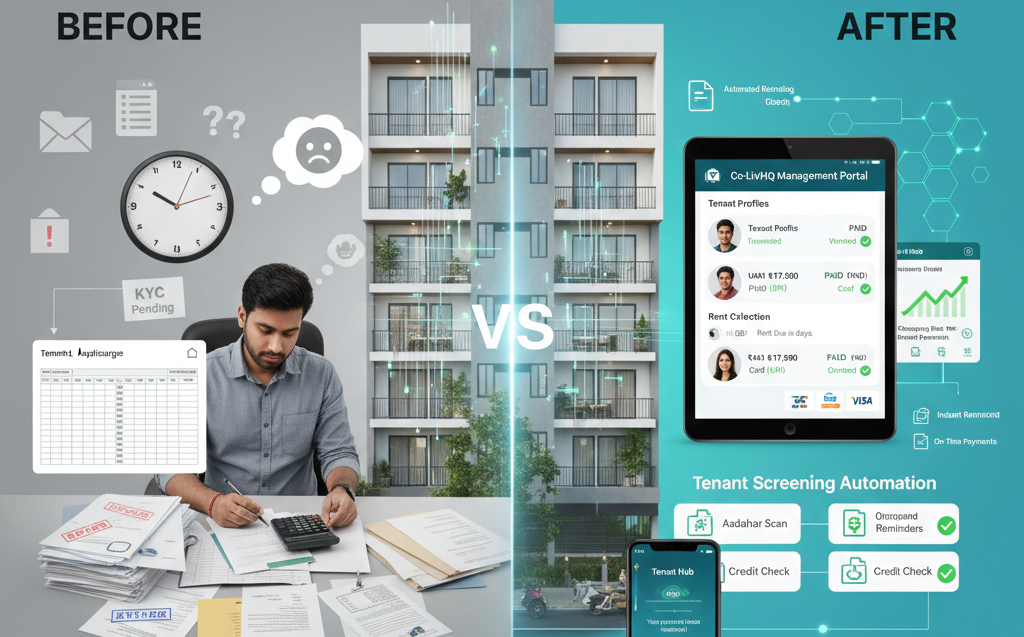
Co-Living Spaces: How to Automate Tenant Screening and Rent Collection A New Rental Model with Old Problems Co-living has moved from a niche concept to a mainstream housing option across Indian cities. Young professionals, students, and remote workers prefer flexible leases, furnished rooms, and shared amenities. Operators benefit from higher occupancy and faster turnover. Yet behind this growth sits a familiar set of problems. Tenant screening takes time. Rent collection becomes fragmented. Manual checks and follow-ups strain operations as portfolios grow. In co-living, volume is the challenge. Dozens or hundreds of tenants may move in and out each month. This is why operators increasingly look to automate tenant screening and rent collection. Automation brings order to scale without removing human judgment. Product Siddha works with platforms that face similar operational complexity. Their approach focuses on building systems that hold up under real usage, not ideal conditions. Why Tenant Screening Matters More in Co-Living Traditional rentals involve fewer tenants and longer leases. Co-living is different. Short stays, shared spaces, and frequent move-ins raise the stakes. Poor screening leads to disputes, payment delays, and community friction. Manual screening struggles to keep pace when applications arrive daily. To automate tenant screening is to reduce inconsistency. It ensures every applicant passes through the same checks, regardless of timing or staff availability. What Automated Tenant Screening Looks Like in Practice Automated screening does not remove decision-making. It structures it. A typical automated screening flow includes: Identity verification through documents Address and employment checks Credit or payment behavior signals Background screening where applicable Data is collected digitally and reviewed against predefined criteria. Applications that meet requirements move forward. Those that do not are flagged for manual review. This approach shortens turnaround time and reduces bias. Every applicant is assessed on the same basis. A Relevant Case from Product Siddha One Product Siddha case study involved AI automation services for a French rental agency, MSC-IMMO. The agency managed a growing portfolio with frequent tenant turnover. Manual screening and rent tracking caused delays. Staff spent excessive time verifying information and chasing payments. Errors affected tenant experience. Product Siddha helped introduce automation layers that standardized screening inputs and synchronized payment tracking. While markets differed, the operational lesson applies directly to co-living in India. To automate tenant screening is not about speed alone. It is about consistency and reliability when volume increases. Digital Screening Builds Tenant Trust Tenants also benefit from automation. Clear requirements and quick decisions reduce uncertainty. Applicants know where they stand without repeated calls or emails. Digital screening records also protect operators. Decisions are documented. Disputes can be resolved with evidence rather than memory. In shared living environments, transparency helps maintain community standards. Rent Collection Challenges in Co-Living Rent collection in co-living is rarely uniform. Tenants join on different dates. Payment methods vary. Late payments disrupt cash flow. Manual reminders do not scale. Missed follow-ups accumulate. Accounting becomes complex. Automation introduces discipline without constant oversight. How Automated Rent Collection Works Automated rent collection relies on clear schedules and digital payment systems. Key components include: Automated invoices based on move-in date Digital payment links or standing instructions Reminder notifications before due dates Automatic reconciliation with records Tenants receive timely reminders. Operators gain predictable cash flow. Exceptions are handled individually rather than across the entire system. This approach reduces friction on both sides. Screening and Payments Work Best Together Tenant screening and rent collection should not exist as separate systems. When linked, they form a complete operational loop. Approved tenants move directly into payment workflows. Lease terms align with billing schedules. Exit processes trigger final settlements automatically. Product Siddha’s experience building custom dashboards by stage supports this integrated view. Operations become easier to manage when data flows without interruption. Data Visibility Improves Decision Making Automation also improves insight. Operators can track: Approval rates by tenant profile Payment delays and patterns Occupancy trends Revenue per property or location These insights support better pricing and capacity planning. Without automation, such analysis remains partial or delayed. To automate tenant screening is also to create a reliable data trail for future decisions. Balancing Automation with Oversight Automation must be applied carefully. Overly rigid rules may reject suitable tenants. Overly lenient ones may increase risk. The best systems allow thresholds and manual review where needed. Staff intervene when context matters. Product Siddha’s broader work across analytics and automation emphasizes this balance. Systems assist teams. They do not replace judgment. A Practical Adoption Path Most co-living operators begin with one area. Screening or payments. As confidence grows, systems connect. Automation reduces routine effort. Staff spend more time on community management and tenant experience. To automate tenant screening and rent collection is not a technological statement. It is an operational one. Sustainable Growth Through Structure Co-living thrives on efficiency and trust. Automation supports both when applied with care. Structured screening protects communities. Predictable rent collection supports financial stability. Together, they allow operators to grow without losing control. Product Siddha’s experience across rental platforms, analytics, and automation reflects this steady approach. Systems should make growth manageable, not fragile.

Voice AI for Real Estate Automated Call Analysis in Hindi and Regional Languages
AI Automation, Blog

Voice AI for Real Estate: Automated Call Analysis in Hindi and Regional Languages

Voice AI for Real Estate: Automated Call Analysis in Hindi and Regional Languages Listening at Scale Real estate in India still runs on phone calls. Leads arrive online, but decisions move forward through conversations. Buyers ask questions, express doubts, negotiate timelines, and reveal intent through speech rather than forms. As call volumes grow, listening becomes the bottleneck. Sales managers cannot review thousands of conversations. Feedback arrives late or not at all. This gap is where Voice AI for Real Estate has begun to change daily operations, especially when calls happen in Hindi and regional languages. Automation here does not replace conversation. It ensures conversation is understood. Why Calls Matter More Than Forms Most real estate leads in India convert or drop based on the first call. Tone, clarity, and response speed matter as much as price or location. Yet call analysis remains manual in many firms. Managers rely on summaries, not transcripts. Patterns are guessed rather than measured. This creates three problems: Missed buying signals Inconsistent call quality across teams No clear link between calls and site visits Voice AI for Real Estate addresses these issues by turning spoken conversations into structured data. What Voice AI Actually Does in Real Estate Voice AI listens to calls, transcribes them, and tags intent markers. These markers may include budget range, location preference, timeline, or objections. When applied correctly, voice systems can: Detect language and dialect automatically Capture intent without manual notes Flag high-interest conversations Track reasons for call drop-offs Feed insights into CRM or dashboards This is especially important in India, where buyers often switch between Hindi, English, and regional languages within the same call. Hindi and Regional Language Complexity Indian real estate conversations rarely follow scripted patterns. A single call may include Hindi, Marathi, Tamil, or Hinglish phrases. Manual analysis struggles here. Voice AI trained for Indian languages recognizes: Local accents Informal speech patterns Mixed-language usage Region-specific expressions This improves accuracy and prevents loss of meaning. Without this capability, automation risks misclassification and poor insights. From Call to Actionable Insight Automated call analysis becomes useful only when insights are actionable. A typical workflow includes: Call recording and transcription Intent tagging Sentiment scoring CRM update Manager-level reporting Product Siddha’s From Lead to Site Visit – Voice AI Automation for a Real Estate Platform case study demonstrates this clearly. In that project, voice analysis helped identify which calls showed genuine buying intent. These leads were prioritized for faster follow-up. The result was not higher call volume. It was better use of existing calls. Improving Sales Team Consistency One common challenge for real estate firms is uneven call quality. Some agents perform well. Others struggle quietly. Voice AI introduces fairness and clarity by: Highlighting missed questions Identifying unclear explanations Tracking follow-up promises Comparing call outcomes across teams This allows managers to coach based on evidence rather than opinion. Over time, overall call quality improves. Among Voice AI for Real Estate use cases, performance standardization delivers long-term value. Call Analysis and Site Visit Conversion Calls that lead to site visits share common traits. Clear budget discussion. Defined timelines. Proper objection handling. When voice systems track these elements, firms gain insight into what works. Scripts improve naturally. Training becomes specific. This mirrors lessons from Product Siddha’s Built Custom Dashboards by Stage case study. When visibility improves, decisions become precise. In real estate, call analysis feeds directly into funnel optimization. Manual vs Automated Call Analysis Area Manual Review Voice AI Analysis Coverage Sampled 100 percent Language handling Limited Multi-language Insight speed Delayed Near real-time Bias risk High Low Scalability Poor Strong Operational Benefits Beyond Sales Voice AI also supports compliance and dispute handling. Recorded and analyzed calls provide clarity when disagreements arise. This is useful during: Pricing disputes Commitment misunderstandings Agent performance reviews Structured call records protect both the firm and the buyer. Avoiding Common Implementation Errors Voice automation fails when treated as a plug-in tool rather than an operational system. Mistakes to avoid include: Ignoring language diversity Overloading agents with scores Failing to align insights with CRM Reviewing data without acting on it Successful Voice AI for Real Estate projects start with clear goals and limited metrics. Complexity grows only after trust is built. A Broader Automation Perspective Voice systems work best when connected to wider automation workflows. Calls inform lead scoring. Lead scoring informs follow-up. Follow-up influences site visits. This integrated thinking aligns with Product Siddha’s broader automation work across platforms and industries. Systems must speak to each other. Voice is not a standalone channel. It is a signal stream. Where Indian Real Estate Is Headed As competition increases, builders and brokers cannot rely on intuition alone. Volume hides problems. Voice analysis exposes them. Firms that adopt voice systems early gain: Clearer buyer understanding Faster response cycles More consistent sales quality Better forecasting accuracy The future of Voice AI for Real Estate lies in quiet efficiency, not visible automation. Closing Thoughts Real estate remains a people business. Voice carries emotion, intent, and trust. Ignoring it at scale is no longer practical. Automated call analysis in Hindi and regional languages allows firms to listen fully without slowing down. It turns everyday conversations into insight. For teams working with Product Siddha, voice automation is treated as an operational lens rather than a technical feature. The goal is simple. Understand buyers better and act faster.

Blockchain & Smart Contracts Future of Automated Property Transactions
AI Automation, Blog

Blockchain & Smart Contracts: Future of Automated Property Transactions

Blockchain & Smart Contracts: Future of Automated Property Transactions Property Deals at a Turning Point Property transactions have always relied on trust, paperwork, and time. Buyers sign agreements they may not fully understand. Sellers wait weeks or months for payments to clear. Lawyers, brokers, and registrars act as safeguards, yet delays and disputes remain common. As property markets expand across borders and investment models grow more complex, these frictions become harder to ignore. Automation has already reshaped banking and payments. Real estate is now entering the same phase. Blockchain and smart contracts are central to this shift. Together, they are laying the groundwork for automated property transactions that reduce manual steps while preserving legal and financial certainty. Product Siddha works with platforms that operate at this intersection of property, data, and automation. The focus is not disruption for its own sake, but reliability at scale. Understanding Blockchain in Property Transactions Blockchain is best understood as a shared ledger. Every transaction recorded on it is time-stamped, tamper-resistant, and visible to permitted parties. Once recorded, it cannot be quietly altered. In property transactions, this ledger can store: Ownership history Sale agreements Payment milestones Compliance records This matters because property disputes often arise from missing or inconsistent records. A shared ledger reduces ambiguity by ensuring that all parties refer to the same source of truth. For automated property transactions, blockchain provides the foundation. Smart contracts provide the logic. What Smart Contracts Actually Do A smart contract is not a contract in the traditional sense. It is a set of coded rules that execute automatically when conditions are met. In a property sale, those conditions might include: Buyer deposits funds into escrow Title verification is completed Regulatory approval is confirmed Once these conditions are satisfied, the smart contract triggers the next step. Payment is released. Ownership records update. Notifications are sent. There is no waiting for manual confirmation. No reliance on verbal follow-ups. The process moves forward because the rules are met. This is the core of automated property transactions. Execution replaces interpretation. Where Automation Changes the Experience Automation does not remove people from the process. It removes uncertainty. For buyers, automated property transactions offer clarity. They can see exactly when funds will move and under what conditions. There is less room for surprise. For sellers, cash flow becomes more predictable. Payment milestones are enforced by code rather than reminders. For platforms and developers, automation creates consistency. Every transaction follows the same rules, reducing operational risk. These gains compound as transaction volume grows. A Real Platform Example from Product Siddha One relevant Product Siddha case study involved product management and analytics for the UAE’s first lifestyle services marketplace. While not limited to property sales, the platform handled high-value service transactions where trust and timing were critical. The challenge was coordination across multiple parties. Payments, service fulfillment, and confirmations often fell out of sync. Manual intervention was frequent. Product Siddha helped design structured workflows supported by automation and clear data stages. While blockchain was not the sole focus, the work reflected the same principle that drives automated property transactions today. Clear rules, enforced systematically, reduce friction and dispute. This experience informs how Product Siddha approaches blockchain-based property systems. Automation must align with real operational behavior, not theoretical models. Smart Contracts and Compliance One common concern is regulation. Property transactions are tightly governed. Automation must respect local laws, not bypass them. Smart contracts can be designed to include compliance checks. For example: Identity verification before contract activation Regulatory approvals as required conditions Jurisdiction-specific clauses encoded into logic In this way, automated property transactions can improve compliance rather than weaken it. Every step is logged. Every action is traceable. Auditors and regulators gain clearer visibility into transaction flows. Cross-Border Property Transactions International property investment is growing, yet it remains complex. Currency conversion, escrow handling, and legal verification often slow deals. Blockchain simplifies cross-border coordination by providing a neutral transaction layer. Smart contracts execute based on verified inputs, not geographic location. For example, an overseas buyer can fund a transaction once local approvals are confirmed. The release of ownership records and payments happens automatically. This does not eliminate legal review. It reduces delays caused by coordination gaps. Key Benefits of Automated Property Transactions Area Impact Speed Reduced settlement time Transparency Shared, verifiable records Cost Lower manual processing overhead Accuracy Fewer errors from re-entry Trust Rules enforced consistently These benefits are practical, not abstract. They address long-standing inefficiencies that both buyers and sellers experience. Integration with Existing Systems Automation works best when it connects with existing tools. Property platforms already rely on CRM systems, payment gateways, and analytics dashboards. Blockchain-based automation does not replace these systems. It coordinates them. Product Siddha’s experience building custom dashboards by stage and full-funnel attribution systems supports this integration-first mindset. Transaction data must flow into reporting and decision systems, not remain isolated. Automated property transactions gain value when insights are accessible, not hidden behind technical layers. Practical Limits and Responsible Use Blockchain is not a cure-all. Poor data input still leads to poor outcomes. Smart contracts execute rules faithfully, even if those rules are flawed. This is why domain expertise matters. Legal, financial, and operational knowledge must shape the logic before automation begins. Product Siddha’s work across fintech, real estate automation, and analytics emphasizes this balance. Technology supports decisions. It does not replace judgment. A Measured Path Forward Automated property transactions represent a steady evolution, not a sudden overhaul. Early adoption often begins with partial automation. Escrow handling, milestone payments, or document verification. As confidence grows, systems expand. Blockchain and smart contracts offer tools that match the seriousness of property transactions. When used carefully, they improve reliability without sacrificing oversight. For platforms and investors looking ahead, the question is not whether automation will arrive, but how responsibly it will be implemented.

Google My Business Automation for Realtors Rank Higher in Local Search
AI Automation, Blog

Google My Business Automation for Realtors: Rank Higher in Local Search

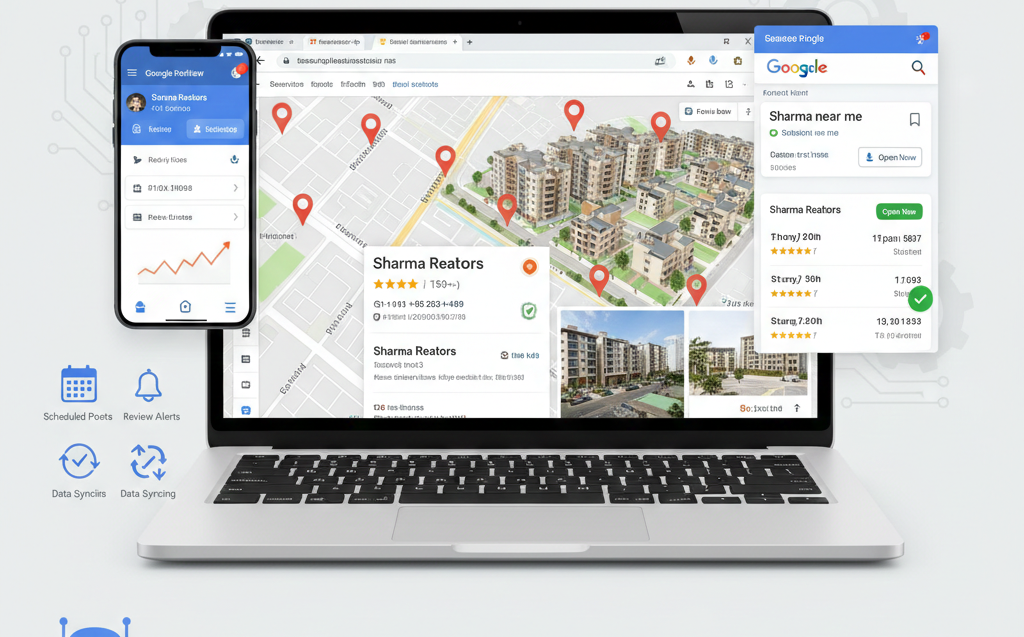
Google My Business Automation for Realtors: Rank Higher in Local Search Local Visibility Still Decides Deals Real estate remains a local business at heart. Buyers search by neighborhood, landmarks, and commute time. Sellers look for agents who appear established in their area. In most cases, the first serious interaction begins with a local search result. Google My Business sits at the center of this discovery process. A well-maintained listing can bring steady inquiries without paid promotion. A neglected one quietly loses ground to competitors who stay active. For busy realtors, consistency is the challenge. Updates are missed. Reviews go unanswered. Listing details drift out of date. This is where GMB Automation for Realtors becomes practical rather than optional. Product Siddha works with data-driven platforms where automation exists to reduce routine work and preserve accuracy. The same principle applies to local search visibility. Why Google My Business Matters for Realtors Google My Business influences how often a realtor appears in map results and local listings. These placements attract users with clear intent. Someone searching for property services nearby is already in decision mode. Key signals that affect visibility include: Accurate business information Regular updates and posts Review activity and response quality Engagement signals such as calls and direction requests Manually managing these signals across months is difficult. Automation helps ensure that the basics never slip. What GMB Automation for Realtors Actually Means Automation does not mean abandoning control. It means setting reliable systems for repeat tasks. GMB Automation for Realtors typically covers: Scheduled posting of updates and listings Automated review alerts and response drafts Consistent business information syncing Performance tracking across locations or agents These systems operate quietly in the background. Realtors remain free to focus on property visits, negotiations, and client conversations. Common Problems Realtors Face Without Automation Many local listings fail due to small oversights that compound over time. A phone number changes but the listing is not updated. Office hours shift during holidays and remain incorrect. Reviews accumulate without acknowledgment. Competitors who stay active gain an edge. Local search rewards consistency. GMB Automation for Realtors exists to protect that consistency. A Real Operations Example from Product Siddha One Product Siddha case study involved AI automation services for a French rental agency, MSC-IMMO. While the focus was broader than Google My Business alone, the challenge mirrored what many realtors face. The agency struggled with fragmented systems. Property updates, customer inquiries, and listing data lived in separate tools. Manual updates led to delays and inconsistencies. Product Siddha helped introduce automation layers that synchronized property information and customer interactions. The result was faster response times and more reliable public-facing data. This approach translates directly to GMB Automation for Realtors. When listing data and customer engagement remain aligned, local visibility improves naturally. Reviews and Reputation at Scale Reviews shape trust. Prospective clients read them carefully, especially in high-value decisions like property transactions. Responding to every review manually is often unrealistic. Automation helps by: Sending instant alerts for new reviews Drafting response templates that maintain tone Flagging negative feedback for priority handling Realtors still approve responses, but the delay disappears. This matters because timely replies signal professionalism to both users and search engines. Posting Consistency Without Daily Effort Google favors listings that remain active. Posts about new properties, market updates, or office announcements reinforce relevance. GMB Automation for Realtors allows scheduled posts based on property data or predefined calendars. Updates appear regularly even during peak sales periods. This steady activity helps listings remain visible without demanding constant attention. Local Search Signals That Benefit from Automation Signal How Automation Helps NAP Accuracy Syncs name, address, phone Review Responses Ensures timely engagement Posts Maintains consistent updates Insights Tracking Monitors calls and clicks Multi-Location Data Keeps listings aligned These signals work together. Automation supports them without adding complexity. Avoiding Over-Automation Automation should support judgment, not replace it. Generic responses or irrelevant posts can harm trust. The best GMB Automation for Realtors includes review steps. Humans approve public-facing messages. Automation handles reminders, drafts, and scheduling. Product Siddha’s experience across analytics and automation emphasizes this balance. Systems assist teams, but decisions remain human. Measuring Local Search Impact Automation also improves measurement. GMB insights show how users find listings and what actions they take. Automated dashboards can track: Call volume trends Direction requests Search queries triggering visibility Engagement over time Product Siddha’s work building custom dashboards by stage supports this reporting approach. Visibility improves when performance is understood clearly. Practical Adoption for Realtors Most realtors start with partial automation. Review alerts, post scheduling, or listing syncs. Over time, systems expand. GMB Automation for Realtors works best when introduced gradually. Teams see value quickly without feeling overwhelmed. The goal is stability. A listing that remains accurate and active month after month builds authority quietly. Local Trust Built Through Consistency Local search rewards reliability. Users trust listings that feel maintained and responsive. Automation helps maintain that standard even when business demands increase. Product Siddha’s work across automation, analytics, and platform optimization reflects this steady approach. Systems should make good practices easier to maintain. For realtors competing in crowded local markets, GMB Automation for Realtors offers a way to protect visibility without adding daily strain.

Email vs WhatsApp Marketing Which Converts Better for Indian Property Sales
Blog, MarTech Implementation

Email vs WhatsApp Marketing: Which Converts Better for Indian Property Sales?

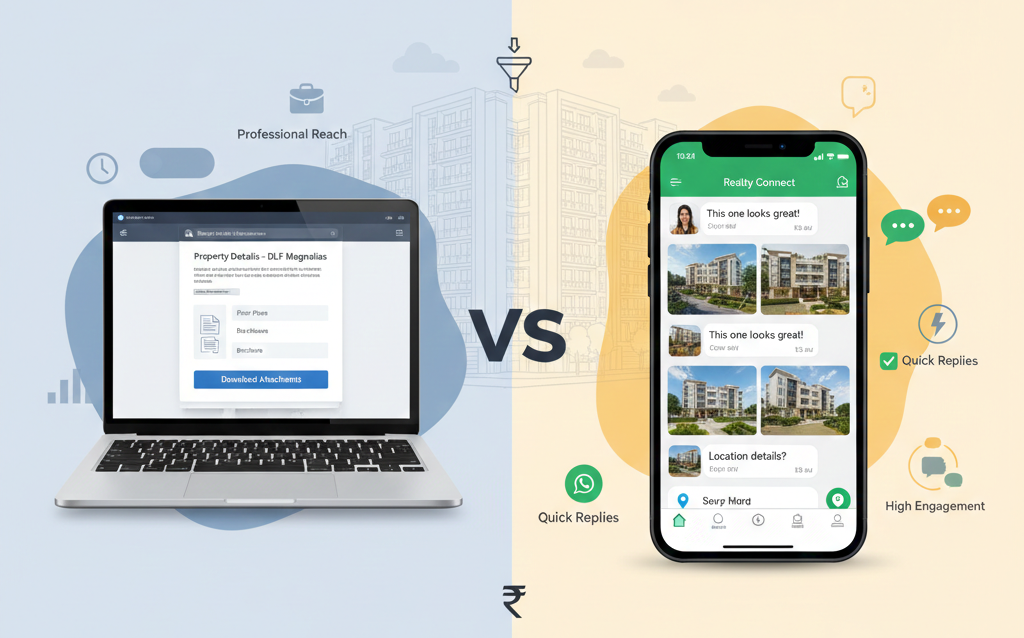
Email vs WhatsApp Marketing: Which Converts Better for Indian Property Sales? Conversations That Actually Close Deals Property sales in India are driven by conversation. Buyers ask questions, compare options, consult family members, and return with follow-ups. Very few decisions are made in a single interaction. Among the many communication channels available today, email and WhatsApp remain the most widely used for property follow-ups. Each serves a different role. Each influences trust in a different way. For real estate teams, the question is not which channel looks more modern, but which one converts better in real conditions. Understanding Email vs WhatsApp Marketing requires attention to how Indian buyers behave, not how tools are promoted. Product Siddha works with platforms that measure conversion across channels using real data. This perspective informs a clear and practical comparison. How Indian Property Buyers Communicate Indian buyers rarely follow a linear path. A typical journey includes missed calls, forwarded messages, screenshots shared with relatives, and delayed responses. Language preference shifts between English and local languages. Formal communication blends with casual replies. Email and WhatsApp both fit into this pattern, but in different ways. Email is viewed as official. WhatsApp feels personal. One supports record keeping. The other supports immediacy. Understanding Email vs WhatsApp Marketing begins with acknowledging this contrast. The Role of Email in Property Sales Email remains important in Indian real estate, especially for structured communication. Common uses include: Sending brochures and floor plans Sharing pricing details and payment schedules Document follow-ups and confirmations Post site visit summaries Email allows longer explanations. Buyers can read at their own pace. Attachments are easier to manage. Messages feel formal enough to share with lawyers or family members. However, email often suffers from delayed engagement. Messages may be opened hours or days later. Some are ignored entirely. In the context of Email vs WhatsApp Marketing, email excels in depth but struggles with speed. The Role of WhatsApp in Property Sales WhatsApp has become the default communication tool for Indian buyers. Messages are read quickly. Voice notes feel natural. Images and short videos are easy to consume. In property sales, WhatsApp is commonly used for: Initial follow-ups after inquiries Sharing quick photos or location pins Confirming site visit timings Addressing short questions Response rates are typically higher than email. Buyers often reply within minutes. Yet WhatsApp has limits. Long explanations feel intrusive. Important details can get buried in chat history. There is also a fine line between helpful and excessive. In Email vs WhatsApp Marketing, WhatsApp leads in engagement but requires restraint. Comparing Conversion Behavior Conversion in property sales rarely means immediate booking. It usually means movement to the next step. A site visit. A second call. A document request. Observed patterns across Indian real estate teams show: WhatsApp drives faster responses and follow-ups Email supports informed decision making WhatsApp performs better in early and mid-stage engagement Email performs better near negotiation and closure This suggests that Email vs WhatsApp Marketing is not a binary choice. It is a sequencing decision. A Data Perspective from Product Siddha One Product Siddha case study involved AI automation services for a French rental agency, MSC-IMMO. While the market differed, the communication challenge was familiar. The agency used multiple channels to engage prospects. Engagement varied sharply by channel and timing. WhatsApp messages triggered quick replies but shorter conversations. Email threads were slower but more detailed. Product Siddha helped map communication touchpoints to funnel stages. This revealed a pattern that applies well to Indian property sales. Fast channels move interest forward. Structured channels support commitment. This insight guides how Email vs WhatsApp Marketing should be applied in real estate workflows. Trust and Perception Matter Property purchases involve large sums. Buyers judge not only the property but the professionalism of the seller. Email conveys seriousness. A well-written message with clear attachments signals stability. WhatsApp conveys accessibility. A prompt reply signals attention. Problems arise when channels are misused. Long sales pitches on WhatsApp can feel intrusive. Casual WhatsApp messages for legal documents can feel careless. Email vs WhatsApp Marketing works best when each channel respects its natural role. Language and Cultural Fit In India, language choice affects comfort. WhatsApp supports Hinglish and regional languages easily. Buyers often respond more freely in familiar speech. Email is more likely to remain in English. This suits formal communication but may limit emotional connection. For teams selling across regions, WhatsApp often bridges language gaps more effectively. Email provides clarity when precision is required. Performance Comparison Overview Aspect Email WhatsApp Response Speed Moderate High Content Length Long Short Formality High Medium Shareability Documents Images and quick clips Buyer Comfort Structured Conversational This table reflects common behavior, not absolute rules. Context always matters. Automation and Measurement Automation improves both channels when applied carefully. Email automation helps with scheduled follow-ups, reminders, and document sharing. WhatsApp automation helps with initial responses and appointment confirmations. Product Siddha’s experience building custom dashboards by stage supports accurate measurement across channels. Tracking which channel moves a lead forward prevents guesswork. Without measurement, Email vs WhatsApp Marketing becomes a matter of opinion. With data, it becomes a strategy. Choosing the Right Mix Most successful Indian real estate teams do not choose one channel exclusively. They combine them with intention. WhatsApp opens the door. Email carries the details. WhatsApp confirms. Email records. Email vs WhatsApp Marketing works when each channel supports the other rather than competing for attention. A Balanced Path Forward Property sales depend on trust built over time. Communication channels shape that trust quietly. WhatsApp brings speed and warmth. Email brings structure and assurance. Ignoring either limits conversion. Product Siddha’s work across automation, analytics, and real estate workflows reflects this balanced approach. Tools should adapt to buyer behavior, not force it to change. For Indian property sales, the better question is not which channel converts better, but how well they work together.

product analytics
Blog, MarTech Implementation

Top 5 Tips to Get More Value From Your Real Estate CRM

Top 5 Tips to Get More Value From Your Real Estate CRM Why most CRMs underperform in real estate Real estate CRMs are rarely implemented poorly. In most cases, they are simply underused. Teams invest time and money into setting up a real estate CRM, but daily habits do not change. Leads are entered, notes are skipped, follow-ups drift, and reporting becomes an afterthought. Over time, the system turns into a passive database instead of an active sales asset. Across real estate, the gap between CRM ownership and CRM value remains wide. Closing this gap does not require new software or complex restructuring. It requires clarity on how the CRM supports selling, not administration. The following five principles reflect how high-performing teams extract consistent value from their real estate CRM, based on real operational patterns observed by Product Siddha across automation and analytics projects. 1. Align CRM stages with real buying behavior A real estate CRM should reflect how buyers move, not how software vendors label stages. When stages feel abstract or generic, sales teams stop trusting them. This leads to inaccurate data and poor forecasting. Effective teams define stages using observable buyer actions. A lead is not qualified because a checkbox is ticked. It is qualified because a budget range is discussed, a preferred location is confirmed, or a site visit is requested. Each stage in the CRM must represent a clear shift in buyer intent. In one Product Siddha real estate automation engagement, the most impactful change was redefining what “site visit scheduled” actually meant. Only visits with a confirmed date and buyer acknowledgment were allowed into that stage. This removed ambiguity and immediately improved the reliability of pipeline reviews. Clear stages reduce friction. They help sales managers coach effectively and allow leadership to trust CRM data without constant verification. 2. Make response time a core CRM metric Speed is often discussed in real estate sales, but rarely enforced through systems. A real estate CRM should make response time visible and unavoidable. When response time is hidden, delays become normal. High-performing teams treat first response time as a frontline metric. Every new enquiry triggers immediate visibility, ownership, and accountability. This does not require aggressive messaging or pushy behavior. It requires presence. Product Siddha’s work on a voice-led automation flow for a real estate platform demonstrated this clearly. Leads that received a response within minutes were far more likely to convert to site visits than those contacted later in the day. The CRM became the enforcement layer, recording response timestamps and exposing delays without blame. Response speed is not about pressure. It is about respect for buyer intent. A real estate CRM that highlights speed creates discipline without micromanagement. 3. Use CRM context to improve sales conversations Many sales calls fail because they start from zero. When agents open a conversation without context, buyers repeat themselves or disengage. A real estate CRM holds valuable clues about buyer intent, but only when surfaced correctly. Effective CRM usage ensures that every conversation begins informed. Agents know where the lead came from, which listings were viewed, whether pricing pages were explored, and what was discussed previously. This changes tone. Conversations become specific instead of generic. In Product Siddha’s analytics and dashboard projects, teams consistently performed better when CRM data was reshaped around decision context rather than raw activity. Instead of long activity logs, sales teams saw concise summaries before each call. This reduced call time while improving quality. A CRM should not overwhelm users with data. It should quietly prepare them to speak with confidence and relevance. 4. Automate follow-ups with restraint and clarity Follow-ups are central to real estate sales, yet they are often inconsistent. Some leads receive too many messages. Others receive none. A real estate CRM can solve this imbalance, but only when automation is applied carefully. Automation should support memory, not replace judgment. The most effective follow-ups are short, timely, and grounded in real interactions. A message referencing a site visit date or a specific unit performs better than generic reminders. Across Product Siddha’s automation engagements, including real estate and non-real estate projects, one pattern remains consistent. Fewer messages with clear intent outperform long automated sequences. Buyers respond when communication feels purposeful. A disciplined CRM setup pauses automation when human interaction resumes. This prevents overlap and maintains trust. Automation succeeds when it feels invisible to the recipient. 5. Treat the CRM as a weekly operating system A real estate CRM should guide weekly decisions, not just monthly reports. When CRM reviews are infrequent, small issues grow unnoticed. Leads stagnate, follow-ups weaken, and patterns disappear. High-performing teams review CRM data weekly with a narrow focus. They look at lead flow, response time, stage movement, and drop-off points. The goal is not reporting. It is correction. In Product Siddha’s HubSpot setup for a growing financial services brand, weekly CRM reviews uncovered a consistent issue. One acquisition channel produced volume but poor-quality conversations. Adjusting this early improved overall efficiency. The same principle applies to real estate CRM usage. Weekly engagement keeps the system aligned with reality. It ensures that the CRM evolves alongside the business, not behind it. A grounded view on CRM value A real estate CRM does not create value through features. It creates value through habits. When stages reflect real buyer actions, response time is visible, conversations are informed, follow-ups are measured, and reviews are regular, the system earns its place. Product Siddha’s work across CRM, analytics, and automation consistently shows that lasting improvements come from disciplined usage, not constant change. A CRM becomes powerful when it fades into the background and quietly supports better decisions. In real estate, where timing and trust define outcomes, a well-used CRM does not feel like software. It feels like structure.