Product Siddha

MarTech Implementation

Blog, MarTech Implementation

2026 Email Marketing: Dynamic Content Blocks That Adapt in Real Time

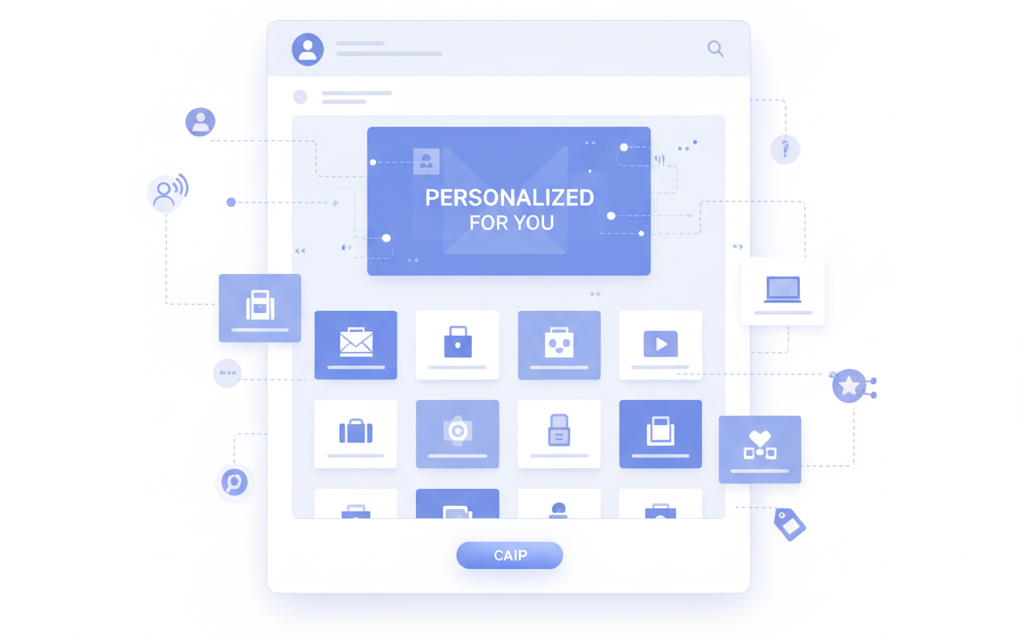
2026 Email Marketing: Dynamic Content Blocks That Adapt in Real Time How Email Is Changing The practice of Email Marketing has always depended on timing, relevance, and clarity. By 2026, one trend has moved from early experiment to dependable method. Marketers now use dynamic content blocks that change at the moment a user opens an email. This shift allows a message to read almost like a personal note rather than a fixed newsletter. Dynamic blocks respond to factors such as browsing patterns, recent purchases, location, or the user’s past interaction with earlier campaigns. When managed well, they help a brand speak with precision without overwhelming the subscriber. The approach suits the kind of structured thinking that Product Siddha applies across its analytics and automation work. Real time adaptation is not a novelty. It is a practical way to match each reader with information that feels relevant on the day they see it. Why Dynamic Content Blocks Matter A traditional email uses a single template. Every subscriber receives the same headline, the same paragraph, and the same visual layout. This works when the message is universal. It fails when the audience varies in intent. Dynamic blocks allow each section to change according to user conditions. For instance, a customer who viewed winter jackets receives a product showcase that focuses on outdoor wear, while another customer who browsed accessories sees a different set of choices. This level of refinement brings two main benefits. First, engagement rises because the reader does not have to search for meaning. Second, conversions increase because the message matches the reader’s stage in the decision journey. Email Marketing in 2026 relies on these principles more than any past year, not because the technology is new but because the volume of customer data now supports it. A Practical Example From The Field One of Product Siddha’s past projects offers a clear illustration. The team helped a Shopify apparel brand lift revenue by improving its Klaviyo setup. The original campaigns used static templates with broad language. After the shift to adaptive blocks, open rates climbed steadily and repeat purchases became more common. The improvement came from simple steps. Product discovery blocks updated according to recent browsing. Stock alerts adapted to regional availability. Seasonal themes shifted based on weather patterns in the subscriber’s city. This case showed that dynamic email experiences do not need dramatic visual changes. They only need thoughtful logic that reflects the user’s current position. When aligned with analytics and clean segmentation, the results can be pronounced. How Dynamic Blocks Work Under the Hood Most platforms use conditional logic to decide which block appears. The email contains multiple versions of the same section. A rule determines which version will load for a particular user at open time. A few common rule sets User activity during the past seven days Time since last website visit Products added to cart or removed Known location Type of device used Loyalty tier As long as the data is fresh, the block selection feels natural. This explains why many businesses pair dynamic Email Marketing with real time analytics. Product Siddha has seen this pattern repeatedly in its work, particularly in its Mixpanel based projects like the full stack analytics setup for a U.S. music app. When data arrives cleanly and quickly, dynamic personalization becomes reliable rather than uncertain. How Dynamic Email Blocks Adapt This simple structure communicates how one email can serve multiple purposes without feeling fragmented. A Table for Quick Comparison Dynamic vs Static Email Experience Aspect Static Email Dynamic Email Relevance Same content for all users Adjusts to user history and context Engagement Moderate Higher due to tailored sections Conversion path Broad and general Precise and user specific Maintenance Low Medium but more efficient long term Data usage Limited Requires real time inputs What 2026 Email Audiences Expect Subscribers now view inbox content with the same attention they give to mobile apps and websites. They expect relevance. They expect clarity. They expect each message to respect their time. Audiences reward brands that practice restraint and precision. Dynamic content blocks help meet these expectations by presenting fewer distractions and more direct value. This does not mean every message should be automated. Many of Product Siddha’s long term clients still use carefully curated editorial emails for announcements or brand storytelling. Dynamic blocks are most effective when the goal is performance, reminder, or cycle based communication. A Short Scenario Imagine a rental agency preparing a property update. One of Product Siddha’s automation projects for MSC-IMMO showed how varied subscriber needs can be. Tenants wanted maintenance updates. Owners wanted occupancy information. Prospects wanted visit schedules. Instead of creating separate newsletters for each group, a single email could carry three dynamic blocks. Each user would see the block that matched their role. This saved time and created a smooth information flow without unnecessary noise. Looking Ahead The future of Email Marketing will not depend on louder messages or heavier graphics. It will depend on intelligent structure, careful timing, and the willingness to adapt. Dynamic content blocks are a natural fit for these priorities. As more businesses adopt real time analytics and automation, the practical value of this method will grow. Product Siddha continues to support brands that want stronger activation, clearer insights, and more responsive digital systems. In many ways, dynamic content is not only a technique. It is a reflection of how users prefer to be spoken to.
Blog, MarTech Implementation

The 2026 MarTech Landscape: What Tools Are Becoming Obsolete

The 2026 MarTech Landscape: What Tools Are Becoming Obsolete The MarTech world is entering a period of quiet but steady change in 2026. Many teams are discovering that the tools they relied on for years no longer match the speed and clarity they need. This shift is shaped by stronger automation, cleaner data practices, and a deeper focus on insight rather than volume. The rise of AI Automation plays a clear role in this transition, and companies like Product Siddha have seen these changes unfold across real projects. Below is a detailed look at which tools are fading, why they are losing value, and how modern teams are preparing for a new MarTech foundation. Why Certain Tools Are Falling Behind Some platforms were built for a world where manual steps were acceptable and weekly reporting cycles were the norm. In 2026, teams want systems that collect data, group signals, and prepare insights with minimal intervention. AI Automation is now strong enough to handle these early layers of work, and that shift makes some older solutions feel slow or incomplete. When Product Siddha worked with a French rental agency, MSC IMMO, the team noticed that many of the client’s earlier systems required significant human effort to keep data current. The new automated flows replaced repetitive checks with a stable system that updated itself. This kind of transformation highlights why older tools struggle to stay relevant. Tools Most Likely to Become Obsolete in 2026 1. Manual Lead Sourcing and Scraping Tools Platforms that offer simple scraping and email extraction were once common. These tools are fading because: They rely on outdated data. They cannot adapt to frequent platform changes. They demand manual filtering and cleaning. A clear example comes from Product Siddha’s work building a lead engine after Apollo access became restricted. The earlier process required fragmented tools and manual routines. The new solution brought automated enrichment, scoring, and routing. This made older scraping tools unnecessary and improved lead quality by a wide margin. 2. Standalone Spreadsheet Reporting Systems Teams used to manage reporting inside spreadsheets. These systems are now too slow and too fragile. They introduce error risk, and they lack the depth needed for modern analytics. In Product Siddha’s project with a U.S. music app, the team moved from basic reporting sheets to full stack Mixpanel analytics. The client gained a clearer picture of user journeys and could act on trending behaviors within days rather than weeks. Legacy spreadsheet tools cannot match this pace. Reporting Workflow Shift Reporting Method Earlier State Current State Daily updates Manual rows added Automated ingestion Trend analysis Limited Multi layer pattern detection Decision cycles Slow Faster and more confident 3. Basic Email Blast Tools Traditional email platforms that focus on single channel campaigns are losing relevance. Today teams want: Automated segmentation Predictive recommendations Behavior based triggers When Product Siddha worked with a Shopify brand using Klaviyo, the shift from simple newsletters to dynamic flows increased revenue from repeat customers. Older tools that only support batch sends are now too restricted. 4. Static Dashboards Without Context Awareness Dashboards that only show surface level numbers offer limited value in 2026. Teams expect systems that can surface changes in patterns and highlight areas worth investigating. Product Siddha’s custom dashboard work for a coaching SaaS platform showed how dynamic context helps decision makers. The dashboards did more than display figures. They reflected funnel stages, user cohorts, and timeline shifts. Static reporting tools are not able to deliver this depth. 5. Manual A/B Testing Platforms A/B tools that require full manual setup are slowly being replaced. Modern systems can: Suggest experiments based on data patterns Identify promising segments Predict outcome ranges This does not remove human judgment. It only strengthens the early phases. When Product Siddha supported a ride hailing app with Mixpanel analytics, the team identified patterns that helped shape experiments that would have taken much longer in older systems. Real Example of an Outdated Workflow Consider a company collecting user feedback from three different channels and manually merging the notes every month. This workflow slows down discovery. The team waits too long before spotting early signs of friction. AI Automation systems can now group sentiment, sort tone, and highlight repeating concerns. In Product Siddha’s work for the first AI powered networking assistant, these automated steps helped the team act on signals much earlier. Older feedback tools did not offer this clarity. Workflow Differences Before and After Automation Task Type Earlier Approach Current Approach Data gathering Manual checks Automated pull with regular updates Insight discovery Sparse and slow Pattern detection with grouping Campaign setup Built from scratch Templates shaped by real behavior Funnel monitoring Single view Layered dashboards with context What This Means for MarTech Teams in 2026 Teams must rethink their stack. The goal is no longer to collect more tools. The goal is to select tools that work as a system. The strongest MarTech stacks today share three qualities: Automated data pipelines Context aware dashboards Insight driven execution These qualities help teams remove older tools that create noise or delay. The result is a simpler, clearer ecosystem that supports faster decisions. A New Direction 2026 will not be the year everything changes at once. The shift is gradual. Each team will replace older systems at its own pace. The pattern is clear though. Tools built on manual routines are losing ground. Tools that support AI Automation and structured insight are becoming the new standard. Product Siddha has already seen this change across multiple industries. The most successful teams keep their stack lean, their data unified, and their insight process steady. This approach helps them stay prepared for the next wave of MarTech evolution.

Blog, MarTech Implementation

Klaviyo Email Marketing 101: Custom Campaigns & Flows Your Store Needs

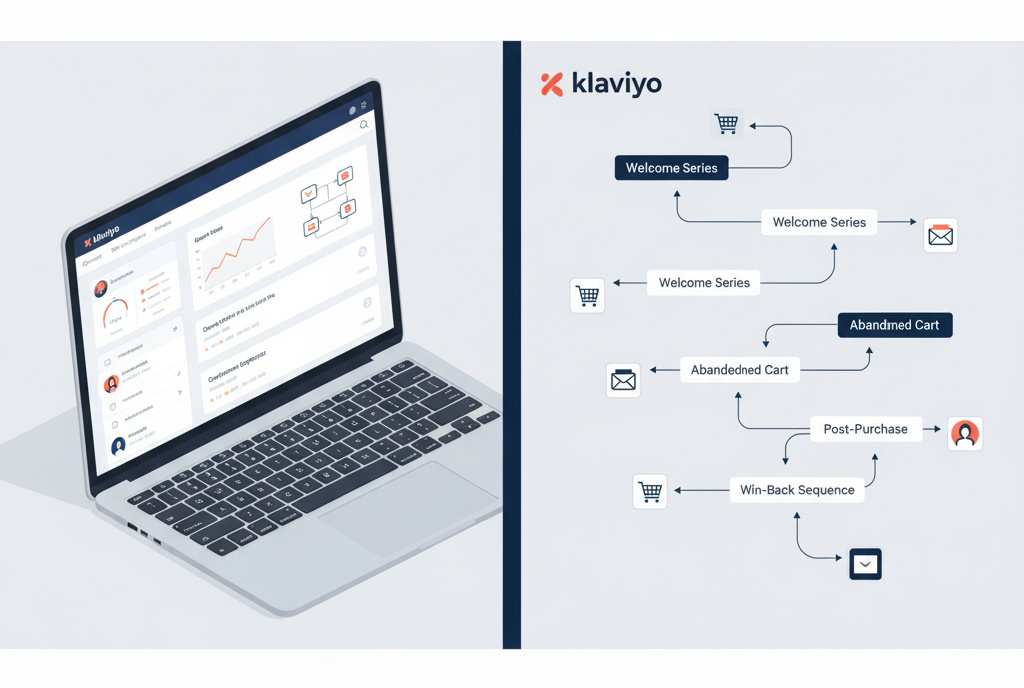
Klaviyo Email Marketing 101: Custom Campaigns & Flows Your Store Needs Smart Email Strategy for Smarter Stores Email remains one of the most powerful tools in e-commerce, and Klaviyo is built to make it sharper. Yet most stores still rely on default templates and broadcast-style messages that barely reflect customer behavior. A well-structured Klaviyo setup transforms that approach into something measurable, personal, and growth-driven. At Product Siddha, our experience with brands on Shopify and WooCommerce has shown that structured automation flows in Klaviyo can increase repeat purchases by more than 25% within the first quarter of use. Let’s explore how you can design these campaigns and flows to create measurable impact for your store. Why Klaviyo Deserves a Closer Look Klaviyo is not just another email marketing platform. It is designed for commerce data. Instead of guessing when to reach a customer, it connects directly with your store’s data to send the right message at the right time. Its strength lies in segmentation and automation. You can create campaigns that target a customer who viewed a product but never bought, or someone who purchased last month but hasn’t returned. Every email becomes part of a broader relationship-building system. Key Advantages for E-Commerce: Behavior-based segmentation: Reach customers based on browsing history, purchase frequency, or cart activity. Integration-first design: Works smoothly with Shopify, WooCommerce, BigCommerce, and custom stores. Flow automation: Enables you to create email sequences for any scenario – from onboarding to win-back. Detailed analytics: Tracks conversion rates, revenue attribution, and customer lifetime value. These features make Klaviyo particularly effective for data-driven teams that want full control without needing external plugins or advanced coding. Essential Klaviyo Campaigns Every Store Should Run A store’s email strategy should not depend on single broadcasts or festive promotions. Instead, it should rely on automated campaigns that run silently and consistently. 1. Welcome Series The welcome flow is your first digital handshake. It should not just greet a subscriber but introduce your brand’s value clearly. Example: A skincare brand can send a three-email sequence that introduces their philosophy, shares usage tips, and then offers a small incentive for the first purchase. 2. Abandoned Cart Recovery This is one of the highest-return flows in e-commerce. Klaviyo allows you to send reminders that feel natural rather than pushy. Timing matters: a first reminder after one hour, a second after 12 hours, and a third with social proof after 24 hours often yields the best conversion rate. 3. Post-Purchase Nurture After a sale, the relationship has just begun. Use post-purchase flows to confirm the order, share educational content, and ask for reviews. Example: A home décor brand can send styling guides showing how to pair purchased products with others in the catalog. 4. Win-Back Campaigns For customers who have gone quiet, a subtle nudge can reignite interest. Use behavior-triggered reactivation emails based on past purchases or preferences rather than generic discounts. 5. Seasonal or Event Campaigns Klaviyo allows you to segment by region, making it especially valuable for GCC-based businesses running promotions around Ramadan, Eid, or National Days. The Flow Framework: What Works and Why The true power of Klaviyo comes from how flows are structured. Each flow has three parts: the trigger, the condition, and the action. Let’s take a closer look at one of Product Siddha’s recent projects – Boosting Email Revenue with Klaviyo for a Shopify Brand. The client, a lifestyle retailer, was sending one-size-fits-all promotional emails. Our team designed 12 automation flows based on customer behavior and product category. Within 60 days: Revenue from email grew by 42%. Repeat purchase rate improved by 18%. Campaign unsubscribes dropped significantly due to improved targeting. This case shows that even small stores can benefit from structured automation if they align it with actual customer journeys rather than trends. Customizing for GCC-Based E-Commerce E-commerce in the GCC region has unique dynamics. Customer engagement is influenced by seasonal events, language preferences, and delivery expectations. Practical Adjustments: Localization: Segment by preferred language (Arabic or English) and time zone to send messages at optimal hours. Cultural context: Plan campaigns around Ramadan, Eid, and back-to-school seasons. Payment and delivery cues: Use transactional triggers like “cash on delivery confirmed” or “order ready for dispatch” to build trust. For instance, a Dubai-based fashion brand we advised implemented dual-language Klaviyo flows. Engagement increased 33% after introducing Arabic subject lines during Ramadan. Metrics That Matter A successful Klaviyo setup is not about how many emails are sent but how they perform. Keep track of: Metric What It Measures Why It Matters Open Rate How many recipients opened your email Indicates subject line strength Click Rate Number of link clicks Measures engagement Conversion Rate Purchases generated from emails Core performance indicator Revenue Per Recipient Total revenue divided by recipients Shows profitability per message Klaviyo’s reporting dashboard allows you to monitor these at both campaign and account levels, making it easier to spot trends early. Building Sustainable Growth Email marketing is not just about automation – it’s about building a brand voice that customers recognize. With Klaviyo, you can create consistent communication patterns that make your store feel human, responsive, and dependable. Working with data-driven partners such as Product Siddha helps businesses identify which flows to prioritize, which customer groups to focus on, and how to refine messaging for long-term gains. The Smarter Way Forward Klaviyo offers the tools, but success depends on how you use them. The most profitable stores approach email not as a task but as an ecosystem that connects marketing, sales, and customer experience. Whether you’re running a new Shopify boutique or a growing WooCommerce marketplace, structured email flows can turn occasional buyers into loyal customers. With data-backed strategies and continuous optimization, Klaviyo becomes less of a platform and more of a growth partner.

Blog, MarTech Implementation

WooCommerce vs Shopify: Which Platform Fits GCC-Based E-Commerce Businesses?

WooCommerce vs Shopify: Which Platform Fits GCC-Based E-Commerce Businesses? Choosing the Right Foundation E-commerce in the Gulf Cooperation Council (GCC) has grown from a regional trend into a digital mainstay. Businesses in the UAE, Saudi Arabia, and Qatar are now focusing on scalability, regional payment options, and localization. The question most founders ask is simple: Which platform supports sustainable growth – WooCommerce or Shopify? Both systems enable online selling, but their foundations differ. WooCommerce is an open-source plugin built on WordPress, offering flexibility and control. Shopify is a fully hosted platform designed for simplicity and speed. For GCC-based businesses, the choice depends on infrastructure, regulatory needs, and long-term cost of ownership. Platform Overview Feature WooCommerce Shopify Hosting Self-hosted Cloud-hosted Customization Unlimited (open-source) Limited by themes & apps Ease of Setup Moderate (requires hosting setup) Very easy Payment Gateways Supports regional options (PayTabs, HyperPay) Supports limited GCC gateways Cost Variable Subscription-based Scalability High, depends on server High, handled by Shopify’s infrastructure Both platforms can power a robust e-commerce store, but the differences in technical structure often determine long-term sustainability in GCC markets. WooCommerce: Flexibility for Local Adaptation WooCommerce suits entrepreneurs who value customization. It integrates deeply with WordPress, giving full control over design, data, and SEO. This control becomes essential when adapting to GCC-specific business needs, such as multilingual sites, VAT compliance, and custom checkout flows. Advantages of WooCommerce for GCC Markets: Local Payment Integration: Gateways such as PayTabs, Telr, and HyperPay are easily integrated through plugins. Full Data Ownership: Businesses control all customer data, aligning with regional data privacy expectations. Scalability: With proper hosting, WooCommerce supports high-traffic periods, such as Eid sales or seasonal campaigns. Localization Support: Ideal for bilingual stores using Arabic and English. Limitations: WooCommerce requires technical maintenance. Hosting, updates, and plugin compatibility are ongoing responsibilities. For startups without in-house IT teams, this may demand external support. Real Example: In Product Siddha’s case study “Product Management for UAE’s First Lifestyle Services Marketplace”, the platform architecture relied on modular integrations similar to WooCommerce’s approach. The team designed custom APIs to connect service categories and automate data tracking. The flexibility of an open framework helped the marketplace scale across multiple service types without rebuilding its backend each time. This mirrors WooCommerce’s advantage: freedom to evolve with the business model rather than being confined by prebuilt platform limits. Shopify: Speed and Reliability in a Box Shopify’s strength lies in its simplicity. It manages hosting, security, and updates automatically. This reliability makes it appealing to small and medium GCC retailers who prioritize ease of launch and quick time-to-market. Advantages of Shopify for GCC Businesses: All-in-One Infrastructure: No need for separate hosting or security setup. Fast Deployment: Stores can launch within days. App Ecosystem: Thousands of apps simplify marketing, inventory, and analytics. Seamless Multichannel Selling: Shopify supports integration with Instagram, TikTok, and regional marketplaces. Limitations: Shopify’s closed ecosystem restricts deep customization. Certain regional payment gateways or tax configurations may need custom middleware. Transaction fees can also increase the cost for high-volume merchants. Regional Fit Example: A regional fashion brand seeking to expand quickly across Saudi Arabia and Kuwait might choose Shopify to minimize IT workload. Its subscription model ensures predictable costs and uptime during high-traffic sales events like Ramadan. However, once these stores grow beyond basic selling functions, they often migrate to hybrid or custom setups for greater control over analytics, marketing automation, and localization. Performance and Scalability in GCC Conditions Internet infrastructure across the GCC is improving rapidly, yet speed and reliability remain key considerations. Shopify benefits from a global content delivery network (CDN) optimized for performance. WooCommerce, on the other hand, depends entirely on the hosting provider’s infrastructure. For GCC-based businesses targeting regional audiences, a locally hosted WooCommerce instance (for example, on UAE or Bahrain servers) can outperform Shopify’s global CDN in localized speed tests. The difference becomes noticeable in checkout completion rates, especially on mobile networks. Data Ownership and Compliance Data localization and privacy are growing priorities across GCC jurisdictions. WooCommerce gives businesses complete control over data storage, making compliance easier under UAE’s Personal Data Protection Law (PDPL) or Saudi Arabia’s Personal Data Protection Regulation (PDPR). Shopify, being a hosted service, stores data in global data centers. While compliant with GDPR standards, its lack of regional data hosting options can raise concerns for enterprises managing sensitive customer information. Cost and Long-Term Value WooCommerce’s costs depend on hosting, themes, and plugins. Initial setup may be cheaper, but maintenance requires ongoing attention. Shopify’s subscription model provides predictable pricing but can become costly as transaction fees and app subscriptions grow. Cost Element WooCommerce Shopify Setup Low (with hosting) Medium (monthly plans) Maintenance Variable Minimal Add-ons Often free or one-time Monthly subscriptions Scalability Costs Linked to hosting Linked to plan tier Over time, WooCommerce can offer better long-term ROI for businesses with in-house technical teams or partners like Product Siddha, who can handle integrations and analytics scaling. Real-World Scenarios Startup Stage: A new boutique store launching in Dubai with minimal inventory can benefit from Shopify’s simplicity and prebuilt templates. Growth Stage: As traffic and sales expand, WooCommerce becomes valuable for integrating advanced analytics, AI-based recommendations, and localized marketing tools. Enterprise Stage: For large retailers or multi-country GCC brands, a hybrid structure using WooCommerce APIs combined with ERP systems ensures flexibility and compliance. Guided Choice At Product Siddha, consulting teams often help clients balance control with convenience. Businesses that prioritize brand uniqueness and local integrations tend to choose WooCommerce. Those that prefer a plug-and-play setup often lean toward Shopify. The right choice is rarely about popularity – it depends on operational maturity, technical capability, and the business’s appetite for customization. Final Take Both WooCommerce and Shopify empower digital commerce in GCC markets. Shopify accelerates entry, while WooCommerce empowers independence. The most sustainable choice lies in aligning your platform with long-term strategy, data requirements, and growth ambition. For GCC founders navigating this decision, expert consultation can help weigh trade-offs between flexibility and convenience. Product Siddha’s implementation experience across analytics, automation, and product management ensures that

Blog, MarTech Implementation

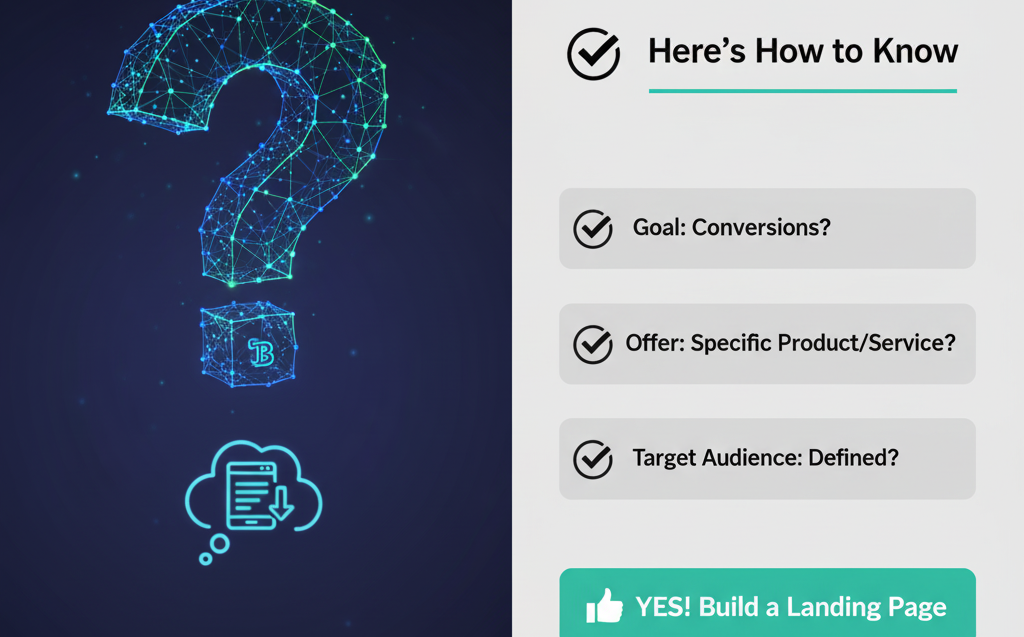
Should Your Brand Build a Landing Page? Here’s How to Know

Should Your Brand Build a Landing Page? Here’s How to Know Understanding the Purpose In the digital economy, every brand is expected to communicate clearly and convert interest into measurable outcomes. A landing page is often the bridge between discovery and decision. It focuses on one message, one audience, and one call to action. But not every business needs one right away. Knowing when and why to build a landing page depends on the maturity of your marketing strategy, the nature of your offer, and the clarity of your goals. At Product Siddha, landing pages are designed as data-driven engines rather than decorative web pages. Each one serves a measurable business function – whether it is collecting leads, validating demand, or testing campaign effectiveness. 1. When You Need a Focused Message A homepage speaks to everyone. A landing page speaks to someone. When your brand runs a targeted campaign, such as a product launch, webinar signup, or localized service promotion, a landing page provides a single, distraction-free environment for users to act. In practice, brands often discover that their main website is too broad to support specific conversions. A landing page isolates one offer, shortens navigation, and uses persuasive structure to guide the visitor’s next step. A B2B SaaS firm, for instance, might use separate landing pages for each audience segment – startups, enterprises, or agencies. Each page delivers tailored language, visuals, and calls to action. This focused approach improves conversion rates without needing a full website redesign. 2. When You’re Running Paid Campaigns Landing pages are essential for any paid digital campaign. Whether it’s Google Ads, LinkedIn campaigns, or email marketing, directing users to your homepage often wastes both budget and attention. The ideal structure matches each ad to a dedicated landing page, ensuring message continuity. When a user clicks an ad promising “Free Product Demo,” they should arrive on a page that repeats that message and offers a clear path to schedule it. Product Siddha’s automation team applies this principle in every MarTech implementation. When setting up conversion tracking in HubSpot or MoEngage, each campaign has its own landing page. This allows accurate measurement of leads, form completions, and user behavior. Without this structure, campaign data becomes mixed and less actionable. 3. When You Need to Validate a New Idea Landing pages can serve as testing grounds for new ideas before full-scale development. They allow you to measure interest, collect signups, and gather data on real demand. In one of Product Siddha’s case studies – Building a Lead Engine After Apollo Shut Us Out – the company created a lightweight automation system using Google Maps, Apify, and n8n to generate business leads. Before launching it as a full-scale solution, Product Siddha built a simple landing page that explained the concept and invited early users to test it. The page gathered genuine interest and allowed the team to refine messaging and pricing based on sign-up behavior. This experiment confirmed that the idea had traction without committing to a full development cycle. 4. When You Want to Improve Lead Quality Landing pages are not just about volume. They help improve the quality of leads entering your system. By aligning content, tone, and form design with audience intent, your brand attracts users who are genuinely interested. A healthcare startup, for example, might build separate landing pages for “Clinic Appointment Booking” and “Diagnostic Test Packages.” Each page filters visitors based on their purpose, leading to more relevant inquiries. Product Siddha often integrates landing pages with automation workflows in tools like HubSpot or Klaviyo, ensuring every submission enters the right nurturing sequence. This precision allows marketing teams to focus on high-value prospects rather than unqualified traffic. 5. When You Need Measurable Results A landing page is measurable by design. It allows you to track user actions such as form completions, downloads, or consultations. By connecting it with analytics platforms like Google Analytics, Mixpanel, or Amplitude, you gain visibility into what drives conversions. For example, when Product Siddha implemented Full-Stack Mixpanel Analytics for Snobs Music App, they tracked user behavior from first interaction to subscription. If the same principle is applied to a landing page, marketers can identify which sections users scroll through, where they drop off, and what prompts them to convert. This data helps refine content and design continuously. A homepage can inform you about general website performance, but a landing page tells you exactly how your campaign performs. 6. When You’re Ready to Scale Marketing Brands ready to scale often need a set of landing pages designed for different products, audiences, or languages. These pages act as the foundation of marketing automation. Product Siddha’s work with a German Shopify brand using Klaviyo demonstrates this approach. Each regional market (Germany, France, and Spain) used localized landing pages paired with segmented email workflows. The result was consistent growth in conversions and email engagement across all stores. When marketing scales, automation depends on structured inputs – and landing pages are those inputs. They ensure that every campaign has a clear starting point, measurable outcomes, and a feedback loop into analytics systems. Business Goal Recommended Action Landing Page Purpose Launching a new product Build a dedicated page Validate interest, collect leads Running paid ads Use separate pages per campaign Improve conversion tracking Testing a new service Create an MVP-style page Measure market response Nurturing leads Integrate with CRM Segment and qualify leads Expanding globally Localize landing pages Improve regional engagement The Strategic Perspective Landing pages serve a deeper purpose than collecting email addresses. They provide measurable insight into how audiences interact with your brand’s value proposition. They help refine messaging, validate assumptions, and shape larger marketing strategies. For brands unsure about where to start, it’s helpful to view landing pages as living prototypes of your communication strategy. Each page is an experiment that informs the next one. Product Siddha approaches landing page creation as part of a larger marketing system – combining data, design, and automation to ensure every visitor interaction contributes to long-term

Blog, MarTech Implementation

MarTech Stack Recommendations for European SaaS Brands: Country-by-Country Analysis (France, Germany, Netherlands, and Spain)

MarTech Stack Recommendations for European SaaS Brands: Country-by-Country Analysis (France, Germany, Netherlands, and Spain) The European SaaS market is maturing fast, with regional nuances defining how businesses attract, engage, and retain customers. What works in Amsterdam may not resonate in Madrid, and what converts well in Paris might require compliance recalibration in Berlin. As SaaS firms expand across borders, their marketing technology (MarTech) stack must evolve beyond automation, it must reflect data privacy, cultural behavior, and local buying habits. At Product Siddha, the focus is on creating scalable, compliant, and insight-driven MarTech ecosystems. Through its MarTech Implementation services, the company helps European SaaS brands identify the right mix of tools, balancing automation with localization and regulatory alignment. Each European country carries a unique marketing DNA: France values precision and data privacy. Germany thrives on structure and measurable ROI. The Netherlands rewards experimentation and agility. Spain emphasizes engagement and emotional connection. France – Precision and Compliance France operates under one of Europe’s most stringent data protection environments. French consumers are highly sensitive about consent and data storage, making GDPR compliance non-negotiable. Companies like Algolia and Doctolib have shown that marketing success in France comes from transparent, privacy-first engagement strategies. Recommended Stack Components for France Function Suggested Tools Notes CRM HubSpot, Salesforce Centralized records with GDPR tracking Email Automation Brevo (formerly Sendinblue) French-origin, localized, and compliant Analytics Matomo Self-hosted analytics for privacy-conscious firms Personalization MoEngage Adapts engagement without violating consent rules Real Example: When Doctolib, a leading French health-tech SaaS, scaled across Europe, it localized its CRM and analytics through a combination of Salesforce and Matomo, ensuring strict GDPR adherence while maintaining user personalization. Product Siddha applied a similar framework for a Paris-based SaaS platform transitioning from a U.S. provider to Brevo and Matomo – reducing compliance risks and improving campaign engagement rates by 18% in three months. Germany – Structure and Efficiency German SaaS companies are renowned for their process discipline. Marketing teams value accuracy, data integrity, and workflow visibility over flashy automation. Brands like Personio and Celonis exemplify this precision-first approach. Recommended Stack Components for Germany Function Suggested Tools Notes CRM Pipedrive B2B-ready and ideal for sales-led SaaS Marketing Automation Customer.io Powerful segmentation and workflow logic Data Management Twilio Segment Enables unified data pipelines Campaign Management HubSpot Streamlined inbound and outbound coordination Case Reference: Personio, a Munich-based HR SaaS platform, scaled its European marketing using Twilio Segment for data unification and HubSpot for campaign automation. This approach improved attribution visibility and helped achieve a 30% increase in lead conversion quality. Similarly, Product Siddha guided a Berlin SaaS company in building a centralized data layer via Twilio Segment, improving campaign efficiency by 25% and reporting accuracy across channels. The Netherlands – Experimentation and Growth Dutch SaaS startups, such as MessageBird and Miro, are known for bold experimentation and agile decision-making. Teams in Amsterdam and Rotterdam prioritize rapid testing, product-led growth (PLG), and frictionless automation. Recommended Stack Components for the Netherlands Function Suggested Tools Notes CRM HubSpot Starter Quick setup and scalable Marketing Automation Klaviyo Lifecycle-driven communication Product Analytics Mixpanel Tracks user engagement in real-time Data Sync Make.com, n8n Open-source workflow automation Example: MessageBird, one of the Netherlands’ fastest-growing SaaS companies, used Mixpanel and Make.com to automate feedback loops between user behavior and campaign triggers. This reduced manual imports by 80% and allowed marketing teams to iterate based on live product usage data. For emerging Dutch SaaS players, Product Siddha’s implementation approach helps build similar data-driven workflows while keeping systems flexible and cost-efficient. Spain – Engagement and Localization Spain’s SaaS landscape thrives on emotional connection, localized messaging, and human-centered marketing. Brands like Typeform and Holded prove that success here depends on personalization and storytelling, supported by automation that feels human. Recommended Stack Components for Spain Function Suggested Tools Notes CRM Zoho CRM Strong multilingual features Email & SMS MoEngage, Mailchimp Multichannel communication across Spanish, Catalan, and English Campaign Tracking Google Analytics 4 Real-time engagement insights Automation Customer.io Personalized workflows for retention Real Example: Typeform, headquartered in Barcelona, built its marketing reputation on conversational engagement. By using MoEngage for multi-language automation and GA4 for granular event tracking, it increased trial-to-paid conversions while maintaining cultural authenticity. Product Siddha’s localization framework has helped Madrid-based SaaS startups create multilingual campaign flows, improving engagement by over 20% while staying aligned with local brand tone. Regional Insights – Comparing Four Markets Country Key Priority Primary Challenge Recommended Core Tool France Data Privacy GDPR Compliance Brevo Germany Process Control Integration Accuracy Twilio Segment Netherlands Agility Data Fragmentation Make.com Spain Localization Multilingual Personalization MoEngage Each of these markets represents a different maturity level of MarTech adoption. France and Germany lean toward structure and governance, while the Netherlands and Spain value flexibility and creativity. Strategic Alignment with Product Siddha Product Siddha’s MarTech Implementation framework for European SaaS growth rests on three foundational pillars: Compliance by Design – Every integration and automation respects regional privacy and consent frameworks. Unified Data Architecture – Eliminating silos ensures consistent reporting and decision-making. Incremental Scalability – Building stacks step-by-step to match maturity, growth, and performance needs. By aligning MarTech systems to local realities, Product Siddha enables SaaS leaders to grow across borders without losing operational coherence. Sustaining Growth Across Europe The future of MarTech in Europe lies in balancing structure with agility. Success depends on understanding not just tools, but how people interact with them – within their cultural and regulatory contexts. From privacy-first frameworks in France to experimentation-driven ecosystems in the Netherlands, regional sensitivity is the foundation of scalable MarTech strategy. Product Siddha continues to help European SaaS companies build marketing stacks that are compliant, flexible, and revenue-aligned, empowering them to achieve sustainable, data-driven growth across the continent.

Blog, MarTech Implementation

The Role of Customer Data Platforms (CDPs) in Shaping the Future of MarTech

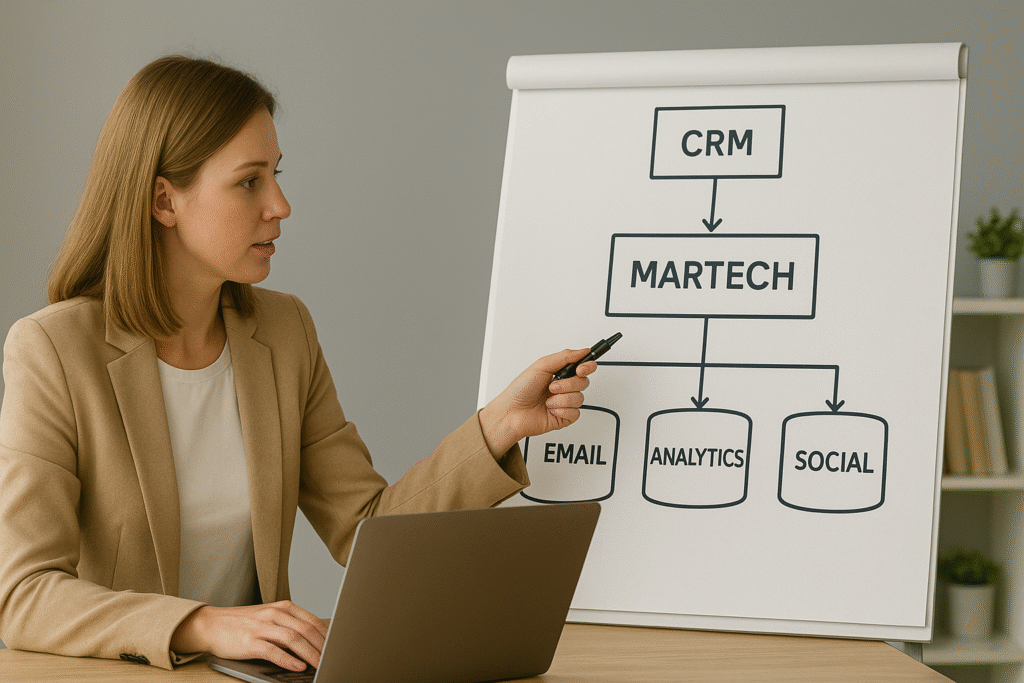
The Role of Customer Data Platforms (CDPs) in Shaping the Future of MarTech The Data Fragmentation Challenge Marketing departments today manage an average of fifteen different technology tools. Each platform collects customer information independently. Email systems track open rates and clicks. Website analytics monitor browsing behavior. CRM software stores purchase history and contact details. Social media tools measure engagement and sentiment. This scattered approach creates problems that extend far beyond simple inconvenience. Marketing teams waste hours switching between platforms to build a complete picture of customer behavior. Data inconsistencies emerge when systems use different identifiers for the same person. Opportunities slip away because no single platform has enough information to trigger the right action at the right moment. Customer Data Platforms address these fundamental challenges by serving as a central repository for all customer information. They connect disparate systems and create unified profiles that give marketing teams a comprehensive view of each customer’s journey. Understanding CDP Architecture A Customer Data Platform differs from other data management tools in several important ways. Unlike data warehouses designed for historical analysis, CDPs process information in real time. They capture customer actions as they happen and make that data immediately available to connected marketing tools. CDPs also handle identity resolution automatically. When someone visits your website from a mobile device, opens an email on their laptop, and makes a purchase in your store, the platform recognizes these actions as coming from a single individual. It merges the data points into one coherent profile despite different devices, channels, and interaction types. This unified view becomes the foundation for effective MarTech implementation. Every connected tool accesses the same accurate, up-to-date customer information. Marketing automation platforms, advertising systems, personalization engines, and analytics tools all work from a single source of truth. Breaking Down Data Silos Traditional marketing technology stacks operate in isolation. Your email platform knows what messages someone has received but cannot see their recent website behavior. Your advertising system targets users based on demographics but lacks insight into their purchase history. Your customer service team answers questions without knowing what marketing messages the caller recently received. These silos prevent businesses from delivering consistent, relevant experiences across touchpoints. A customer might receive a promotional email for products they already purchased. Advertising continues after someone converts. Support agents repeat information already shared through other channels. CDPs eliminate these disconnects by making customer data accessible across the entire marketing technology ecosystem. When implementing MarTech solutions, businesses that start with a strong CDP foundation avoid the integration problems that plague traditional approaches. Product Siddha has worked with organizations that spent years accumulating marketing tools without a unifying data strategy. The process of connecting these systems through a CDP often reveals opportunities for optimization and consolidation that were previously invisible. Real-Time Personalization Capabilities Modern consumers expect businesses to recognize them regardless of how they interact with your brand. Someone browsing your website should see recommendations based on their email engagement history. A mobile app user deserves experiences informed by their in-store purchases. This level of coordination requires instant access to complete customer profiles. CDPs enable this real-time personalization by continuously updating customer records as new information arrives. When someone abandons a shopping cart, the CDP immediately shares that signal with your email platform, advertising system, and website personalization engine. Each tool can respond appropriately based on the customer’s complete history and current context. This capability transforms MarTech implementation from a collection of independent tools into a coordinated system that adapts to customer behavior moment by moment. The result is higher engagement rates, improved conversion rates, and stronger customer relationships. Privacy and Compliance Management Data privacy regulations have become increasingly strict across global markets. GDPR in Europe, CCPA in California, and similar laws in other jurisdictions impose serious obligations on businesses that collect and use customer information. Violations result in substantial fines and reputational damage. Managing compliance across multiple marketing platforms presents significant challenges. Each system needs to respect customer consent preferences. Data retention policies must be enforced consistently. Customers who request data deletion require removal from every connected database. Modern CDPs include privacy management features that simplify compliance. They maintain a central record of consent preferences and propagate those choices to all connected systems. When someone opts out of marketing communications or requests data deletion, the CDP ensures that preference applies across your entire technology stack. This centralized approach to privacy management reduces legal risk while demonstrating respect for customer preferences. It also streamlines MarTech implementation by addressing compliance requirements at the platform level rather than configuring privacy controls separately for each tool. Improving Marketing Attribution Understanding which marketing activities drive results remains one of the most difficult challenges in the field. Customers interact with brands through multiple channels before making purchase decisions. They might see a social media ad, visit your website several times, read email newsletters, and talk to a sales representative before buying. Traditional attribution models struggle to track these complex journeys accurately. They often credit the last touchpoint before conversion while ignoring the earlier interactions that built awareness and consideration. This incomplete picture leads to poor investment decisions as marketing teams allocate budget based on faulty data. CDPs solve attribution problems by capturing every customer interaction across all channels and devices. They build complete timeline records that show exactly how marketing activities influence customer behavior over time. This comprehensive view supports sophisticated attribution models that recognize the contribution of each touchpoint throughout the customer journey. Better attribution leads to smarter MarTech implementation decisions. Teams can identify which tools and channels generate the best returns and adjust their technology investments accordingly. Predictive Analytics and Customer Insights The volume of customer data collected by modern businesses exceeds human capacity to analyze manually. Valuable patterns hide within millions of interactions. Customer segments with similar behaviors and preferences remain unidentified. Opportunities to prevent churn or encourage upsells pass unnoticed. Advanced CDPs incorporate analytics capabilities that uncover these hidden insights. They identify customer segments based on behavior patterns rather than

Blog, MarTech Implementation

The 2025 Martech Stack: HubSpot, Klaviyo & Segment Integration

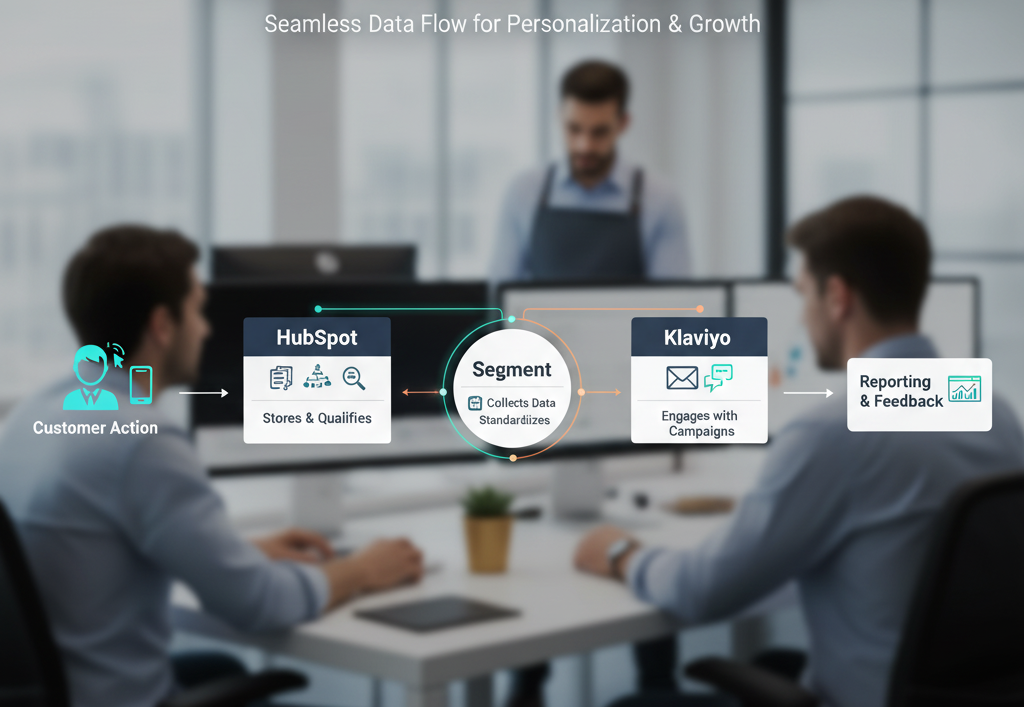
The 2025 Martech Stack: HubSpot, Klaviyo & Segment Integration Building a Cohesive Martech Stack in 2025 Modern organizations face a constant challenge in making marketing systems work together. Data flows from multiple sources, customer expectations keep rising, and teams cannot afford inefficiency. In this setting, the Martech stack has become central to product management and long-term planning. Among the many options available, three tools stand out: HubSpot, Klaviyo, and Segment. When combined correctly, they give marketing and product leaders a clear view of their customers while ensuring campaigns are both personal and timely. Why Integration Matters Using HubSpot, Klaviyo, or Segment in isolation has value, but the real advantage comes from integration. HubSpot manages customer relationships and inbound activity. Klaviyo delivers powerful automation for email and SMS campaigns. Segment acts as the data pipeline, collecting, cleaning, and distributing information across the stack. Without integration, data silos develop, teams duplicate effort, and decision-making slows down. With integration, customer journeys become clear, reporting improves, and campaigns run with precision. Core Role of HubSpot HubSpot continues to serve as a reliable foundation for customer relationship management. It captures leads, organizes contacts, and enables sales pipelines to function without confusion. For product managers, HubSpot gives visibility into how users first interact with a business, whether through a form submission, a website visit, or a campaign touchpoint. This level of detail informs product roadmaps and helps teams prioritize features. Strength of Klaviyo Klaviyo is widely used for lifecycle marketing. Its ability to create targeted automations allows teams to deliver the right message at the right time. A customer who abandons a cart can be reminded within hours. A loyal user can receive personalized offers that reflect past behavior. Klaviyo’s analytics also make it clear which messages work and which need adjustment. For product management, this insight shows how communication affects adoption and engagement. Function of Segment Segment operates in the background but has a central role. It collects data from websites, mobile apps, and third-party tools, then standardizes it for distribution. Instead of setting up separate integrations for every platform, Segment acts as the hub. This ensures that the same customer record flows through HubSpot and Klaviyo without conflict. With Segment in place, marketing teams can trust that data is accurate, consistent, and ready for use. Case Reference: Product Siddha’s Approach Product Siddha has guided organizations in building unified Martech stacks where these three platforms work together. One example involved a retail company that struggled with fragmented data. HubSpot was tracking sales leads, Klaviyo was managing email campaigns, and the analytics team was pulling reports manually from multiple systems. By introducing Segment as the central connector, Product Siddha created a single source of truth. Data flowed cleanly between platforms, reducing manual reporting and giving managers a clearer view of customer behavior. The change not only improved campaign accuracy but also helped product teams understand how engagement translated to long-term retention. Step-by-Step Integration Framework Define Objectives Begin with clear goals. Decide whether the focus is on lead conversion, customer retention, or improved analytics. Establish Data Flow Map how information should move between HubSpot, Klaviyo, and Segment. Typically, Segment collects the raw data, HubSpot manages lead and contact details, and Klaviyo activates the communication layer. Set Event Tracking Configure Segment to capture critical events such as sign-ups, purchases, or feature use. These events feed both HubSpot and Klaviyo, giving consistent visibility. Align Marketing Automations Create Klaviyo flows that respond to Segment events and use HubSpot insights for audience segmentation. For example, a lead marked as “high intent” in HubSpot can trigger a Klaviyo sequence. Test and Refine Run pilot campaigns to ensure data sync works correctly. Adjust automation rules to avoid duplication or missed opportunities. MarTech Stack Workflow [Customer Action] → [Segment Collects Data] → [HubSpot Stores & Qualifies] → [Klaviyo Engages with Campaigns] → [Reporting & Feedback] This linear flow makes clear how the three systems complement each other when properly aligned. Practical Benefits for Product Management Integrating HubSpot, Klaviyo, and Segment produces several outcomes directly relevant to product managers: Unified Customer Profiles – Every action, from signup to purchase, feeds into a single record. Improved Campaign Precision – Targeting rules rely on accurate data instead of outdated lists. Faster Roadmap Decisions – Data on customer behavior helps prioritize product features with real evidence. Resource Efficiency – Reduced manual reporting saves time and avoids errors. Common Challenges and How to Overcome Them Data Duplication If mapping rules are unclear, the same customer may appear in multiple forms. This can be avoided by carefully defining a primary identifier. Team Alignment Marketing, sales, and product functions must agree on event definitions. Without agreement, reporting becomes fragmented. Platform Updates Tools evolve, and integrations may break. Regular monitoring ensures the stack continues to function smoothly. Product Siddha emphasizes structured governance to prevent these issues. By setting clear rules for ownership and updates, organizations maintain long-term value from their Martech investment. Looking Forward to 2025 The Martech landscape continues to expand, but integration remains the defining challenge. Tools will keep improving, but without a coherent framework, teams risk inefficiency. HubSpot, Klaviyo, and Segment form a strong core that balances relationship management, communication, and data accuracy. For companies investing in growth, building a seamless connection between them is less a choice and more a necessity. Product Siddha continues to refine methods that ensure integration does not become a burden but a competitive advantage. Final Thoughts The success of a Martech stack depends on how well its parts work together. In 2025, HubSpot, Klaviyo, and Segment stand out not only for their individual strengths but for the synergy they create. When aligned, they give marketing and product teams clarity, efficiency, and confidence in decision-making. Product Siddha’s consulting experience shows that integration, once achieved, becomes a foundation for long-term product and customer success.

Blog, MarTech Implementation

Is Cold Email Effective in Modern B2B Marketing?

Is Cold Email Effective in Modern B2B Marketing? In the evolving world of B2B marketing, the question of whether cold email still holds value is often debated. While digital channels multiply and marketing technology becomes more advanced, cold email continues to be a staple in many organizations’ outreach strategies. Its effectiveness, however, hinges on strategy, personalization, and a clear understanding of the audience. Understanding Cold Email in B2B Marketing Cold email is a direct outreach method where a company contacts potential business clients who have not previously interacted with them. Unlike bulk spam emails, a well-crafted cold email focuses on relevance and value. In the context of B2B marketing, it serves as a way to introduce products or services, open dialogue with decision-makers, and nurture leads toward a purchase decision. A typical cold email includes a personalized greeting, a concise explanation of the offer or value proposition, and a clear call to action. When executed with attention to detail, it can cut through the noise of other marketing channels. The Role of Personalization Personalization is key in cold email campaigns. Generic emails that lack context are often deleted immediately, but messages that demonstrate knowledge of the recipient’s business needs and challenges show credibility and build trust. For example, Product Siddha, a leader in AI automation and B2B solutions, employs personalization in their outreach to highlight how their services can streamline marketing operations or improve product management workflows. Using data-driven insights, marketers can tailor email content to address pain points specific to the industry or company they are targeting. Segmenting recipients based on firmographics, role, or previous interactions enhances relevance and increases response rates. Case Study Example Consider a mid-sized technology company seeking automation solutions. Product Siddha’s outreach involved a series of targeted cold emails showcasing case studies of similar clients. Each email highlighted measurable outcomes, such as a 30% reduction in manual workflow processes, and concluded with an invitation for a consultation. The result was a 25% response rate from high-value leads – a rate significantly higher than untargeted campaigns. This demonstrates that when cold emails are informative, concise, and aligned with the recipient’s needs, they become an effective B2B marketing tool. Timing and Frequency Another critical factor in cold email success is timing. Emails sent during high-activity business periods or outside typical office hours often go unnoticed. Marketers need to test sending times and maintain a consistent but not overwhelming frequency. A follow-up strategy, spaced appropriately, can substantially increase engagement without crossing into intrusion. Content and Value Proposition The content of cold emails should focus on value rather than self-promotion. In B2B marketing, decision-makers respond to solutions that address their operational challenges, increase efficiency, or reduce costs. Including quantitative data or success metrics adds credibility. For instance, sharing insights from Product Siddha’s AI automation projects, such as improvements in campaign ROI or customer engagement, illustrates tangible benefits that resonate with potential clients. Integration with Broader Marketing Strategy Cold email should not operate in isolation. Integrating email campaigns with other B2B marketing channels like webinars, whitepapers, or social media content reinforces messaging and nurtures leads along the sales funnel. Multi-channel strategies provide touchpoints that support credibility and increase the likelihood of engagement. Measuring Effectiveness Effectiveness can be measured through open rates, click-through rates, response rates, and conversion rates. Modern email tools allow for A/B testing of subject lines, content, and calls to action. In addition, tracking the impact of cold email campaigns on overall lead generation and revenue provides insight into ROI. A practical example is Product Siddha’s approach to B2B marketing, which combines targeted cold email campaigns with strategic analytics dashboards. This integration allows their clients to understand lead behavior and optimize outreach in real time. Challenges and Best Practices Despite its benefits, cold emailing faces challenges. Deliverability issues, spam filters, and potential regulatory compliance concerns require careful attention. Adhering to GDPR, CAN-SPAM, and other regulations is essential. Moreover, quality of content outweighs quantity; a smaller list of highly targeted recipients is preferable to mass emailing. Best practices include: Using accurate and verified email lists Personalizing content for relevance Keeping messages concise and actionable Testing subject lines and sending times Following up strategically Providing an easy opt-out option Wrapping It Up Cold email remains a relevant and effective tactic in modern B2B marketing when executed with precision, insight, and respect for the recipient. Companies like Product Siddha demonstrate that combining personalized messaging, data-driven strategies, and integration with broader marketing initiatives can yield measurable results. While it requires careful planning and execution, cold email can provide a direct, cost-effective channel to connect with decision-makers, nurture relationships, and drive business growth.

Blog, MarTech Implementation

Behind the Stack: Real Examples of High-Performing MarTech Setups

Behind the Stack: Real Examples of High-Performing MarTech Setups Marketing technology (MarTech) is no longer just an optional toolset; it is a core driver of growth and competitive advantage. Yet many organizations struggle to realize the transformative value it promises. At Product Siddha, after analyzing hundreds of MarTech configurations, it is clear that the difference between great success and mediocre outcomes lies not in the tools themselves, but in how companies implement and integrate them. This blog explores five real-life case studies from leading companies who implemented marketing technology stacks with measurable impact. These examples offer insights into best practices, common challenges, and the paths to MarTech excellence. Case Study 1: Go Geothermal – E-Commerce Transformation with Zoho and Klaviyo Go Geothermal, a UK-based e-commerce retailer specializing in renewable energy solutions, faced declining conversion rates despite growing web traffic. Their marketing stack consisted of disconnected tools: standalone email marketing, basic Google Analytics, and manual reporting workflows. This fractured setup inhibited personalized customer interactions and delayed critical business insights. Implementation: The company rebuilt its ecosystem with a centralized customer data platform integrating Zoho Expense and Klaviyo for automated, behavior-based email marketing. Dynamic segmentation enabled personalized campaigns triggered by browsing and purchase data. Results: Email click-through rates surged from 2.1% to 7.8%, a 271% increase. Customer lifetime value more than doubled from $127 to $289, and cart abandonment recovery skyrocketed by 325%. Support response times decreased drastically from 18 hours to 2.3 hours. These gains stemmed from treating MarTech implementation as a comprehensive data architecture project rather than a tool-collection effort. Case Study 2: Nubank & OpenAI – AI-Driven Lead Generation Overhaul Nubank, Latin America’s largest digital bank, faced challenges qualifying and prioritizing leads across channels. Manual processes led to wasted sales efforts on low-quality prospects, while high-value leads fell through the cracks. Implementation: Nubank implemented an AI-powered marketing automation and CRM integration using OpenAI’s platform. They introduced advanced lead scoring models that assigned real-time scores based on website behavior, content engagement, and product fit. Progressive profiling enriched customer data with every interaction. Impact: Within six months, lead quality improved by 340%. Sales qualified leads closed at 23%, nearly four times the prior rate. Average deal size increased 45%, allowing Nubank to focus resources on high-value opportunities and accelerate growth. Case Study 3: Prettylitter & Klaviyo – Patient and Customer Engagement Automation Prettylitter, a subscription pet health company focused on cat wellness, struggled with fragmented customer communication due to siloed data systems. Inconsistent messaging and inefficient appointment reminders led to poor customer experience. MarTech Approach: Prettylitter unified customer data via Klaviyo to automate personalized health messages, appointment reminders, and subscription lifecycle communications. The tech stack included optimized mobile portals, automated workflows, and integration with electronic health records to maintain compliance and privacy. Results: Patient (customer) satisfaction scores increased by 89%, while churn rates dropped significantly. Staff productivity improved as automated workflows replaced manual communication tasks. The initiative paid for itself in eight months through higher retention and operational efficiencies. Case Study 4: Tonies & Braze – Manufacturing Digital Transformation Tonies, a German audio toy manufacturer, recognized the need to modernize customer engagement to keep pace with digital expectations. Their legacy systems mainly relied on manual CRM and ERP processes, limiting real-time interaction capabilities. Solution: Tonies implemented Braze’s cross-channel customer engagement platform integrated with their ERP system to enable real-time order updates, personalized email and SMS campaigns, and a customer portal for direct communication. Business Impact: Customer retention improved 67%, order processing time dropped from 3.2 days to 1.1 days, and revenue grew 23% year-over-year. The sales team pivoted from administrative tasks to customer relationship building, driving sustainable growth. Case Study 5: Global Consulting Firm – Client Management with Zoho and Salesforce A leading global consulting firm relied on spreadsheets and manual updates for project and client management, resulting in communication gaps and project delays. Implementation Focus: The firm deployed Zoho Projects for client collaboration, integrated with Salesforce for customer relationship management and automated progress reporting. They actively involved clients during implementation, capturing communication preferences to drive adoption. Key Outcomes: Project delivery times improved 34%, client satisfaction ratings increased from 7.2 to 9.1 out of 10, and the firm expanded project capacity by 40% without increasing staff. Enhanced efficiency and client-centric communication led to higher business throughput. Shared Success Patterns Analysis of these real-world MarTech transformations reveals common attributes: Data Integration is Foundational: Success comes from treating data flow and architecture as the core, ensuring all systems share and act on unified customer insights. Incremental Rollout Mitigates Risk: Phased implementation allows for testing, user adaptation, and continuous improvement rather than disruptive wholesale change. User Training Drives Adoption: Even the best tools are ineffective if end users aren’t competent; investments in training and support are critical. Measurement Enables Optimization: Robust analytics from day one help teams identify winners, iterate quickly, and demonstrate ROI. Lessons for Your Organization MarTech implementation is not about chasing the latest tools but about strategically solving real business problems with technology as an enabler. Begin by mapping your customer journey and identifying pain points. Focus on integration complexity and allow ample time for testing. Invest in training to empower your teams. Measure everything consistently and be ready to pivot based on data. Product Siddha guides organizations through this transformation, ensuring MarTech initiatives deliver operational agility, enhanced customer experiences, and measurable growth. This blend of practical case studies and strategic lessons provides a blueprint for organizations ready to leverage marketing technology for lasting competitive advantage.