
Product Siddha

product managers

AI Automation, Blog

Hyper-Personalized Property Recommendations Using Behavioral AI

Hyper-Personalized Property Recommendations Using Behavioral AI Reading Buyer Intent Property search has changed quietly over the last decade. Buyers no longer rely only on listings filtered by price and location. They browse at night, compare neighborhoods over weeks, revisit floor plans, and pause longer on certain images. Each action leaves a signal. Behavioral AI uses these signals to shape property recommendations with precision. When supported by AI Automation, this process becomes structured, measurable, and scalable. Hyper-personalized property recommendations are not about showing more listings. They are about showing the right listing at the right time, based on observable behavior rather than broad assumptions. From Static Filters to Behavioral Models Traditional real estate platforms depend on fixed search filters such as budget, city, and number of bedrooms. While useful, these filters ignore deeper intent. Behavioral AI considers: Time spent viewing certain property types Frequency of return visits Scroll depth and image interaction Saved listings and comparison activity Response time to follow-up communication These signals feed machine learning models that rank properties dynamically. AI Automation systems collect and process this data continuously, updating recommendations in real time. In the case study From Lead to Site Visit – Voice AI Automation for a Real Estate Platform, structured automation tracked user responses and qualification behavior. Leads who engaged deeply received prioritized follow-ups. This same behavioral tracking can guide listing recommendations. The Data Foundation Accurate personalization begins with clean data architecture. Property platforms must integrate CRM systems, website analytics, marketing automation tools, and listing databases into a unified environment. In Built Custom Dashboards by Stage, lifecycle data was mapped clearly across user journeys. That clarity allowed teams to see where prospects dropped off and which segments progressed. For property platforms, similar funnel analysis helps refine recommendation engines. AI Automation ensures that: User events are captured consistently Profiles update in real time Segments refresh automatically Recommendation rules adjust based on new signals Without automation, personalization remains manual and inconsistent. Behavioral Segmentation in Practice Hyper-personalization does not rely solely on individual profiles. It also considers behavioral clusters. For example: Behavioral Pattern Likely Intent Recommended Action Repeated villa searches in gated communities Family relocation Highlight schools and amenities Frequent visits to high-rise listings Investment focus Show rental yield projections Short browsing sessions with price filter changes Budget-sensitive buyer Display financing options These patterns allow property platforms to anticipate needs. In AI Automation Services for French Rental Agency MSC-IMMO, inquiry management workflows were automated to categorize leads by urgency and property preference. Although focused on rental operations, the underlying principle applies to recommendation systems. Real-Time Personalization Engines Behavioral AI operates best when recommendation models update instantly. If a buyer suddenly shifts from city apartments to suburban homes, the system should adjust within the same session. AI Automation supports this through: Event-driven triggers Predictive scoring models Automated ranking algorithms Dynamic content blocks In Product Analytics for a Ride-Hailing App with Mixpanel, event tracking shaped user engagement strategies. Similar event-driven analytics guide property recommendation adjustments. The goal is not complexity. It is relevance. Case Insight from Marketplace Operations In Product Management for UAE’s First Lifestyle Services Marketplace, behavioral data shaped service recommendations across categories. Users who booked cleaning services frequently were shown subscription packages. Engagement history influenced interface display. Real estate platforms can adopt the same discipline. Buyers who repeatedly explore waterfront properties may value scenic imagery and premium amenities. The interface can adapt accordingly. Only one reference is needed here. Product Siddha has applied structured AI Automation in marketplace environments to support behavioral segmentation and operational clarity. Predictive Scoring and Lead Qualification Behavioral AI also improves lead scoring. Prospects who engage deeply with property pages, download brochures, or interact with mortgage calculators demonstrate stronger purchase intent. AI Automation assigns weighted scores to these actions. High-scoring leads receive priority outreach. In Building a Lead Engine After Apollo Shut Us Out, disciplined tracking restored visibility into prospect engagement. While focused on lead generation infrastructure, the principle applies directly to real estate. Structured event capture leads to informed action. Ethical and Privacy Considerations Hyper-personalization must respect privacy regulations. Data consent, secure storage, and transparent usage policies are essential. AI Automation frameworks should include: Role-based data access Consent tracking logs Data anonymization where required Clear opt-out mechanisms Property transactions involve significant financial commitments. Trust is central. Behavioral AI should enhance clarity rather than create discomfort. Continuous Learning and Model Refinement Recommendation engines improve with usage. Each inquiry, site visit, or transaction refines predictive models. Machine learning pipelines require: Clean historical data Regular model evaluation Error analysis Feedback integration In Driving Growth for a U.S. Music App with Full-Stack Mixpanel Analytics, data-informed iteration strengthened engagement strategies. Property platforms can apply the same cycle to refine listing suggestions. AI Automation ensures that data pipelines remain stable and repeatable, allowing models to learn consistently. Measuring Success The impact of hyper-personalized property recommendations can be measured through: Increase in inquiry rate Improvement in site visit scheduling Reduction in search abandonment Higher average session duration Faster time to decision These metrics should appear in internal dashboards for constant monitoring. When AI Automation links recommendation systems with CRM and analytics tools, performance reporting becomes immediate and reliable. Practical Outcomes Behavioral AI does not replace property agents. It supports them. Agents receive better-qualified leads. Buyers receive listings aligned with their genuine preferences. Over time, the search experience feels intuitive rather than repetitive. Real estate markets in regions such as the UAE, France, and the United States are increasingly digital. Buyers expect platforms to understand their preferences without excessive filtering. AI Automation makes this possible by connecting behavioral analytics, predictive modeling, and operational workflows into a single system. Clear Direction Hyper-personalized property recommendations represent a practical shift in how property platforms operate. Behavioral AI interprets user signals. AI Automation ensures those insights translate into action. When data collection is structured, segmentation is thoughtful, and automation is disciplined, property discovery becomes efficient for both buyers and sellers. Product Siddha approaches this field with structured engineering practices and careful data governance. The goal


Blog, Product Management

Creating Internal Admin Dashboards Through Vibe Coding

Creating Internal Admin Dashboards Through Vibe Coding The Quiet Control Room Every growing company reaches a point where spreadsheets begin to fail. Data lives in several systems. Teams ask for reports that take days to prepare. Leadership wants a live view of operations, yet no one wants another bulky software project. Internal admin dashboards solve this problem when they are built with care. With Vibe Coding, these dashboards can move from idea to usable interface in a short cycle, without turning into fragile prototypes. Vibe Coding, in this context, refers to a structured development approach where developers collaborate with intelligent coding assistants while preserving architectural control. It speeds up interface creation, data queries, and backend connectors, yet the human developer remains accountable for logic and stability. At Product Siddha, internal dashboards are treated as operational infrastructure. They are not decorative charts. They are decision tools. Why Admin Dashboards Matter An internal admin panel typically serves operations teams, product managers, finance heads, or support staff. It answers simple but urgent questions: How many new users signed up today What is the current conversion rate Which orders are pending approval Where are bottlenecks forming Without a centralized dashboard, these answers require manual effort. In the case study Built Custom Dashboards by Stage, lifecycle tracking was divided into clear stages. Each stage had defined metrics. The dashboard showed drop-offs, progression rates, and operational delays. That clarity allowed teams to respond quickly rather than rely on assumptions. This is where Vibe Coding becomes practical. Instead of building dashboards from scratch over months, developers can generate query structures, data models, and component layouts efficiently, then refine them through review. Defining the Dashboard Scope Before writing a single line of code, scope must be frozen. Internal dashboards often fail because they attempt to display everything. A structured internal dashboard should include: A defined user group Five to ten primary metrics Clear data sources Role-based access controls For example, in Product Analytics for a Ride-Hailing App with Mixpanel, operational metrics such as ride completion rate and driver acceptance rate were separated from marketing metrics. This avoided confusion and data clutter. Vibe Coding works best when boundaries are clear. If the data model is disciplined, automated code suggestions remain accurate and manageable. The Vibe Coding Workflow A practical Vibe Coding process for admin dashboards includes four phases. Phase 1 – Data Mapping Developers document database schemas, event tracking structures, and API endpoints. Intelligent coding assistants can then generate optimized SQL queries or API connectors based on this structure. In Driving Growth for a U.S. Music App with Full-Stack Mixpanel Analytics, event tracking was defined early. That preparation allowed dashboards to reflect real user behavior without rework. Data mapping is often overlooked. It should not be rushed. Phase 2 – Backend Scaffolding Using Vibe Coding methods, developers generate: Authentication layers Role permissions Data aggregation functions Scheduled refresh jobs The generated code is reviewed line by line. Efficiency improves, but responsibility remains human. In HubSpot Marketing Hub Setup for a Growing Fintech Brand, structured automation and reporting required careful backend integration. Internal visibility depended on stable connectors. This is the same discipline required in custom dashboard systems. Phase 3 – Interface Construction The user interface of an internal admin dashboard must remain plain and readable. Tables, charts, and filters should appear in predictable locations. Suggested dashboard layout: Section Purpose Example Metric Overview Panel Daily summary New signups Performance Graph Trend analysis Weekly revenue Operations Table Pending actions Unapproved listings Alerts Panel Risk indicators Payment failures Vibe Coding accelerates component generation for charts and data tables. Still, visual clarity depends on thoughtful arrangement. Operational dashboards helped track vendor approvals and service bookings. Clear interface structure reduced confusion during scale. Phase 4 – Validation and Testing An internal dashboard must reflect accurate data at all times. Testing includes: Data reconciliation checks Role-based access validation Load performance testing Edge-case review In AI Automation Services for Agri-Tech/FoodTech VC Fund, reporting accuracy influenced investment decisions. Dashboard errors would have damaged credibility. Validation cannot be optional. Vibe Coding reduces development time. It does not remove the need for verification. Practical Example of Controlled Expansion In Building a Lead Engine After Apollo Shut Us Out, rebuilding reporting infrastructure required disciplined data ownership. Once visibility was restored, dashboard layers made monitoring sustainable. This example highlights an important lesson. Internal dashboards should grow in stages. Begin with critical metrics. Add modules only after adoption stabilizes. Feature expansion should follow operational need, not curiosity. Governance and Access Admin dashboards often expose sensitive information. Role-based permissions are essential. For instance: Finance teams access revenue metrics Operations teams access workflow queues Product teams access engagement analytics In From Lead to Site Visit – Voice AI Automation for a Real Estate Platform, structured access control ensured that lead data remained secure while operational teams handled scheduling flows. Vibe Coding can generate access templates quickly, yet final approval should involve senior technical review. Avoiding Common Pitfalls Internal dashboards fail for predictable reasons: Unclear ownership Poor data hygiene Overloaded visual design Lack of documentation No maintenance plan Structured documentation is especially important. When intelligent coding tools assist development, teams must still maintain clean repositories and comments. At Product Siddha, documentation accompanies every dashboard build. This ensures continuity even when teams evolve. Long-Term Value Internal admin dashboards are rarely visible to customers, yet they influence business stability more than public interfaces. Accurate operational insight shapes hiring, budgeting, and product direction. Vibe Coding provides a practical advantage. It shortens development cycles for internal tools while preserving engineering standards. Used carefully, it allows teams to respond to operational needs without launching major rebuilds. Speed, however, must remain aligned with structure. Steady Systems Creating internal admin dashboards through Vibe Coding is not about experimentation for its own sake. It is about controlled acceleration. When data models are stable, access rules are defined, and metrics are agreed upon, intelligent coding assistance becomes a reliable partner. The result is a dashboard that reflects reality rather than guesswork. Product Siddha approaches

Blog, MarTech Implementation

From Idea to MVP in 48 Hours – Building with Claude Code

From Idea to MVP in 48 Hours – Building with Claude Code The 48-Hour Engineering Constraint Building an MVP in 48 hours is not about rushing. It is about disciplined scope, clean architecture, and structured execution. With Claude Code, teams can accelerate repetitive backend scaffolding, API logic, and test generation. However, speed only works when the foundation is correct: Clear problem definition Strict feature limitation Clean repository structure Documented decisions Automated testing Simple deployment pipeline An MVP built fast but structured properly becomes iteration-ready. One built chaotically becomes technical debt. What a Technical MVP Must Include A true MVP is not a demo. It must be deployable, testable, and maintainable. Minimum technical requirements: One validated core feature Authentication (if required) Logging and error handling Basic analytics tracking Structured file system README and documentation files Automated tests Deployment configuration The difference between a prototype and an MVP is structure. 48-Hour Technical Build Framework Hour 1–6: Scope Lock and Architecture Blueprint Before writing code, define: Primary user story One measurable outcome Core data entities API requirements Deployment target (Vercel, AWS, DigitalOcean, etc.) Create a simple architecture outline: Frontend → API Layer → Database ↓ Logging / Analytics Then initialize the repository. Recommended Project Structure Example for a Node.js + React MVP: project-name/ │ ├── src/ │ ├── components/ │ ├── pages/ │ ├── services/ │ ├── utils/ │ └── hooks/ │ ├── api/ │ ├── routes/ │ ├── controllers/ │ ├── middleware/ │ └── validators/ │ ├── database/ │ ├── schema.sql │ └── migrations/ │ ├── tests/ │ ├── unit/ │ └── integration/ │ ├── docs/ │ ├── architecture.md │ ├── api-spec.md │ └── deployment.md │ ├── .env.example ├── README.md ├── package.json └── dockerfile Structure reduces chaos. Claude Code can generate route handlers, database schemas, and validation logic – but developers must place them correctly. Documentation Standards (.md Files) Documentation is not optional, even in a 48-hour sprint. Required Markdown Files 1. README.md Must include: Project overview Setup instructions Environment variables Run commands Test commands Deployment steps 2. architecture.md System diagram Data flow explanation Key technical decisions Third-party services 3. api-spec.md Endpoint definitions Request/response examples Authentication rules 4. deployment.md Build command Hosting provider Environment config Rollback method Without documentation, iteration becomes risky. Hour 6–24: Core Build Phase Claude Code accelerates: Database schema generation CRUD endpoints Input validation Error handling Basic test case scaffolding Key rules during build: No second feature No UI polish obsession No optimization work beyond stability Focus only on: Core feature working end-to-end Data saved correctly Logs generated properly Analytics events firing Add structured logging early: INFO: User created ERROR: Payment failed DEBUG: API request payload Logs are essential during rapid deployment. Hour 24–36: Testing Discipline Testing cannot be skipped. 1. Unit Tests Validate core logic Test data validation Check error cases 2. Integration Tests API endpoint tests Database write/read validation Authentication flow 3. Manual Test Checklist Signup flow Core action flow Error scenario handling Mobile responsiveness Claude Code can generate test stubs, but engineers must validate logic. Use simple test command: npm run test An MVP without tests is unstable at launch. Hour 36–48: Deployment Pipeline Deployment must be simple. Option 1: Vercel / Netlify (Frontend + Serverless API) Push to GitHub Connect repository Add environment variables Deploy automatically Option 2: Docker-Based Deployment Create Dockerfile: FROM node:18 WORKDIR /app COPY package*.json ./ RUN npm install COPY . . CMD [“npm”, “start”] Build and run: docker build -t mvp-app . docker run -p 3000:3000 mvp-app Option 3: Cloud VM Deployment Provision server Install Node / runtime Configure reverse proxy (Nginx) Use PM2 for process management Configure SSL Document every step in deployment.md. MVP Production Checklist Before release: Core feature works end-to-end No console errors Logs visible Analytics events firing Tests passing Environment variables secured README updated Deployment order: Internal testing Limited beta Feedback collection Iteration roadmap Common Mistakes in 48-Hour Builds No file structure discipline Mixing business logic with UI Skipping environment variable control No logging No testing No documentation Deploying manually without repeatability Claude Code accelerates scaffolding. It does not fix architectural mistakes. Sustainable Iteration After Launch Once live: Track user behavior Review logs daily Fix errors immediately Add one feature at a time Maintain documentation updates The first 48 hours create the foundation. The next 48 days shape the product. Final Perspective Building an MVP in 48 hours is realistic when structure guides speed. Claude Code helps generate components quickly. But engineering discipline defines whether the result is scalable or fragile. A successful rapid MVP follows this formula: Define clearly. Structure properly. Document thoroughly. Test carefully. Deploy cleanly. Speed is useful only when architecture supports it.

AI Automation, Blog

AI Automation for GCC and Middle East Enterprises – Compliance, Localization and Scale

AI Automation for GCC and Middle East Enterprises – Compliance, Localization and Scale Regional Reality Enterprises across the GCC and wider Middle East are investing heavily in digital infrastructure. Governments are encouraging innovation. Private firms are modernizing operations. Yet AI Automation in this region faces a distinct set of conditions. Compliance requirements differ by country. Language expectations vary. Growth plans are often ambitious and regional rather than local. For AI Automation to succeed in this environment, it must be built with three priorities in mind – compliance, localization, and scale. Technology alone does not solve these challenges. Structure and governance do. Compliance Is Not Optional Data regulations in the Gulf are evolving. Financial services, healthcare, real estate, and public sector projects operate under strict frameworks. Enterprises must consider data residency, audit trails, access controls, and consent management before deploying automation systems. AI Automation workflows often connect CRM systems, analytics platforms, messaging tools, and internal databases. Without compliance controls, these integrations can expose sensitive information. In the case study Product Management for UAE’s First Lifestyle Services Marketplace, structured data governance supported marketplace growth. Vendor onboarding, service bookings, and payment workflows required careful system architecture. Automated processes were documented. Access levels were defined clearly. Audit logs were maintained. This approach allowed operational efficiency without compromising regulatory discipline. Enterprises in Saudi Arabia, the UAE, Qatar, and Bahrain increasingly demand similar safeguards. AI-driven process automation must respect local hosting requirements and user data protections. Localization Beyond Translation Localization in the Middle East goes deeper than translating content into Arabic. It includes: Right-to-left interface considerations Multilingual chatbot capabilities Regional dialect recognition Cultural context in customer engagement Country-specific payment workflows AI Automation systems that ignore these factors often struggle with adoption. Voice-based qualification workflows had to accommodate regional language preferences and scheduling norms. Automated call flows were adjusted to local communication styles. This improved lead conversion while maintaining operational consistency. Localization affects data fields, reporting formats, and compliance documentation. AI-powered workflows must adapt to these realities rather than impose generic templates. Scaling Across Borders Many GCC enterprises expand quickly across neighboring markets. A business headquartered in Dubai may serve customers in Riyadh, Doha, and Kuwait City within a short period. AI Automation architecture must therefore support multi-entity operations. Scalable automation requires: Modular workflow design Centralized data warehousing Flexible permission layers Cross-region performance dashboards In Built Custom Dashboards by Stage, lifecycle reporting structures allowed leadership to view performance by market and business unit. Automation triggered actions based on standardized funnel stages, even when operational details varied between locations. Scale does not mean duplication. It means structured replication. Intelligent Operations in Practice Consider AI Automation Services for an Agri-Tech/FoodTech VC Fund. Investment tracking, founder communications, and reporting cycles required structured workflows. Automated document processing and notification systems improved operational visibility. As the fund expanded its portfolio, the automation framework supported new investments without rebuilding the system. This principle applies to large enterprises in logistics, energy, and retail across the Middle East. When automation is designed with scalability in mind, growth does not strain internal coordination. Compliance, Localization and Scale – A Comparative View Dimension Compliance Focus Localization Focus Scale Focus Data Governance Residency, audit trails, consent tracking Multilingual data capture Centralized warehouse structure Customer Interaction Secure communication logs Arabic and English interfaces Unified CRM workflows Reporting Regulatory reporting templates Local currency formats Multi-market dashboards Access Control Role-based permissions Region-specific admin roles Cross-entity oversight This framework illustrates how AI Automation must address multiple layers simultaneously. The Role of Data Infrastructure AI Automation depends on reliable data architecture. Enterprises operating in the GCC often integrate global systems with region-specific applications. Without centralized data warehousing and standardized event tracking, automation logic becomes inconsistent. In Product Analytics & Full-Funnel Attribution for a SaaS Coaching Platform, structured analytics connected marketing and product data into one reporting environment. The same discipline applies in Middle Eastern enterprises. Centralized data enables predictive analytics, performance monitoring, and operational forecasting. Compliance audits also become easier when data pipelines are documented clearly. Real Estate and Enterprise Automation Real estate is a prominent sector across the region. Developers manage large inventories, investor relations, and regulatory documentation. AI Automation supports lead routing, contract management, and performance reporting. Structured workflows improved inquiry management and internal coordination. Although based in Europe, the principles apply directly to GCC property markets. Automation can manage multilingual inquiries, automate document processing, and generate real-time dashboards for leadership. Regional enterprises require these capabilities as project volumes increase. Practical Deployment Approach Enterprises often begin with one operational function such as lead management or document processing. AI Automation expands gradually once stability is proven. At Product Siddha, implementation typically follows four structured steps: Regulatory review and data mapping Workflow design aligned with local practices Controlled pilot deployment Gradual regional expansion This method prevents disruption and ensures governance remains intact. Human Oversight and Governance Automation in highly regulated environments cannot operate without supervision. Governance committees review workflow updates. Data teams monitor accuracy. Legal advisors validate compliance alignment. AI Automation reduces manual effort but does not eliminate accountability. Enterprises that combine technical structure with oversight scale confidently. Sustainable Expansion The Middle East presents strong opportunities for enterprises willing to modernize operations responsibly. AI Automation supports operational efficiency, cost control, and faster service delivery. Yet its success depends on understanding regional compliance standards, respecting cultural expectations, and designing for cross-border growth. When compliance is built into architecture, localization is treated as a core requirement, and scalability is planned from the beginning, automation becomes a strategic asset. Enterprises that follow this path reduce operational risk while improving performance visibility. Those that overlook these foundations often rebuild systems under pressure. Structured automation is not a trend. It is infrastructure.

Blog, MarTech Implementation

Data Warehousing for Marketing Teams – Snowflake, BigQuery, or Native CDP?

Data Warehousing for Marketing Teams – Snowflake, BigQuery, or Native CDP? One Source of Truth Marketing teams generate more data than ever before. Campaign metrics, CRM records, product usage events, offline conversions, and revenue reports often live in separate systems. Without a clear Data Warehousing strategy, reporting becomes fragmented. Attribution models shift depending on who prepares the report. Data Warehousing brings order to that environment. It centralizes structured and semi-structured data into a unified repository. Queries become consistent. Dashboards draw from the same dataset. Decision-making improves because everyone relies on shared definitions. The question many marketing leaders now face is practical. Should they use Snowflake, BigQuery, or rely on a native Customer Data Platform? What Data Warehousing Means for Marketing In simple terms, Data Warehousing involves collecting, cleaning, storing, and organizing data for reporting and analysis. For marketing teams, this includes: Lead acquisition data Campaign performance metrics Customer lifecycle events Sales outcomes Retention and churn signals A marketing data warehouse supports business intelligence tools, advanced analytics, and structured reporting. It separates operational systems from analytical systems. That separation improves performance and data accuracy. Without a warehouse, teams often depend on exports and spreadsheets. Errors multiply quickly. Snowflake for Cross-Platform Marketing Data Snowflake is widely used for scalable cloud-based Data Warehousing. It handles large volumes of structured data and integrates with many analytics tools. Marketing teams favor Snowflake when: Data sources are diverse and growing Cross-region compliance matters Custom transformations are required Multiple business units share data access In the case study Driving Growth for a U.S. Music App with Full-Stack Mixpanel Analytics, event tracking and marketing data were unified to understand subscription behavior. While Mixpanel handled product analytics, long-term reporting relied on structured warehouse logic. A cloud-based warehouse environment supported deeper segmentation and revenue modeling. Snowflake works well when marketing analytics intersects with product data and finance systems. BigQuery for High-Volume Event Data BigQuery, part of the Google Cloud ecosystem, is often selected by teams already invested in Google Analytics and advertising platforms. It processes large datasets quickly and supports advanced SQL queries. BigQuery becomes useful when: Marketing campaigns rely heavily on Google Ads and GA4 exports Real-time event streaming is required Machine learning models are layered onto campaign data Cost control is managed through query optimization In Product Analytics for a Ride-Hailing App with Mixpanel, structured event tracking required consistent definitions across ride bookings, cancellations, and retention triggers. A warehouse solution like BigQuery enables marketing and product teams to align on lifecycle metrics derived from behavioral data. BigQuery is particularly effective when event data volume is high and near real-time analysis is important. Native CDP – Convenience with Limits Customer Data Platforms promise unified customer profiles. Many include built-in segmentation, campaign triggers, and integration layers. For marketing teams with limited technical resources, a native CDP can serve as a simplified Data Warehousing solution. It centralizes contact data and enables segmentation without complex infrastructure. However, limitations appear when: Data transformations require custom logic Reporting extends beyond customer profiles Cross-department analytics are needed Finance and product data must merge with marketing metrics In Boosting Email Revenue with Klaviyo for a Shopify Brand, structured segmentation drove measurable revenue growth. While Klaviyo offers native data capabilities, long-term performance analysis benefits from warehouse integration. Campaign metrics and purchase events become more reliable when consolidated into a structured warehouse layer. A CDP is useful, but it rarely replaces full Data Warehousing architecture in complex environments. Comparative View Below is a simplified comparison for marketing teams evaluating these options. Criteria Snowflake BigQuery Native CDP Scalability High High Moderate Real-Time Processing Strong Very Strong Limited Custom Data Modeling Flexible Flexible Restricted Marketing Tool Integration Broad Strong with Google Native focus Technical Setup Required Moderate to High Moderate Low to Moderate Cross-Department Analytics Strong Strong Limited This comparison does not declare a universal winner. The right choice depends on business maturity and reporting needs. Governance and Data Hygiene A warehouse is only as reliable as the data it stores. Marketing teams must define: Standard naming conventions Event tracking documentation Data validation rules Access permissions Update schedules In Building a Lead Engine After Apollo Shut Us Out, alternative lead acquisition systems were introduced rapidly. Without structured ingestion processes, CRM records would have fragmented. A disciplined warehouse approach ensured consistent lead fields and attribution clarity. Data hygiene is rarely visible, but its absence becomes obvious. How Product Siddha Approaches Data Warehousing At Product Siddha, Data Warehousing decisions begin with business questions. The team identifies reporting objectives before recommending infrastructure. If the requirement involves complex cross-functional analytics, a scalable warehouse such as Snowflake or BigQuery may be suitable. If the objective centers on segmentation and campaign activation, a native CDP may suffice initially. The goal is clarity. Marketing teams need dependable metrics. Revenue forecasts depend on trustworthy data. Choosing with Perspective There is no single answer to the Snowflake, BigQuery, or CDP question. Each tool solves a different layer of the data challenge. Snowflake supports flexible enterprise analytics. BigQuery excels in processing speed and event-scale analysis. Native CDPs simplify customer profile management. Marketing leaders should evaluate current reporting gaps, projected growth, compliance requirements, and internal technical capacity. Data Warehousing is an investment in operational stability. When structured carefully, it transforms reporting from reactive summary to forward-looking analysis. Stable Foundations Marketing performance depends on consistent measurement. Data Warehousing provides that foundation. Whether implemented through Snowflake, BigQuery, or supported by a CDP layer, the underlying goal remains the same. Centralize data, define metrics clearly, and ensure access across teams. Organizations that treat data infrastructure seriously reduce reporting disputes and improve planning accuracy. Those that delay the decision often find themselves rebuilding systems under pressure. A stable warehouse does not guarantee growth. It does make growth measurable. And that distinction matters.

AI Automation, Blog

AI-Powered Revenue Operations – Aligning Sales, Marketing & Customer Success

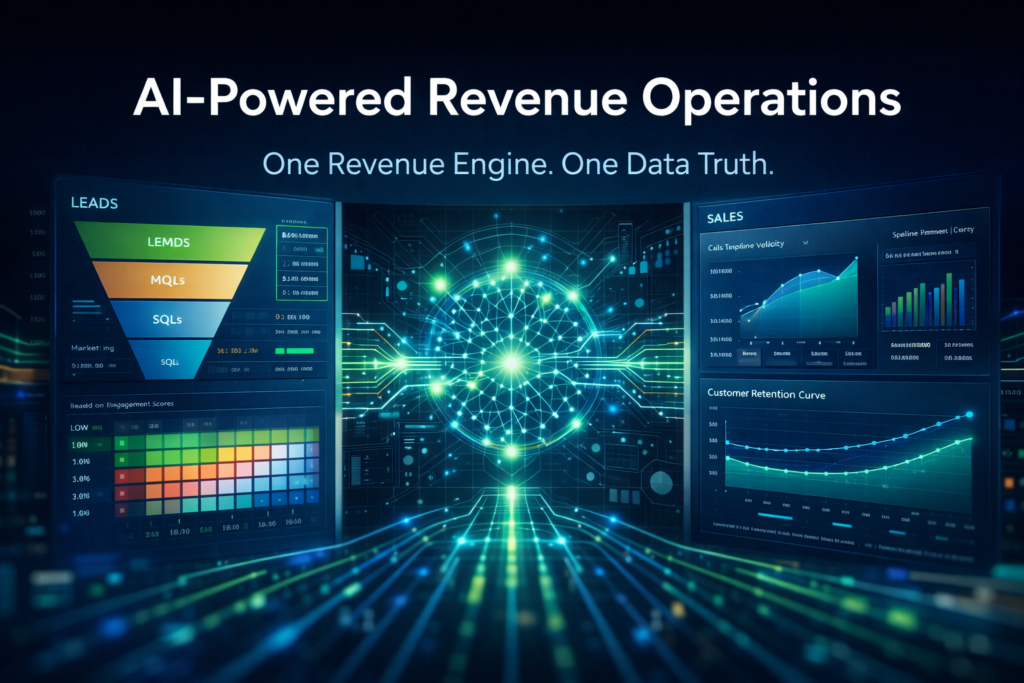
AI-Powered Revenue Operations – Aligning Sales, Marketing & Customer Success Revenue Misalignment Is a Systems Problem Most companies do not have a revenue problem. They have a systems alignment problem. Marketing optimizes CPL. Sales optimizes win rate. Customer Success optimizes renewals. Each team operates correctly – but from disconnected datasets. Revenue Operations (RevOps) was created to solve this. AI Automation makes it scalable. The shift is not about dashboards. It is about intelligent system orchestration. What AI Changes in Revenue Operations Traditional RevOps is reporting-heavy. AI-powered RevOps is signal-driven. Instead of reviewing last month’s pipeline, AI models analyze: Behavioral intent signals Multi-touch attribution paths Engagement decay patterns Usage drop-off indicators Sales cycle velocity anomalies This moves revenue management from reactive to predictive. The Core Architecture of AI-Powered RevOps A mature AI RevOps stack has five layers: 1. Unified Data Layer CRM (HubSpot / Salesforce) Marketing automation Product analytics Billing systems Support tools All events must flow into a central warehouse or structured reporting layer. In our work on Product Analytics & Full-Funnel Attribution for a SaaS Coaching Platform, we rebuilt attribution logic to connect marketing campaigns with in-product usage behavior and closed revenue. The insight: Attribution is not about “last click.” It is about lifecycle influence weighting. Without unified data, AI amplifies noise. 2. AI-Driven Lead Intelligence Most companies score leads on form fills and email opens. AI-powered scoring models include: Time-to-engagement compression Cross-channel behavior clustering Industry-specific buying cycles Historical win similarity scoring In Building a Lead Engine After Apollo Shut Us Out, alternative acquisition channels were integrated into automated scoring logic to prioritize real intent signals over vanity engagement. This reduced pipeline pollution and improved Sales Accepted Lead conversion rates. Insight: Lead scoring should predict sales velocity, not just interest. 3. Intelligent Sales Orchestration Revenue leakage often occurs in routing and follow-up lag. AI automation can: Auto-assign leads based on closing probability Trigger escalation workflows for stalled deals Detect inactivity risk Recommend next best action Instead of fixed rules, machine learning models adapt based on win/loss patterns. This transforms CRM from a database into a decision engine. 4. Predictive Customer Success Automation Retention is revenue. AI models identify churn risk through: Declining product engagement Reduced support interaction Payment irregularities Feature underutilization In HubSpot Marketing Hub Setup for a Growing Fintech Brand, lifecycle automation was structured so customer success received real-time alerts based on engagement decay — not after renewal failure. Insight: Customer success automation should trigger before the human notices a problem. 5. Closed-Loop Revenue Attribution Marketing ROI is often miscalculated because product and revenue data are disconnected. In Product Management for UAE’s First Lifestyle Services Marketplace, acquisition data was connected to vendor performance and transactional revenue metrics. This revealed: High-volume channels with low LTV Lower acquisition channels with higher expansion value Marketplace supply-demand revenue gaps Insight: AI-powered RevOps optimizes for lifetime revenue contribution, not cost-per-lead. What Most AI RevOps Implementations Get Wrong Automating broken processes Skipping data cleaning No governance structure Over-reliance on dashboards No ownership model Automation without governance creates hidden risk. Governance Framework for AI RevOps Before deploying automation, define: Ownership Who owns lead scoring model tuning? Who monitors churn prediction accuracy? Who validates attribution reports? Monitoring Cadence Weekly anomaly detection review Monthly revenue signal recalibration Quarterly model refinement Fail-Safes Manual override triggers Alert thresholds Performance drift monitoring AI is not “set and forget.” It requires operational discipline. Real Alignment Looks Like This Marketing knows: Which campaigns generate long-term customers Sales knows: Which accounts have expansion potential Customer Success knows: Which users require proactive intervention Leadership sees: One revenue number One attribution model One lifecycle dashboard That is unified RevOps. Measurable Business Outcomes of AI-Powered RevOps When implemented properly, organizations see: 20–35% improvement in lead-to-opportunity conversion Reduced sales cycle length Higher forecast accuracy Lower churn volatility Increased expansion revenue The compounding effect is operational clarity. The Strategic Shift AI-powered Revenue Operations is not about replacing teams. It is about: Removing manual friction Embedding intelligence into workflows Converting fragmented systems into one revenue engine When Sales, Marketing, and Customer Success operate from shared predictive models, accountability becomes structural – not political. Revenue becomes measurable across the full lifecycle. That is sustainable scale.

AI Automation, Blog

AI Workflow Governance – How to Control, Monitor, and Scale Automation Without Chaos

AI Workflow Governance – How to Control, Monitor, and Scale Automation Without Chaos Order Before Scale Automation promises speed. It rarely promises order. That is where many companies struggle. They invest in AI Workflow Automation to remove manual effort, only to discover that disconnected tools, unclear ownership, and hidden errors create new risks. AI workflow governance is the discipline that keeps automation aligned with business goals. It defines who controls the system, how decisions are tracked, and how performance is measured. Without governance, automation expands quietly until no one fully understands how it operates. At Product Siddha, governance is not treated as an afterthought. It is designed into the automation architecture from the start. What AI Workflow Governance Actually Means AI Workflow Automation connects systems, data, and actions. It may qualify leads, route support tickets, trigger campaigns, or update dashboards. Governance ensures that these automated decisions remain accurate, compliant, and measurable. In practical terms, governance covers: Workflow ownership and accountability Access control and permission layers Data validation standards Monitoring and error detection Audit trails and reporting Version control for automation logic When these elements are missing, automation becomes difficult to scale. Small changes ripple across the system. Teams hesitate to modify workflows because no one knows what might break. Why Governance Matters in Growing Businesses Early-stage companies often automate quickly. They connect CRM tools, analytics platforms, and messaging systems. It works well in the beginning. Problems surface when volume increases. One clear example appears in the case study From Lead to Site Visit – Voice AI Automation for a Real Estate Platform. The automation handled inbound property inquiries and routed them through voice-based qualification before scheduling visits. Without strict monitoring rules and fallback logic, even minor data mismatches could have sent buyers to the wrong sales representative. Governance prevented that outcome. Workflow checkpoints were built into the system. Every automated action was logged. Manual overrides were clearly defined. As inquiry volume grew, the automation scaled without confusion. That is the difference between automation and controlled automation. The Core Pillars of AI Workflow Governance 1. Clear Workflow Ownership Every automated workflow must have a named owner. This is not symbolic. The owner is responsible for reviewing performance metrics, approving updates, and ensuring compliance with business rules. In the HubSpot Marketing Hub Setup for a Growing Fintech Brand case study, Product Siddha structured marketing automation flows with defined ownership across lifecycle stages. Lead nurturing, qualification, and handoff processes were assigned to specific team members. The automation did not operate in isolation. It had oversight. Ownership creates accountability. Accountability prevents silent failures. 2. Structured Monitoring and Alerts AI Workflow Automation must be monitored like financial systems. Real-time alerts, anomaly detection, and health dashboards are essential. In the case titled Product Analytics for a Ride-Hailing App with Mixpanel, structured dashboards were built to track event flow across the user journey. When automated triggers depend on behavioral events, data gaps can break workflows. Continuous monitoring ensured that event tracking remained consistent. Monitoring answers simple but critical questions: Are triggers firing correctly Is data flowing between systems Are outputs aligned with expectations If automation operates without monitoring, errors remain hidden until customers complain. 3. Version Control and Change Management As businesses evolve, workflows change. Offers change. Routing logic changes. Compliance rules change. Governance requires version control. Each workflow update should be documented, tested, and rolled out in stages. In Built Custom Dashboards by Stage, reporting layers were aligned with funnel stages. Any adjustment to stage definitions required coordinated updates across dashboards and automation triggers. A change management protocol ensured that modifications did not disrupt reporting accuracy. This approach prevents automation sprawl. 4. Data Quality and Validation AI Workflow Automation depends on data integrity. Poor data creates poor outcomes. Governance must define: Required fields Validation rules Duplicate management Standard naming conventions Consider Building a Lead Engine After Apollo Shut Us Out. After losing access to a primary lead source, new workflows were created for alternative acquisition channels. Without strict data validation, lead records could have entered the CRM in inconsistent formats. Governance rules ensured clean ingestion and accurate segmentation. Automation is only as reliable as the data that feeds it. Scaling Without Chaos Scaling automation involves more than increasing volume. It involves expanding use cases. A French rental agency featured in AI Automation Services for French Rental Agency MSC-IMMO implemented automation for inquiry management and internal coordination. As adoption grew, governance policies ensured that new workflows followed consistent naming structures and reporting standards. Scaling followed three principles: Centralized workflow documentation Unified performance dashboards Regular governance reviews Without these controls, teams often build parallel automations that duplicate effort or conflict with each other. Governance Framework in Practice Below is a simplified governance structure often used in AI Workflow Automation environments. Governance Layer Purpose Key Actions Strategy Layer Align automation with business goals Define KPIs and workflow objectives Control Layer Protect data and access Set permissions and approval processes Monitoring Layer Track system health Create dashboards and alert rules Optimization Layer Improve performance Conduct periodic workflow audits This layered model reduces risk while supporting growth. Lessons from Real Implementations Across Product Siddha case studies, several patterns emerge: Automation succeeds when measurement precedes expansion Clear documentation reduces internal friction Cross-functional visibility improves adoption Regular audits prevent workflow decay In Boosting Email Revenue with Klaviyo for a Shopify Brand, revenue gains depended on structured lifecycle automation. Governance ensured that segmentation logic remained consistent even as campaigns multiplied. Automation did not replace strategy. It executed strategy. Responsible Automation AI Workflow Automation should simplify operations. It should not create uncertainty. Governance gives leaders confidence to scale. It allows teams to experiment without losing control. It ensures that automation remains aligned with compliance standards and customer expectations. When governance is ignored, teams spend time troubleshooting instead of building. When governance is built into the architecture, automation becomes predictable and durable. Product Siddha approaches automation as a managed system rather than a collection of tools. That mindset allows businesses to grow without losing clarity.

Sell.Do vs Zoho CRM Best Real Estate Automation for Indian Builders 2026
AI Automation, Blog

Sell.Do vs Zoho CRM: Best Real Estate Automation for Indian Builders 2026

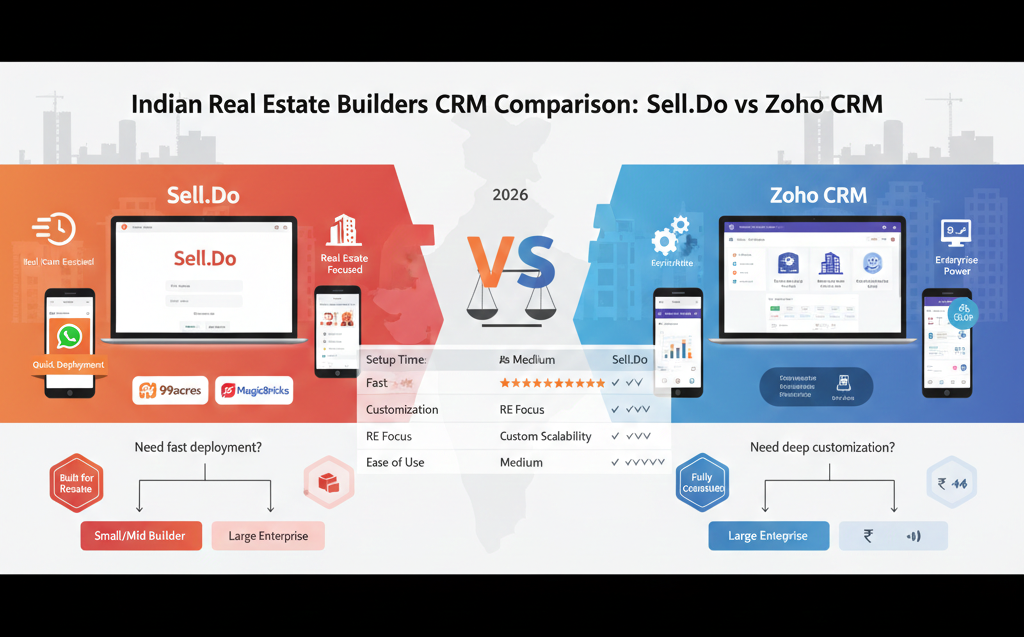
Sell.Do vs Zoho CRM: Best Real Estate Automation for Indian Builders 2026 Setting the Context Indian real estate in 2026 looks very different from even three years ago. Builders are no longer struggling only with lead volume. The real problem is lead quality, delayed follow-ups, poor coordination between sales teams, and unclear visibility into what actually converts a prospect into a site visit or booking. Automation has moved from being a support tool to becoming the backbone of sales operations. This is where the debate around Sell.Do vs Zoho CRM becomes important for builders searching for the Best Real Estate Automation suited to Indian market realities. This article examines both platforms through a practical lens. It focuses on usability, automation depth, reporting clarity, and long-term scalability. Insights are grounded in real-world implementation experience from Product Siddha, including automation work for real estate platforms operating in high-volume lead environments. What Builders Actually Need From Automation Before comparing tools, it is important to understand what Indian builders expect from real estate automation today. Most builders require: Fast lead capture from portals, ads, and walk-ins Immediate response through calls or WhatsApp Automated follow-ups without sounding robotic Clear tracking from lead to site visit to booking Simple dashboards that sales managers can actually use Automation that looks impressive but creates friction for sales teams usually fails within months. The Best Real Estate Automation is not the one with the longest feature list. It is the one that reduces human dependency at scale while keeping reporting clean and trustworthy. Sell.Do Overview for Real Estate Teams Sell.Do is built specifically for real estate developers. Its strength lies in understanding builder workflows rather than trying to be a general CRM. Core Strengths Native integrations with Indian property portals Lead routing based on project, budget, and location Site visit scheduling tied to sales calendars Builder-friendly dashboards and reports WhatsApp and call automation tailored for real estate Sell.Do works well for mid to large builders who want speed without heavy customization. Where Sell.Do Falls Short Limited flexibility outside real estate use cases Reporting becomes restrictive at enterprise scale Advanced automation requires external tools Not ideal for builders with multi-business verticals Sell.Do is practical and focused. It solves real problems quickly but does not always scale cleanly across complex organizations. Zoho CRM Overview in a Real Estate Context Zoho CRM is a horizontal platform. It is designed to serve many industries, including real estate, through customization. Core Strengths Highly customizable workflows Strong automation engine Scales across multiple departments Advanced reporting when configured properly Integrates with Zoho ecosystem tools Zoho CRM appeals to builders who want long-term control over automation logic rather than a pre-built system. Where Zoho CRM Struggles Requires implementation expertise Real estate workflows are not native Initial setup time is longer Sales teams often resist complex interfaces Without proper implementation, Zoho CRM can feel heavy for field-focused real estate sales teams. Feature Comparison at a Glance Feature Area Sell.Do Zoho CRM Real estate focus Built-in Custom-built Lead automation Strong Very strong Ease of adoption High Medium Reporting depth Medium High Scalability Medium High Custom workflows Limited Extensive Best fit Builder-first teams Enterprise builders Automation Depth That Matters Automation is not just about emails and reminders. In real estate, automation must bridge marketing, inside sales, and on-ground teams. Sell.Do automates lead assignment, follow-ups, and site visit reminders well. It works best when teams follow standard sales processes. Zoho CRM, when implemented correctly, allows builders to automate: Budget-based lead scoring Multi-stage approvals Custom sales logic by project type Post-visit follow-up journeys This makes Zoho CRM more powerful, but only when paired with proper implementation. At Product Siddha, automation projects show that builders often underestimate the importance of workflow design. Tools alone do not fix broken processes. Real-World Automation Example One relevant example from Product Siddha’s portfolio is “From Lead to Site Visit – Voice AI Automation for a Real Estate Platform.” In this engagement, automation was layered on top of existing CRM workflows to: Instantly call new leads within minutes Qualify prospects using voice logic Route qualified leads to sales teams Track call outcomes automatically The outcome was not higher lead volume, but faster site visit scheduling and cleaner attribution. This kind of automation works with both Sell.Do and Zoho CRM, but Zoho offered deeper control at scale. This highlights an important truth. The Best Real Estate Automation depends on how well automation aligns with actual sales behavior. Reporting and Visibility Builders often complain that CRMs show activity but not clarity. Sell.Do offers ready-made reports that answer basic questions: How many leads came in? How many site visits happened? Which channel performed better? Zoho CRM, when implemented correctly, answers deeper questions: Which sales actions increase site visits? Where do high-budget leads drop off? How long does each stage really take? Product Siddha often builds custom dashboards by stage, allowing leadership teams to see the real health of the funnel rather than surface metrics. Scalability for 2026 and Beyond Smaller builders usually prefer Sell.Do for its simplicity. Large builders with multiple projects, cities, or international expansion often outgrow it. Zoho CRM scales better across: Multiple brands Channel partners Centralized analytics Advanced automation logic However, scaling Zoho CRM without expert implementation often leads to clutter and poor adoption. This is where experienced real estate automation partners matter more than the tool itself. Choosing the Best Real Estate Automation There is no universal winner. Choose Sell.Do if: You want fast deployment Your team prefers simplicity You operate mainly in residential real estate Choose Zoho CRM if: You need deep customization You operate at enterprise scale You want long-term automation flexibility In both cases, success depends on how well workflows are designed, automated, and adopted. At Product Siddha, automation projects focus on business outcomes rather than tool features. Whether it is real estate platforms, SaaS products, or AI-driven systems, the principle remains the same. Automation should reduce friction, not add complexity. Final Word In 2026, the Best Real Estate Automation is not about

Reduce Cost Per Lead by 40% Automation Strategies for Indian Realtors
AI Automation, Blog

Reduce Cost Per Lead by 40%: Automation Strategies for Indian Realtors

Reduce Cost Per Lead by 40%: Automation Strategies for Indian Realtors The Cost Pressure Reality For Indian realtors, cost per lead has become a quiet threat. Advertising budgets rise each year, yet sales teams often complain that leads arrive late, go cold quickly, or lack intent. The result is familiar. More spending produces diminishing returns. The answer is not higher budgets or louder campaigns. It lies in tighter systems that respond faster, filter better, and waste less effort. This is where Automation Strategies for Indian Realtors have started to show measurable impact, especially when implemented with restraint and clarity. Automation does not replace people. It removes delays, repetition, and guesswork so sales teams can focus on real conversations. Why Cost Per Lead Keeps Rising in Indian Real Estate Several structural issues drive up lead costs across Indian property markets. First, response time remains slow. Many leads are contacted hours after they are generated, especially during weekends or holidays. Second, sales teams treat all leads equally. High-intent buyers and casual browsers enter the same follow-up queue. Third, reporting remains shallow. Teams track leads generated but not leads converted to site visits or bookings. These gaps inflate cost per lead because money is spent on volume rather than outcomes. Automation Strategies for Indian Realtors address these problems at the process level, not the ad level. Automation That Actually Lowers Cost Per Lead Automation works best when it intervenes early in the lead journey. The first five minutes after a lead arrives matter more than any later follow-up. Effective automation usually includes: Instant lead capture from all sources Automated first contact through call or WhatsApp Basic qualification before human involvement Clear routing based on budget and project fit Consistent follow-ups without manual effort When these steps run reliably, wasted leads reduce naturally. Cost per lead falls because fewer paid inquiries are lost to silence or delay. Lead Qualification Without Guesswork Most Indian realtors still rely on sales instincts to judge lead quality. This works at low volumes but fails at scale. Automation allows basic qualification to happen before a salesperson steps in. Simple signals like budget range, preferred location, and timeline can be captured through automated calls or forms. This approach reduces time spent on poor-fit leads. Over time, it brings down cost per lead because teams stop chasing prospects who were never likely to convert. Among Automation Strategies for Indian Realtors, structured qualification is often the most undervalued. Reducing Human Effort at the Right Stages Automation should not dominate every interaction. Its real value lies in handling repetitive tasks consistently. Tasks suited for automation include: First response messages Appointment reminders Follow-up scheduling Lead status updates Sales manager reporting When these tasks are automated, sales teams spend more time on site visits and negotiations. This balance lowers overall acquisition cost without affecting buyer experience. The Role of Funnel Visibility Many realtors know how many leads they receive but cannot explain where good prospects drop out. Product Siddha’s “Built Custom Dashboards by Stage” case study highlights the importance of stage-level clarity. By tracking leads from inquiry to site visit to booking, teams could see exactly where delays occurred. Once delays were visible, automation was applied selectively. Follow-ups were tightened at weak stages. As leakage reduced, cost per lead dropped without increasing ad spend. Visibility supports better automation decisions. Guesswork inflates costs. Channel Control and Cost Discipline Another contributor to rising lead costs is uncontrolled channel spending. When teams cannot link leads to outcomes, they keep funding poor channels. Automation combined with attribution tracking helps realtors identify which portals, ads, or referrals deliver real site visits. Although not a real estate case, Product Siddha’s work on “Product Analytics & Full-Funnel Attribution for a SaaS Coaching Platform” illustrates this principle well. Attribution exposed wasted spend and shifted budgets toward productive channels. The same logic applies to Indian real estate. When outcomes guide spending, cost per lead stabilizes. WhatsApp and Voice Automation in Practice Indian buyers respond well to familiar communication channels. Automation should respect this behavior. WhatsApp automation works best for: Acknowledging inquiries Sharing project details Sending visit confirmations Voice automation works best for: Immediate lead engagement Simple qualification Missed call follow-ups Used together, these tools reduce dependence on manual calling teams. This lowers operational cost and improves lead response consistency. Among Automation Strategies for Indian Realtors, channel-aligned automation delivers quick returns. Manual vs Automated Lead Handling Area Manual Process Automated Process Lead response time 1 to 6 hours Under 5 minutes Qualification Sales judgment Rule-based Follow-ups Inconsistent Scheduled Reporting Activity-based Outcome-based Cost efficiency Low High Common Automation Mistakes to Avoid Automation fails when it overwhelms teams or prospects. Avoid: Over-automation of conversations Complex workflows sales teams cannot understand Ignoring field feedback Automating without clear reporting goals Successful Automation Strategies for Indian Realtors remain simple, focused, and measurable. Closing Perspective Reducing cost per lead by 40 percent is not a promise. It is a process outcome when delays, waste, and guesswork are removed. Automation does not create demand. It preserves demand that already exists. For Indian realtors under pressure to do more with less, this distinction matters. When applied thoughtfully, automation improves response speed, lead quality, and reporting clarity. These improvements compound over time, steadily lowering acquisition costs. For teams working with Product Siddha, automation is approached as a discipline rather than a feature set. The goal is not complexity, but control.

Co-Living Spaces How to Automate Tenant Screening and Rent Collection
AI Automation, Blog

Co-Living Spaces: How to Automate Tenant Screening and Rent Collection

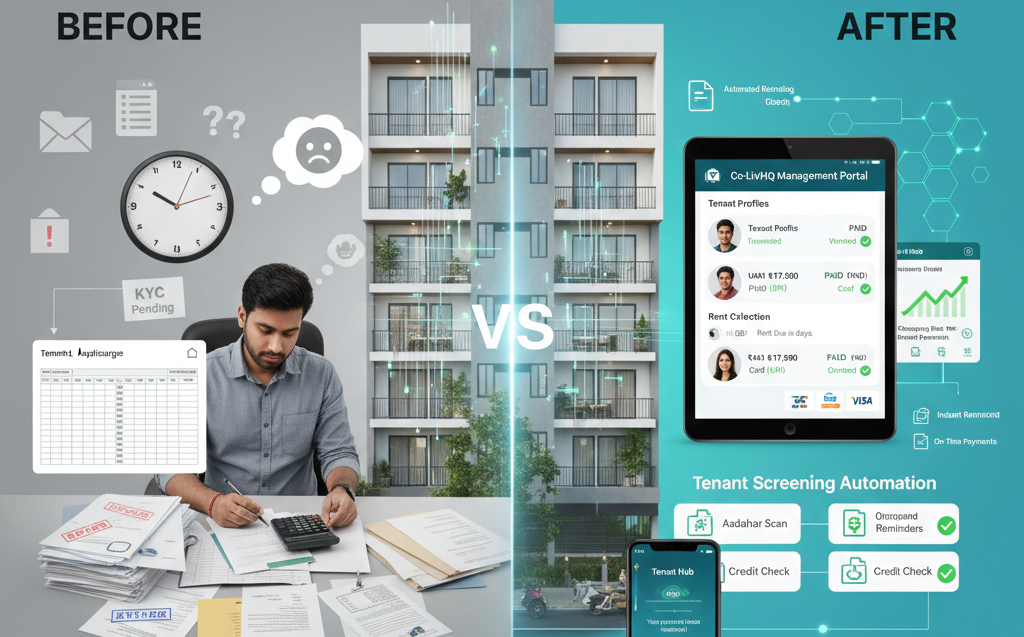
Co-Living Spaces: How to Automate Tenant Screening and Rent Collection A New Rental Model with Old Problems Co-living has moved from a niche concept to a mainstream housing option across Indian cities. Young professionals, students, and remote workers prefer flexible leases, furnished rooms, and shared amenities. Operators benefit from higher occupancy and faster turnover. Yet behind this growth sits a familiar set of problems. Tenant screening takes time. Rent collection becomes fragmented. Manual checks and follow-ups strain operations as portfolios grow. In co-living, volume is the challenge. Dozens or hundreds of tenants may move in and out each month. This is why operators increasingly look to automate tenant screening and rent collection. Automation brings order to scale without removing human judgment. Product Siddha works with platforms that face similar operational complexity. Their approach focuses on building systems that hold up under real usage, not ideal conditions. Why Tenant Screening Matters More in Co-Living Traditional rentals involve fewer tenants and longer leases. Co-living is different. Short stays, shared spaces, and frequent move-ins raise the stakes. Poor screening leads to disputes, payment delays, and community friction. Manual screening struggles to keep pace when applications arrive daily. To automate tenant screening is to reduce inconsistency. It ensures every applicant passes through the same checks, regardless of timing or staff availability. What Automated Tenant Screening Looks Like in Practice Automated screening does not remove decision-making. It structures it. A typical automated screening flow includes: Identity verification through documents Address and employment checks Credit or payment behavior signals Background screening where applicable Data is collected digitally and reviewed against predefined criteria. Applications that meet requirements move forward. Those that do not are flagged for manual review. This approach shortens turnaround time and reduces bias. Every applicant is assessed on the same basis. A Relevant Case from Product Siddha One Product Siddha case study involved AI automation services for a French rental agency, MSC-IMMO. The agency managed a growing portfolio with frequent tenant turnover. Manual screening and rent tracking caused delays. Staff spent excessive time verifying information and chasing payments. Errors affected tenant experience. Product Siddha helped introduce automation layers that standardized screening inputs and synchronized payment tracking. While markets differed, the operational lesson applies directly to co-living in India. To automate tenant screening is not about speed alone. It is about consistency and reliability when volume increases. Digital Screening Builds Tenant Trust Tenants also benefit from automation. Clear requirements and quick decisions reduce uncertainty. Applicants know where they stand without repeated calls or emails. Digital screening records also protect operators. Decisions are documented. Disputes can be resolved with evidence rather than memory. In shared living environments, transparency helps maintain community standards. Rent Collection Challenges in Co-Living Rent collection in co-living is rarely uniform. Tenants join on different dates. Payment methods vary. Late payments disrupt cash flow. Manual reminders do not scale. Missed follow-ups accumulate. Accounting becomes complex. Automation introduces discipline without constant oversight. How Automated Rent Collection Works Automated rent collection relies on clear schedules and digital payment systems. Key components include: Automated invoices based on move-in date Digital payment links or standing instructions Reminder notifications before due dates Automatic reconciliation with records Tenants receive timely reminders. Operators gain predictable cash flow. Exceptions are handled individually rather than across the entire system. This approach reduces friction on both sides. Screening and Payments Work Best Together Tenant screening and rent collection should not exist as separate systems. When linked, they form a complete operational loop. Approved tenants move directly into payment workflows. Lease terms align with billing schedules. Exit processes trigger final settlements automatically. Product Siddha’s experience building custom dashboards by stage supports this integrated view. Operations become easier to manage when data flows without interruption. Data Visibility Improves Decision Making Automation also improves insight. Operators can track: Approval rates by tenant profile Payment delays and patterns Occupancy trends Revenue per property or location These insights support better pricing and capacity planning. Without automation, such analysis remains partial or delayed. To automate tenant screening is also to create a reliable data trail for future decisions. Balancing Automation with Oversight Automation must be applied carefully. Overly rigid rules may reject suitable tenants. Overly lenient ones may increase risk. The best systems allow thresholds and manual review where needed. Staff intervene when context matters. Product Siddha’s broader work across analytics and automation emphasizes this balance. Systems assist teams. They do not replace judgment. A Practical Adoption Path Most co-living operators begin with one area. Screening or payments. As confidence grows, systems connect. Automation reduces routine effort. Staff spend more time on community management and tenant experience. To automate tenant screening and rent collection is not a technological statement. It is an operational one. Sustainable Growth Through Structure Co-living thrives on efficiency and trust. Automation supports both when applied with care. Structured screening protects communities. Predictable rent collection supports financial stability. Together, they allow operators to grow without losing control. Product Siddha’s experience across rental platforms, analytics, and automation reflects this steady approach. Systems should make growth manageable, not fragile.