Product Siddha

Product Management

Blog, Product Management

Product Discovery in the Age of AI: New Playbooks for PMs

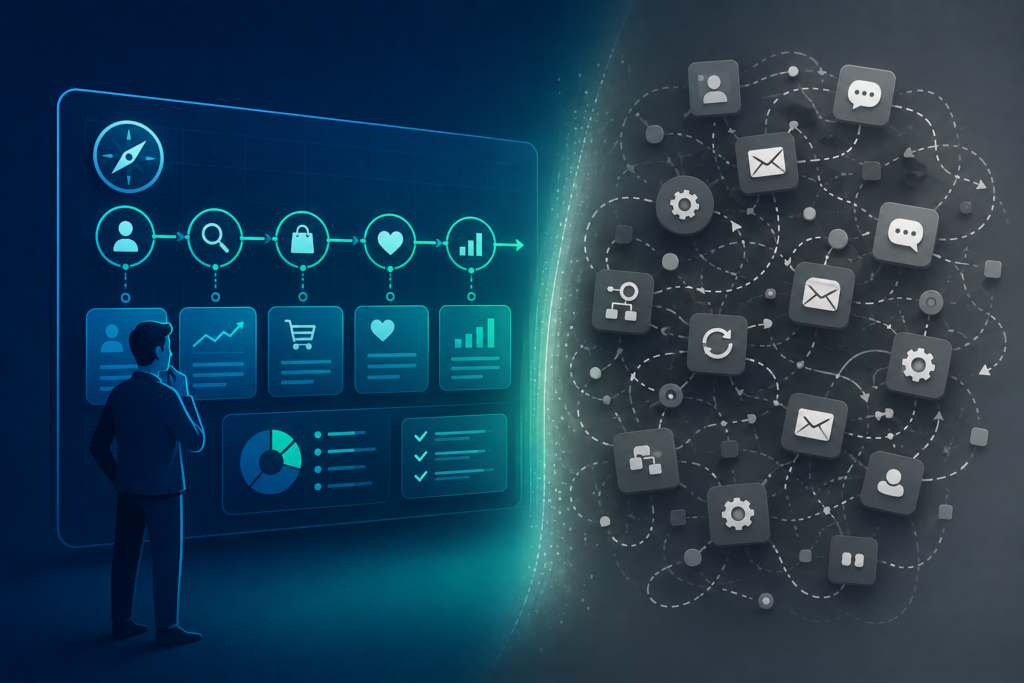
Product Discovery in the Age of AI: New Playbooks for PMs A Shift in How Products Begin Product discovery has always been about understanding users before building solutions. That principle has not changed. What has changed is the speed and depth at which insights can be gathered. In earlier years, discovery relied heavily on interviews, surveys, and intuition. Today, AI-assisted tools allow product teams to observe behavior, test ideas, and refine direction in a much shorter time. Yet faster access to data has introduced a new challenge. Teams now face more signals than they can interpret. For teams working with Product Siddha, product discovery is treated as a structured discipline. AI is used as support, not as a replacement for judgment. What Product Discovery Means in 2026 Product discovery is the process of identifying the right problem and validating the right solution before full development begins. A sound discovery process answers three questions: Who is the user What problem do they face Why does the problem matter enough to solve AI helps gather evidence for these questions, but it does not decide the answers. The Role of AI in Discovery Work AI has introduced new ways to study users and markets. It processes large data sets quickly and highlights patterns that might otherwise go unnoticed. Key Applications Area Traditional Method AI-Assisted Method User Research Interviews and surveys Behavioral data analysis and clustering Market Signals Manual tracking Automated trend detection Feedback Analysis Reading responses Sentiment and intent analysis Experimentation Limited testing Rapid prototype testing These capabilities allow product managers to test ideas earlier and refine them with evidence. AI-Driven Product Discovery Flow User Signals → Pattern Identification → Hypothesis → Rapid Testing → Insight → Iteration This cycle reflects continuous learning. Discovery is not a single phase. It runs alongside development. A Practical Example: Networking Assistant A useful case comes from “Building the World’s First AI-Powered Networking Assistant.” The product aimed to connect users based on shared interests and context. At the discovery stage, the problem was not clearly defined. Users expressed a general need to network better, but their expectations varied. AI-assisted analysis of user interactions helped identify patterns. Users valued timely and relevant introductions rather than broad recommendations. This insight shaped the product direction. Instead of building a large platform, the team focused on a single feature. Context-based matching. Early prototypes tested this feature with a small group. Feedback confirmed its value. This example shows how AI can guide discovery without replacing human judgment. New Playbooks for Product Managers Product managers must adapt their approach to make effective use of AI. 1. Start with Real Signals Rely on actual user behavior, not assumptions. AI tools can highlight patterns, but these must be interpreted carefully. 2. Form Clear Hypotheses Every idea should be treated as a hypothesis. Define what success looks like before testing. 3. Test Early and Often Rapid prototyping allows teams to validate ideas quickly. This reduces wasted effort. 4. Combine Data with Context Numbers alone do not explain user intent. Combine quantitative data with qualitative insights. Decision Quality vs Data Volume Data Volume Decision Quality Low Limited insight Moderate Balanced understanding High without context Confusion High with structure Strong decisions More data does not guarantee better decisions. Structure is essential. Avoiding Common Pitfalls Despite better tools, product discovery can still fail. Over-Reliance on AI Some teams treat AI outputs as final answers. This leads to shallow conclusions. Ignoring Edge Cases Patterns often reflect majority behavior. Unique user needs may be overlooked. Skipping Problem Validation Teams may move directly to solutions without confirming the problem. Fragmented Insights Data from different sources may not align, leading to inconsistent conclusions. Balancing Speed and Thought AI allows teams to move faster, but speed must be managed carefully. Quick decisions without reflection can lead to poor outcomes. Comparison Approach Speed Depth Result Fast without analysis High Low Weak validation Slow traditional method Low High Delayed progress Balanced AI-assisted method Medium High Strong outcomes The goal is to maintain depth while improving speed. Integrating Discovery with Development Discovery should not be isolated from development. Insights must flow into product decisions continuously. In “Product Management for UAE’s First Lifestyle Services Marketplace,” early discovery revealed diverse user needs. Instead of building separate solutions, the team identified common patterns. This allowed the creation of a unified service layer. Development proceeded with clarity, reducing rework and confusion. The Road Ahead Product discovery in the age of AI offers new opportunities. Teams can learn faster, test ideas earlier, and reduce uncertainty. Yet these advantages require careful use. AI should support thinking, not replace it. Data should guide decisions, not overwhelm them. Structure should remain at the core of discovery. Product managers who adapt to this approach will build products that meet real needs. Those who rely only on tools may struggle to find direction. In the end, product discovery remains a human process. AI simply makes it more informed and more efficient.

Blog, Product Management

Before You Hire a Product Consultant: 12 Questions That Save You Lakhs

Before You Hire a Product Consultant: 12 Questions That Save You Lakhs The Cost of a Wrong Hire Hiring a product consultant is not a small decision. In many cases, the engagement runs into several lakhs within a few months. What often goes unnoticed is the cost of wrong direction. A consultant who builds the wrong roadmap, tracks the wrong metrics, or ignores user behavior can quietly drain time, budget, and team morale. A good product consultant does not just give advice. They shape how decisions are made, how features are prioritized, and how growth is measured. This is why asking the right questions before hiring matters far more than reviewing a polished proposal. Below are twelve questions that can help you avoid expensive mistakes and find the right partner for your business. 1. How do you approach product discovery? A capable product consultant will not jump straight into solutions. They begin with understanding users, business goals, and constraints. Ask how they validate ideas before development. Look for mention of user interviews, data analysis, and problem framing. If the answer sounds like a fixed process applied to every company, that is a warning sign. 2. Can you share a real example of solving a similar problem? Experience should be specific, not generic. For example, Product Siddha worked on Building a Lead Engine After Apollo Shut Us Out. Instead of relying on a single tool, they designed a multi-channel system that reduced dependency risk and improved lead flow stability. This kind of example shows problem solving under constraints, which is far more useful than standard success stories. 3. What metrics do you track to measure success? A strong product consultant focuses on meaningful metrics, not vanity numbers. They should speak about activation, retention, conversion rates, and revenue impact. If the conversation stays limited to traffic or downloads, the engagement may not deliver business outcomes. 4. How do you balance product intuition with data? Good product decisions sit between instinct and evidence. In one case, Product Siddha handled Product Analytics & Full-Funnel Attribution for a SaaS Coaching Platform. Instead of relying only on dashboards, they combined user journey data with founder insights to refine the funnel. This balance is critical. Too much data can slow decisions. Too much intuition can lead to bias. 5. What tools and systems do you work with? A consultant should be comfortable with modern analytics and marketing tools, but the focus should remain on outcomes. For instance, in Driving Growth for a U.S. Music App with Full-Stack Mixpanel Analytics, the use of Mixpanel was not the highlight. The real value came from identifying user drop-offs and improving engagement loops. The tool matters less than how it is used. 6. How do you prioritize features? Feature prioritization often decides the success or failure of a product. Ask how they choose what to build first. Look for structured thinking such as impact versus effort, user value, and alignment with business goals. Avoid consultants who rely only on founder requests or competitor features. 7. How do you handle unclear requirements? In early-stage or fast-moving companies, clarity is rare. A reliable product consultant should be comfortable working with incomplete information. They should explain how they break down ambiguity into smaller, testable steps. For example, in Building the World’s First AI-Powered Networking Assistant, the initial scope was broad. The approach focused on iterative validation instead of building everything at once. 8. Can you explain a failure and what you learned from it? This question reveals honesty and depth. Every experienced consultant has faced setbacks. What matters is how they learned and adapted. If the answer avoids failure entirely, it is unlikely to be genuine. 9. How do you work with internal teams? A product consultant should not operate in isolation. They must collaborate with developers, marketers, and leadership. Ask how they communicate progress, resolve conflicts, and ensure alignment. In HubSpot Marketing Hub Setup for a Growing Fintech Brand, success depended on aligning marketing and product teams around shared data and workflows. 10. What does your typical engagement look like? Clarity in process helps avoid confusion later. Ask about timelines, deliverables, and involvement levels. A vague answer often leads to scope creep and missed expectations. 11. How do you ensure long-term impact? The goal is not short-term fixes. It is building systems that continue to deliver value. For example, in Built Custom Dashboards by Stage, the focus was on creating visibility across the funnel so that teams could make informed decisions even after the engagement ended. 12. What will you need from us to succeed? This question shifts the focus to collaboration. A good product consultant will clearly state what they expect from your team. This may include access to data, regular check-ins, or decision-making support. If the answer suggests they can handle everything independently, it may lead to misalignment later. Good vs Poor Product Consultant Criteria Strong Consultant Weak Consultant Discovery Approach User and data driven Assumption based Metrics Focus Business outcomes Vanity metrics Communication Clear and structured Irregular and vague Flexibility Adapts to context Uses fixed templates Impact Builds systems Delivers one-time outputs Final Thoughts Hiring a product consultant is a strategic decision. The right choice can accelerate growth and bring clarity to complex problems. The wrong one can slow progress and increase costs without visible results. These twelve questions are not just a checklist. They are a way to understand how a consultant thinks, works, and collaborates. When answered well, they reveal far more than any proposal or presentation. Take your time with this process. A careful evaluation today can save lakhs tomorrow.

Blog, Product Management

Why Investors Care More About Retention Than Signups

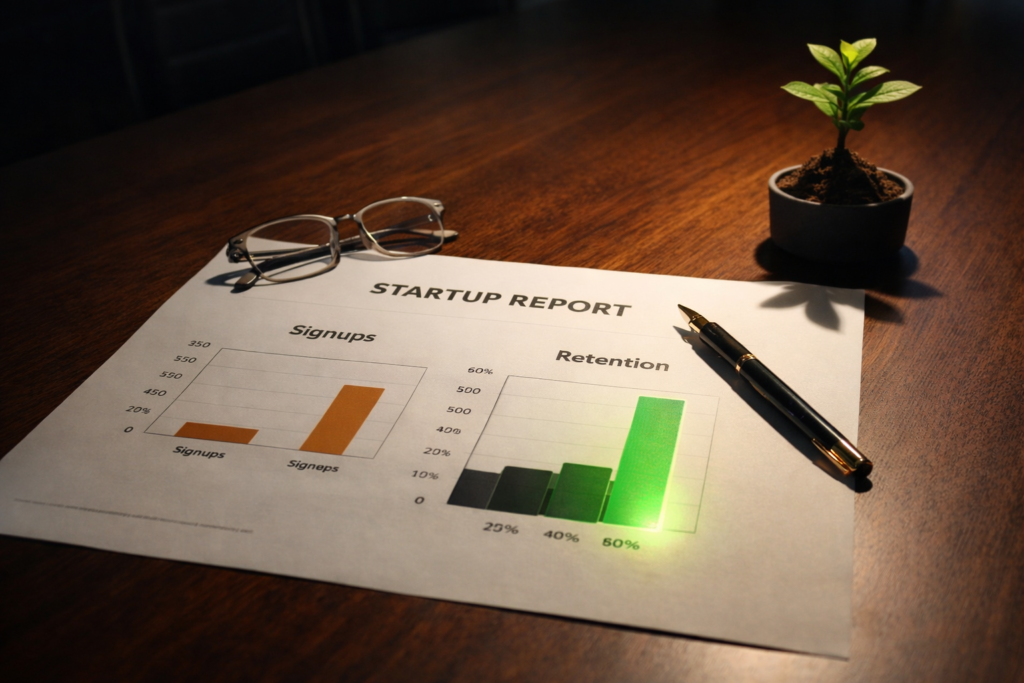
Why Investors Care More About Retention Than Signups In the early life of a startup, growth numbers often receive the most attention. Founders celebrate rising signup counts. Dashboards display daily registrations and user acquisition charts. These figures appear impressive during product launches and press announcements. Investors, however, study a different signal. They want to know whether users remain active after the first visit. Signups show curiosity. Retention shows value. A product that attracts thousands of new users but loses them within days rarely builds a sustainable company. A smaller product that keeps its users engaged often attracts serious investment. This difference explains why investors place greater importance on user retention metrics than on raw signup totals. Looking Beyond the First Click A signup represents the beginning of a relationship with a product. It does not guarantee that the user will return. Many startups experience an early surge of registrations followed by rapid decline in activity. This pattern appears when marketing efforts bring visitors who are only exploring. Investors prefer to see signs of consistent usage. These signs include: repeat visits to the product regular interaction with core features gradual increase in user engagement These patterns indicate healthy product retention rates. They show that the product solves a real problem rather than attracting temporary interest. The Difference Between Growth and Stickiness Two metrics often appear together in startup reports. Metric What It Measures Signups Number of new users joining Retention Percentage of users returning Signups describe the speed at which people discover a product. Retention describes the strength of the product experience. Investors evaluate both numbers together. A product with steady customer retention metrics signals long term potential. Example Scenario Imagine two startups launching similar software tools. Startup A gains 50,000 signups during its first three months. After one week only 5 percent of those users remain active. Startup B attracts 8,000 signups during the same period. After one week 60 percent continue using the product. Although Startup A appears larger, investors usually prefer Startup B. Strong user retention analytics suggest that the product has real market fit. Why Retention Predicts Revenue Sustainable businesses depend on repeated usage. When customers continue using a product, several positive outcomes follow. Subscription payments continue Users recommend the product to others Customer support costs decrease Product data becomes more reliable These effects strengthen customer lifetime value, which investors examine carefully when evaluating a startup. A product that retains users often grows through natural referrals. This pattern reduces the cost of acquiring each new customer. Measuring Retention Correctly Product teams measure retention using several time based methods. Retention Period Purpose Day 1 Retention Checks if users return after the first visit Week 1 Retention Measures early product engagement Month 1 Retention Indicates long term interest These figures form the basis of product retention analysis. Data teams track the percentage of users who return during each period. The results reveal whether the product continues to provide value. Learning from Product Analytics Retention data becomes meaningful only when it connects to user behavior. Product analytics tools help teams understand what users actually do inside the product. One example appears in the case study titled “Driving Growth for a U.S. Music App with Full Stack Mixpanel Analytics.” In this project, analysts examined how listeners interacted with the music platform. The data showed specific points where users stopped listening or left the application. These drop off moments indicated friction in the user experience. After the product team simplified navigation and improved playlist discovery, engagement increased. As retention improved, the product gained stronger evidence of market demand. This example reflects how companies such as Product Siddha apply product analytics and retention tracking to guide product decisions. A Visual Look at Retention Suggested infographic for the article: New Users ↓ First Product Experience ↓ Repeat Visits ↓ Regular Usage ↓ Long Term Customer This path illustrates how a casual visitor becomes a committed user. The Investor Perspective Investors examine retention numbers because they reveal several important characteristics of a startup. Product Market Fit High retention suggests that the product solves a meaningful problem. Users continue returning because the product fits naturally into their daily routine. Efficient Growth When users stay active, growth becomes easier. Returning customers often invite colleagues or friends, creating organic expansion. Reliable Forecasting Retention provides stable revenue projections. Investors can estimate future earnings when customers maintain regular subscriptions. These factors make startup retention metrics a central part of investor evaluation. Real World Example A familiar example comes from the early development of Slack. Before the company became a global workplace communication platform, the founders observed that teams who tried the product often continued using it every day. Daily usage remained extremely high within organizations. This pattern demonstrated strong user engagement and retention. Investors recognized that behavior as a signal of deep product value. The product expanded rapidly after those early indicators appeared. Improving Retention in Practice Founders often ask how to improve retention once a product launches. The answer usually begins with careful observation of user behavior. Product teams often focus on three areas. Clear First Experience New users should quickly understand how the product helps them. Confusion during the first session often leads to abandonment. Reliable Performance Slow loading times and technical errors discourage repeat visits. Stable infrastructure supports better user retention performance. Continuous Product Learning Analytics data should guide product updates. When teams observe where users struggle, they can refine the experience gradually. Companies that follow these steps often see steady improvements in retention. Data That Guides Product Decisions The following chart illustrates common retention indicators used by product teams. Indicator Insight Active users Overall product engagement Session frequency How often users return Feature usage Most valuable product tools Churn rate Percentage of users leaving Together these metrics form a clear picture of product health. Final Insight Signups create the first spark of growth for a startup. They show that people are curious enough to try the product. Yet curiosity alone does not build a durable

Blog, Product Management

Why Non-Technical Founders Should Launch an MVP Before Building a Full Product

Why Non-Technical Founders Should Launch an MVP Before Building a Full Product Many founders begin with a clear idea but no technical background. They know the problem they want to solve and understand their market, yet the process of building software feels uncertain. The instinct is often to build a complete product from the start. That approach can drain time, money, and energy before anyone confirms that the idea actually works. A better path is to begin with MVP development. A Minimum Viable Product allows founders to test a concept with a small set of core features before investing in a full system. This approach has shaped the early stages of many successful companies. For non-technical founders in particular, it reduces risk and provides practical insight into what customers truly want. Understanding the Purpose of an MVP A Minimum Viable Product is not a prototype built only for demonstration. It is a working product designed to solve one essential problem for a specific group of users. Instead of building ten features at once, the team focuses on the single feature that delivers the most value. This approach allows founders to answer three critical questions early: Do people actually need this product? Are they willing to use it repeatedly? Will they eventually pay for it? For a non-technical founder, MVP development becomes a practical learning tool. The product enters the real market quickly and feedback replaces assumptions. Why Full Product Development Is Risky at the Start Building a complete product before testing demand often leads to expensive mistakes. Many founders design elaborate feature lists based on personal opinions or early conversations. Once development begins, months pass before the product reaches users. By that time the market may respond differently than expected. Three common problems appear in early stage product launches: Risk What Happens Overbuilding Teams create features customers never use Delayed feedback Real user insights arrive too late Budget exhaustion Development costs rise before revenue appears Through structured MVP development, founders avoid these traps. They gather feedback earlier and make adjustments while costs remain manageable. Real Market Learning Happens After Launch Ideas rarely survive unchanged once real users interact with them. Customers often interpret a product differently from how the founder imagined it. A feature that seemed minor may become central. Another feature may prove unnecessary. Launching an MVP allows founders to observe how people actually behave. For example, a ride-hailing startup that focused only on driver scheduling might discover that customers care more about arrival notifications than scheduling tools. This insight appears only after real usage. Product teams can then refine their roadmap using real behavior rather than predictions. A Practical Example from Product Siddha In the case study “Building the World’s First AI-Powered Networking Assistant”, the early phase focused on validating whether professionals would use an AI assistant to manage networking conversations. Instead of building a complete platform with every possible feature, the early system concentrated on a few essential capabilities: identifying relevant contacts suggesting conversation starters helping users follow up after meetings This limited release allowed the team to observe how people interacted with the assistant in real situations. Feedback revealed which suggestions users valued and which functions felt unnecessary. Because the initial build followed a structured MVP development process, improvements could be made quickly before expanding the product further. The lesson is simple. Early validation guided later development and prevented unnecessary complexity. Benefits of MVP Development for Non-Technical Founders Founders without technical experience gain several advantages when they begin with an MVP. 1. Lower Financial Risk Software development can be expensive. An MVP reduces the initial investment because only core features are built. Founders can test their idea without committing the full development budget. 2. Faster Time to Market Instead of waiting many months for a full system, an MVP can often launch in a few weeks or a few development cycles. This speed allows founders to begin learning from users almost immediately. 3. Clearer Product Direction Once real feedback arrives, product decisions become easier. Rather than debating hypothetical features, the team focuses on improvements that users actually request. 4. Easier Investor Conversations Investors often ask a simple question. Has the market shown interest? An MVP with active users demonstrates early traction. Even modest usage numbers can show that the problem is real. The MVP Development Process Although each product differs, most MVP projects follow a similar sequence. Step 1: Define the Core Problem The team begins by identifying the single problem that matters most to the target audience. If the product solves that problem effectively, users will tolerate missing features during early stages. Step 2: Select Essential Features Only the functions required to solve the core problem are included. Every additional feature increases development time and complexity. Step 3: Build the First Version Developers create a functional system that users can interact with. Quality still matters. Even a minimal product must work reliably. Step 4: Release to Early Users The MVP is introduced to a small group of real customers. Usage patterns and feedback provide the most valuable insights. Step 5: Iterate Based on Evidence Improvements follow actual user behavior. Features expand gradually as demand becomes clear. Visual Snapshot of the MVP Journey Infographic Concept Idea ↓ Problem Validation ↓ MVP Development ↓ Early Users ↓ Feedback ↓ Product Expansion This cycle repeats several times as the product grows. Example Scenarios Where MVPs Work Well Many industries benefit from the MVP approach. Industry Example MVP Idea Healthcare Appointment scheduling app with basic reminders Real Estate Property listing platform with limited search tools Education Simple course subscription platform Fitness Coaching app that tracks workouts and feedback Each example begins with one clear function rather than a large ecosystem. How Product Siddha Helps Founders Move from Idea to Product Many founders possess strong domain knowledge but lack technical guidance. This gap is where companies like Product Siddha provide structured support. Their work across analytics, product management, and AI automation often begins with defining the earliest workable version

Blog, Product Management

How to Build a Startup MVP Without Writing a Single Line of Code

How to Build a Startup MVP Without Writing a Single Line of Code Build an MVP Without Code Startups often stall before the first product appears. Founders spend months planning a system, hiring developers, and raising funds. Many never reach the stage where users can try the product. The idea remains on a whiteboard. A different path exists today. A founder can launch a working product with no coding knowledge. Tools now allow anyone to assemble a product piece by piece, test the idea with users, and gather feedback. This method keeps risk low and speed high. This guide explains how to approach MVP development without writing a single line of code. The process relies on practical tools, careful planning, and a clear understanding of the problem you want to solve. What an MVP Actually Means An MVP is the smallest version of a product that solves one clear problem. It is not a rough prototype or a collection of half-built features. It is a working solution that people can use. Good MVP development focuses on three questions. What problem does the product solve Who experiences that problem the most What is the simplest feature that solves it When founders skip these questions, they build too much. When they answer them honestly, the product becomes small, focused, and testable. No-code tools make this approach practical. Instead of building a full platform, you assemble the core functions and place them in front of real users. The Rise of No-Code Tools Ten years ago a founder needed a development team to build almost anything online. Today there are platforms that provide ready-made building blocks. Examples include tools for: Web app creation Database management Workflow automation Payment processing User authentication A founder can connect these parts together like a system of modules. The result is a functioning product. This shift has changed the way startup MVP development works. Teams now test ideas quickly before committing to complex engineering work. The Step-by-Step Path 1. Define the Core Problem Every product begins with a problem that affects a specific group of people. Take a moment to write a simple statement. Example: “Freelancers lose track of client invoices.” That statement already suggests a product direction. The MVP does not need accounting tools, dashboards, and reporting features. It only needs to help freelancers track invoices. Clear problems lead to focused minimum viable product development. 2. Design the Product Flow Before opening any tool, sketch the product on paper. Draw three things: How a user enters the product What action they perform What result they receive This exercise reveals unnecessary steps. For example, an invoice tracker might have only three screens. Step User Action Result 1 Create invoice Invoice stored 2 Send invoice Client receives link 3 Payment status User sees paid or pending This small structure is enough for an MVP. 3. Choose No-Code Development Tools Different tools serve different purposes. A simple MVP might combine several platforms. Function Example Tool App builder Bubble Website builder Webflow Database Airtable Automation Zapier Payments Stripe Analytics Mixpanel These platforms connect easily through APIs or built-in integrations. Using this stack, founders can handle MVP software development tasks without engineering teams. 4. Build the First Working Version At this stage the goal is not perfection. The goal is usability. Start with the main feature. For the invoice example: User signs up User creates invoice User sends invoice Ignore everything else. Many founders delay launch because they worry about design or advanced features. Early users care about whether the tool solves the problem. That is the essence of lean MVP development. 5. Add Basic Analytics Even a small product should track user behavior. Analytics tools help answer questions like: How many users sign up Which features they use Where they abandon the product A simple dashboard can reveal whether the idea works. Product analytics platforms play a major role in modern MVP development services. Example from Product Siddha A good example appears in one of the projects handled by Product Siddha. The case study titled Driving Growth for a U.S. Music App with Full-Stack Mixpanel Analytics shows how data helps refine an early product. The team did not start by expanding the application with dozens of new features. Instead they studied how users moved through the app. Mixpanel data showed where users dropped off during the listening journey. After identifying those friction points, small adjustments improved engagement. The lesson is clear. Even when a product exists, understanding user behavior matters more than adding features. This method reflects disciplined product MVP development. Build something small, observe real usage, and adjust the product based on evidence. A Simple MVP Architecture Below is a basic structure used in many no-code startups. Landing Page ↓ User Signup ↓ Core Feature ↓ Payment or Action ↓ Analytics Tracking Each layer uses a separate tool. Together they create a functioning product. This modular approach reduces risk during MVP product development. If one component needs replacement later, the rest of the system remains intact. MVP Development Workflow Idea ↓ Problem Definition ↓ Simple Product Flow ↓ No-Code Tool Selection ↓ Build MVP ↓ User Testing ↓ Product Improvement This loop continues until the product shows clear demand. Real Example from the Startup World A well-known example outside the Product Siddha ecosystem comes from the early days of Airbnb. Before building a complex booking platform, the founders created a simple website listing a few air mattresses in their apartment. Guests could book a stay during a conference in San Francisco. The first version had minimal technology behind it. The founders wanted to test whether people would pay to stay in someone else’s home. Once they confirmed demand, they invested in full software MVP development and eventually built a global marketplace. The lesson is simple. Real users provide better answers than assumptions. When to Move Beyond No-Code No-code tools are powerful, but they are not always permanent solutions. Signs that a product should move to custom engineering include: Large numbers

Blog, Product Management

7 Mistakes Non-Technical Founders Make When Hiring Developers

7 Mistakes Non-Technical Founders Make When Hiring Developers Starting a technology company without a technical background is common. Many successful founders began with business knowledge rather than programming skill. The difficulty appears when the first development team must be hired. A founder who does not understand software engineering often depends entirely on the judgment of others. That situation can create expensive problems. Projects run late, budgets expand, and the product takes a shape that no longer reflects the original idea. These problems rarely come from bad intentions. They usually arise from small misunderstandings during the hiring stage. The following seven mistakes appear again and again when non technical founders recruit developers. Recognizing them early can save time, money, and months of confusion. The Hiring Challenge A founder entering the world of software development faces an unusual gap in knowledge. Business planning feels familiar. Customer research feels natural. Yet software engineering follows its own logic. Many founders approach hiring as if they were selecting a marketing manager or accountant. The same process rarely works for technical roles. Companies such as Product Siddha often encounter startups that arrive after their first hiring attempt has failed. In many cases the problem started with one of the mistakes described below. 1. Hiring Without a Clear Product Plan The most common mistake appears before the first interview even begins. The founder does not yet have a clear product plan. Developers cannot build an idea that exists only in conversation. They require structure. This usually includes: A written product outline A list of essential features Basic user flow diagrams Without these elements the developer must guess what the founder intends. That guess often changes several times during the project. Each change increases development time. A simple document describing the minimum product helps avoid this problem. Example Product Outline   Section Description Core Problem What user problem the product solves Key Feature The one action users must complete User Flow Steps from signup to result Platform Web application or mobile app Even a brief plan can guide early development decisions. 2. Judging Developers Only by Cost Budget matters in every startup. Still, selecting developers solely because they offer the lowest price often leads to difficulty. Software development requires careful thinking and steady testing. When the price falls far below the normal range, it usually signals one of two issues: The developer lacks experience The developer plans to rush the work In both situations the founder may pay the difference later through delays and repairs. Experienced founders compare several proposals before making a choice. They examine technical approach, timeline, and communication style along with cost. 3. Ignoring Communication Skills A skilled developer who cannot explain technical ideas clearly becomes difficult to work with. Non technical founders rely on simple explanations to understand progress. During interviews it helps to ask candidates to describe a previous project in plain language. A capable developer should explain the problem, the approach, and the result in simple terms. Poor communication often causes misunderstandings about features, deadlines, and product direction. 4. Skipping a Small Test Project Many founders hire developers immediately after one interview. This step creates risk. A short test project allows both sides to evaluate the working relationship. The task might involve: Building a small interface Connecting a basic database Fixing an existing bug The test does not need to be large. Its purpose is to observe how the developer works. Founders can see how quickly the developer responds, how clearly the code is organized, and how carefully instructions are followed. This simple step prevents many hiring errors. 5. Expecting One Developer to Do Everything Software projects involve several distinct roles. These may include: Role Responsibility Front End Developer Builds the user interface Back End Developer Handles data and server logic Product Manager Defines product direction QA Tester Checks for errors Non technical founders sometimes expect a single developer to perform all of these tasks. A rare individual may handle several roles. Most projects benefit from dividing responsibilities. Understanding these roles helps founders build a balanced team. 6. Neglecting Product Analytics from the Beginning Many startups build a product without tracking how users behave inside the application. This creates a blind spot. The founder cannot see which features people use or where they abandon the product. A case study connected to Product Siddha illustrates this issue well. In the project titled “Product Analytics for a Ride Hailing App with Mixpanel,” the team analyzed user behavior across the application. They tracked events such as ride search, booking attempts, and payment completion. The data revealed specific points where riders stopped using the service. After the product team improved those areas, engagement increased. Without analytics tools, these insights would remain invisible. Early development should include basic event tracking and reporting. Example Product Analytics Metrics Metric Purpose User Signups Measures interest in the product Feature Usage Shows which tools people use Drop Off Points Identifies where users leave Conversion Rate Tracks completed actions These numbers guide product improvement. 7. Forgetting Long Term Product Maintenance Launching the first version of a product is only the beginning. Software requires ongoing maintenance. Servers must be updated. Security patches must be installed. Small bugs appear as more users arrive. Founders sometimes assume the project ends once development finishes. Later they discover that no one is responsible for maintaining the system. During hiring discussions it helps to ask developers about long term support. A clear maintenance plan protects the product from future problems. Real World Illustration Many technology startups follow this learning path. The founders of the online marketplace Etsy faced similar challenges in their early days. The original team consisted of creative entrepreneurs rather than experienced software engineers. Early hiring decisions shaped the technical direction of the company for years. Their experience highlights a broader lesson. A thoughtful hiring process helps protect the product vision. Closing Perspective Non technical founders bring valuable strengths to a startup. They understand markets, customer behavior, and business growth. Software development introduces a different

Blog, Product Management

Creating Internal Admin Dashboards Through Vibe Coding

Creating Internal Admin Dashboards Through Vibe Coding The Quiet Control Room Every growing company reaches a point where spreadsheets begin to fail. Data lives in several systems. Teams ask for reports that take days to prepare. Leadership wants a live view of operations, yet no one wants another bulky software project. Internal admin dashboards solve this problem when they are built with care. With Vibe Coding, these dashboards can move from idea to usable interface in a short cycle, without turning into fragile prototypes. Vibe Coding, in this context, refers to a structured development approach where developers collaborate with intelligent coding assistants while preserving architectural control. It speeds up interface creation, data queries, and backend connectors, yet the human developer remains accountable for logic and stability. At Product Siddha, internal dashboards are treated as operational infrastructure. They are not decorative charts. They are decision tools. Why Admin Dashboards Matter An internal admin panel typically serves operations teams, product managers, finance heads, or support staff. It answers simple but urgent questions: How many new users signed up today What is the current conversion rate Which orders are pending approval Where are bottlenecks forming Without a centralized dashboard, these answers require manual effort. In the case study Built Custom Dashboards by Stage, lifecycle tracking was divided into clear stages. Each stage had defined metrics. The dashboard showed drop-offs, progression rates, and operational delays. That clarity allowed teams to respond quickly rather than rely on assumptions. This is where Vibe Coding becomes practical. Instead of building dashboards from scratch over months, developers can generate query structures, data models, and component layouts efficiently, then refine them through review. Defining the Dashboard Scope Before writing a single line of code, scope must be frozen. Internal dashboards often fail because they attempt to display everything. A structured internal dashboard should include: A defined user group Five to ten primary metrics Clear data sources Role-based access controls For example, in Product Analytics for a Ride-Hailing App with Mixpanel, operational metrics such as ride completion rate and driver acceptance rate were separated from marketing metrics. This avoided confusion and data clutter. Vibe Coding works best when boundaries are clear. If the data model is disciplined, automated code suggestions remain accurate and manageable. The Vibe Coding Workflow A practical Vibe Coding process for admin dashboards includes four phases. Phase 1 – Data Mapping Developers document database schemas, event tracking structures, and API endpoints. Intelligent coding assistants can then generate optimized SQL queries or API connectors based on this structure. In Driving Growth for a U.S. Music App with Full-Stack Mixpanel Analytics, event tracking was defined early. That preparation allowed dashboards to reflect real user behavior without rework. Data mapping is often overlooked. It should not be rushed. Phase 2 – Backend Scaffolding Using Vibe Coding methods, developers generate: Authentication layers Role permissions Data aggregation functions Scheduled refresh jobs The generated code is reviewed line by line. Efficiency improves, but responsibility remains human. In HubSpot Marketing Hub Setup for a Growing Fintech Brand, structured automation and reporting required careful backend integration. Internal visibility depended on stable connectors. This is the same discipline required in custom dashboard systems. Phase 3 – Interface Construction The user interface of an internal admin dashboard must remain plain and readable. Tables, charts, and filters should appear in predictable locations. Suggested dashboard layout: Section Purpose Example Metric Overview Panel Daily summary New signups Performance Graph Trend analysis Weekly revenue Operations Table Pending actions Unapproved listings Alerts Panel Risk indicators Payment failures Vibe Coding accelerates component generation for charts and data tables. Still, visual clarity depends on thoughtful arrangement. Operational dashboards helped track vendor approvals and service bookings. Clear interface structure reduced confusion during scale. Phase 4 – Validation and Testing An internal dashboard must reflect accurate data at all times. Testing includes: Data reconciliation checks Role-based access validation Load performance testing Edge-case review In AI Automation Services for Agri-Tech/FoodTech VC Fund, reporting accuracy influenced investment decisions. Dashboard errors would have damaged credibility. Validation cannot be optional. Vibe Coding reduces development time. It does not remove the need for verification. Practical Example of Controlled Expansion In Building a Lead Engine After Apollo Shut Us Out, rebuilding reporting infrastructure required disciplined data ownership. Once visibility was restored, dashboard layers made monitoring sustainable. This example highlights an important lesson. Internal dashboards should grow in stages. Begin with critical metrics. Add modules only after adoption stabilizes. Feature expansion should follow operational need, not curiosity. Governance and Access Admin dashboards often expose sensitive information. Role-based permissions are essential. For instance: Finance teams access revenue metrics Operations teams access workflow queues Product teams access engagement analytics In From Lead to Site Visit – Voice AI Automation for a Real Estate Platform, structured access control ensured that lead data remained secure while operational teams handled scheduling flows. Vibe Coding can generate access templates quickly, yet final approval should involve senior technical review. Avoiding Common Pitfalls Internal dashboards fail for predictable reasons: Unclear ownership Poor data hygiene Overloaded visual design Lack of documentation No maintenance plan Structured documentation is especially important. When intelligent coding tools assist development, teams must still maintain clean repositories and comments. At Product Siddha, documentation accompanies every dashboard build. This ensures continuity even when teams evolve. Long-Term Value Internal admin dashboards are rarely visible to customers, yet they influence business stability more than public interfaces. Accurate operational insight shapes hiring, budgeting, and product direction. Vibe Coding provides a practical advantage. It shortens development cycles for internal tools while preserving engineering standards. Used carefully, it allows teams to respond to operational needs without launching major rebuilds. Speed, however, must remain aligned with structure. Steady Systems Creating internal admin dashboards through Vibe Coding is not about experimentation for its own sake. It is about controlled acceleration. When data models are stable, access rules are defined, and metrics are agreed upon, intelligent coding assistance becomes a reliable partner. The result is a dashboard that reflects reality rather than guesswork. Product Siddha approaches

Blog, Product Management

What Traditional Brokers Can Learn From Product-Led Growth in PropTech

What Traditional Brokers Can Learn From Product-Led Growth in PropTech A Shift Worth Studying Traditional real estate brokerage has long relied on personal networks, local reputation, and negotiation skill. These foundations still matter. Yet over the last decade, PropTech firms have grown by focusing on something brokers rarely formalize. The product itself. Product-led growth in PropTech does not mean replacing relationships with software. It means designing systems that make discovery easier, decisions clearer, and follow-through more reliable. At the center of this shift is disciplined product management, where every feature, workflow, and data point exists to serve a real user need. For traditional brokers, the lesson is not to become technology companies. The lesson is to adopt the thinking that has helped PropTech platforms scale trust and efficiency. Product Thinking Versus Deal Thinking Brokers often operate deal by deal. Each transaction is treated as a standalone effort. PropTech companies think in systems. They ask how one improvement can benefit thousands of users repeatedly. This difference comes down to product management discipline. Product teams map user journeys. They identify friction points. They improve processes incrementally. Brokers, on the other hand, often solve problems manually each time they arise. By studying product-led growth models, brokers can begin to document their processes, identify repeatable actions, and reduce dependence on memory and habit. Learning From Usage Data, Not Gut Feel Traditional brokers rely heavily on experience. Experience matters, but it has limits. PropTech platforms learn from usage data. They track what users search for, where they hesitate, and what prompts action. This approach does not require building an app. It requires observing patterns. Which listings attract repeat views. Which follow-ups lead to site visits. Which documents close deals faster. Product Siddha’s work on Product Analytics for a Ride-Hailing App with Mixpanel illustrates this mindset. While the industry differs, the principle applies. Decisions improved when data revealed real behavior rather than assumptions. Brokers who adopt even basic analytics thinking can refine their approach without losing the human element. Designing for Clarity Over Persuasion Product-led PropTech platforms focus on clarity. Clear pricing. Clear availability. Clear next steps. Traditional brokers often rely on persuasion and verbal explanation to bridge information gaps. From a product management perspective, clarity reduces effort on both sides. Buyers feel informed. Brokers spend less time explaining basics and more time addressing real concerns. This is not about removing conversation. It is about making conversations more productive. In Built Custom Dashboards by Stage, Product Siddha helped teams visualize user progress clearly. Translating this idea to brokerage work could mean standardized listing sheets, consistent follow-up summaries, or clearer site visit documentation. Reducing Friction at Key Moments Product-led growth pays close attention to moments where users drop off. In real estate, these moments are familiar. Missed calls. Delayed responses. Confusing paperwork. Unclear next steps after a site visit. PropTech firms design around these weak points. Automated confirmations. Structured follow-ups. Predictable timelines. One relevant example is From Lead to Site Visit – Voice AI Automation for a Real Estate Platform. In this case, automation reduced early-stage friction without removing human involvement later. Brokers can apply the same thinking by identifying where routine steps slow momentum and simplifying them. Treating Trust as a Product Outcome Trust is often described as intangible. Product-led companies treat it as a measurable outcome. They design features that reinforce reliability. Consistent communication. Transparent status updates. Predictable service quality. For brokers, this can translate into simple practices. Regular status messages. Clear timelines. Written summaries after meetings. These actions feel small, but together they form a dependable experience. Product management teaches that trust grows through repeated positive interactions, not grand gestures. Scaling Without Losing Quality One challenge for successful brokers is scale. As volume increases, quality often slips. Product-led PropTech firms address this through standardization. Not rigid scripts, but shared frameworks. In Product Management for UAE’s First Lifestyle Services Marketplace, Product Siddha helped structure offerings so quality remained consistent as the platform grew. Brokers can adopt similar frameworks. Defined service stages. Standard checklists. Clear ownership at each step. Scaling then becomes manageable rather than chaotic. Feedback Loops That Improve Over Time Product-led growth depends on feedback loops. What worked. What failed. What needs adjustment. This mindset is less common in traditional brokerage, where reflection often happens informally. By introducing simple review cycles, brokers can improve steadily. Post-deal reviews. Client feedback summaries. Pattern tracking across transactions. Product management emphasizes iteration. Brokers who adopt this habit evolve faster than those who rely solely on instinct. Learning From Outside the Industry Several Product Siddha case studies outside real estate offer relevant lessons. Building a Lead Engine After Apollo Shut Us Out shows resilience through system redesign. Driving Growth for a U.S. Music App with Full-Stack Mixpanel Analytics highlights the value of understanding user behavior deeply. These examples reinforce a core idea. Product-led growth principles travel well across industries because they focus on people, not platforms. Why This Matters Now The brokerage model is not broken. It is under pressure. Buyers expect speed, clarity, and consistency. Product-led PropTech firms meet these expectations by design. Traditional brokers who learn from product management do not lose their advantage. They strengthen it. Relationships supported by systems outperform relationships held together by memory alone. A Practical Closing Note Product-led growth is not a technology strategy. It is a way of thinking. It asks simple questions. What do users struggle with. Where do they pause. What makes progress easier. For traditional brokers, adopting this mindset does not require abandoning proven methods. It requires refining them with structure and reflection. Those who learn from PropTech’s product discipline will find their work easier, their clients more confident, and their outcomes more predictable.

Blog, Product Management

How Top Product Teams Turn Customer Signals into Roadmap Decisions

How Top Product Teams Turn Customer Signals into Roadmap Decisions Listening Without Guesswork Every product team claims to be customer-driven. In practice, most teams are surrounded by noise. Feature requests arrive through support tickets. Usage data sits inside analytics tools. Sales teams pass along anecdotes from calls. Founders add instinctive opinions. Somewhere between all this input, roadmap decisions are made. Top product teams handle this differently. They treat customer signals as evidence, not opinions. They do not chase every request or react to the loudest voice. Instead, they build a clear system that converts raw signals into decisions that stand the test of time. This is where disciplined Product Management begins. What Counts as a Customer Signal Customer signals are not limited to feedback forms or survey scores. In strong product organizations, signals fall into three broad categories. First, there is behavioral data. This includes how users move through the product, where they pause, and where they drop off. Second, there is expressed feedback, such as support tickets, call notes, and direct messages. Third, there is outcome data, including retention, expansion, churn, and revenue patterns. The mistake many teams make is treating these sources separately. Product Management works best when these signals are reviewed together, not in isolation. Separating Patterns from Noise Not every signal deserves action. One frustrated customer does not define a roadmap. Ten similar complaints might. A single power user request may reflect edge behavior, not the broader market. Experienced product leaders look for patterns across time and segments. They ask simple questions. Does this behavior repeat? Does it affect a meaningful group of users? Does it connect to business outcomes we care about? In Product Siddha’s work on product analytics for a ride-hailing app using Mixpanel, the team observed that riders were not abandoning the app at checkout, as originally assumed. Instead, they were hesitating earlier, during fare comparison. This insight only surfaced when behavioral data was studied alongside session paths and timing. The roadmap changed as a result. Pricing transparency features were prioritized over payment optimizations. Turning Usage Data into Clear Product Questions Data alone does not shape a roadmap. Interpretation does. Strong Product Management teams translate signals into questions before jumping to solutions. For example, instead of asking, “Should we build feature X,” they ask, “Why are users failing to complete task Y?” This shift keeps teams focused on problems rather than outputs. In the case of a SaaS coaching platform where Product Siddha implemented full-funnel attribution, product leaders initially believed onboarding content was the weak link. Funnel analysis showed a different story. Users were completing onboarding but failing to return in the second week. The roadmap shifted toward habit-building features rather than additional tutorials. The Role of Qualitative Feedback Quantitative signals show what users do. Qualitative signals explain why. Top teams combine both. Customer interviews, support transcripts, and call recordings help product managers understand intent. However, they are used carefully. Teams avoid treating interviews as votes. Instead, they look for repeated themes and language that point to unmet needs. When Product Siddha supported Product Management for the UAE’s first lifestyle services marketplace, interviews revealed that users were less concerned about service variety and more concerned about trust and follow-through. Usage data supported this insight, showing drop-offs after booking. The roadmap shifted toward provider verification and service tracking rather than expanding categories. Prioritization Is Where Discipline Shows Turning signals into decisions requires restraint. Not every validated problem becomes a roadmap item. Teams must weigh impact, effort, and alignment with long-term goals. Strong product leaders use simple prioritization frameworks. They avoid over-engineering scoring models that create false precision. Clear reasoning matters more than complex math. In building custom dashboards by stage for multiple organizations, Product Siddha emphasized clarity over volume. Dashboards highlighted only the signals tied directly to product outcomes. This allowed leadership teams to make roadmap calls with fewer meetings and less debate. Avoiding the Trap of Opinion-Led Roadmaps One of the hardest challenges in Product Management is managing internal pressure. Sales teams want features that close deals. Executives want differentiation. Engineers want technical improvements. Top product teams do not ignore these inputs. They test them against customer evidence. If a proposed feature does not map to a validated signal, it is parked, not rushed. This approach builds trust over time. Stakeholders learn that roadmap decisions are grounded in reality, not preference. Signals Evolve as Products Mature Early-stage products rely heavily on direct feedback and founder conversations. As products scale, behavioral data becomes more reliable. Mature products shift focus toward retention, depth of use, and efficiency. Product teams that fail to adjust their signal mix often stall. They keep listening the same way long after their user base has changed. In the case of building the world’s first AI-powered networking assistant, early roadmap decisions leaned heavily on founder-led interviews. As adoption grew, usage analytics revealed which networking actions delivered real value. The product evolved accordingly. Making Roadmaps Understandable, Not Just Accurate A roadmap is a communication tool. Even the best decisions fail if they cannot be explained clearly. Top Product Management teams articulate why each roadmap item exists. They connect features to signals and signals to outcomes. This clarity helps engineering teams execute with confidence and helps leadership stay aligned. Simple language matters here. Avoiding jargon keeps the roadmap accessible to everyone involved. Where Many Teams Go Wrong Teams struggle when they treat customer signals as validation after decisions are made. Others collect data endlessly without making calls. Both approaches weaken Product Management. The balance lies in steady review cycles, clear ownership, and the willingness to say no. Signals guide decisions. They do not replace judgment. Decisions That Hold Up Over Time Great product roadmaps are not built in isolation or rushed meetings. They are shaped through careful attention to customer behavior, consistent analysis, and thoughtful prioritization. Product Siddha’s experience across analytics, automation, and Product Management shows a common truth. Teams that listen well build products that last. They spend less time reacting

Blog, Product Management

Building a Repeatable Product Launch System with Automation and Analytics

Building a Repeatable Product Launch System with Automation and Analytics Why a System Matters Launching a product for the first time is often chaotic. Teams scramble to coordinate timelines, marketing, development, and feedback. Without structure, you may rely heavily on manual effort, inconsistent tracking, and guesswork. That makes it hard to know what worked and what failed – and even harder to repeat success. What many companies need instead is a repeatable product launch system. Such a system treats a product launch as a process rather than an event. It depends on automation to reduce manual work, and analytics to measure each stage. Over time it becomes a predictable, optimizable workflow. This approach aligns with how Product Siddha operates. Their core framework – Build Real, Learn What Matters, Stack Smart Tools, Launch with Focus – reflects precisely this idea. Key Components of a Repeatable Launch System Component Purpose What to Automate / Measure Defined launch workflow Ensures every launch follows the same steps Task scheduling, notifications, handoffs Analytics instrumentation Captures user behavior and product performance Event tracking (e.g. sign-ups, conversions, churn) Data-driven decision points Allows teams to evaluate and improve after launch Dashboards for adoption, engagement, retention Feedback and iteration loop Enables continuous refinement with minimal friction Automated feedback collection, release triggers based on metrics Scalable tool stack Reduces manual overhead and supports growth Low-code workflows, integrated analytics, unified dashboards How Automation and Analytics Work Together Automation and analytics are not separate helpers – they reinforce each other. Automation ensures repeatability. Analytics ensures insight. Together they make launching less risky, faster, and more informed. For example, automation can handle every non-creative, rule-based task: scheduling deployment, notifying stakeholders, syncing databases, launching promotional emails, generating reports. Analytics then measures how users respond: Are signups rising? Is retention stable? Where do people drop off? Armed with these insights, teams can iterate confidently. Maybe onboarding needs simplification. Maybe messaging around key features must change. Maybe pricing or positioning should shift. Each launch becomes a learning opportunity – and the data ensures learning is grounded in truth, not assumption. Real Example: How Product Siddha Did It When a popular prospecting database became unavailable, Product Siddha shifted from dependence on a third-party tool to building an internal lead-generation engine. They used open tools like Google Maps API, n8n, and Apify to build an automated workflow: scrape live business data, enrich leads via LinkedIn, store clean data in Google Sheets, and schedule periodic updates – all without manual effort. That engine became repeatable. It delivered fresh leads consistently. It cut costs relative to paying third-party subscription prices. It turned a brittle dependence into a stable, controllable system. This same principle applies to product launches. Once you invest in automation and analytics infrastructure, each future launch reuses that foundation – with less friction, lower risk, and clearer measurement. Another example: On a project for a U.S. music-discovery app, Product Siddha implemented full-stack analytics via Mixpanel. The team instrumented key user events: first use, activation, subscription conversion, retention after periods of inactivity. With those analytics dashboards in place, product managers no longer needed to request custom reports. Teams made decisions weekly based on real user behavior. Interface tweaks, growth experiments, and marketing adjustments all came from the same data. That data-driven approach enabled repeatable cycles: launch – measure – iterate – launch. Steps to Build Your Repeatable Launch System Map your ideal launch flow Identify every step needed: development, QA, marketing preparation, pre-launch content, promotion, user feedback, post-launch updates. Write it down. Keep it simple. Automate every repeatable step Use tools like workflow engines (e.g. n8n, Zapier, Make) to automate scheduling, notifications, data sync, content publishing, reporting, etc. The fewer manual handoffs, the fewer chances for error. Instrument analytics from day one Set up analytics to capture meaningful events: user signups, first-time use, feature adoption, conversion, churn. Use reliable tools that support funnel analysis, cohorts, and retention tracking. Build shared dashboards Create visual dashboards where stakeholders (product, marketing, executives) can see launch metrics at a glance. Ensure metrics link to business goals: activation rate, conversion rate, retention, revenue, engagement. Define decision points/triggers Decide ahead of time what metrics determine success or need iteration. For example: If activation < X% after 30 days, revisit onboarding flow. If retention drops below Y% in week 2, adjust messaging. After-action review and documentation After each launch, hold a review. Document what worked, what didn’t, and what should change next time. Store these lessons – they become part of the system. Scale the tool stack as needed As your launches grow in complexity or frequency, ensure your automation and analytics mechanisms scale too. Add data warehouses, experiment tracking tools, cross-platform integrations, or automated regression checks. Why This Approach Beats a One-Off Launch Predictability: With a system in place, you understand roughly how long a launch will take, what resources it needs, and what work remains. Repeatability: Once built, the same flow can be reused for each product or feature launch. Insight: Analytics gives you objective feedback. You know what users do, where you lose them, what features they engage with. Speed and cost efficiency: Automation reduces manual work, lowers risk of human error, and saves time. Continuous improvement: Each launch yields data. Each data point refines future launches. What to Watch Out For Setting up automation and analytics requires investment in time and tools. Initial effort may feel heavy, especially for small teams. It can also create a false sense of security. A system is only as good as the process and data behind it. Poor instrumentation or unclear metrics may lead to misleading conclusions. Regular audits and updates are essential. Also, avoid over-automation. Creative tasks – design, messaging, customer empathy – still need human judgment. Use automation to support people, not replace them. Final Thoughts Building a repeatable product launch system using automation and analytics is not magic. It is discipline, consistency, and smart design. Once you invest in the foundation – clean workflows, automated tools, proper analytics – each future launch