Product Siddha

Author name: Sahil Sanghar

AI Automation, Blog

Streamline HR Operations: Automate Employee Onboarding and Offboarding

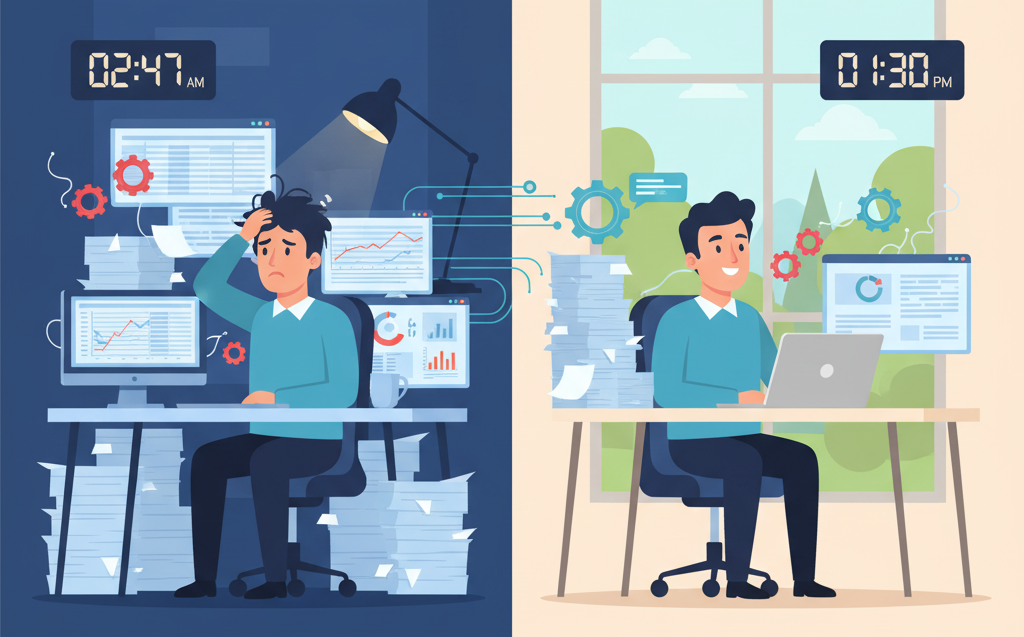
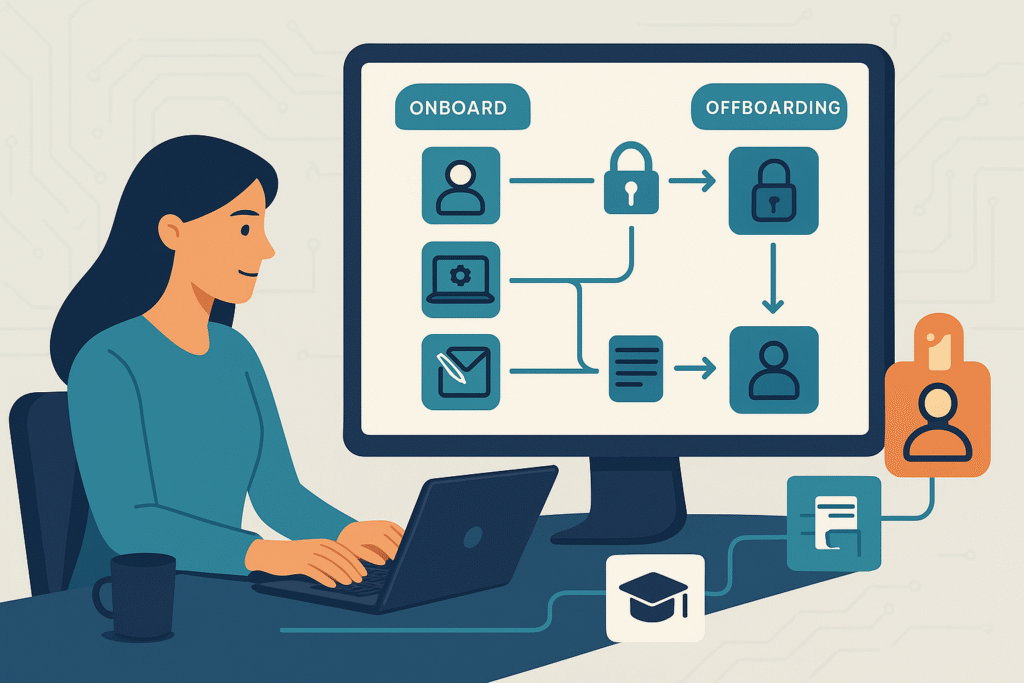
Streamline HR Operations: Automate Employee Onboarding and Offboarding The HR Bottleneck Nobody Talks About Hiring or offboarding an employee sounds simple – until you realize how many moving parts are involved. A single new hire can trigger 40–60 individual tasks: creating accounts, assigning training, sending welcome kits, granting building access, and more. When someone leaves, it’s just as complex – revoking access, collecting equipment, handling payroll, and ensuring compliance. Most HR teams still manage this manually through endless spreadsheets, reminder emails, and follow-ups. The result? Delays, missed steps, security risks, and burnt-out HR staff. At Product Siddha, we help organizations eliminate this chaos with n8n-based workflow automation. The result: up to 75% reduction in HR workload, faster task completion, and smoother experiences for employees – both joining and leaving the company. Why Manual HR Processes Fail Onboarding Chaos Traditional onboarding means HR must coordinate with multiple departments – IT, finance, admin, and management. Each relies on manual communication to: Create user accounts and emails Arrange hardware delivery Assign learning modules Schedule introductions and orientation Collect paperwork and approvals Without automation, it’s easy to miss steps. Many new hires arrive without access to systems or equipment, creating poor first impressions and wasted time. Offboarding Risks When employees leave, HR must deactivate access, reclaim devices, process pay, and document exits. If a single step is missed, security risks arise, former employees might still access data, or company assets go untracked. These errors happen because HR relies on manual coordination and human memory instead of structured workflows. How n8n Fixes It All n8n is a powerful workflow automation platform that connects all your HR, IT, and communication tools into one seamless system. At Product Siddha, we design custom n8n workflows that automatically handle repetitive HR actions. Here’s how it transforms onboarding and offboarding: Process Before Automation After n8n Automation New hire data entry HR enters info into multiple systems manually HR adds data once — n8n syncs it across all systems IT provisioning Manual email to IT for account setup Accounts, access, and devices created automatically Document collection Emails, printouts, follow-ups Digital forms auto-sent, tracked, and verified Offboarding access removal Delayed and error-prone Instant, timed deactivation across all systems Status updates Manual check-ins Real-time notifications to HR, IT, and managers Automating Employee Onboarding A great onboarding experience starts before Day One. With n8n, once HR marks a candidate as “hired,” automation takes over: HRIS entry: Employee record and ID are created instantly. IT setup: Email accounts, Slack access, and software licenses are provisioned automatically. Equipment requests: Laptop and accessories are scheduled for delivery before the start date. Documents: The new hire receives automated emails with links to complete tax forms, policy acknowledgments, and bank details. Training: Based on role, required courses are assigned automatically in the learning system. Communication: Welcome messages, manager alerts, and team introductions are all triggered automatically. Result? A fully prepared first day – with zero manual chasing. Automating Offboarding Employee exits often create anxiety for HR teams. Automation brings order and security. When HR initiates a resignation or termination, n8n automatically: Creates an offboarding checklist: From system access removal to asset recovery. Deactivates accounts: Email, Google Workspace, Slack, CRM—everything at the exact time scheduled. Tracks equipment return: Sends reminders, logs items, and updates inventory automatically. Handles knowledge transfer: Reassigns document ownership, redirects emails, and notifies managers. Schedules exit interviews: Sends invites and compiles responses directly into HR records. Coordinates final pay: Calculates dues and alerts Finance automatically. This ensures every exit is smooth, compliant, and fully documented – without HR having to micromanage. Designing Your Automation Strategy If you’re just getting started with automation, don’t try to overhaul everything at once. Here’s a step-by-step approach Product Siddha recommends: 1. Map Your Current Workflows Write down every step in onboarding and offboarding, including who handles it and what systems are used. This helps identify repetitive tasks perfect for automation. 2. Find High-Impact Bottlenecks Ask: Where do we waste the most time? Where do errors or delays happen most often? These are your best starting points for automation. 3. Build Modular Workflows Instead of one massive automation, create small, focused workflows – for IT provisioning, equipment tracking, and document collection. They’re easier to test and refine. 4. Add Human Review Where Needed Not everything should be 100% automated. Keep manual approval steps for sensitive cases (e.g., final pay verification or termination approvals). 5. Monitor, Improve, Repeat Use n8n’s logs and dashboards to see which workflows save time and which need adjustment. Optimization is continuous. Metrics That Prove It Works When Product Siddha implements n8n-based automation, clients typically see: 60–75% reduction in HR admin time Zero missed steps in onboarding/offboarding checklists Faster onboarding (from 3 days to a few hours) Improved data security through timely deactivation Happier employees due to seamless experiences Automation doesn’t just save time – it also builds trust. New hires feel valued when everything is ready on Day One, and departing employees leave on a positive note. Start Small, Scale Fast You don’t need a huge IT project to begin. Many Product Siddha clients start by automating just one process – like account provisioning or equipment return – and then expand gradually. Our team helps HR leaders design, build, and deploy low-code n8n automations that integrate with systems like: BambooHR, Zoho People, or Gusto Slack and Google Workspace Trello or Asana Office 365, Okta, or Freshservice Each workflow is customized for your organization’s unique needs, ensuring reliability, security, and scalability. The Bigger Picture Automation doesn’t replace HR – it empowers it. By letting workflows handle repetitive admin work, HR teams can focus on what matters most: Building culture Nurturing talent Improving employee engagement At Product Siddha, we believe automation is the foundation of a smarter workplace. It’s not about removing the human touch – it’s about freeing humans to do what they do best. Final Thoughts Manual onboarding and offboarding are relics of the past. Modern HR teams that embrace automation gain not only efficiency but also
AI Automation, Blog

Confused About n8n Pricing in 2025? Here’s How to Choose the Right Plan

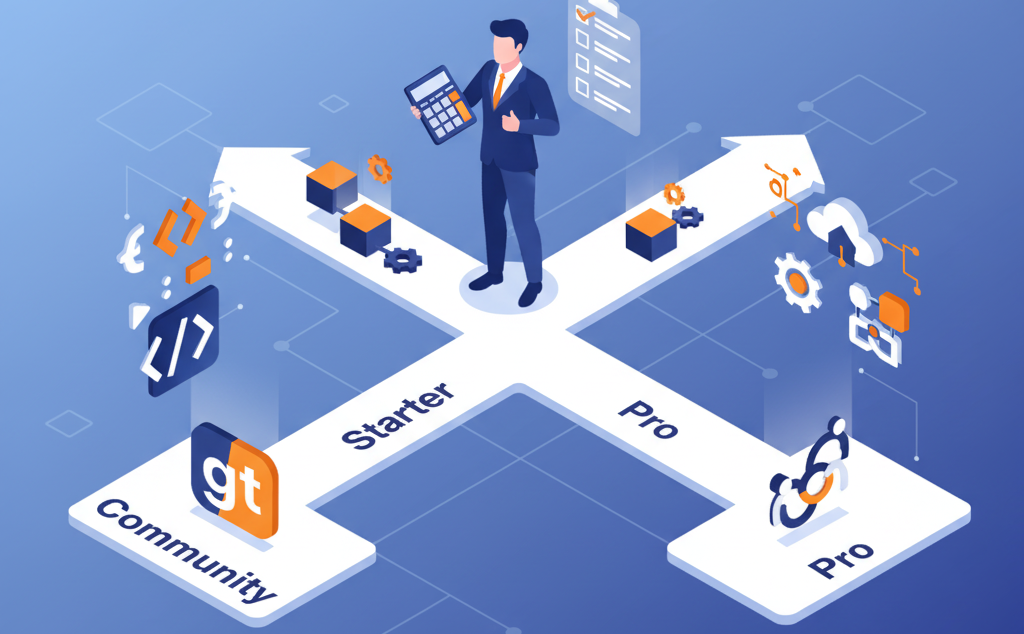
Confused About n8n Pricing in 2025? Here’s How to Choose the Right Plan Why n8n Pricing Confuses So Many Teams If you’ve explored automation tools lately, you’ve probably noticed that n8n’s pricing changed a lot. What started as a free, open-source workflow builder has grown into a full automation platform with paid cloud tiers, usage limits, and premium support. At Product Siddha, we help businesses compare automation platforms – and n8n is often one of the top choices. But many founders and teams get stuck trying to understand what they’re really paying for. So here’s a simple, startup-friendly breakdown of n8n’s 2025 pricing, hidden costs, and when each plan makes sense. 1. The n8n Plans at a Glance Plan Best For Cost (Monthly) Executions Users Hosting Support Community (Self-hosted) Tech-savvy teams $0 + server cost Unlimited Unlimited Self-managed Community forum Starter (Cloud) Solo users ~$20 2,500 1 n8n Cloud Basic Pro (Cloud) Small teams ~$50–$80/user 5,000+ Multi-user n8n Cloud Priority Enterprise Large orgs Custom (~$1,000+) Custom Unlimited Flexible Dedicated 2. Community Edition – Free, but Not Really “Free” The Community Edition is 100% open-source and free to use. You can install it on your own server and unlock all automation features without restrictions. Sounds great, right? But here’s the catch – you handle everything. What you get: Unlimited workflow executions Full control over your data Access to all community nodes and features What you manage yourself: Server setup and hosting Security patches and updates Backups and monitoring Troubleshooting through community support Hidden costs: Hosting can cost $50–$500 per month, depending on your setup. Add 10–15 hours of DevOps time monthly for maintenance, and the “free” version can easily cost more than a paid plan if you factor in team time. Best for: Developers, technical founders, and teams with in-house DevOps who want complete control and scalability. 3. Starter Plan – Cloud Hosting for Solo Users The Starter Plan is the easiest way to try n8n without worrying about infrastructure. It’s hosted on n8n’s cloud and designed for individuals or micro businesses. What you get: Hosted solution (no servers needed) 2,500 workflow executions/month 1 user account Basic security and community support What to watch for: Extra executions cost $10–$15 per 1,000 runs No team collaboration (single-user only) Limited support if things go wrong Best for: Freelancers, solo founders, or small businesses testing automation or running light workflows. Example: A solo marketer automating lead collection and email alerts can run comfortably within 2,000–2,500 executions per month. Once workflows grow, they’ll likely need to upgrade to Pro. 4. Pro Plan – For Growing Teams The Pro Plan is where most growing teams land. It balances cost, capacity, and collaboration tools, perfect for startups scaling their operations. What you get: 5,000 executions/month (expandable) Multiple user access Role-based permissions Workflow sharing and version control Priority email support Why it’s worth it: When automation becomes part of your daily operations – syncing CRMs, triggering emails, generating reports, you’ll need multiple users and faster support. The Pro Plan scales with your team and keeps automation reliable. Estimated cost: $50–$80 per user per month, depending on usage. Best for: Startups and teams that rely on automation daily and need collaboration + stability. 5. Enterprise Plan – For Large, Regulated Organizations If you’re a larger business or need guaranteed uptime and compliance, the Enterprise Plan is your match. Key features: Custom executions and user count Dedicated support and SLAs Advanced security controls Option for dedicated hosting Training and onboarding for big teams Pricing: Starts around $1,000/month but varies based on setup. Best for: Corporates, fintech, and healthcare companies with complex automation needs and strict data regulations. 6. Understanding the Real Costs Even though n8n’s listed pricing looks simple, total cost depends on how you use it. Let’s break down hidden costs and key variables that affect your decision. a. Execution Overages Every cloud plan has a workflow execution cap. When you exceed it, overage fees kick in, and they can pile up fast. Pro Tip: Monitor execution usage weekly. Optimize workflows by combining triggers, batching tasks, or reducing unnecessary steps. Product Siddha has seen teams cut execution costs by 20–40% just through better workflow design. b. Infrastructure and Maintenance If you self-host n8n (Community Edition), you’re responsible for: Server hosting ($50–$500/month) Security patches and monitoring Backup management DevOps hours for updates For non-technical teams, these hidden costs often outweigh the savings of going self-hosted. c. Integration & API Costs Many workflows rely on third-party APIs (like HubSpot, Airtable, or Slack). Some APIs have premium pricing or request limits – adding to your total automation cost. Always check if your workflow uses any paid connectors or API subscriptions before committing. 7. How to Choose the Right Plan (Step-by-Step) Let’s make this simple. Here’s a step-by-step checklist Product Siddha uses with clients when selecting the right n8n plan: Check your technical ability If you have a DevOps or tech team → Community Edition If not → Cloud (Starter or Pro) Estimate your execution volume Light usage (<2,500) → Starter Moderate (5,000–10,000) → Pro Heavy or custom (>20,000) → Enterprise or self-hosted Evaluate team access Solo user → Starter Team collaboration → Pro or higher Consider data privacy Regulated or sensitive data → Community (self-hosted) No strict requirements → Cloud Plan for growth Expect workflow volume to double in 6–12 months. Start with the lowest plan that can handle future growth without constant upgrades. 8. Real-World Examples Startup Example: SaaS Founders A small SaaS team uses n8n to automate customer onboarding and billing. They started on the Starter Plan to test automation, but quickly hit limits as users grew. Upgrading to Pro gave them more executions, multi-user access, and better reliability. Agency Example: Marketing Team A five-person digital agency automates client reports and campaign updates. They needed collaboration, version control, and reliable support, so they chose Pro Plan for around $240/month (3 users). The automation saves 15+ hours per week, easily covering the plan’s cost. Tech Example: Self-Hosting A tech startup

Blog, Product Management

Forget Product-Market Fit – Here’s What Early-Stage Startups Should Really Chase

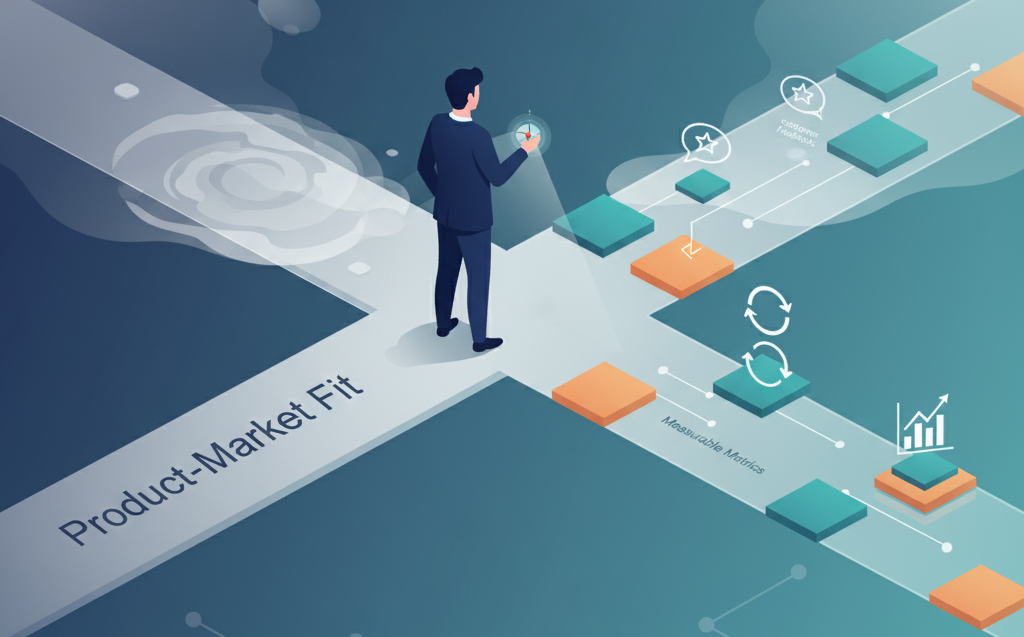
Forget Product-Market Fit – Here’s What Early-Stage Startups Should Really Chase The Startup Myth Everyone Believes If you’ve spent any time around investors, accelerators, or startup Twitter, you’ve probably heard the same advice over and over again: “You just need to find product-market fit.” It’s treated like a holy grail — that magical moment when your product perfectly aligns with what customers want, and growth takes off on its own. Founders chase it endlessly, pitch decks worship it, and entire strategies are built around it. But here’s the truth we’ve seen first-hand working with early-stage founders at Product Siddha: product-market fit isn’t real in the way people think it is. Markets evolve, customers change, and what feels like “fit” today may completely fall apart in six months. Instead of chasing an illusion, smart startups focus on something more practical and powerful – continuous validation and learning. Why Product-Market Fit Misleads Founders For early-stage startups, the concept of “fit” assumes that both your product and your market are stable enough to align perfectly. But in reality, everything is in motion. Your customers are still figuring out what they need. You’re still refining what you’re building. And competitors are constantly shifting the landscape. When founders chase a static idea of “fit,” they often fall into these traps: Waiting too long for “perfect validation” before launching. Overbuilding features that customers never asked for. Mistaking early enthusiasm for sustainable traction. Treating feedback as a finish line instead of a compass. We’ve seen early teams spend months (sometimes years) perfecting an MVP they never actually test with real users – because they’re waiting to “find fit.” What they should be doing is testing faster, learning faster, and adapting faster. What Actually Drives Startup Success The startups that grow successfully aren’t the ones that “found” fit – they’re the ones that learn faster than everyone else. They don’t treat product-market fit as a milestone. They treat it as a moving target and build systems to adjust continuously. At Product Siddha, we help founders build MVPs that are designed for validation velocity, not just launch speed. That means: Getting early users involved before the full product exists. Measuring real behavior, not just survey opinions. Iterating weekly based on what data and conversations reveal. If you can shorten your learning loop, you can outpace competitors who are still waiting for validation. The Continuous Validation Framework Instead of chasing product-market fit, we help startups build around three principles that create ongoing alignment with customers and markets: Customer Intimacy — deeply understanding your users’ behavior and context. Rapid Experimentation — testing small ideas fast to learn what works. Honest Measurement — tracking metrics that actually matter, not vanity ones. Let’s unpack each one. 1. Customer Intimacy: Stop Guessing, Start Observing Most early-stage teams think they understand their users because they ran a few interviews. But interviews only show what customers say they do, not what they actually do. Customer intimacy means spending real time watching how users interact with your MVP, even if it’s just a prototype, a Figma mockup, or a landing page test. At Product Siddha, we encourage founders to spend at least 30% of their time each week in direct contact with users. Example weekly breakdown: Activity Time (hrs/week) Purpose Observe users in real workflows 4 Identify friction and unmet needs Review product usage data 3 Spot hidden behavior trends Conduct customer calls 3 Hear the language of their pain points Reflect & plan experiments 2 Turn observations into testable ideas Success indicators: Product decisions reference specific customer stories. You can clearly describe your users’ day-to-day behavior. You adjust features based on what people actually do, not what they say. 2. Rapid Experimentation: Learn Fast, Fail Small Startups often think validation requires big product launches. In reality, it’s about running small, controlled experiments that give you real insights without wasting resources. Here’s a simple cycle we use with founders: Week Step What You Do 1 Form Hypothesis “If we add X feature, engagement will increase.” 1 Design Mini-Test Create a quick MVP, landing page, or clickable demo. 2 Launch to Small Group Get 10–20 real users to interact. 2 Measure & Analyze Collect both qualitative and quantitative feedback. 2 Decide & Iterate Keep, pivot, or discard based on data. Target: Run 8–12 micro-experiments per month. Goal: Validate or kill 3–4 key assumptions before scaling. The faster you run this loop, the faster your product evolves toward real traction. 3. Honest Measurement: The Metrics That Actually Matter Many founders love dashboards full of signups and traffic charts, but those don’t tell you whether your product truly delivers value. Real validation comes from retention and engagement, not acquisition. Here’s how we advise startups to measure progress: Metric Why It Matters What to Track Retention Are users coming back? 7-day, 30-day, 90-day active usage Activation Are users reaching their “aha” moment? % of users completing core action Expansion Are customers deepening engagement? Frequency of use, upsells, referrals Feedback Loops Are you learning from users? # of actionable insights per week It’s not about “how many” people signed up – it’s about how many stuck around because they found real value. Why This Shift Matters for Early-Stage Startups The old “product-market fit” mindset made sense when markets moved slowly. Today, user expectations change weekly. Competitors launch in months. New AI tools appear overnight. Waiting to “find fit” is like waiting for still water in a storm. Founders who focus on continuous learning instead of perfect fit: Ship faster. Adapt faster. Build products people genuinely want, because they keep listening. At Product Siddha, we’ve seen startups that work this way: Pivot earlier before burning through their runway. Discover surprising use cases through real observation. Raise funding faster because their insights are grounded in data, not theory. Mindset Comparison: Old vs. New Category Product-Market Fit Mindset Continuous Validation Mindset Goal Find the “perfect” fit Keep improving alignment Launch Philosophy Wait until ready Ship small, learn fast Customer Interaction Occasional interviews Weekly observation

AI Automation, Blog

40 Hours to 4: AI Automation Reclaimed Our Workweek

40 Hours to 4: AI Automation Reclaimed Our Workweek When Time Became Our Most Valuable Resource At Product Siddha, we build smarter systems for fast-moving B2B brands. But even for us – an agency dedicated to efficiency and automation – time had become our rarest commodity. Our operations manager, David, was spending nearly 12 hours a day managing recurring administrative work: updating spreadsheets, sending client reports, tracking project statuses, processing invoices, and coordinating between marketing and development teams. It wasn’t just David – across the company, we found the same story. Brilliant people, buried under repetitive, rule-based work. The tasks were necessary but left no time for innovation or strategic growth. We realized it was time to turn our own expertise inward. So we asked ourselves: What if we could apply the same AI automation frameworks we build for clients… to our own workflow? The results surprised even us. Finding the Hidden Time Sinks Before jumping to solutions, we conducted an internal time audit across every department at Product Siddha. Here’s what we found: Operations: 40 hours per week on project updates, vendor coordination, and data entry. Accounting: 35 hours per week on invoice approvals and payment reconciliations. Marketing: 38 hours per week on social media scheduling, lead tracking, and performance reporting. Customer Success: 35 hours per week answering repetitive client questions. HR: 30 hours per week on onboarding workflows and internal communications. Across all departments, nearly 75% of weekly work was repetitive, rule-based, and predictable – making it perfect for automation. We weren’t dealing with a productivity problem; we were dealing with a manual process problem. How We Designed Our AI Automation Framework Our mission was clear: reduce manual workload by 80% within six weeks, without adding headcount or disrupting active projects. Using the same 4-Step Framework we deploy for our clients – Build Real, Learn What Matters, Stack Smart Tools, and Launch with Focus- we began re-engineering our internal operations. 1. Build Real, Fast We started with invoice automation, a process that consumed the most time and followed strict logic. Using AI-powered OCR (Optical Character Recognition) and low-code workflow tools like Make and n8n, we built an automation that: Extracted data from invoices automatically Validated entries against our CRM and accounting systems Routed exceptions for human approval Logged payment status in a shared dashboard What once took 15 minutes per invoice was now completed in under two minutes, entirely hands-free. 2. Learn What Matters Next, we automated email and customer communication workflows. Our AI assistant, powered by natural language processing, was trained on thousands of historical support and client emails. It learned to identify intent, context, and sentiment, responding instantly to common requests like file access, project updates, or invoice queries. Within a week, the assistant was handling 60% of all incoming queries, freeing our support and account managers to focus on complex, high-impact client relationships. 3. Stack Smart Tools Our marketing team had been juggling multiple tools for campaign tracking, reporting, and CRM updates. We connected HubSpot, Google Analytics, and Slack using AI-driven automation. Reports that took 5 hours to compile now appeared automatically every morning, visualized on a custom Product Siddha dashboard. 4. Launch with Focus The final phase was refining workflows for scalability. We set up automated alerts, daily summaries, and escalation rules to maintain full visibility. Every workflow was documented, versioned, and monitored using analytics dashboards-so we could measure performance in real time. The Results: Reclaiming 36 Hours per Week After just six weeks of implementation, our internal time audit revealed astonishing results: Department Manual Hours/Week Automated Hours/Week Time Saved How Time Was Reinvested Operations 40 4 36 hrs Vendor strategy & workflow optimization Accounting 35 6 29 hrs Forecasting & profitability analysis Marketing 38 10 28 hrs Creative strategy & customer insights Customer Success 35 8 27 hrs Relationship building & proactive support HR 30 8 22 hrs Employee engagement & culture programs Across the company, we reduced manual hours by 90%, reclaiming hundreds of hours each month for strategic, creative, and analytical work. What We Learned Along the Way 1. Automation Doesn’t Replace People, It Empowers Them Our biggest takeaway was cultural, not technical. Automation wasn’t about replacing employees; it was about liberating them from low-value tasks. When AI handled data processing, our people finally had the space to think deeply and creatively. David, once buried in spreadsheets, now spends his week designing workflow improvements and mentoring junior team members. 2. Strategic Thinking Needs Breathing Room Our marketing lead used the extra 12 hours a week to revamp our content strategy, launch new performance campaigns, and improve engagement metrics by 38%. The difference was night and day – when you’re not buried in execution, you can finally focus on innovation. 3. The Human Element Is Still Essential Roughly 20% of our workflows couldn’t be automated effectively. Empathy-driven client conversations, strategic planning, and creative problem-solving still require human intuition. AI amplifies our efforts, it doesn’t replace the human spark. 4. Data Quality Determines Automation Success AI is only as smart as the data it learns from. We spent significant time cleaning, standardizing, and labeling our historical data to ensure the automation could operate reliably. That groundwork paid off in accuracy and consistency. The Financial Impact Within four months, our investment in automation tools and integrations had paid for itself. Here’s what changed: Productivity increased by 340%, measured by value-generating activities. Error rates dropped by 67%, thanks to consistent data handling. Operational costs decreased by 29%, without reducing team size. Employee satisfaction increased by 31%, as measured by internal surveys. Our ROI wasn’t just financial – it was cultural. Automation reshaped how we viewed time, value, and productivity. How B2B Brands Can Replicate This Transformation At Product Siddha, we now use this same AI automation playbook to help our clients scale faster and smarter. Here’s the simplified roadmap we recommend to growing B2B teams: Audit Your Workflows – Identify processes that are rule-based, repetitive, and time-consuming. Start Small, Scale Fast – Automate one

AI Automation, Blog

How Product Siddha Automated Customer Service for a Fintech SaaS in 48 Hours

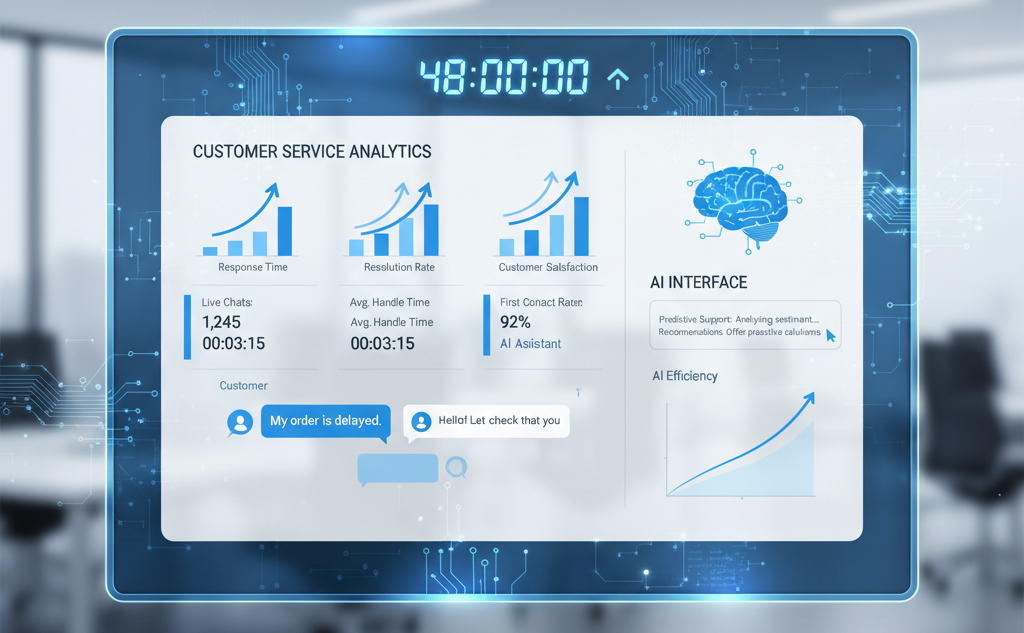
How Product Siddha Automated Customer Service for a Fintech SaaS in 48 Hours The Challenge: Scaling Customer Support Without Scaling Costs A fast-growing fintech SaaS company was facing a familiar startup dilemma – rapid customer growth but limited support bandwidth. The support team was managing hundreds of repetitive tickets every week – password resets, billing clarifications, account access issues, and renewal confirmations. Despite having a capable staff, they were spending most of their time responding to the same questions, manually updating CRMs, and routing tickets between departments. Response times were climbing. On average, customers waited six hours for replies – longer during weekends and peak billing periods. Hiring more agents was an option, but not a scalable one. The leadership team realized that their growth was being held back by inefficiency, not demand. They needed a system that could automate repetitive processes, improve response times, and enhance customer experience, without requiring additional headcount or software chaos. That’s when they partnered with Product Siddha, a consulting agency specializing in AI automation, MVP development, and workflow optimization for early-stage SaaS startups. Their goals were ambitious: Automate at least 70% of recurring support tasks Reduce average response time by 90% Improve visibility and coordination across customer touchpoints Deliver results within 48 hours Phase 1: Mapping and Integration (Hour 0–24) Product Siddha started by mapping the entire customer service workflow – from chat and email inquiries to CRM updates and escalation procedures. The automation specialists quickly identified key inefficiencies: manual ticket assignment, redundant CRM updates, and delayed handoffs. Within the first 24 hours, they built an integrated, AI-powered workflow that connected all major systems. Here’s what went live on day one: HubSpot CRM integration with live chat and Slack notifications AI intent detection for repetitive questions (billing, renewals, password resets) Real-time data sync between the helpdesk and CRM Smart routing for complex issues that required human review Fail-safe escalation triggers to ensure no ticket was ever missed By the end of the first day, the prototype was operational in test mode. It could already recognize basic queries, fetch data instantly, and alert the right team members for urgent or high-value interactions. Phase 2: Testing, Training, and Launch (Hour 24–48) Once the structure was in place, Product Siddha shifted to AI training and validation. They ran more than 250 test scenarios to fine-tune automation accuracy and ensure the responses aligned with the client’s tone and brand voice. The AI assistant was trained using historical support data so it could mimic the company’s conversational style – clear, concise, and customer-first. At 9:00 AM on launch day, the new system went live. Within the first hour, it handled over 40 inquiries end-to-end without human assistance – each resolved in under two minutes. The transformation was immediate: Response time: 6 hours → 1.7 minutes Automation accuracy: 94% Human handoff success: 100% The fintech company’s leadership was astonished – not just by the speed, but by how seamless the transition felt. There was no downtime, no technical bottleneck, and no disruption to live operations. Phase 3: The First Week – Real, Measurable Impact Within the first week of deployment, the automated system processed more than 1,200 customer interactions. Most were related to billing, renewals, and product troubleshooting, exactly the kind of queries that had previously consumed hours of manual effort. The improvements were evident across all metrics: Metric Before Automation After Automation Improvement Average Response Time 6 hours 1.7 minutes 99.5% faster Customer Satisfaction 72% 88% +16 points Support Cost per Ticket $12.50 $7.38 41% lower Automation Rate 0% 78% — Customer satisfaction surveys confirmed what the numbers showed – users appreciated the faster, more consistent responses. Meanwhile, the internal support team was finally free to focus on strategic initiatives like customer onboarding, retention analytics, and experience improvement. Phase 4: Lessons from the Automation Journey The fintech SaaS team learned several key lessons through this process – lessons that shaped how they approached automation going forward: Clean data drives great automation. Product Siddha helped structure and sanitize historical data before deployment. This step drastically improved AI accuracy and reduced errors in ticket resolution. Transparency builds trust. Customers were informed they were chatting with an AI assistant. Because the system was quick, helpful, and could escalate instantly when needed, transparency enhanced, not reduced, user trust. AI works best with human support. Automation handled 80% of tickets flawlessly, while human agents managed the remaining 20%, typically complex or emotionally sensitive issues. This balance delivered both efficiency and empathy. The collaboration reinforced that automation doesn’t replace teams, it amplifies their productivity. Phase 5: 30 Days Later – Tangible ROI A month after implementation, the results were clear. The AI-powered system had processed more than 8,300 conversations, resolving 6,500 of them entirely through automation. The measurable outcomes: 41% reduction in operational overhead 24/7 coverage without increasing staff Full ROI achieved in under seven weeks Beyond numbers, the company’s support team experienced a noticeable morale boost. Instead of chasing repetitive tickets, they were contributing to product improvements, customer success initiatives, and strategic growth planning. The leadership team credited Product Siddha’s structured approach and deep understanding of SaaS operations for making such rapid automation possible. How Product Siddha Made It Work Product Siddha’s success came from a clear, structured framework that balances speed, scalability, and strategic fit – specifically designed for SaaS and MVP-stage businesses: Build Real, Fast – Rapidly prototype working automation flows that deliver immediate value. Learn What Matters – Track how users and AI interact to refine automation logic continuously. Stack Smart Tools – Integrate CRMs, MarTech, and communication platforms seamlessly. Launch with Focus – Deploy with rigorous testing and monitor for iterative optimization. This process ensured that the fintech client didn’t just “get automation” – they got a sustainable, adaptive system that grows with the business. The Takeaway: From Chaos to Clarity in 48 Hours This 48-hour project showcased what’s possible when a growing SaaS company partners with the right automation experts. In just two days, the fintech startup transformed

webflow vs framer
Blog, Product Management

Framer vs Webflow: Best No-Code CMS for Interactive Design and Animations

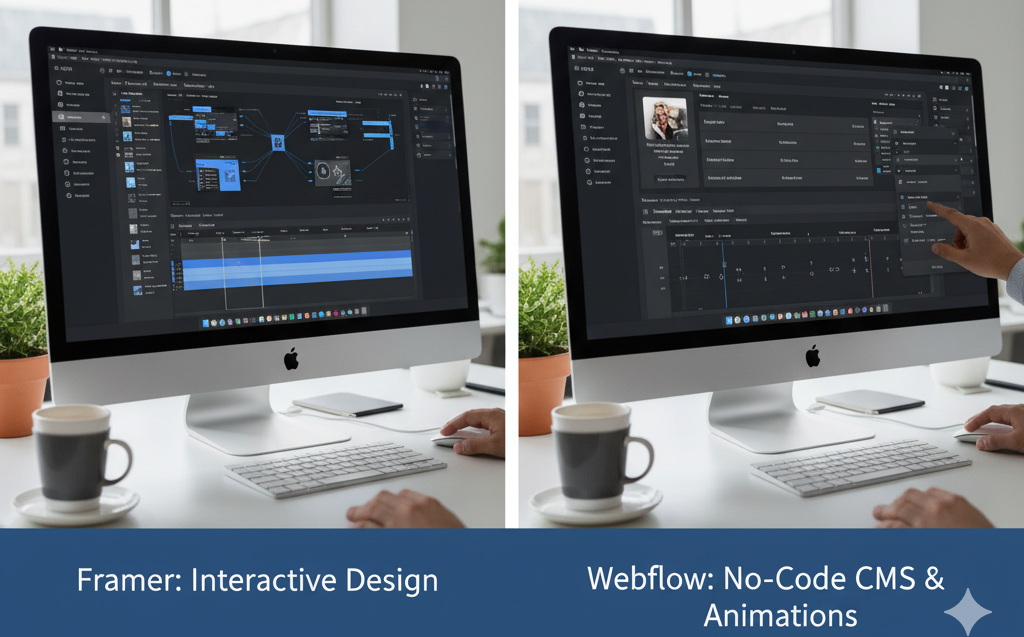
Framer vs Webflow: Best No-Code CMS for Interactive Design and Animations The No-Code Design Platform Landscape Designers and product teams increasingly seek tools that allow them to create sophisticated websites without extensive coding knowledge. The rise of no-code platforms has democratized web design, enabling people with visual design skills to build functional, interactive sites that previously required developer involvement. Among these platforms, Framer and Webflow have emerged as leading choices for teams prioritizing interactive design and sophisticated animations. Both tools offer powerful capabilities, yet they approach web design from different philosophical starting points and serve somewhat different use cases. Understanding these distinctions helps teams select the platform that aligns with their specific needs and working styles. Framer’s Design-First Philosophy Framer originated as a prototyping tool before evolving into a full website builder. This heritage shows in its interface and workflow, which feel familiar to designers accustomed to tools like Figma or Sketch. The platform emphasizes visual design and animation as primary concerns, with technical implementation details handled largely behind the scenes. The Framer interface uses a layer-based approach where designers stack and arrange elements visually. Creating animations happens through an intuitive timeline interface that lets designers define motion without writing code. This approach makes Framer accessible to people with strong visual design skills but limited technical backgrounds. Framer excels at micro-interactions and smooth transitions. Designers can create hover effects, scroll-triggered animations, and component state changes with relative ease. The platform generates performant code automatically, handling optimization and browser compatibility without requiring designer intervention. Content management in Framer has improved significantly in recent iterations. The platform now includes CMS functionality that allows content editors to update text, images, and other elements without accessing the design interface. This separation of design and content makes Framer viable for sites that require regular updates. Webflow’s Structure and Control Webflow takes a different approach, giving designers more direct control over the underlying web structure. The platform exposes concepts like flexbox, grid layouts, and CSS properties through a visual interface. This design philosophy assumes users have some understanding of how websites work at a technical level, even if they cannot write code fluently. The Webflow designer operates more like a visual CSS editor than a pure design tool. Users define styles, create reusable classes, and manage responsive behavior across different screen sizes with granular control. This approach produces cleaner code and greater flexibility for complex layouts, but it also requires a steeper learning curve. Animation capabilities in Webflow center around its interactions panel, which allows designers to trigger animations based on page load, scroll position, hover states, and clicks. The system uses a trigger-and-action model where designers define what event should initiate which animation. Complex animation sequences can be built by chaining multiple actions together. Webflow’s CMS represents one of its strongest features. The platform provides a robust content management system with custom collection types, dynamic filtering, and powerful template capabilities. Content-heavy sites like blogs, portfolios, and directories work particularly well in Webflow because of this CMS flexibility. Framer vs Webflow Feature Comparison Feature Framer Webflow Learning Curve Gentler for pure designers Steeper, requires web concepts Animation Interface Timeline-based, intuitive Trigger-action model Layout Control Visual layer stacking CSS-based with flexbox/grid CMS Capabilities Basic to intermediate Advanced and flexible Component System React-based components Symbol and class system Code Export Limited Full code export available Collaboration Real-time design collaboration Designer and editor roles Pricing Model Per site Per project and hosting Interactive Design Capabilities Both Framer and Webflow support sophisticated interactive design, but they achieve it through different mechanisms. Framer’s component-based architecture allows designers to create reusable elements with built-in interactivity. These components can have multiple states, respond to user input, and include animations that trigger based on those states. Webflow’s interaction system provides fine-grained control over animation timing, easing curves, and chained effects. Designers can create complex scroll-based animations where different elements move at different rates, creating parallax effects or revealing content progressively as users navigate down the page. For teams at Product Siddha building interactive product showcases or marketing sites, both platforms offer adequate tools. The choice often comes down to whether the team prefers Framer’s component-based approach or Webflow’s trigger-action model for defining interactions. Animation Performance and Quality Animation performance matters significantly for user experience. Poorly optimized animations create janky, unprofessional experiences that frustrate users and harm conversion rates. Both Framer and Webflow generate performant animations, but they handle this differently. Framer uses React and Framer Motion under the hood, producing JavaScript-based animations that integrate tightly with component behavior. The platform automatically optimizes animations for performance, using GPU acceleration and efficient rendering techniques. Designers rarely need to think about performance optimization explicitly. Webflow generates CSS animations and transitions whenever possible, falling back to JavaScript only when necessary. CSS animations generally perform better than JavaScript alternatives, particularly on mobile devices. Webflow also provides tools for previewing animations at different frame rates, helping designers identify performance issues before publishing. Responsive Design Workflows Modern websites must work across devices ranging from phones to large desktop displays. Both platforms provide tools for creating responsive designs, though their approaches differ. Framer handles responsiveness primarily through breakpoints where designers define how layouts adapt at different screen widths. The platform includes a mobile-first preview and allows designers to override specific properties at each breakpoint. Auto-layout features help components resize intelligently as screen dimensions change. Webflow gives designers more granular control over responsive behavior. Every property can be adjusted independently at each breakpoint. This flexibility allows for precise control but requires more manual work to ensure designs adapt appropriately across all screen sizes. For complex responsive layouts with significant layout changes across breakpoints, Webflow’s detailed control proves valuable. For simpler sites where content primarily reflows, Framer’s streamlined approach may suffice. Content Management Considerations Sites requiring frequent content updates need capable content management systems. Webflow’s CMS has matured into a powerful tool suitable for content-heavy sites. Content editors can manage blog posts, case studies, team profiles, and other dynamic content through an intuitive

recruiting
AI Automation, Blog

Is Your Recruiting Process Hurting Your Brand? Product Siddha is Here to Help

Is Your Recruiting Process Hurting Your Brand? Product Siddha is Here to Help The Hidden Cost of Poor Hiring Practices Every interaction between your organization and potential employees sends a message about who you are as a company. The recruiting process represents one of the most significant touchpoints where people form lasting impressions about your culture, values, and operational competence. Yet many organizations treat recruitment as a purely transactional function without recognizing its profound impact on brand perception. Candidates who experience disorganized, disrespectful, or opaque hiring practices share their stories. They tell friends, post reviews on employer rating sites, and factor these experiences into their opinions about your products or services. In markets where talent remains scarce and customers have abundant choices, these negative impressions create consequences that extend far beyond a single unfilled position. When Recruitment Becomes a Brand Liability Several common problems transform the recruiting process from a neutral administrative function into an active threat to organizational reputation. Understanding these issues helps companies recognize where their own practices may be causing damage. Slow response times frustrate candidates who have other opportunities under consideration. When weeks pass between application submission and initial contact, or when promised follow-ups never materialize, candidates conclude that your organization lacks efficiency or respect for people’s time. These impressions persist even among candidates you eventually hire, affecting their early engagement and loyalty. Inconsistent communication creates confusion and anxiety. Candidates receive conflicting information from different people, encounter unexplained changes to interview schedules, or never learn the status of their applications. This disorganization suggests broader operational problems and raises questions about how the company treats employees once hired. Unnecessarily complex or lengthy processes signal bureaucracy and inefficiency. Requiring multiple rounds of interviews for junior positions, demanding extensive unpaid work samples, or making candidates repeat the same information across different forms demonstrates poor process design and insufficient regard for candidate time. Poor interviewer preparation wastes everyone’s time and damages credibility. When interviewers arrive unprepared, ask inappropriate questions, or clearly have not reviewed the candidate’s background, it suggests the organization does not value the recruiting process or the people participating in it. Common Recruiting Process Issues and Their Brand Impact Problem Area Candidate Experience Brand Impact Slow Response Time Frustration, feeling undervalued Company seen as inefficient Communication Gaps Confusion, anxiety Perceived as disorganized Process Complexity Time burden, inconvenience Viewed as bureaucratic Unprepared Interviewers Wasted time, lack of respect Questions about competence No Feedback or Closure Uncertainty, negative feelings Disrespectful to people Unrealistic Requirements Discouragement, gatekeeping Out of touch with reality The Ripple Effects on Business Performance Damage from a poor recruiting process extends through multiple aspects of business performance. The most obvious impact appears in hiring outcomes. Strong candidates accept offers elsewhere or withdraw from consideration when they experience frustrating recruitment interactions. Organizations find themselves hiring from a diminished pool of second and third-choice candidates rather than competing successfully for top talent. Customer perception suffers when candidates share negative experiences publicly. People increasingly check employer reviews before purchasing products or services, particularly for companies that emphasize their culture or values in marketing. Inconsistency between marketed values and recruitment reality creates damaging credibility gaps. Current employees notice how candidates are treated. They recognize when their referrals receive poor treatment or when new hires share stories about difficult recruiting experiences. This awareness affects morale and employee advocacy. Team members become less willing to refer qualified contacts when they feel embarrassed about the recruiting process those contacts will encounter. Product development and innovation suffer when hiring practices prevent organizations from attracting necessary talent. Companies that struggle to recruit skilled product managers, designers, engineers, or other specialists cannot execute on their strategic visions regardless of how sound those strategies might be. Designing a Recruiting Process That Strengthens Your Brand Improving recruitment requires examining the complete candidate journey from initial awareness through offer acceptance and onboarding. Product Siddha works with organizations to identify friction points and implement practical improvements that enhance both candidate experience and hiring outcomes. Clear process definition establishes consistent candidate experiences. Document each step of the recruiting process, including who is responsible for what actions and what timeframes should be maintained. This clarity allows everyone involved in hiring to understand their roles and prevents candidates from falling into communication gaps. Realistic timeline commitments demonstrate respect for candidate schedules. Establish achievable response windows and meet them consistently. If delays occur, communicate proactively rather than leaving candidates wondering about their status. Simple acknowledgment of applications and regular updates throughout the process dramatically improve candidate perception. Efficient interview design respects everyone’s time while gathering necessary information. Limit interview rounds to what genuinely adds value in decision making. Combine conversations when possible rather than scheduling numerous separate meetings. Provide clear agendas so candidates can prepare appropriately and interviewers can avoid redundant questioning. Interviewer training ensures consistent, professional interactions. Train people on appropriate questioning techniques, legal considerations, and how to represent company culture authentically. Provide interview guides that help maintain focus while allowing natural conversation. Require interviewers to review candidate materials before meetings. Constructive feedback closes the loop professionally even when candidates are not selected. While detailed critique may not be feasible for early-stage rejections, providing some explanation helps candidates understand decisions and maintains positive relationships. Many rejected candidates become customers, partners, or future applicants when treated respectfully throughout the process. Technology Tools, Automation, and Human Touch Modern recruiting technology can significantly improve efficiency and candidate experience when implemented thoughtfully. Applicant tracking systems help manage workflows and communication. Scheduling tools reduce coordination friction. Video interviewing platforms expand geographic reach while saving travel time. Today, advanced automation unlocks even greater opportunities: Candidate sourcing automation – Tools can scrape LinkedIn, professional networks, and niche communities to identify potential candidates who may not be actively applying but fit your requirements. AI-driven personalization – Instead of sending generic outreach, AI can analyze candidate profiles and craft tailored icebreakers or introduction messages that resonate with individual interests and career paths. Email and campaign automation – Automated but personalized drip campaigns

product development
Blog, Product Management

Unlocking Innovation: Product Siddha’s Approach to the New Product Development Process

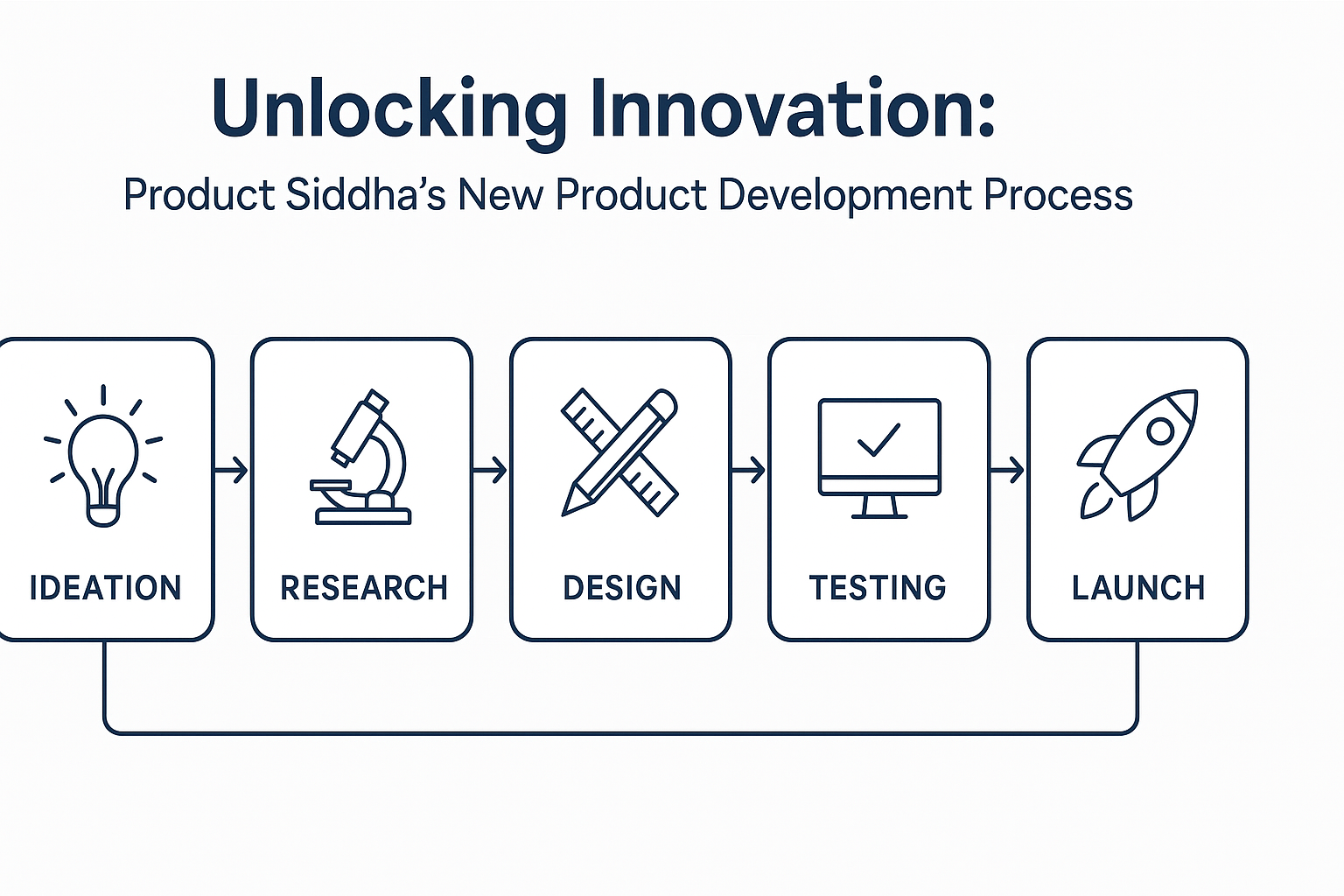
Unlocking Innovation: Product Siddha’s Approach to the New Product Development Process The Challenge of Systematic Innovation Every organization wants to create products that resonate with customers and generate sustainable revenue. Yet most product initiatives fail to meet expectations. Some never reach the market. Others launch but fail to gain traction. Many succeed initially but cannot maintain momentum as market conditions shift. These failures rarely result from lack of effort or talent. More often, they stem from inadequate processes for moving from initial concept through development and into market success. Organizations need structured approaches that guide decision making while remaining flexible enough to adapt as learning occurs. Product Siddha has developed a new product development process that addresses these challenges. This approach combines proven frameworks with practical adaptations based on real-world experience across multiple industries and product types. Discovery: Understanding Problems Worth Solving The new product development process begins with thorough discovery work. This phase focuses on understanding customer needs, market dynamics, and competitive positioning before committing resources to building anything. Many organizations rush through discovery, eager to start development. This impatience costs them later when products miss the mark. Discovery involves multiple research methods working in concert. Customer interviews reveal pain points and desired outcomes. Market analysis identifies opportunities and constraints. Competitive assessment shows what alternatives exist and where gaps remain. Technical exploration determines what solutions are feasible given current capabilities and reasonable investments. Product Siddha structures discovery around specific questions that need answers. What problems do target customers face? How do they currently address these problems? What would make a solution compelling enough to change behavior? What are customers willing to pay? Which customer segments offer the best opportunities? The discovery phase produces clear documentation of findings, including customer profiles, problem statements, and opportunity assessments. This foundation guides all subsequent work and provides a reference point when difficult trade-offs arise during development. Concept Development and Validation Once discovery establishes a solid understanding of the opportunity, the new product development process moves into concept development. This phase translates insights into concrete product concepts that can be evaluated and refined. Concept development generates multiple possible solutions rather than converging immediately on a single approach. This divergent thinking often reveals options that would not emerge if teams jumped directly to implementation. Different concepts might serve different customer segments, use different business models, or take varying technical approaches to solving the same core problem. Each concept gets developed enough to enable meaningful evaluation. This typically includes value propositions, high-level feature descriptions, rough business models, and technical feasibility assessments. The goal involves creating sufficient clarity to make informed choices about which concepts warrant further investment. Validation testing provides reality checks on concepts before heavy development begins. Product Siddha uses various validation techniques depending on the product type and market context. These might include customer surveys, landing page tests, prototype demonstrations, or small-scale pilots with friendly customers. Product Siddha’s Development Process Phases Phase Key Activities Primary Outputs Success Criteria Discovery Customer research, market analysis Problem definition, opportunity assessment Clear understanding of customer needs Concept Development Ideation, evaluation, validation Product concepts, validation results Validated concept with market evidence Planning Roadmap creation, resource allocation Development plan, success metrics Aligned team with clear direction Build & Test Iterative development, user testing Working product increments Functional product meeting requirements Launch Preparation Go-to-market planning, training Launch materials, trained teams Ready for market introduction Market Introduction Phased rollout, feedback collection Live product, user data Active users demonstrating value Strategic Planning for Execution After validation confirms a concept worth pursuing, careful planning sets the stage for efficient execution. The planning phase of the new product development process defines what will be built, in what sequence, and with what resources. Product roadmapping translates the validated concept into a sequence of deliverable increments. Rather than planning the entire product in detail upfront, Product Siddha emphasizes planning the first increment thoroughly while maintaining flexibility for later phases. This approach accommodates learning that occurs during development without requiring complete replanning when assumptions prove incorrect. Resource planning ensures teams have the necessary skills, tools, and time to execute effectively. This includes identifying any capability gaps that need addressing through hiring, training, or partnerships. Clear resource plans prevent common problems like assigning work to teams that lack required expertise or scheduling work without accounting for other commitments. Success metrics get defined during planning so everyone understands how the product’s performance will be evaluated. These metrics connect to business objectives and customer outcomes rather than focusing solely on completion of features. Well-defined metrics guide prioritization decisions throughout development. Iterative Build and Testing Cycles The construction phase uses iterative cycles that build working increments, test them with users, and incorporate feedback before proceeding. This approach surfaces problems early when they remain relatively easy and inexpensive to address. Each iteration produces something testable. Early iterations might focus on core functionality that delivers the primary value proposition. Later iterations add supporting features, refinements, and optimizations. The sequence gets determined by what provides the most learning about the product’s viability and value. User testing occurs throughout development rather than only after completion. Product Siddha involves representative users in evaluating each increment to ensure the product remains aligned with actual needs. This continuous validation prevents the common scenario where teams build something impressive from a technical perspective that fails to resonate with its intended audience. Technical quality receives appropriate attention throughout the new product development process. While early increments may take shortcuts to enable rapid learning, fundamental architectural decisions get made thoughtfully. Code reviews, testing practices, and documentation standards help maintain product quality as development progresses. Preparing for Market Introduction As development nears completion, focus shifts to preparing for successful market introduction. This involves more than just finishing the product. It requires coordinating multiple functions to ensure smooth launch and adoption. Go-to-market planning defines how the product will reach customers. This includes positioning and messaging, pricing strategy, distribution channels, and promotional activities. Product Siddha works with clients to ensure go-to-market plans align with

AI Automation, Case Studies

Building a Lead Engine After Apollo Shut Us Out

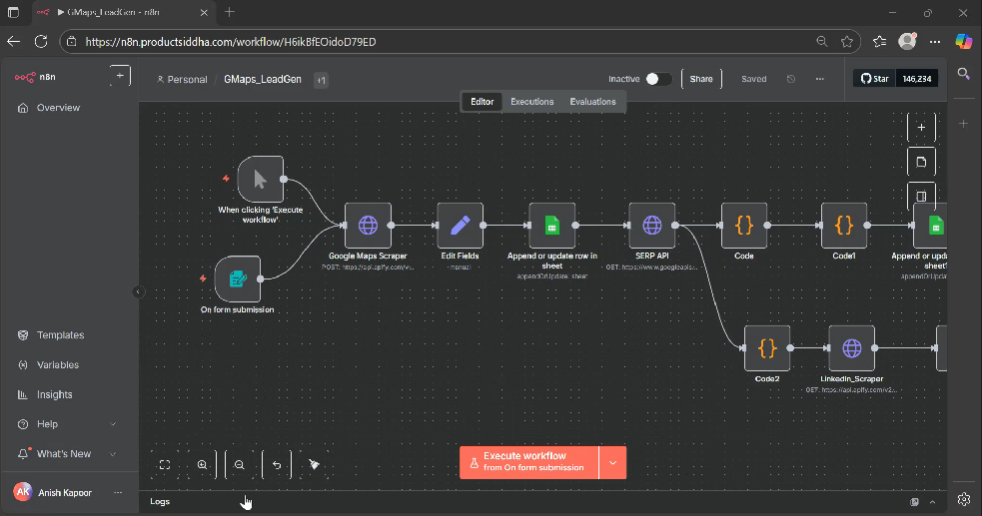
Building a Lead Engine After Apollo Shut Us Out Client Internal Project (Product Siddha) Service Provider Product Siddha Industry B2B / Marketing Automation Service AI Automation Services / Lead Generation Workflow Automation The Problem: Apollo Went Down, and Our Lead Flow Stopped Like many agencies, Product Siddha relied on Apollo for fast prospect lists and outbound campaigns. It worked well – until Apify’s Apollo scraping access was suddenly banned. Overnight, our outbound system stopped working. No more fresh leads. No more automated contact lists. We tried a few alternatives like Ample Leads and Scraper City. They worked, but most of the data felt old or repeated. We needed something fresh, real-time, and under our control. The goal was clear: Pull live business data from Google Maps Find key decision-makers via LinkedIn Automate everything through n8n Keep it cheaper than Apollo or Sales Navigator scraping The Solution: A Smart, Lightweight Lead Engine Instead of switching to another expensive tool, Product Siddha decided to build its own lead generation system – powered by open tools like Google Maps, Apify, and n8n. Here’s how our new lead engine works: Google Maps Scraper → Fresh Business Data The system starts by pulling live business listings directly from Google Maps (for example: “clinics in Melbourne”). This ensures that every lead is from a real, active business. Google Sheets → Clean Data Storage The scraped data – business name, website, phone, and address – is automatically added to a Google Sheet for easy use. SERP API → Decision Maker Discovery Using Google’s free Search API, the system finds decision-maker names and LinkedIn profile URLs based on each company’s website. Apify LinkedIn Scraper → Profiles & Emails Next, Apify’s LinkedIn automation fetches profile data, roles, and professional emails for each contact. n8n → Full Automation n8n ties everything together. It schedules scrapes, merges data, and updates Google Sheets, all without any manual effort. The Outcome: Reliable Leads Without the Heavy Price Our internal automation system now runs smoothly without relying on Apollo or similar databases. Key Wins: Fresh business data from Google Maps Real-time decision-maker insights from LinkedIn Fully automated workflow via n8n Lower cost than any paid lead database Zero manual upkeep once built Measurable Results: Accuracy: ~60% (strong for live scraped data) Time saved: Hours each week Cost: Significantly lower than Apollo or Sales Navigator Maintenance: Zero ongoing management Output: Google Sheet with business name, contact, title, email, LinkedIn URL, company, website, phone, and address Lessons Learned Live data beats bulk databases every time. Automation doesn’t have to be perfect, just consistent. Building your own tools can often be faster (and smarter) than finding new ones. Now, this same workflow helps us: Test new Ideal Customer Profiles (ICPs) Feed AI tools for personalized outreach Run cleaner, higher-quality cold campaigns The Stack Tools Used: n8n, Google Maps API, Google SERP API, Apify LinkedIn Scraper, Google Sheets Watch the Walkthrough: Product Siddha Case Video Conclusion: Own Your Data, Own Your Growth This project shows how Product Siddha uses AI automation to solve real business problems, quickly and cost-effectively. By creating our own lightweight lead system, we now have control, flexibility, and accuracy without paying for outdated data. Want a similar setup for your sales or marketing team? Reach out to Product Siddha – we’ll help you build it, or share the JSON file so you can tinker with it yourself.

prototype
Blog, Product Management

MVP vs Prototype: What Founders Need to Know Before Investing

MVP vs Prototype: What Founders Need to Know Before Investing The Confusion That Costs Founders Money Many founders waste significant time and capital because they misunderstand what they should build first. The terms “prototype” and “minimum viable product” get used interchangeably in casual conversation, leading entrepreneurs to invest in the wrong thing at the wrong time. This confusion creates real consequences: delayed market entry, depleted resources, and missed opportunities to learn from actual users. Understanding the distinction between these two approaches helps founders make better decisions about where to invest their limited resources. Each serves a different purpose in the product development process, and choosing the right one depends on what questions you need answered at your current stage. What a Prototype Actually Is A prototype exists to demonstrate an idea and test assumptions about user interaction and feasibility. It can range from paper sketches to interactive digital mockups to functional demonstrations built with no-code tools. The defining characteristic of a prototype is that it does not need to work as a real product. It only needs to appear functional enough to gather meaningful feedback. Prototypes help answer questions like: Do users understand the concept? Can they navigate the interface? Does the proposed solution address their actual problems? Will the technical approach work at all? These questions can often be answered without writing production-quality code or building scalable infrastructure. The investment required for prototyping typically measures in days or weeks rather than months. Founders can test multiple variations quickly and inexpensively. A designer can create interactive prototypes using tools like Figma that feel real to users during testing sessions but contain no actual functionality behind the interface. Understanding MVP Development A minimum viable product represents something fundamentally different. An MVP must actually work for real users in real situations. It delivers genuine value, even if that value is limited compared to the full product vision. Users can accomplish meaningful tasks, and the product can begin generating the data and feedback necessary for informed decisions about future development. MVP development requires real engineering work. The product needs functional backend systems, reliable data storage, and code that can handle actual usage. While an MVP deliberately omits many planned features, what it does include must work properly. Users will not tolerate a product that constantly breaks or loses their data, regardless of how early-stage it claims to be. The investment in MVP development typically ranges from several weeks to a few months, depending on complexity. The costs are substantially higher than prototyping because you are building something that must function in production environments with real users. Product Siddha guides founders through MVP development by helping them identify the absolute minimum feature set that can deliver real value. This process prevents the common mistake of building an MVP that includes too much, which wastes resources and delays learning. Key Differences Between Prototypes and MVPs Characteristic Prototype MVP Purpose Test concepts and assumptions Validate market demand Functionality Can be simulated or fake Must work reliably Users Internal team and test participants Real customers in real situations Timeline Days to weeks Weeks to months Investment Low (hundreds to low thousands) Moderate to high (thousands to tens of thousands) Technical Debt Not a concern Must be managed carefully Revenue Never generates revenue Can begin monetization When to Build a Prototype First Prototyping makes sense when you have fundamental uncertainties about your product concept. If you are unsure whether users will understand your solution, whether the interface makes sense, or whether the technical approach is even feasible, a prototype provides answers at minimal cost. Founders working in unfamiliar problem spaces benefit especially from prototyping. If you are creating a product for an industry you do not know well, a prototype lets you test your understanding before committing significant resources. You can show it to potential users, watch how they interact with it, and identify misunderstandings early. Hardware products almost always require prototyping before MVP development. The costs of physical production make it prohibitive to iterate through multiple full builds. Prototypes let hardware founders test form factors, materials, and functionality before investing in manufacturing. When to Move Directly to MVP Development Some situations warrant skipping prototyping and moving directly to MVP development. If you have deep domain expertise and high confidence in your solution approach, extensive prototyping may provide limited additional value. The faster path to market learning comes from building something real that users can actually adopt. Products in well-understood categories with clear user expectations often benefit from this approach. If you are building a familiar type of product with a specific innovation or improvement, you probably understand enough about user needs and behavior to design an effective MVP without extensive prototyping. Competitive pressure can also influence this decision. In fast-moving markets where first-mover advantage matters, the time spent on prototyping might allow competitors to establish positions that become difficult to challenge. However, founders should be cautious about skipping validation steps due to competitive anxiety alone. The Sequential Approach Most founders benefit from using prototypes and MVPs sequentially rather than choosing one or the other. Start with quick prototypes to test fundamental assumptions and refine your understanding. Once you have reasonable confidence in the basic approach, move to MVP development to validate actual market demand and gather real usage data. This sequential approach provides several advantages. It surfaces major problems while they remain cheap to fix. It builds confidence among team members and investors that the product addresses real needs. It creates opportunities to refine positioning and messaging before investing in production-quality development. Product Siddha often works with founders who attempted to skip prototyping and built MVPs that missed the mark. Helping these companies course-correct costs more than proper validation would have initially. The pressure to salvage sunk costs can lead to throwing good money after bad rather than acknowledging mistakes and adjusting direction. Common Mistakes in Both Approaches Founders frequently build prototypes that are too elaborate. They invest in polish and details that do not help