Product Siddha

AI Automation

AI Automation, Blog

AI Automation Governance in 2026: Frameworks to Scale Without Breaking Systems

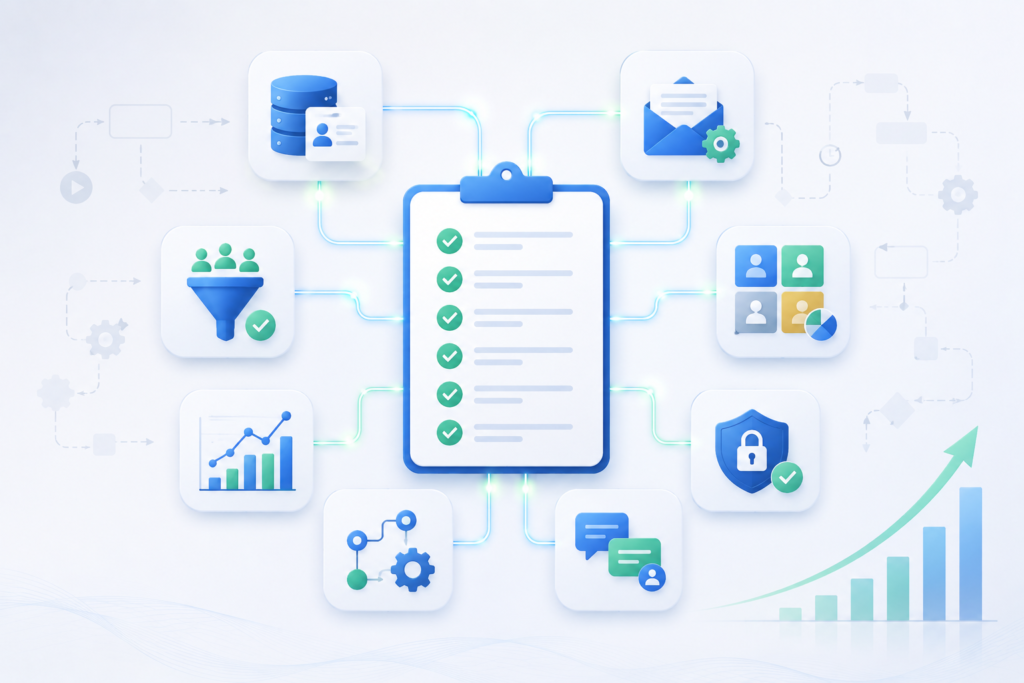
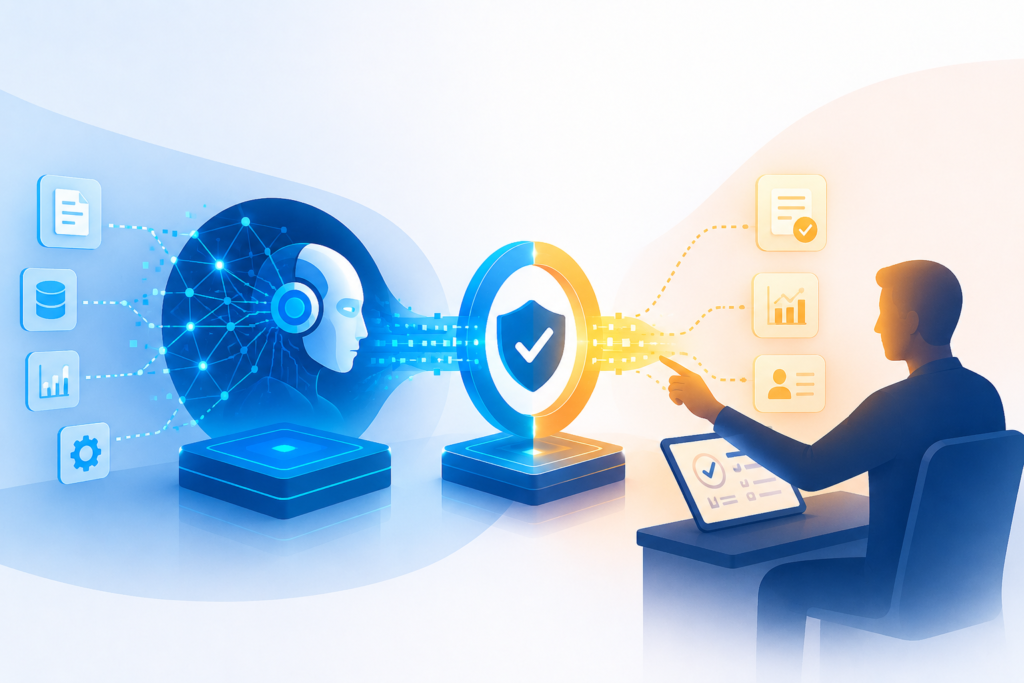
AI Automation Governance in 2026: Frameworks to Scale Without Breaking Systems A Quiet Risk in Fast Automation Automation is no longer a side project. It now sits inside daily operations across sales, marketing, finance, and support. Many firms adopted automation quickly over the past three years. They connected tools, deployed AI agents, and replaced manual work at speed. Growth followed, but so did a new class of problems. Workflows break without warning. Data flows lose accuracy. Teams lose visibility into what is running and why. In some cases, no one knows who owns a system that touches revenue. This is where governance enters the picture. For any serious Product Siddha, governance is not a control layer that slows work. It is the structure that allows systems to grow without failure. What Governance Means in AI Automation Governance in this context is not about rules alone. It is about clarity. Every automated system should answer three basic questions: Who owns this workflow What data does it depend on How is success measured When these answers are missing, teams operate in fragments. Automation then creates more confusion instead of efficiency. An experienced AI automation agency builds governance into the system from the start. This includes naming standards, version control, access rules, and monitoring. Without these, scaling becomes risky. Where Systems Usually Break Most breakdowns follow familiar patterns. They do not come from complex algorithms. They come from simple gaps. 1. No Ownership A workflow runs across marketing and sales, but neither team owns it fully. When it fails, each assumes the other is responsible. 2. Fragmented Data Sources CRM, analytics, and communication tools operate on different data sets. A small mismatch creates large reporting errors. 3. Silent Failures An automation stops working but sends no alert. The issue is discovered days later when leads or revenue drop. 4. Uncontrolled Scaling A workflow built for 100 users is extended to 10,000 without testing. Performance issues follow. Core Governance Framework for 2026 A structured approach helps avoid these failures. The following framework reflects how modern teams are organizing automation at scale. Governance Layer Overview Layer Purpose Key Actions Ownership Define responsibility Assign clear owners for each workflow Data Integrity Ensure accuracy Standardize data sources and validation Monitoring Track performance Set alerts and logs for every process Version Control Manage changes Maintain workflow history and rollback options Compliance Protect data Apply access rules and audit logs Ownership First, Technology Second Governance begins with ownership. Before building a workflow, define who is responsible for its performance. In one implementation involving HubSpot and WhatsApp automation, a fintech team faced repeated failures in lead routing. The issue was not technical. Ownership was unclear. Once responsibility shifted to a single operations lead, failure rates dropped within weeks. This principle applies across industries. Without ownership, even the best automation tools fail. Data Integrity as the Foundation Automation depends on clean and consistent data. A small mismatch can affect multiple systems. A strong example comes from the case study “Product Analytics & Full-Funnel Attribution for a SaaS Coaching Platform.” The team struggled with inconsistent attribution across channels. Leads appeared in dashboards but did not match CRM records. The solution was not a new tool. It was a unified data model. Events were standardized, naming conventions were fixed, and tracking points were aligned across platforms. Once this was done, reporting accuracy improved significantly. Monitoring That Actually Works Many teams rely on basic logs. These are often ignored. Effective monitoring requires active alerts. Set thresholds for key metrics Trigger alerts when workflows fail Track execution time and error rates In the case “From Lead to Site Visit – Voice AI Automation for a Real Estate Platform,” monitoring played a critical role. Voice AI handled incoming calls and scheduled visits. When response delays crossed a defined limit, alerts were triggered. This allowed the team to act before user experience declined. Controlled Scaling Instead of Rapid Expansion Scaling automation should follow a controlled path. Start small, test thoroughly, then expand. This staged approach prevented overload and ensured each layer worked as expected. Role of an AI Automation Agency Governance is difficult to implement internally without experience. Many teams focus on tools rather than structure. This is where an AI automation agency provides value. An agency does not just build workflows. It defines how systems behave over time. This includes: Designing scalable architecture Establishing governance standards Integrating tools into a unified system Creating monitoring and reporting layers Product Siddha has followed this approach across multiple engagements. In the case “Built Custom Dashboards by Stage,” dashboards were not just visual tools. They became governance instruments. Each stage of the funnel had defined metrics, ownership, and alerts. Automation Governance Lifecycle Design → Ownership Assignment → Data Standardization → Deployment → Monitoring → Optimization This cycle repeats as systems evolve. Governance is not a one-time setup. It is a continuous process. Common Mistakes to Avoid Even experienced teams fall into predictable traps. Treating governance as documentation only Ignoring monitoring until failures occur Allowing multiple teams to edit workflows without control Scaling workflows before testing edge cases Each of these leads to instability over time. A Practical Checklist Before scaling any automation system, review the following: Question Status Is ownership clearly defined Yes or No Are data sources unified Yes or No Are alerts configured Yes or No Is there a rollback option Yes or No Has the workflow been tested at scale Yes or No If any answer is no, the system is not ready to scale. The Path Forward AI automation will continue to expand across industries. The difference between success and failure will not depend on tools alone. It will depend on structure. Governance provides that structure. It ensures that systems remain reliable as they grow. It reduces risk without slowing progress. Most importantly, it allows teams to trust their automation. For companies working with an AI automation agency like Product Siddha, governance is not an added feature. It is part of the foundation.

AI Automation, Blog

Fixing Broken Automations: A Troubleshooting Guide for Scaling Teams

Fixing Broken Automations: A Troubleshooting Guide for Scaling Teams When Automation Stops Working Automation is often introduced to reduce manual effort and improve consistency. In the early stages, it works well. Tasks are completed faster, teams rely less on repetitive work, and systems appear stable. As the business grows, cracks begin to show. Workflows fail without warning. Data stops syncing. Notifications are delayed or sent incorrectly. These issues rarely come from one major failure. They build up over time. Scaling teams depend heavily on reliable automation services. When those systems break, the impact spreads quickly across operations. Fixing them requires a structured approach rather than quick fixes. Product Siddha treats broken automation as a system issue, not an isolated error. Common Signs of Broken Automations Before troubleshooting, it helps to identify clear symptoms. Leads are not routed correctly Emails or notifications are delayed Data mismatches between systems Reports showing incomplete information Manual intervention increasing over time These signs indicate that the automation system is no longer aligned with current workflows. Step 1 – Trace the Workflow End-to-End Start by mapping the full automation flow. Identify each step, from trigger to final output. Note where data enters, how it moves, and where actions are executed. Many teams discover that their workflows have grown more complex than expected. Small additions over time create fragile chains. In AI Automation Services for French Rental Agency MSC-IMMO, the issue was not a single failure point. It was a combination of delayed triggers and inconsistent data updates. Mapping the workflow revealed hidden dependencies that needed correction. Clarity at this stage prevents guesswork. Step 2 – Check Data Inputs First Automation depends on clean and consistent data. Review the inputs that trigger workflows. Look for missing fields, incorrect formats, or outdated values. If the input is flawed, the output will be unreliable. In Product Analytics for a Ride-Hailing App with Mixpanel, data inconsistencies affected event tracking. Cleaning input data restored accuracy and improved system performance. This step often resolves more issues than expected. Step 3 – Validate Triggers and Conditions Triggers define when automation starts. Conditions define how it proceeds. Check whether triggers are firing correctly. Confirm that conditions still match current business rules. As processes evolve, conditions may become outdated. This leads to workflows that either do not run or run incorrectly. Accurate triggers are essential for dependable automation services. Step 4 – Review Integrations Between Systems Most automation systems rely on multiple tools working together. Inspect integrations carefully. Check whether APIs are functioning, credentials are valid, and data is syncing as expected. In HubSpot Marketing Hub Setup for a Growing Fintech Brand, integration issues initially caused delays in data flow. Resolving these connections restored system reliability. Integration failures are a common source of broken automation. Step 5 – Audit Workflow Logic Over time, workflows become layered with additional rules. Review the logic step by step. Remove unnecessary conditions and simplify where possible. Complex workflows are harder to maintain and more prone to failure. A clear structure improves both performance and reliability. Step 6 – Monitor Execution Logs Logs provide insight into what actually happens during execution. Check logs for errors, delays, or skipped steps. These details help identify where the system is failing. Teams often overlook logs, but they offer direct evidence of issues. Step 7 – Test in Controlled Conditions Before applying fixes, test workflows in a controlled environment. Use sample data to verify changes. Confirm that each step works as expected. Testing reduces the risk of introducing new errors while fixing existing ones. Step 8 – Rebuild Where Necessary Some workflows cannot be fixed through small adjustments. If a system has become too complex, rebuilding it may be more efficient. A fresh structure removes hidden issues and improves clarity. In Built Custom Dashboards by Stage, restructuring data flows simplified reporting and reduced errors. The same principle applies to automation systems. Rebuilding is sometimes the most practical solution. Step 9 – Establish Monitoring and Alerts Once automation is fixed, ongoing monitoring is essential. Set up alerts for failures or delays. Regular checks ensure that issues are detected early. Reliable automation services depend on continuous oversight. Step 10 – Align Automation with Current Processes Automation should reflect how the business operates today. Review workflows regularly to ensure alignment. Update triggers, conditions, and integrations as processes evolve. In From Lead to Site Visit – Voice AI Automation for a Real Estate Platform, aligning automation with actual user behavior improved response time and conversion outcomes. Alignment keeps systems relevant. Broken vs Optimized Automation Aspect Broken Automation Optimized Automation Reliability Inconsistent Stable Data Accuracy Unreliable Accurate Maintenance Frequent fixes Minimal intervention Team Effort High manual work Reduced workload Scalability Limited Supports growth A Practical Perspective Automation systems are often built quickly to solve immediate needs. As the business grows, these systems must evolve. Ignoring small issues leads to larger failures. Addressing them early keeps operations smooth. Product Siddha focuses on building automation systems that remain reliable over time. The emphasis is on clarity, simplicity, and adaptability. Final Insight Fixing broken automation is not about patching errors. It is about understanding the system as a whole. A structured approach helps identify root causes, restore reliability, and prepare systems for future growth. With careful troubleshooting and ongoing monitoring, automation can continue to support scaling teams effectively.

AI Automation, Blog

How to Justify AI Automation Investment to Your Leadership Team

How to Justify AI Automation Investment to Your Leadership Team Making the Case Convincing a leadership team to invest in AI automation requires more than enthusiasm. Senior decision makers expect clarity, numbers, and a direct link to business outcomes. A well-prepared case speaks in terms they trust – cost, efficiency, risk, and long-term value. A skilled product consultant understands this balance. The role is not limited to suggesting tools. It involves shaping a clear argument that connects automation efforts with measurable business results. This is where many proposals fail. They focus on capability instead of consequence. This guide outlines a practical way to present AI automation as a sound business decision. Start with a Defined Problem Leadership teams respond better to problems than to possibilities. Begin by identifying a specific operational issue. For example, slow lead response time, manual reporting delays, or repeated data entry tasks. Describe the current state in simple terms. Show how it affects revenue, team productivity, or customer experience. In one engagement involving a real estate platform, the gap was clear. Leads were generated in volume, but follow-up was inconsistent. This resulted in missed site visits and lost opportunities. The automation effort was framed around solving that precise issue. When the problem is clear, the investment becomes easier to understand. Translate Automation into Financial Terms A proposal gains strength when it connects directly to financial outcomes. Break down the expected impact into three areas: Cost reduction Revenue improvement Time savings For instance, if automation reduces manual work by 20 hours per week, convert that into cost savings over a year. If faster response improves conversion rates, estimate the added revenue. A product consultant often builds simple financial models to support this step. These models do not need to be complex. They need to be credible and easy to follow. Use Real Examples to Build Confidence Leadership teams trust evidence more than projections. In the case of From Lead to Site Visit – Voice AI Automation for a Real Estate Platform, automation improved response time and increased qualified site visits. The outcome was not limited to efficiency. It directly influenced revenue flow. These examples show that AI automation is not an abstract concept. It delivers measurable improvements when applied with care. Clarify the Scope of Investment Unclear scope often leads to hesitation. Define what the investment includes: Tools and platforms Implementation effort Ongoing maintenance Training and support A product consultant helps structure this clearly. Leadership teams prefer predictable commitments over open-ended initiatives. It also helps to present the investment in phases. A smaller initial rollout reduces perceived risk and allows room for learning. Address Risk and Uncertainty Every investment carries risk. Ignoring it weakens the proposal. Discuss possible challenges such as integration issues, adoption delays, or data quality concerns. Then explain how these risks will be managed. In AI Automation Services for Agri-Tech/FoodTech VC Fund, early concerns included data inconsistency and process variation. The approach focused on cleaning data and standardizing workflows before automation. This reduced failure risk and improved outcomes. A balanced view builds trust. Show Impact on Teams, Not Just Systems Automation changes how teams work. Leadership teams care about this impact. Explain how roles will evolve. Will repetitive tasks reduce? Will decision making improve with better data? In Built Custom Dashboards by Stage, the benefit was not limited to reporting. Teams gained visibility into performance at each stage, which improved accountability and decision speed. This human angle often makes the difference in approval discussions. Before and After Automation Area Before Automation After Automation Lead Response Delayed and inconsistent Immediate and structured Reporting Manual and time-consuming Real-time dashboards Data Accuracy Prone to errors Standardized and reliable Team Efficiency Repetitive tasks Focus on high-value work Tables like this simplify complex changes. Build a Phased Roadmap Large investments are easier to approve when broken into stages. Start with a pilot project. Measure results. Use those results to justify further expansion. For example, in Product Analytics for a Ride-Hailing App with Mixpanel, the initial focus was on key user actions. Once insights improved decision making, the scope expanded to full funnel tracking. This step-by-step approach reduces resistance. Align with Business Priorities AI automation should not exist as a separate initiative. It must support existing business goals. If the company is focused on growth, highlight revenue impact. If efficiency is the priority, focus on cost and time savings. Product Siddha plays a key role here. They connect technical capabilities with business direction, ensuring that automation efforts are not isolated. A Grounded Perspective At its core, justifying AI automation is about clarity. Leadership teams are not opposed to new investments. They are cautious about unclear ones. A well-structured case answers three questions: What problem are we solving What value will we gain What risks are involved When these answers are supported by real examples and practical reasoning, the conversation changes. It shifts from approval seeking to informed decision making. AI automation is not a trend to follow. It is a tool to solve defined problems and improve how businesses operate. The responsibility lies in presenting it with care, discipline, and evidence. With the right approach, and with guidance from an experienced Product Siddha, organizations can move forward with confidence and avoid costly missteps.

AI Automation, Case Studies

AI Proposal Generation System for Agency Workflow Automation

AI Proposal Generation System for Agency Workflow Automation Client Internal Automation Initiative – Product Siddha Service AI Workflow Automation Industry Marketing Agencies / Consulting / Service Businesses Solution AI Proposal Generation System Repository https://github.com/elnino-hub/proposal-gen Executive Summary Agencies and consulting firms often spend hours converting client meeting notes into polished proposals. Manual structuring, formatting, and rewriting lead to inefficiencies and delayed client responses. Product Siddha developed an AI-powered Proposal Generation System that transforms raw meeting notes (MoM) into a fully formatted, client-ready PDF proposal. By integrating Claude Code with Puppeteer-driven PDF generation, the system produces multi-page, visually consistent proposals in minutes, improving response speed, consistency, and operational efficiency. Business Context Client calls frequently conclude with: “Send me a proposal.” Teams manually spend 2–3 hours structuring notes, designing layouts, and ensuring formatting consistency. Repetition reduces productivity and introduces errors, delaying proposals and potentially losing deals. Traditional tools lack: Automatic parsing of raw meeting notes Multi-page formatting with brand consistency End-to-end automation from MoM to print-ready PDF Objective To automate proposal generation by building a system that: Parses unstructured meeting notes to extract scope, deliverables, pricing, timelines, and milestones Generates a fully formatted multi-page proposal (cover page, executive summary, scope, milestones, and project timeline) Ensures page-height validation for A4 PDFs Delivers a client-ready, print-ready PDF instantly Standardizes branding and formatting Solution Architecture The Proposal Generation System consists of three key layers: 1. Natural Language Processing Layer Uses Claude Code to interpret raw MoM text Extracts structured parameters including scope, deliverables, pricing, timelines, and milestone cards Maintains consistency across multi-page output 2. Formatting & PDF Generation Uses a pre-built HTML template (Navy #0d2b4a + Gold #b08d57) with Playfair Display headings and Inter body font Multi-page HTML converted to PDF via Puppeteer Ensures no page overflow or blank pages Produces a 6-page client-ready PDF with cover page, executive summary, scope of work, investment terms, milestones, and project timeline 3. Customization & Deployment Template is easily brandable for any agency Update CSS variables, agency name, and footer spans to match brand Simple installation: drop into Claude skills directory and run once to install dependencies Rapid deployment: functional in minutes with minimal setup Implementation Outcomes Proposal creation time reduced from 2–3 hours to minutes Fully automated formatting and structuring Consistent, high-quality, client-ready output Improved internal productivity and faster client response Scalable workflow without additional staffing Operational Impact Shortened lead-to-proposal cycle improves conversion rates Eliminates manual repetitive work, allowing teams to focus on strategy Standardized multi-page proposals enhance brand perception Ready-to-send PDFs ensure consistent presentation in competitive markets Key Takeaways Raw meeting notes can be fully automated into structured proposals End-to-end automation improves both speed and consistency Technical solutions like Claude Code + Puppeteer can standardize output for agencies Workflow automation is a scalable, high-impact productivity lever Conclusion The AI Proposal Generation System demonstrates how technical automation can transform a repetitive, time-intensive process into a reliable, scalable capability. By parsing raw meeting notes, structuring outputs, and generating print-ready PDFs, Product Siddha equips agencies to respond faster, standardize client communications, and focus on high-value work.

AI Automation, Blog

Why Co-Living Companies Need Custom Software

Why Co-Living Companies Need Custom Software Co-living has grown into a distinct segment of the housing market. Young professionals, students, and remote workers increasingly prefer flexible housing with shared services. Property operators now manage multiple buildings, rotating tenants, and various amenities under one business model. Yet many co-living companies still rely on generic property tools or spreadsheets. These tools were originally designed for traditional apartment management. Shared living operations require a different structure. This is where a Custom Software Development Company becomes valuable. Instead of forcing a business to adapt to generic software, a tailored system supports the exact workflow of co-living operations. For companies managing shared housing communities, the difference is practical and immediate. A Different Type of Housing Business Co-living operations differ from conventional rental management in several ways. Residents typically stay for shorter periods. New tenants arrive every few weeks. Services such as housekeeping, internet access, events, and maintenance must be coordinated across many units. Traditional property systems usually focus on long leases and simple rent collection. They rarely track shared services or community activity. As co-living portfolios grow, operational complexity increases. A Custom Software Development Company can design systems that reflect the actual structure of shared living operations. These systems track tenants, services, payments, and property usage in one environment. Operational Challenges in Co-Living Co-living companies often encounter similar operational issues. Challenge Operational Impact Frequent tenant turnover Manual onboarding and offboarding Shared services management Difficulty tracking service requests Multi-property coordination Limited visibility across locations Tenant communication Messages scattered across platforms When these activities are managed manually, staff spend significant time on administrative tasks. Custom systems simplify these operations. Why Generic Property Software Falls Short Standard property management tools usually assume a simple relationship between landlord and tenant. Co-living companies operate in a different environment. Residents may change rooms, extend short stays, or participate in shared activities. Amenities must be scheduled and tracked across multiple users. Generic systems cannot easily represent these patterns. A Custom Software Development Company can build platforms that handle: room level occupancy tracking flexible lease durations service subscriptions community event management integrated payment records This structure allows staff to manage operations without juggling multiple systems. Resident Experience Matters Co-living communities depend on resident satisfaction. Many tenants choose shared living for convenience and social interaction. A digital platform designed for co-living can improve the resident experience in several ways. Residents may use a mobile portal to: reserve shared spaces submit maintenance requests manage rent payments communicate with community managers When these services operate smoothly, the property feels organized and professional. A Custom Software Development Company can develop resident portals tailored to the exact services offered by a co-living brand. Example of Operational Transformation The importance of tailored software appears in several industries where operational complexity increases with growth. One relevant case documented by Product Siddha involves Product Management for UAE’s First Lifestyle Services Marketplace. The platform combined several service categories within one digital system. Users needed a unified interface to browse services, schedule appointments, and track activity. Although the marketplace operated in a different sector, the challenge resembles the situation faced by co-living operators. Multiple services must be coordinated within a single environment. By designing custom product workflows, the system could manage service listings, user engagement, and operational data more effectively. The lesson for co-living operators is clear. When a business offers several services under one roof, standard tools rarely provide the required flexibility. Custom platforms provide better alignment with day to day operations. Core Modules in Co-Living Software A well designed platform for shared housing typically includes several integrated modules. Module Function Tenant Management Track residents, room assignments, and lease duration Billing and Payments Manage rent, deposits, and service subscriptions Maintenance Requests Record and track service issues Community Events Organize resident activities Property Analytics Monitor occupancy and revenue These modules form the foundation of a digital operations system. A Custom Software Development Company can expand these modules as the business grows. Co-Living Software Architecture Tenant Onboarding ↓ Room Allocation ↓ Billing and Payments ↓ Service Requests ↓ Community Engagement ↓ Operational Analytics This simple structure allows managers to view the entire lifecycle of a resident. Benefits for Growing Operators Custom software offers several advantages to co-living businesses. Operational Efficiency Staff spend less time updating spreadsheets or searching for information. Most operational records appear within one dashboard. Data Visibility Managers can monitor occupancy rates, service usage, and revenue patterns. Consistent Resident Communication Messages, service updates, and announcements reach residents through one system. Scalable Infrastructure As the property portfolio expands, the platform grows alongside the business. These improvements help operators focus on building communities rather than managing paperwork. The Role of a Custom Software Development Company Developing software internally can be difficult for real estate operators. Most co-living companies specialize in property management rather than software engineering. Working with a Custom Software Development Company provides access to experienced product teams. These teams design platforms that match operational workflows. A firm such as Product Siddha works closely with businesses to understand their operational structure. Developers and product managers then translate those requirements into a structured digital platform. This collaboration ensures that the software supports real operations rather than forcing the company to change its processes. A Foundation for the Future Shared housing continues to evolve. New services appear as resident expectations change. Co-living operators who rely on manual tools often struggle to keep pace with this growth. Digital systems designed specifically for shared living offer a stable foundation. A platform built by a Custom Software Development Company allows co-living companies to manage properties, coordinate services, and support residents within a single environment. As portfolios expand and communities grow larger, the value of such systems becomes increasingly clear. Custom software does not simply automate tasks. It organizes the entire operational structure of a modern co-living business.

AI Automation, Blog

How AI Can Answer Property Buyer Questions Instantly

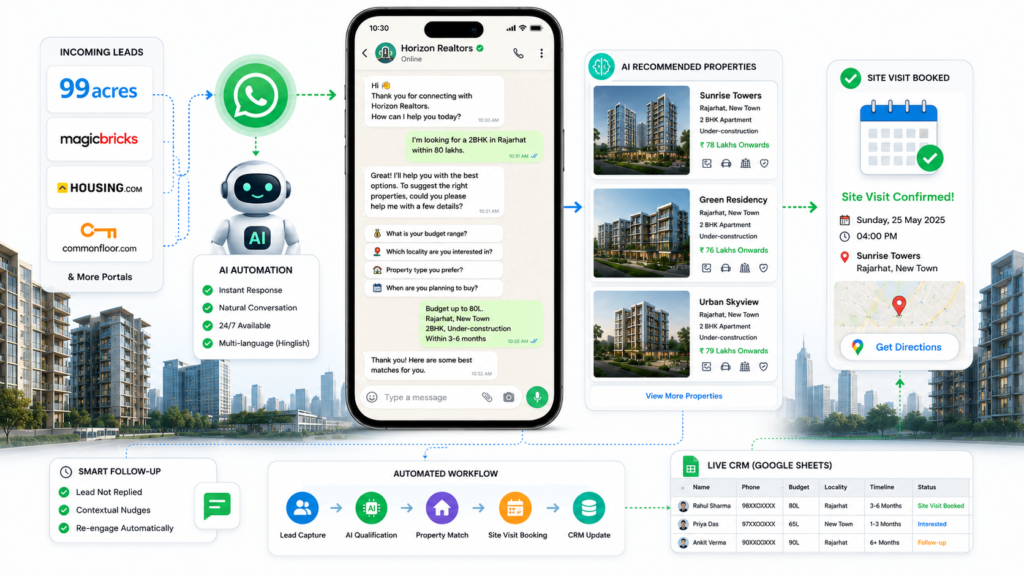
How AI Can Answer Property Buyer Questions Instantly Buying property rarely begins with a single decision. It begins with questions. A buyer wants to know the price, the location, the nearby schools, and the payment terms. Each answer helps the buyer move one step closer to a visit or a purchase. For real estate teams, responding to every inquiry quickly can be difficult. Messages arrive through websites, chat tools, phone calls, and property portals. Sales agents cannot respond instantly to every request. This situation explains why many property platforms now rely on AI Automation. Properly designed systems answer common buyer questions within seconds. The buyer receives clear information. The sales team gains time to focus on serious prospects. The Nature of Buyer Questions Property buyers tend to ask similar questions at the beginning of their search. These questions appear across nearly every real estate website. Typical inquiries include: Buyer Question Information Requested What is the price of this property? Cost and payment plan Is the property available now? Current availability Where is the location? Map and neighborhood What amenities are nearby? Schools, hospitals, transport How can I schedule a visit? Booking a site tour Sales teams can answer these questions manually. However, when hundreds of inquiries arrive each day, response time becomes slow. This is where AI Automation becomes useful. Automated systems respond immediately with accurate property information. How AI Automation Works in Real Estate At its core, AI Automation connects three components. A knowledge base containing property details A conversational interface such as chat or voice An automated workflow that delivers responses When a buyer submits a question, the system scans the stored information and returns the correct reply. The response appears instantly through chat or voice. This approach handles routine inquiries without human intervention. Agents step in only when the conversation becomes complex. Simplified AI Workflow Suggested infographic for the article: Buyer Question ↓ AI Chat or Voice Interface ↓ Property Database Search ↓ Instant Response ↓ Optional Human Agent Support This structure allows property websites to answer questions around the clock. Why Instant Responses Matter Speed affects buyer behavior more than many real estate firms realize. When a buyer asks about a property and receives a quick reply, interest remains high. If the response arrives hours later, attention may already have shifted elsewhere. Research in customer communication has shown that prompt responses often increase the likelihood of a follow up action such as a call or site visit. With AI Automation, a property platform can answer inquiries at any time of the day. Buyers in different time zones receive the same prompt service. Example from a Real Estate Automation Project A useful illustration comes from the case study titled “From Lead to Site Visit – Voice AI Automation for a Real Estate Platform.” This project involved a property platform that struggled to manage incoming buyer calls. The company received large numbers of inquiries from online advertisements and listing portals. Many callers simply wanted basic information about property pricing and location. Agents spent hours answering the same questions. An automated voice system was introduced to handle the first stage of communication. When a caller asked about a property, the system retrieved details from the property database and provided an immediate response. The result was simple yet significant. Sales agents spent less time repeating routine information. They could focus on scheduling property visits and discussing purchase decisions. This example demonstrates the practical role of AI Automation services in real estate operations. The Types of Questions AI Handles Well Not every conversation should be automated. Still, many early stage buyer questions follow predictable patterns. The following categories work well with AI Automation systems. Question Type AI Capability Property price Retrieve stored pricing Availability Check listing status Location details Provide map links Payment options Explain installment plans Visit scheduling Connect to calendar These functions remove routine work from the sales team. Combining Automation with Human Expertise A balanced approach works best. Automation should guide the early stage conversation, while experienced agents handle complex discussions. For example: AI provides property details AI collects contact information AI schedules a visit Agent conducts the property tour This cooperation improves efficiency without removing the personal element that property buyers often expect. Example from Global Property Platforms Several international property platforms already rely on automation for initial inquiries. Large listing sites often include automated chat tools that answer questions about listings. These systems pull information directly from the property database. A buyer might ask, “What is the price of the apartment in Marina District?” The system replies with the exact listing price and basic details. This form of AI driven automation keeps the conversation active even when human staff are unavailable. Role of Product Siddha in Automation Projects Companies that specialize in product development often help businesses design these systems carefully. Product Siddha has worked on automation initiatives where structured data and analytics play a key role. In automation projects, product teams focus on several areas: organizing property data building reliable conversation flows tracking buyer interactions improving response accuracy These steps ensure that AI Automation solutions remain useful rather than confusing. Measuring the Impact Real estate firms can measure the results of automation through simple indicators. Metric What It Shows Response time Speed of answering inquiries Lead volume Number of buyer contacts Site visit bookings Conversion to physical visits Agent workload Reduction in routine calls When these numbers improve, the system is working effectively. Visual Explanation of the Buyer Journey Suggested chart for the blog: Online Property Listing ↓ Buyer Inquiry ↓ AI Automation Response ↓ Lead Qualification ↓ Site Visit Booking ↓ Sales Discussion This structure helps property firms handle large numbers of inquiries without overwhelming the sales team. Final Reflection Property buyers value clarity and speed. They want quick answers before committing to a visit or negotiation. For real estate platforms managing hundreds of daily inquiries, responding instantly can be difficult. AI Automation offers a practical solution. By answering routine questions immediately, automated

AI Automation, Blog

Hyper-Personalized Property Recommendations Using Behavioral AI

Hyper-Personalized Property Recommendations Using Behavioral AI Reading Buyer Intent Property search has changed quietly over the last decade. Buyers no longer rely only on listings filtered by price and location. They browse at night, compare neighborhoods over weeks, revisit floor plans, and pause longer on certain images. Each action leaves a signal. Behavioral AI uses these signals to shape property recommendations with precision. When supported by AI Automation, this process becomes structured, measurable, and scalable. Hyper-personalized property recommendations are not about showing more listings. They are about showing the right listing at the right time, based on observable behavior rather than broad assumptions. From Static Filters to Behavioral Models Traditional real estate platforms depend on fixed search filters such as budget, city, and number of bedrooms. While useful, these filters ignore deeper intent. Behavioral AI considers: Time spent viewing certain property types Frequency of return visits Scroll depth and image interaction Saved listings and comparison activity Response time to follow-up communication These signals feed machine learning models that rank properties dynamically. AI Automation systems collect and process this data continuously, updating recommendations in real time. In the case study From Lead to Site Visit – Voice AI Automation for a Real Estate Platform, structured automation tracked user responses and qualification behavior. Leads who engaged deeply received prioritized follow-ups. This same behavioral tracking can guide listing recommendations. The Data Foundation Accurate personalization begins with clean data architecture. Property platforms must integrate CRM systems, website analytics, marketing automation tools, and listing databases into a unified environment. In Built Custom Dashboards by Stage, lifecycle data was mapped clearly across user journeys. That clarity allowed teams to see where prospects dropped off and which segments progressed. For property platforms, similar funnel analysis helps refine recommendation engines. AI Automation ensures that: User events are captured consistently Profiles update in real time Segments refresh automatically Recommendation rules adjust based on new signals Without automation, personalization remains manual and inconsistent. Behavioral Segmentation in Practice Hyper-personalization does not rely solely on individual profiles. It also considers behavioral clusters. For example: Behavioral Pattern Likely Intent Recommended Action Repeated villa searches in gated communities Family relocation Highlight schools and amenities Frequent visits to high-rise listings Investment focus Show rental yield projections Short browsing sessions with price filter changes Budget-sensitive buyer Display financing options These patterns allow property platforms to anticipate needs. In AI Automation Services for French Rental Agency MSC-IMMO, inquiry management workflows were automated to categorize leads by urgency and property preference. Although focused on rental operations, the underlying principle applies to recommendation systems. Real-Time Personalization Engines Behavioral AI operates best when recommendation models update instantly. If a buyer suddenly shifts from city apartments to suburban homes, the system should adjust within the same session. AI Automation supports this through: Event-driven triggers Predictive scoring models Automated ranking algorithms Dynamic content blocks In Product Analytics for a Ride-Hailing App with Mixpanel, event tracking shaped user engagement strategies. Similar event-driven analytics guide property recommendation adjustments. The goal is not complexity. It is relevance. Case Insight from Marketplace Operations In Product Management for UAE’s First Lifestyle Services Marketplace, behavioral data shaped service recommendations across categories. Users who booked cleaning services frequently were shown subscription packages. Engagement history influenced interface display. Real estate platforms can adopt the same discipline. Buyers who repeatedly explore waterfront properties may value scenic imagery and premium amenities. The interface can adapt accordingly. Only one reference is needed here. Product Siddha has applied structured AI Automation in marketplace environments to support behavioral segmentation and operational clarity. Predictive Scoring and Lead Qualification Behavioral AI also improves lead scoring. Prospects who engage deeply with property pages, download brochures, or interact with mortgage calculators demonstrate stronger purchase intent. AI Automation assigns weighted scores to these actions. High-scoring leads receive priority outreach. In Building a Lead Engine After Apollo Shut Us Out, disciplined tracking restored visibility into prospect engagement. While focused on lead generation infrastructure, the principle applies directly to real estate. Structured event capture leads to informed action. Ethical and Privacy Considerations Hyper-personalization must respect privacy regulations. Data consent, secure storage, and transparent usage policies are essential. AI Automation frameworks should include: Role-based data access Consent tracking logs Data anonymization where required Clear opt-out mechanisms Property transactions involve significant financial commitments. Trust is central. Behavioral AI should enhance clarity rather than create discomfort. Continuous Learning and Model Refinement Recommendation engines improve with usage. Each inquiry, site visit, or transaction refines predictive models. Machine learning pipelines require: Clean historical data Regular model evaluation Error analysis Feedback integration In Driving Growth for a U.S. Music App with Full-Stack Mixpanel Analytics, data-informed iteration strengthened engagement strategies. Property platforms can apply the same cycle to refine listing suggestions. AI Automation ensures that data pipelines remain stable and repeatable, allowing models to learn consistently. Measuring Success The impact of hyper-personalized property recommendations can be measured through: Increase in inquiry rate Improvement in site visit scheduling Reduction in search abandonment Higher average session duration Faster time to decision These metrics should appear in internal dashboards for constant monitoring. When AI Automation links recommendation systems with CRM and analytics tools, performance reporting becomes immediate and reliable. Practical Outcomes Behavioral AI does not replace property agents. It supports them. Agents receive better-qualified leads. Buyers receive listings aligned with their genuine preferences. Over time, the search experience feels intuitive rather than repetitive. Real estate markets in regions such as the UAE, France, and the United States are increasingly digital. Buyers expect platforms to understand their preferences without excessive filtering. AI Automation makes this possible by connecting behavioral analytics, predictive modeling, and operational workflows into a single system. Clear Direction Hyper-personalized property recommendations represent a practical shift in how property platforms operate. Behavioral AI interprets user signals. AI Automation ensures those insights translate into action. When data collection is structured, segmentation is thoughtful, and automation is disciplined, property discovery becomes efficient for both buyers and sellers. Product Siddha approaches this field with structured engineering practices and careful data governance. The goal

AI Automation, Blog

AI Automation for GCC and Middle East Enterprises – Compliance, Localization and Scale

AI Automation for GCC and Middle East Enterprises – Compliance, Localization and Scale Regional Reality Enterprises across the GCC and wider Middle East are investing heavily in digital infrastructure. Governments are encouraging innovation. Private firms are modernizing operations. Yet AI Automation in this region faces a distinct set of conditions. Compliance requirements differ by country. Language expectations vary. Growth plans are often ambitious and regional rather than local. For AI Automation to succeed in this environment, it must be built with three priorities in mind – compliance, localization, and scale. Technology alone does not solve these challenges. Structure and governance do. Compliance Is Not Optional Data regulations in the Gulf are evolving. Financial services, healthcare, real estate, and public sector projects operate under strict frameworks. Enterprises must consider data residency, audit trails, access controls, and consent management before deploying automation systems. AI Automation workflows often connect CRM systems, analytics platforms, messaging tools, and internal databases. Without compliance controls, these integrations can expose sensitive information. In the case study Product Management for UAE’s First Lifestyle Services Marketplace, structured data governance supported marketplace growth. Vendor onboarding, service bookings, and payment workflows required careful system architecture. Automated processes were documented. Access levels were defined clearly. Audit logs were maintained. This approach allowed operational efficiency without compromising regulatory discipline. Enterprises in Saudi Arabia, the UAE, Qatar, and Bahrain increasingly demand similar safeguards. AI-driven process automation must respect local hosting requirements and user data protections. Localization Beyond Translation Localization in the Middle East goes deeper than translating content into Arabic. It includes: Right-to-left interface considerations Multilingual chatbot capabilities Regional dialect recognition Cultural context in customer engagement Country-specific payment workflows AI Automation systems that ignore these factors often struggle with adoption. Voice-based qualification workflows had to accommodate regional language preferences and scheduling norms. Automated call flows were adjusted to local communication styles. This improved lead conversion while maintaining operational consistency. Localization affects data fields, reporting formats, and compliance documentation. AI-powered workflows must adapt to these realities rather than impose generic templates. Scaling Across Borders Many GCC enterprises expand quickly across neighboring markets. A business headquartered in Dubai may serve customers in Riyadh, Doha, and Kuwait City within a short period. AI Automation architecture must therefore support multi-entity operations. Scalable automation requires: Modular workflow design Centralized data warehousing Flexible permission layers Cross-region performance dashboards In Built Custom Dashboards by Stage, lifecycle reporting structures allowed leadership to view performance by market and business unit. Automation triggered actions based on standardized funnel stages, even when operational details varied between locations. Scale does not mean duplication. It means structured replication. Intelligent Operations in Practice Consider AI Automation Services for an Agri-Tech/FoodTech VC Fund. Investment tracking, founder communications, and reporting cycles required structured workflows. Automated document processing and notification systems improved operational visibility. As the fund expanded its portfolio, the automation framework supported new investments without rebuilding the system. This principle applies to large enterprises in logistics, energy, and retail across the Middle East. When automation is designed with scalability in mind, growth does not strain internal coordination. Compliance, Localization and Scale – A Comparative View Dimension Compliance Focus Localization Focus Scale Focus Data Governance Residency, audit trails, consent tracking Multilingual data capture Centralized warehouse structure Customer Interaction Secure communication logs Arabic and English interfaces Unified CRM workflows Reporting Regulatory reporting templates Local currency formats Multi-market dashboards Access Control Role-based permissions Region-specific admin roles Cross-entity oversight This framework illustrates how AI Automation must address multiple layers simultaneously. The Role of Data Infrastructure AI Automation depends on reliable data architecture. Enterprises operating in the GCC often integrate global systems with region-specific applications. Without centralized data warehousing and standardized event tracking, automation logic becomes inconsistent. In Product Analytics & Full-Funnel Attribution for a SaaS Coaching Platform, structured analytics connected marketing and product data into one reporting environment. The same discipline applies in Middle Eastern enterprises. Centralized data enables predictive analytics, performance monitoring, and operational forecasting. Compliance audits also become easier when data pipelines are documented clearly. Real Estate and Enterprise Automation Real estate is a prominent sector across the region. Developers manage large inventories, investor relations, and regulatory documentation. AI Automation supports lead routing, contract management, and performance reporting. Structured workflows improved inquiry management and internal coordination. Although based in Europe, the principles apply directly to GCC property markets. Automation can manage multilingual inquiries, automate document processing, and generate real-time dashboards for leadership. Regional enterprises require these capabilities as project volumes increase. Practical Deployment Approach Enterprises often begin with one operational function such as lead management or document processing. AI Automation expands gradually once stability is proven. At Product Siddha, implementation typically follows four structured steps: Regulatory review and data mapping Workflow design aligned with local practices Controlled pilot deployment Gradual regional expansion This method prevents disruption and ensures governance remains intact. Human Oversight and Governance Automation in highly regulated environments cannot operate without supervision. Governance committees review workflow updates. Data teams monitor accuracy. Legal advisors validate compliance alignment. AI Automation reduces manual effort but does not eliminate accountability. Enterprises that combine technical structure with oversight scale confidently. Sustainable Expansion The Middle East presents strong opportunities for enterprises willing to modernize operations responsibly. AI Automation supports operational efficiency, cost control, and faster service delivery. Yet its success depends on understanding regional compliance standards, respecting cultural expectations, and designing for cross-border growth. When compliance is built into architecture, localization is treated as a core requirement, and scalability is planned from the beginning, automation becomes a strategic asset. Enterprises that follow this path reduce operational risk while improving performance visibility. Those that overlook these foundations often rebuild systems under pressure. Structured automation is not a trend. It is infrastructure.

AI Automation, Case Studies

AI Booking Agent for Intelligent Calendar Automation

AI Booking Agent for Intelligent Calendar Automation Client Internal Automation Initiative – Product Siddha Service AI Workflow Automation Industry Real Estate / High-Velocity Sales Environments Repository https://github.com/elnino-hub/booking-agent Executive Summary In high-response industries such as real estate and B2B sales, speed of engagement directly impacts revenue conversion. Manual scheduling and calendar coordination introduce delays, conflicts, and operational inefficiencies that reduce response velocity. Product Siddha developed an AI-powered Booking Agent to automate conversational scheduling through chat. The system integrates calendar intelligence, natural language understanding, and workflow automation to manage meeting booking, rescheduling, and cancellation without manual intervention. The result is a structured, self-operating scheduling layer that improves response time, eliminates coordination overhead, and increases meeting conversion efficiency. Business Context In real estate and consultative sales environments: Leads expect immediate response. Agents operate across meetings, travel, and site visits. Calendar coordination is often reactive and manual. Response delays result in lost opportunities. While traditional booking links allow users to select time slots, they do not support conversational modifications, intelligent conflict detection, or multi-step coordination within chat. This created three operational gaps: Manual time spent coordinating schedules Missed or delayed meeting confirmations Inefficient rescheduling workflows The organization required a scalable solution that could operate continuously without increasing administrative load. Objective To design and deploy an AI-powered conversational booking system that: Understands natural language scheduling requests Integrates directly with calendar systems Detects scheduling conflicts before confirmation Handles rescheduling and cancellations autonomously Maintains conversational context across multi-turn interactions The goal was to convert scheduling from a manual coordination task into an automated workflow layer. Solution Architecture The Booking Agent was designed as a modular automation system consisting of: 1. Natural Language Processing Layer Powered by GPT-4, the system interprets user intent from free-form chat messages such as: “Book a meeting tomorrow afternoon.” “Move my 4 PM call to Friday.” “Cancel next week’s demo.” The AI extracts structured scheduling parameters including: Date and time Time zone Event type Modification intent 2. Workflow Orchestration Engine Built using n8n, the orchestration layer manages: Calendar API calls Conflict validation Slot availability checks Event creation and updates Notification triggers Python-based logic modules ensure controlled decision execution before final booking actions. 3. Calendar Integration The system integrates directly with Google Calendar APIs to: Retrieve existing events Identify available time slots Prevent double-booking Generate Google Meet links automatically This ensures real-time accuracy and operational reliability. 4. Multi-Turn Context Management The agent retains context across conversational exchanges. For example: User: “Move my 4 PM meeting to 6 PM.”Agent: “Today or tomorrow?”User: “Tomorrow.”Agent: “Rescheduled to 6 PM. Confirmation sent.” This eliminates repeated data entry and maintains conversational continuity. Implementation Outcomes After deployment, the AI Booking Agent delivered measurable operational improvements: Near-instant scheduling response time 70% reduction in manual coordination effort Elimination of double bookings Fully automated rescheduling workflows Consistent confirmation and reminder delivery Scheduling ceased to be a manual task and became a system-level capability. Operational Impact The automation introduced several strategic advantages: Increased lead-to-meeting conversion velocity Reduced administrative overhead Improved user experience through instant response Scalable scheduling capacity without additional staffing In high-competition environments, the ability to confirm meetings immediately creates a structural advantage. Key Takeaways Calendar coordination is often an underestimated operational bottleneck. Conversational AI can transform scheduling into a structured automation layer. Intelligent orchestration improves speed without sacrificing control. Automation should eliminate friction, not remove human decision-making. Conclusion The AI Booking Agent demonstrates how conversational automation can replace manual scheduling workflows while preserving reliability and control. By integrating natural language understanding, real-time calendar synchronization, and workflow orchestration, Product Siddha transformed a repetitive operational process into a scalable system capability. The result is not merely convenience – it is improved response velocity, reduced operational burden, and enhanced revenue opportunity capture.

AI Automation, Blog

AI-Powered Revenue Operations – Aligning Sales, Marketing & Customer Success

AI-Powered Revenue Operations – Aligning Sales, Marketing & Customer Success Revenue Misalignment Is a Systems Problem Most companies do not have a revenue problem. They have a systems alignment problem. Marketing optimizes CPL. Sales optimizes win rate. Customer Success optimizes renewals. Each team operates correctly – but from disconnected datasets. Revenue Operations (RevOps) was created to solve this. AI Automation makes it scalable. The shift is not about dashboards. It is about intelligent system orchestration. What AI Changes in Revenue Operations Traditional RevOps is reporting-heavy. AI-powered RevOps is signal-driven. Instead of reviewing last month’s pipeline, AI models analyze: Behavioral intent signals Multi-touch attribution paths Engagement decay patterns Usage drop-off indicators Sales cycle velocity anomalies This moves revenue management from reactive to predictive. The Core Architecture of AI-Powered RevOps A mature AI RevOps stack has five layers: 1. Unified Data Layer CRM (HubSpot / Salesforce) Marketing automation Product analytics Billing systems Support tools All events must flow into a central warehouse or structured reporting layer. In our work on Product Analytics & Full-Funnel Attribution for a SaaS Coaching Platform, we rebuilt attribution logic to connect marketing campaigns with in-product usage behavior and closed revenue. The insight: Attribution is not about “last click.” It is about lifecycle influence weighting. Without unified data, AI amplifies noise. 2. AI-Driven Lead Intelligence Most companies score leads on form fills and email opens. AI-powered scoring models include: Time-to-engagement compression Cross-channel behavior clustering Industry-specific buying cycles Historical win similarity scoring In Building a Lead Engine After Apollo Shut Us Out, alternative acquisition channels were integrated into automated scoring logic to prioritize real intent signals over vanity engagement. This reduced pipeline pollution and improved Sales Accepted Lead conversion rates. Insight: Lead scoring should predict sales velocity, not just interest. 3. Intelligent Sales Orchestration Revenue leakage often occurs in routing and follow-up lag. AI automation can: Auto-assign leads based on closing probability Trigger escalation workflows for stalled deals Detect inactivity risk Recommend next best action Instead of fixed rules, machine learning models adapt based on win/loss patterns. This transforms CRM from a database into a decision engine. 4. Predictive Customer Success Automation Retention is revenue. AI models identify churn risk through: Declining product engagement Reduced support interaction Payment irregularities Feature underutilization In HubSpot Marketing Hub Setup for a Growing Fintech Brand, lifecycle automation was structured so customer success received real-time alerts based on engagement decay — not after renewal failure. Insight: Customer success automation should trigger before the human notices a problem. 5. Closed-Loop Revenue Attribution Marketing ROI is often miscalculated because product and revenue data are disconnected. In Product Management for UAE’s First Lifestyle Services Marketplace, acquisition data was connected to vendor performance and transactional revenue metrics. This revealed: High-volume channels with low LTV Lower acquisition channels with higher expansion value Marketplace supply-demand revenue gaps Insight: AI-powered RevOps optimizes for lifetime revenue contribution, not cost-per-lead. What Most AI RevOps Implementations Get Wrong Automating broken processes Skipping data cleaning No governance structure Over-reliance on dashboards No ownership model Automation without governance creates hidden risk. Governance Framework for AI RevOps Before deploying automation, define: Ownership Who owns lead scoring model tuning? Who monitors churn prediction accuracy? Who validates attribution reports? Monitoring Cadence Weekly anomaly detection review Monthly revenue signal recalibration Quarterly model refinement Fail-Safes Manual override triggers Alert thresholds Performance drift monitoring AI is not “set and forget.” It requires operational discipline. Real Alignment Looks Like This Marketing knows: Which campaigns generate long-term customers Sales knows: Which accounts have expansion potential Customer Success knows: Which users require proactive intervention Leadership sees: One revenue number One attribution model One lifecycle dashboard That is unified RevOps. Measurable Business Outcomes of AI-Powered RevOps When implemented properly, organizations see: 20–35% improvement in lead-to-opportunity conversion Reduced sales cycle length Higher forecast accuracy Lower churn volatility Increased expansion revenue The compounding effect is operational clarity. The Strategic Shift AI-powered Revenue Operations is not about replacing teams. It is about: Removing manual friction Embedding intelligence into workflows Converting fragmented systems into one revenue engine When Sales, Marketing, and Customer Success operate from shared predictive models, accountability becomes structural – not political. Revenue becomes measurable across the full lifecycle. That is sustainable scale.