

Product Siddha

Lifecycle Marketing

Why D2C Brands Need a Retention Strategy Before They Need More Klaviyo Flows
Blog, Product Management

Why D2C Brands Need a Retention Strategy Before They Need More Klaviyo Flows

Why D2C Brands Need a Retention Strategy Before They Need More Klaviyo Flows Start With the Customer D2C brands can build a surprising number of automated workflows inside Klaviyo. Welcome emails, abandoned checkout reminders, post-purchase sequences, replenishment campaigns, cross-sell messages, and win-back flows can all serve useful purposes. The problem begins when a business treats every retention problem as a request for another flow. If customers are receiving too many messages, adding another workflow may increase the problem. If customer segments are poorly defined, more automation simply sends more messages to poorly defined groups. If the brand does not understand why customers return or leave, additional flows may create activity without improving retention. A retention strategy should come first. Klaviyo can then become one of the tools used to execute that strategy. For Product Siddha, this distinction is important when helping businesses review marketing automation. The starting point should be the customer journey, business objectives, data, and retention challenges. What a Retention Strategy Actually Does A retention strategy provides a framework for deciding how a business will encourage customers to continue buying and engaging with the brand. It should answer several basic questions: Who are your most valuable customers? When do customers typically purchase again? What causes customers to stop purchasing? Which products lead to repeat purchases? How long does it usually take to make a second order? Which customers need education after purchasing? Which customers are ready for another purchase? Which customers have become inactive? Which communication channels do customers respond to? These questions help determine where automation can contribute. Without these answers, a brand can end up building workflows because they are available rather than because they solve a specific customer problem. Consider a Simple Example Imagine a D2C brand that sells premium coffee subscriptions and individual bags of coffee. The company has already built several Klaviyo flows: Welcome flow Abandoned cart flow Post-purchase flow Cross-sell flow Review request flow Win-back flow The marketing team notices that repeat purchases have slowed. The first suggestion is to create another promotional flow. Before doing that, the company examines its customer data. It discovers that many first-time buyers purchase a 30-day supply. A significant number of these customers receive a promotional email before they are likely to need another order. Some customers purchase again before the promotional sequence ends, while others become inactive after receiving several unrelated messages. The real issue is timing and customer journey design. The brand needs to understand when customers are likely to reorder, what they purchased, which messages they have already received, and whether they have already placed another order. A retention strategy could establish these rules first. First Purchase → Product Education → Expected Consumption Period → Replenishment Reminder → Repeat Purchase → Loyalty Communication Klaviyo flows can then execute these stages. The difference is significant. The business is no longer asking, “What flow should we build next?” It is asking, “What should happen next in the customer’s relationship with our brand?” Map the Customer Lifecycle Before adding automation, map the major stages of your customer lifecycle. A basic D2C journey might look like: Lifecycle Stage Customer Situation Strategic Objective New subscriber Has shown initial interest Build familiarity First-time buyer Completed first order Support the purchase experience Potential repeat buyer May be approaching reorder Encourage appropriate follow-up Repeat customer Has purchased again Increase customer value High-value customer Purchases frequently Strengthen the relationship Inactive customer Has stopped purchasing Understand and address inactivity Each stage should have a purpose. The associated Klaviyo flow should support that purpose rather than exist simply because the platform allows it. Know Your Customer Segments A retention strategy also depends on useful segmentation. A list of 50,000 customers does not represent one uniform audience. Customers can differ by purchase history, order value, product preferences, purchase frequency, engagement, and time since their last order. Useful segments may include: First-time customers Repeat purchasers High-value customers Customers nearing their expected reorder period Customers with declining purchase frequency Inactive customers Product-specific customer groups Customers who purchased during a particular period Segmentation gives the brand a better basis for deciding which communication is appropriate. It also helps reduce unnecessary overlap between campaigns. Understand What Each Flow Is Supposed to Do Every automated workflow should have a clear purpose. For example: Welcome Flow: Introduce the brand and help new subscribers understand what to expect. Post-Purchase Flow: Provide useful information after an order and support the customer’s experience. Replenishment Flow: Contact customers around the time they may reasonably need another product. Win-Back Flow: Address customers who have become inactive. Cross-Sell Flow: Introduce relevant products based on previous purchasing behavior. If two flows serve nearly the same purpose, the business should review whether both are necessary. A retention strategy creates the structure for making these decisions. Use Klaviyo as an Execution Layer Klaviyo can be an important part of a D2C retention operation. Its role should be connected to the wider customer data and marketing strategy. The ecommerce store provides purchase information. Customer data provides context. Segmentation determines eligibility. Klaviyo can execute communication based on those conditions. For more advanced businesses, other systems may also be involved, including SMS platforms, customer support tools, analytics systems, and CRM software. The important point is that these systems should work from a consistent understanding of the customer. A customer who has just completed a purchase should not continue receiving a message intended for customers who have never purchased. Measure Retention, Not Just Flow Activity A flow can perform well according to campaign metrics while having limited impact on customer retention. Open rates and click-through rates can provide useful diagnostic information. They should not be the only measures used to judge retention performance. D2C brands should also monitor: Repeat purchase rate Customer lifetime value Purchase frequency Revenue per customer Customer retention rate Time to second purchase Replenishment conversion rate Customer reactivation rate These metrics provide a broader view of whether customers are continuing to create value. For example, if a new post-purchase flow

AI Agents for Customer Retention Which Lifecycle Tasks Can Actually Run Autonomously
AI Automation, Blog

AI Agents for Customer Retention: Which Lifecycle Tasks Can Actually Run Autonomously?

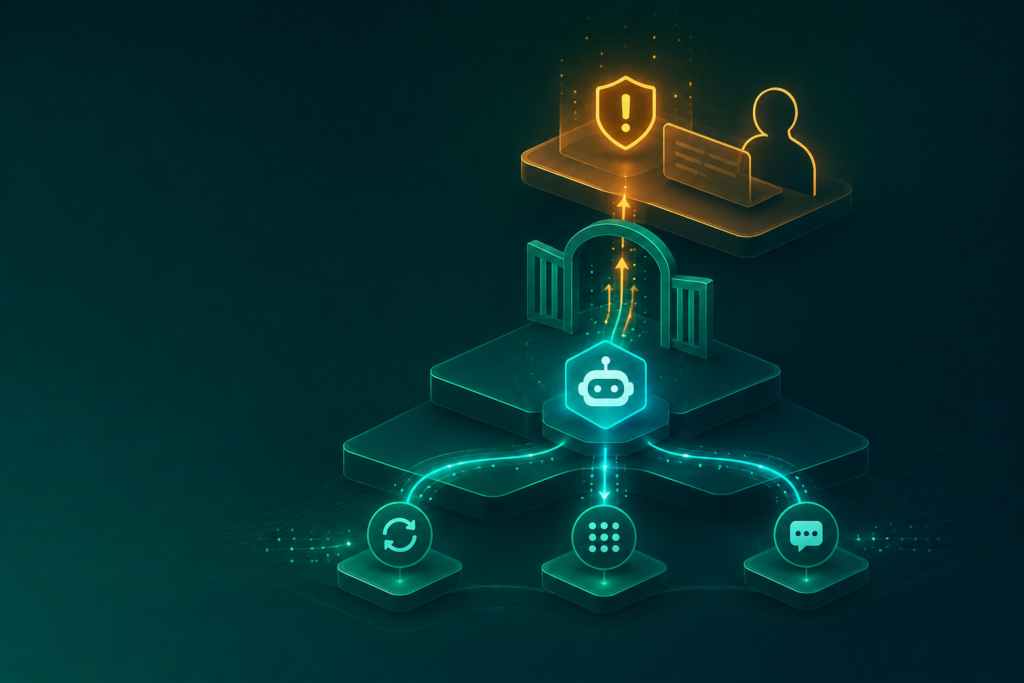
AI Agents for Customer Retention: Which Lifecycle Tasks Can Actually Run Autonomously? Where Agents Fit Customer retention involves many recurring tasks. A customer places an order, receives follow-up communication, becomes eligible for another purchase, responds to a message, or gradually becomes inactive. Each event can create another marketing or service requirement. Businesses have traditionally handled these activities through scheduled campaigns, rules-based workflows, and manual decisions. These systems remain useful, particularly when the process is predictable. AI Agents introduce another option. An agent can monitor information, interpret a defined situation, choose an appropriate action, use connected software, and evaluate what happened next. This makes them particularly relevant to customer lifecycle operations. The important question for a D2C brand is not whether an AI agent can theoretically handle a task. The better question is whether the task has enough structure, reliable data, clear permissions, and measurable outcomes to be handled safely with limited human intervention. What Makes a Task Suitable? Not every retention activity should run autonomously. The strongest candidates generally have four characteristics: Reliable customer data is available The desired action can be clearly defined The consequences of an error are manageable The result can be measured and reviewed A replenishment reminder is a good example. If a customer typically repurchases a product after a predictable period, an agent can review the purchase history, determine whether the customer is approaching that period, check whether another order has already been placed, and recommend or initiate the next communication. A complicated complaint involving refunds, sensitive customer information, or an unusual order may require human involvement. The distinction matters because autonomy should be based on the nature of the task rather than the novelty of the technology. Task 1: Customer Segmentation Customer segmentation is one of the more practical areas for AI-assisted retention. An agent can review purchase frequency, order history, engagement, product preferences, and periods of inactivity. It can then identify changes in customer behavior and assign customers to predefined segments. For example, a customer who previously purchased every month may become inactive for several months. The agent can identify the change and move that customer into an appropriate re-engagement segment. This process can reduce the need for marketing teams to manually review large customer lists. Human oversight can still be useful when segment definitions change or when the business wants to introduce a new retention strategy. Task 2: Replenishment Management Replenishment is particularly suitable for products with reasonably predictable buying cycles. An AI agent can examine previous orders and estimate when a customer may need to purchase again. Before sending a reminder, it can check recent transactions to determine whether the customer has already reordered. The workflow could look like this: Purchase History → Expected Reorder Period → Recent Order Check → Customer Eligibility → Reminder → Response Tracking This is more useful than sending the same reminder to every customer after an identical number of days. The agent can work with individual customer histories while following the brand’s communication rules. Task 3: Customer Re-Engagement Customer inactivity can be difficult to manage manually when a business has thousands of customers. AI Agents can monitor customer activity and identify changes that meet predefined conditions. An agent might look at: Time since last purchase Previous purchase frequency Average order value Product categories purchased Email engagement Previous response to offers Once a customer meets the conditions for re-engagement, the agent can select an approved workflow and initiate the appropriate action. The business can establish limits around message frequency, discounts, and communication channels. Task 4: Product Recommendations Product recommendations can also be supported by AI Agents when sufficient customer and product data is available. An agent can review previous purchases and identify products that may reasonably complement a customer’s buying history. For example, someone who purchased a particular product may qualify for a related accessory or replacement item. The agent should work within defined product rules. It should not make recommendations based on incomplete information simply because a product appears statistically related. This is where product data quality becomes important. Task 5: Customer Support Triage Customer service is another area where autonomous agents can assist, particularly with classification and routing. An agent can review an incoming customer request and determine whether it relates to an order status, product question, return request, shipping issue, or another known category. It can then route the request to the correct workflow or team. Simple questions may be suitable for automated responses when the business has approved answers and reliable information sources. More sensitive cases should be transferred to a human representative. A useful structure is: Customer Request Possible Agent Action Order status Retrieve approved order information Shipping question Provide available delivery information Product question Retrieve approved product details Return request Identify the applicable return process Complaint Route to customer service Complex account issue Escalate to a human This approach allows automation to handle routine work while preserving human review for situations that require judgment. Task 6: Lifecycle Workflow Management AI Agents can also monitor whether customers have moved from one lifecycle stage to another. A customer might move from first-time buyer to repeat customer. Another may become inactive. A high-value customer may qualify for a separate retention program. The agent can monitor these changes and coordinate actions across connected systems. For example, when a customer makes a second purchase, the agent can update the customer profile, change the relevant segment, stop an introductory workflow, and place the customer into a repeat-buyer journey. This prevents multiple workflows from continuing without regard to the customer’s current status. Task 7: Campaign Monitoring AI Agents can also assist with monitoring automated retention programs. An agent can watch for unusual changes in campaign performance, workflow errors, failed integrations, or unexpected customer activity. For instance, if a workflow suddenly stops sending messages because a data connection has failed, the agent can identify the issue and alert the appropriate team. The agent does not necessarily need permission to correct every problem automatically. In many cases, identifying

retention-marketing-agency-1536x1024
AI Automation

How to Vet a Retention Marketing Agency for Your D2C Brand: A 2026 Buyer’s Checklist

How to Vet a Retention Marketing Agency for Your D2C Brand: A 2026 Buyer’s Checklist Start With the Right Questions Choosing a retention marketing agency can have a direct effect on how effectively a D2C brand turns existing customers into repeat buyers. Many agencies can manage email campaigns, SMS programs, customer data, or automated workflows. The more important question is whether the agency can connect those activities to the way your customers actually buy. For a D2C company, customer retention involves several moving parts. Purchase frequency, customer lifetime value, repeat purchase rate, customer segmentation, lifecycle communication, and customer experience all need to work together. A Marketing Agency for D2C Brand growth should therefore be evaluated on more than its creative portfolio or list of marketing platforms. Before signing a contract, brand owners should examine its strategy, processes, technology, reporting practices, and understanding of their business. Product Siddha helps businesses approach automation and marketing systems with a practical focus on processes, customer data, and measurable business outcomes. Know What You Need First Before speaking with agencies, establish what you want the engagement to accomplish. Your current retention challenges might include: Low repeat purchase rates Customers becoming inactive after their first order Poor email or SMS engagement Disconnected customer data Weak post-purchase communication Manual campaign management Limited customer segmentation Inconsistent promotional communication Poor visibility into customer lifetime value A good agency should be able to work from these business problems rather than immediately recommending a collection of tools. Create a short internal brief that explains your current customer journey, marketing channels, technology stack, sales cycle, average order value, and key retention metrics. This gives prospective agencies enough information to provide a meaningful assessment. Check Their D2C Experience Experience matters, but the number of clients an agency has served is not enough to establish expertise. Ask whether the agency has worked with brands that have similar products, purchase cycles, customer expectations, and order values. A company selling consumable products may need a very different retention strategy from a brand selling furniture or high-value electronics. Ask prospective agencies: Which D2C brands have you worked with? What retention problems did those businesses have? Which channels did you manage? What metrics did you improve? How did you approach customer segmentation? What did your team change after reviewing customer data? Look for specific answers. An agency that understands retention should be able to explain the reasoning behind its recommendations. Examine the Retention Strategy A strong retention program should have a clear structure. Ask the agency to explain how it would approach customers at different stages. This may include welcome communication, first-purchase follow-up, product education, replenishment reminders, cross-sell opportunities, win-back campaigns, and customer loyalty initiatives. The strategy should also account for customer behavior. For example, customers who purchased once and have shown no recent activity should not necessarily receive the same communication as frequent customers. Segmentation allows the brand to adjust messaging according to purchase history, engagement, preferences, and other useful customer information. A capable Marketing Agency for D2C Brand should be able to explain how these segments would be created and maintained. Review Their Automation Capabilities Retention marketing often involves repetitive tasks that can be handled through automation. During the evaluation process, ask agencies which workflows they recommend automating and why. Potential workflows include: Customer Stage Possible Automation New customer Welcome and onboarding sequence First purchase Post-purchase communication Repeat buyer Cross-sell or loyalty messaging Expected reorder Replenishment reminder Inactive customer Re-engagement campaign High-value customer VIP communication Abandoned purchase Recovery sequence The agency should also explain how these workflows will be monitored. Automation should not mean launching a sequence and leaving it untouched for months. Evaluate Their Technology Knowledge A retention partner should understand the systems that support your customer journey. Depending on your business, this may include your ecommerce platform, customer relationship management system, email marketing platform, SMS provider, customer data platform, analytics tools, and reporting systems. Ask how the agency handles integrations and data synchronization. You should also clarify who owns the accounts, customer data, campaign assets, automation workflows, and reporting dashboards. These details should be clear before the engagement begins. Ask How They Measure Success A serious retention partner should be comfortable discussing measurable outcomes. Common retention metrics include: Customer retention rate Repeat purchase rate Customer lifetime value Purchase frequency Revenue per customer Churn rate Email conversion rate SMS conversion rate Revenue from automated campaigns Do not accept a reporting structure that focuses entirely on open rates, clicks, or campaign volume. Those figures can provide useful information, but they should support a larger view of customer and revenue performance. Ask the agency how often it reports results and what happens when a campaign underperforms. Understand the Team Behind the Proposal The person presenting the proposal may not be the person managing your account. Ask who will actually work on your business. Find out who handles strategy, campaign development, data analysis, automation, copywriting, and reporting. You should also understand how communication works. Will you have a dedicated account manager? How frequently will strategy meetings take place? How quickly does the team respond to issues? A clear operating process can prevent many problems later. Request a Practical Audit Before selecting a Marketing Agency for D2C Brand, consider asking shortlisted agencies for a limited audit or assessment. A useful audit could examine your current customer segments, lifecycle campaigns, automation workflows, retention metrics, and customer communication. The objective is not to obtain free consulting work. It is to see how the agency thinks. Compare the recommendations from several agencies. Pay attention to whether their observations are based on your actual business information or whether they present the same generic recommendations to every prospective client. Review Pricing and Contract Terms Pricing should be examined alongside the scope of work. Ask whether the quoted fee includes strategy, campaign management, copywriting, design, automation development, analytics, reporting, and technical support. Clarify additional charges for new workflows, integrations, campaign volumes, platform fees, or strategy work. Also review contract length, cancellation terms, ownership of

Product Siddha
Privacy Overview

This website uses cookies so that we can provide you with the best user experience possible. Cookie information is stored in your browser and performs functions such as recognising you when you return to our website and helping our team to understand which sections of the website you find most interesting and useful.