Product Siddha

product management

Google My Business Automation for Realtors Rank Higher in Local Search
AI Automation, Blog

Google My Business Automation for Realtors: Rank Higher in Local Search

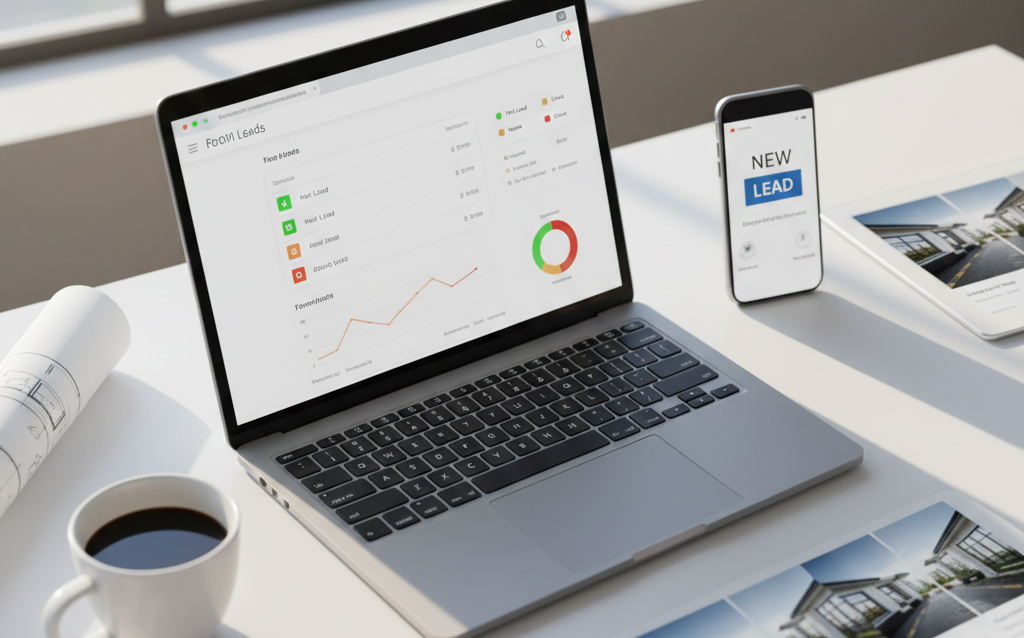
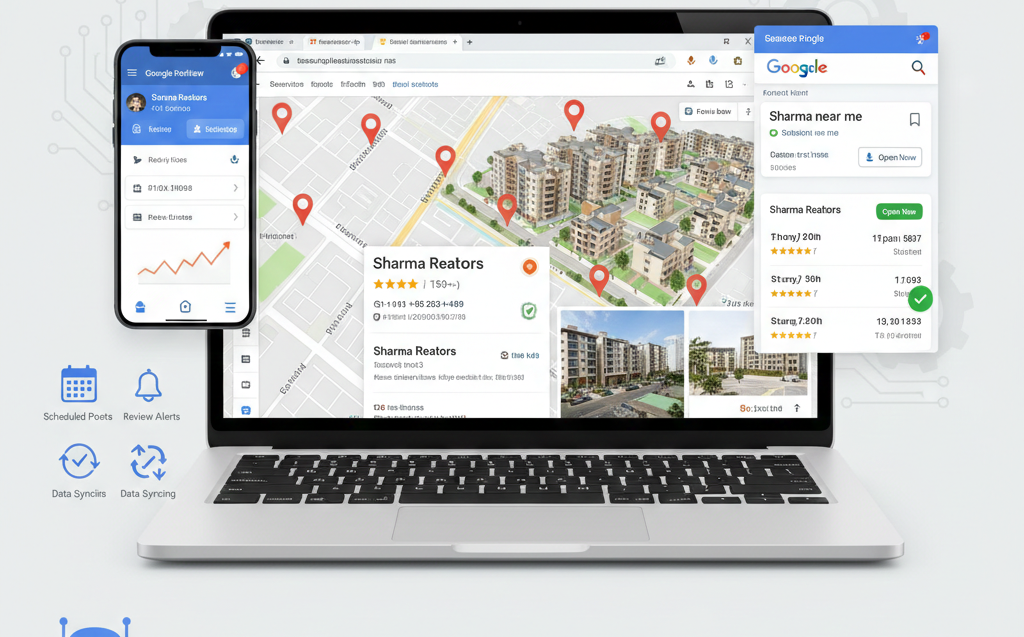
Google My Business Automation for Realtors: Rank Higher in Local Search Local Visibility Still Decides Deals Real estate remains a local business at heart. Buyers search by neighborhood, landmarks, and commute time. Sellers look for agents who appear established in their area. In most cases, the first serious interaction begins with a local search result. Google My Business sits at the center of this discovery process. A well-maintained listing can bring steady inquiries without paid promotion. A neglected one quietly loses ground to competitors who stay active. For busy realtors, consistency is the challenge. Updates are missed. Reviews go unanswered. Listing details drift out of date. This is where GMB Automation for Realtors becomes practical rather than optional. Product Siddha works with data-driven platforms where automation exists to reduce routine work and preserve accuracy. The same principle applies to local search visibility. Why Google My Business Matters for Realtors Google My Business influences how often a realtor appears in map results and local listings. These placements attract users with clear intent. Someone searching for property services nearby is already in decision mode. Key signals that affect visibility include: Accurate business information Regular updates and posts Review activity and response quality Engagement signals such as calls and direction requests Manually managing these signals across months is difficult. Automation helps ensure that the basics never slip. What GMB Automation for Realtors Actually Means Automation does not mean abandoning control. It means setting reliable systems for repeat tasks. GMB Automation for Realtors typically covers: Scheduled posting of updates and listings Automated review alerts and response drafts Consistent business information syncing Performance tracking across locations or agents These systems operate quietly in the background. Realtors remain free to focus on property visits, negotiations, and client conversations. Common Problems Realtors Face Without Automation Many local listings fail due to small oversights that compound over time. A phone number changes but the listing is not updated. Office hours shift during holidays and remain incorrect. Reviews accumulate without acknowledgment. Competitors who stay active gain an edge. Local search rewards consistency. GMB Automation for Realtors exists to protect that consistency. A Real Operations Example from Product Siddha One Product Siddha case study involved AI automation services for a French rental agency, MSC-IMMO. While the focus was broader than Google My Business alone, the challenge mirrored what many realtors face. The agency struggled with fragmented systems. Property updates, customer inquiries, and listing data lived in separate tools. Manual updates led to delays and inconsistencies. Product Siddha helped introduce automation layers that synchronized property information and customer interactions. The result was faster response times and more reliable public-facing data. This approach translates directly to GMB Automation for Realtors. When listing data and customer engagement remain aligned, local visibility improves naturally. Reviews and Reputation at Scale Reviews shape trust. Prospective clients read them carefully, especially in high-value decisions like property transactions. Responding to every review manually is often unrealistic. Automation helps by: Sending instant alerts for new reviews Drafting response templates that maintain tone Flagging negative feedback for priority handling Realtors still approve responses, but the delay disappears. This matters because timely replies signal professionalism to both users and search engines. Posting Consistency Without Daily Effort Google favors listings that remain active. Posts about new properties, market updates, or office announcements reinforce relevance. GMB Automation for Realtors allows scheduled posts based on property data or predefined calendars. Updates appear regularly even during peak sales periods. This steady activity helps listings remain visible without demanding constant attention. Local Search Signals That Benefit from Automation Signal How Automation Helps NAP Accuracy Syncs name, address, phone Review Responses Ensures timely engagement Posts Maintains consistent updates Insights Tracking Monitors calls and clicks Multi-Location Data Keeps listings aligned These signals work together. Automation supports them without adding complexity. Avoiding Over-Automation Automation should support judgment, not replace it. Generic responses or irrelevant posts can harm trust. The best GMB Automation for Realtors includes review steps. Humans approve public-facing messages. Automation handles reminders, drafts, and scheduling. Product Siddha’s experience across analytics and automation emphasizes this balance. Systems assist teams, but decisions remain human. Measuring Local Search Impact Automation also improves measurement. GMB insights show how users find listings and what actions they take. Automated dashboards can track: Call volume trends Direction requests Search queries triggering visibility Engagement over time Product Siddha’s work building custom dashboards by stage supports this reporting approach. Visibility improves when performance is understood clearly. Practical Adoption for Realtors Most realtors start with partial automation. Review alerts, post scheduling, or listing syncs. Over time, systems expand. GMB Automation for Realtors works best when introduced gradually. Teams see value quickly without feeling overwhelmed. The goal is stability. A listing that remains accurate and active month after month builds authority quietly. Local Trust Built Through Consistency Local search rewards reliability. Users trust listings that feel maintained and responsive. Automation helps maintain that standard even when business demands increase. Product Siddha’s work across automation, analytics, and platform optimization reflects this steady approach. Systems should make good practices easier to maintain. For realtors competing in crowded local markets, GMB Automation for Realtors offers a way to protect visibility without adding daily strain.

Email vs WhatsApp Marketing Which Converts Better for Indian Property Sales
Blog, MarTech Implementation

Email vs WhatsApp Marketing: Which Converts Better for Indian Property Sales?

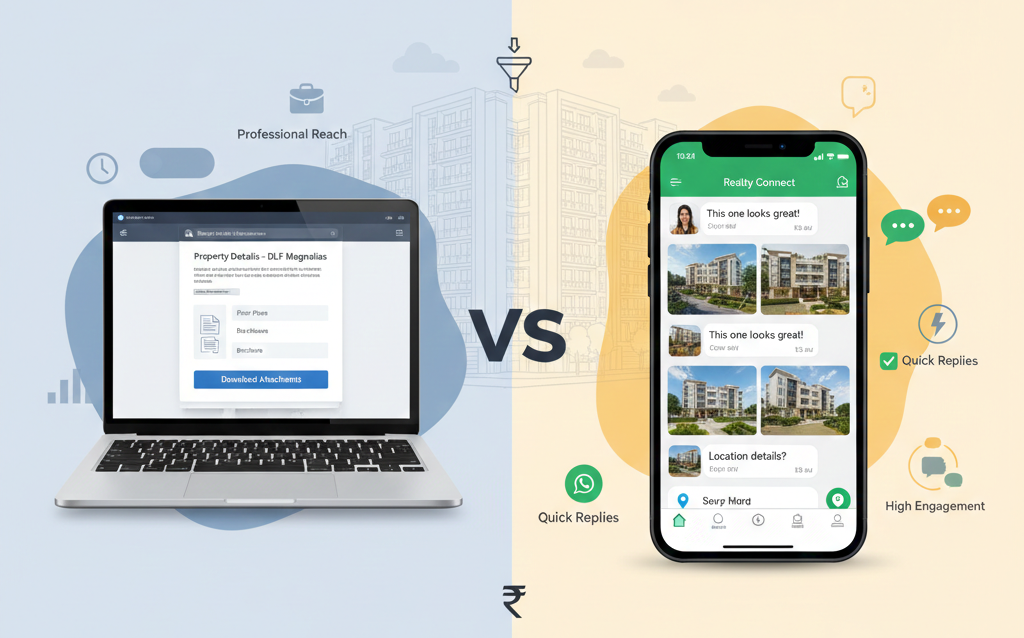
Email vs WhatsApp Marketing: Which Converts Better for Indian Property Sales? Conversations That Actually Close Deals Property sales in India are driven by conversation. Buyers ask questions, compare options, consult family members, and return with follow-ups. Very few decisions are made in a single interaction. Among the many communication channels available today, email and WhatsApp remain the most widely used for property follow-ups. Each serves a different role. Each influences trust in a different way. For real estate teams, the question is not which channel looks more modern, but which one converts better in real conditions. Understanding Email vs WhatsApp Marketing requires attention to how Indian buyers behave, not how tools are promoted. Product Siddha works with platforms that measure conversion across channels using real data. This perspective informs a clear and practical comparison. How Indian Property Buyers Communicate Indian buyers rarely follow a linear path. A typical journey includes missed calls, forwarded messages, screenshots shared with relatives, and delayed responses. Language preference shifts between English and local languages. Formal communication blends with casual replies. Email and WhatsApp both fit into this pattern, but in different ways. Email is viewed as official. WhatsApp feels personal. One supports record keeping. The other supports immediacy. Understanding Email vs WhatsApp Marketing begins with acknowledging this contrast. The Role of Email in Property Sales Email remains important in Indian real estate, especially for structured communication. Common uses include: Sending brochures and floor plans Sharing pricing details and payment schedules Document follow-ups and confirmations Post site visit summaries Email allows longer explanations. Buyers can read at their own pace. Attachments are easier to manage. Messages feel formal enough to share with lawyers or family members. However, email often suffers from delayed engagement. Messages may be opened hours or days later. Some are ignored entirely. In the context of Email vs WhatsApp Marketing, email excels in depth but struggles with speed. The Role of WhatsApp in Property Sales WhatsApp has become the default communication tool for Indian buyers. Messages are read quickly. Voice notes feel natural. Images and short videos are easy to consume. In property sales, WhatsApp is commonly used for: Initial follow-ups after inquiries Sharing quick photos or location pins Confirming site visit timings Addressing short questions Response rates are typically higher than email. Buyers often reply within minutes. Yet WhatsApp has limits. Long explanations feel intrusive. Important details can get buried in chat history. There is also a fine line between helpful and excessive. In Email vs WhatsApp Marketing, WhatsApp leads in engagement but requires restraint. Comparing Conversion Behavior Conversion in property sales rarely means immediate booking. It usually means movement to the next step. A site visit. A second call. A document request. Observed patterns across Indian real estate teams show: WhatsApp drives faster responses and follow-ups Email supports informed decision making WhatsApp performs better in early and mid-stage engagement Email performs better near negotiation and closure This suggests that Email vs WhatsApp Marketing is not a binary choice. It is a sequencing decision. A Data Perspective from Product Siddha One Product Siddha case study involved AI automation services for a French rental agency, MSC-IMMO. While the market differed, the communication challenge was familiar. The agency used multiple channels to engage prospects. Engagement varied sharply by channel and timing. WhatsApp messages triggered quick replies but shorter conversations. Email threads were slower but more detailed. Product Siddha helped map communication touchpoints to funnel stages. This revealed a pattern that applies well to Indian property sales. Fast channels move interest forward. Structured channels support commitment. This insight guides how Email vs WhatsApp Marketing should be applied in real estate workflows. Trust and Perception Matter Property purchases involve large sums. Buyers judge not only the property but the professionalism of the seller. Email conveys seriousness. A well-written message with clear attachments signals stability. WhatsApp conveys accessibility. A prompt reply signals attention. Problems arise when channels are misused. Long sales pitches on WhatsApp can feel intrusive. Casual WhatsApp messages for legal documents can feel careless. Email vs WhatsApp Marketing works best when each channel respects its natural role. Language and Cultural Fit In India, language choice affects comfort. WhatsApp supports Hinglish and regional languages easily. Buyers often respond more freely in familiar speech. Email is more likely to remain in English. This suits formal communication but may limit emotional connection. For teams selling across regions, WhatsApp often bridges language gaps more effectively. Email provides clarity when precision is required. Performance Comparison Overview Aspect Email WhatsApp Response Speed Moderate High Content Length Long Short Formality High Medium Shareability Documents Images and quick clips Buyer Comfort Structured Conversational This table reflects common behavior, not absolute rules. Context always matters. Automation and Measurement Automation improves both channels when applied carefully. Email automation helps with scheduled follow-ups, reminders, and document sharing. WhatsApp automation helps with initial responses and appointment confirmations. Product Siddha’s experience building custom dashboards by stage supports accurate measurement across channels. Tracking which channel moves a lead forward prevents guesswork. Without measurement, Email vs WhatsApp Marketing becomes a matter of opinion. With data, it becomes a strategy. Choosing the Right Mix Most successful Indian real estate teams do not choose one channel exclusively. They combine them with intention. WhatsApp opens the door. Email carries the details. WhatsApp confirms. Email records. Email vs WhatsApp Marketing works when each channel supports the other rather than competing for attention. A Balanced Path Forward Property sales depend on trust built over time. Communication channels shape that trust quietly. WhatsApp brings speed and warmth. Email brings structure and assurance. Ignoring either limits conversion. Product Siddha’s work across automation, analytics, and real estate workflows reflects this balanced approach. Tools should adapt to buyer behavior, not force it to change. For Indian property sales, the better question is not which channel converts better, but how well they work together.

product analytics
Blog, MarTech Implementation

Top 5 Tips to Get More Value From Your Real Estate CRM

Top 5 Tips to Get More Value From Your Real Estate CRM Why most CRMs underperform in real estate Real estate CRMs are rarely implemented poorly. In most cases, they are simply underused. Teams invest time and money into setting up a real estate CRM, but daily habits do not change. Leads are entered, notes are skipped, follow-ups drift, and reporting becomes an afterthought. Over time, the system turns into a passive database instead of an active sales asset. Across real estate, the gap between CRM ownership and CRM value remains wide. Closing this gap does not require new software or complex restructuring. It requires clarity on how the CRM supports selling, not administration. The following five principles reflect how high-performing teams extract consistent value from their real estate CRM, based on real operational patterns observed by Product Siddha across automation and analytics projects. 1. Align CRM stages with real buying behavior A real estate CRM should reflect how buyers move, not how software vendors label stages. When stages feel abstract or generic, sales teams stop trusting them. This leads to inaccurate data and poor forecasting. Effective teams define stages using observable buyer actions. A lead is not qualified because a checkbox is ticked. It is qualified because a budget range is discussed, a preferred location is confirmed, or a site visit is requested. Each stage in the CRM must represent a clear shift in buyer intent. In one Product Siddha real estate automation engagement, the most impactful change was redefining what “site visit scheduled” actually meant. Only visits with a confirmed date and buyer acknowledgment were allowed into that stage. This removed ambiguity and immediately improved the reliability of pipeline reviews. Clear stages reduce friction. They help sales managers coach effectively and allow leadership to trust CRM data without constant verification. 2. Make response time a core CRM metric Speed is often discussed in real estate sales, but rarely enforced through systems. A real estate CRM should make response time visible and unavoidable. When response time is hidden, delays become normal. High-performing teams treat first response time as a frontline metric. Every new enquiry triggers immediate visibility, ownership, and accountability. This does not require aggressive messaging or pushy behavior. It requires presence. Product Siddha’s work on a voice-led automation flow for a real estate platform demonstrated this clearly. Leads that received a response within minutes were far more likely to convert to site visits than those contacted later in the day. The CRM became the enforcement layer, recording response timestamps and exposing delays without blame. Response speed is not about pressure. It is about respect for buyer intent. A real estate CRM that highlights speed creates discipline without micromanagement. 3. Use CRM context to improve sales conversations Many sales calls fail because they start from zero. When agents open a conversation without context, buyers repeat themselves or disengage. A real estate CRM holds valuable clues about buyer intent, but only when surfaced correctly. Effective CRM usage ensures that every conversation begins informed. Agents know where the lead came from, which listings were viewed, whether pricing pages were explored, and what was discussed previously. This changes tone. Conversations become specific instead of generic. In Product Siddha’s analytics and dashboard projects, teams consistently performed better when CRM data was reshaped around decision context rather than raw activity. Instead of long activity logs, sales teams saw concise summaries before each call. This reduced call time while improving quality. A CRM should not overwhelm users with data. It should quietly prepare them to speak with confidence and relevance. 4. Automate follow-ups with restraint and clarity Follow-ups are central to real estate sales, yet they are often inconsistent. Some leads receive too many messages. Others receive none. A real estate CRM can solve this imbalance, but only when automation is applied carefully. Automation should support memory, not replace judgment. The most effective follow-ups are short, timely, and grounded in real interactions. A message referencing a site visit date or a specific unit performs better than generic reminders. Across Product Siddha’s automation engagements, including real estate and non-real estate projects, one pattern remains consistent. Fewer messages with clear intent outperform long automated sequences. Buyers respond when communication feels purposeful. A disciplined CRM setup pauses automation when human interaction resumes. This prevents overlap and maintains trust. Automation succeeds when it feels invisible to the recipient. 5. Treat the CRM as a weekly operating system A real estate CRM should guide weekly decisions, not just monthly reports. When CRM reviews are infrequent, small issues grow unnoticed. Leads stagnate, follow-ups weaken, and patterns disappear. High-performing teams review CRM data weekly with a narrow focus. They look at lead flow, response time, stage movement, and drop-off points. The goal is not reporting. It is correction. In Product Siddha’s HubSpot setup for a growing financial services brand, weekly CRM reviews uncovered a consistent issue. One acquisition channel produced volume but poor-quality conversations. Adjusting this early improved overall efficiency. The same principle applies to real estate CRM usage. Weekly engagement keeps the system aligned with reality. It ensures that the CRM evolves alongside the business, not behind it. A grounded view on CRM value A real estate CRM does not create value through features. It creates value through habits. When stages reflect real buyer actions, response time is visible, conversations are informed, follow-ups are measured, and reviews are regular, the system earns its place. Product Siddha’s work across CRM, analytics, and automation consistently shows that lasting improvements come from disciplined usage, not constant change. A CRM becomes powerful when it fades into the background and quietly supports better decisions. In real estate, where timing and trust define outcomes, a well-used CRM does not feel like software. It feels like structure.

How to Spot High Intent Buyers Inside Your CRM
AI Automation, Blog

How to Spot High Intent Buyers Inside Your CRM

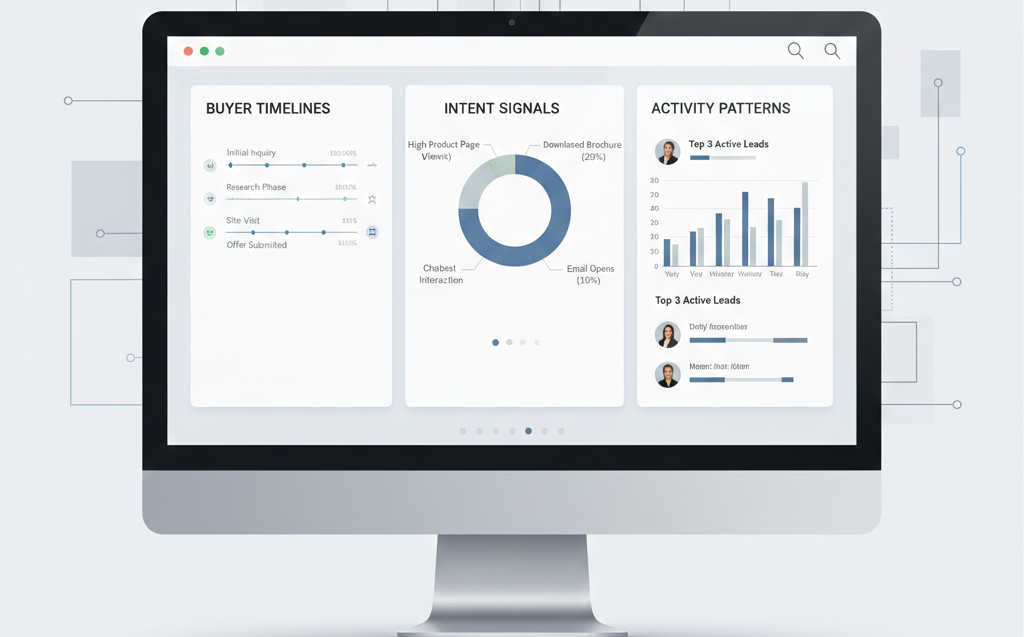
How to Spot High Intent Buyers Inside Your CRM Signals That Actually Matter Every CRM is full of activity. Page visits, emails opened, forms filled, calls logged. Yet very little of this activity points clearly to buying intent. Most teams mistake movement for motivation and treat every contact as equal. Over time, this blurs judgment, slows follow-up, and wastes attention on leads that were never close to a decision. High intent buyers leave patterns behind them. These patterns are quiet, repeatable, and measurable if the CRM is structured correctly. Spotting them is less about clever tactics and more about disciplined observation. At Product Siddha, this problem shows up across industries. Whether the business sells property, software, or services, the question is the same. Who is ready now, and how do we know? What High Intent Really Looks Like Intent is not interest. Interest can be casual. Intent carries weight. Inside a CRM, high intent buyers usually show three qualities: Consistency in behavior Escalation in engagement Compression of time between actions A buyer who views one pricing page once is curious. A buyer who returns to pricing, requests a demo, and responds quickly to follow-up is preparing to decide. CRMs often record these actions but fail to connect them. Intent only becomes visible when signals are viewed together. Behavioral Signals That Deserve Attention Certain actions repeatedly correlate with purchase readiness across sectors. Repeated High-Value Page Views Visits to pricing pages, comparison pages, or implementation guides matter more than blog traffic. Repetition is the key factor. One visit may be research. Multiple visits over a short period suggest evaluation. Direct Questions and Clarifications Emails or chat messages that ask about timelines, availability, customization, or next steps indicate seriousness. These questions reduce uncertainty rather than explore options. Shortening Response Times High intent buyers reply faster as they move closer to a decision. Long gaps early in the journey often shrink to minutes or hours later. Channel Switching Buyers who move from email to phone, or from form to direct message, are signaling urgency. They want resolution, not information. Engagement Sequences Matter More Than Scores Many CRMs rely on lead scoring. While helpful, scores often hide the story. A sequence of actions reveals more than a number. For example: Day 1: Downloads a buying guide Day 3: Views pricing page twice Day 4: Submits a contact form Day 5: Responds to follow-up within one hour This pattern reflects intent building over time. The CRM must preserve order and timing, not just totals. In Built Custom Dashboards by Stage, Product Siddha focused on sequencing rather than aggregation. Dashboards showed movement between stages instead of static scores. This helped teams identify buyers who were advancing quickly rather than those accumulating activity without direction. CRM Hygiene Makes Intent Visible High intent buyers often hide inside poor data. Common issues include: Duplicate contacts Missing timestamps Disconnected channels Manual notes without structure Cleaning these issues does not improve intent itself, but it makes intent visible. In HubSpot Marketing Hub Setup for a Growing Fintech Brand, CRM restructuring aligned forms, emails, and deal stages. Once data was consistent, patterns appeared naturally. Sales teams stopped relying on gut feeling and began prioritizing based on behavior. Intent detection improves when the CRM tells one coherent story per buyer. Listening to Voice and Conversation Data Written actions are only part of the picture. Calls and voice interactions often carry the strongest intent signals. In From Lead to Site Visit – Voice AI Automation for a Real Estate Platform, call data revealed patterns that forms never showed. Buyers who asked about visit timing, access, and documentation were far more likely to convert than those asking general questions. When call summaries and transcripts feed into the CRM, intent becomes easier to spot. Language shifts from exploratory to decisive. Timing Is an Intent Signal When actions cluster tightly, intent is usually high. A buyer who spreads activity over months may still convert, but urgency is low. A buyer who completes several steps within days is often ready for a direct conversation. CRMs should surface: Time between first contact and latest action Gaps between responses Acceleration trends In Product Analytics & Full-Funnel Attribution for a SaaS Coaching Platform, timing analysis revealed that buyers who completed onboarding steps within a week were far more likely to purchase. This insight reshaped follow-up priorities. Intent is not only about what buyers do, but when they do it. Industry Context Shapes Intent Signals Intent looks different depending on the industry. Real estate buyers show intent through visit scheduling and document requests SaaS buyers show intent through product usage and pricing reviews E-commerce buyers show intent through repeat views and cart behavior Investment platforms show intent through follow-up questions and data access In AI Automation Services for French Rental Agency MSC-IMMO, tenant inquiries with rapid follow-up and document readiness converted faster than high-volume inquiries without preparation. CRMs should adapt intent markers to business reality rather than rely on generic models. Dashboards That Surface Intent Early Well-designed dashboards reduce guesswork. Effective intent dashboards show: Buyers with increasing activity frequency Buyers moving stages faster than average Buyers engaging across multiple channels Buyers returning after pricing exposure In Building a Lead Engine After Apollo Shut Us Out, dashboards focused on movement, not volume. This allowed teams to redirect effort toward buyers already signaling readiness instead of chasing raw lead counts. Intent becomes actionable when it is visible at a glance. A Clear Ending High intent buyers rarely announce themselves. They reveal their readiness through patterns, timing, and behavior that already exist inside the CRM. The difference between missed opportunities and consistent conversions lies in how those signals are interpreted. Clean data, structured timelines, and attention to sequences matter more than complex formulas. Product Siddha’s work across analytics, automation, and CRM systems shows the same lesson repeating. When intent is observed carefully, the CRM becomes less of a storage tool and more of a decision guide.

What Industries Benefit from AI Automation Agencies
AI Automation, Blog

What Industries Benefit from AI Automation Agencies?

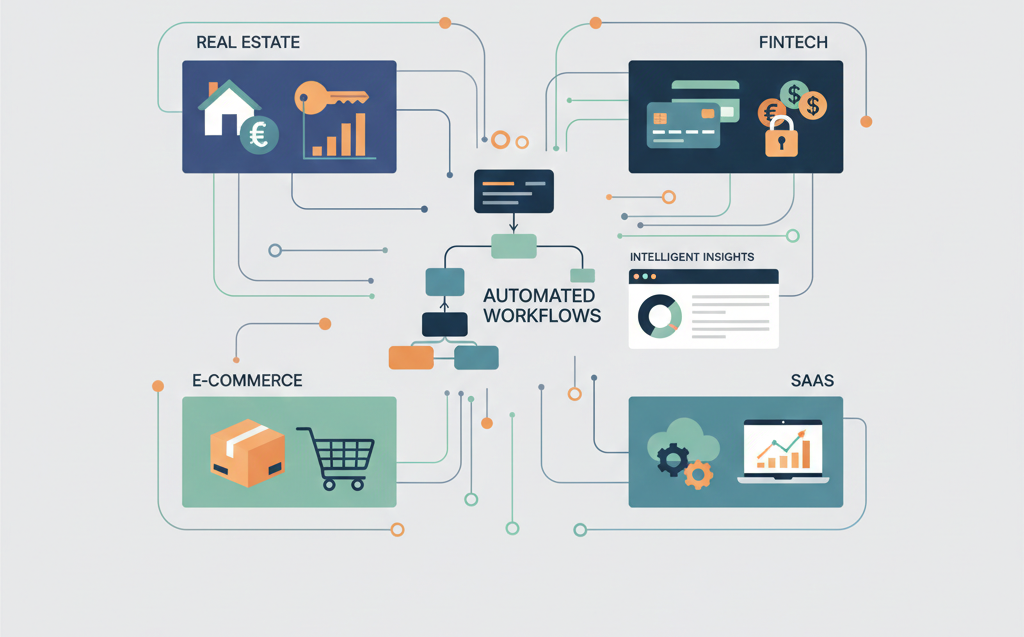
What Industries Benefit from AI Automation Agencies? Where Automation Quietly Changes Outcomes AI automation agencies rarely enter an organization through the front door. They arrive when teams feel stretched, when systems fail to keep pace with demand, and when growth exposes weak seams in daily operations. Across industries, the pattern is consistent. Volume increases, complexity follows, and manual processes begin to cost real money. Industries that depend on speed, accuracy, and repeatable decision-making see the greatest returns. This is especially true where AI-Powered Lead Generation plays a central role in revenue flow. Product Siddha’s work across sectors offers a practical view into where automation delivers lasting value. Real Estate and Property Services Real estate remains one of the clearest beneficiaries of AI automation agencies. The business depends on fast response, precise follow-up, and constant coordination between prospects, agents, and listings. AI automation supports: Inquiry handling across web, phone, and messaging Lead qualification based on intent and readiness Automated scheduling for site visits CRM updates without manual entry A relevant example appears in From Lead to Site Visit – Voice AI Automation for a Real Estate Platform. In this implementation, incoming calls were handled by voice automation that captured requirements, qualified prospects, and booked visits directly into the system. Response time dropped sharply, and agents focused on high-intent conversations. AI-Powered Lead Generation in real estate works best when automation connects first contact to physical action without delay. Financial Services and Fintech Financial services operate under strict rules and heavy data loads. Automation agencies help by reducing manual checks while improving consistency. Common applications include: Automated lead intake and verification CRM and compliance workflow alignment Reporting dashboards for performance tracking Customer communication automation The case study HubSpot Marketing Hub Setup for a Growing Fintech Brand reflects this approach. Structured lead stages and automated communication improved visibility without compromising control. AI-Powered Lead Generation here focused on quality and traceability rather than volume alone. E-Commerce and Direct-to-Consumer Brands E-commerce businesses generate data continuously. Orders, emails, support tickets, and behavioral signals arrive in volume. AI automation agencies help make sense of this activity. Services often include: Automated email and messaging flows Customer segmentation based on behavior Revenue attribution tracking Inventory and demand insights In Boosting Email Revenue with Klaviyo for a Shopify Brand, automation aligned customer behavior with timely outreach. While not every use case is labeled as lead generation, AI-Powered Lead Generation still plays a role through repeat purchase signals and lifecycle engagement. SaaS and Subscription Businesses Software businesses rely on steady lead flow and clear understanding of user behavior. Automation agencies help bridge marketing, sales, and product data. Typical services include: Product analytics implementation Funnel and cohort analysis Lead scoring tied to product usage Automated onboarding communication The case study Product Analytics & Full-Funnel Attribution for a SaaS Coaching Platform illustrates how attribution clarified which actions drove conversion. These insights fed directly into AI-Powered Lead Generation systems, improving targeting and follow-up logic. Marketplaces and Platform-Based Businesses Marketplaces balance supply and demand. Automation helps manage this balance without constant human intervention. Agencies support: User onboarding workflows Supply-demand matching logic Performance dashboards by segment Automated notifications and follow-ups In Product Management for UAE’s First Lifestyle Services Marketplace, automation supported scale while maintaining service quality. AI-Powered Lead Generation here focused on matching the right users rather than maximizing raw volume. Media, Entertainment, and Consumer Apps Consumer-facing apps operate at speed. User attention shifts quickly, and engagement data matters more than intuition. Automation agencies assist with: Event tracking and behavioral analysis Retention and engagement automation Performance dashboards Attribution across channels The case study Driving Growth for a U.S. Music App with Full-Stack Mixpanel Analytics shows how analytics informed smarter decisions. While not a traditional lead business, AI-Powered Lead Generation still applies through user acquisition and activation signals. Investment, Agri-Tech, and Specialized Funds Investment-focused organizations deal with complex pipelines and long decision cycles. Automation agencies streamline data flow and evaluation. Services include: Deal flow tracking Automated reporting for stakeholders Data aggregation from multiple sources Decision support dashboards In AI Automation Services for Agri-Tech/FoodTech VC Fund, automation reduced manual reporting and improved visibility across opportunities. AI-Powered Lead Generation in this context centered on sourcing and qualifying opportunities rather than customers. Logistics, Mobility, and Ride-Based Platforms High-volume transaction environments demand precision. Automation agencies support these businesses through analytics and operational workflows. In Product Analytics for a Ride-Hailing App with Mixpanel, automation clarified rider behavior and drop-off points. These insights influenced acquisition strategies and service optimization. AI-Powered Lead Generation here extends beyond marketing into operational growth signals. Networking, B2B Services, and Emerging Platforms New platforms often struggle with scale before structure. Automation agencies help by building systems that grow with usage. The case study Building the World’s First AI-Powered Networking Assistant reflects how automation can shape entirely new categories. Lead generation becomes contextual and conversational rather than form-based. Why Industry Fit Matters Not every industry benefits equally from automation. The strongest results appear where: Lead volume is high Response speed affects outcomes Data exists but is underused Decisions repeat with slight variation AI-Powered Lead Generation succeeds when paired with clear workflows and measurable intent. Product Siddha’s cross-industry work shows that automation works best when adapted to context rather than applied as a generic layer. A Practical Closing AI automation agencies serve many industries, but the pattern remains steady. Where growth strains manual systems, automation restores balance. Where data overwhelms teams, automation clarifies direction. From real estate and fintech to SaaS, marketplaces, and investment platforms, the benefits compound when systems connect. Product Siddha’s case studies offer grounded examples of how this work unfolds in practice.

What Services Do AI Automation Agencies Offer
AI Automation, Blog

What Services Do AI Automation Agencies Offer?

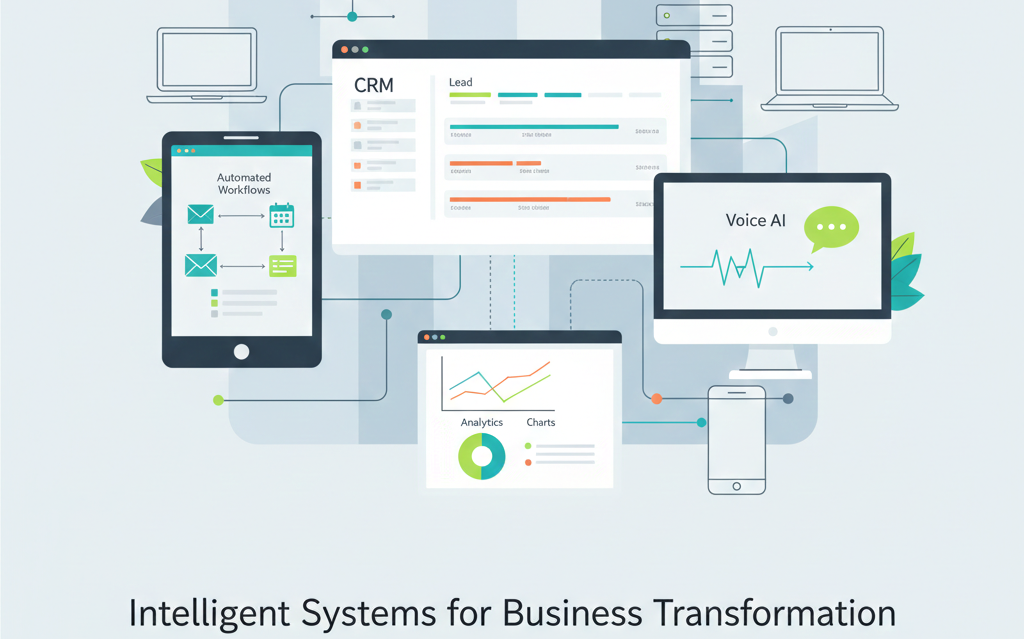
What Services Do AI Automation Agencies Offer? A Clear Starting Point Most businesses reach a moment when manual effort starts to work against them. Leads arrive at odd hours. Data sits in tools that do not talk to each other. Teams spend more time updating spreadsheets than speaking with customers. This is usually the point where AI automation agencies enter the picture. An AI automation agency focuses on building systems that reduce friction in daily operations. The goal is not novelty. The goal is consistency, speed, and accuracy across workflows that matter to revenue. For companies dealing with high volumes of inquiries, especially those dependent on AI-Powered Lead Generation, these services shape how growth actually happens. Product Siddha works in this space by combining automation, analytics, and system design into practical deployments that fit real businesses. Core Automation Strategy and Process Design Every engagement begins with process mapping. Before any models or tools are discussed, agencies study how work currently moves through the organization. This includes lead capture, qualification, follow-up, handoff, and reporting. AI automation agencies document each step and identify delays, duplication, and points where human judgment adds little value. Only then do they design automation layers. This service often includes: Workflow audits across sales, marketing, and operations Identification of automation-ready tasks Design of end-to-end automated flows For businesses focused on AI-Powered Lead Generation, this step ensures that leads are not only captured but routed, scored, and acted on without delay. AI-Powered Lead Generation Systems Lead generation remains the most requested service from automation agencies. The difference lies in how leads are sourced, filtered, and prioritized. AI-Powered Lead Generation systems combine data signals from multiple sources such as websites, ads, CRMs, and communication tools. Instead of sending every inquiry to the same inbox, these systems evaluate intent, timing, and fit. Typical services include: Intelligent lead capture forms Automated lead scoring based on behavior Real-time routing to sales or support teams Voice and chat-based lead engagement A real-world example comes from Product Siddha’s work titled From Lead to Site Visit – Voice AI Automation for a Real Estate Platform. In this case, inbound inquiries were handled by a voice automation layer that qualified prospects, scheduled site visits, and updated the CRM without human intervention. The result was faster response times and fewer missed opportunities. CRM and Marketing Automation Integration AI automation agencies often serve as system integrators. Many businesses already use CRMs, email tools, and analytics platforms, but these systems operate in isolation. Agencies connect these tools and add intelligence on top. Services in this area include: CRM setup and customization Automated email and messaging sequences Lead lifecycle tracking Data synchronization across platforms One relevant case study is HubSpot Marketing Hub Setup for a Growing Fintech Brand. The project involved structuring lead stages, automating follow-ups, and aligning sales actions with real engagement data. This type of work ensures that AI-Powered Lead Generation does not stop at capture but continues through nurturing and conversion. Custom Dashboards and Decision Intelligence Automation without visibility creates risk. AI automation agencies address this by building dashboards that reflect how systems perform in real time. These dashboards pull data from CRMs, analytics tools, and internal systems to present clear answers. How many leads arrived today. Which channels converted. Where drop-offs occurred. Product Siddha’s case study Built Custom Dashboards by Stage demonstrates this service well. Instead of a single summary report, stakeholders received stage-wise views of the funnel, allowing teams to act on specific bottlenecks. This service usually includes: KPI definition aligned with business goals Real-time reporting dashboards Funnel and cohort analysis Alerts for anomalies or delays Data and Product Analytics Implementation AI automation agencies also specialize in analytics frameworks. This work focuses on understanding user behavior and system performance over time. Services include: Event tracking setup Attribution modeling Behavioral analysis Product usage insights The case study Product Analytics & Full-Funnel Attribution for a SaaS Coaching Platform shows how analytics can reveal which actions actually lead to conversion. These insights often feed back into AI-Powered Lead Generation systems, refining scoring models and follow-up logic. Industry-Specific Automation Solutions Not all automation is generic. Many agencies build tailored solutions for specific industries. For example, in AI Automation Services for French Rental Agency MSC-IMMO, automation handled inquiries, scheduled property visits, and maintained communication across languages. This reduced manual coordination while improving response consistency. Similarly, sector-focused automation appears in areas like: Real estate inquiry handling Financial services onboarding Marketplace operations Investment fund deal flow These solutions rely heavily on AI-Powered Lead Generation adapted to industry context rather than broad templates. Voice, Chat, and Conversational Automation Conversational systems are now a standard service offering. These include voice assistants, chat interfaces, and messaging bots designed to handle first contact and routine queries. Services often include: Voice AI for inbound calls Chat automation on websites Messaging automation for follow-ups Integration with CRM and scheduling tools When implemented correctly, these systems reduce response time and maintain consistent engagement. They are particularly effective in high-volume lead environments where speed determines outcome. Closing Perspective AI automation agencies do not sell software in isolation. They design systems that connect data, decisions, and actions. Their services span strategy, lead generation, analytics, and industry-specific execution. For businesses relying on AI-Powered Lead Generation, the value lies in coordination. Leads arrive faster, move cleaner through pipelines, and reach teams when intent is highest. Product Siddha’s body of work reflects this approach. Each case study shows a focus on systems that hold up under real operational pressure rather than surface-level automation.

AI-Powered Lead Generation What It Is and Why Your Real Estate Business Needs It
AI Automation, Blog

AI-Powered Lead Generation: What It Is and Why Your Real Estate Business Needs It

AI-Powered Lead Generation: What It Is and Why Your Real Estate Business Needs It Understanding the shift Lead generation in real estate has always depended on timing, reach, and judgment. Agents place listings, respond to enquiries, and follow up with prospects who may or may not be ready to act. While channels have multiplied over the years, the core challenge remains unchanged. Many enquiries show little intent, while serious buyers are often missed or contacted too late. AI-powered lead generation changes how this imbalance is handled. It does not replace agents or sales teams. It improves how leads are identified, prioritized, and contacted before meaningful human interaction begins. For real estate businesses operating in competitive or international markets, this brings discipline to a process that has long relied on manual effort and guesswork. What AI-powered lead generation actually means AI-powered lead generation refers to systems that combine data sourcing, enrichment, and personalization to create outbound and inbound conversations that feel deliberate rather than generic. In real estate, this includes identifying the right prospects, understanding their context, and reaching out with messages that reflect real awareness of their business or property needs. Unlike traditional lead capture, which waits passively for forms and portal enquiries, AI-powered systems actively surface and engage prospects who match a defined ideal customer profile. The objective is not volume. It is relevance. Why traditional lead generation falls short Conventional lead generation relies heavily on portals, paid listings, and inbound forms. These channels generate activity, but little insight. A form submission rarely explains urgency. A portal enquiry often lacks intent. Sales teams are then left to qualify manually. Calls are made, emails are sent, and time is spent separating serious prospects from casual browsers. This approach is slow and inconsistent. Outcomes depend heavily on timing and individual effort. As competition increases, this inefficiency becomes costly. Buyers and partners who do not feel understood disengage quickly. Attention shifts elsewhere. AI-powered lead generation addresses this gap by moving intelligence upstream, before human time is invested. How AI improves lead quality in real estate The most visible improvement comes from intent-based targeting and personalization. Instead of broadcasting the same message to hundreds of contacts, AI-powered workflows focus on fewer prospects and speak to them with precision. This is achieved by analyzing who the prospect is, what they do, and how they present themselves online. For example, a European real estate operator with a clear geographic focus and service offering requires a very different approach than a generic investor list. AI systems allow teams to recognize this context before outreach begins. The result is fewer conversations, but better ones. Agents spend less time filtering and more time engaging with prospects who are prepared to respond. Speed and consistency at scale Speed remains a decisive factor in real estate conversion, whether inbound or outbound. AI-powered lead generation supports fast execution without increasing manual workload. Once sourcing, enrichment, and personalization are automated, outreach runs continuously and consistently. There are no delays caused by list preparation or manual research. In Product Siddha’s implementation work, these systems are designed to operate with minimal human intervention while maintaining high-quality output. This balance allows teams to scale outreach without sacrificing relevance. The outbound technology stack that actually works Effective AI-powered lead generation does not rely on bloated platforms. It relies on a focused and proven stack that emphasizes accuracy and personalization. A typical setup includes: Lead sourcing LinkedIn Sales Navigator is used to curate highly specific prospect lists based on geography, role, industry, and buying profile. This ensures outreach targets the right decision-makers from the start. Data enrichment Tools such as Vayne and Anymail Finder are used to verify and enrich contact information. This step ensures high deliverability and reduces wasted outreach caused by invalid data. Personalized content generation OpenAI-powered agents analyze each prospect’s website and LinkedIn profile. Emails are written individually, referencing real details rather than placeholders. Each message reads as if it were typed manually, not generated at scale. Workflow automation The entire process is automated using n8n or custom Python scripts. Once configured, the system runs continuously with minimal oversight, handling sourcing, enrichment, personalization, and sending in sequence. This approach consistently outperforms generic templates because it respects the prospect’s context. Many large agencies charge significant retainers while quietly using this same stack behind the scenes. Product Siddha implements it directly, without unnecessary layers. Cost structure and investment clarity AI-powered lead generation is often assumed to be expensive. In practice, costs are transparent and predictable. A typical implementation includes: One-time development fee: approximately $1500 Recurring monthly cost: approximately $250 The development fee covers system setup, integrations, automation logic, and testing. The monthly cost supports infrastructure, tooling, and ongoing reliability. Compared to agency retainers or inefficient ad spend, this investment is modest. Teams often recover costs quickly through improved response quality and booked conversations. Expected volume and results This approach does not aim to flood inboxes. It aims to create meaningful engagement. With proper targeting and personalization, agencies and operators commonly see 15 to 20 qualified calls per month from outbound efforts alone. These conversations occur because prospects recognize that the outreach is relevant and informed. Volume becomes manageable because effort aligns with intent rather than raw numbers. Reducing noise without losing opportunity A common concern is that automation removes the human element. In reality, the opposite occurs. By removing repetitive tasks, teams regain time to focus on actual conversations. Prospects receive messages that acknowledge who they are and what they do. Noise is reduced without shrinking the pipeline. Leads are not treated as entries in a spreadsheet. They are approached as individuals. Long-term operational value Beyond short-term call bookings, AI-powered lead generation builds durable systems. Data reveals which profiles respond, which messages resonate, and which markets convert best. These insights inform broader decisions, from market expansion to service positioning. In Product Siddha’s broader automation and analytics work, this feedback loop consistently supports steadier and more predictable growth. Closing perspective AI-powered lead generation is not a

Speed to Lead The Unsung Metric in Real Estate Success
Blog, Product Analytics

Speed to Lead: The Unsung Metric in Real Estate Success

Speed to Lead: The Unsung Metric in Real Estate Success The moment that decides everything In real estate, timing shapes outcomes long before negotiation begins. A buyer fills out a form, sends a message, or makes a missed call. At that moment, interest is fresh and intent is active. What happens next often matters more than pricing, amenities, or follow-up skill. Speed to lead, the time between enquiry and first response, quietly determines which real estate leads turn into conversations and which disappear without a trace. Despite its impact, speed to lead remains overlooked. Many teams track enquiries, site visits, and closures, yet fail to measure how quickly real estate leads are acknowledged. This gap explains why strong marketing pipelines often produce uneven results. The issue is rarely lead quality alone. More often, it is delayed response. Why speed matters more than volume Real estate leads are time-sensitive by nature. Buyers compare options quickly. Portals, social platforms, and property websites place competing listings one click away. When a response takes hours, the buyer’s attention shifts. Research across sales-driven industries consistently shows that faster responses lead to higher engagement rates. In real estate, this effect is even stronger because buyers often submit multiple enquiries within a short span. The first response sets the tone. It signals seriousness, reliability, and preparedness. Many teams respond to weak conversions by increasing advertising budgets or widening listing exposure. This increases lead volume but rarely improves outcomes. Speed to lead works differently. It improves results using the same pool of real estate leads, simply by engaging buyers while intent is still active. Where delays actually come from Response delays rarely come from lack of effort. They usually stem from fragmented workflows and unclear ownership. Leads arrive through website forms, phone calls, messaging platforms, and property portals. Each channel often routes differently. Sales agents juggle site visits, internal coordination, and existing clients. Another issue lies in perception. Teams assume that responding within a few hours is acceptable. Internally, this may seem reasonable. From the buyer’s perspective, it feels slow. In many real estate operations reviewed by Product Siddha, response delays remained hidden because they were not measured. Without timestamps, benchmarks, and visible reporting, speed to lead stayed invisible. What remains invisible rarely improves. Speed as a trust signal Buyers interpret response time as a sign of reliability. A quick acknowledgment reassures them that their enquiry reached the right place. It reduces uncertainty and keeps attention anchored. Speed does not require aggressive sales language. It requires presence. Buyers are not asking for instant decisions. They want confirmation that someone is listening. Delayed responses create doubt. Buyers question whether their message was ignored or misplaced. That doubt weakens engagement before a real conversation begins. Once confidence drops, it is difficult to recover momentum. From enquiry to conversation Speed to lead is not about rushing conversations. It is about reducing the gap between enquiry and meaningful exchange. The first response does not need to solve everything. It needs to open the door. Effective teams ensure that real estate leads receive a timely acknowledgment followed by a clear next step. This may be a scheduled call, a site visit option, or a simple clarification question. The key is continuity. Buyers should feel progress, not pause. In Product Siddha’s implementation work for real estate platforms, response speed is treated as a core operational metric. Across client deployments, the average speed to lead is consistently kept under 45 seconds. This is achieved through clear routing, ownership logic, and lightweight automation that ensures no enquiry waits silently. The outcome is not more conversations, but better ones that move forward quickly. This approach was also reflected in the case study titled “From Lead to Site Visit – Voice AI Automation for a Real Estate Platform,” where missed calls and delayed callbacks were the primary cause of drop-offs. Improving response timing directly increased site visit conversions, without changing lead sources or sales scripts. Measuring what truly matters Many teams measure how many real estate leads arrive each day. Far fewer measure how quickly those leads are contacted. This imbalance leads to misguided decisions. Speed to lead should be tracked alongside lead volume and conversion rate. Useful indicators include average first response time, percentage of leads contacted within defined time windows, and progression rates based on response speed. When reviewed consistently, these metrics reveal patterns. Certain channels may enable faster engagement. Some teams may outperform others due to response discipline rather than sales technique. These insights support practical improvements rather than surface-level reporting. In Product Siddha’s work building custom dashboards by stage, making response timing visible helped teams identify exactly where momentum was lost. Once delays were clear, corrective action followed naturally. Human limits and system support Speed to lead does not demand constant availability from individuals. It demands systems that support human limits. Sales agents cannot respond instantly to every enquiry while attending site visits or meetings. Clear routing, alerts, and structured ownership ensure that no real estate lead waits unnoticed. If one agent is unavailable, another steps in. Speed becomes a shared standard rather than an individual burden. Teams that treat response time as an operational expectation achieve consistency without burnout. Discipline replaces pressure. The cost of slow response Slow response carries hidden costs. Leads cool quickly. Follow-ups require more effort. Conversations begin with skepticism instead of curiosity. Over time, teams compensate by increasing outreach volume, which further strains capacity. Fast response reduces friction. Conversations feel natural. Buyers remain receptive. Sales teams spend less time chasing and more time guiding. Speed to lead improves efficiency by aligning effort with timing rather than intensity. A grounded path forward Improving speed to lead does not require sweeping change. It requires focus. Teams must decide that response time matters and reflect that decision in daily operations. Clear benchmarks, visible tracking, and regular review form the foundation. Respecting buyer time becomes part of culture rather than policy. When applied consistently, results improve quietly but reliably. Product Siddha’s experience

Real Estate Chatbots Valuable Tool or Just Digital Noise
AI Automation, Blog

Real Estate Chatbots: Valuable Tool or Just Digital Noise?

Real Estate Chatbots: Valuable Tool or Just Digital Noise? Setting the scene Real estate chatbots have become common across property websites, listing portals, and messaging platforms. Visitors are greeted instantly. Questions are answered around the clock. Enquiries are captured without human effort. Yet many brokers and developers quietly wonder whether these tools are helping or simply adding another layer of noise to an already crowded sales process. The answer is neither simple nor universal. Real estate chatbots can create measurable value, but only when their role is clearly defined and tightly connected to how buyers behave. When deployed without restraint or context, they often frustrate visitors and burden sales teams with low-quality conversations. This article examines where real estate chatbots earn their place and where they fail, using grounded examples and operational patterns observed across real-world automation projects by Product Siddha. What real estate chatbots are meant to solve At their core, real estate chatbots exist to handle early-stage interactions. They greet visitors, respond to basic questions, and collect information before a human steps in. In markets where response speed influences outcomes, chatbots promise immediate engagement without expanding staff. In practice, most buyer questions at the first touchpoint are predictable. Availability, price range, location, possession timelines, and site visit scheduling dominate early enquiries. A well-designed real estate chatbot can address these without friction, allowing sales teams to focus on conversations that require judgment and persuasion. Problems arise when chatbots are asked to do more than they should. Buyers do not want long scripted conversations. They want clarity, acknowledgment, and a clear next step. When chatbots attempt to replace human interaction rather than prepare for it, trust erodes quickly. Where real estate chatbots add real value The strongest use cases for real estate chatbots appear in three areas: speed, consistency, and qualification. Speed remains the most obvious advantage. Chatbots respond instantly, regardless of time or workload. For late-night visitors or weekend browsers, this immediacy signals seriousness and professionalism. Consistency matters just as much. Chatbots deliver the same accurate information every time. There is no fatigue, no skipped questions, and no variation in tone. This is particularly useful for large inventories where details must remain precise. Qualification is where value compounds. When chatbots are limited to collecting intent signals, such as preferred location, budget range, and timeline, sales teams receive better-prepared leads. Conversations begin further along the decision path. In Product Siddha’s case study titled “From Lead to Site Visit – Voice AI Automation for a Real Estate Platform,” early automation focused on filtering genuine interest before human follow-up. The result was not more conversations, but fewer and better ones. Site visit conversion improved because sales teams spoke to buyers who were already prepared to engage. When chatbots become digital noise Despite their promise, many real estate chatbots fail for the same reasons. Overreach, poor language, and weak integration turn them into obstacles rather than assets. Overreach is the most common mistake. Chatbots that ask too many questions at once or attempt complex conversations create friction. Buyers abandon the interaction or provide false answers simply to escape the flow. Language is another frequent issue. Chatbots often rely on stiff or generic phrasing that feels disconnected from real speech. This breaks trust quickly. Buyers sense when they are being processed rather than heard. Integration failures also undermine effectiveness. When chatbot data does not flow cleanly into the real estate CRM, leads lose context. Sales agents start conversations blind, repeating questions the buyer already answered. This repetition signals disorganization. In these situations, chatbots do not reduce workload. They increase it by generating shallow interactions that require cleanup later. Buyer expectations and conversational limits Understanding buyer psychology is essential when evaluating real estate chatbots. Property decisions involve emotion, risk, and long-term commitment. Buyers tolerate automation only when it respects these stakes. Chatbots are well suited for factual exchanges. They struggle with reassurance, negotiation, and nuanced objections. A buyer asking about parking availability expects a direct answer. A buyer expressing uncertainty about affordability expects empathy and explanation. Effective implementations recognize this boundary. Chatbots hand over conversations gracefully when questions move beyond basics. This handoff must feel intentional, not abrupt. A simple acknowledgment followed by human follow-up preserves continuity. Across Product Siddha’s automation projects, including non-real estate domains, the most successful systems treat chatbots as gatekeepers, not closers. Their role is to open doors, not to seal deals. Measuring value beyond lead count One reason chatbots disappoint is the way success is measured. Many teams focus on lead volume rather than lead quality. A spike in chatbot interactions may look impressive on dashboards but deliver little revenue impact. More meaningful indicators include response time, qualification rate, and progression to site visits or calls. These metrics reflect whether the chatbot supports real outcomes rather than surface activity. In real estate environments where chatbots are aligned with CRM workflows, teams gain clearer visibility into buyer intent. This allows managers to allocate attention where it matters most. When metrics stay shallow, chatbots remain superficial tools. Chatbots within a broader system Real estate chatbots rarely succeed in isolation. They perform best when embedded within a wider operational system that includes CRM discipline, response tracking, and clear ownership. Product Siddha’s work building lead engines and custom dashboards highlights this principle across industries. Automation elements that operate without feedback loops tend to drift. Those tied to regular review and adjustment improve steadily over time. In real estate, this means reviewing chatbot conversations alongside sales outcomes. Which questions correlate with site visits. Where buyers drop off. Which handoff points feel awkward. Without this reflection, chatbots stagnate. Aspect High-Quality Chatbot Conversations Low-Quality Chatbot Conversations Opening message Clear, polite greeting that explains purpose in one sentence Generic greeting with no context or value explained Question flow Asks one focused question at a time based on buyer intent Fires multiple questions at once, overwhelming the visitor Language tone Natural, simple language that mirrors how buyers speak Robotic, scripted phrasing that feels impersonal Information accuracy Provides precise

Blog, Product Analytics

Product Analytics Metrics Every SaaS Should Track

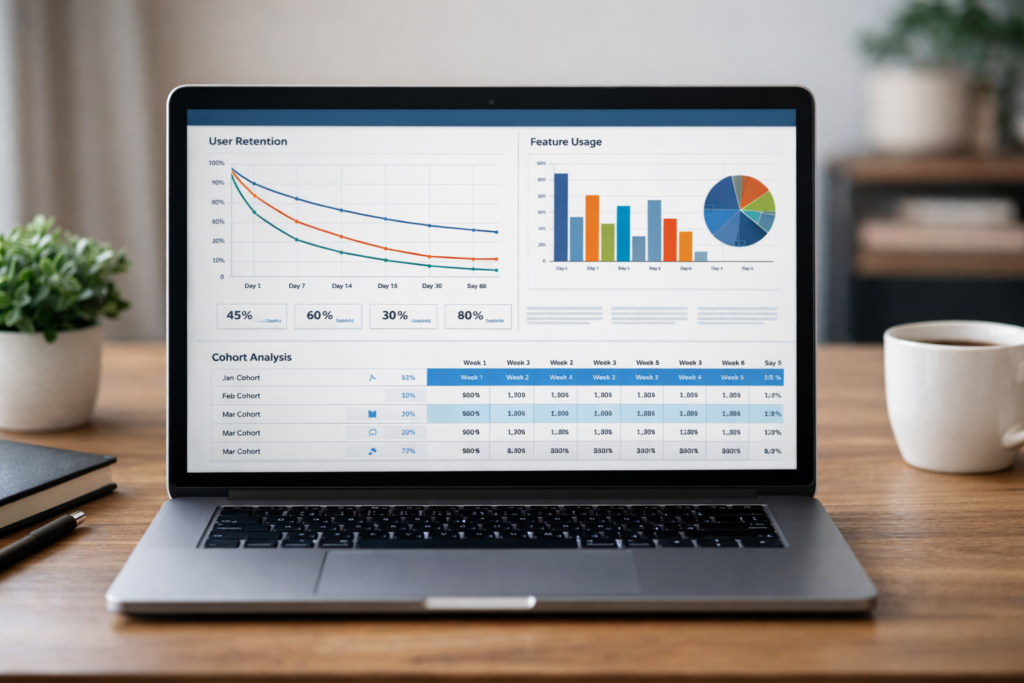
Product Analytics Metrics Every SaaS Should Track Signals That Matter SaaS growth rarely stalls because of a lack of features. It slows when teams lose sight of how real users interact with the product. Dashboards look busy, reports arrive on time, yet decisions feel reactive. This is where Product Analytics earns its place. Product Analytics focuses on behavior inside the product. It shows how users move, where they pause, what they repeat, and where they leave. For SaaS businesses, these patterns are often more valuable than revenue reports or campaign data alone. At Product Siddha, most analytics engagements begin with a single question. Which signals actually reflect product health? This article outlines the Product Analytics metrics every SaaS company should track, why they matter, and how they connect to real operational outcomes. Active Usage Metrics Daily Active Users and Monthly Active Users DAU and MAU remain foundational metrics in Product Analytics. They reveal how often users return and whether the product has become part of a routine. A rising user base with falling activity is an early warning sign. The ratio between DAU and MAU is often more telling than either number alone. A strong ratio suggests habitual use. A weak ratio points to shallow engagement. In a Product Siddha project involving a U.S. music streaming app, usage analysis showed a sharp gap between signups and weekly activity. By studying DAU trends by feature, the team discovered that users returned primarily for curated playlists, not social features. This insight redirected development priorities and improved retention without adding new acquisition spend. Activation Metrics Time to First Value Time to First Value measures how quickly a user experiences a meaningful outcome after signing up. In SaaS, this moment defines whether curiosity turns into commitment. Product Analytics tracks the actions that lead to that first success. It may be creating a dashboard, completing a setup step, or receiving a result. In a SaaS coaching platform analyzed by Product Siddha, activation time averaged eight days. Funnel analysis revealed that users stalled during data import. Simplifying that step reduced Time to First Value to under three days and lifted trial to paid conversions. Feature Engagement Metrics Feature Adoption Rate Not all features deserve equal attention. Feature adoption rates show which parts of the product users rely on and which ones remain unused. Product Analytics tools like Mixpanel or Amplitude allow teams to track usage by role, plan, or cohort. This prevents product decisions based on internal assumptions. In a ride hailing platform project, Product Siddha used feature level analytics to understand why a driver earnings view saw low usage. The data showed drivers preferred real time notifications over static reports. The interface was redesigned accordingly, increasing daily engagement among active drivers. Retention Metrics Cohort Retention Analysis Retention tells the long story of a product. Cohort analysis compares users based on signup period or behavior, showing how engagement changes over time. Product Analytics highlights when and why users disengage. This is far more useful than looking at churn numbers alone. In one Product Siddha engagement focused on full funnel attribution for a SaaS coaching platform, retention cohorts revealed that users who completed two sessions in their first week stayed three times longer than those who completed only one. This insight reshaped onboarding messaging and in app nudges. Engagement Depth Metrics Session Frequency and Event Volume Session counts and event frequency measure how deeply users interact with a product. A single login may signal curiosity. Repeated actions signal value. Product Analytics helps separate passive usage from meaningful engagement. High session counts with low event activity often point to confusion or friction. Metric What It Shows Why It Matters Sessions per user Visit frequency Habit formation Events per session Interaction depth Feature usefulness Avg session duration Focus time User intent Conversion Metrics Funnel Conversion Rates Conversion funnels show how users move from one key action to the next. This applies to onboarding, upgrades, renewals, or feature adoption. In a real estate platform project involving voice automation, Product Siddha mapped the journey from lead capture to site visit booking. Product Analytics revealed that users who engaged with voice follow ups converted faster than those relying on email alone. This allowed the team to double down on high intent channels. Revenue Linked Product Metrics Expansion and Usage Based Revenue Signals For SaaS models tied to usage, Product Analytics connects behavior directly to revenue. Metrics like seats used, reports generated, or API calls consumed reveal expansion opportunities. Rather than pushing blanket upsells, teams can identify accounts already showing growth signals. In a fintech marketing hub setup, Product Siddha used usage thresholds to trigger sales alerts only when accounts showed sustained product adoption. This reduced sales friction and improved close rates. Operational Metrics Error Rates and Performance Events Product Analytics is not limited to growth. It also protects reliability. Tracking error events, failed actions, and performance delays helps teams fix issues before support tickets spike. In a custom dashboard project, analytics revealed that slow load times correlated directly with abandoned sessions. Infrastructure changes improved both performance and engagement. Putting Metrics Into Practice Tracking metrics alone does not improve outcomes. Value comes from consistency, context, and ownership. SaaS teams should define a small set of core Product Analytics metrics tied to product goals. At Product Siddha, analytics implementations often focus on clarity over volume. Clean event definitions, reliable tracking, and shared dashboards matter more than complex reports. Measuring What Endures Product Analytics gives SaaS teams a way to listen without interruption. It captures behavior as it happens and reveals truths users may never articulate. The most effective SaaS companies track fewer metrics, but they track them well. They understand which signals reflect value, which predict growth, and which warn of risk. When Product Analytics becomes part of everyday decision making, products improve quietly and steadily. That kind of progress tends to last.