
Product Siddha

AI Automation

AI Automation, Blog

2026 Trends in Automation in the Real Estate Industry: How Product Siddha Is Leading the Shift

2026 Trends in Automation in the Real Estate Industry: How Product Siddha Is Leading the Shift Shifts Taking Shape The real estate industry has always moved with cycles, but the past few years have created a stronger push for operational clarity and dependable systems. As firms adjusted to new buyer behavior, higher technology expectations, and pressure for faster deal movement, leaders began to ask how much of their workflow could be automated without reducing the human connection that the property market depends on. This is the environment in which Automation in Real Estate became more than a technical idea. It turned into a central strategy for companies that wanted both stability and growth. By early 2026, the strongest trend is the shift toward targeted, practical automation rather than broad transformation projects. Real estate teams are no longer attracted to complicated systems. They want reliable tools that handle the repetitive parts of their process and open up more time for relationship building and on-ground work. Product Siddha has been building solutions in this direction for several years. The company’s work with real estate platforms, rental networks, and service marketplaces has shaped a fresh view of how automation supports day-to-day operations. Why Automation in Real Estate Matters in 2026 Automation in Real Estate now covers far more than basic lead routing. Teams are applying it across four consistent areas of need: Lead qualification and follow-up Buyer and tenant journey management Operational coordination between field and office Reporting and performance visibility In 2026, firms that use automation in these areas have noticed a steady lift in response time, higher lead engagement, and fewer missed opportunities. Instead of relying on memory or scattered notes, teams open their dashboard and see the exact state of each pipeline. Automation also reduces the operational load that often slows property teams. Many client service tasks repeat throughout the week. These routines follow predictable patterns, which makes them ideal for process automation and voice-led workflows. Example: Moving from Lead to Site Visit With Voice Automation A recent project by Product Siddha shows how practical automation can influence outcomes in real estate. The team partnered with a real estate platform that handled a large inflow of daily inquiries. Their challenge was not only the number of leads but the speed at which they needed to respond. Prospects often visited competing listings if the initial interaction was slow. Product Siddha built a voice AI workflow that managed the early part of the buyer journey. When an inquiry arrived, the system contacted the lead, confirmed interest, clarified requirements, and guided them to available appointment slots. The platform then connected the prospect with a field representative for the site visit. This is an example of Automation in Real Estate applied in a controlled, practical way. It removed delays in the early stages and helped the team convert more leads into physical visits. What made the solution effective was its grounded design. Instead of rewriting the entire process, Product Siddha automated the narrow segment that created the most friction. Core Trends Shaping Real Estate Automation in 2026 Trend 1: Conversational Workflows Replace Static Forms Prospective buyers and tenants rarely enjoy filling long forms. In 2026, conversational AI has become a preferred method for collecting early information. It feels natural and saves time. A simple example is an automated dialogue that asks: What type of property are you looking for What is your preferred location When would you like to schedule a viewing This approach reduces form abandonment and creates cleaner lead profiles. Trend 2: Unified Data for Faster Decisions Real estate firms often work with CRM tools, listing platforms, call tracking systems, and spreadsheets. Automation in Real Estate now focuses on joining these pieces into a single view. Product Siddha’s experience with custom dashboards for other industries helped shape similar solutions for property teams. When data sits in one location, decision making becomes faster. Leaders track site visits, lead sources, closure rates, and representative performance without switching systems. Trend 3: Automation That Helps Field Teams, Not Just Office Staff Many automation tools are built for office workflows, but field teams form the real backbone of the property sector. In 2026, firms have started using automation to help representatives stay organized during visits. Examples include: Automatically generated visit routes Appointment reminders sent to both agent and prospect Quick digital notes synced with the internal system This simple layer of support helps teams maintain consistency, especially during high-traffic viewing periods. Trend 4: Real-Time Insight Into Buyer Behavior Some real estate firms now use product analytics to understand how buyers navigate their website or mobile app. They follow patterns such as repeated searches for the same locality or frequent interest in mid-range inventory. These insights help teams prepare better recommendations. Product Siddha has handled product analytics for several digital platforms, including ride-hailing and SaaS coaching environments. These skills translate well for real estate players who want a stronger view of buyer behavior and funnel activity. Trend 5: Personalization Without High Operational Load Real estate buyers prefer listings that match their needs, but personalized recommendations require effort. Automation in Real Estate solves this by matching inventory with buyer preferences automatically. Systems scan location, budget, amenities, and past searches, then present relevant properties. It creates a tailored experience without increasing the workload for sales teams. Automation Area Typical Challenge Automated Result Lead Routing Slow response Immediate contact Appointment Setup Missed follow-ups Confirmed visit slots Field Coordination Manual scheduling Automated route and reminders Reporting Scattered data Unified dashboard Looking Ahead Automation in Real Estate in 2026 is less about reinventing the industry and more about refining the parts that slow teams down. Real estate professionals still rely on trust, presence, and personal guidance. Automation strengthens these qualities by giving teams more time for direct engagement. Product Siddha continues to support this shift with carefully designed systems that respond to real market needs. As firms move forward, the most successful ones will likely be those that adopt practical automation in


AI Automation, Blog

Top 10 Use Cases of Document Automation for Real Estate Teams in 2026

Top 10 Use Cases of Document Automation for Real Estate Teams in 2026 A Clear Need for Better Systems Real estate work depends on steady documentation. Every sale, rental, inspection, and visit request involves forms. These include agreements, disclosures, reports, and follow up notes. Many teams still handle these tasks by hand. As volume rises, small delays begin to affect the entire cycle. This is where document automation for real estate becomes practical. It brings order to the movement of information and gives teams more control over their daily work. Product Siddha has studied these patterns through several projects. One example is the voice AI automation created for a real estate platform. The team noticed that documents connected with property visits were always delayed. After reviewing the communication steps, they built an automated flow that gathered buyer details, produced a visit sheet, and logged records without manual work. This type of thinking forms the base of document automation. The following sections describe the ten most useful applications of document automation for real estate teams in 2026. 1. Automated Property Listing Packs When a property enters the market, agents must prepare description sheets, images, and standard disclosure notes. Automated systems can create these packs instantly once the basic details are added into the CRM. This reduces repetitive formatting and helps teams keep documents consistent. Image suggestion: A simple layout showing property details flowing into a document template. 2. Digital Agreements for Buyer and Seller Signatures Agreements often pass through many rounds of edits. Automation allows the system to store templates for each property type. Once names and figures are added, the documents are ready for review. Electronic signatures make the process faster and cleaner. 3. Lead Qualification Sheets Generated Automatically Lead records often sit untouched because agents are busy with field visits. Automated lead sheets collect all the essential details from forms or voice inputs. This helps agents review prospects without searching through multiple platforms. This method was similar to the approach used in Product Siddha’s project where a team built a lead engine after data restrictions blocked their previous system. The new automated sheets delivered accurate information with less manual effort. 4. Inspection Reports With Auto Filled Sections Property inspections follow a fixed structure. An automated form can store location details, property configuration, and standard checkpoints. Inspectors only update the points that change. This reduces errors and improves clarity. Section Manual Time Automated Time Property Details 10 minutes 1 minute Condition Checklist 20 minutes 5 minutes Final Notes 15 minutes 5 minutes 5. Document Routing Between Agents, Buyers, and Legal Teams When documents move through many people, tracking becomes difficult. Automation creates routing paths. Each document goes to the next person in the chain automatically. This avoids confusion about who must act next. 6. Automated Owner Updates and Monthly Reports Landlords often expect a clear record of visits, repairs, and payments. Automated systems collect the data and prepare monthly reports without additional staff hours. These reports can be sent on fixed dates. 7. Consistent Rental Application Packs Rental teams receive many applications each week. Systems can gather the details, validate fields, attach identity documents, and prepare a clean file for verification. This avoids mismatched formats and missing information. This practice resembles the work completed through Product Siddha’s automation system for MSC IMMO, a rental company in France. Their rental documentation improved in structure and accuracy through well planned workflows. 8. Automated Disclosure and Compliance Paperwork Real estate documents must follow state rules. Automation can store updated legal templates. When an agent prepares a file for a sale or lease, the system attaches the current legal forms automatically. This prevents the use of outdated documents. 9. Payment Receipts and Invoice Generation When booking amounts, deposits, or service fees are collected, teams often produce receipts by hand. Automated invoice tools prepare the documents instantly and store them in the customer record. This method removes the chances of mismatched numbers. 10. Automated Document Storage and Retrieval As businesses grow, document storage becomes harder to manage. Automation organises files into clear folders based on property ID, date, and document type. Search functions allow agents to retrieve any file within seconds. This improves coordination across departments. Practical Strengths of Document Automation for Real Estate Document automation brings order to large volumes of real estate paperwork. It reduces the need for manual checks and encourages consistent formatting. Teams gain a better view of their pipeline and can respond to clients without delay. It also removes the risk of misplacing crucial forms. Product Siddha has observed this improvement in various industries while working on analytics, dashboards, and automation. The custom dashboard solution created for a multi stage system showed how careful organisation can guide teams. That same structure supports real estate workflows as well. Use Case Table for 2026 Use Case Benefit Listing Packs Faster preparation Digital Agreements Clear editing and signing Lead Sheets Better qualification Inspection Reports Reduced repetition Routing Clear workflow steps Owner Reports Scheduled summaries Rental Packs Uniform structure Compliance Forms Updated legal files Invoices Accurate records Document Storage Immediate retrieval A Reliable Path Forward Document automation for real estate gives teams the space to focus on client communication and field work. It removes repetitive tasks and encourages stronger organisation. The results become clearer and easier to track. Many teams across sales, rentals, and property management now consider automation a core part of their operations. Product Siddha continues to build systems that follow simple principles. The work stays practical, steady, and grounded in observation. This approach supports real estate teams as they move toward more structured processes in 2026.

AI Automation, Blog

Why Product Siddha Is the Most Reliable Automation Service Provider Company for Growing Businesses

Why Product Siddha Is the Most Reliable Automation Service Provider Company for Growing Businesses A Steady Shift Toward Practical Automation Many businesses today reach a stage where manual effort can no longer support growth. Teams spend long hours moving data, monitoring activity, or preparing reports that could be handled with a well planned system. The need for a reliable automation service provider company grows from this point. Product Siddha has gained trust in this area because of its careful planning, clear execution, and ability to work across different industries. Automation is not only a tool. It is a method that allows organisations to build predictable systems. It helps in reducing errors, improving visibility, and supporting teams with better decision making. The work becomes more organised, and the results become easier to measure. How Product Siddha Approaches Automation Product Siddha follows a pattern that removes unnecessary steps and ensures dependable results. Each automation project begins with a study of the current process. Teams observe how information moves, where delays occur, and how often work is repeated. Only after this, the plan is shaped. The company works on CRM setup, lifecycle workflows, product analytics pipelines, reporting dashboards, and full scale marketing automation. These activities fall under a broader category known as automation in operations. The work stays practical, measured, and clear. Examples From Real Work 1. Voice AI Automation for a Real Estate Platform A real estate platform needed a way to manage property visit requests. Their support team was spending hours calling buyers and confirming time slots. Product Siddha created a voice AI system that called leads instantly, gathered information, and arranged the final visit. This change reduced the time spent by support agents and improved the number of qualified visits. 2. Lead Engine Setup After Apollo Restrictions When Apollo limited data access, one organisation could not continue its outbound work. Product Siddha built an independent lead engine using alternate enrichment sources. The team added automation for validation, scoring, and routing. The system now delivers daily lead batches without relying on a single tool. 3. Mixpanel Analytics for a U.S. Music App A music application needed clarity on user behaviour. Product Siddha deployed Mixpanel as a full stack analytics platform. Automation was added for event tracking, segment reporting, and funnel comparisons. This allowed the product team to understand the impact of each feature release with stronger accuracy. What Makes a Reliable Automation Partner Clear Structure Automation works only when the structure is simple. Product Siddha breaks complex workflows into steps that can be controlled. This avoids confusion and keeps teams aligned. Stable Execution The company focuses on systems that continue working without daily attention. Engineers create checkpoints to prevent failures. Monitoring rules are added to alert the team when something breaks. This offers long term reliability. Industry Flexibility The team has worked with real estate, fintech, retail, SaaS, media, logistics, and investment firms. This wide exposure helps them recognise patterns across industries. It also helps in designing automation with fewer mistakes. Case Study Table Case Study Category Result AI Automation for MSC IMMO Real Estate Rentals Faster property workflows Custom Dashboards by Stage SaaS Better team visibility Email Revenue Growth with Klaviyo E-commerce Higher repeat orders Product Analytics for Ride Hailing App Mobility Clearer funnel behaviour AI for AgriTech VC Fund Investment Improved lead screening A Look at Long Term Benefits Businesses that adopt automation early enjoy stronger growth patterns. The work becomes more consistent. Reporting becomes trustworthy. Teams gain time to focus on planning rather than chasing routine tasks. Automation also supports accuracy in decision making. When systems collect data automatically, leaders can observe real trends instead of relying on scattered notes or outdated sheets. Why Growing Businesses Trust Product Siddha Product Siddha stays consistent in its methods. The team listens carefully before creating a solution. The work is tested thoroughly. Clients receive clear documentation that helps them understand their own systems. This avoids confusion and reduces dependency. One example can be seen in the HubSpot Marketing Hub setup for a fintech brand. Product Siddha organised lifecycle stages, deal automation, contact scoring, and reporting rules. The company gained a proper view of its sales activity for the first time. This clarity improved team coordination. The company does not build systems that disappear after delivery. The team remains accessible for improvements, audits, and future phases. This continuity builds trust. A Final Reflection Reliable automation grows from patience, structure, and examination. Businesses that invest in these systems build stronger operations. Product Siddha has learned from years of multi-industry work and continues to refine its methods. This is why many organisations consider it the most dependable automation service provider company for long term growth.

AI Automation, Blog

9 Real Estate Workflow Automation Ideas to Drive Business Growth

9 Real Estate Workflow Automation Ideas to Drive Business Growth Practical Ways to Automate Real Estate Workflows Real estate transactions are shaped by timing, coordination and data. A single delay in documentation or communication often results in lost revenue or customer dissatisfaction. This is why many property companies are now moving away from manual processes. They are adopting real estate automation to improve workflows and reduce routine effort. A well structured automation strategy gives property firms a reliable way to organize records, respond to inquiries, manage leads and control property tasks. It removes unnecessary manual steps and gives teams more time to focus on growth. The ideas below provide a practical view of how real estate businesses can apply automation for day to day operations. 1. Automatic Lead Capture and Routing Real estate firms receive inquiries from several channels. It becomes difficult to track these manually. Real estate automation helps capture leads from websites, ads and referrals without additional work from the sales team. Leads are organized in one place and assigned based on availability or location. For example, Product Siddha once designed a lead system that replaced a blocked Apollo instance. The new solution created a steady pipeline of inquiries and improved visibility across teams. The value came from a structured workflow rather than complex technology. 2. Automated Email Follow Up A customer inquiry loses value when left unanswered. With automation, follow up emails, reminders and appointment confirmations can be sent in a consistent pattern. Teams no longer need to remember every conversation. They can focus on qualified buyers and tenants. This improves response times and gives customers the assurance that their queries are being handled. 3. Task Reminders for Property Management Real estate involves several operational tasks. Rent reminders, maintenance visits, renewals and inspections need timely action. Real estate automation makes this predictable. Each task is tracked and scheduled. Reminders are sent to the assigned person and the system records the completion. It reduces mistakes and improves accountability. 4. Document and Contract Automation Agreements and property documents can take time to prepare. Manual handling also increases the risk of errors. Document automation tools generate standardized templates. They help collect signatures and track approval. This improves the speed of closing a deal and prevents missing paperwork. 5. Centralized Property Information Companies often store property data in different places. This leads to confusion and delays. Automation gives a single source of information for property listings, images, pricing, unit specifications and tenancy details. It keeps all departments aligned and ensures that updates are made only once. This type of information automation is similar to how Product Siddha builds analytics and dashboard systems for other industries. The platform approach helps businesses understand activity and performance. 6. Payment and Rent Collection Automation Real estate firms deal with recurring payments. Managing these manually is time consuming. Automation helps schedule and track rent payments, maintenance charges and invoices. It notifies customers in advance and updates records automatically. This also provides property owners and managers a clear view of overdue accounts. 7. Customer Communication Workflows Communication between buyers, tenants and property managers is often fragmented. Real estate automation organizes communication into structured workflows. It schedules appointments, sends reminders, shares updates and confirms availability. Communication becomes more predictable and less dependent on memory. It also improves the customer experience. 8. Reporting and Decision Making Real estate firms need regular insight into occupancy, revenue, inquiries and asset performance. Automation helps generate dashboards and reports that update in real time. It removes experimentation and gives management a steady basis for decision making. This approach is similar to Product Siddha’s work on dashboards and analytics for other industries. With consistent reporting, teams have better control over operations. 9. Workflows for Sales and Renewal Cycles Sales and renewal cycles include several steps. They can be planned in advance. Automation tools help create structured workflows. Each stage is defined and tracked. Customers receive communication at the right moment. This reduces manual work and improves closure rates. Real estate automation is valuable because it supports growth without adding additional staff. Automation Benefits for Real Estate Operation Manual Method Automated Method Lead management Tracking manually One system for all leads Payments Paper and manual follow up Scheduled and tracked Property data Spread across files Centralized records Tasks Memory based Automated reminders Reporting Periodic effort Real time insights Why Automation Strengthens Real Estate Growth Many firms see automation as optional. In practice, it quickly becomes a central operational tool. It supports consistency and improves customer experience. It also helps teams manage work across multiple locations. Automation prevents common errors and gives every department better visibility into property performance. It is a foundation that helps companies scale. How Product Siddha Supports Real Estate Firms Product Siddha has worked across several industries to design automation solutions that improve operations and sales. The expertise includes analytics, dashboards, AI workflows and system design. For real estate companies, this capability helps build structured systems for lead management, property tasks and communication. The outcome is steady growth over time through dependable systems. Moving Forward with Real Estate Automation Real estate automation also brings stability to daily workflow management. It reduces errors that appear when multiple systems and teams handle the same information. Tasks like lead follow up, appointment scheduling and property evaluation move through a clear cycle without the need for repeated manual work. Real estate companies gain more time for negotiation, customer relationships and closing more deals. Automation also creates predictable outcomes across different market situations. When processes are consistent, decision making does not depend on individual habits or memory. It becomes possible to compare performance across listings, branches and client types. Teams track results in a structured way and identify which practices produce the strongest growth. The result is a more disciplined environment where the company can scale with confidence.

AI Automation, Blog

When Real Estate Property Management Needs More Than Manual Work

When Real Estate Property Management Needs More Than Manual Work The steady growth of rental units and commercial buildings has changed the way property owners and managers work. The traditional operating model depended on long checklists, repeated manual tasks and daily follow ups across several departments. Today many property firms have reached a stage where human attention alone is insufficient to meet tenant expectations and business pressure. AI and custom software provide a clear path to structure property management in a more exact and predictable way. Property management companies face a unique mix of recurring tasks. Tenant onboarding, maintenance, rent collection, scheduling, documentation and finance run at the same time. Many of these activities follow repeated patterns. These patterns can be mapped and automated with AI-driven systems. When this shift happens, teams focus on decision making instead of repetitive admin work. Where Most Real Estate Operations Struggle There are a few common breakpoints in property management across Indian real estate firms-builders, brokers, co-living, and rental management agencies: Lead flow comes from many parallel channels (99acres, MagicBricks, website forms, WhatsApp, channel partners) and is difficult to track. Tenant requests and maintenance tickets are not always handled on time. Documents, agreements and inspection reports are scattered across several platforms. Owners lose visibility into payment, vacancy and renewal cycles. Manual communication slows down customer experience. There is no single source of operational truth. Many real estate firms try to solve these problems by adding more people or tools. The outcome is usually a heavier workload. Businesses need systems that reduce operational friction instead of adding to it. What AI Brings to Property Management Artificial intelligence is now practical for daily operations. The most visible impact is the ability to identify patterns and act before problems appear. Property teams can rely on AI for: Automated rent reminders and payment follow ups Predictive maintenance requests Lead scoring and tenant profiling Intelligent scheduling Market price evaluation Automated WhatsApp conversations for buyer/tenant queries Chatbots connected to property listings and inventory This does not replace operational staff. It raises efficiency. Once an automated workflow is set, it does not forget or skip steps. This allows property firms to manage more units without proportionate increase in cost. When Custom Software Becomes Necessary Many real estate firms begin with popular applications. Then they discover every region and tenant segment follows different operational patterns. Custom software becomes useful when: Leads must be routed from multiple sources (MagicBricks, 99acres, website, WhatsApp) Rental agreements need local compliance Market conditions change frequently Visit scheduling and inventory queries require automation Reporting needs better business context A custom platform allows control over workflows. Teams gain visibility into the entire property lifecycle and avoid long-term cost created by disconnected tools. Common Use Cases in the Indian Market Automated lead routing from 99acres/MagicBricks to CRM Chatbots answering property questions 24/7 and booking site visits WhatsApp + IVR workflows for queries, updates and reminders Digital onboarding, KYC and rental agreement management Predictive ticketing for maintenance issues Scheduled rent reminders and online payment workflows These examples create predictable improvements. Together they produce a stable and scalable operating model. Manual Tasks That Are Easy To Automate Area of Work Traditional Method Automated Method Lead Management Manual entry Single CRM pipeline Rent Collection Phone reminders AI reminders Document Handling Physical + email Digital classification Site Visit Booking Phone calls Automated scheduler Maintenance Notes & phone Ticketing workflow A Practical View of Integration Most property businesses start with the same question: Will automation replace what we do? The answer is no. Good automation works as steady support. It connects tenants, managers, owners and contractors into a single system. The most successful projects follow a step-by-step approach: Study existing operations Identify repetitive tasks Start with simple workflows Add dashboards for visibility Improve the model over time This preserves the human role while strengthening business structure. A Calm and Efficient Future For Property Management Artificial intelligence and custom software give real estate companies a way to run operations with fewer interruptions. Instead of constant supervision, systems guide routine work. Teams focus attention on better property experience, customer satisfaction and long-term value. Firms that make this shift early do not only save time. They build better control and a stronger foundation for growth. Why Product Siddha Fits Well Into This Landscape Product Siddha works with real estate, technology firms and digital product companies through analytics, custom dashboards, full funnel tracking and AI automation. The benefit is not software alone. It is the ability to combine thought, engineering and implementation. Property management firms often need this combination to build a stable and predictable system.

AI Automation, Blog

AI SDR Agents That Do More Than Send Messages

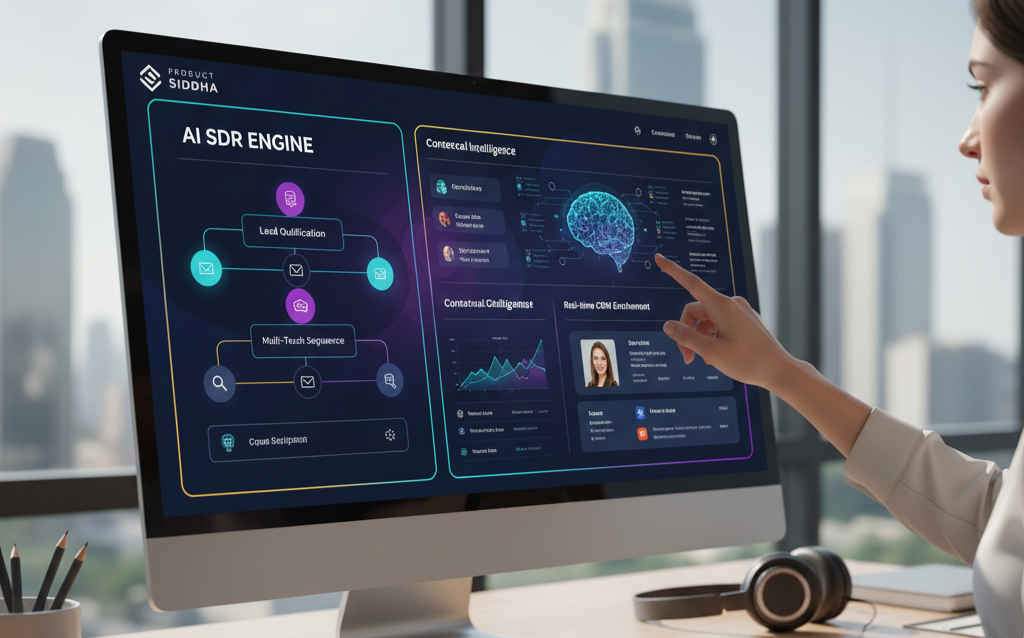
AI SDR Agents That Do More Than Send Messages Rethinking Lead Generation Many sales processes fail not because companies lack good leads but because they treat outreach as a repetitive chore. In the past, SDRs were asked to follow rigid scripts and send large batches of emails. Today’s environment demands a different approach. Buyers expect thoughtful, relevant, and informed outreach. They respond to conversations that understand their problems and adjust as the dialogue progresses. This shift has produced a rise in intelligent SDR systems. These are not the typical tools that simply automate cold messages. They behave like skilled representatives who understand context, track behavior, and handle objections. This evolution matters for businesses and for Email Marketing Companies that must integrate sales and lifecycle communication into the same system. What an AI SDR Should Actually Do An effective AI SDR system moves beyond outreach. It plays an active role through the early phases of a deal. The most practical systems handle tasks such as: Lead qualification across channels Managing replies, objections, and follow up Data entry and CRM enrichment Multi-touch outbound sequences Handing warm leads to the sales team The goal is not only to send more messages. The goal is to remove repetitive work from sales teams so they can focus on real conversations. This is where many AI systems fall short. They stop at automation and do not help move leads through the pipeline. What Makes a High-Performing AI SDR Engine A strong AI SDR system contains three layers of capability. 1. Contextual intelligence The system understands user profiles, industry language, and timing. It reads signals before sending a message. It adjusts tone when a lead asks a question and adapts when a prospect shares new information. 2. Operational precision It manages lists and outreach sequences without errors. It updates CRM fields. It tags leads by sector and buying stage. 3. Learning and improvement It does not repeat the same outreach pattern forever. It learns what converts, what fails, and what messaging encourages a response. The winning systems mirror human reasoning while maintaining consistency across thousands of conversations. A Real Case in Point Product Siddha worked on a project that required building a complete outbound engine after direct access to a popular prospecting platform was removed. The challenge was not just finding a new source of leads. We built an intelligence layer that filtered and qualified leads, tracked replies, and triggered the correct follow-up action. This was not only automation. It required planning, classification logic, user behavior mapping, and custom enrichment. The result was an SDR engine that continued generating conversations and appointments even when a primary channel was no longer available. That project demonstrated that strong SDR systems do more than send messages. They protect the pipeline when conditions change. Why Outreach Alone Is Not Enough Many companies still believe that outbound success depends on sending a high volume of messages. It often leads to the opposite result. Prospects ignore messages that lack context. What works better is a system that behaves more like a consultant. It asks questions. It notes objections. It adds context from previous interactions. This mindset is common among the best Email Marketing Companies as well. They treat communication as a long-term process rather than a broadcast tool. When outreach is part of a larger engagement system, it becomes more credible and more predictable. Comparison Table Basic SDR Automation High Performing AI SDR Engine Sends volume messages Evaluates lead intent Triggered by static rules Adjusts based on conversation No personalization Uses profile and context Works on a fixed schedule Responds when prospects interact Limited data capture Enriches CRM and keeps history Where AI SDRs Fit Into the Sales Operation Every successful sales team depends on three functions. Identifying opportunities Qualifying them with context Handing them off to closers AI SDRs are now strong candidates for the first two steps. They free sales teams from repetitive tasks and provide cleaner data. They also lower the cost of outbound programs. This is also where voice bots play a growing role. Modern AI voice SDRs can handle qualification calls, book meetings, answer objections, and route high-intent leads to the sales team-without requiring manual dialing. They simulate human conversations, extract intent, and trigger automated next steps inside CRM or email workflows. When connected with lifecycle systems and customer analytics, voice bots and AI SDRs together become more powerful than a traditional outbound team. The Role of Email Marketing Companies in This Shift Customers no longer evaluate companies only on the first message. They evaluate the entire sequence of communication. Email Marketing Companies that understand lifecycle automation can help integrate AI SDRs into the broader funnel. This ensures that outbound conversations lead into post-sales flows such as onboarding, retention, and re-engagement. When outbound systems and lifecycle systems work in parallel, businesses see better return on investment. This is because conversations do not end when a lead replies. They continue through a structured journey. Final View AI SDR systems will shape the next decade of sales. They do not replace people. They support them. They handle the repetitive tasks while allowing sales teams to work on relationships. When backed by thoughtful planning and strong analytics, these systems can change how companies generate demand. Product Siddha builds SDR engines through that principle. The goal is to create intelligence that understands customers and moves them through the funnel in a structured way. This keeps outreach relevant even when conditions change.

AI Automation, Case Studies

From Lead to Site Visit – Voice AI Automation for a Real Estate Platform

From Lead to Site Visit – Voice AI Automation for a Real Estate Platform Client Confidential (Fast-growing Property Management / Real Estate Aggregator in South India) Service Provider Product Siddha Industry Real Estate Service AI Automation Services / Voice AI for Real Estate The Problem: Too Many Inquiries, Not Enough Humans Our client is a rapidly growing real estate aggregator in South India. They receive thousands of property inquiries every month from their website, WhatsApp, 99acres, and Magicbricks. But here was the real challenge: Human agents were overwhelmed by repetitive questions “Is this available?” “What is the rent?” “2BHK in HSR?” – same questions all day Agents missed calls and delayed responses Many leads came at odd hours Too much time was spent filtering serious buyers from casual ones The result was lost leads, slow replies, and too much manual effort. They needed a way to automate qualification and bookings without losing a personal touch. The Solution: A Digital Leasing Assistant That Handles Everything Product Siddha designed a Voice AI system that works like a real leasing agent. Not a bot. Not a script. A smart Digital Leasing Assistant that understands context and responds naturally. Here’s how it works: 1. Context-Aware Conversations The AI knows where the lead came from and acknowledges it: Website WhatsApp Property listing links It instantly recognizes the property and starts the conversation. 2. Smart Interruption Handling In the test video, the customer suddenly asked: “Do you have anything in Sipani Viveza?” The AI immediately switched context and spoke about that exact building. 3. Real-Time Database Lookup It checks availability in real-time and even suggested alternatives: HSR Layout Marathahalli Other matching properties This removes the back-and-forth humans struggle with. The Wow Moment: The AI Negotiated and Upsold This was the most powerful part of the interaction. The customer had a budget of ₹40,000. The property they wanted was ₹45,000. Instead of rejecting the lead, the AI said: “The rent for this property is ₹45,000, which is slightly above your budget. Would you still be interested?” The customer said yes and accepted the price difference. No human intervention. No negotiation stress. This showed the AI could sell, not just support. The Conversion: Appointment Booked Automatically Once the customer showed interest, the Digital Leasing Assistant moved into conversion mode: Confirmed date & time Collected name, phone, email Booked the site visit Sent confirmation by SMS/Email It handled the complete pipeline from question → price discussion → qualification → booking. All without a human. The Outcome: Faster Responses, Better Conversion This Voice AI became the first touchpoint and the qualification engine. Key Wins 24/7 agent availability Human workload is drastically reduced Instant answers for availability, pricing, and alternatives Serious buyers only – filtered before they reach the sales team Professional, polite, and consistent tone every time Business Impact No missed leads Faster conversions Zero wait time High-quality appointments Pull Quotes (From the Conversation) “I found a 2BHK… However, the rent is 45,000, which is slightly above your budget. Would you still be interested?” “I have noted your preferred time. I will now proceed to book this site visit for you.” Conclusion: AI That Automates Real Estate Conversions This project proves how Product Siddha’s Voice AI Automation can turn inbound inquiries into qualified site visits with zero effort. From natural conversations to smart negotiation and perfect scheduling, the Digital Leasing Assistant removes the human bottleneck and boosts conversions. If you want to automate real estate leasing workflows, Product Siddha can do it for you.

AI Automation, Blog

How AI is Rewriting the Rules of Product Discovery in 2026

How AI is Rewriting the Rules of Product Discovery in 2026 A New Starting Point Product discovery has always depended on a careful search for real needs. Teams observed users, studied patterns, and tested ideas through slow cycles. The arrival of stronger AI automation has changed this rhythm. By 2026, product discovery has moved from being an early stage research task to a continuous system that behaves more like a living structure. Companies that learn to work with this new structure gain a clearer view of what people want and why they choose certain paths. Product Siddha has seen this shift while supporting firms that handle large volumes of data. The patterns point toward a future where discovery relies on steady observation, automated analysis, and human judgement working together. Signals Taking the Lead Modern product teams receive more signals than ever before. These signals come from app interactions, support conversations, search behaviour, trial usage, and simple movement across screens. Years ago, teams struggled to translate such signals into meaningful insights. Today, AI automation provides an early layer of structure that transforms scattered information into organised groups. For example, when Product Siddha worked on full-stack Mixpanel analytics for a U.S. music app, the team saw how automated clustering brought together patterns that were difficult to see with manual review. Listeners who appeared unrelated at first showed similar habits once the system grouped their actions. This clarity helped the product team test features that matched these behaviour groups. Patterns Emerging Faster After signals come patterns. Automated systems do the first pass, scanning for repetition and movement. Human reviewers handle the second pass, asking questions about what these patterns truly mean. This dual method saves time and reduces errors that come from fatigue. Many firms now treat pattern detection as a constant task. They no longer wait for quarterly reviews to study user behaviour. Instead, they receive pattern updates each week through automated dashboards. Product Siddha has built similar dashboards for clients in different industries. Once these dashboards are in place, teams discover that product opportunities appear sooner and with more clarity. A short table helps summarise the contrast. Product Discovery Workflow Before and After Widespread AI Automation Stage Earlier Approach Current Approach Signal gathering Manual collection Automated capture with steady updates Pattern detection Limited by analyst hours Automated clustering and grouping Insight formation Slow interpretation cycles Weekly or biweekly review with human judgment Experiment selection Broad and uncertain Narrower and informed by clearer signals This change is shaping how teams decide what to build next. Sharper Understanding of User Intent Another major development in 2026 is the rise of intent analysis. Tools now read not only what users do but how they move across tasks. They detect early hesitation, interest, and quiet abandonment. This provides a practical picture of what people actually want. In one case, a ride hailing app studied with Mixpanel showed that users often paused at a specific point before completing a ride request. Automated tools detected this behaviour during a late hour time window. The team later discovered that unclear pricing at night caused uncertainty. Once this became clear, they tested a simple display change. Retention improved shortly after. This example shows how intent patterns guide discovery with more precision. Reduced Risk Through Faster Experimentation With stronger discovery comes faster experimentation. AI automation makes it possible to set up experiments quickly, measure them continuously, and retire weak ideas before they consume resources. A small team with limited support can now run more trials than larger teams could ten years ago. One case from Product Siddha illustrates this. While supporting an AgriTech and FoodTech VC fund, the team helped automate parts of the evaluation process for early stage products. Instead of relying only on long reports, the system presented small performance indicators drawn from early usage. This helped the fund reduce the risk of investing in ideas that had no real traction. This same principle applies to product teams inside companies. Discovery is no longer a slow study. It is a rotation of trials guided by constant measurement. Personalisation With Greater Discipline Another rule changing through AI automation is the approach to personalisation. Earlier methods often relied on broad segments. The new approach uses behaviour groups that shift over time. Discovery depends on understanding which groups form, grow, and fade. For instance, when Product Siddha built the world’s first AI powered networking assistant, early personalisation was based on simple categories. As more signals flowed into the system, user clusters changed shape. AI automation helped update these clusters daily. This kept the experience natural for users and helped the product team spot where new features were needed. Agencies and companies that follow similar practices gain an advantage in planning development cycles. More Cross Functional Participation As AI automation handles the early steps of discovery, more people within the company can participate in the process. Data is no longer stored in long reports that only analysts can read. It is presented in clear dashboards and simple charts. This encourages design, engineering, sales, and support teams to take part in product decisions. Their input leads to stronger hypotheses because they understand context that data alone cannot reveal. When Product Siddha built custom dashboards by stage for clients, this cross functional habit became easier to adopt. Preparing for the Future As 2026 unfolds, the rules of product discovery will continue to evolve. Teams that adopt these practices early will adapt faster to user expectations. Key actions include Use automated systems for early pattern detection. Combine machine driven grouping with human judgement. Review signals weekly rather than quarterly. Encourage cross functional involvement in interpretation. Treat product discovery as a continuous system instead of a temporary stage. AI automation does not remove the need for careful thought. It strengthens the foundation on which thought can work. Product teams that blend structure and insight will steer their products with more confidence. A Forward View Product discovery in 2026 feels more dynamic than at any earlier

AI Automation, Blog

How AI Is Changing the Freelancer Economy: What Agencies Must Prepare For

How AI Is Changing the Freelancer Economy: What Agencies Must Prepare For A Changing Landscape The freelancer economy has grown steadily during the last decade, and its rhythm now shifts again with the arrival of stronger automation. Independent professionals have begun to adjust their work habits as tools powered by AI automation reshape how tasks are planned, delivered, and priced. For agencies, the shift is more than a trend. It is a structural movement that affects staffing models, project timelines, and client expectations. Product Siddha has studied these changes closely while working with companies that needed deeper systems for productivity and reporting. Clear patterns now point to what agencies must prepare for as 2026 approaches. Workflows Moving Toward Hybrid Execution A common sight in the past year is a freelancer who blends manual judgment with automated steps. A designer uses automated drafts, then completes final refinements by hand. A researcher begins with automated summaries before examining source material line by line. This hybrid workflow is becoming a stable path for many professionals. Agencies have noticed that this mix can increase speed when the foundation is well planned. One case from Product Siddha illustrates the point. The team supported a French rental agency that needed stronger lead qualification. Automated routing and enrichment reduced repetitive checks while allowing staff to focus on tenant quality. The same pattern appears in many freelance categories. Repetitive tasks are shrinking, but judgment driven tasks remain steady. A short table helps explain the shift. Common Tasks Before and After Widespread AI Automation Task Type Earlier Approach Current Approach Data gathering Manual search and copy Automated extraction with human review Draft creation Manual from scratch Automated first draft then manual refinement Lead routing Manual sorting Automated rule-driven scoring Performance reporting Spreadsheet heavy Automated dashboards with human insights Agencies that work closely with freelancers observe that hybrid models can cut delivery time while improving consistency. This change affects team planning. Fewer hours are spent on prep work. More emphasis is placed on accuracy, interpretation, and long term thinking. New Expectations From Clients Clients now expect faster delivery schedules when AI automation enters a project. They may not always understand the effort behind final refinement, but they notice that early drafts arrive quickly. Agencies must prepare communication guidelines that explain how automation supports the process without promising unrealistic speed. One example comes from a U.S. music app that worked with Product Siddha to use Mixpanel analytics. The platform gathered large volumes of user data. Automation helped compile and present this data, yet the interpretation still required a steady hand. Agencies today must adopt similar clarity when speaking to clients about what AI can do and what it cannot replace. Shifts in Pricing Models Pricing in the freelancer economy is beginning to bend toward value rather than pure time. Automated tools finish certain tasks rapidly. This can cause confusion when older hourly pricing structures remain in place. Agencies that hire or manage freelancers should adjust their pricing approaches so they reflect the final outcome, not the minutes spent on each step. Some freelancers now offer blended prices. For instance, a writer may charge a fixed amount for research because automated extraction helps them gather information faster, but charge a separate amount for narrative refinement. Agencies should prepare similar models that make sense to both clients and contractors. Greater Importance of Data Literacy Freelancers who understand data have an advantage today. Many projects include some form of measurement, even in fields that previously relied on intuition. A designer now follows user behaviour reports. A content specialist studies click movement patterns. A marketing assistant learns simple attribution principles. Product Siddha noticed this need while building custom dashboards for several clients. When data is presented clearly and updated automatically, individuals making decisions can work with more confidence. Agencies that train freelancers in basic data reading will produce better outcomes and improve long term relationships. A Practical Example of Change Consider a small learning platform that wants to grow subscription purchases. Five years ago, the agency managing this platform would assign researchers, writers, and analysts who worked manually across the funnel. Today, much of the early funnel activity can be automated. Lead scoring can be managed by rule based systems. User journeys can be tracked using standard analytics tools. Writers may begin with automated ideas and then refine them. Designers can use automated layout suggestions before applying their judgement. Rising Need for Strong Coordination Although automation reduces repetitive tasks, it increases the need for coordination. With faster drafts and richer data arriving at once, agencies must organise how freelancers interact with each stage of the project. Without this structure, early speed is lost during later confusion. Product Siddha solved a similar issue when creating full funnel attribution for a SaaS coaching platform. Automated data arrived rapidly, and the team built a structure where each stakeholder received only what they needed for their part of the workflow. Agencies that use freelancers can follow the same practice by defining clear checkpoints and communication lines. Preparing for 2026 Several steps will help agencies prepare for the next two years. Build a stable core of AI automation practices rather than scattered tools. Train freelancers in basic data literacy. Adopt pricing models that reflect value rather than time. Strengthen client communication, especially on boundaries of automation. Keep human judgement at the centre while using automation for speed and structure. These measures grant agencies flexibility during a period of steady change. The freelancer economy will continue to rely on individual skill. At the same time, automation will guide how work is divided and delivered. A Clear Path Forward Automation will not remove the need for freelancers. It will change their tools and clarify their roles. Agencies that learn to combine human insight with automated support will be stronger in the years ahead. Product Siddha continues to study this evolution closely as it helps companies adopt practical AI automation systems. Agencies that prepare today will meet demand confidently when these changes

AI Automation, Blog

The 2026 Blueprint for Scaling Subscription Businesses With Automation

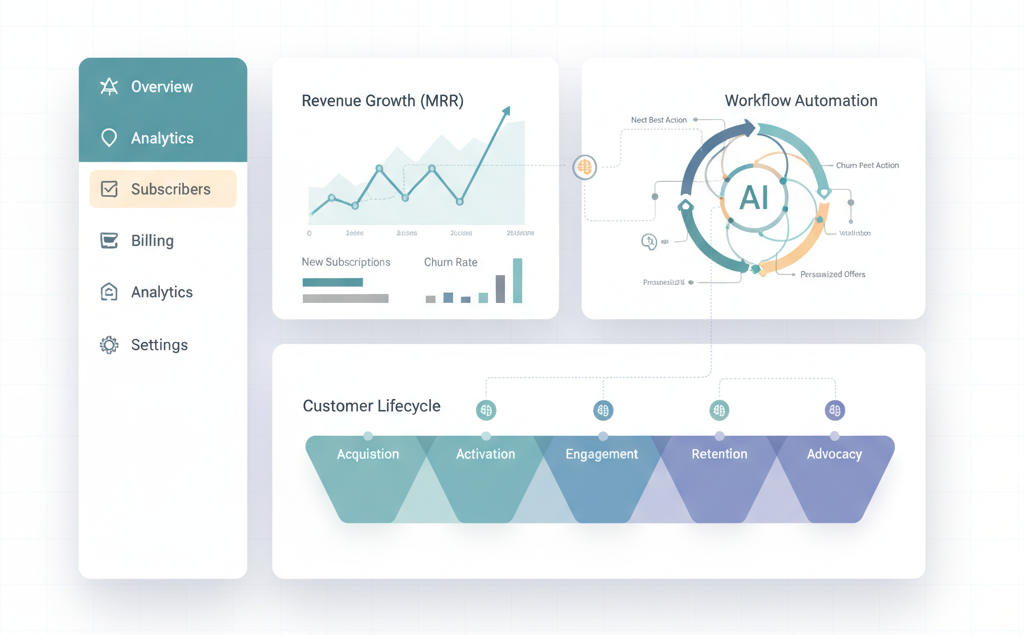
The 2026 Blueprint for Scaling Subscription Businesses With Automation Setting the Stage Subscription companies once grew by widening their product lines or introducing modest incentives for returning users. The landscape has changed. Rising acquisition costs, frequent competition, and unpredictable consumer behavior have made steady growth more complex. Many firms now turn to structured automation to control their operational systems and improve customer experience. This shift explains why interest in AI Automation Services continues to increase among subscription providers across software, media, health programs, professional learning, and retail memberships. Companies today face several consistent questions. How can we prevent customer fatigue? How can we predict usage patterns early? And how do we reduce churn across the entire lifecycle instead of reacting to it at the end? Automation offers an answer that feels practical and durable. A Look at Real Practice Product Siddha has worked with several firms that needed systematic improvement in user flows and data organization. One example involved a French rental agency known as MSC IMMO. Their team struggled to keep pace with incoming requests from tenants and owners, which delayed responses and weakened satisfaction levels. Structured workflows built with AI Automation Services replaced many repetitive communications and enabled the team to focus on more delicate conversations. The results included shorter resolution times and a clear rise in renewal interest. This example demonstrates an important idea. Automation is not a shortcut that weakens relationships; it is a tool that enhances them. It serves as a stable framework that maintains consistency while people handle the tasks that require judgment and care. Why Subscription Models Benefit From Automation Subscription companies move through a predictable cycle. They must attract users, help them reach value quickly, maintain steady engagement, and nurture long term loyalty. Any weak point in this cycle disrupts revenue. Automation helps these firms repair gaps with fewer resources. Below are areas where the impact is most visible. Onboarding and Activation New customers expect a simple start. Automated onboarding sequences can present essential steps in a clear order. They can guide users through setup, supply educational notes, and trigger account checks when a user falls behind. This reduces early abandonment. An onboarding flow may include items such as Welcome message Account verification First action prompt Feature walkthrough Usage reminder Even modest improvements at this stage influence long term retention. Billing and Renewal Billing tasks follow a structured pattern. Automation can manage recurring charges, failed payments, grace periods, and renewal reminders. This helps firms recover revenue that might otherwise be lost. Subscription companies often discover that a large portion of churn results from card failures rather than dissatisfaction. Automated billing communication prevents these unnecessary losses. Customer Engagement AI powered recommendations can shape the experience of every user. A reader might receive content suited to previous topics. A fitness customer might see routines that match earlier sessions. An educational platform might suggest lessons that fit a student’s pace. When these suggestions occur at the right moment, the customer feels guided rather than pressured. Support and Issue Resolution Automation handles many early support questions before a ticket reaches a human agent. This saves time for both sides. When a matter requires personal attention, the support team receives the essential information without asking the customer to repeat past details. This results in faster and calmer resolutions. A Practical Framework for 2026 The most successful subscription companies in 2026 will follow a clear structure for building and expanding their automated systems. Below is a general framework that works with small and large teams. 1. Map the Customer Path Before implementing any form of automation, a company must understand its entire subscription path. This usually includes awareness, trial, conversion, usage, expansion, and renewal. A visual outline helps identify points where users hesitate, lose interest, or experience common errors. 2. Organize Data in a Structured Manner Automation depends on clean data. Product Siddha often begins its work by arranging data pipelines, event tracking, and user attributes. When this foundation is reliable, automated actions feel accurate rather than random. Companies that attempt automation without preparing their data often encounter poor results. 3. Implement Gradual Workflows Automation should begin with one or two practical workflows. Candidates include renewal notices, feature education, or customer follow up. These tasks offer immediate value and measurable results. 4. Build Intelligent Segments AI Automation Services can process large volumes of behavior patterns and place users into specific groups. An early stage user may require different prompts than a long term user. A customer with high activity may respond well to product tips, while an inactive customer may require a different message. Intelligent segmentation serves as the bridge between action and personal relevance. 5. Measure Consistently Automation flourishes when companies measure its performance against clear targets. Retention rate, activation rate, support resolution time, and monthly recurring revenue offer helpful signals. A simple table may help illustrate this. Metric Before Automation After Automation Usage frequency Lower Higher Support resolution time Longer Shorter Renewal rate Moderate Improved Monthly recurring revenue Stable Upward These numbers vary across industries, but the pattern remains consistent. 6. Maintain Human Oversight Automation is strongest when supported by human judgment. Companies often assign a small group to monitor workflows, adjust triggers, and review unusual situations. Automation works as the system. People work as the guide. A Closer Look at Predictive Churn An important part of scaling subscription revenue is understanding churn risk. Many firms attempt surveys or direct questions, but users often leave without warning. AI Automation Services analyze usage depth, login patterns, session time, and support interactions to predict early signs of disengagement. A company can then act with timely interventions such as personal outreach, helpful recommendations, or recovery messages. These interventions must feel relevant and polite. When performed with care, they can rebuild momentum and prevent churn. What 2026 Will Bring Several developments are shaping the year ahead. AI agents will become more reliable in handling repetitive tasks. Customer data platforms will offer sharper insights. And subscription companies will create experiences