
Product Siddha

Blog

product analytics
Blog, Product Management

What Makes a Product Management Consultant Truly Exceptional

What Makes a Product Management Consultant Truly Exceptional The Rising Demand for Strategic Product Expertise Organizations across industries are discovering that building successful products requires more than just technical skills and market intuition. The complexity of modern product development, coupled with rapidly changing customer expectations, has created a significant demand for experienced product management consultants who can guide companies through strategic challenges. A product management consultant brings specialized knowledge that helps businesses navigate critical decisions about product strategy, market positioning, and development processes. However, not all consultants deliver equal value. The difference between an average consultant and a truly exceptional one can determine whether a product succeeds or fails in the marketplace. Deep Understanding of Business Context Exceptional product management consultants possess a comprehensive understanding of how products connect to broader business objectives. They recognize that product decisions cannot exist in isolation from company strategy, financial constraints, and organizational capabilities. These consultants spend considerable time learning about their client’s industry, competitive landscape, and internal culture before proposing solutions. They ask probing questions about revenue models, customer acquisition costs, and long-term business goals. This contextual knowledge allows them to recommend product strategies that align with what the organization can realistically execute and sustain. When Product Siddha works with clients, the focus extends beyond immediate product challenges to understanding the complete business ecosystem. This approach ensures that product recommendations support sustainable growth rather than short-term wins that may create future problems. Technical Competence Without Losing Sight of Users The best product management consultants maintain a balance between technical feasibility and user needs. They understand development methodologies, technology stacks, and engineering constraints well enough to have credible conversations with technical teams. Yet they never allow technical considerations to overshadow the fundamental question of whether a product solves real problems for real people. These professionals know how to translate between different stakeholder groups. They can discuss API architectures with engineers in the morning and customer pain points with sales teams in the afternoon. This bilingual capability prevents the common disconnect where technically impressive products fail because they miss the mark on actual user requirements. Data-Driven Decision Making Exceptional consultants base their recommendations on evidence rather than assumptions. They establish clear metrics, conduct thorough market research, and analyze user behavior patterns before suggesting strategic directions. When data is incomplete or unavailable, they design experiments to gather the necessary information rather than proceeding blindly. This analytical approach extends to how they measure success. They help clients define meaningful key performance indicators that reflect genuine product health rather than vanity metrics that look impressive but reveal little about actual value creation. Product management consultants who excel in their field understand that data tells stories, but those stories require careful interpretation. They look for patterns, identify anomalies, and remain skeptical of conclusions that seem too convenient or that confirm existing biases without sufficient evidence. Practical Framework Application The product management field is rich with frameworks, methodologies, and best practices. Exceptional consultants know these tools thoroughly but apply them pragmatically rather than dogmatically. They understand that frameworks like OKRs, Jobs to Be Done, or Lean Startup principles are useful guides, not rigid rules. These professionals assess which approaches suit specific organizational contexts and adapt methodologies to fit real-world constraints. They might combine elements from different frameworks or modify standard practices to address unique challenges their clients face. Strong Communication and Influence Skills Perhaps no quality matters more than the ability to communicate effectively across all organizational levels. Exceptional product management consultants can present complex ideas clearly to executives, collaborate productively with cross-functional teams, and gather valuable insights from customer-facing employees. They understand that consulting success depends on adoption, not just recommendation quality. The most brilliant product strategy creates no value if stakeholders do not understand it or feel no ownership over its implementation. Great consultants invest time in building buy-in, addressing concerns, and ensuring that teams feel equipped to execute recommended changes. These communication skills extend to difficult conversations. Exceptional consultants deliver hard truths about failing products, misaligned strategies, or unrealistic expectations in ways that people can hear and act upon rather than defensively dismiss. Proven Track Record Across Product Lifecycles Experience across different product stages provides consultants with perspective that single-stage specialists lack. Exceptional product management consultants have worked with early-stage products seeking market fit, growth-stage products scaling operations, and mature products requiring renewal or repositioning. This breadth of experience helps them recognize which challenges are stage-specific and which reflect deeper strategic issues. They can anticipate problems before they become critical and suggest interventions appropriate to where a product sits in its lifecycle. At Product Siddha, consultants bring experience from various industries and product types, allowing them to cross-pollinate ideas and identify solutions that might not be obvious to those working within a single domain. Commitment to Knowledge Transfer Truly exceptional consultants measure success partly by how well they develop their client’s internal capabilities. Rather than creating dependency, they actively work to build skills within the organization so that teams become more self-sufficient over time. They document their thinking processes, explain the reasoning behind recommendations, and coach internal team members. They create templates, playbooks, and decision frameworks that teams can continue using after the consulting engagement ends. Adaptability and Continuous Learning The product management field evolves constantly as new technologies emerge, customer expectations shift, and market dynamics change. Exceptional consultants maintain their relevance through continuous learning and adaptation. They stay current with industry trends without becoming distracted by every new buzzword or shiny methodology. They experiment with emerging practices, evaluate their effectiveness, and integrate what works into their consulting approach while discarding what does not deliver real value. Finding the Right Product Management Partner Selecting a product management consultant represents a significant investment of time and resources. Organizations should look for professionals who demonstrate the qualities discussed above, evidenced through case studies, client testimonials, and substantive conversations about specific challenges. The right consultant becomes a strategic partner who strengthens product capabilities while delivering immediate value. They bring

Blog, Product Management

Lean Product Development Australia: Strategies to Reduce Costs and Accelerate Launch

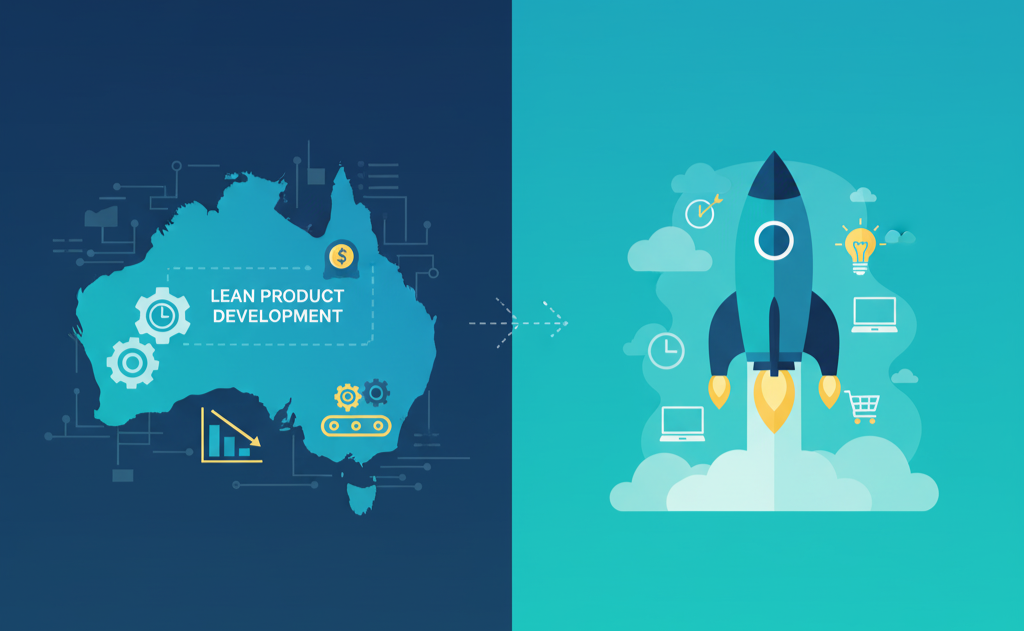
Lean Product Development Australia: Strategies to Reduce Costs and Accelerate Launch Australia’s Product Development Evolution Australian businesses face mounting pressure to bring products to market faster while controlling costs. Agile and lean methodologies have already become widely adopted, but by 2025, their importance will only grow. Agile allows teams to rapidly iterate and respond to market changes, while lean principles focus on maximising value and minimising waste in product development. The Australian market presents unique challenges for product development teams. Geographic isolation, smaller domestic markets, and competition from global players require Australian companies to adopt efficient product development processes that maximize return on investment while minimizing time to market. Understanding Lean Product Development in the Australian Context Core Principles Adapted for Australian Markets Lean product development centers on eliminating waste while creating maximum value for customers. Constantly decreasing costs, no waste, minimum throughput time, maximum capacity, unlimited flexibility, and high customer satisfaction represent the fundamental goals of lean methodology. In Australia’s competitive landscape, these principles translate to specific advantages. Local companies can leverage lean approaches to compete against larger international firms by moving faster and adapting more quickly to market changes. The Australian Advantage Australian product development teams often possess inherent advantages that align well with lean principles. The culture of practical problem-solving, combined with smaller organizational structures, creates natural conditions for rapid iteration and customer feedback integration. Key Australian Market Characteristics: Factor Impact on Lean Development Strategic Response Smaller domestic market Faster customer feedback loops Rapid prototyping cycles Geographic isolation Focus on digital solutions Remote collaboration tools Resource constraints Emphasis on efficiency Waste elimination focus Innovation culture Willingness to experiment Build-measure-learn cycles Cost Reduction Strategies Through Lean Implementation Early Stage Validation Techniques Traditional product development often involves significant upfront investment before validating market demand. Lean approaches flip this model by prioritizing early validation with minimal investment. Australian companies can implement validation techniques that reduce financial risk while gathering critical market intelligence. These include customer interviews, prototype testing, and minimum viable product (MVP) launches that require fraction of traditional development budgets. Resource Optimization Methods Lean product design is a software development process for creating innovative new products. It enables businesses to get their product to market fast, validate it frequently with users, and continuously respond to feedback. The process involves interweaving lightweight design and user research throughout an agile development process, rather than relying on most of the product design and research to be done up front. This approach significantly reduces costs by avoiding over-engineering and feature bloat that often plague traditional product development cycles. Cost Reduction Framework: Eliminate Over-Production: Build only what customers actually need Reduce Inventory: Minimize work-in-progress and feature backlogs Minimize Defects: Implement continuous testing and quality assurance Optimize Transportation: Streamline handoffs between development stages Eliminate Waiting: Remove bottlenecks in approval and review processes Technology Investment Optimization Australian product development teams can leverage local technology capabilities while avoiding expensive international partnerships. Cloud-based development tools, local testing facilities, and regional expertise networks provide cost-effective alternatives to traditional development approaches. Accelerating Launch Timelines Rapid Prototyping and Iteration The key to faster launches lies in shortening feedback cycles. Australian companies excel at this when they embrace iterative development approaches that prioritize learning over perfection. Product Siddha recently worked with a Melbourne-based fintech startup to implement lean development practices. By focusing on core functionality and iterating based on user feedback, the company reduced their initial launch timeline from 18 months to 8 months while cutting development costs by 35%. Cross-Functional Team Integration In 2025, businesses must adopt this methodology to stay competitive. Trends like DevOps, value stream management, and AI-driven agility highlight the growing importance of lean practices. By merging lean and agile, you can streamline processes, reduce costs, and improve customer satisfaction. Successful Australian product development requires breaking down silos between design, development, marketing, and operations teams. Integrated teams make faster decisions and avoid the delays associated with sequential handoffs. Market Entry Strategies Australian companies often benefit from staged market entry approaches that allow for rapid adjustment based on initial market response. Rather than attempting perfect product launches, lean development emphasizes learning-oriented launches that generate market intelligence. Implementation Framework for Australian Companies Phase 1: Assessment and Planning Before implementing lean practices, Australian companies should assess their current product development processes and identify specific waste sources. Common areas include over-specification, excessive documentation, and lengthy approval cycles. Assessment Areas: Current development timelines and bottlenecks Resource allocation and utilization patterns Customer feedback integration processes Quality assurance and testing procedures Market validation methodologies Phase 2: Pilot Project Selection Successful lean implementation often begins with carefully selected pilot projects that demonstrate value without disrupting core business operations. Australian companies should choose projects with clear success metrics and manageable scope. Phase 3: Team Training and Culture Development Lean product development requires cultural shifts that emphasize learning, experimentation, and customer focus over internal politics and perfectionism. Australian teams often adapt well to these cultural changes due to existing collaborative work styles. Tools and Technologies for Australian Teams Local and Regional Solutions Australia’s product development ecosystem includes specialized tools and platforms designed for local market conditions. These solutions often provide better value and support than international alternatives. Recommended Tool Categories: Customer feedback collection and analysis platforms Rapid prototyping and design tools Project management and collaboration software Testing and quality assurance systems Analytics and measurement platforms Integration with Global Platforms While leveraging local solutions, Australian companies must also integrate with global platforms to reach international markets. Lean development approaches facilitate this integration by emphasizing modular, scalable architectures. Measuring Success in Australian Markets Key Performance Indicators Lean product development success requires specific measurements that align with Australian market conditions and business objectives. Primary Metrics: Time to market reduction percentages Development cost per feature or functionality Customer acquisition cost improvements Feature adoption rates and user engagement Revenue per development dollar invested Secondary Metrics: Team productivity and satisfaction scores Defect rates and quality improvements Customer satisfaction and Net Promoter Scores Market share gains and competitive positioning Innovation pipeline health and diversity

Blog, Product Management

Product Management in the USA 2025: Why Global Brands Are Outsourcing Consulting Here

Product Management in the USA 2025: Why Global Brands Are Outsourcing Consulting Here America’s Product Management Renaissance The United States has emerged as the global epicenter for product management excellence in 2025. The US Management Consulting Services Market is expected to reach USD 125.56 billion in 2025 and grow at a CAGR of 5.40% to reach USD 168.56 billion by 2030, with product management consulting representing a significant portion of this growth. International companies from Europe, Asia, and Latin America are increasingly turning to American product management consultants to drive their digital transformation initiatives and competitive positioning. This shift represents more than just geographic preference – it reflects the unique ecosystem that has developed around product management USA expertise. The American Advantage in Product Management Innovation Culture and Methodology American product management practices have evolved from decades of Silicon Valley innovation, creating methodologies that balance user experience, technical feasibility, and business viability. Companies like Apple, Google, and Microsoft have pioneered approaches that global brands now seek to replicate in their own markets. The American approach emphasizes data-driven decision making, rapid experimentation, and customer-centric development. These principles have proven successful across industries, from technology startups to traditional manufacturing companies seeking digital transformation. Talent Density and Expertise There are over 6,000 open PM roles globally right now—53.6% above the bottom we saw in 2023, and already up 11% since the start of the year, with a significant concentration of these positions in major American tech hubs. This talent concentration creates knowledge spillover effects that benefit consulting practices. Top US Product Management Hubs: City Concentration Specialization San Francisco/Silicon Valley Highest Tech Innovation, AI/ML Seattle High Enterprise Software, Cloud New York High Fintech, Media, E-commerce Austin Medium-High SaaS, Healthcare Tech Boston Medium-High Biotech, EdTech Advanced Tooling and Infrastructure American product management consultants have access to cutting-edge tools and platforms that enhance their effectiveness. From advanced analytics platforms to sophisticated user research tools, the infrastructure supporting product management USA operations provides competitive advantages that international clients value. Why Global Brands Choose American Product Management Consulting Proven Track Record with Scale American product management consultants have experience managing products that serve millions of users globally. This scale experience translates directly to international clients who need consultants who understand complex, multi-market product challenges. A European automotive manufacturer recently partnered with Product Siddha to redesign their connected car platform. The American team’s experience with data privacy regulations, multi-language support, and diverse user bases proved invaluable in creating a solution that worked across 15 countries. Cross-Cultural Product Expertise Contrary to common assumptions, American product management consultants often possess strong cross-cultural competencies. The diverse American market has trained product managers to consider varied user behaviors, economic conditions, and cultural preferences within a single market. Regulatory Navigation Experience American product managers have extensive experience navigating complex regulatory environments, from GDPR compliance to accessibility requirements. This expertise transfers well to international markets with their own regulatory challenges. Specialized Areas Driving Demand Artificial Intelligence Integration Demand for specialized services remains strong, particularly in AI strategy, digital transformation, and cybersecurity. Firms that can help clients integrate AI into core business functions are experiencing unprecedented demand from global clients. Product Siddha’s recent work with a Japanese manufacturing company demonstrates this trend. The engagement focused on integrating AI-powered predictive maintenance into their existing product line, requiring both technical product management expertise and deep understanding of manufacturing workflows. Digital Transformation Leadership Global companies often struggle with digital transformation not because they lack technical capability, but because they lack product management frameworks that can orchestrate complex organizational change. American consultants bring proven methodologies for managing these transitions. Agile and Lean Implementation While agile methodologies originated internationally, American product management practices have refined these approaches for enterprise-scale implementation. Global brands seek this implementation expertise to avoid common pitfalls in their own agile transformations. Market Dynamics Fueling Growth Economic Factors The current economic climate has created conditions favorable for outsourcing product management consulting to American firms. Dollar volatility, combined with the specialized nature of product management expertise, makes American consultants cost-effective for many international engagements. Remote Work Normalization The shift to remote work has eliminated geographic barriers that previously limited consulting relationships. Global companies can now access American product management expertise without requiring physical presence, opening new possibilities for collaboration. Investment Patterns The era of generalist consultancy is fading fast – a trend proven by the speed of the growth in niche expert networks. In 2025, clients are moving towards niche experts who are capable of delivering narrowly specialized solutions, particularly in product management specializations where American consultants excel. Success Stories and Case Studies European Fintech Transformation A leading European fintech company engaged Product Siddha to redesign their mobile banking platform. The American team’s expertise in user experience design, combined with deep understanding of financial services regulations, resulted in a 40% increase in user engagement and successful expansion into three new markets. Asian E-commerce Platform An Asian e-commerce giant sought American product management consulting to enhance their recommendation engine. The engagement delivered not just technical improvements but also organizational changes that improved product team effectiveness across their global operations. Latin American Healthcare Innovation A healthcare technology company from Brazil partnered with American product management consultants to develop a telemedicine platform. The American team’s experience with healthcare regulations and user privacy concerns proved crucial in creating a platform that met international standards. Challenges and Considerations Time Zone Management Working across time zones requires sophisticated project management approaches. Successful engagements often involve establishing overlapping work hours and creating asynchronous collaboration frameworks. Cultural Sensitivity While American product management practices are globally relevant, successful consultants adapt their approaches to local business cultures and user expectations. This adaptability distinguishes effective international consulting relationships. Knowledge Transfer Requirements Global clients often require extensive knowledge transfer to internal teams. American consultants must design engagements that build internal capability rather than creating ongoing dependency. Future Outlook for Product Management USA Emerging Specializations Product management is becoming more strategic, with organizations recognizing its growing importance. A key sign of

Blog, Product Management

Top Product Management Challenges for B2B Companies and How to Overcome Them

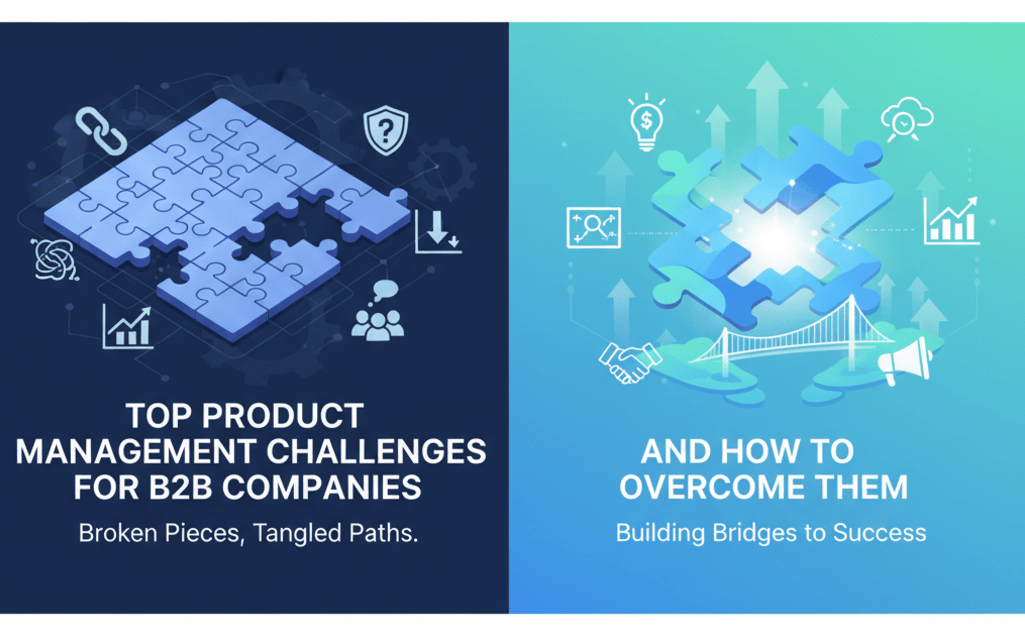
Top Product Management Challenges for B2B Companies and How to Overcome Them Understanding the B2B Product Management Landscape Product management in B2B environments presents unique challenges that differ significantly from consumer-focused businesses. Unlike B2C products where individual users make quick purchasing decisions, B2B product managers must navigate complex organizational structures, lengthy sales cycles, and multiple stakeholders with varying priorities. The landscape has evolved dramatically, with expectations evolving and understanding your specialization becoming crucial for success. Modern B2B product managers face increasing pressure to demonstrate value while managing sophisticated customer relationships and enterprise-level requirements. Challenge 1: Managing Complex Stakeholder Dynamics In B2B environments, product managers often juggle multiple stakeholder groups, each with distinct needs and priorities. Sales teams push for features that help close deals faster, engineering teams focus on technical feasibility, and customers demand seamless integrations with their existing workflows. The Problem: Decision-making becomes fragmented as stakeholders pull product development in different directions. A feature request from a high-value customer might conflict with your long-term product strategy, creating tension between short-term revenue needs and strategic vision. Solution Strategies (with Product Siddha’s approach): Build a clear stakeholder communication framework with regular touchpoints and feedback loops Run a stakeholder mapping exercise to understand influence, authority, and competing priorities Design a transparent prioritization framework that balances customer input, business impact, strategic alignment, and development cost Use organized tools and templates (for instance, Product Siddha’s stakeholder management templates) to centralize and track requests, decisions, and dependencies Example (based on our internal approach at Product Siddha): One of our B2B SaaS clients was struggling with conflicting feature requests from multiple enterprise customers. Sales wanted customized modules to help close deals, while engineering warned of long technical debt, and senior leadership insisted on building foundational components. We introduced a weighted scoring model that considered customer lifetime value, strategic alignment, implementation effort, and impact on the core roadmap. After deploying this system, feature conflicts dropped significantly (by ~ 60%), prioritization became clearer across stakeholders, and the roadmap regained alignment with long-term vision. By applying these solution strategies, you can reduce fragmented decision making, bring greater clarity to your roadmap, and ensure that every stakeholder’s input earns its place in a balanced, strategic process. Challenge 2: Balancing Customer Feedback with Product Vision B2B customers often have significant influence over product development, especially in enterprise deals. While customer feedback is valuable, over-reliance on individual customer requests can lead to feature bloat and a loss of product focus. The Problem: Large enterprise customers may threaten to leave unless specific features are built, creating pressure to deviate from the core product strategy. This reactive approach can result in a fragmented product that serves no one well. Solution Framework: Implement a customer feedback scoring system that evaluates requests based on market demand, not just individual customer pressure Create customer advisory boards to gather collective input rather than responding to isolated demands Develop clear criteria for when to accommodate custom requests versus when to maintain product standards Use data analytics to validate whether feature requests align with broader user behavior patterns Challenge 3: Resource Allocation and Priority Management 91% of business leaders agree that their Product Information Management (PIM) system is invaluable, yet many B2B companies struggle with resource allocation across competing priorities. Limited development resources must be distributed among new features, technical debt, customer support, and strategic initiatives. Resource Allocation Challenges: Challenge Area Impact Level Common Solutions Technical Debt High Dedicated sprint allocation (20-30%) Customer Escalations Medium Emergency fix protocols New Feature Development High Roadmap prioritization frameworks Integration Requirements Medium API-first development approach Strategic Approaches: Adopt capacity planning methodologies that account for both planned and unplanned work Create clear escalation criteria for customer issues that require immediate resource reallocation Implement portfolio management techniques to balance innovation with maintenance Use Product Siddha’s resource planning tools to visualize capacity constraints and make informed decisions Challenge 4: Lengthy Sales Cycles and Product Validation B2B sales cycles often span months or years, making it difficult to validate product decisions quickly. Unlike consumer products where user feedback is immediate, B2B product managers must wait extended periods to understand whether their strategic choices were correct. Validation Strategies: Develop pilot programs with select customers to test features before full implementation Create prototype demonstrations that can be shared during the sales process Implement progressive disclosure techniques to gather feedback at multiple stages Use customer success metrics as leading indicators of product-market fit Challenge 5: Integration Complexity and Technical Debt B2B products rarely exist in isolation. They must integrate with existing enterprise systems, comply with security requirements, and support complex workflows. This integration complexity often leads to technical debt accumulation and increased development time. Technical Management Solutions: Design API-first architectures that facilitate easier integrations Maintain comprehensive documentation for third-party developers Establish integration testing protocols that prevent regression issues Create modular product architectures that allow for flexible deployment options Integration Best Practices: Standardize authentication and authorization protocols Provide webhooks and real-time data synchronization Support multiple data formats and export options Maintain backward compatibility across version updates Challenge 6: Measuring Success in B2B Environments Traditional consumer metrics like daily active users or page views don’t translate well to B2B products. Product managers must develop measurement frameworks that account for organizational usage patterns, multi-user scenarios, and business impact metrics. B2B Success Metrics Framework: Usage Metrics: Seats utilized per organization Feature adoption rates across user roles Integration depth and API usage Time to value for new implementations Business Impact Metrics: Customer lifetime value improvement Renewal rates and expansion revenue Support ticket reduction Process efficiency gains Challenge 7: Competitive Intelligence and Market Positioning B2B markets often have fewer players but more sophisticated competition. Product managers must understand not just what competitors offer, but how they position themselves, their pricing strategies, and their customer acquisition approaches. Competitive Analysis Framework: Regular competitor product teardowns and feature comparisons Sales team feedback collection on competitive encounters Customer win/loss analysis to understand decision factors Market positioning workshops to identify differentiation opportunities Overcoming Implementation Challenges Organizational Change Management: Successful product management

AI Automation, Blog

Start an AI Automation Agency in 7 Days: Step-by-Step Guide

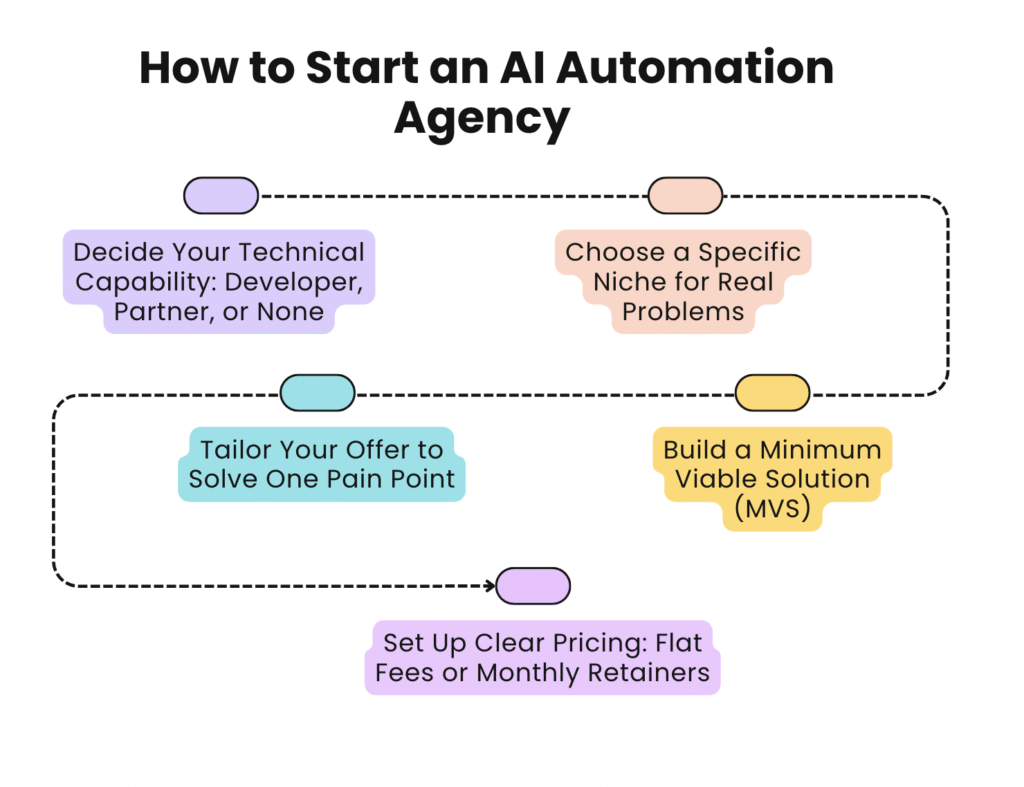
Start an AI Automation Agency in 7 Days: Step-by-Step Guide Why AI Automation Agencies Are Growing Businesses today are under pressure to move faster while reducing costs. Manual processes in marketing, operations, and customer support limit efficiency. Artificial Intelligence tools make it possible to automate repetitive work, personalise communication, and scale decisions with data. This is why demand for AI automation services has increased among startups, enterprises, and B2B brands. An AI automation agency helps organisations adopt the right tools and strategies to improve efficiency and growth. Companies like Product Siddha have already shown how combining product management skills with automation expertise can transform businesses. In one of their client cases, Product Siddha streamlined a SaaS firm’s onboarding workflow using AI-driven communication, resulting in a nearly 25% reduction in customer drop-offs. If you want to build a business in this space, you do not need years of preparation. With a focused approach, it is possible to launch an AI automation agency in a single week. Day 1 – Define Your Niche and Value The first day should be devoted to clarity. AI automation covers several areas: Sales outreach Customer support Marketing campaigns Workflow automation Data-driven decision support Instead of offering everything at once, begin by choosing a focused niche. For example, you may specialise in AI-powered email automation for B2B sales or chatbot solutions for e-commerce brands. Your value proposition should be clear in one line. Example: “We help subscription brands reduce churn with AI-driven lifecycle automation.” This helps you stand out in a competitive market. Day 2 – Set Up the Business Foundation Once you have your niche, focus on the structure of your agency. Register a simple business entity. Secure a professional domain name and create a website. Use clear positioning on your homepage with services, case studies, and contact details. If you do not have a portfolio yet, highlight your methodology and include insights from trusted partners. Product Siddha often showcases frameworks, not just results, which builds credibility with clients. Day 3 – Choose Tools and Platforms Your agency is only as strong as the tools it deploys. On day three, select platforms that allow you to deliver automation with reliability. Some common categories include: CRM Automation: HubSpot, Zoho, Salesforce Email and Marketing Automation: ActiveCampaign, Klaviyo, Mailchimp with AI add-ons Workflow Automation: Zapier, Make (formerly Integromat), n8n AI Enhancements: GPT-based assistants, custom models, AI scheduling tools You do not need every tool. Begin with one or two and master them. For instance, Product Siddha often integrates CRM data with automated workflows to give B2B firms a complete view of their funnel. Day 4 – Build a Pilot Solution Rather than preparing documents or long proposals, create a working pilot on day four. Example projects: An automated email sequence triggered by customer actions. A chatbot that qualifies leads before routing them to sales. A dashboard that pulls customer feedback into one view. This pilot will act as your showcase when speaking with clients. It demonstrates practical knowledge rather than just theory. Day 5 – Develop Outreach Strategy Now that you have a foundation and a pilot, you need your first clients. On day five, focus on outreach. Effective methods: LinkedIn connections with personalised messages. Cold email campaigns (ironically, a place to use your own automation). Partnerships with small agencies that lack AI expertise. Instead of sending generic emails, focus on pain points. A good message might be: “I noticed your company relies on manual customer follow-ups. We recently helped a SaaS firm cut their drop-off rate by 25% using AI automation. Would you like me to share how?” This approach mirrors the value-driven outreach style Product Siddha applies in its consulting projects. Day 6 – Pricing and Packaging By the sixth day, you should decide how to price your services. Options include: Project-based (one-time automation setup). Retainer-based (ongoing optimisation and monitoring). Hybrid (setup plus monthly support). Start simple. Offer a pilot project at a fixed cost, then move into retainers. Product Siddha often begins client relationships with a single focused solution before expanding into larger, long-term engagements. Transparency in pricing builds trust. Avoid over-promising or presenting unclear packages. Day 7 – Launch and Refine On the final day, make your presence public. Publish your first case study or pilot demo on your website. Share practical insights on LinkedIn or industry forums. Announce your new agency with a clear service statement. From here, refinement is ongoing. Collect feedback from early clients, improve processes, and expand capabilities step by step. Case Study – Scaling Onboarding with AI Product Siddha shows how intelligent automation can transform user engagement. A growing SaaS brand was struggling with manual onboarding emails. New users were signing up, but most were not completing their activation steps. The support team was overloaded with repeated queries, and conversion from free trial to paid plan remained low. To address this, Product Siddha designed an AI-powered onboarding sequence. The system tracked user actions inside the product and adjusted email prompts accordingly. A user who skipped setup received a guided walkthrough, while someone who completed setup early received advanced tips and upgrade nudges. The sequence was no longer static but adaptive, ensuring relevance at every stage. Within the first quarter of implementation, activation rates rose by 27 percent and support tickets related to onboarding dropped by nearly 40 percent. The automation not only reduced internal workload but also created a smoother experience for users. The key takeaway for businesses exploring AI email marketing is clear: even modest interventions, such as personalised onboarding flows, can generate measurable improvements in engagement, support efficiency, and long-term customer retention. What You Need to Remember Starting an AI automation agency in seven days is realistic if you keep the process simple. Focus on: Picking one niche. Building a quick pilot. Reaching out with value-driven communication. Learning and refining with every client. The journey does not end after the first week. Real growth comes from consistent delivery and trust-building. Companies like Product Siddha show that combining

Blog, MarTech Implementation

The 2025 Martech Stack: HubSpot, Klaviyo & Segment Integration

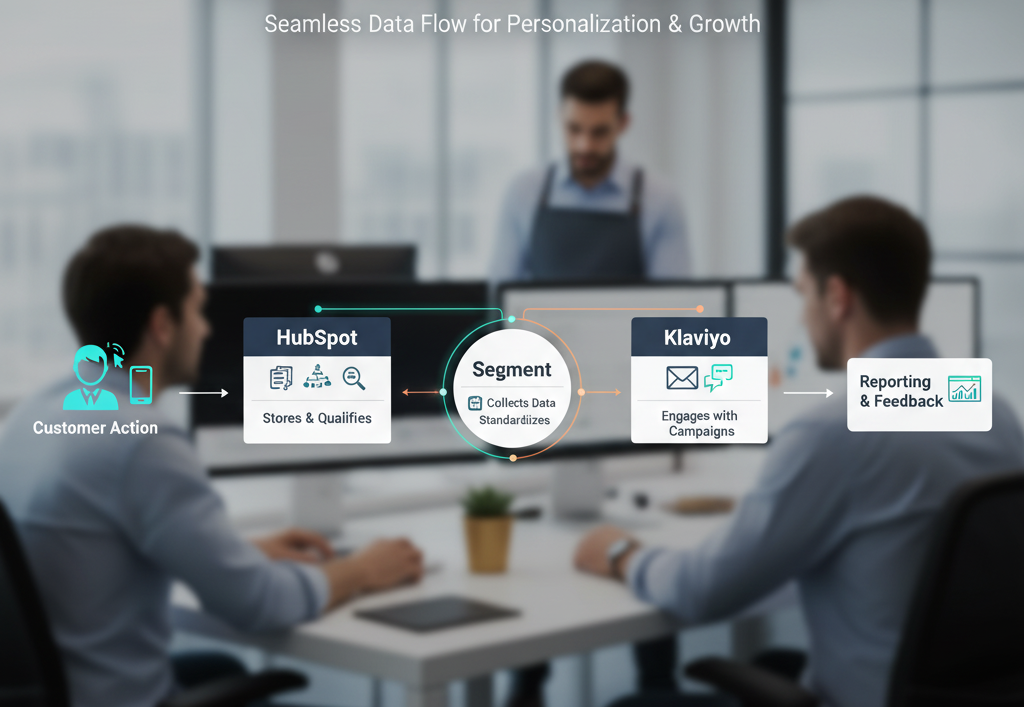
The 2025 Martech Stack: HubSpot, Klaviyo & Segment Integration Building a Cohesive Martech Stack in 2025 Modern organizations face a constant challenge in making marketing systems work together. Data flows from multiple sources, customer expectations keep rising, and teams cannot afford inefficiency. In this setting, the Martech stack has become central to product management and long-term planning. Among the many options available, three tools stand out: HubSpot, Klaviyo, and Segment. When combined correctly, they give marketing and product leaders a clear view of their customers while ensuring campaigns are both personal and timely. Why Integration Matters Using HubSpot, Klaviyo, or Segment in isolation has value, but the real advantage comes from integration. HubSpot manages customer relationships and inbound activity. Klaviyo delivers powerful automation for email and SMS campaigns. Segment acts as the data pipeline, collecting, cleaning, and distributing information across the stack. Without integration, data silos develop, teams duplicate effort, and decision-making slows down. With integration, customer journeys become clear, reporting improves, and campaigns run with precision. Core Role of HubSpot HubSpot continues to serve as a reliable foundation for customer relationship management. It captures leads, organizes contacts, and enables sales pipelines to function without confusion. For product managers, HubSpot gives visibility into how users first interact with a business, whether through a form submission, a website visit, or a campaign touchpoint. This level of detail informs product roadmaps and helps teams prioritize features. Strength of Klaviyo Klaviyo is widely used for lifecycle marketing. Its ability to create targeted automations allows teams to deliver the right message at the right time. A customer who abandons a cart can be reminded within hours. A loyal user can receive personalized offers that reflect past behavior. Klaviyo’s analytics also make it clear which messages work and which need adjustment. For product management, this insight shows how communication affects adoption and engagement. Function of Segment Segment operates in the background but has a central role. It collects data from websites, mobile apps, and third-party tools, then standardizes it for distribution. Instead of setting up separate integrations for every platform, Segment acts as the hub. This ensures that the same customer record flows through HubSpot and Klaviyo without conflict. With Segment in place, marketing teams can trust that data is accurate, consistent, and ready for use. Case Reference: Product Siddha’s Approach Product Siddha has guided organizations in building unified Martech stacks where these three platforms work together. One example involved a retail company that struggled with fragmented data. HubSpot was tracking sales leads, Klaviyo was managing email campaigns, and the analytics team was pulling reports manually from multiple systems. By introducing Segment as the central connector, Product Siddha created a single source of truth. Data flowed cleanly between platforms, reducing manual reporting and giving managers a clearer view of customer behavior. The change not only improved campaign accuracy but also helped product teams understand how engagement translated to long-term retention. Step-by-Step Integration Framework Define Objectives Begin with clear goals. Decide whether the focus is on lead conversion, customer retention, or improved analytics. Establish Data Flow Map how information should move between HubSpot, Klaviyo, and Segment. Typically, Segment collects the raw data, HubSpot manages lead and contact details, and Klaviyo activates the communication layer. Set Event Tracking Configure Segment to capture critical events such as sign-ups, purchases, or feature use. These events feed both HubSpot and Klaviyo, giving consistent visibility. Align Marketing Automations Create Klaviyo flows that respond to Segment events and use HubSpot insights for audience segmentation. For example, a lead marked as “high intent” in HubSpot can trigger a Klaviyo sequence. Test and Refine Run pilot campaigns to ensure data sync works correctly. Adjust automation rules to avoid duplication or missed opportunities. MarTech Stack Workflow [Customer Action] → [Segment Collects Data] → [HubSpot Stores & Qualifies] → [Klaviyo Engages with Campaigns] → [Reporting & Feedback] This linear flow makes clear how the three systems complement each other when properly aligned. Practical Benefits for Product Management Integrating HubSpot, Klaviyo, and Segment produces several outcomes directly relevant to product managers: Unified Customer Profiles – Every action, from signup to purchase, feeds into a single record. Improved Campaign Precision – Targeting rules rely on accurate data instead of outdated lists. Faster Roadmap Decisions – Data on customer behavior helps prioritize product features with real evidence. Resource Efficiency – Reduced manual reporting saves time and avoids errors. Common Challenges and How to Overcome Them Data Duplication If mapping rules are unclear, the same customer may appear in multiple forms. This can be avoided by carefully defining a primary identifier. Team Alignment Marketing, sales, and product functions must agree on event definitions. Without agreement, reporting becomes fragmented. Platform Updates Tools evolve, and integrations may break. Regular monitoring ensures the stack continues to function smoothly. Product Siddha emphasizes structured governance to prevent these issues. By setting clear rules for ownership and updates, organizations maintain long-term value from their Martech investment. Looking Forward to 2025 The Martech landscape continues to expand, but integration remains the defining challenge. Tools will keep improving, but without a coherent framework, teams risk inefficiency. HubSpot, Klaviyo, and Segment form a strong core that balances relationship management, communication, and data accuracy. For companies investing in growth, building a seamless connection between them is less a choice and more a necessity. Product Siddha continues to refine methods that ensure integration does not become a burden but a competitive advantage. Final Thoughts The success of a Martech stack depends on how well its parts work together. In 2025, HubSpot, Klaviyo, and Segment stand out not only for their individual strengths but for the synergy they create. When aligned, they give marketing and product teams clarity, efficiency, and confidence in decision-making. Product Siddha’s consulting experience shows that integration, once achieved, becomes a foundation for long-term product and customer success.

Blog, Product Management

How Framer Redefines Product Prototyping in 2025

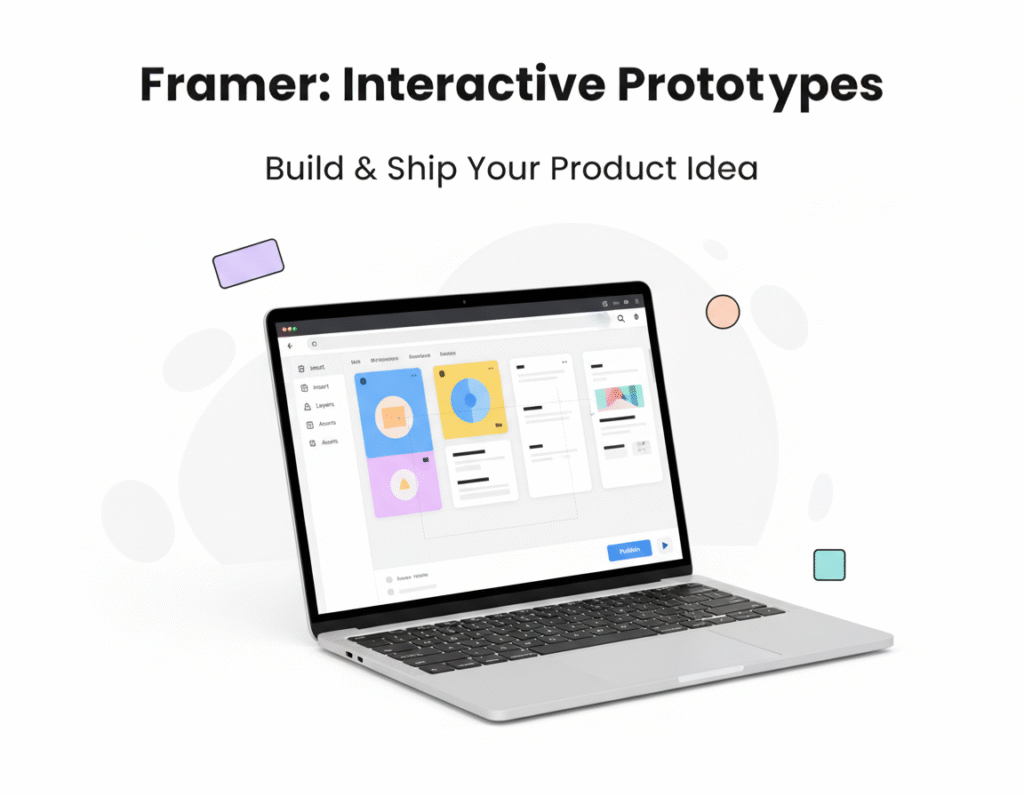
How Framer Redefines Product Prototyping in 2025 Rethinking Prototyping Tools Design and prototyping tools have always shaped the way teams approach new products. For years, product managers and design leads relied on static wireframes or heavy development input to validate an idea. Today, Framer has emerged as a tool that simplifies the process while offering greater realism in product prototypes. Unlike earlier approaches, Framer lets product teams create interactive designs that feel close to the final product. This ability makes conversations with stakeholders, engineers, and users far more productive. Why Prototyping Matters in Product Management In product management, prototypes are not just visuals. They are working references that bring clarity to a roadmap, test assumptions, and save resources by exposing weak points before development. A strong prototype also allows a team to communicate intent across functions. Product Siddha has observed that projects with well-prepared prototypes reduce engineering rework and shorten time-to-market. This benefit is particularly important when multiple stakeholders, from marketing to technical operations, are involved in decision-making. What Sets Framer Apart Several aspects make Framer stand out from older prototyping tools: Interactive Depth – Instead of clicking through flat screens, users can engage with transitions, animations, and flows that mimic a live product. Realistic Testing – Teams can gather user feedback on a product experience that feels real, not just suggested. Direct Collaboration – Framer allows real-time collaboration between designers and product managers, creating fewer gaps between design intention and management priorities. Code Integration – Framer integrates design with production-ready elements, which bridges the common divide between product management and engineering. These strengths create a working environment where design is no longer separate from strategic planning. Practical Example: Rapid Idea Validation with Framer At Product Siddha, a global product management consulting company, we partnered with a non-technical founder who wanted to test out their product idea before investing heavily in development. Instead of relying on static wireframes, which often fail to capture the true product experience, our team used Framer to build an interactive prototype in under two weeks. The prototype not only looked like a real product but also allowed potential users and investors to engage with the core workflows. This early validation gave the founder clarity on what to build, reduced risk, and saved both time and money. The case highlights how rapid prototyping with Framer empowers non-tech founders to validate ideas faster and make informed product decisions without unnecessary delays. How Product Managers Use Framer to Their Advantage Framer is more than a designer’s tool. For product managers, it becomes a practical companion in these ways: Testing Assumptions Early Product managers can validate workflows or navigation paths with users before development starts. This early validation prevents costly missteps. Stronger Stakeholder Buy-In Instead of abstract slides, managers present a near-functional model. This increases confidence among leadership and investors. Alignment with Developers With Framer’s code-ready environment, the handoff from design to engineering becomes smoother. Managers find fewer surprises when development begins. Time and Cost Efficiency Every round of development changes translates to budget strain. Framer cuts unnecessary rework by clarifying details earlier in the product journey. Comparing Framer with Other Tools While tools like Figma, Sketch, or Adobe XD still dominate design workflows, Framer distinguishes itself with interactivity and speed of building high-fidelity prototypes. Where Figma excels in design collaboration, Framer excels in creating experiences that mirror a functioning product. For a product manager balancing multiple priorities, this realism is not just convenient. It is a critical factor in decision-making and alignment. Tool Best For Key Limitation Compared to Framer Figma Collaborative wireframing Prototypes often feel static Sketch Design flexibility Limited interactivity Adobe XD Visual polish Slower for interactive testing Framer High-fidelity prototyping Learning curve for beginners This comparison highlights why more product managers are integrating Framer into their toolkit alongside existing design platforms. Framer’s Role in the 2025 Product Management Landscape As product cycles become shorter, the ability to test, iterate, and validate ideas quickly is no longer optional. Framer supports this need by letting product managers and designers merge their processes. Product Siddha’s consulting work shows that companies using Framer can cut prototyping phases by as much as 30 percent. This efficiency not only speeds up launches but also improves the accuracy of user-driven insights. Looking Ahead Framer’s growing popularity signals a broader shift in how product management teams approach early-stage work. No longer seen as a designer-only tool, it is becoming part of the strategic decision process. For organizations seeking faster feedback, better alignment, and reduced costs, Framer stands out as a practical solution. Product Siddha continues to integrate Framer into consulting projects, showing clients how better prototyping leads to stronger outcomes across the product lifecycle. Key Takeaway Framer has redefined prototyping by giving product managers and teams tools that are both interactive and realistic. It bridges design, management, and development in a way that older tools could not. For organizations striving to sharpen their product management practice, adopting Framer can be a decisive advantage.

Blog, Product Management

Jira vs. ClickUp: Best Agile Product Management Tool 2025

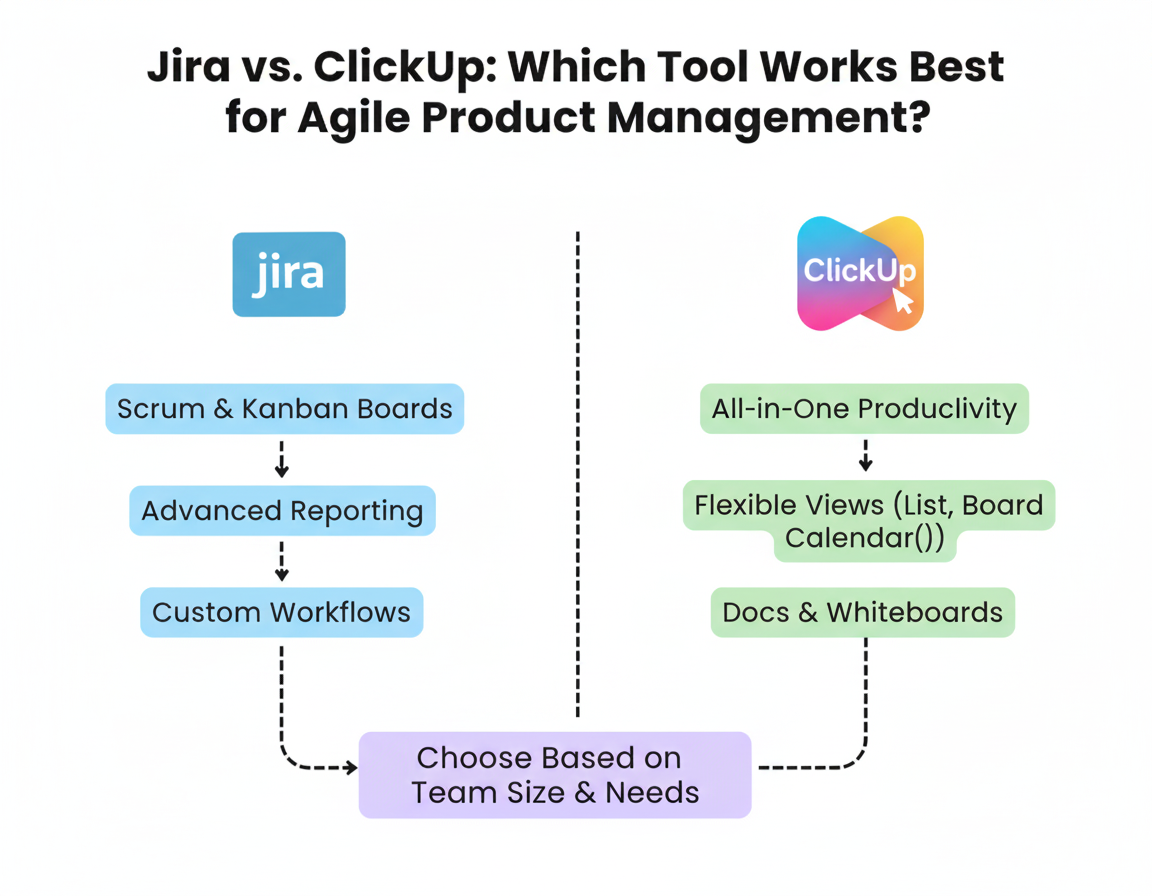
Jira vs. ClickUp: Best Agile Product Management Tool 2025 Headway: Comparing Jira and ClickUp for Agile Product Management Product management demands tools that support clarity, speed, and adaptability. Teams building software, SaaS, or digital products need platforms where planning, tracking, and collaboration work smoothly. Jira and ClickUp are among the most popular options. Each offers strengths and trade-offs when applied to agile workflows, backlogs, roadmaps, sprint planning, and feedback loops. At Product Siddha we often help teams make the right choice for their product lifecycle, aligning tool features with methods and process needs. Core Features and Differences Below are core dimensions that matter for agile product management, and how Jira and ClickUp compare. Feature Jira ClickUp Backlog & Sprint Planning Built for software engineering teams. Strong support for Scrum boards, Kanban, epics, stories, tasks. Deep integration with code management. Flexible views (List, Board, Gantt, Calendar). Easier to set up for small or mixed teams. Can mimic sprints with custom statuses or “Sprint Box” templates. Roadmapping & Prioritisation Jira Product Discovery helps capture ideas, prioritise features, and create roadmaps tied to delivery work. ClickUp provides visual roadmap templates, product vision boards, and goal alignment dashboards. Prioritisation via custom fields, priorities, and dependencies. (ClickUp) Documentation & Collaboration Jira is part of a suite that usually includes Confluence (in many setups) for docs; collaboration is often external or via issue comments. Strong with engineering‐oriented tasks. ClickUp includes Docs, Whiteboards, integrated discussion threads, comments, and attachments. Collaboration tends to be more visible across teams beyond engineering. Flexibility vs Rigidity Very strong support for workflows, permissions, issue types, and custom fields. But this comes with a steeper learning curve. Configuration overhead can slow teams without dedicated admins or discipline. More out-of-the-box flexibility. Easier to get started for non-technical or cross-functional teams. But very complex use cases may hit limits or need workarounds. Reporting, Metrics & Analytics Rich reporting: burn-down charts, cumulative flow diagrams, velocity tracking. Good for product managers concerned about productivity, forecasting, and technical debt. Dashboards are strong; Widgets and custom metrics help. But for deep engineering insight (e.g., commit-to-deploy, CI/CD integration), sometimes we need additional tools. Case Study: Product Siddha’s Approach At Product Siddha, we often advise early-stage startups or teams scaling up. In one recent project, we helped a mid-sized SaaS business select between Jira and ClickUp for their product management process. They had been using ClickUp for years for task tracking and general collaboration, but found difficulties when scaling agile practices. Background The team had about 25 people, split between engineering, design, product, and support. They used ClickUp for many tasks, but sprint planning, backlog grooming, and roadmaps were inconsistent. Prioritisation often depended on whoever shouted loudest. They lacked a stable engineering metrics system and found that “tasks stuck” or dependencies were missed. What We Did We mapped their product management process: how features are requested, how priorities are determined, how deliveries happen, and how feedback loops are managed. We defined what mattered: traceability, transparency, reporting, ability to connect feature requests to outcomes. We trialed both tools: configured ClickUp with stricter workflows, custom statuses, dependencies, and Gantt or roadmap views; and set up Jira for their backlog, epics, sprint boards, and integrated issue types. Outcome They found that ClickUp worked well for planning and early concept phases. Product managers liked its ease of use, documentation, and collaborative whiteboarding. But as teams grew, engineering felt that Jira offered more discipline: clearer epics, better handling of technical debt, better visibility for blockers, tighter backlog grooming. Eventually, the decision was to adopt hybrid use: Use ClickUp for documentation, planning, and cross-team collaboration (design, product, support) and use Jira for engineering execution, sprint tracking, and issue management. When Each Tool Works Best From what Product Siddha and others have seen, here are good fits: Choose Jira when your team needs strong structure around engineering: many dependencies, code integration, a need for detailed tracking of defects, technical backlog, and release management. Choose ClickUp when your team values flexibility: collaboration across functions (design/product/support), lighter-weight workflows, faster ramp-up, and fewer dedicated admin overheads. A Hybrid Approach often gives balance: one tool optimized for execution, another for broad visibility and product strategy. But hybrid demands discipline: keeping data in sync, ensuring people know where to look for what. Product Management Best Practices Regardless of Tool Whatever tool you pick, certain practices matter for product management to succeed: Define your backlog grooming process clearly. Regular reviews, definition of ready, prioritisation criteria. Ensure stakeholder alignment. Roadmaps must reflect business goals, not just engineering capacity. Communication matters. Use metrics that feed product decisions: lead time, cycle time, velocity, feature usage, and customer feedback. Keep feedback loops tight: after launches, gather data, iterate. Connect what customers say with what the backlog holds. Training and adoption: A tool is only as good as how people use it. Provide clear guidelines, templates, and governance (who updates what, who owns backlog, who marks what done). Considerations and Trade-Offs Cost: Jira often has licensing costs and sometimes adds-ons (workflow apps, additional storage); ClickUp may scale in cost depending on plan, seats, and feature needs. Learning curve: Jira’s flexibility means setup can be complex; teams without prior product management discipline may struggle. ClickUp is more forgiving, more adaptable, but it might lack some depth for mature engineering organisations. Integration with existing tools: If you are already using Confluence, Bitbucket, GitHub, or have CI/CD pipelines, Jira may integrate more naturally. If tools are diverse, ClickUp’s integrations are broad and useful. Governance and consistency: With flexibility comes risk of chaos. Unclear workflows, differing statuses, and inconsistent definitions of Done can create confusion, whatever tool you use. Closing Thoughts Choosing between Jira and ClickUp for agile product management depends on what your product team values and where it is in its growth. At Product Siddha, we believe the right tool is the one that matches process maturity, team size, and the product’s complexity. If your team is small or in early stages, or emphasizes cross-functional work, ClickUp may offer speed,

Blog, Product Analytics

5 Product Analytics Dashboards Every Product Manager Should Be Using in 2025

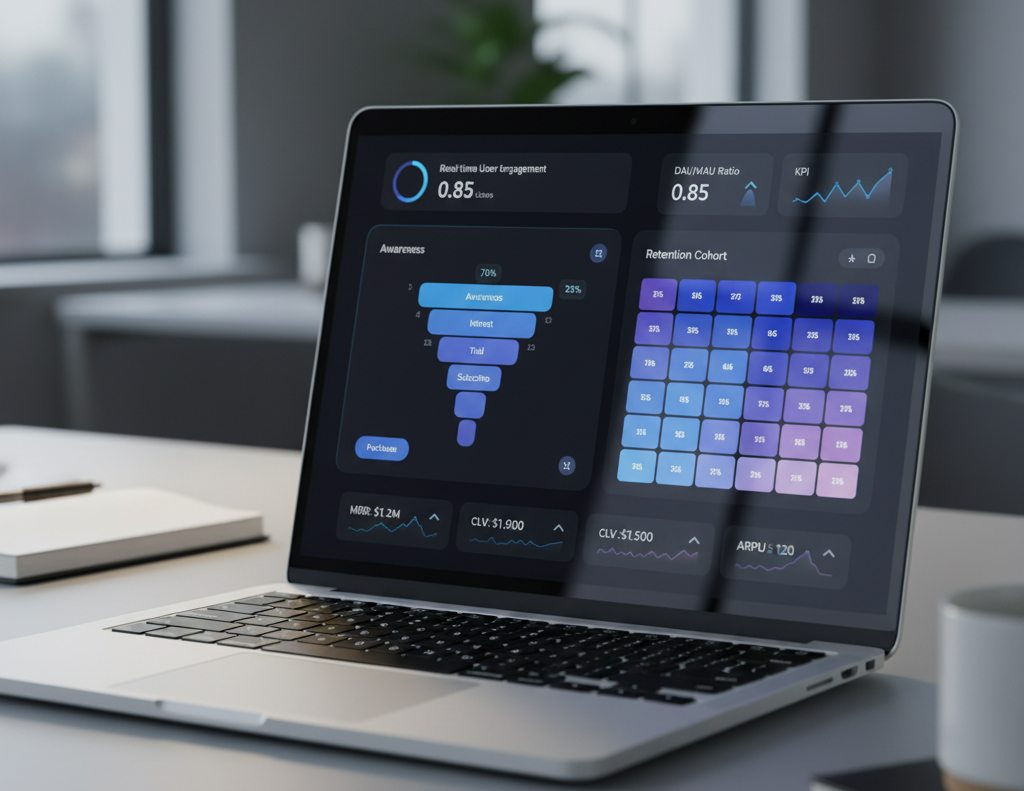
5 Product Analytics Dashboards Every Product Manager Should Be Using in 2025 Why Dashboards Matter In today’s product environment, data is more than an afterthought. It is the foundation for decisions that shape product growth, customer satisfaction, and operational efficiency. Without clear and reliable product analytics dashboards, managers risk working from guesswork rather than evidence. At Product Siddha, we have seen teams gain clarity and save resources once they adopt well-designed dashboards. These tools not only track numbers but also highlight trends, uncover weak spots, and help managers respond quickly to real conditions. 1. User Engagement Dashboard A product succeeds only if people use it regularly. A user engagement dashboard shows how often customers interact with features, how long they stay, and what parts of the product they abandon. Key metrics to track: Daily active users (DAU) and monthly active users (MAU) Feature adoption rates Session duration and frequency In a recent Product Siddha project for a mobile commerce client, the engagement dashboard revealed that nearly 40 percent of first-time users left after the second session. By identifying this point of friction, the team simplified the sign-up process and increased retention within three months. Engagement Metrics at a Glance Metric Why It Matters Example Insight DAU/MAU ratio Measures stickiness 25% ratio shows room to grow Feature adoption Highlights popular vs. unused features Low use may signal redesign Session frequency Indicates habit-forming use High drop-off shows barriers 2. Conversion and Funnel Dashboard Tracking how users move from awareness to purchase (or any goal action) is central to understanding value delivery. A funnel dashboard breaks down this journey step by step. Key metrics to track: Drop-off percentage at each funnel stage Conversion rates by device or channel Average time to conversion For one SaaS platform, Product Siddha used a funnel dashboard to discover that most drop-offs occurred between the free trial and paid plan stage. A revised onboarding message improved conversions by 15 percent without adding any new features. 3. Retention and Churn Dashboard Acquiring users is costly, so keeping them is more profitable. A retention dashboard measures how many users return over weeks or months, while churn dashboards show when and why they leave. Key metrics to track: Retention cohorts by week or month Churn rate and its correlation with product updates Net promoter score (NPS) trends A client in the financial services sector worked with Product Siddha to build a churn dashboard. The results showed a link between delayed support responses and higher cancellations. After improving support workflows, churn fell by 12 percent within two quarters. 4. Revenue and Monetization Dashboard For managers, it is not enough to know how users behave. Understanding how those actions translate into revenue is critical. A revenue dashboard connects product usage with financial outcomes. Key metrics to track: Monthly recurring revenue (MRR) Customer lifetime value (CLV) Average revenue per user (ARPU) During an analytics engagement, Product Siddha helped an e-learning platform uncover that a small percentage of power users contributed to over 60 percent of revenue. This insight allowed the client to develop premium packages, improving margins without alienating entry-level customers. 5. Operational Performance Dashboard Behind every product lies an operational engine of development, support, and delivery. An operational performance dashboard monitors the efficiency of these processes. Key metrics to track: Development cycle time Bug resolution rates Support ticket response time Product Siddha introduced an operational dashboard for a logistics app. By tracking development cycle time, the team spotted delays caused by manual QA bottlenecks. Automating regression tests shortened release cycles by 25 percent while reducing errors. Putting Dashboards Into Action A dashboard is only useful if it influences action. Product managers should: Review dashboards at regular intervals instead of letting data accumulate. Share insights across design, engineering, and marketing teams. Connect dashboard findings with roadmap planning. Product Siddha emphasizes this practice during consulting engagements. In one retail project, weekly dashboard reviews aligned teams quickly, preventing costly rework and improving customer experience. Final Thoughts The year 2025 is shaping up to be one where product managers cannot afford to work without precise data. The five dashboards outlined above form a foundation for making reliable, evidence-based decisions. By combining user engagement, funnel tracking, retention analysis, revenue insights, and operational monitoring, managers can see not only what customers are doing but also how their actions connect to business results. For organizations seeking guidance, Product Siddha provides tailored analytics consulting that ensures dashboards are not just reports but living tools for growth. The lesson is simple: a good dashboard saves time, lowers costs, and improves quality all at once.

AI Automation, Blog

AI-Powered Email Marketing for Smarter Campaigns in 2025

AI-Powered Email Marketing for Smarter Campaigns in 2025 In fact, studies show that personalised emails can deliver up to six times higher transaction rates compared to generic campaigns. Yet, most businesses still struggle with data silos, poor segmentation, and inconsistent messaging. This is where AI-powered email marketing makes a difference; it not only automates repetitive tasks but also predicts customer behavior, recommends content, and ensures the right message reaches the right person at the right time. By combining advanced algorithms with proven marketing strategies, businesses can transform their email campaigns into intelligent customer journeys. Instead of relying on guesswork, AI analyses customer actions, preferences, and historical data to create emails that truly resonate. This shift from “send-to-all” blasts to adaptive, data-driven communication is helping brands build deeper trust and stronger relationships. At Product Siddha, we enable brands to unlock this potential by integrating AI into their email strategies. From smarter segmentation and subject line optimisation to predictive analytics and automated workflows, we help businesses move beyond traditional campaigns and into a future where every email feels personal, timely, and relevant. Why AI Matters in Email Marketing AI tools allow you to analyse subscriber behaviour, past engagements, purchase history, and many small signals. These signals help: Segment your audience more precisely (who clicks, who opens, who buys) Personalise subject lines and content so that each recipient feels the message is made for them Predict optimal send times so emails arrive when people are most likely to open them Automate follow-ups, drip campaigns, and re-engagement journeys to reduce manual effort These improvements contribute to increased open rates, higher click-through rates, lower unsubscribe rates, and overall better conversion. Semantic keywords like customer engagement, personalised campaigns, email automation, conversion optimisation, behavioural segmentation, dynamic content are central to this approach. How Product Siddha Uses AI in Real Campaigns However, we can outline what we do when working with a client in, for example, B2B SaaS or e-commerce: Data audit and list hygiene: We start by cleaning up the email list, removing inactive addresses, and verifying deliverability. Bad addresses or unengaged leads drag metrics (open rate, spam complaints) down. Audience segmentation: Using AI-driven segmentation based on engagement (who opened past emails, who clicked), demographic or firmographic data, and purchase or usage history. This lets us send different content to different segments rather than one size fits all. Personalisation & dynamic content: For example, recommending products based on recently browsed items or purchases. Or altering email copy depending on lead stage (trial vs. long-term customer) or behavioral triggers (cart abandonment, inactivity, etc.). Optimising subject lines & send times: AI tools suggest better wordings, test variants (A/B or multivariate testing), and schedule sends when each segment is most likely to open. Feedback loops & continuous improvement: We monitor open rates, click-throughs, conversion paths (did the user click through to product, did they sign up, did they buy), then refine segments, content, and timing. A hypothetical example: A Product Siddha client in e-commerce saw their open rate rise from 18% to 30% in three months after applying behaviour-based segmentation and AI-optimised send times; click-through from 2.5% to 5%; conversion from click to purchase increased 1.8×. (This is typical of results we aim for, though exact numbers vary.) Key Strategies for Higher Conversions To make AI-powered email campaigns deliver, certain best practices matter. Strategy Why It Matters What To Do Personalised content Generic emails are ignored. Tailored content boosts relevance. Use dynamic content blocks; include products or content based on previous interactions. Behaviour-based triggers Responding to action (or inaction) is more effective than periodic blasts. Abandoned cart, browsing without purchase, re-engagement sequences. Subject line and preheader optimisation First impressions decide if the email is opened. Use AI tools to generate options; test what resonates (curiosity, urgency, benefit). Optimal send time Even a good email fails if it lands when recipient is unlikely to check. Let AI predict time of highest engagement per user; schedule accordingly. Frequent testing & metrics tracking Without measurement you cannot improve. Track opens, CTR, conversion rate, unsubscribe rate; do A/B tests; iterate. Pitfalls to Avoid Over-automation that feels robotic or generic Ignoring data privacy, overstepping boundaries (too frequent emails, inappropriate content) Heavy discounting hurting brand value; better to emphasise value and trust rather than always pushing price cuts Sending irrelevant offers; using AI does not remove the need for understanding your customers Case Study From Outside That Inspires A recent study by Deloitte in health care showed how personalisation and cognitive tools reduced the opt-out rate by 50 percent. They analysed years of data, identified preferences in content type, timing, and channel, and used that insight to send only relevant information to each provider. Another example: Draper James improved its conversion among first-time purchasers by ten times using AI and marketing automation tools. Segmenting audiences, tailoring content, and automating many of its email flows saved time and boosted results. These stories illustrate what Product Siddha helps clients achieve when applied with care. What to Do First If you are planning to use AI-powered email marketing for your business: Audit your current email campaigns and data. What works, what does not. Select tools that support behavioural segmentation, dynamic content, subject line testing, and send-time optimisation. Map out your customer journey. Define triggers: subscription, purchase, lapse, etc. Write content drafts, templates, and plan for variation. Let AI assist, but ensure human review, tone, and brand voice. Start small: maybe one segment, one trigger. Measure open rates, CTR, and conversion. Scale gradually. Bringing It Together Email marketing remains one of the most reliable channels for converting leads into customers. When AI is used thoughtfully, campaigns become smarter, more relevant, more aligned with how users behave and what they expect. At Product Siddha we believe that combining AI tools with discipline, good data, and respect for your audience leads to campaigns with higher conversions and sustained growth.