
Product Siddha

Blog

Blog, Product Management

What Traditional Brokers Can Learn From Product-Led Growth in PropTech

What Traditional Brokers Can Learn From Product-Led Growth in PropTech A Shift Worth Studying Traditional real estate brokerage has long relied on personal networks, local reputation, and negotiation skill. These foundations still matter. Yet over the last decade, PropTech firms have grown by focusing on something brokers rarely formalize. The product itself. Product-led growth in PropTech does not mean replacing relationships with software. It means designing systems that make discovery easier, decisions clearer, and follow-through more reliable. At the center of this shift is disciplined product management, where every feature, workflow, and data point exists to serve a real user need. For traditional brokers, the lesson is not to become technology companies. The lesson is to adopt the thinking that has helped PropTech platforms scale trust and efficiency. Product Thinking Versus Deal Thinking Brokers often operate deal by deal. Each transaction is treated as a standalone effort. PropTech companies think in systems. They ask how one improvement can benefit thousands of users repeatedly. This difference comes down to product management discipline. Product teams map user journeys. They identify friction points. They improve processes incrementally. Brokers, on the other hand, often solve problems manually each time they arise. By studying product-led growth models, brokers can begin to document their processes, identify repeatable actions, and reduce dependence on memory and habit. Learning From Usage Data, Not Gut Feel Traditional brokers rely heavily on experience. Experience matters, but it has limits. PropTech platforms learn from usage data. They track what users search for, where they hesitate, and what prompts action. This approach does not require building an app. It requires observing patterns. Which listings attract repeat views. Which follow-ups lead to site visits. Which documents close deals faster. Product Siddha’s work on Product Analytics for a Ride-Hailing App with Mixpanel illustrates this mindset. While the industry differs, the principle applies. Decisions improved when data revealed real behavior rather than assumptions. Brokers who adopt even basic analytics thinking can refine their approach without losing the human element. Designing for Clarity Over Persuasion Product-led PropTech platforms focus on clarity. Clear pricing. Clear availability. Clear next steps. Traditional brokers often rely on persuasion and verbal explanation to bridge information gaps. From a product management perspective, clarity reduces effort on both sides. Buyers feel informed. Brokers spend less time explaining basics and more time addressing real concerns. This is not about removing conversation. It is about making conversations more productive. In Built Custom Dashboards by Stage, Product Siddha helped teams visualize user progress clearly. Translating this idea to brokerage work could mean standardized listing sheets, consistent follow-up summaries, or clearer site visit documentation. Reducing Friction at Key Moments Product-led growth pays close attention to moments where users drop off. In real estate, these moments are familiar. Missed calls. Delayed responses. Confusing paperwork. Unclear next steps after a site visit. PropTech firms design around these weak points. Automated confirmations. Structured follow-ups. Predictable timelines. One relevant example is From Lead to Site Visit – Voice AI Automation for a Real Estate Platform. In this case, automation reduced early-stage friction without removing human involvement later. Brokers can apply the same thinking by identifying where routine steps slow momentum and simplifying them. Treating Trust as a Product Outcome Trust is often described as intangible. Product-led companies treat it as a measurable outcome. They design features that reinforce reliability. Consistent communication. Transparent status updates. Predictable service quality. For brokers, this can translate into simple practices. Regular status messages. Clear timelines. Written summaries after meetings. These actions feel small, but together they form a dependable experience. Product management teaches that trust grows through repeated positive interactions, not grand gestures. Scaling Without Losing Quality One challenge for successful brokers is scale. As volume increases, quality often slips. Product-led PropTech firms address this through standardization. Not rigid scripts, but shared frameworks. In Product Management for UAE’s First Lifestyle Services Marketplace, Product Siddha helped structure offerings so quality remained consistent as the platform grew. Brokers can adopt similar frameworks. Defined service stages. Standard checklists. Clear ownership at each step. Scaling then becomes manageable rather than chaotic. Feedback Loops That Improve Over Time Product-led growth depends on feedback loops. What worked. What failed. What needs adjustment. This mindset is less common in traditional brokerage, where reflection often happens informally. By introducing simple review cycles, brokers can improve steadily. Post-deal reviews. Client feedback summaries. Pattern tracking across transactions. Product management emphasizes iteration. Brokers who adopt this habit evolve faster than those who rely solely on instinct. Learning From Outside the Industry Several Product Siddha case studies outside real estate offer relevant lessons. Building a Lead Engine After Apollo Shut Us Out shows resilience through system redesign. Driving Growth for a U.S. Music App with Full-Stack Mixpanel Analytics highlights the value of understanding user behavior deeply. These examples reinforce a core idea. Product-led growth principles travel well across industries because they focus on people, not platforms. Why This Matters Now The brokerage model is not broken. It is under pressure. Buyers expect speed, clarity, and consistency. Product-led PropTech firms meet these expectations by design. Traditional brokers who learn from product management do not lose their advantage. They strengthen it. Relationships supported by systems outperform relationships held together by memory alone. A Practical Closing Note Product-led growth is not a technology strategy. It is a way of thinking. It asks simple questions. What do users struggle with. Where do they pause. What makes progress easier. For traditional brokers, adopting this mindset does not require abandoning proven methods. It requires refining them with structure and reflection. Those who learn from PropTech’s product discipline will find their work easier, their clients more confident, and their outcomes more predictable.


AI Automation, Blog

The ROI of Real Estate Automation: What the Numbers Say in 2026

The ROI of Real Estate Automation: What the Numbers Say in 2026 Where the Money Really Moves Real estate has always been measured by land value, construction cost, and sales velocity. Over the past few years, another variable has entered the equation: operational efficiency. By 2026, Real Estate Automation is no longer a side investment or pilot experiment. It directly influences margins, sales cycles, and team productivity. Firms that deploy structured automation report 10–25% improvement in operating margins, largely driven by faster conversions and lower manual overhead. The return on investment does not come from automation itself. It comes from how effectively routine work is reduced, how accurately buyer intent is measured, and how quickly teams respond to serious prospects. When automation is applied with discipline, ROI becomes visible within 6–9 months, not years. Understanding ROI in Real Estate Terms ROI in real estate automation should not be viewed through a software lens. It must be assessed through business outcomes that developers, brokers, and operators care about. By 2026, firms measuring automation impact typically track: 20–40% reduction in cost per qualified lead 30–50% faster response times to buyer inquiries 10–18% improvement in site visit–to–booking conversion rates These are not abstract metrics. They directly influence cash flow, inventory turnover, and marketing efficiency. Firms that track only lead volume struggle to justify automation spend. Firms that track lead quality, response time, and stage progression can clearly map returns to every rupee invested. Lead Handling Efficiency and Cost Reduction One of the most immediate returns from Real Estate Automation comes from lead handling. Manual processes involving call centers, spreadsheets, delayed follow-ups, and repeated data entry inflate costs and leak high-intent buyers. Industry data from 2025–2026 shows that nearly 35% of real estate leads go cold due to delayed first response. Automation reduces this friction: Instant lead routing Early-stage qualification Behavior-based follow-ups Organizations implementing structured lead automation report: 25–45% reduction in manual follow-up hours 15–30% drop in overall lead handling costs A relevant Product Siddha case study is From Lead to Site Visit – Voice AI Automation for a Real Estate Platform. In this project, voice-based automation filtered early inquiries before passing qualified prospects to sales teams. The outcome included: 40% faster lead qualification ~18% increase in site visit conversion rate Noticeable reduction in sales team time spent on low-intent leads These gains translated directly into lower acquisition costs and higher revenue efficiency. Shorter Sales Cycles and Faster Closures Real estate sales cycles are inherently long, but unnecessary delays add weeks to buyer decision-making. Automation shortens cycles by maintaining consistent, timely engagement. Automated reminders, follow-up sequences, and intent-based alerts ensure interested buyers do not go silent due to human delay. By 2026: Firms using Real Estate Automation report 12–22% shorter sales cycles Faster movement from inquiry to site visit increases closure probability by 8–15% Reduced holding time lowers inventory carrying costs, especially in mid- and high-ticket projects Speed, in this context, becomes a measurable financial advantage. Better Use of Sales Team Time Sales productivity is often overlooked in ROI calculations. In many real estate firms, experienced sales professionals spend 30–40% of their time on tasks that do not require experience – data updates, reminder calls, and basic qualification. Automation shifts this balance: Routine tasks are system-managed Sales teams focus on high-intent conversations Product Siddha’s work on Built Custom Dashboards by Stage highlights this impact. Teams with real-time visibility into buyer readiness saw: 20–30% improvement in effective selling time Higher deal velocity without increasing headcount The ROI here comes from better utilization of existing staff, not from expanding teams. Improved Attribution and Smarter Spend Attribution remains one of the most challenging ROI questions in real estate. Marketing budgets are distributed across portals, paid search, social media, site activations, and offline events. Without automation, linking these touchpoints to bookings is nearly impossible. Real Estate Automation enables multi-stage attribution: First inquiry Engagement behavior Site visit Negotiation and closure Firms using full-funnel attribution models report: 15–25% reduction in wasted marketing spend Clear identification of channels driving actual bookings, not just leads Product Siddha has implemented similar models in Product Analytics and Full-Funnel Attribution for a SaaS Coaching Platform. The same logic applies to real estate – budget decisions become data-backed rather than assumption-driven. Operational Savings Beyond Sales ROI is not limited to revenue growth. Operational savings contribute significantly to long-term returns. Automation delivers: 50–70% reduction in manual reporting effort Faster decision-making through real-time dashboards Lower error rates due to standardized data flows In 2026, firms relying on weekly manual reports struggle to react to market changes. Firms with automated visibility reduce costly delays, especially during slow or volatile market phases. Additional savings come from improved compliance tracking, document handling, and communication logs – areas that quietly accumulate cost when unmanaged. Scaling Without Proportional Cost Increase Growth exposes operational weaknesses. As lead volume increases, manual systems break down. Automation allows firms to scale without proportional increases in operational cost. Product Siddha’s AI Automation Services for French Rental Agency MSC-IMMO demonstrated this principle. Automation enabled volume growth while keeping operational costs nearly flat. The ROI came from cost stability during scale, not aggressive expansion. For Indian developers expanding across cities, this scalability is critical. Automation ensures consistency across teams, projects, and regions – without adding layers of management. Risks That Dilute ROI Automation does not guarantee returns. Common mistakes include: Automating broken processes Ignoring sales team workflows Tracking vanity metrics instead of revenue-impacting stages Firms that rush tool adoption without system design often see single-digit or negligible ROI, despite high software spend. Product Siddha approaches Real Estate Automation as a system design problem, not a tool deployment task. This distinction often determines whether ROI is measurable or merely theoretical. What the Numbers Point To in 2026 By 2026, the financial pattern is clear: 10–25% operating margin improvement 20–40% reduction in lead-related costs 8–18% uplift in conversion efficiency Faster sales cycles and better team utilization The numbers do not favor automation for its own sake. They favor clarity, speed, and

Blog, MarTech Implementation

MarTech Implementation Challenges in Indian Real Estate

MarTech Implementation Challenges in Indian Real Estate The Ground Reality Indian real estate has always moved on relationships, site visits, and trust built over time. Over the last decade, digital channels have entered this space, but adoption has been uneven. Many developers and brokerage firms invested in CRM tools, marketing platforms, and analytics software without a clear plan for how these systems would work together. As a result, MarTech Implementation often becomes a collection of disconnected tools rather than a working growth system. Unlike retail or SaaS, real estate marketing in India deals with long decision cycles, fragmented buyer data, and a strong offline influence. These factors make technology adoption more complex. The challenge is not the lack of tools. The challenge lies in making them useful, measurable, and aligned with how real estate teams actually operate. Fragmented Data Across the Buyer Journey One of the most common problems in MarTech Implementation for Indian real estate is data fragmentation. Leads come from property portals, Google Ads, WhatsApp inquiries, site walk-ins, call centers, and channel partners. Each source captures data differently, often with missing or inconsistent fields. Sales teams rely on spreadsheets. Marketing teams depend on dashboards that only show surface-level numbers. Leadership sees reports that do not connect spend to site visits or bookings. Without a single view of the buyer journey, decisions are based on assumptions. Product Siddha has addressed similar challenges while building custom dashboards by stage for growth teams. In one such implementation, lead data was reorganized around buyer intent stages rather than source labels. This allowed teams to see where prospects dropped off and which channels actually influenced site visits, not just form fills. Misalignment Between Sales and Marketing Systems In many Indian real estate firms, marketing tools and sales tools operate in isolation. CRM systems are used as record-keeping software rather than decision tools. Marketing automation platforms are configured without understanding how sales teams follow up on leads. This misalignment creates gaps. Leads are generated but not contacted on time. Follow-ups are tracked manually. Campaign performance is judged by volume, not quality. A relevant Product Siddha case study is From Lead to Site Visit – Voice AI Automation for a Real Estate Platform. In this project, automation was introduced to qualify and route leads before they reached sales teams. The outcome was not more leads, but better conversations. Sales teams spent time with prospects who were ready for a site visit, while early-stage inquiries were nurtured automatically. This approach highlights an important truth. MarTech Implementation succeeds only when sales workflows shape the technology setup, not the other way around. Overdependence on Tools Without Strategy Many developers invest in popular platforms like HubSpot, Salesforce, or marketing automation tools because competitors use them. The assumption is that software alone will improve performance. In practice, these tools amplify existing processes, good or bad. Without a clear growth strategy, dashboards turn into vanity metrics. Email campaigns are sent without segmentation. Retargeting ads follow users who already booked a visit. Product Siddha’s experience with HubSpot Marketing Hub Setup for a Growing Fintech Brand shows how structured implementation changes outcomes. The same principles apply to real estate. Clear lifecycle stages, defined handoffs, and measurable goals must be set before the first workflow goes live. MarTech Implementation is not a one-time setup. It is an operational change that requires discipline and regular review. Difficulty Measuring Offline Conversions A major hurdle unique to real estate is offline conversion tracking. Site visits, broker meetings, and on-ground events play a critical role in closing deals. Most MarTech stacks fail to connect these offline actions to digital touchpoints. As a result, marketing teams cannot confidently answer basic questions. Which campaign drove site visits? Which channel influenced bookings? Which messages shortened the sales cycle? Product Siddha has solved similar attribution problems through product analytics and full-funnel attribution projects. By mapping offline actions back to digital identifiers, teams gained clarity on what actually influenced buyer decisions. This approach is especially valuable in real estate, where the final decision often happens weeks after the first interaction. Resistance from On-Ground Teams Technology adoption often meets resistance from sales managers and site teams. Many view MarTech tools as monitoring systems rather than support systems. This resistance leads to poor data quality, incomplete updates, and low platform usage. The solution is not more training slides. It is better system design. Tools must reduce effort, not add steps. Data entry should be minimal. Insights should be visible and useful to frontline teams. In Product Siddha’s Product Management for UAE’s First Lifestyle Services Marketplace, similar resistance was addressed by redesigning workflows around user behavior. The lesson carries over to Indian real estate. When systems respect how teams work, adoption follows naturally. Lack of Local Context in Global Tools Most MarTech platforms are built for Western markets. Indian real estate has unique realities such as joint ownership, regional language preferences, broker networks, and regulatory differences. Off-the-shelf setups often ignore these factors. Customization becomes essential. Lead scoring models must reflect local buying signals. Communication workflows must account for WhatsApp and phone calls, not just email. Reporting must align with how leadership reviews performance. Product Siddha’s work on AI Automation Services for French Rental Agency MSC-IMMO demonstrates how global tools can be adapted to local business models. The same approach applies to Indian real estate, where thoughtful customization bridges the gap between software capability and business reality. The Cost of Poor Implementation When MarTech Implementation fails, the cost is not just wasted software licenses. It is lost trust in data, slower decision-making, and missed opportunities. Teams revert to intuition because reports feel unreliable. Leadership questions marketing spend without clear answers. Successful implementation creates confidence. Teams understand what works. Budgets are allocated with clarity. Growth becomes repeatable rather than reactive. A Practical Way Forward Indian real estate firms do not need more tools. They need fewer tools that work together. A phased approach works best. Start by mapping the buyer journey honestly. Identify where data breaks. Align

AI Automation, Blog

Property Listing Syndication Hell? Here’s How to Update Once and Be Done

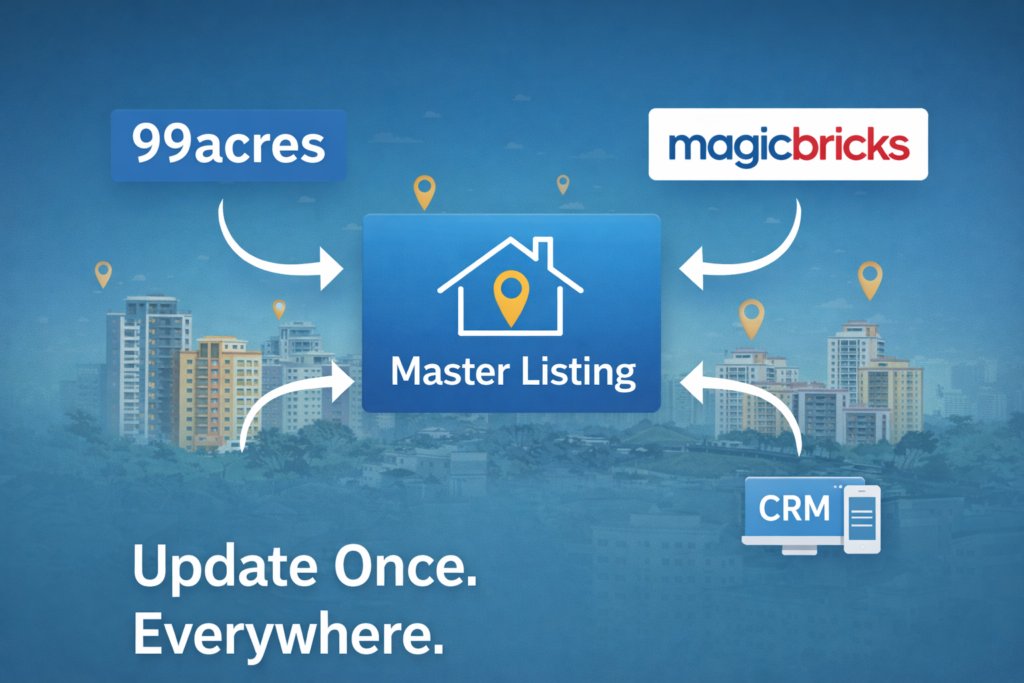
Property Listing Syndication Hell? Here’s How to Update Once and Be Done One Listing, Too Many Places In the Indian real estate market, a single property rarely lives in one place. A listing appears on 99acres, Magicbricks, Housing.com, broker WhatsApp catalogs, internal CRMs, and sometimes regional portals specific to a city. Each platform expects accurate data, but each treats updates differently. A price change reflects on one portal but stays outdated on another. A flat marked as sold continues to attract calls. Photos appear cropped, reordered, or missing altogether. Agents and back-office teams spend hours correcting issues they did not create. This is where Real Estate Automation becomes essential. When listings are managed as living records instead of static uploads, updates happen once and flow everywhere with consistency. Why Syndication Breaks Down in Indian Real Estate Most Indian brokerages still rely on manual uploads. Even large developers often maintain separate spreadsheets for portals, channel partners, and internal teams. CRMs rarely enforce strict listing standards. Portals like 99acres and Magicbricks have their own field structures, photo limits, and compliance checks. When each platform becomes its own source of truth, inconsistencies multiply. The cost goes beyond time. Buyers lose trust when listings feel unreliable. Agents waste energy explaining discrepancies. Managers struggle to assess pipeline health because listing data cannot be trusted. Automation fixes this by restoring order, not by pushing listings faster. Defining the Single Source of Truth Every successful syndication system begins with one decision. Where does the listing actually live? Strong teams create a master listing record. This record includes pricing, availability, property type, location details, media assets, and compliance fields relevant to Indian portals. All updates happen here and nowhere else. Real Estate Automation tools then distribute this data outward. Portals receive updates, but they never overwrite the master record. If a platform rejects a field, the system flags it immediately. This structure replaces guesswork with accountability. Choosing the Right Property Data for Indian Buyers Not every detail matters equally in India. Automation works best when it reflects buyer behavior. For residential listings, high-impact fields include carpet area, price breakup, possession timeline, floor number, parking details, and nearby landmarks. For rentals, furnishing status and maintenance charges matter more than descriptive copy. Automation allows these priorities to be enforced consistently. Mandatory fields cannot be skipped. Optional fields adapt by property type. The system does not rely on agent memory. This discipline improves listing quality before syndication even begins. Photos That Actually Convert Photos are where most Indian listings fall short. Blurry mobile images, poor lighting, and inconsistent order reduce inquiry quality. A clean process matters. Properties should be photographed in daylight, with wide shots of living areas first, followed by bedrooms, kitchen, bathrooms, and balconies. Amenities and floor plans come last. AI helps here at scale. Images can be auto-checked for resolution, orientation, and duplication. Thumbnails can be standardized. Platform-specific limits for 99acres or Magicbricks are handled automatically during upload. Automation ensures that media quality does not depend on who uploaded the listing. Writing Content That Fits Indian Portals Indian portals reward clarity over creativity. Buyers want facts, not adjectives. Automation templates help maintain consistency. Property descriptions pull from structured data rather than free text. Location benefits, project highlights, and pricing logic are assembled dynamically. AI can assist by adjusting tone for sales versus rentals, or for primary versus resale properties. The goal is accuracy, not persuasion. When content stays factual, syndication becomes smoother and rejections decrease. Updating Once Without Breaking Anything Updating once means designing a controlled process. A price change is made in the master record. Automation validates the update against portal rules. Syndication runs in sequence. Each platform confirms success or reports errors. If Magicbricks delays an update or 99acres flags a missing field, the system pauses and reports the issue. Nothing goes live partially or silently. This is how Real Estate Automation reduces listing maintenance from hours to minutes. Learning From Real Automation Work Product Siddha’s work with AI Automation Services for French Rental Agency MSC-IMMO followed the same principle. Listings across regional portals were centralized, validated, and distributed from one source. Availability updates reflected instantly, and manual corrections dropped sharply. The lesson translates cleanly to India. Control the source, then automate distribution. AI at Scale for Large Inventories For teams managing hundreds or thousands of listings, manual control is impossible. AI helps by classifying property types, detecting missing fields, and flagging anomalies before syndication. Duplicate listings can be identified. Expired properties can be archived automatically. This allows Indian brokerages and developers to scale without losing accuracy. Human teams focus on pricing strategy and negotiations instead of data hygiene. Syndication Feeds the Entire Stack Clean listings power more than portals. They feed voice bots, WhatsApp responders, lead routing systems, and site visit scheduling. In From Lead to Site Visit – Voice AI Automation for a Real Estate Platform, real-time listing data ensured that calls were routed only for available properties. Automation protected both the buyer experience and the agent’s time. Syndication cannot remain manual when downstream systems depend on it. Calm Returns to the Listing Process Property listing syndication does not have to feel like damage control. With the right structure, updates become predictable and reliable. One source of truth. One update. Clear confirmation across 99acres, Magicbricks, and every other channel. Real Estate Automation brings discipline to a process that too often feels chaotic. In the Indian market, where trust and speed define success, that discipline is no longer optional. Where Product Siddha Fits Into the Workflow Product Siddha supports property listing syndication by first bringing structure to how listing data is created and maintained. This begins with mapping existing CRM records, broker inputs, media storage, and portal requirements for platforms such as 99acres and Magicbricks. A master listing record is then defined, covering pricing, availability, location details, media assets, and compliance fields. Automation rules ensure that every update flows outward from this source with validation, sequencing, and confirmation built in, so errors are identified

AI Automation, Blog

How Email Automation Becomes a Revenue Channel When Done Right

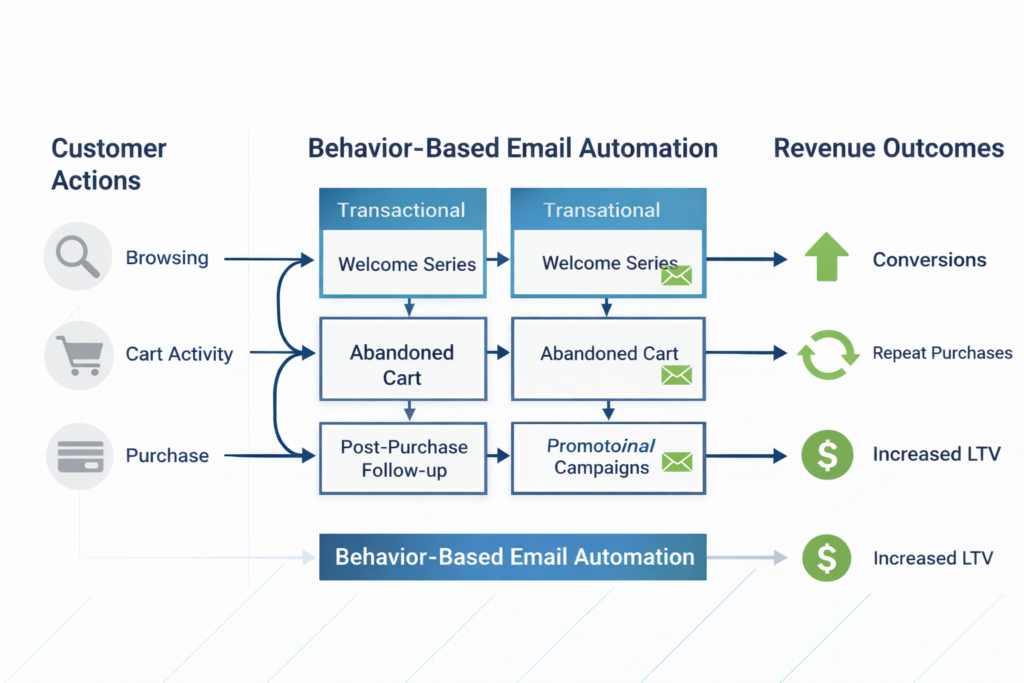
How Email Automation Becomes a Revenue Channel When Done Right From Inbox Noise to Business Asset Most inboxes are crowded. Buyers skim subject lines, delete without opening, and move on. This reality has led many teams to treat email as a support tool rather than a source of revenue. When email performance stalls, the channel is often blamed instead of the approach behind it. Email Automation changes this equation when it is built with purpose. Instead of sending campaigns on a schedule, strong teams design systems that respond to user behavior, timing, and intent. When done carefully, email stops being a reminder channel and starts acting as a steady contributor to revenue. This shift does not come from clever wording or volume. It comes from structure, data, and restraint. Why Email Often Fails to Drive Revenue Email fails when it is disconnected from user behavior. Messages are sent because a calendar says so, not because a user action triggered them. Content is generic because segmentation is shallow. Results are measured by open rates instead of outcomes. Another common issue is over-automation. Teams set up dozens of flows without understanding how users actually move through the product or store. Messages overlap. Timing feels random. Trust erodes. Email Automation works when it mirrors how customers already behave. The system should feel observant, not intrusive. The Difference Between Automated Email and Automated Thinking Sending automated emails is easy. Automating decisions is harder. The best Email Automation systems are built around decision points. A user browses but does not purchase. A customer buys once and disappears. A subscriber reads pricing pages repeatedly. Each of these actions signals intent. The role of automation is to respond with relevance, not repetition. Product Siddha has seen this pattern across industries. Automation that reacts to real behavior consistently outperforms automation based on assumptions. Revenue Starts with Clean Inputs No Email Automation system performs well without reliable data. This includes event tracking, purchase history, and lifecycle stages. In a Shopify brand engagement where Product Siddha helped boost email revenue using Klaviyo, the first step was not writing emails. It was cleaning event data. Product views, add-to-cart actions, and purchase confirmations were audited and corrected. Once the data reflected reality, automation flows were rebuilt around customer actions. Browse abandonment, post-purchase follow-ups, and replenishment reminders were timed based on actual behavior, not guesses. Revenue lift followed because the messages made sense to the recipient. This example highlights a quiet truth. Revenue growth through email usually starts with better inputs, not louder messages. The Technology Stack Behind Revenue-Driven Email Automation Email Automation becomes a revenue channel only when it is supported by the right technical foundation. Without a connected stack, even well-written automation flows fail to deliver consistent results. At a minimum, revenue-focused teams rely on four layers of technology. The first layer is data collection. Tools like Segment, Mixpanel, or native platform tracking capture user actions such as browsing, cart activity, purchases, and feature usage. These events form the raw signals that automation depends on. The second layer is the email delivery and automation platform. Systems such as Klaviyo, HubSpot, Customer.io, or Brevo handle workflows, triggers, and message sequencing. These tools decide when and to whom an email is sent. The third layer is customer context storage. This is often a CRM or data warehouse where user attributes, lifecycle stages, and historical behavior are stored and updated. Without this layer, personalization remains shallow. The final layer is analytics and attribution. Dashboards and reporting tools connect email actions to outcomes like conversions, repeat purchases, and lifetime value. This closes the loop between automation and revenue. In practice, Product Siddha has seen that email automation starts producing revenue only after these layers are properly connected. Writing emails comes later. Infrastructure comes first. Timing Matters More Than Frequency Many teams focus on how often emails are sent. Strong teams focus on when. A well-timed message sent once can outperform five poorly timed reminders. Email Automation allows teams to respond in hours or days based on user action, rather than batching communication. For example, in a SaaS coaching platform where full-funnel attribution was implemented, automated emails tied to trial usage proved more effective than weekly newsletters. Messages arrived after meaningful actions, such as completing a module or skipping sessions. Engagement increased because timing matched intent. Email Automation succeeds when it respects the user’s rhythm. Content That Supports Decisions Revenue-focused email content does not persuade aggressively. It supports decisions already forming. This means explaining value clearly, reducing friction, and answering common questions. It avoids urgency tactics that feel artificial. Strong teams write emails as if they are continuing a conversation, not starting one. The tone stays helpful and direct. In fintech environments, such as a HubSpot Marketing Hub setup for a growing brand, automated emails focused on clarity. Feature explanations, usage reminders, and simple prompts guided users toward action. Conversion followed because confusion was reduced. Segmentation Is About Behavior, Not Labels Many Email Automation systems rely on static lists. These lists age quickly. Behavioral segmentation adapts in real time. Users move in and out of flows based on what they do, not what they were once tagged as. This approach reduces wasted sends and increases relevance. It also keeps automation manageable. Across Product Siddha’s analytics and automation projects, behavioral triggers consistently outperform demographic or role-based segmentation. People reveal intent through action. Personalization at Scale Without Losing Control Personalization does not mean writing a different email for every user. At scale, it means designing systems that adapt automatically based on behavior. Revenue-focused Email Automation uses dynamic content, conditional logic, and real-time data. A returning customer sees different messaging than a first-time visitor. A high-intent user receives follow-ups sooner than a casual browser. This approach depends on rules, not guesswork. For example, users who view pricing pages multiple times may enter a value-focused email flow. Customers who complete a purchase may receive education or replenishment reminders instead of discounts. In real implementations, including automation setups using tools

AI Automation, Blog

Zapier vs Make vs n8n: Which No-Code Tool Actually Works for Real Estate?

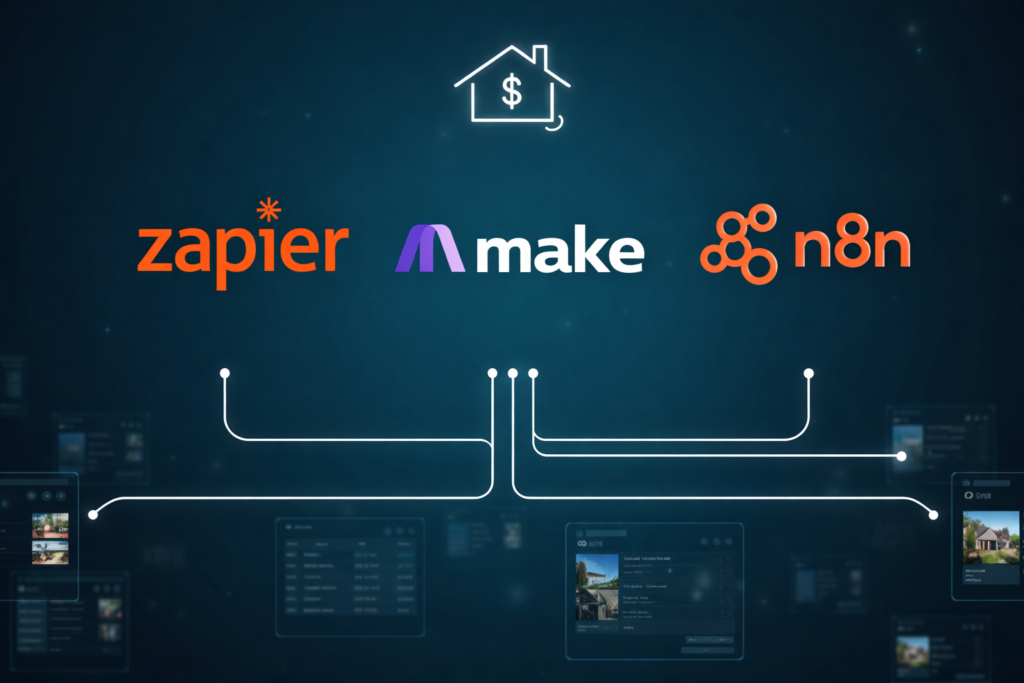
Zapier vs Make vs n8n: Which No-Code Tool Actually Works for Real Estate? Tools Meet Ground Reality Real estate teams adopt automation for one reason. They want fewer manual steps between a lead inquiry and a closed deal. Over the last few years, no-code tools such as Zapier, Make, and n8n have been promoted as simple answers to complex operational problems. In practice, real estate workflows are rarely simple. Leads arrive from portals, websites, calls, and messaging apps. Sales teams work across locations. Follow-ups are time-sensitive. Data quality matters because missed updates lead to missed revenue. Choosing the right automation tool is not about features alone. It is about whether the tool can survive real estate conditions without constant fixes. This is where Real Estate Automation either proves its value or quietly breaks down. What Real Estate Automation Actually Needs Before comparing tools, it helps to define the work. Real estate automation typically includes lead capture, routing, follow-up, site visit scheduling, CRM updates, and reporting. These workflows involve delays, conditional logic, retries, and human handoffs. A lead may respond after three days. A site visit may be rescheduled twice. An agent may miss a call. Automation tools must handle uncertainty without failing silently. This requirement shapes how Zapier, Make, and n8n perform in real-world use. Zapier in Real Estate Operations Zapier is often the first tool teams try. It is quick to set up and easy to understand. For basic Real Estate Automation, Zapier works well. Simple tasks like pushing website leads into a CRM or sending confirmation emails can be handled reliably. Zapier shines when workflows are short and predictable. However, Zapier struggles with complex logic. Multi-step workflows that require branching, delays, or retries become harder to manage. Costs also rise quickly as task volume increases, which is common in property sales environments. Zapier fits solo agents or small teams testing automation for the first time. It is less suited for brokerages managing hundreds of leads per week. Make and Its Strength in Workflow Design Make offers more flexibility. It allows visual workflow building with branching paths, conditional logic, and data manipulation. For Real Estate Automation, this matters. Make handles lead qualification flows, multi-channel notifications, and delayed follow-ups more gracefully than Zapier. In automation work similar to what Product Siddha implemented for a French rental agency, MSC-IMMO, structured workflows were essential. Lead responses, document requests, and follow-ups needed logic that adapted to renter behavior. Tools like Make handle this better because workflows remain visible and editable. The trade-off is complexity. Make requires planning. Teams must understand their process before building it. When they do, the result is more stable automation. n8n and Control Over Automation n8n takes a different approach. It is open-source and can be self-hosted. This gives teams full control over data, logic, and scaling. For real estate platforms handling sensitive data or high lead volume, this control matters. n8n allows advanced logic, custom scripts, and integration with internal systems. In Product Siddha’s work on voice AI automation that moved leads from inquiry to site visit, reliability was critical. Failures could not be tolerated. Tools with deeper control options are better suited for such workflows. However, n8n requires technical expertise. It is not a plug-and-play solution. Smaller teams without engineering support may find it challenging to maintain. Comparing Tools by Real Estate Use Case To understand which tool actually works, it helps to compare them against common real estate scenarios. For basic lead capture and email alerts, Zapier performs adequately. Setup is fast and maintenance is low. For multi-step lead qualification, Make offers better structure. Conditional routing, delays, and error handling are clearer and easier to manage. For large-scale automation across calls, messaging, CRM updates, and reporting, n8n provides the most control. It handles complexity well but demands technical discipline. Real Estate Automation succeeds when tools match the workload. Mismatch leads to brittle systems that break under pressure. Cost and Scale Considerations Cost is often underestimated. Zapier pricing increases with task volume. Real estate teams generate many tasks through follow-ups and status updates. Make pricing scales more predictably. It allows higher volume at lower cost, making it attractive for growing teams. n8n’s cost depends on hosting and maintenance. While licensing may be low, infrastructure and expertise add overhead. Product Siddha often advises teams to evaluate total cost over six to twelve months, not just setup expenses. Automation that fails during peak demand costs more than it saves. Reliability Matters More Than Features In real estate, missed actions translate directly to lost trust. A delayed response or missed follow-up damages relationships. Automation tools must handle failures gracefully. Make and n8n offer better error handling and retries. Zapier’s simplicity can become a limitation in unpredictable environments. This is why Real Estate Automation should be tested with real scenarios, not demos. Where Teams Often Go Wrong Many teams choose tools based on popularity rather than fit. Others try to automate broken processes. Automation amplifies existing behavior. If follow-up logic is unclear, no tool will fix it. Successful teams map workflows on paper first. Only then do they choose tools. Practical Guidance from the Field Product Siddha’s experience across analytics, automation, and real estate workflows points to a simple conclusion. Tools do not create efficiency. Clear processes do. Zapier is useful for quick wins. Make is effective for structured automation. n8n suits teams that need control and scale. There is no universal winner. The right choice depends on volume, complexity, and internal capability. Choosing What Holds Up Over Time Real Estate Automation is not about replacing people. It is about reducing friction. Teams that choose tools carefully see faster response times, cleaner data, and better sales outcomes. Those that rush decisions spend time fixing automation instead of selling property. The tools discussed here each have strengths. The work lies in matching them to reality.

AI Automation, Blog

Indian Real Estate Firms Are Quietly Replacing CRM Work with AI Agents

Indian Real Estate Firms Are Quietly Replacing CRM Work with AI Agents A Practical Shift Inside Sales Offices Indian real estate firms have never lacked effort. Sales teams work long hours, juggle calls, update records, and follow up with buyers who may or may not show up for site visits. What they have lacked is time. For years, CRM systems promised order and efficiency, yet many teams found themselves spending more time feeding the system than selling property. Over the past two years, a quiet shift has begun. Instead of hiring more CRM executives or forcing agents to log every interaction, firms are introducing AI Agents that handle routine sales operations in the background. This is not about futuristic experimentation. It is about removing friction from everyday work. AI Agents now answer inquiries, qualify leads, schedule site visits, and keep records updated without constant human input. In many Indian real estate offices, CRM dashboards are no longer the center of activity. The real work happens through automated agents that act, respond, and learn continuously. Why Traditional CRM Work Started Breaking Down CRMs were designed for structured sales environments. Indian real estate rarely fits that model. Leads come from portals, WhatsApp, phone calls, walk-ins, and referrals. Agents are often on the move, not sitting at desks updating fields and notes. As a result, CRMs became partial records at best. Follow-ups were missed. Lead response times stretched from minutes to hours. Managers relied on incomplete reports, while agents relied on memory and personal notebooks. The problem was not the software. It was the assumption that humans would consistently perform repetitive data work under pressure. AI Agents remove that assumption. They listen, log, update, and trigger actions automatically. What AI Agents Actually Do in Real Estate Operations AI Agents are not chatbots answering basic questions and stopping there. In real estate workflows, they act as digital coordinators. They respond to incoming leads across channels, including web forms, calls, and messaging apps. They ask qualifying questions based on budget, location preference, and timeline. They assign leads to the right sales agent and book site visits based on availability. After each interaction, the agent updates records, sets reminders, and triggers follow-ups. No manual entry. No forgotten notes. The system stays current because the agent never stops working. This shift changes the role of human sales teams. Agents focus on negotiation, property walkthroughs, and closing. AI Agents handle the rest. From Lead to Site Visit Through Voice AI Automation One clear example of this approach can be seen in Product Siddha’s work on voice AI automation for a real estate platform. The goal was simple. Reduce lead drop-off between inquiry and site visit. Instead of routing calls to busy sales executives, a voice-based AI Agent answered inbound calls, collected buyer intent, confirmed interest, and scheduled visits automatically. The agent followed up with reminders and handled rescheduling without human intervention. The result was not just faster response times. It was consistency. Every lead received the same level of attention, regardless of time of day or call volume. Sales teams reported higher show-up rates and fewer wasted follow-ups. This type of automation replaces a large portion of CRM-related work without replacing salespeople. How Indian Firms Are Using AI Agents Instead of CRM Tasks Across India, developers and brokerage firms are adopting AI Agents in specific areas rather than ripping out systems overnight. Lead qualification is often the first step. AI Agents filter serious buyers from casual inquiries before assigning them to agents. Follow-up management comes next. Agents no longer chase reminders or update statuses. AI Agents track conversations and trigger the next action automatically. Reporting is another major shift. Instead of manual dashboards updated at the end of the day, managers view live performance data generated by agent activity. CRMs still exist in many setups, but they operate quietly in the background. AI Agents interact with them, update them, and extract insights without requiring constant human input. Beyond Real Estate, Proof from Other Industries The strength of AI Agents becomes clearer when viewed across industries. Product Siddha has implemented similar automation models for rental agencies, SaaS platforms, and marketplaces. In the case of a French rental agency, MSC-IMMO, AI automation handled inquiry routing, follow-ups, and scheduling. The operational logic closely mirrors Indian real estate workflows, where speed and responsiveness matter more than polished CRM records. Another example comes from building custom dashboards by stage. Instead of asking teams to update metrics manually, AI Agents populated dashboards automatically based on real activity. The same principle applies to real estate sales funnels. These case studies show that AI Agents work best when they remove routine decisions from human hands. Data Accuracy Improves When Humans Are Removed from Data Entry One unexpected outcome of AI Agent adoption is better data quality. Human-entered CRM data often suffers from delays, shortcuts, and inconsistency. AI Agents log interactions as they happen. Every call, message, and booking becomes structured data. Over time, firms gain a clearer picture of lead sources, conversion timelines, and agent performance. This data can support smarter pricing decisions, marketing spend allocation, and inventory planning. The value compounds because the system improves as more interactions flow through it. What This Means for Sales Teams on the Ground Sales agents are often wary of automation. In practice, AI Agents reduce pressure rather than increase it. Agents spend less time on follow-ups that go nowhere. They receive better-qualified leads. Their calendars are managed for them. Conversations start at a higher level of intent. Managers gain visibility without micromanagement. Instead of chasing reports, they review outcomes. This balance is why AI Agents are being accepted more easily than earlier CRM mandates. A Measured Path Forward for Indian Real Estate Firms The most successful firms are not rushing to replace everything at once. They introduce AI Agents into one workflow, measure impact, and expand gradually. Lead handling, site visit coordination, and follow-up automation are natural entry points. Over time, these agents become the operational backbone,

AI Automation, Blog

Building Self-Healing Business Processes with AI Agents and Automation

Building Self-Healing Business Processes with AI Agents and Automation When Systems Learn to Fix Themselves Most business processes fail quietly. A data sync breaks. A lead stops moving. A report shows numbers that no one trusts. Teams compensate with manual checks, follow-up messages, and late-night fixes. Over time, these workarounds become normal. Self-healing business processes change that pattern. With AI agents and well-designed automation, systems can detect issues, adjust workflows, and restore operations without waiting for human intervention. This is not a futuristic idea. It is already happening across analytics, operations, customer engagement, and internal reporting. At the center of this shift is AI Automation used with restraint and purpose. When applied carefully, it reduces downtime, protects data integrity, and allows teams to focus on decisions instead of repairs. What Self-Healing Really Means in Business Operations Self-healing does not mean a system that never fails. It means a system that recognizes failure early and responds in predictable ways. For example, if a data source stops sending events, an AI agent can flag the issue, switch to a fallback source, and notify the team with context already prepared. If a lead pipeline slows down, automation can trace the delay to a specific stage and trigger corrective steps. This approach depends on three elements working together: Continuous monitoring Context-aware decision rules Automated recovery actions AI automation provides the connective tissue that allows these elements to function as a single system. Where Traditional Automation Falls Short Many organizations already use automation, yet their processes remain fragile. The reason is simple. Traditional automation follows fixed instructions. When conditions change, it stops. A rule that sends alerts based on one metric becomes useless when data definitions shift. A workflow built for one team structure breaks after a reorganization. Manual intervention fills the gap, and trust in the system erodes. AI agents improve this by adapting to change. They observe patterns, learn acceptable ranges, and adjust responses based on current conditions rather than static thresholds. This difference marks the transition from automated processes to self-healing ones. Learning From Real Operational Systems Product Siddha’s work across analytics and automation projects shows how self-healing principles apply in practice. In the case study Built Custom Dashboards by Stage, fragmented data across tools caused reporting delays and frequent errors. Instead of relying on manual checks, the system was designed to validate incoming data automatically. When inconsistencies appeared, dashboards adjusted their calculations and flagged the root cause. Reporting stabilized without daily intervention. Similarly, in Product Analytics for a Ride-Hailing App with Mixpanel, event tracking issues once required engineering involvement to diagnose. AI-driven monitoring identified missing events, suggested schema fixes, and restored visibility faster than human review alone. These examples show how AI automation shifts teams from reactive fixes to continuous stability. AI Agents as Process Supervisors AI agents act like supervisors that never sleep. They watch workflows, check assumptions, and respond when something drifts off course. In customer-facing systems, this role becomes especially valuable. Consider lead management, onboarding, or transaction processing. Delays often happen because one step depends on another that silently fails. In From Lead to Site Visit – Voice AI Automation for a Real Estate Platform, voice AI handled inbound calls and scheduling. When calendar sync issues occurred, the system detected booking failures and rerouted appointments automatically. The process healed itself before users noticed a problem. This level of resilience shortens cycle times and protects the user experience without adding operational overhead. Self-Healing in Marketing and Revenue Systems Revenue systems are sensitive to small errors. A broken email trigger or missing attribution event can distort results for weeks. In Boosting Email Revenue with Klaviyo for a Shopify Brand, AI automation monitored campaign performance and delivery health. When open rates dropped unexpectedly, the system reviewed recent changes, identified timing conflicts, and adjusted sending windows automatically. Revenue recovered without manual campaign resets. Likewise, HubSpot Marketing Hub Setup for a Growing Fintech Brand included automated checks for CRM data consistency. When lead fields failed to sync, fallback rules preserved segmentation accuracy. These systems did not replace marketing judgment. They protected it by keeping the underlying machinery reliable. Designing for Recovery, Not Perfection The strongest self-healing systems are designed with failure in mind. They assume something will break and plan responses in advance. This mindset shapes how AI automation is implemented. Monitoring focuses on signals that matter, not every possible metric. Recovery actions are limited and reversible. Alerts provide context instead of noise. Product Siddha applies this approach across complex environments, including Product Analytics & Full-Funnel Attribution for a SaaS Coaching Platform and Driving Growth for a U.S. Music App with Full-Stack Mixpanel Analytics. In both cases, systems were built to detect data drift early and adjust attribution logic before decisions were affected. The result is confidence in numbers and faster operational response. When AI Automation Improves Human Work Self-healing systems do not remove humans from the loop. They change where human effort is applied. Instead of troubleshooting missing data, teams review trends. Instead of chasing failed tasks, they refine workflows. Instead of fixing yesterday’s problems, they plan tomorrow’s improvements. In AI Automation Services for French Rental Agency MSC-IMMO, automation stabilized lead handling and follow-ups. Staff spent less time resolving errors and more time improving tenant experience. The system absorbed routine disruptions and allowed people to focus on judgment-driven work. This balance is where AI automation delivers its most durable value. Building Toward Resilient Operations Self-healing business processes are not built in one sprint. They emerge through careful layering. Organizations start by identifying fragile points. They add monitoring with clear intent. They introduce AI agents gradually, validating each recovery action. Over time, the system becomes more stable and less dependent on constant oversight. Product Siddha’s experience across marketplaces, analytics platforms, and automation-heavy environments shows that resilience is not accidental. It is designed. AI automation, when grounded in real operational needs, allows businesses to grow without increasing complexity at the same pace.

Blog, Product Management

How Top Product Teams Turn Customer Signals into Roadmap Decisions

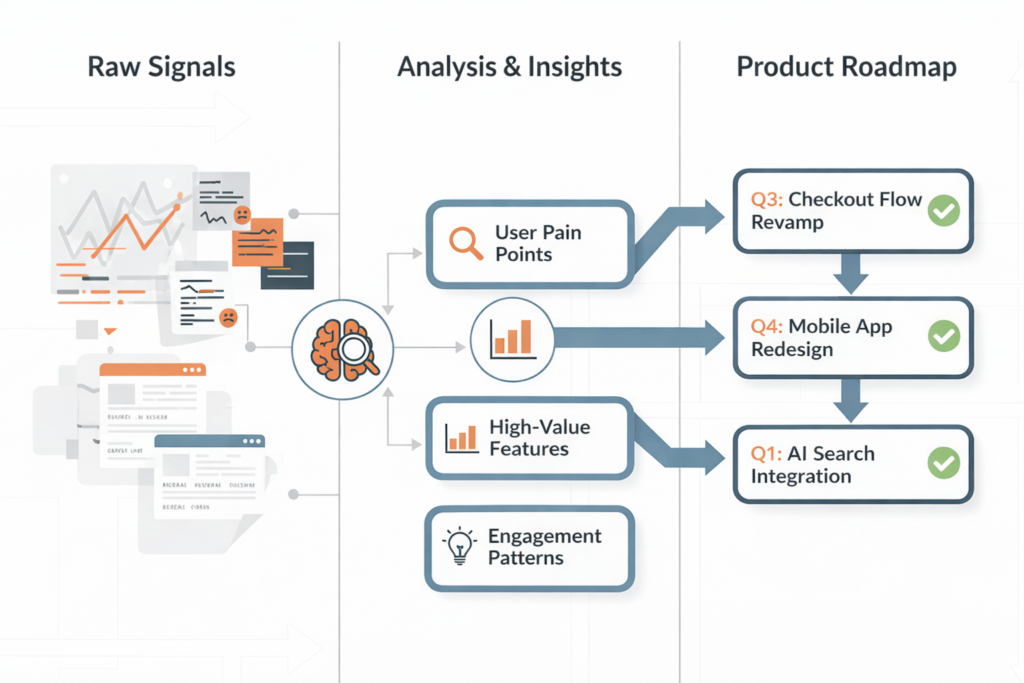
How Top Product Teams Turn Customer Signals into Roadmap Decisions Listening Without Guesswork Every product team claims to be customer-driven. In practice, most teams are surrounded by noise. Feature requests arrive through support tickets. Usage data sits inside analytics tools. Sales teams pass along anecdotes from calls. Founders add instinctive opinions. Somewhere between all this input, roadmap decisions are made. Top product teams handle this differently. They treat customer signals as evidence, not opinions. They do not chase every request or react to the loudest voice. Instead, they build a clear system that converts raw signals into decisions that stand the test of time. This is where disciplined Product Management begins. What Counts as a Customer Signal Customer signals are not limited to feedback forms or survey scores. In strong product organizations, signals fall into three broad categories. First, there is behavioral data. This includes how users move through the product, where they pause, and where they drop off. Second, there is expressed feedback, such as support tickets, call notes, and direct messages. Third, there is outcome data, including retention, expansion, churn, and revenue patterns. The mistake many teams make is treating these sources separately. Product Management works best when these signals are reviewed together, not in isolation. Separating Patterns from Noise Not every signal deserves action. One frustrated customer does not define a roadmap. Ten similar complaints might. A single power user request may reflect edge behavior, not the broader market. Experienced product leaders look for patterns across time and segments. They ask simple questions. Does this behavior repeat? Does it affect a meaningful group of users? Does it connect to business outcomes we care about? In Product Siddha’s work on product analytics for a ride-hailing app using Mixpanel, the team observed that riders were not abandoning the app at checkout, as originally assumed. Instead, they were hesitating earlier, during fare comparison. This insight only surfaced when behavioral data was studied alongside session paths and timing. The roadmap changed as a result. Pricing transparency features were prioritized over payment optimizations. Turning Usage Data into Clear Product Questions Data alone does not shape a roadmap. Interpretation does. Strong Product Management teams translate signals into questions before jumping to solutions. For example, instead of asking, “Should we build feature X,” they ask, “Why are users failing to complete task Y?” This shift keeps teams focused on problems rather than outputs. In the case of a SaaS coaching platform where Product Siddha implemented full-funnel attribution, product leaders initially believed onboarding content was the weak link. Funnel analysis showed a different story. Users were completing onboarding but failing to return in the second week. The roadmap shifted toward habit-building features rather than additional tutorials. The Role of Qualitative Feedback Quantitative signals show what users do. Qualitative signals explain why. Top teams combine both. Customer interviews, support transcripts, and call recordings help product managers understand intent. However, they are used carefully. Teams avoid treating interviews as votes. Instead, they look for repeated themes and language that point to unmet needs. When Product Siddha supported Product Management for the UAE’s first lifestyle services marketplace, interviews revealed that users were less concerned about service variety and more concerned about trust and follow-through. Usage data supported this insight, showing drop-offs after booking. The roadmap shifted toward provider verification and service tracking rather than expanding categories. Prioritization Is Where Discipline Shows Turning signals into decisions requires restraint. Not every validated problem becomes a roadmap item. Teams must weigh impact, effort, and alignment with long-term goals. Strong product leaders use simple prioritization frameworks. They avoid over-engineering scoring models that create false precision. Clear reasoning matters more than complex math. In building custom dashboards by stage for multiple organizations, Product Siddha emphasized clarity over volume. Dashboards highlighted only the signals tied directly to product outcomes. This allowed leadership teams to make roadmap calls with fewer meetings and less debate. Avoiding the Trap of Opinion-Led Roadmaps One of the hardest challenges in Product Management is managing internal pressure. Sales teams want features that close deals. Executives want differentiation. Engineers want technical improvements. Top product teams do not ignore these inputs. They test them against customer evidence. If a proposed feature does not map to a validated signal, it is parked, not rushed. This approach builds trust over time. Stakeholders learn that roadmap decisions are grounded in reality, not preference. Signals Evolve as Products Mature Early-stage products rely heavily on direct feedback and founder conversations. As products scale, behavioral data becomes more reliable. Mature products shift focus toward retention, depth of use, and efficiency. Product teams that fail to adjust their signal mix often stall. They keep listening the same way long after their user base has changed. In the case of building the world’s first AI-powered networking assistant, early roadmap decisions leaned heavily on founder-led interviews. As adoption grew, usage analytics revealed which networking actions delivered real value. The product evolved accordingly. Making Roadmaps Understandable, Not Just Accurate A roadmap is a communication tool. Even the best decisions fail if they cannot be explained clearly. Top Product Management teams articulate why each roadmap item exists. They connect features to signals and signals to outcomes. This clarity helps engineering teams execute with confidence and helps leadership stay aligned. Simple language matters here. Avoiding jargon keeps the roadmap accessible to everyone involved. Where Many Teams Go Wrong Teams struggle when they treat customer signals as validation after decisions are made. Others collect data endlessly without making calls. Both approaches weaken Product Management. The balance lies in steady review cycles, clear ownership, and the willingness to say no. Signals guide decisions. They do not replace judgment. Decisions That Hold Up Over Time Great product roadmaps are not built in isolation or rushed meetings. They are shaped through careful attention to customer behavior, consistent analysis, and thoughtful prioritization. Product Siddha’s experience across analytics, automation, and Product Management shows a common truth. Teams that listen well build products that last. They spend less time reacting

AI Automation, Blog

How Real Estate Teams Use AI Automation to Shorten Sales Cycles

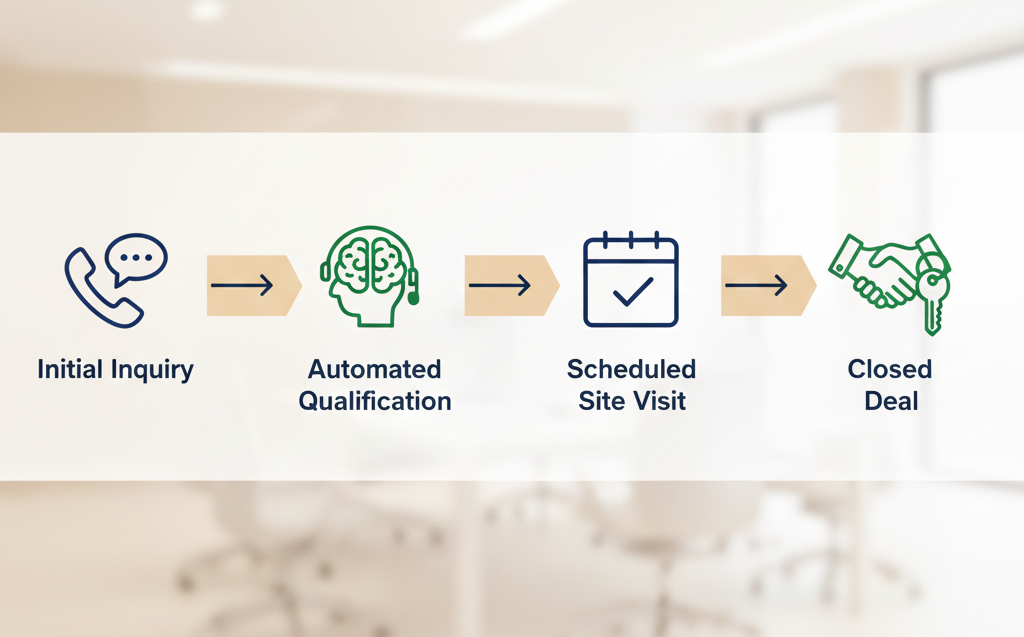
How Real Estate Teams Use AI Automation to Shorten Sales Cycles Closing the Gap Between First Contact and Final Signature In real estate, time is rarely neutral. Every extra hour between a new inquiry and a meaningful response lowers the chance of a deal moving forward. Buyers lose interest, sellers explore other options, and agents spend more time chasing updates than closing transactions. Over the past few years, many real estate teams have begun turning to AI automation not as a replacement for human judgment, but as a way to remove friction from routine work. When done correctly, AI Automation for Real Estate Teams shortens sales cycles by improving speed, consistency, and follow-through at every stage of the funnel. This shift is not about aggressive marketing tactics or abstract technology promises. It is about practical systems that help teams respond faster, qualify better, and focus their energy where it matters most. Where Sales Cycles Usually Break Down Before automation enters the picture, most delays happen in predictable places. Leads arrive outside business hours and sit unanswered until the next day. Agents manually sort inquiries without clear intent signals. Follow-ups depend on memory, spreadsheets, or overworked CRM notes. Site visit scheduling becomes a chain of back-and-forth messages. None of these issues are dramatic on their own. Together, they quietly stretch a sales cycle from days into weeks. AI automation works best when it addresses these small failures of timing and coordination rather than attempting to overhaul the entire sales process at once. Faster Responses Without Adding Headcount Speed remains the strongest factor in early-stage conversions. AI-powered systems now allow real estate teams to respond to new inquiries within seconds, regardless of when they arrive. Chat and voice AI tools can acknowledge interest, ask basic qualifying questions, and route leads to the right agent based on location, budget, or property type. This initial contact feels immediate and organized, not rushed or generic. One example comes from Product Siddha’s work on “From Lead to Site Visit – Voice AI Automation for a Real Estate Platform.” In this project, voice AI handled inbound calls, captured intent, and scheduled site visits automatically. Agents no longer spent hours returning missed calls. Prospects moved directly from inquiry to appointment without delay. Smarter Lead Qualification at Scale Not every inquiry deserves the same level of attention. AI automation helps teams identify which leads are ready to move forward and which need time. By analyzing response patterns, engagement history, and basic intent signals, automated systems can tag leads as high, medium, or low priority. Agents see this context before making contact, which changes the tone of the conversation. Instead of asking surface-level questions, agents can focus on specifics like financing readiness or move-in timelines. This reduces wasted calls and shortens the path to serious discussions. For teams managing large volumes of inbound traffic, this alone can remove days from the sales cycle. Clean Data That Supports Faster Decisions Sales delays often stem from poor visibility. When data is fragmented across tools, teams hesitate. They double-check information, ask for updates, or wait for reports. Product Siddha has addressed this problem across several projects by building custom dashboards by stage. These dashboards give real estate managers a clear view of where every lead sits, how long each stage takes, and where deals slow down. With this level of clarity, teams can intervene early. If site visits stall, scheduling workflows are adjusted. If follow-ups lag, automation rules are refined. Decisions are made with evidence, not guesswork. Automated Follow-Ups That Feel Human Follow-up is one of the most neglected parts of real estate sales, largely because it is repetitive and time-consuming. AI automation ensures no lead goes silent. Emails, messages, or reminders are triggered based on behavior rather than fixed schedules. A prospect who views a listing twice receives a different follow-up than one who has gone quiet for a week. The key is restraint. Well-designed automation supports agents instead of overwhelming prospects. Messaging stays relevant and timely, which keeps conversations alive without pressure. This balance is central to effective AI Automation for Real Estate Teams. Shortening the Path to Site Visits The site visit remains a critical turning point. Delays here often derail deals entirely. Automation simplifies scheduling by syncing calendars, offering instant time slots, and confirming appointments automatically. Voice AI, chat assistants, and CRM integrations work together to remove manual coordination. In the previously mentioned Product Siddha real estate platform project, site visit booking times dropped significantly once automation was introduced. Prospects moved from interest to in-person engagement in hours instead of days. This acceleration has a direct impact on close rates. Learning From Patterns Across Markets AI systems do more than execute tasks. They learn from outcomes. Over time, patterns emerge. Certain property types close faster with evening follow-ups. Some buyer segments respond better to voice calls than messages. Pricing discussions stall at predictable points. By reviewing these patterns, teams refine their approach. Sales cycles shrink not because agents work harder, but because systems guide them toward what works. This mindset mirrors Product Siddha’s broader analytics work across industries, including growth-focused dashboards and funnel attribution systems used in SaaS and marketplace environments. The same principles apply clean data, clear signals, and steady optimization. What Successful Teams Do Differently Teams that see the strongest results from automation share a few habits. They start with one or two bottlenecks rather than automating everything at once. They involve agents in workflow design so tools match real conversations. They review performance monthly and adjust rules instead of treating automation as a fixed setup. Most importantly, they treat AI as operational support, not a sales shortcut. This approach keeps the process grounded and sustainable. Moving Faster Without Losing Trust Shortening a sales cycle should never come at the expense of trust. Real estate remains a relationship-driven business. AI automation works best when it handles timing, organization, and consistency, allowing agents to focus on judgment, negotiation, and personal connection. Product Siddha’s work across real estate,