
Product Siddha

Product Analytics

Speed to Lead The Unsung Metric in Real Estate Success
Blog, Product Analytics

Speed to Lead: The Unsung Metric in Real Estate Success

Speed to Lead: The Unsung Metric in Real Estate Success The moment that decides everything In real estate, timing shapes outcomes long before negotiation begins. A buyer fills out a form, sends a message, or makes a missed call. At that moment, interest is fresh and intent is active. What happens next often matters more than pricing, amenities, or follow-up skill. Speed to lead, the time between enquiry and first response, quietly determines which real estate leads turn into conversations and which disappear without a trace. Despite its impact, speed to lead remains overlooked. Many teams track enquiries, site visits, and closures, yet fail to measure how quickly real estate leads are acknowledged. This gap explains why strong marketing pipelines often produce uneven results. The issue is rarely lead quality alone. More often, it is delayed response. Why speed matters more than volume Real estate leads are time-sensitive by nature. Buyers compare options quickly. Portals, social platforms, and property websites place competing listings one click away. When a response takes hours, the buyer’s attention shifts. Research across sales-driven industries consistently shows that faster responses lead to higher engagement rates. In real estate, this effect is even stronger because buyers often submit multiple enquiries within a short span. The first response sets the tone. It signals seriousness, reliability, and preparedness. Many teams respond to weak conversions by increasing advertising budgets or widening listing exposure. This increases lead volume but rarely improves outcomes. Speed to lead works differently. It improves results using the same pool of real estate leads, simply by engaging buyers while intent is still active. Where delays actually come from Response delays rarely come from lack of effort. They usually stem from fragmented workflows and unclear ownership. Leads arrive through website forms, phone calls, messaging platforms, and property portals. Each channel often routes differently. Sales agents juggle site visits, internal coordination, and existing clients. Another issue lies in perception. Teams assume that responding within a few hours is acceptable. Internally, this may seem reasonable. From the buyer’s perspective, it feels slow. In many real estate operations reviewed by Product Siddha, response delays remained hidden because they were not measured. Without timestamps, benchmarks, and visible reporting, speed to lead stayed invisible. What remains invisible rarely improves. Speed as a trust signal Buyers interpret response time as a sign of reliability. A quick acknowledgment reassures them that their enquiry reached the right place. It reduces uncertainty and keeps attention anchored. Speed does not require aggressive sales language. It requires presence. Buyers are not asking for instant decisions. They want confirmation that someone is listening. Delayed responses create doubt. Buyers question whether their message was ignored or misplaced. That doubt weakens engagement before a real conversation begins. Once confidence drops, it is difficult to recover momentum. From enquiry to conversation Speed to lead is not about rushing conversations. It is about reducing the gap between enquiry and meaningful exchange. The first response does not need to solve everything. It needs to open the door. Effective teams ensure that real estate leads receive a timely acknowledgment followed by a clear next step. This may be a scheduled call, a site visit option, or a simple clarification question. The key is continuity. Buyers should feel progress, not pause. In Product Siddha’s implementation work for real estate platforms, response speed is treated as a core operational metric. Across client deployments, the average speed to lead is consistently kept under 45 seconds. This is achieved through clear routing, ownership logic, and lightweight automation that ensures no enquiry waits silently. The outcome is not more conversations, but better ones that move forward quickly. This approach was also reflected in the case study titled “From Lead to Site Visit – Voice AI Automation for a Real Estate Platform,” where missed calls and delayed callbacks were the primary cause of drop-offs. Improving response timing directly increased site visit conversions, without changing lead sources or sales scripts. Measuring what truly matters Many teams measure how many real estate leads arrive each day. Far fewer measure how quickly those leads are contacted. This imbalance leads to misguided decisions. Speed to lead should be tracked alongside lead volume and conversion rate. Useful indicators include average first response time, percentage of leads contacted within defined time windows, and progression rates based on response speed. When reviewed consistently, these metrics reveal patterns. Certain channels may enable faster engagement. Some teams may outperform others due to response discipline rather than sales technique. These insights support practical improvements rather than surface-level reporting. In Product Siddha’s work building custom dashboards by stage, making response timing visible helped teams identify exactly where momentum was lost. Once delays were clear, corrective action followed naturally. Human limits and system support Speed to lead does not demand constant availability from individuals. It demands systems that support human limits. Sales agents cannot respond instantly to every enquiry while attending site visits or meetings. Clear routing, alerts, and structured ownership ensure that no real estate lead waits unnoticed. If one agent is unavailable, another steps in. Speed becomes a shared standard rather than an individual burden. Teams that treat response time as an operational expectation achieve consistency without burnout. Discipline replaces pressure. The cost of slow response Slow response carries hidden costs. Leads cool quickly. Follow-ups require more effort. Conversations begin with skepticism instead of curiosity. Over time, teams compensate by increasing outreach volume, which further strains capacity. Fast response reduces friction. Conversations feel natural. Buyers remain receptive. Sales teams spend less time chasing and more time guiding. Speed to lead improves efficiency by aligning effort with timing rather than intensity. A grounded path forward Improving speed to lead does not require sweeping change. It requires focus. Teams must decide that response time matters and reflect that decision in daily operations. Clear benchmarks, visible tracking, and regular review form the foundation. Respecting buyer time becomes part of culture rather than policy. When applied consistently, results improve quietly but reliably. Product Siddha’s experience
Blog, Product Analytics

Product Analytics Metrics Every SaaS Should Track

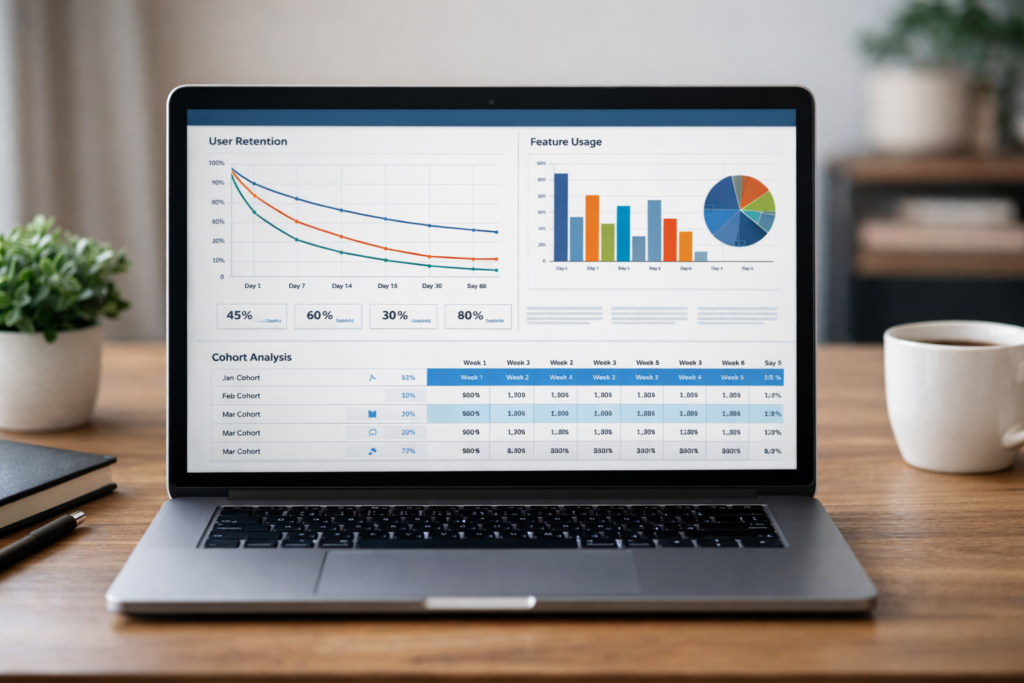
Product Analytics Metrics Every SaaS Should Track Signals That Matter SaaS growth rarely stalls because of a lack of features. It slows when teams lose sight of how real users interact with the product. Dashboards look busy, reports arrive on time, yet decisions feel reactive. This is where Product Analytics earns its place. Product Analytics focuses on behavior inside the product. It shows how users move, where they pause, what they repeat, and where they leave. For SaaS businesses, these patterns are often more valuable than revenue reports or campaign data alone. At Product Siddha, most analytics engagements begin with a single question. Which signals actually reflect product health? This article outlines the Product Analytics metrics every SaaS company should track, why they matter, and how they connect to real operational outcomes. Active Usage Metrics Daily Active Users and Monthly Active Users DAU and MAU remain foundational metrics in Product Analytics. They reveal how often users return and whether the product has become part of a routine. A rising user base with falling activity is an early warning sign. The ratio between DAU and MAU is often more telling than either number alone. A strong ratio suggests habitual use. A weak ratio points to shallow engagement. In a Product Siddha project involving a U.S. music streaming app, usage analysis showed a sharp gap between signups and weekly activity. By studying DAU trends by feature, the team discovered that users returned primarily for curated playlists, not social features. This insight redirected development priorities and improved retention without adding new acquisition spend. Activation Metrics Time to First Value Time to First Value measures how quickly a user experiences a meaningful outcome after signing up. In SaaS, this moment defines whether curiosity turns into commitment. Product Analytics tracks the actions that lead to that first success. It may be creating a dashboard, completing a setup step, or receiving a result. In a SaaS coaching platform analyzed by Product Siddha, activation time averaged eight days. Funnel analysis revealed that users stalled during data import. Simplifying that step reduced Time to First Value to under three days and lifted trial to paid conversions. Feature Engagement Metrics Feature Adoption Rate Not all features deserve equal attention. Feature adoption rates show which parts of the product users rely on and which ones remain unused. Product Analytics tools like Mixpanel or Amplitude allow teams to track usage by role, plan, or cohort. This prevents product decisions based on internal assumptions. In a ride hailing platform project, Product Siddha used feature level analytics to understand why a driver earnings view saw low usage. The data showed drivers preferred real time notifications over static reports. The interface was redesigned accordingly, increasing daily engagement among active drivers. Retention Metrics Cohort Retention Analysis Retention tells the long story of a product. Cohort analysis compares users based on signup period or behavior, showing how engagement changes over time. Product Analytics highlights when and why users disengage. This is far more useful than looking at churn numbers alone. In one Product Siddha engagement focused on full funnel attribution for a SaaS coaching platform, retention cohorts revealed that users who completed two sessions in their first week stayed three times longer than those who completed only one. This insight reshaped onboarding messaging and in app nudges. Engagement Depth Metrics Session Frequency and Event Volume Session counts and event frequency measure how deeply users interact with a product. A single login may signal curiosity. Repeated actions signal value. Product Analytics helps separate passive usage from meaningful engagement. High session counts with low event activity often point to confusion or friction. Metric What It Shows Why It Matters Sessions per user Visit frequency Habit formation Events per session Interaction depth Feature usefulness Avg session duration Focus time User intent Conversion Metrics Funnel Conversion Rates Conversion funnels show how users move from one key action to the next. This applies to onboarding, upgrades, renewals, or feature adoption. In a real estate platform project involving voice automation, Product Siddha mapped the journey from lead capture to site visit booking. Product Analytics revealed that users who engaged with voice follow ups converted faster than those relying on email alone. This allowed the team to double down on high intent channels. Revenue Linked Product Metrics Expansion and Usage Based Revenue Signals For SaaS models tied to usage, Product Analytics connects behavior directly to revenue. Metrics like seats used, reports generated, or API calls consumed reveal expansion opportunities. Rather than pushing blanket upsells, teams can identify accounts already showing growth signals. In a fintech marketing hub setup, Product Siddha used usage thresholds to trigger sales alerts only when accounts showed sustained product adoption. This reduced sales friction and improved close rates. Operational Metrics Error Rates and Performance Events Product Analytics is not limited to growth. It also protects reliability. Tracking error events, failed actions, and performance delays helps teams fix issues before support tickets spike. In a custom dashboard project, analytics revealed that slow load times correlated directly with abandoned sessions. Infrastructure changes improved both performance and engagement. Putting Metrics Into Practice Tracking metrics alone does not improve outcomes. Value comes from consistency, context, and ownership. SaaS teams should define a small set of core Product Analytics metrics tied to product goals. At Product Siddha, analytics implementations often focus on clarity over volume. Clean event definitions, reliable tracking, and shared dashboards matter more than complex reports. Measuring What Endures Product Analytics gives SaaS teams a way to listen without interruption. It captures behavior as it happens and reveals truths users may never articulate. The most effective SaaS companies track fewer metrics, but they track them well. They understand which signals reflect value, which predict growth, and which warn of risk. When Product Analytics becomes part of everyday decision making, products improve quietly and steadily. That kind of progress tends to last.

Blog, Product Analytics

Product Analytics vs Marketing Analytics: Key Differences Explained

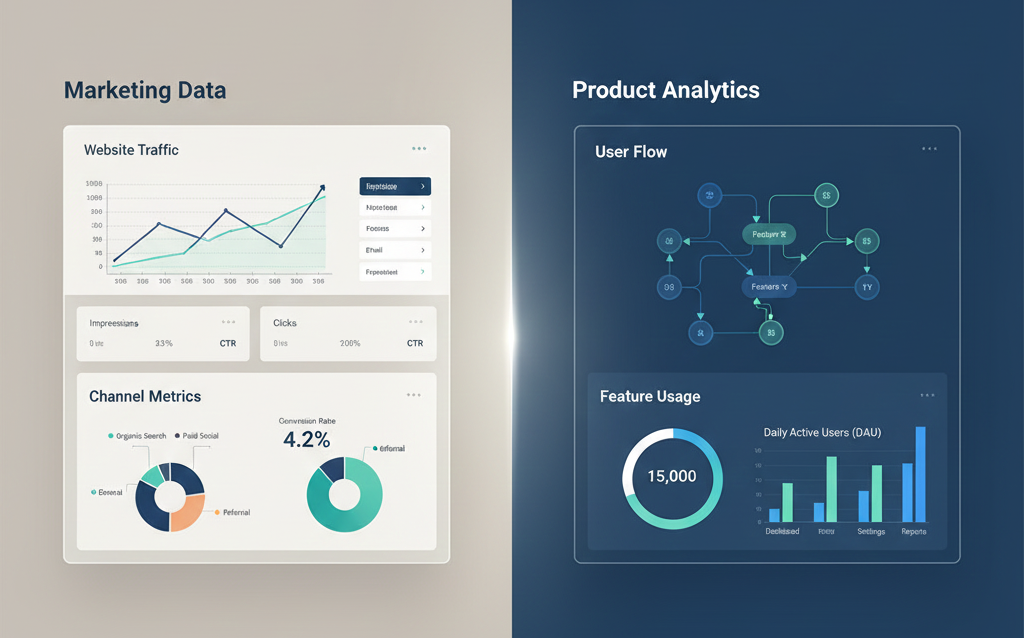
Product Analytics vs Marketing Analytics: Key Differences Explained Two Lenses, One Business As digital products mature, teams collect more data than ever before. Yet confusion persists around what that data should explain. Two disciplines often get grouped together, even though they serve different purposes. Product Analytics and Marketing Analytics answer different questions, support different decisions, and influence different teams. Understanding the distinction matters. When leaders treat both as interchangeable, they risk drawing the wrong conclusions. When used together with clarity, these analytics disciplines provide a complete picture of growth, usage, and value. What Product Analytics Focuses On Product Analytics examines how users interact with a product after they arrive. It tracks behavior inside the product experience. This includes feature usage, user flows, drop-off points, and long-term engagement. The goal is to understand how value is delivered. Are users completing key actions? Where do they hesitate? What patterns separate active users from those who leave? Product Analytics relies on event-level data. Every click, view, or action becomes part of a behavioral story. Over time, these stories reveal how the product performs in real conditions. This discipline supports product managers, engineering teams, and leadership responsible for product decisions. What Marketing Analytics Examines Marketing Analytics looks outward. It focuses on how users arrive, what messages attract them, and which channels drive awareness. It measures campaign performance, traffic sources, and conversion paths before users enter the product. The central concern is acquisition efficiency. Which channels bring relevant users. Which messages resonate. How spend translates into leads or sign-ups. Marketing Analytics helps teams allocate budgets and refine outreach. It answers questions about reach and response, not usage depth. Where Confusion Commonly Arises Confusion begins when teams expect Marketing Analytics to explain user behavior after onboarding. Click-through rates and campaign reports cannot explain why users stop using a feature or abandon workflows. Likewise, Product Analytics cannot explain why traffic dropped or why a campaign underperformed. Each discipline has limits. Product Analytics explains what happens after entry. Marketing Analytics explains how users arrive. Both are necessary. Neither replaces the other. A Practical Comparison To clarify the distinction, consider a simple example. A mobile app sees a drop in daily active users. Marketing Analytics may show stable traffic and consistent campaign performance. Acquisition has not changed. Product Analytics may reveal that a recent update introduced friction in a core workflow. Users encounter difficulty and disengage. Without Product Analytics, the team might increase marketing spend unnecessarily. Without Marketing Analytics, the team might miss early warning signs of declining acquisition quality. Product Analytics in Action Product Siddha’s work on Product Analytics for a Ride-Hailing App with Mixpanel illustrates the practical role of Product Analytics. In this case, detailed event tracking revealed where users dropped out during ride booking. The issue was not demand, but friction in a specific step. Once identified, teams adjusted the flow and engagement improved. Marketing efforts remained unchanged because the problem was internal to the product experience. This example shows how Product Analytics protects teams from guessing. It replaces assumption with evidence. When Marketing Analytics Takes the Lead Marketing Analytics becomes critical during expansion or repositioning. When entering a new market or testing new messaging, teams need clear feedback on reach and response. For example, HubSpot Marketing Hub Setup for a Growing Fintech Brand focused on organizing acquisition data and campaign tracking. The insights guided budget allocation and messaging adjustments. Product Analytics would not have solved this problem alone. Marketing Analytics provided clarity at the top of the funnel. The Overlap Zone There is a small overlap between the two disciplines. Conversion tracking sits at the boundary. The moment a user signs up or completes onboarding, responsibility begins to shift. This handoff is where alignment matters. Shared definitions and clean data ensure continuity. Without alignment, teams argue over numbers rather than improving outcomes. Why Product Analytics Drives Long-Term Value Product Analytics often receives less attention early on. Acquisition feels urgent. Growth targets demand traffic. Over time, however, retention and engagement determine sustainability. Product Analytics reveals whether users find lasting value. It highlights which features matter and which create friction. Teams that invest early in Product Analytics build products that improve steadily. Teams that delay rely on marketing spend to compensate for weak experiences. Common Mistakes Teams Make One common mistake is using marketing dashboards to judge product success. High traffic does not equal high value. Another mistake is tracking too many product events without a clear purpose. Data volume without direction creates noise. Product Analytics works best when tied to clear questions. Which actions predict retention. Which steps block progress. Which changes improve outcomes. Using Both Disciplines Together Strong organizations treat Product Analytics and Marketing Analytics as complementary. Marketing brings users in. Product ensures they stay and succeed. This balance was evident in Product Analytics and Full-Funnel Attribution for a SaaS Coaching Platform, where attribution connected acquisition sources with in-product behavior. Teams gained clarity across the entire journey without blurring responsibilities. Choosing the Right Metrics Metrics should reflect responsibility. Marketing teams focus on cost per acquisition and channel efficiency. Product teams focus on activation, retention, and feature adoption. Leadership reviews both through a strategic lens. The mistake is expecting one dashboard to answer every question. Product Analytics excels at explaining user behavior. Marketing Analytics excels at explaining reach and response. A Clear Takeaway The difference between Product Analytics and Marketing Analytics is not technical. It is conceptual. One examines how value is delivered. The other examines how attention is earned. When teams respect this distinction, decisions improve. Resources are used wisely. Growth becomes repeatable rather than reactive. Final Perspective Product Analytics and Marketing Analytics serve different masters. Confusing them weakens both. Organizations that understand the difference gain clarity at every stage. They know how users arrive and why they stay. They fix real problems instead of chasing surface metrics. For teams working with Product Siddha, this distinction forms the foundation of meaningful analytics work. Clear questions lead to useful data. Useful data leads to better

Blog, Product Analytics

Customer Data in the Age of Privacy: Smarter Targeting Without Third-Party Cookies

Customer Data in the Age of Privacy: Smarter Targeting Without Third-Party Cookies Adapting to a Privacy-First Era The era of third-party cookies is drawing to a close. For years, marketers and product teams have relied on cookies to track users, measure performance, and personalize campaigns. Today, regulations and browser changes have altered that landscape. The focus has shifted from mass tracking to meaningful consent. This transformation has prompted organizations to rethink how they collect, store, and activate customer data. The question is no longer how much data one can gather, but how responsibly it can be used. Product Siddha helps companies navigate this shift by designing systems that respect privacy while still delivering actionable insights. Why Third-Party Cookies Are Disappearing Third-party cookies once enabled advertisers to follow users across websites, creating detailed behavioral profiles. However, rising concerns over surveillance and misuse of personal data have led to stronger privacy laws and technological restrictions. Major browsers such as Chrome and Safari now block these cookies by default. Users expect transparency and control over their personal information. This evolution marks a broader shift from opaque data collection to a model built on permission and trust. For product teams and digital marketers, this change is both a challenge and an opportunity. It demands new frameworks that align with privacy expectations while preserving the ability to understand customers. The Rise of First-Party Data First-party data refers to information collected directly from a company’s own interactions with users. This includes website activity, app engagement, email responses, and purchase histories. Unlike third-party data, it is earned through consent and trust. Product Siddha has long emphasized the strategic value of first-party data. In one project involving a Shopify-based retail brand, the team integrated Klaviyo to unify customer touchpoints. Rather than relying on external tracking, the system analyzed behavioral signals from on-site interactions and email engagement. The result was a 40% increase in conversion efficiency while maintaining full compliance with privacy guidelines. This example shows that consent-driven data collection is not a limitation. It is an asset that strengthens customer relationships and delivers cleaner insights. Building Privacy-Conscious Data Infrastructure Transitioning to a privacy-first model begins with a disciplined approach to data infrastructure. Every organization must establish how data is collected, where it resides, and who can access it. A well-structured data framework includes the following layers: Layer Description Purpose Consent Layer Tracks user permissions and preferences Ensures compliance with regulations such as GDPR and CCPA Collection Layer Gathers behavioral, transactional, and engagement data directly from owned channels Builds a transparent data foundation Storage Layer Secures data in privacy-compliant environments Protects integrity and confidentiality Activation Layer Uses anonymized data for insights, personalization, and automation Enables smarter, compliant targeting These layers form a closed-loop system that protects both user rights and business intelligence. Smarter Targeting Without Tracking Smarter targeting in a cookieless world relies on pattern recognition rather than individual surveillance. AI and automation tools now allow companies to identify group behaviors, sentiment shifts, and contextual relevance without violating privacy. For example, Product Siddha’s AI automation services for a French rental agency used internal behavioral data to predict tenant preferences. By analyzing engagement across owned digital platforms, the company achieved precise targeting while avoiding external data dependencies. This approach demonstrates a core principle: ethical targeting is not about identifying every individual but about understanding shared intent. When combined with transparent communication, it builds both effectiveness and trust. Zero-Party Data and User Participation A newer concept gaining traction is zero-party data – information that users voluntarily share. This might include survey responses, preference selections, or personalized feedback. It gives users direct involvement in shaping their experience. For product managers and marketing teams, zero-party data offers clarity. It replaces inference with explicit input. A brand that asks, “Which product features matter most to you?” gains more reliable insights than one that guesses based on browsing behavior. Product Siddha encourages clients to embed such mechanisms into onboarding flows and feedback systems. When users see that their input directly improves their experience, participation becomes self-sustaining. Analytics in the Post-Cookie Landscape While cookies disappear, analytics continues to evolve. Tools like Mixpanel, HubSpot, and Customer.io now integrate first-party tracking frameworks that maintain accuracy without external identifiers. Product Siddha has used such systems to help a SaaS coaching platform implement full-funnel attribution using first-party data. The platform could trace engagement across sign-ups, feature use, and retention without depending on third-party cookies. This strengthened both compliance and strategic clarity. For many organizations, the key lies in redefining measurement practices – from tracking individuals to understanding journeys. Ethics as a Competitive Advantage Privacy is no longer just a legal requirement. It is a defining factor in customer loyalty. Surveys consistently show that users prefer brands that handle their data responsibly. Companies that communicate clearly about data practices build stronger reputations and longer relationships. For product managers, this means aligning every decision with ethical clarity. Transparency, consent, and control should guide how data is collected and how personalization is executed. The companies that adopt this philosophy early will lead in both trust and innovation. The Future of Customer Data The age of privacy is not a constraint on marketing intelligence. It is an evolution toward responsibility. By combining first-party and zero-party data with AI-driven insights, organizations can deliver meaningful personalization without intrusion. Product Siddha continues to help businesses build systems that respect individuals while advancing technology’s potential. In this balance lies the true future of customer engagement: smarter, fairer, and more human.

Blog, Product Analytics

Building Data-Driven Cultures: How Product Leaders Use Analytics to Align Teams and Strategy

Building Data-Driven Cultures: How Product Leaders Use Analytics to Align Teams and Strategy Data as a Common Language Modern product leaders know that intuition alone cannot scale a business. Decisions based on assumption often lead to missed opportunities, slow reactions, and internal misalignment. A data-driven culture solves this by turning Product Analytics into a shared language across teams. When data becomes the foundation of every discussion, design and engineering no longer debate on opinions. Instead, they collaborate around measurable facts. This approach not only aligns teams but also links product goals directly to company strategy. At Product Siddha, the idea of data as a unifying force is not theory. It has been applied in real projects, helping teams convert fragmented insight into clear direction and measurable progress. Why Product Analytics Defines Modern Leadership The role of a product leader has evolved from managing features to guiding decisions. Today, leaders must interpret data to understand user intent, measure impact, and adjust strategy in real time. Product Analytics serves as the instrument that brings clarity to this process. It connects every team’s contribution to a common outcome. From marketing to engineering, everyone sees the same numbers, understands the same patterns, and works toward shared performance goals. According to a McKinsey study, organizations that use analytics in their core decision-making are 23% more likely to outperform competitors in customer acquisition and retention. Yet many teams still struggle with scattered data and unclear metrics. Building a data-driven culture is not about adopting tools alone. It is about creating habits where every team member looks at the same dashboards before making a move. Case Example: Full-Stack Mixpanel Analytics for a Music App A clear example of this alignment came from Product Siddha’s work with a U.S.-based swipe-style music discovery app. The team implemented Mixpanel analytics to visualize how users interacted with songs, artists, and playlists. Instead of broad engagement reports, they broke the data into lifecycle stages: Activation (tracking how many users swiped within their first 30 days) Conversion (identifying which actions led users to paid subscriptions) Retention (examining who returned after periods of inactivity) These dashboards helped the client’s product and marketing teams work from a single source of truth. They no longer needed analysts to interpret data. Product managers could test hypotheses weekly, and designers could adjust interfaces based on evidence rather than guesswork. The outcome was a faster product cycle and higher user satisfaction. Teams across different roles began to speak the same analytical language, achieving true cross-functional alignment. The Foundations of a Data-Driven Culture Creating such a culture requires deliberate change in three key areas. 1. Leadership Commitment Data-driven behavior starts from the top. When leaders consistently ask for data-backed updates and make decisions using analytics, it sets the standard for others. Product Siddha’s work with a SaaS coaching platform demonstrated this. By deploying Amplitude analytics and live dashboards that showed daily active users, conversion funnels, and retention trends, leadership could spot what worked within hours. Teams followed that example, replacing assumptions with observable data. Within months, the company’s marketing and engineering departments were aligned on the same product growth indicators. 2. Accessible, Clean Data Complex dashboards are of little use if people cannot understand or trust the numbers. Data must be structured, consistent, and easily accessible. Product Siddha often emphasizes this during Product Analytics implementations. For instance, when building analytics for a ride-hailing application, the team created a structured taxonomy covering every event from ride selection to payment completion. This clean data system allowed both product and operations teams to analyze user behavior in real time without confusion. 3. Shared Metrics Across Teams Every department should measure success with metrics that link back to a common business goal. In many organizations, marketing focuses on clicks, while product teams focus on usage. A unified analytics approach brings these together. When metrics reflect a shared objective, teams stop competing for attention and start contributing to one result. This mindset shift is what transforms a data system into a data-driven culture. Data-Driven Strategy in Action Once a culture of analytics is established, product leaders can use it to connect daily execution to long-term business goals. Define the Objective – Decide which product metrics align with revenue or user growth targets. Instrument the Journey – Track user behavior at every major interaction point. Monitor Outcomes Continuously – Build dashboards that refresh automatically and are visible to all departments. Encourage Ownership – Allow teams to experiment and measure their own outcomes using the same data framework. This method gives every department the autonomy to innovate, while keeping them aligned under the same strategic umbrella. Product Siddha’s Experience with Data-Driven Alignment At Product Siddha, the focus has always been on translating data into practical outcomes. In one case, a fintech client struggled with disconnected marketing and sales systems. By introducing HubSpot Marketing Hub and linking it with a structured analytics pipeline, both teams gained real-time visibility of leads and conversions. The automation ensured that every qualified lead moved smoothly through the sales cycle. Marketing knew which campaigns generated high-value leads, while sales focused on closing those deals. The shift was not just technical; it was cultural. Decisions became faster, meetings became shorter, and the two teams began operating as one. How Product Analytics Shapes Better Decisions The most valuable benefit of Product Analytics lies in its ability to reveal cause and effect. It explains not just what happened, but why it happened. A simple change in onboarding flow might raise engagement by 10%. Analytics can then identify which specific step created that lift, helping teams refine the experience even further. Data-driven leaders also understand that analytics is not static. It evolves with the product. Metrics that matter during early growth may differ once scale is achieved. A mature analytics culture adapts to these changes without losing direction. From Insight to Impact A strong data-driven culture does more than improve decision-making. It builds confidence. Teams that understand the numbers behind their actions work with purpose and

Blog, Product Analytics

From Spreadsheet Fatigue to Analytics Nirvana: How VC Funds Automate Research

From Spreadsheet Fatigue to Analytics Nirvana: How VC Funds Automate Research The Research Burden Nobody Talks About Every venture capital analyst knows the grind – endless spreadsheets, messy data, and late-night updates before partner meetings. On average, analysts spend more than 20 hours a week manually updating deal pipelines, tracking metrics, and building market models. The problem? VC deal flow has exploded. What used to be 50 deals a year is now 500. Yet, many firms still rely on Excel sheets and email threads. When a partner asks for “updated ARR numbers” mid-meeting, someone scrambles to patch a broken formula before the conversation moves on. This system might have worked a decade ago, but it simply can’t scale today. Recognizing this, many forward-thinking firms, including those Product Siddha partners with — have started rebuilding their research and analytics infrastructure from the ground up. Where Manual Processes Break Down The inefficiency starts at data collection. Startups share financials in wildly different formats – PDFs, decks, or screenshots. Some highlight GMV, others focus on retention or CAC. Analysts must normalize all this manually, increasing the risk of errors. Then comes market research – scanning competitors, reading sector reports, tracking news, scraping data from Crunchbase or LinkedIn. A single competitive analysis can take eight hours or more. And even after investment, the problem persists. Portfolio monitoring becomes chaotic when companies use different KPIs and reporting schedules. Comparing ARR from one firm to MAU from another becomes a nightmare. The human toll is real. Analysts join venture capital to find great startups, not to spend nights copying numbers from one spreadsheet to another. As one associate at a mid-sized Bangalore VC fund said, “We weren’t researching companies anymore. We were researching Excel errors.” The Automated Alternative Automation has started rewriting the rules of VC research. Tools now exist that can extract, standardize, and analyze data across multiple sources with minimal human effort. Data extraction tools use Optical Character Recognition (OCR) and NLP to read pitch decks and identify key metrics automatically. Market intelligence platforms such as Crunchbase Pro, PitchBook, and CB Insights track funding rounds, leadership changes, and product trends in real time. Deal flow management systems like Affinity and Airtable Ventures organize conversations, notes, and follow-ups automatically. Portfolio monitoring tools such as Visible.vc or Carta Total Compensation provide real-time dashboards for key metrics. With these systems, analysts can generate complete deal profiles in minutes instead of hours, freeing time for actual investment analysis. Real Implementation Examples Authentic change is already underway across global VC firms. Andreessen Horowitz (a16z) uses custom-built internal analytics to track startup traction, funding velocity, and category momentum. Analysts receive live dashboards instead of static reports. Accel Partners uses automated data pipelines to integrate startup submissions directly into its CRM, eliminating manual entry and ensuring data freshness. Sequoia Capital India integrates automation into its “Surge” program to evaluate early-stage startups faster, using structured founder forms and AI-assisted screening tools. And in one case, a mid-sized venture fund in Bangalore that Product Siddha partnered with automated its research workflows. Before automation, analysts spent 60% of their week on repetitive data entry. After deploying an AI-powered research assistant and portfolio dashboard, that dropped to 15%. The firm’s investment pace increased by 40% – without expanding the team. Building the Right System Successful automation doesn’t begin with software – it starts with strategy. Funds must identify which pain points cost the most time and accuracy before adopting tools. Document the current process. Map every step analysts take from sourcing to reporting. Integrate before you automate. Ensure tools connect seamlessly – deal flow data should move from CRM to analytics to presentation decks automatically. Customize workflows. No two VC firms evaluate deals the same way. Systems should adapt to internal logic, not force uniformity. Train the team. Many automation projects fail because teams don’t fully adopt them. Internal champions and regular workshops are key. A hybrid setup usually works best: automated data intake combined with human judgment for validation and insight. The Changing Role of Analysts Automation doesn’t replace analysts – it liberates them. Instead of spending hours cleaning data, they spend time interpreting it. Instead of preparing reports, they analyze investment patterns and founder quality. The new analyst profile looks different: They understand automation tools and APIs as well as financial models. They can ask sharper questions because software has already answered the obvious ones. They spend more time building relationships and sourcing founders – the work that truly differentiates top-tier VC firms. Firms like Lightspeed Venture Partners and First Round Capital exemplify this. Their analysts use data-driven platforms for research but rely on human intuition for conviction. The technology enhances judgment – it doesn’t replace it. Worth the Investment Automation comes with upfront costs – software, integration, and team training. Smaller funds might spend $30,000 per year; large global funds may invest upwards of $200,000. But the ROI is immediate: Time savings often cover the expense within a year. Data accuracy improves investment decisions. Analyst retention rises because the job becomes more meaningful. As one partner at a Singapore-based early-stage fund said after automating their research workflows, “We stopped paying analysts to clean data – and started paying them to find unicorns.” Rethinking VC Operations Venture capital’s competitive edge now depends on data velocity – how quickly a firm can turn information into conviction. Manual research models simply can’t keep pace. Funds that embrace automation gain the ability to evaluate more opportunities, monitor portfolio performance in real time, and act on insights faster than rivals. The transformation Product Siddha observes across the global investment ecosystem points to a clear future: within five years, manual spreadsheet-based research will be as outdated as faxed pitch decks. The firms building automated, analytics-driven research ecosystems today will define the next generation of venture capital excellence.

Blog, Product Analytics

5 Product Analytics Dashboards Every Product Manager Should Be Using in 2025

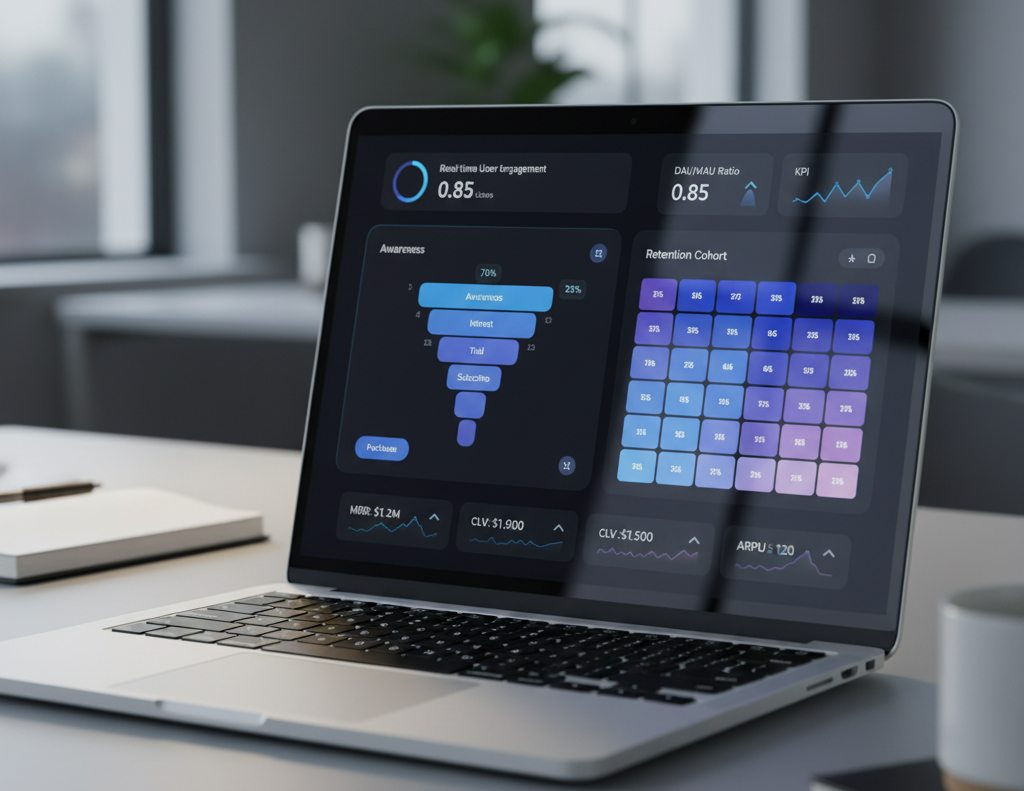
5 Product Analytics Dashboards Every Product Manager Should Be Using in 2025 Why Dashboards Matter In today’s product environment, data is more than an afterthought. It is the foundation for decisions that shape product growth, customer satisfaction, and operational efficiency. Without clear and reliable product analytics dashboards, managers risk working from guesswork rather than evidence. At Product Siddha, we have seen teams gain clarity and save resources once they adopt well-designed dashboards. These tools not only track numbers but also highlight trends, uncover weak spots, and help managers respond quickly to real conditions. 1. User Engagement Dashboard A product succeeds only if people use it regularly. A user engagement dashboard shows how often customers interact with features, how long they stay, and what parts of the product they abandon. Key metrics to track: Daily active users (DAU) and monthly active users (MAU) Feature adoption rates Session duration and frequency In a recent Product Siddha project for a mobile commerce client, the engagement dashboard revealed that nearly 40 percent of first-time users left after the second session. By identifying this point of friction, the team simplified the sign-up process and increased retention within three months. Engagement Metrics at a Glance Metric Why It Matters Example Insight DAU/MAU ratio Measures stickiness 25% ratio shows room to grow Feature adoption Highlights popular vs. unused features Low use may signal redesign Session frequency Indicates habit-forming use High drop-off shows barriers 2. Conversion and Funnel Dashboard Tracking how users move from awareness to purchase (or any goal action) is central to understanding value delivery. A funnel dashboard breaks down this journey step by step. Key metrics to track: Drop-off percentage at each funnel stage Conversion rates by device or channel Average time to conversion For one SaaS platform, Product Siddha used a funnel dashboard to discover that most drop-offs occurred between the free trial and paid plan stage. A revised onboarding message improved conversions by 15 percent without adding any new features. 3. Retention and Churn Dashboard Acquiring users is costly, so keeping them is more profitable. A retention dashboard measures how many users return over weeks or months, while churn dashboards show when and why they leave. Key metrics to track: Retention cohorts by week or month Churn rate and its correlation with product updates Net promoter score (NPS) trends A client in the financial services sector worked with Product Siddha to build a churn dashboard. The results showed a link between delayed support responses and higher cancellations. After improving support workflows, churn fell by 12 percent within two quarters. 4. Revenue and Monetization Dashboard For managers, it is not enough to know how users behave. Understanding how those actions translate into revenue is critical. A revenue dashboard connects product usage with financial outcomes. Key metrics to track: Monthly recurring revenue (MRR) Customer lifetime value (CLV) Average revenue per user (ARPU) During an analytics engagement, Product Siddha helped an e-learning platform uncover that a small percentage of power users contributed to over 60 percent of revenue. This insight allowed the client to develop premium packages, improving margins without alienating entry-level customers. 5. Operational Performance Dashboard Behind every product lies an operational engine of development, support, and delivery. An operational performance dashboard monitors the efficiency of these processes. Key metrics to track: Development cycle time Bug resolution rates Support ticket response time Product Siddha introduced an operational dashboard for a logistics app. By tracking development cycle time, the team spotted delays caused by manual QA bottlenecks. Automating regression tests shortened release cycles by 25 percent while reducing errors. Putting Dashboards Into Action A dashboard is only useful if it influences action. Product managers should: Review dashboards at regular intervals instead of letting data accumulate. Share insights across design, engineering, and marketing teams. Connect dashboard findings with roadmap planning. Product Siddha emphasizes this practice during consulting engagements. In one retail project, weekly dashboard reviews aligned teams quickly, preventing costly rework and improving customer experience. Final Thoughts The year 2025 is shaping up to be one where product managers cannot afford to work without precise data. The five dashboards outlined above form a foundation for making reliable, evidence-based decisions. By combining user engagement, funnel tracking, retention analysis, revenue insights, and operational monitoring, managers can see not only what customers are doing but also how their actions connect to business results. For organizations seeking guidance, Product Siddha provides tailored analytics consulting that ensures dashboards are not just reports but living tools for growth. The lesson is simple: a good dashboard saves time, lowers costs, and improves quality all at once.

Blog, Product Analytics

HubSpot Mixpanel Integration 2025: Step‑by‑Step Setup, Best Practices & Use Cases

HubSpot Mixpanel Integration 2025: Step‑by‑Step Setup, Best Practices & Use Cases Integrating HubSpot with Mixpanel in 2025 provides businesses with a robust solution to unify customer data, track user behavior, and improve decision-making. While HubSpot serves as a comprehensive customer relationship management (CRM) and marketing automation platform, Mixpanel specializes in advanced user analytics and product behavior insights. The combination of these two tools helps businesses create smarter marketing strategies and deliver personalized experiences based on real-time data. At Product Siddha, we help businesses implement seamless integrations between HubSpot and Mixpanel. This enables teams to gain a holistic view of customer interactions, track conversion funnels, and measure engagement across touchpoints without the typical technical complexity. Why Integrate HubSpot with Mixpanel? HubSpot is widely used for managing inbound marketing, sales pipelines, and customer relationships. It excels at automating emails, managing contacts, and running campaigns. However, it offers limited depth when it comes to detailed behavioral analytics. Mixpanel, on the other hand, focuses on event-based tracking. It enables businesses to understand how users interact with products or digital platforms by capturing granular behavioral data. Integrating the two systems ensures that marketing teams not only manage leads and customer journeys but also understand precisely what drives conversions. Key advantages of the integration include: Enhanced customer segmentation based on behavior and engagement Accurate attribution of marketing efforts to user actions Improved visibility into customer journeys for better targeting Automated syncing of key events and contact data Step‑by‑Step HubSpot Mixpanel Integration Setup Step 1: Define Key Events and Data Points Before connecting HubSpot and Mixpanel, outline the key customer actions and events to track. These typically include: Form submissions Email opens and clicks Website visits and page views Purchase or subscription completions Trial activations This clarity ensures that only relevant data flows between the two systems, reducing noise and improving insights. Step 2: Use an Integration Platform or Custom API Several integration tools exist that facilitate HubSpot and Mixpanel connection without custom coding. Platforms like Zapier, Integromat, or native APIs allow you to automate workflows. Alternatively, Product Siddha recommends building a custom API connection for larger enterprises or unique business models requiring advanced data flows. Example workflow: Set up a trigger in HubSpot for a contact property update (e.g., form submission). Configure an action in Mixpanel to log an event based on that trigger (e.g., “Form Submitted”). Map contact properties such as email, user ID, or campaign source for seamless tracking. Step 3: Test Data Sync Once the integration is configured, test it thoroughly. Ensure that events in HubSpot trigger corresponding events in Mixpanel. Check for: Accurate data mapping (no missing or misaligned properties) Timely syncing (data flows in near real-time) Proper event categorization Validation helps prevent discrepancies that can lead to incorrect marketing decisions. Step 4: Configure Dashboards and Reporting Mixpanel offers powerful funnel analysis, cohort analysis, and retention tracking. Once the integration is active, build dashboards that reflect critical KPIs such as: Conversion rate per marketing campaign User activation trends over time Retention rates by customer segment HubSpot’s dashboard can continue to show lead generation and contact management metrics, while Mixpanel provides deeper behavioral insights. This two-layered visibility helps both marketing and product teams collaborate efficiently. Best Practices for HubSpot Mixpanel Integration Align on Common Identifiers: Ensure consistent unique identifiers (like email address or user ID) across both platforms. This avoids duplication or misattributed events and helps connect CRM data to behavioral data cleanly. Prioritize Relevant Events: Avoid tracking every possible action. Focus on key events that directly relate to business outcomes such as trial sign-ups, product usage milestones, or payment completions. Regularly Audit Data Integrity: Set periodic checks to confirm that event flows remain intact. System updates, API changes, or platform upgrades can sometimes break integrations without clear alerts. Leverage Cohort Analysis: Use Mixpanel’s cohort functionality to segment customers based on behavior patterns. Combine this with HubSpot’s demographic data to deliver targeted marketing campaigns. Automate Workflows with Purpose: Automate follow-up tasks such as sending targeted emails when a customer performs a specific action. Well-crafted automation reduces manual overhead and increases relevance. Real-World Use Cases Case 1: SaaS Subscription Business A SaaS company used Product Siddha’s expertise to integrate HubSpot with Mixpanel. By tracking trial activation events in Mixpanel and syncing them with HubSpot, the marketing team was able to target users who showed high engagement but hadn’t yet converted. This led to a 25% uplift in trial-to-paid conversion rates within three months. Case 2: E-commerce Retailer An online retailer combined HubSpot’s marketing automation with Mixpanel’s behavioral insights to monitor user paths from landing page to checkout. By identifying drop-off points through Mixpanel funnels and triggering personalized emails in HubSpot, cart abandonment rates decreased by 18% over six weeks. The Role of Product Siddha in HubSpot Mixpanel Integration At Product Siddha, we help businesses unlock the full potential of their customer data by implementing tailored HubSpot-Mixpanel integrations. Our approach goes beyond technical setup; we help define strategic KPIs, build data governance frameworks, and develop actionable dashboards that inform decision-making. Whether your organization is just beginning to explore data-driven product management or you need advanced customization, Product Siddha ensures your tools work in harmony. Our experts bring decades of experience to help businesses streamline their data flows, enhance customer insights, and optimize marketing effectiveness. Conclusion Integrating HubSpot with Mixpanel in 2025 is more than a technical task; it is a strategic investment. It enables businesses to move beyond fragmented data silos and gain a unified view of the customer journey. The combination of HubSpot’s CRM and marketing automation capabilities with Mixpanel’s event-driven analytics empowers businesses to make informed decisions, automate processes, and improve user engagement. For organizations seeking to sharpen their product and marketing strategies, adopting this integration with the guidance of an expert AI Automation Agency like Product Siddha is a logical next step. It drives efficiency, accelerates insights, and ultimately supports sustainable business growth. Frequently Asked Questions (FAQs) 1. What are the key benefits of integrating HubSpot with Mixpanel? Integrating HubSpot with

Case Studies, Product Analytics

Driving Growth for a U.S. Music App with Full-Stack Mixpanel Analytics

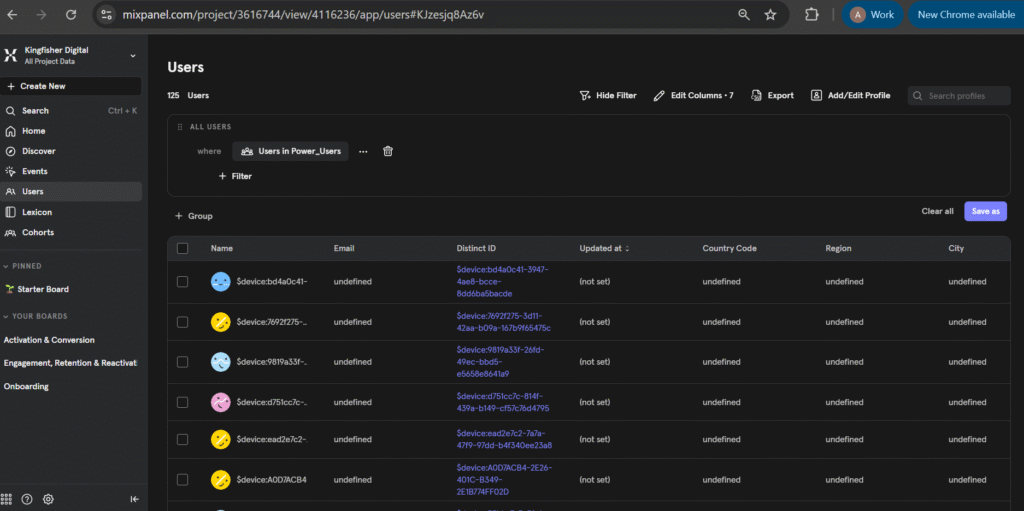
Driving Growth for a U.S. Music App with Full-Stack Mixpanel Analytics Client Kingfisher Digital Product Snobs (Swipe-based music discovery app) Service Provider Product Siddha Industry Music / Mobile Apps / Consumer Tech Service Mixpanel Integration, Analytics Strategy & Dashboard Setup The Problem: Swipes, Streams… but No Direction Snobs is a swipe-based app that helps people in the U.S. discover music from over 150+ subgenres. Users explore short music clips and swipe right to add artists to their favorites. The app was growing, but the team didn’t have a clear picture of what was working. Here’s what was missing: No tracking of how often users engaged with swipes No clear signal for user activation Couldn’t tell who the power users were Drop-offs in the onboarding journey were a mystery Trial-to-paid conversions weren’t well understood Teams relied too much on analysts for reports Snobs needed a smarter system to track product usage, understand behavior, and drive real growth. The Solution: Full-Stack Mixpanel Analytics Setup Product Siddha rolled out a complete analytics solution using Mixpanel, designed specifically for a swipe-based music discovery experience. Here’s what we did to unlock product growth: Mapped the Entire User Journey in Mixpanel We set up tracking across all the key touchpoints inside the app: First swipe Right vs left swipe count Artist follows Time spent per session Playlist creations In-app trial activations Paid plan signups These events gave the Snobs team full visibility into how users explored music inside the app. These events gave the Snobs team full visibility into how users explored music inside the app. Built Custom Dashboards by Stage To make the data usable, we created dashboards for each part of the user lifecycle: Activation Dashboard How many users swiped at least X times in the first 30 days Helped define a clear activation benchmark Showed which users were exploring music vs those who churned early Conversion Dashboard Compared free trial users to paying subscribers Helped spot what actions led to paid upgrades Led to better CTAs and trial experience tweaks Engagement Dashboard Tracked average swipes per session Measured time spent and session frequency Helped identify power users and top features Retention Curves Showed how long users stayed active Identified patterns among users who returned after a gap Allowed for better re-engagement strategy planning Onboarding Funnel Tracked every step from app open → first swipe Found drop-off points and improved onboarding screens Empowered All Teams with Self-Serve Analytics We trained the product, growth, and marketing teams to: Explore dashboards without coding Run weekly product experiments Compare cohorts over time Now, they no longer rely on analysts. They could act fast and test ideas weekly. Now, they no longer rely on analysts. They could act fast and test ideas weekly. The Outcome: Swipe-Based Growth, Backed by Data With Product Siddha’s full-stack analytics setup, Snobs moved from guessing to growing, using real user behavior. Key Wins: Activation insights: Swipe thresholds tied to long-term retention Conversion optimization: Improved trial-to-paid journey Experimentation speed: New features are tested every week Power user focus: Features shaped around the top 10% of users No analyst needed: PMs and marketers owned the data Measurable Results: Clear engagement metrics tied to feature usage 100% visibility into onboarding and drop-off stages Faster release cycles with real-time data Smarter personalization based on user patterns Conclusion: From Music Discovery to Data-Driven Growth Snobs is more than a music app; it’s a swipe-powered experience built on curiosity and sound. With help from Product Siddha, they now have a powerful analytics engine behind that experience. From user onboarding to retention, everything is tracked, tested, and improved. Whether you’re building a music app, social platform, or mobile product, real growth starts with real data. 📞 Let Product Siddha help you turn user behavior into business results.

Case Studies, Product Analytics

Product Analytics for a Ride-Hailing App with Mixpanel

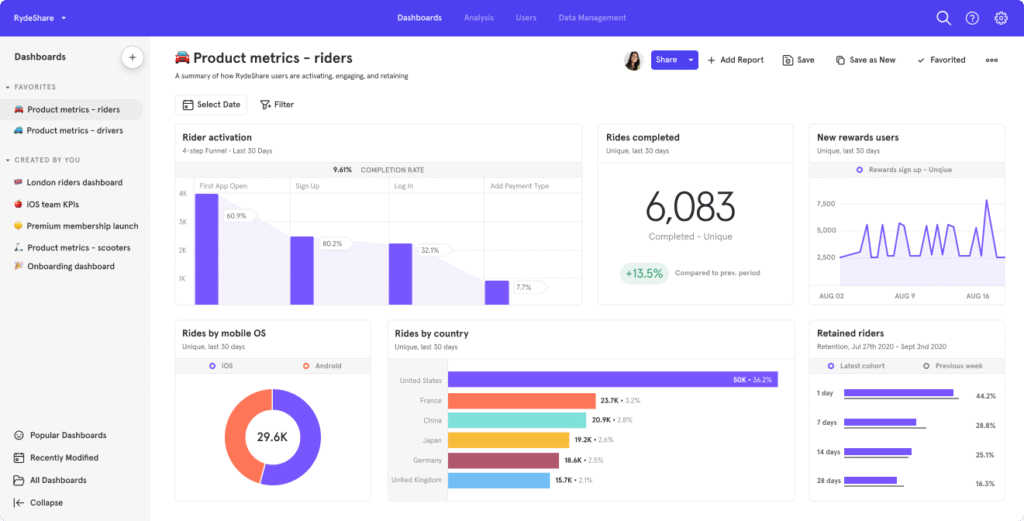
Product Analytics for a Ride-Hailing App with Mixpanel Client Ride-Hailing Mobile App Service Provider Product Siddha Industry Transportation / Mobile App Service Product Analytics Implementation using Mixpanel The Problem: No Clear View of How Users Book Rides The client runs a ride-hailing app. They wanted to better understand how users moved from installing the app to completing a ride. But there were several problems: Missing event tracking: There was no intuitive way to see what users were doing inside the app, like where they dropped off or how long it took to book a ride, without having to visit the app logs/backend. No organized data structure: The teams couldn’t trust the numbers because there was no proper naming or structure. Lack of funnel visibility: Product/Marketing team couldn’t track the full ride journey – install, sign-up, payment, and ride completion. Slow decision-making: Product and marketing teams were guessing instead of using real data to improve the app. They needed a strong analytics system to track user actions clearly and help teams make smarter, faster decisions. The Solution: Smart Mixpanel Setup for End-to-End Tracking Product Siddha stepped in to create a complete product analytics solution using Mixpanel, a powerful tool for tracking user behavior. Here’s how they did it: Full Event Tracking Plan The team designed and set up a complete event tracking plan. This plan captured all the key actions users took in the app—like signing up, selecting rides, making payments, and completing rides. Built a Scalable Data Taxonomy To keep everything clean and easy to manage, a data taxonomy and schema was created. This included: Ride lifecycle (start to finish) Payments and cancellations User actions and traits (such as device type, location, etc.) With this system, teams could easily track and compare data across all parts of the app. Funnel Visibility from Start to Finish Mixpanel was set up to track the entire user journey, from app install to the first completed ride. The analytics showed exactly where users dropped off and which parts of the ride process needed fixing. Dashboards for Everyone Custom Mixpanel dashboards were built for each team—marketing, product, and operations. These dashboards made it easy to see real-time results and understand user behavior at every step. The Outcome: Clear Data, Faster Growth, Better Rides The new analytics setup gave the ride-hailing app a complete view of how users behaved. In just 30 days, the team saw big results: +13.5% increase in funnel completion rate – More users finished the ride booking process because drop-off points were fixed. Faster decision-making – Teams used dashboards to track real-time trends and test new ideas. Improved user experience – With better data, the app was updated to match how users actually used it. Scalable tracking – The clean schema and taxonomy made it easy to add new features without breaking the system. Conclusion: Clear Analytics That Drive Better Rides and Results This case study shows how Product Siddha used Mixpanel to bring smart product analytics to a fast-moving ride-hailing app. With better tracking, real-time data, and easy-to-use dashboards, the company made quick improvements that boosted user engagement and completed rides. If your mobile app needs clear insights and smarter funnels, Product Siddha can build the right system for you.