
Product Siddha

ai automation

Lead Scoring Using AI How to Prioritize Prospects That Actually Convert
AI Automation, Blog

Lead Scoring Using AI: How to Prioritize Prospects That Actually Convert

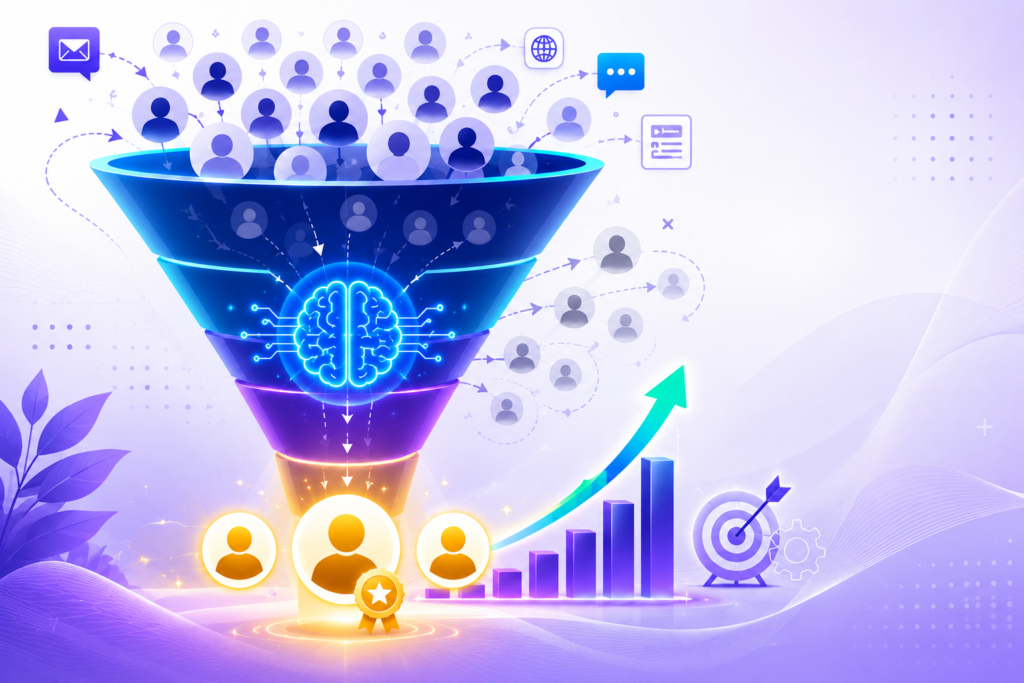
Lead Scoring Using AI: How to Prioritize Prospects That Actually Convert The Hidden Cost of Chasing Every Lead Every business wants more leads. Yet many sales teams face a different problem. They spend too much time on prospects who never become customers. A contact form submission, a webinar attendee, or a downloaded whitepaper may look promising at first. In reality, not every lead has the same level of interest or buying intent. Treating all prospects equally often leads to wasted effort, slower sales cycles, and missed revenue opportunities. This is where lead scoring becomes valuable. Traditional lead scoring methods rely on fixed rules and assumptions. While these systems can help, they often struggle to keep pace with changing customer behavior. Today, organizations are turning to AI Automation to improve lead qualification and identify prospects that are most likely to convert. By analyzing large volumes of customer data, artificial intelligence can uncover patterns that human teams may overlook. At Product Siddha, we have seen how AI-powered lead scoring helps businesses focus on high-value opportunities while reducing time spent on low-priority prospects. Understanding Lead Scoring Lead scoring is the process of assigning values to potential customers based on their likelihood of becoming paying clients. These scores are typically generated using factors such as: Lead Attribute Impact on Score Website visits Indicates interest Email engagement Shows interaction level Content downloads Signals research activity Job title Reveals decision-making authority Company size Helps determine fit Product inquiries Shows purchase intent Previous interactions Indicates relationship strength The purpose of lead scoring is simple. Sales teams need a reliable way to determine which prospects deserve immediate attention. Without a scoring system, representatives often rely on guesswork. This can result in valuable opportunities slipping through the cracks while less promising leads consume valuable resources. Why Traditional Lead Scoring Falls Short For years, companies used manual scoring systems based on predefined rules. For example: Downloading an eBook = 10 points Visiting a pricing page = 20 points Opening an email = 5 points While these rules provide structure, they have limitations. Customer behavior changes over time. Market conditions shift. New buying patterns emerge. Static scoring models rarely adapt quickly enough. A prospect who downloads three resources may not be ready to buy. Another prospect who spends five minutes on a product comparison page might have strong purchase intent. Traditional systems often fail to recognize these subtle differences. As databases grow larger, maintaining rule-based scoring becomes increasingly difficult. This creates inconsistencies that affect both marketing and sales performance. How AI Improves Lead Scoring Artificial intelligence brings a more dynamic approach to lead qualification. Instead of relying solely on predefined rules, AI models analyze historical customer data and identify patterns associated with successful conversions. The system continuously learns from: Customer interactions Website behavior CRM records Email engagement Purchase history Product usage data Sales outcomes As new information becomes available, the model adjusts its predictions. This makes AI Automation particularly effective for businesses with large volumes of leads and complex customer journeys. Rather than assigning scores based on assumptions, AI predicts the probability that a prospect will convert based on real-world evidence. Key Benefits of AI-Powered Lead Scoring Improved Sales Productivity Sales representatives spend less time reviewing unqualified prospects. Instead, they focus on leads with the highest conversion potential. This improves efficiency and increases the likelihood of successful outcomes. Faster Response Times High-intent prospects can be identified immediately. When sales teams engage at the right moment, conversion rates often improve because customer interest remains strong. Better Marketing Alignment Marketing and sales departments frequently disagree about lead quality. AI-driven lead scoring creates a shared framework based on data rather than opinions. This helps both teams work toward common goals. Higher Conversion Rates Businesses that prioritize qualified prospects often experience stronger conversion performance. By directing resources toward the right opportunities, organizations can improve revenue generation without significantly increasing acquisition costs. Continuous Learning Unlike static models, AI systems evolve. As customer behavior changes, machine learning algorithms refine their predictions and maintain scoring accuracy over time. The Data Behind Effective AI Lead Scoring The quality of an AI lead scoring system depends heavily on the quality of data available. Organizations should focus on collecting information from multiple sources. Demographic Data This includes: Industry Company size Geographic location Job role Business type These attributes help determine whether a prospect fits the ideal customer profile. Behavioral Data Behavioral indicators often provide stronger buying signals than demographic information alone. Examples include: Website page views Session duration Product page interactions Form submissions Webinar attendance Resource downloads Engagement Data Customer engagement reveals ongoing interest. Useful metrics include: Email opens Click-through rates Meeting requests Chat interactions Event participation Product Data Businesses offering software or digital products can gain valuable insights from usage patterns. Product analytics can reveal: Feature adoption Login frequency Trial engagement User activity trends Combining these data points creates a more complete picture of customer intent. The Role of AI Automation in Modern Lead Management Lead scoring is only one part of a broader AI Automation strategy. Organizations increasingly use automation to streamline repetitive tasks throughout the customer acquisition process. Examples include: Automated lead qualification Intelligent customer segmentation Predictive analytics CRM workflow automation Sales forecasting Marketing attribution analysis When these capabilities work together, businesses gain a clearer understanding of customer behavior and purchasing intent. This creates a more efficient path from prospect identification to customer conversion. Building an AI-Driven Lead Scoring Framework Successful implementation requires a structured approach. Define Conversion Goals Start by identifying what constitutes a successful outcome. Examples may include: Product purchases Demo bookings Subscription upgrades Contract signings Centralize Customer Data Data scattered across multiple systems limits AI effectiveness. Integrating CRM, marketing platforms, analytics tools, and product data creates a stronger foundation for predictive modeling. Train the Model Historical customer data allows machine learning algorithms to identify patterns associated with successful conversions. The larger and cleaner the dataset, the more accurate the predictions tend to be. Monitor Performance Lead scoring should not be treated as a one-time

AI Workflows That Save More Than 500 Hours Per Month
AI Automation, Blog

AI Workflows That Save More Than 500 Hours Per Month

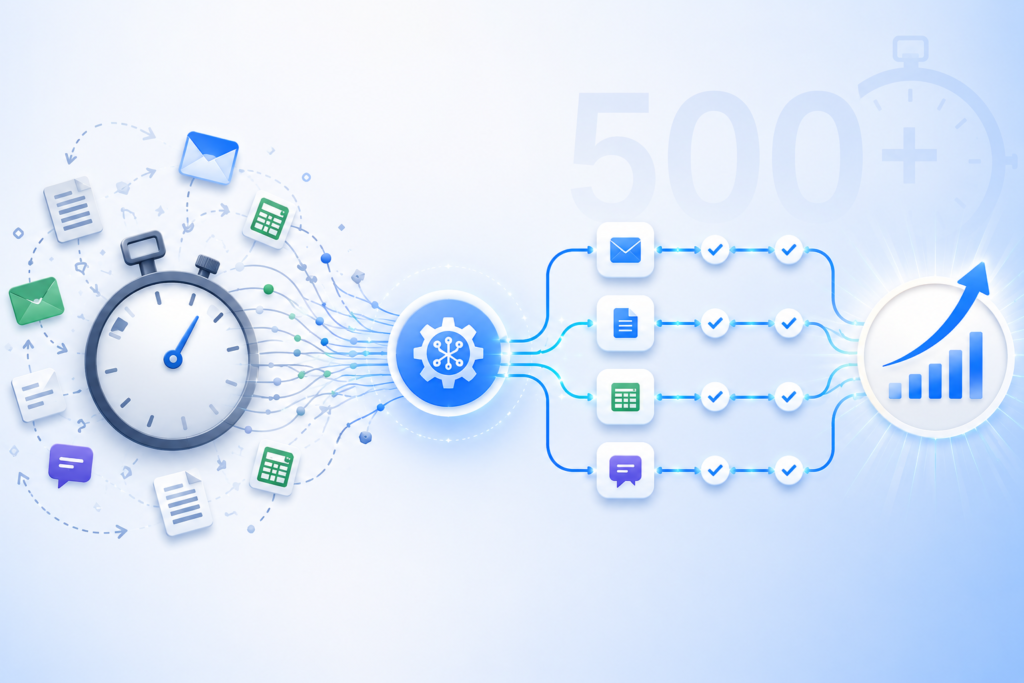
AI Workflows That Save More Than 500 Hours Per Month The Hidden Cost of Repetitive Work Every growing business reaches a point where routine work begins to consume valuable time. Employees spend hours responding to emails, updating customer records, preparing reports, entering data, and moving information between systems. Each task may seem small on its own, yet together they create a significant operational burden. This is one reason businesses are increasingly investing in AI Workflows. An intelligent workflow can automate repetitive activities, connect systems, and reduce manual effort without disrupting daily operations. In many cases, these workflows save hundreds of hours each month. At Product Siddha, we help organizations implement AI Workflows that improve efficiency while allowing teams to focus on work that requires experience, creativity, and strategic thinking. Understanding AI Workflows An AI Workflow is a sequence of automated actions supported by artificial intelligence and connected business systems. Instead of employees manually completing repetitive tasks, AI workflows perform activities automatically. Common examples include: Customer inquiry management Lead qualification CRM updates Invoice processing Data extraction Email categorization Report generation Document analysis AI Workflows combine automation with intelligent decision-making, making them more flexible than traditional automation systems. A Practical Example Consider a medium-sized software company that receives: 2,000 customer inquiries per month 1,500 sales leads Hundreds of invoices Weekly business reports Daily CRM updates Before automation, employees handled these tasks manually. The company faced several problems: Slow response times Repetitive administrative work Data entry errors Delayed reporting Employee fatigue Management realized that expanding the team would increase costs without addressing the underlying inefficiencies. Instead, they implemented AI Workflows. Workflow 1 – Customer Support Automation The company introduced an AI workflow to manage customer requests. The workflow: Receives incoming messages. Understands customer intent. Categorizes inquiries. Provides instant responses for common questions. Assigns complex cases to support staff. Updates the CRM automatically. Monthly Impact Activity Manual Hours AI Workflow Hours Ticket Categorization 90 5 Customer Replies 120 20 CRM Updates 50 2 Total 260 27 Time Saved: 233 Hours Workflow 2 – Sales Lead Processing Previously, sales representatives manually reviewed every incoming lead. The AI workflow now: Collects leads from multiple sources Evaluates lead quality Scores prospects automatically Assigns leads to sales representatives Updates CRM records Schedules follow-up reminders Monthly Impact Activity Manual Hours AI Workflow Hours Lead Review 80 8 CRM Data Entry 60 3 Lead Assignment 25 1 Total 165 12 Time Saved: 153 Hours Workflow 3 – Invoice Processing Finance teams often spend considerable time reviewing invoices and entering data. The AI Workflow automatically: Extracts invoice information Validates records Matches purchase orders Flags discrepancies Stores documents Generates summaries Monthly Impact Activity Manual Hours AI Workflow Hours Data Entry 55 4 Verification 35 5 Reporting 20 2 Total 110 11 Time Saved: 99 Hours Workflow 4 – Business Reporting Reporting often requires collecting information from: CRM systems Sales databases Analytics platforms Customer support software The AI workflow: Pulls data automatically Cleans information Creates dashboards Generates summaries Sends reports to management Monthly Impact Activity Manual Hours AI Workflow Hours Data Collection 25 2 Report Preparation 30 3 Dashboard Updates 15 1 Total 70 6 Time Saved: 64 Hours Total Time Saved When all workflows were combined, the results were significant. Workflow Hours Saved Customer Support 233 Lead Processing 153 Invoice Processing 99 Reporting 64 Total Monthly Savings 549 Hours The company saved more than 500 hours each month while improving response times and operational accuracy. Why AI Workflows Deliver Better Results Several factors contribute to these improvements. Consistent Execution AI workflows follow the same process every time. This reduces: Human errors Missed tasks Data inconsistencies Faster Processing Tasks that once required hours can often be completed within minutes. Examples include: Customer replies Document processing CRM synchronization Report generation Scalability As businesses grow, AI Workflows can handle increased workloads without requiring proportional staff expansion. Whether processing: 500 leads 5,000 leads 50,000 leads The workflow structure remains largely unchanged. Common Business Areas for AI Workflows Businesses increasingly automate: Customer Service Ticket classification Automated responses Escalation management Sales Operations Lead scoring CRM updates Meeting scheduling Finance Invoice processing Expense categorization Financial reporting Human Resources Resume screening Candidate communication Employee onboarding Product Analytics User behavior tracking Event analysis Customer retention reports AI Workflows continue expanding as businesses identify additional opportunities for automation. AI Workflows Saving 500+ Hours Per Month Customer Support Ticket Management AI Responses CRM Updates Hours Saved: 233 Sales Lead Scoring Lead Assignment CRM Synchronization Hours Saved: 153 Finance Invoice Processing Verification Reporting Hours Saved: 99 Reporting Data Collection Dashboards Weekly Reports Hours Saved: 64 Total 549 Hours Saved Monthly Working Smarter Saving time is only one benefit of AI Workflows. Businesses also gain improved accuracy, faster decision-making, better customer experiences, and greater operational flexibility. The example discussed here demonstrates how a well-designed set of AI Workflows can save more than 500 hours each month while allowing employees to focus on meaningful work rather than repetitive administrative tasks. At Product Siddha, we design and implement AI Workflows that align with real business needs. From customer support automation to intelligent reporting and CRM workflows, we help organizations create systems that improve efficiency and support long-term growth. Frequently Asked Questions What are AI Workflows? AI Workflows are automated processes that combine artificial intelligence with business systems to complete repetitive tasks, process information, and improve operational efficiency. How many hours can AI Workflows save? The number varies by business. Many organizations save hundreds of hours each month by automating customer support, CRM updates, reporting, and administrative processes. Which departments benefit most from AI Workflows? Customer service, sales, finance, operations, and product teams commonly benefit from AI Workflows. Are AI Workflows suitable for small businesses? Yes. Small businesses can automate repetitive tasks and improve efficiency without building large teams. How does Product Siddha help businesses implement AI Workflows? Product Siddha designs custom AI Workflows that automate business processes, integrate systems, improve efficiency, and support sustainable business growth.

AI Automation, Blog

AI Automation Agency for Indian Startups: Cost, Benefits & Real Use Cases

AI Automation Agency for Indian Startups: Cost, Benefits & Real Use Cases   Building Smarter Operations Indian startups operate in a fast-moving environment where every decision affects growth, hiring, and operational stability. Founders often manage customer acquisition, sales operations, support workflows, reporting, and internal communication with limited resources. As teams grow, manual processes begin slowing down execution. This is where automation becomes practical rather than optional. Many startups across India are now working with an AI Automation Agency to reduce repetitive work, organize business operations, and improve productivity without expanding headcount too quickly. For startups trying to scale carefully, automation can help control operational pressure while keeping systems manageable. At Product Siddha, we work with businesses that need practical automation systems that solve everyday workflow problems. The focus is rarely on complexity. Most startups simply want smoother operations, faster reporting, and fewer manual tasks. Why Indian Startups Are Turning to Automation Startup teams usually begin with flexible systems. Spreadsheets, manual emails, WhatsApp coordination, and disconnected software tools are common during the early stages. That approach works for a while. Eventually, growth creates bottlenecks: Leads are not tracked properly Customer follow-ups are delayed Sales reports become inconsistent Internal approvals take too long Data is copied manually between platforms Customer support requests increase faster than staffing An AI Automation Agency helps startups organize these systems before operational confusion begins affecting revenue and customer experience. Automation does not replace people. It removes repetitive administrative work so teams can focus on sales, product development, operations, and customer service. Understanding the Cost of Automation One reason startups hesitate to adopt automation is uncertainty around pricing. Many founders assume automation requires enterprise-level budgets. In reality, automation costs vary depending on workflow complexity, software integrations, and business size. Common Cost Factors Automation Area Estimated Startup Investment CRM Workflow Automation Moderate Lead Management Systems Moderate Customer Support Automation Moderate to High Data Reporting Dashboards Moderate Marketing Workflow Integration Moderate AI Chatbot Development High ERP or Multi-System Integration High For most Indian startups, partnering with an AI Automation Agency is more affordable than building an internal automation team. Hiring full-time AI developers, workflow engineers, analysts, and integration specialists can become expensive very quickly. Agencies spread technical resources across multiple projects, which lowers the overall cost for individual businesses. This gives startups access to experienced specialists without maintaining a large technical payroll. Faster Deployment Creates Faster ROI Time matters for startups. Internal development projects often slow down because founders are already managing hiring, investor discussions, customer acquisition, and operational scaling. An experienced AI Automation Agency already understands common implementation challenges. This reduces trial-and-error delays. For example, a SaaS startup needing automated onboarding emails, CRM updates, customer ticket routing, and usage reporting may take months building systems internally. An agency that has handled similar projects can usually deploy those workflows much faster. The faster automation becomes operational, the sooner the startup sees measurable savings in labor hours and operational efficiency. Real Startup Use Cases in India Automation is no longer limited to large enterprises. Indian startups across different sectors are using automation in practical ways every day. Ecommerce Startups Online retail businesses use automation for: Inventory alerts Order status notifications Customer follow-up emails Payment confirmation workflows Return request management These systems reduce manual coordination and improve response time. SaaS Companies Software startups rely heavily on workflow automation. Typical use cases include: Trial user onboarding Subscription renewal reminders CRM lead scoring Support ticket categorization Automated reporting dashboards These processes improve customer management while reducing operational workload. Real Estate Startups Real estate companies often receive high lead volumes from multiple channels. Automation helps manage: Lead assignment Property inquiry responses Meeting scheduling Client follow-up reminders Broker communication tracking Without automation, many leads go cold due to delayed responses. Healthcare and HealthTech Startups Health-focused businesses use automation for: Appointment reminders Patient intake forms Follow-up communication Internal reporting Billing workflow coordination These systems improve administrative efficiency while helping staff focus on patient interaction. Operational Benefits Beyond Cost Savings Many startups initially adopt automation to reduce expenses. Over time, they discover broader operational advantages. Better Accuracy Manual data entry creates mistakes. Automation reduces duplicate records, missed follow-ups, and reporting errors. Consistent Processes Automation ensures tasks follow the same workflow every time. This creates more reliable operations across teams. Improved Scalability As customer volume grows, startups can handle higher workloads without increasing staff at the same rate. Better Visibility Automation dashboards provide clearer operational reporting. Founders can monitor sales pipelines, customer activity, and workflow performance more easily. Reduced Team Burnout Repetitive tasks drain productivity. Automation allows employees to focus on higher-value responsibilities instead of administrative repetition. Challenges Startups Should Consider Automation is useful, but implementation still requires planning. Poorly designed workflows can create confusion instead of efficiency. Startups sometimes purchase multiple software tools without considering how those systems communicate with each other. This creates fragmented operations. An experienced AI Automation Agency helps startups avoid these issues by designing workflows that match actual business processes. It is also important to avoid automating unstable systems too early. If a business process is constantly changing, automation should be introduced gradually. Successful automation depends on operational clarity. Why Startups Work With Product Siddha Product Siddha helps startups simplify operations through practical automation systems built around real business workflows. Our team supports: AI workflow automation CRM integration Marketing automation Reporting dashboards Customer communication systems Data synchronization Process optimization We focus on systems that improve daily operations without unnecessary technical complexity. Startups often need flexibility because business requirements change quickly. Our approach supports scalable automation while allowing room for operational growth. Every startup operates differently. Automation should reflect those differences rather than forcing businesses into rigid structures. Looking Ahead Indian startups are entering a stage where operational efficiency matters as much as growth itself. Founders who rely entirely on manual coordination eventually face scaling limitations. Delayed communication, inconsistent reporting, and repetitive work begin slowing progress. Working with an AI Automation Agency allows startups to organize operations earlier and build stronger internal systems without

AI Automation Agency vs In-House Automation Team Which Delivers Better ROI
AI Automation, Blog

AI Automation Agency vs In-House Automation Team: Which Delivers Better ROI?

AI Automation Agency vs In-House Automation Team: Which Delivers Better ROI? Smarter Automation Decisions Businesses across retail, finance, healthcare, logistics, and SaaS are investing in automation to reduce repetitive work and improve operational speed. The question is no longer whether automation matters. The real question is who should build and manage it. Some companies prefer an internal automation department. Others partner with an AI Automation Agency that already has the tools, workflows, and technical experience in place. Both approaches can work. Still, the return on investment depends on budget, hiring capacity, business goals, and how quickly automation needs to produce results. At Product Siddha, we have worked with organizations that started with internal teams and later shifted to agency partnerships after delays, rising costs, and integration issues slowed progress. We have also seen companies use a hybrid model successfully. The right choice depends on what the business truly needs. Understanding the Two Models An in-house automation team is built internally. The company hires developers, analysts, automation engineers, project managers, and system architects to create workflows and maintain automation systems. An AI Automation Agency works as an external partner. The agency designs, deploys, tests, and manages automation solutions for the client using experienced specialists and established frameworks. The difference is not only about staffing. It affects speed, maintenance, scalability, software integration, and long-term operating cost. Cost Structure and Financial Impact An internal automation department requires ongoing investment. Salaries, benefits, training, software licenses, cloud infrastructure, and hiring costs add up quickly. Many businesses underestimate how expensive automation talent has become. Skilled AI engineers, data specialists, and automation architects are in high demand. Recruiting them takes time and often delays projects before development even begins. An AI Automation Agency spreads those costs across multiple clients. That allows businesses to access senior-level expertise without maintaining a full-time technical department. Typical Cost Areas Expense Category In-House Team AI Automation Agency Hiring Costs High Minimal Training Ongoing Included Infrastructure Setup Internal responsibility Often managed by agency Maintenance Full internal cost Shared service model Scaling Projects Requires more hiring Faster expansion Time to Deployment Slower initially Faster implementation For many mid-sized companies, agency partnerships create better ROI during the first several years of automation adoption. Speed Matters More Than Most Companies Expect Automation projects lose value when deployment drags on for months. Internal teams often spend large amounts of time building workflows from scratch, selecting software tools, solving integration issues, and handling testing problems that experienced agencies already know how to avoid. An AI Automation Agency usually works with tested implementation models. The agency has already built similar systems for other industries and understands where delays typically occur. This shortens development cycles and reduces operational disruption. For example, a retail company automating customer communication may need CRM integration, email workflow automation, customer segmentation, reporting dashboards, and AI-driven personalization. An experienced automation agency can often deploy these systems much faster because the architecture already exists. Faster deployment improves ROI because businesses begin saving time and reducing manual labor earlier. Technical Expertise and Problem Solving Automation today involves more than simple workflow triggers. Businesses now rely on: AI workflow automation Marketing automation platforms CRM integrations Data synchronization Predictive analytics Automated reporting Customer support automation Lead scoring systems Inventory forecasting Real-time dashboard reporting An internal team may have expertise in one or two areas but struggle across the full ecosystem. An AI Automation Agency usually brings specialists from multiple disciplines into a single project. This includes AI engineers, API developers, UX strategists, automation architects, and analytics professionals. That depth matters when systems become more complex. At Product Siddha, many clients initially approached us after internal projects stalled because software tools were not communicating properly. Integration problems often become the hidden cost of automation. Scalability and Long-Term Flexibility Business needs change quickly. A company that automates customer support this year may need sales automation, reporting automation, or supply chain forecasting next year. Internal teams may struggle to scale at the same pace because every new project requires additional hiring and training. An AI Automation Agency can usually scale faster because the technical resources already exist. Agencies also stay updated with automation trends, emerging AI tools, and platform changes that internal departments may not monitor closely. This flexibility becomes especially important during growth periods. For example: A real estate company may need automated lead routing during expansion. A healthcare organization may require patient communication automation. An ecommerce brand may need automated product recommendation systems during seasonal demand spikes. An experienced AI Automation Agency can adapt systems more quickly across these changing needs. The Hidden Risk of Internal Dependency One issue many businesses overlook is employee turnover. When key automation engineers leave an internal team, critical knowledge often leaves with them. Workflows become difficult to maintain, documentation may be incomplete, and troubleshooting slows down. Agencies reduce this risk because multiple specialists understand the project infrastructure. Support continuity becomes more reliable. This does not mean internal teams lack value. In fact, businesses with mature technical operations often benefit from internal ownership. However, companies entering automation for the first time usually face a steeper learning curve. When an In-House Team Makes Sense An internal automation department can be the right investment under certain conditions. In-house automation may work better when: The business has a large technical budget Automation is central to proprietary operations Internal data security policies require direct control The company already employs experienced AI engineers Long-term custom platform development is needed Large enterprises sometimes prefer internal ownership because automation becomes part of their competitive advantage. Still, building that capability takes substantial investment and management oversight. When an AI Automation Agency Delivers Better ROI Most growing businesses prioritize speed, lower upfront cost, and reliable execution. An AI Automation Agency often delivers stronger ROI when: Automation needs immediate implementation Internal technical hiring is difficult Multiple systems require integration The business needs specialized expertise Scalability is important Budget efficiency matters Leadership wants measurable results quickly For many companies, the agency model reduces risk while accelerating