Human-in-the-Loop AI: When Automation Should Ask for Approval
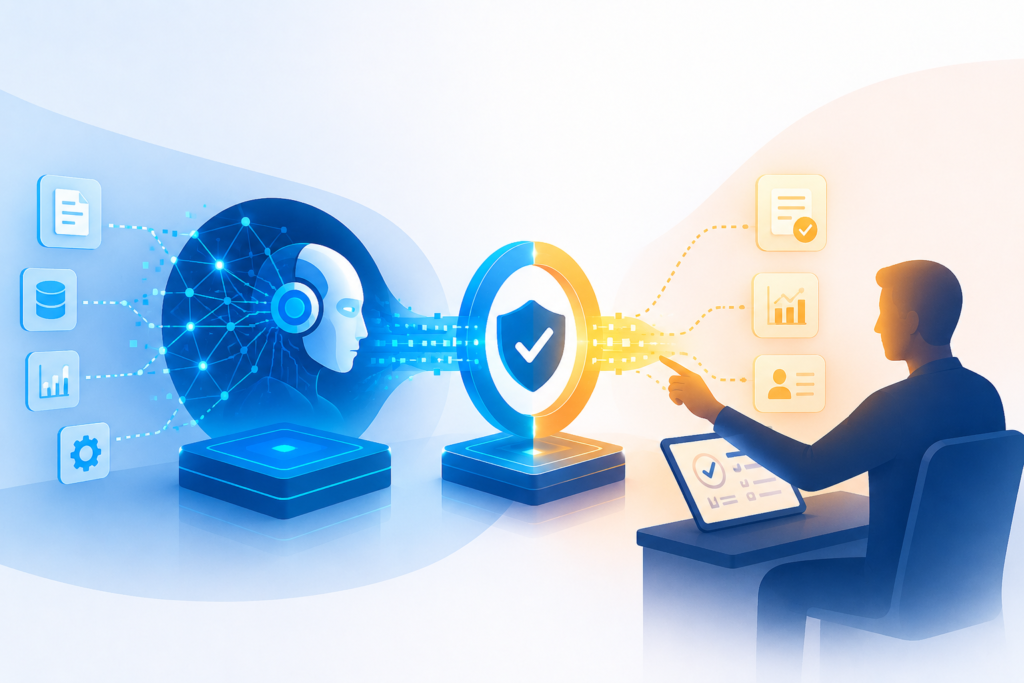
Human-in-the-Loop AI: When Automation Should Ask for Approval Finding the Right Balance Artificial intelligence has become an important part of everyday business operations. Companies use automated systems to process documents, respond to customer requests, analyze information, and complete routine tasks faster than ever before. While these capabilities improve productivity, there are situations where fully automated decisions can create unnecessary risks. Some business processes require human judgment before an action is completed. Financial approvals, legal reviews, healthcare decisions, hiring recommendations, and customer complaints often involve factors that software alone cannot fully understand. This is where Human-in-the-Loop (HITL) AI becomes valuable. Human-in-the-Loop AI combines the speed of AI Automation with human expertise. Instead of allowing automation to complete every task independently, the system pauses when predefined conditions are met and requests approval from a person before continuing. For businesses seeking reliable automation without losing control over important decisions, this approach offers a practical balance between efficiency and accountability. At Product Siddha, we help organizations build AI automation workflows that improve operational efficiency while ensuring human oversight where it matters most. What Is Human-in-the-Loop AI? Human-in-the-Loop AI is an automation model where artificial intelligence performs routine work while humans review, approve, or correct actions that require experience or business judgment. The workflow usually follows this sequence: AI receives a task. The system processes available information. A recommendation or action is prepared. Approval is requested if predefined conditions are triggered. A person reviews the recommendation. The workflow continues after approval or revision. This structure allows organizations to automate repetitive work while maintaining confidence in important business decisions. Why Human Approval Still Matters Artificial intelligence performs well when dealing with structured information and predictable rules. However, businesses regularly encounter situations that require context, interpretation, and professional judgment. For example: A customer refund exceeds company policy. A supplier invoice contains inconsistent information. A healthcare record requires clinical review. A loan application presents unusual financial data. A legal contract includes non-standard clauses. In these situations, automatic decisions may not produce the most appropriate outcome. Human oversight helps prevent costly mistakes. Where Human-in-the-Loop AI Works Best Human-in-the-Loop AI supports many business functions. Finance Finance departments process thousands of transactions every month. AI automation can: Verify invoices Match purchase orders Detect unusual transactions Prepare payment approvals When exceptions appear, finance managers review the transaction before payment is released. Customer Support Many customer requests can be handled automatically. However, complex complaints, compensation requests, or sensitive cases often require human review. AI automation collects information, prepares responses, and routes exceptions to customer service specialists. Human Resources Recruitment systems can screen resumes and organize candidate information. Final hiring decisions, salary approvals, and employee evaluations remain under human control. This supports fairness while reducing administrative work. Healthcare Healthcare organizations increasingly use AI to assist with medical imaging, scheduling, documentation, and patient communication. Doctors continue making clinical decisions while AI provides supporting information. This improves efficiency without reducing professional responsibility. Legal Services AI can review contracts, identify missing clauses, summarize documents, and organize legal files. Lawyers review recommendations before approving legal agreements. Benefits of Human-in-the-Loop AI Organizations adopting Human-in-the-Loop AI often experience several advantages. Improved Accuracy AI handles repetitive work consistently while humans review exceptions. This combination reduces operational errors. Better Compliance Many industries operate under strict regulations. Human approval creates additional accountability for regulated decisions. This supports compliance with internal policies and legal requirements. Higher Productivity Employees spend less time on repetitive administrative work. Their attention shifts toward decisions that require experience and critical thinking. Greater Trust Business leaders often hesitate to rely entirely on automated systems. Knowing that important actions require human approval increases confidence in AI automation. Continuous Improvement Every correction made by employees helps identify opportunities to improve automation rules and AI performance over time. Deciding When Automation Should Ask for Approval Not every workflow requires human review. Organizations should define approval points based on business risk. Typical approval triggers include: High-value financial transactions Contract approval Sensitive customer complaints Policy exceptions Data inconsistencies Regulatory reporting Security alerts Employee termination Vendor onboarding Routine tasks with low business risk can usually remain fully automated. Critical decisions deserve human involvement. Building Effective Approval Workflows Successful Human-in-the-Loop AI depends on well-designed business processes. Several best practices improve results. Define Clear Approval Rules Employees should understand why an approval request has been generated. Simple business rules reduce confusion. Provide Relevant Information Approval requests should include supporting documents, recommended actions, and confidence scores where appropriate. Decision-makers should not need to search for missing information. Keep Approval Steps Efficient Adding unnecessary approval levels slows business operations. Only involve people when their review creates meaningful value. Record Decisions Maintaining approval records improves transparency, supports audits, and helps organizations evaluate workflow performance. Comparison Feature Fully Automated AI Human-in-the-Loop AI Human Review None Required for defined exceptions Decision Accuracy High for routine tasks Higher for complex decisions Compliance Support Moderate Strong Business Risk Higher in sensitive cases Lower through oversight Workflow Speed Faster Slightly slower for approvals Transparency Limited Improved with approval records Employee Involvement Minimal Focused on critical decisions The Future of AI Automation Human oversight will remain an important part of AI automation as organizations expand the use of intelligent systems. Future automation platforms will become better at identifying situations that require human judgment while independently completing routine activities with greater confidence. Businesses are unlikely to remove people from important decisions entirely. Instead, the relationship between employees and automation will continue to evolve. AI will perform repetitive operational work. People will provide experience, accountability, ethical judgment, and business context. This partnership creates stronger business outcomes than either humans or automation working alone. Final Perspective Human-in-the-Loop AI demonstrates that successful AI automation is not simply about reducing human involvement. It is about placing people where their expertise delivers the greatest value. By allowing automation to manage repetitive processes while reserving important decisions for experienced professionals, organizations improve productivity without sacrificing quality, compliance, or accountability. At Product Siddha, we help businesses design AI automation solutions that combine intelligent