
Product Siddha

Klaviyo

Blog, Product Analytics

Klaviyo Segments to Meta & Google Ads: Turning Owned Data Into Cheaper Acquisition

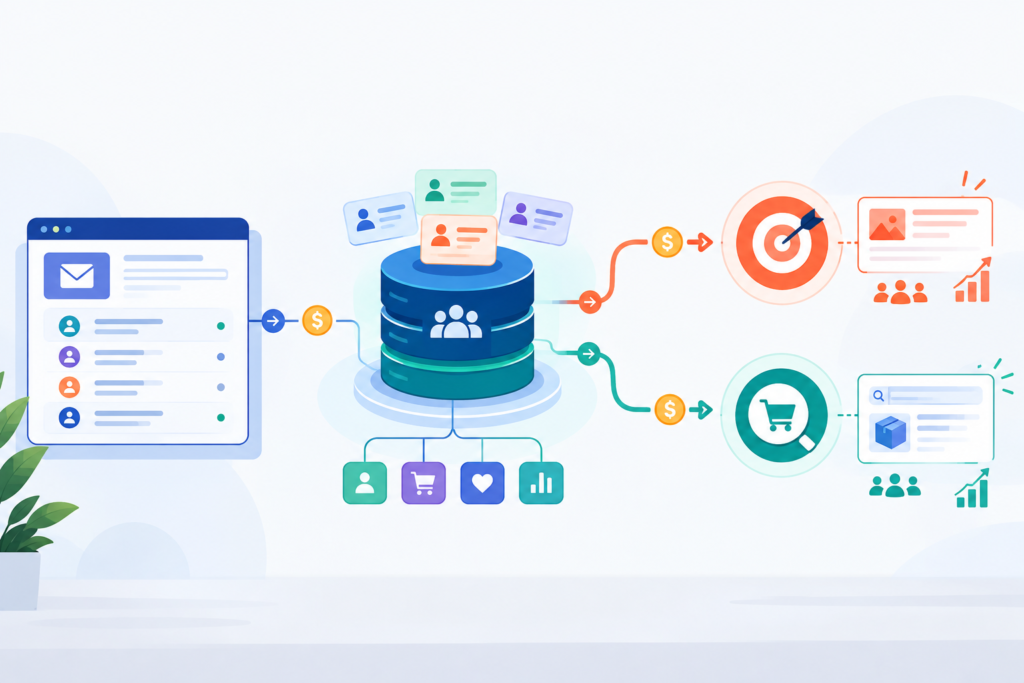
Klaviyo Segments to Meta & Google Ads: Turning Owned Data Into Cheaper Acquisition Start With Data You Own An ecommerce business can collect a large amount of useful customer information through its website, email program, and purchasing system. Much of that information sits inside Klaviyo, where customers can be grouped according to purchases, engagement, product interests, order value, and other useful signals. The problem is that this information often stays inside the email platform. Klaviyo segments can become much more valuable when they are connected with paid advertising platforms such as Meta Ads and Google Ads. Instead of relying only on broad audience targeting, a business can use its existing customer data to create more relevant advertising audiences. This approach can help improve customer acquisition efficiency because the business has a clearer idea of who its best customers are. The process requires careful segmentation, accurate data, appropriate audience matching, and regular measurement. It also requires attention to privacy, consent, and the policies of each advertising platform. Build Better Klaviyo Segments The quality of the advertising audience depends heavily on the quality of the underlying customer segments. A useful Klaviyo segment should have a clear business purpose. For example, a retailer might create separate groups for first-time buyers, repeat customers, high-value customers, inactive customers, and people who have viewed particular product categories. Consider a simple segmentation structure: Klaviyo Segment Customer Group Potential Advertising Use Recent buyers Purchased within a defined period Exclude from acquisition ads Repeat buyers Multiple purchases Create similar audience signals High-value buyers Higher lifetime value Find similar prospects Product buyers Purchased a specific category Cross-sell campaigns Inactive customers No recent purchase Win-back advertising Engaged subscribers Regular email interaction Prospecting or retention analysis The exact definitions should reflect the company’s products, purchase cycle, and customer behavior. A segment created simply because the platform allows it is unlikely to provide much value. Turn Customer Data Into Audience Signals Once useful Klaviyo segments exist, they can inform advertising strategies. A business may have a group of customers who repeatedly purchase, place larger orders, or remain active for a long period. That segment can provide a useful source of information about the characteristics of valuable customers. Customer lists can also be used with supported advertising tools to create custom audiences or similar audience strategies, subject to each platform’s current requirements and privacy rules. The objective is to give advertising platforms better information about the customers a business actually wants. This is particularly useful when the difference between an average customer and a highly valuable customer is significant. Use Meta Ads for Customer Matching Meta’s advertising system can work with customer lists and other audience sources where the business meets the platform’s requirements. For an ecommerce company, a carefully prepared customer segment can be used to build a custom audience. The business can then decide whether that audience should be used for retention, exclusion, or prospecting purposes. For example, a company could create an audience based on repeat customers and use it as a source for finding potential customers with similar characteristics. Another useful application is exclusion. Suppose a campaign is intended to acquire first-time customers. Continuing to show that acquisition campaign to people who recently purchased can waste part of the advertising budget. A customer segment can help the business separate existing customers from acquisition audiences where the advertising platform supports the required controls. Connect Valuable Segments With Google Ads Google Ads provides another route for using customer information in advertising campaigns. Customer Match can allow eligible advertisers to use customer-provided data for audience targeting and related advertising functions, subject to Google’s policies and eligibility requirements. This creates an opportunity to connect customer segmentation with search, shopping, display, and other advertising activities where supported. The important point is that the customer list should have a reason behind it. A list containing every contact in the database may provide less useful information than a smaller segment containing customers with a demonstrated history of valuable purchases. The more carefully the audience is defined, the easier it becomes to understand what the advertising campaign is trying to achieve. Find Your Best Customers First One of the most useful applications of Klaviyo segmentation is identifying the customers who are worth acquiring again. Revenue alone does not always provide the complete picture. A customer who purchases once may generate less long-term value than someone who makes several purchases over two years. Looking at purchase frequency, average order value, customer lifetime value, product category, and engagement can help identify stronger customer groups. These groups can then become the basis for audience strategies across advertising platforms. For example, a business selling skincare products may discover that customers who purchase a particular product range have higher repeat-purchase rates. Rather than treating all previous customers equally, the company can create a segment around that behavior and use it to inform future acquisition and retention campaigns. Exclude Customers When It Saves Money Audience data is useful for finding prospects, but it can also prevent unnecessary spending. Customer exclusions are often overlooked. If someone purchased a product yesterday, showing them an advertisement designed to persuade them to make their first purchase is unlikely to be the best use of the budget. Similarly, a customer who recently bought one product may need a different message from someone who has never purchased. Klaviyo segments can help create a clearer separation between customer groups. These groups can then be reflected in advertising audiences and campaign structures where the relevant platform features are available. This can make paid acquisition more controlled and reduce unnecessary overlap between marketing activities. Keep Email and Advertising in Step The strongest results often come when owned channels and paid channels work from the same customer understanding. Imagine a customer has purchased a product but has not purchased again after the expected replenishment period. The business might use email to recommend a repeat purchase while also using advertising to support the same broader retention effort. Another customer may have shown interest in
Why D2C Brands Need a Retention Strategy Before They Need More Klaviyo Flows
Blog, Product Management

Why D2C Brands Need a Retention Strategy Before They Need More Klaviyo Flows

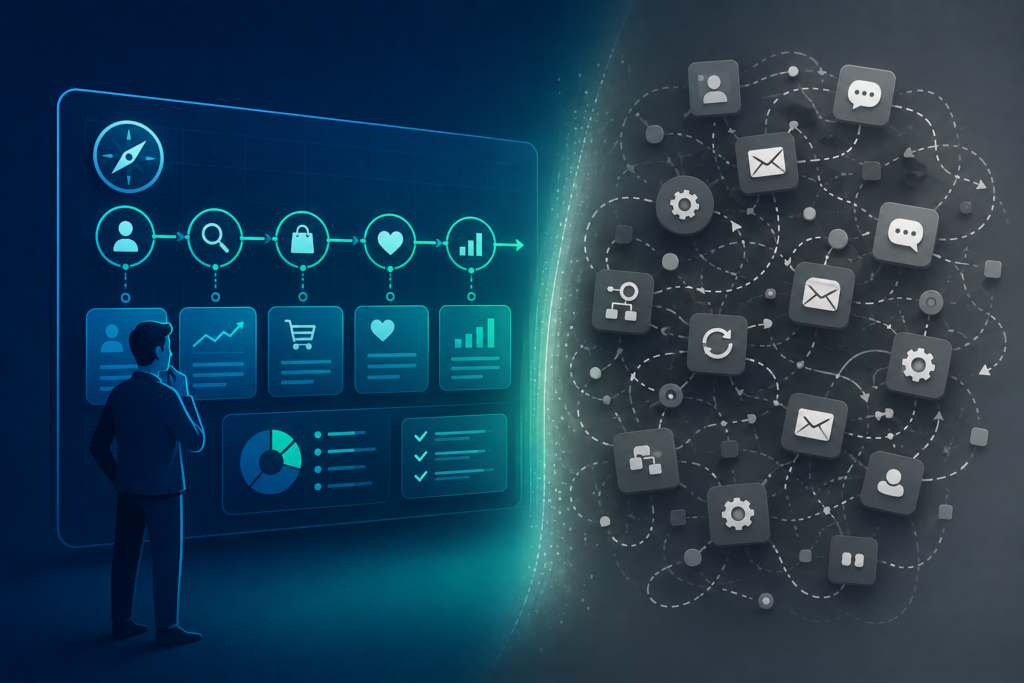
Why D2C Brands Need a Retention Strategy Before They Need More Klaviyo Flows Start With the Customer D2C brands can build a surprising number of automated workflows inside Klaviyo. Welcome emails, abandoned checkout reminders, post-purchase sequences, replenishment campaigns, cross-sell messages, and win-back flows can all serve useful purposes. The problem begins when a business treats every retention problem as a request for another flow. If customers are receiving too many messages, adding another workflow may increase the problem. If customer segments are poorly defined, more automation simply sends more messages to poorly defined groups. If the brand does not understand why customers return or leave, additional flows may create activity without improving retention. A retention strategy should come first. Klaviyo can then become one of the tools used to execute that strategy. For Product Siddha, this distinction is important when helping businesses review marketing automation. The starting point should be the customer journey, business objectives, data, and retention challenges. What a Retention Strategy Actually Does A retention strategy provides a framework for deciding how a business will encourage customers to continue buying and engaging with the brand. It should answer several basic questions: Who are your most valuable customers? When do customers typically purchase again? What causes customers to stop purchasing? Which products lead to repeat purchases? How long does it usually take to make a second order? Which customers need education after purchasing? Which customers are ready for another purchase? Which customers have become inactive? Which communication channels do customers respond to? These questions help determine where automation can contribute. Without these answers, a brand can end up building workflows because they are available rather than because they solve a specific customer problem. Consider a Simple Example Imagine a D2C brand that sells premium coffee subscriptions and individual bags of coffee. The company has already built several Klaviyo flows: Welcome flow Abandoned cart flow Post-purchase flow Cross-sell flow Review request flow Win-back flow The marketing team notices that repeat purchases have slowed. The first suggestion is to create another promotional flow. Before doing that, the company examines its customer data. It discovers that many first-time buyers purchase a 30-day supply. A significant number of these customers receive a promotional email before they are likely to need another order. Some customers purchase again before the promotional sequence ends, while others become inactive after receiving several unrelated messages. The real issue is timing and customer journey design. The brand needs to understand when customers are likely to reorder, what they purchased, which messages they have already received, and whether they have already placed another order. A retention strategy could establish these rules first. First Purchase → Product Education → Expected Consumption Period → Replenishment Reminder → Repeat Purchase → Loyalty Communication Klaviyo flows can then execute these stages. The difference is significant. The business is no longer asking, “What flow should we build next?” It is asking, “What should happen next in the customer’s relationship with our brand?” Map the Customer Lifecycle Before adding automation, map the major stages of your customer lifecycle. A basic D2C journey might look like: Lifecycle Stage Customer Situation Strategic Objective New subscriber Has shown initial interest Build familiarity First-time buyer Completed first order Support the purchase experience Potential repeat buyer May be approaching reorder Encourage appropriate follow-up Repeat customer Has purchased again Increase customer value High-value customer Purchases frequently Strengthen the relationship Inactive customer Has stopped purchasing Understand and address inactivity Each stage should have a purpose. The associated Klaviyo flow should support that purpose rather than exist simply because the platform allows it. Know Your Customer Segments A retention strategy also depends on useful segmentation. A list of 50,000 customers does not represent one uniform audience. Customers can differ by purchase history, order value, product preferences, purchase frequency, engagement, and time since their last order. Useful segments may include: First-time customers Repeat purchasers High-value customers Customers nearing their expected reorder period Customers with declining purchase frequency Inactive customers Product-specific customer groups Customers who purchased during a particular period Segmentation gives the brand a better basis for deciding which communication is appropriate. It also helps reduce unnecessary overlap between campaigns. Understand What Each Flow Is Supposed to Do Every automated workflow should have a clear purpose. For example: Welcome Flow: Introduce the brand and help new subscribers understand what to expect. Post-Purchase Flow: Provide useful information after an order and support the customer’s experience. Replenishment Flow: Contact customers around the time they may reasonably need another product. Win-Back Flow: Address customers who have become inactive. Cross-Sell Flow: Introduce relevant products based on previous purchasing behavior. If two flows serve nearly the same purpose, the business should review whether both are necessary. A retention strategy creates the structure for making these decisions. Use Klaviyo as an Execution Layer Klaviyo can be an important part of a D2C retention operation. Its role should be connected to the wider customer data and marketing strategy. The ecommerce store provides purchase information. Customer data provides context. Segmentation determines eligibility. Klaviyo can execute communication based on those conditions. For more advanced businesses, other systems may also be involved, including SMS platforms, customer support tools, analytics systems, and CRM software. The important point is that these systems should work from a consistent understanding of the customer. A customer who has just completed a purchase should not continue receiving a message intended for customers who have never purchased. Measure Retention, Not Just Flow Activity A flow can perform well according to campaign metrics while having limited impact on customer retention. Open rates and click-through rates can provide useful diagnostic information. They should not be the only measures used to judge retention performance. D2C brands should also monitor: Repeat purchase rate Customer lifetime value Purchase frequency Revenue per customer Customer retention rate Time to second purchase Replenishment conversion rate Customer reactivation rate These metrics provide a broader view of whether customers are continuing to create value. For example, if a new post-purchase flow

AI Orchestration for Retention Connecting Klaviyo, WhatsApp, and Your Store Into One Customer Journey
AI Automation

AI Orchestration for Retention: Connecting Klaviyo, WhatsApp, and Your Store Into One Customer Journey

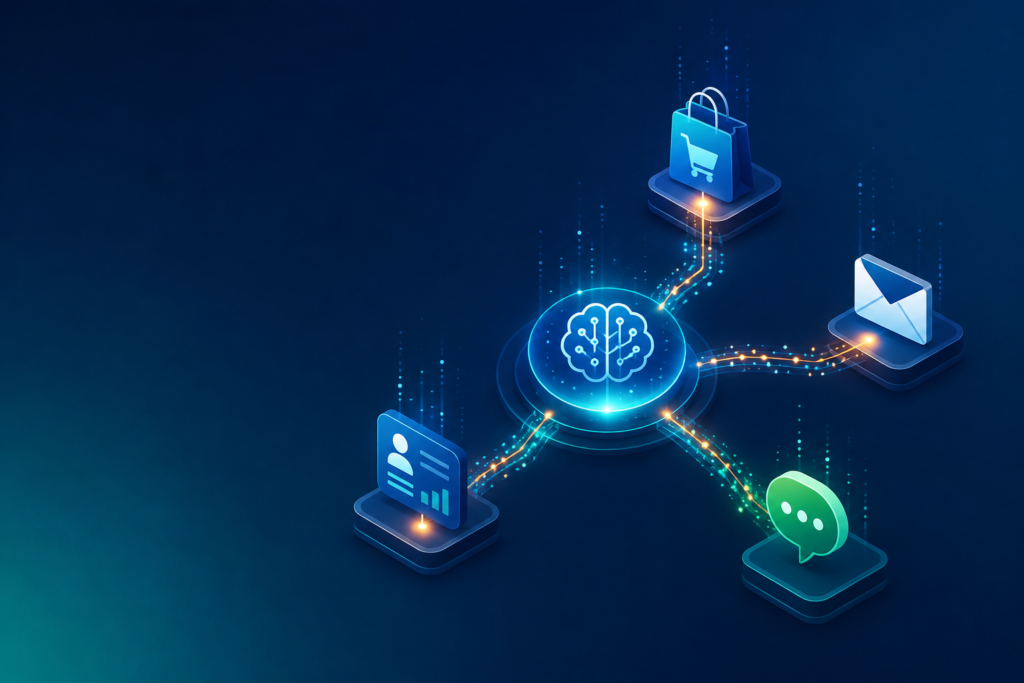
AI Orchestration for Retention: Connecting Klaviyo, WhatsApp, and Your Store Into One Customer Journey One Connected Journey A D2C customer rarely interacts with a brand through a single channel. A customer may discover a product through an online store, subscribe to email communication, receive a WhatsApp message, return to the website, complete a purchase, and later receive a replenishment reminder. Each interaction creates useful information. The difficulty begins when that information remains separated across different systems. The ecommerce store knows what the customer purchased. Klaviyo may know which emails the customer opened or clicked. WhatsApp may contain another part of the communication history. If these systems are poorly connected, marketing teams may end up managing several separate customer journeys. AI Orchestration provides a way to coordinate these systems around customer activity. Instead of treating each platform as an isolated tool, businesses can establish rules that determine how customer information moves between systems and what action should happen next. For Product Siddha, this type of automation is about building a practical connection between data, systems, and business processes. Why Disconnected Systems Create Problems Suppose a customer purchases a skincare product from an ecommerce store. The store records the order. An email platform may send a confirmation or follow-up message. A WhatsApp system may continue sending promotional communication. If the platforms do not share sufficient customer information, the customer could receive an irrelevant offer immediately after purchasing the same product. This creates unnecessary communication and makes the customer journey harder to manage. Connected automation can change the sequence. Once the purchase is recorded, the system can update the customer profile, remove the customer from an active promotional campaign, trigger post-purchase communication, and schedule a future message based on the expected product usage period. The individual tools still perform their own functions. Orchestration determines how those functions work together. Connect the Store to Customer Data The ecommerce store should generally act as an important source of customer and transaction information. Useful events may include: Product viewed Product added to cart Checkout started Order completed Product refunded Order cancelled Repeat purchase Customer inactive for a defined period These events can become triggers for automated workflows. For example, an order completion event could update a customer segment in Klaviyo and prevent certain promotional messages from being sent. The same event could also initiate a WhatsApp follow-up if the customer has provided the required consent. This creates a more consistent customer data flow. Give Klaviyo a Clear Role Klaviyo can manage email and other customer communication functions within an ecommerce marketing system. Its value increases when the information entering the platform is accurate and timely. Instead of creating numerous independent flows, businesses can structure workflows around customer lifecycle events. Consider a simple sequence: Customer Event System Action Possible Communication New subscription Create customer segment Welcome email First purchase Update customer status Post-purchase email Product usage period Check purchase history Product education Expected reorder date Evaluate customer activity Replenishment message Repeat purchase Update customer value Cross-sell communication Extended inactivity Move to inactive segment Re-engagement message The exact workflow will depend on the product, buying cycle, customer preferences, and communication permissions. Add WhatsApp to the Journey WhatsApp can serve a different purpose from email. Some customers may respond better to short, timely messages. For certain businesses, WhatsApp can be useful for order updates, customer support, reminders, product information, and carefully planned promotional communication. The important consideration is context. If a customer has just completed a purchase, the system should recognize that event before another promotional message is sent. If a customer has contacted support about an order problem, promotional communication may need to be paused until the issue is resolved. AI Orchestration can help apply these conditions across channels. A workflow might look like this: Store Event → Customer Profile Update → Segment Evaluation → Communication Decision → Email or WhatsApp → Customer Response → Next Action This gives each channel a defined role within the larger customer journey. Use AI Where Decisions Need Context AI Orchestration should have a clear purpose. It can help evaluate customer information, identify patterns, classify customer activity, recommend workflow actions, or determine which process should run based on predefined business rules. For example, a system may identify customers who have purchased several times but have become inactive. Those customers could be placed into a retention segment for further evaluation. Another workflow could identify customers who frequently purchase a particular category and trigger an appropriate product recommendation after a suitable interval. The value comes from connecting customer information with the next business action. Prevent Conflicting Campaigns One of the less visible problems in ecommerce automation is campaign overlap. A customer may qualify for several workflows at the same time. They might be eligible for a welcome campaign, a promotional campaign, a replenishment reminder, and a loyalty message. Without coordination, all four could run independently. A well-designed orchestration layer can establish priorities and exclusions. For example: Transactional communication takes priority. Customer service issues can pause promotional messaging. Recent purchasers can be excluded from acquisition-focused campaigns. Replenishment messages should consider the customer’s actual purchase date. High-value customer segments can follow separate communication rules. These conditions help keep automation organized. Build Around Customer Consent Customer communication also requires appropriate permission management. Email and WhatsApp programs should respect applicable consent requirements, opt-outs, communication preferences, and platform policies. A connected customer data system should make these preferences available to the relevant workflows. This is especially important when multiple communication channels are involved. A customer who has opted out of one type of communication should not be treated as automatically available for every other promotional channel. Good orchestration includes these controls as part of the workflow design. Measure the Whole Journey Channel-level metrics remain useful, but retention should also be evaluated across the complete customer journey. Useful measurements include: Repeat purchase rate Customer lifetime value Purchase frequency Customer retention rate Revenue per customer Replenishment conversion Reactivation rate Revenue attributed to automated journeys Unsubscribe and opt-out rates A connected

Product Siddha
Privacy Overview

This website uses cookies so that we can provide you with the best user experience possible. Cookie information is stored in your browser and performs functions such as recognising you when you return to our website and helping our team to understand which sections of the website you find most interesting and useful.