WhatsApp Commerce in 2026 – Automating the Full Buyer Journey From Chat to Checkout
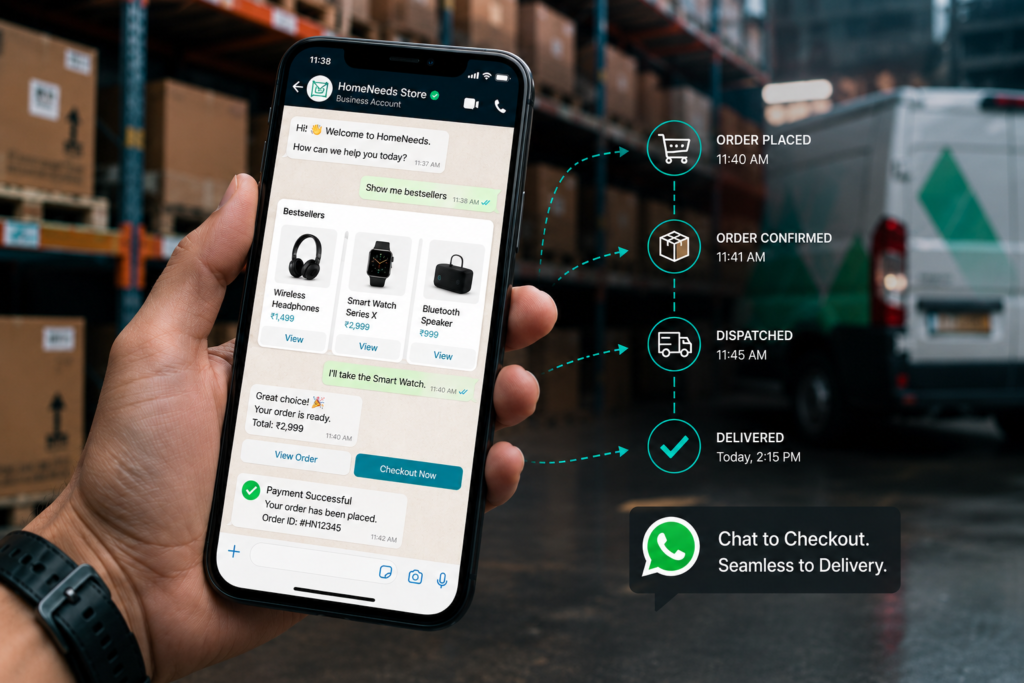
WhatsApp Commerce in 2026 – Automating the Full Buyer Journey From Chat to Checkout Opening Note WhatsApp has become a daily channel for millions of Indian consumers. By 2026 the app is a routine point of sale for many brands and merchants. The key shift is from isolated chat interactions to an orchestrated buyer journey that runs from initial inquiry to delivery confirmation. Companies that put AI Automation at the centre of that flow gain scale, speed, and clearer metrics. Product Siddha recommends a practical, staged approach to automation that balances reliability with measurable business outcomes. Why WhatsApp commerce matters in 2026 Consumers expect convenience and continuity. They begin discovery in chat groups, move to a private conversation, and expect a simple path to purchase. WhatsApp combines reach, trust, and rich message formats. For sellers, the channel reduces friction in product discovery and customer support. For financial institutions and insurers that work with merchant customers, WhatsApp provides a visible transaction record. The combination of conversational commerce, embedded payments, and automated workflows changes the economics of small-ticket sales and repeat purchases. Core components of an automated buyer journey Conversational interface and intent detection At the front end a conversation must feel natural and clear. Natural language understanding and intent classification identify whether a user is looking for product information, price negotiation, or checkout help. AI Automation converts that intent into discrete actions – show catalog cards, request delivery pin code, or offer installment options. Rapid intent routing reduces latency and keeps the customer engaged. Product catalog and discovery A catalog must be searchable, browsable, and presentable in chat. Rich messages, carousel cards, and quick replies help customers compare items. Behind the messages a catalog management system supplies up-to-date availability and pricing. Synchronised inventory prevents disappointment and reduces cancellations. Checkout and payment processing Checkout on WhatsApp combines a compact order summary with a secure payment link or an embedded payments flow. Payment gateways, wallet integrations, and UPI require tight compliance. AI Automation handles price validation, tax calculations, and fraud checks before the payment step. For recurring purchases the system can prompt saved-payment flows with explicit consent. Order management and fulfillment Once a payment clears the order must enter an OMS. The system allocates stock, schedules pick and pack, and triggers the courier. Automation can select the fastest or cheapest courier based on rules that include delivery window, product fragility, and past performance. Real-time tracking updates send messages to the buyer automatically. That reduces inbound support and improves perceived service quality. Post-purchase and retention After delivery automated flows confirm receipt, invite feedback, and offer cross-sell suggestions. Chat makes it simple to handle returns and warranty claims. AI Automation sequences follow-ups and recovery messages for abandoned carts. The result is a tighter retention loop with measurable lift in repeat purchase rates. How AI Automation powers the experience Natural language understanding and personalization Advanced NLU maps colloquial queries to product attributes. Personalization layers use purchase history, session signals, and declared preferences to present the most relevant items. AI Automation applies those models in real time so messages reflect the user’s context and increase conversion likelihood. Workflow automation and orchestration Automation platforms define deterministic flows – accept order, validate address, run fraud checks, call payment gateway, update OMS. Orchestration engines handle retries, error paths, and human handovers. For high volume merchants orchestration reduces manual steps and lowers time to fulfilment. Risk management and fraud prevention Automated fraud scoring evaluates velocity, device signals, and payment patterns. AI Automation flags suspicious transactions for manual review. That balancing act keeps acceptance rates high while protecting revenue. Analytics and lifecycle measurement Measurement is essential. Track conversion rate from first message to purchase, average order value, time to ship, and repeat rate. AI Automation can produce dashboards and trigger experiments to improve weak points in the buyer journey. Operational and regulatory concerns Compliance and consent WhatsApp commerce requires consent management and clear opt-in flows. Retain consent records and make unsubscribe simple. Payment flows must follow local rules including RBI guidance and data localisation where applicable. Data privacy and retention Protect message content and personal data. Encrypt stored records, limit access, and apply retention rules. Use zero-party signals – preferences provided directly by customers – where possible to avoid inference risk. Human oversight and escalation Automation must include human fallback. Complex negotiations, bespoke requests, and fraud investigations need a human agent. Design clear escalation paths so agents receive context-rich history and suggested responses. Integration and vendor choices Pick partners that offer robust WhatsApp Business API integration, reliable payment links, and an OMS that supports webhook-driven updates. Prefer modular systems that expose APIs for product catalog, inventory, and billing. Product Siddha advises starting with a core set of integrations and expanding based on measured value. A practical rollout plan Define a narrow scope – a best-selling product line or a single region. Implement a basic conversational flow and connect catalog and payments. Add AI Automation for intent routing and order validation. Run a live pilot with explicit success metrics such as conversion rate and fulfilment SLA. Expand the scope, automate returns and recovery flows, and add richer personalization. Measuring success Choose three metrics to track initially. Suggested options are conversion from chat to checkout, average time from order to dispatch, and repeat purchase rate within 90 days. Use A/B tests where possible. Keep the experiments small and statistically valid. Final Take WhatsApp commerce in 2026 is not merely a sales channel. It is a commerce platform that can deliver end-to-end buyer journeys when paired with reliable automation. AI Automation is the glue that maps conversations to actions, handles routine tasks, and leaves human agents to address exceptions. Product Siddha recommends a staged approach that begins with a tight pilot and clear metrics. That method reduces risk and produces evidence that supports broader rollout. For merchants, the payoff is faster conversions, lower operating cost, and more predictable customer relationships.